Summer evenings bring gatherings, grilling, and porch time—but darkness can cut comfort and safety short. When dusk falls, patios, decks, and yards need clear, dependable lights to keep guests safe and food visible.
The right choice depends on what must be lit: people near the grill, steps, walkways, or the house perimeter. This guide focuses on practical solutions that balance ambiance and function.
Expect renter-friendly and seasonal options with easy setup. Recommendations prioritize brightness, sensor behavior, weather resistance, and simple installation for renters and seasonal decorators.
Common categories covered include motion/security units, floodlights, solar dusk-to-dawn fixtures, string lights for ambiance, and small portable lights. Decision factors used are lumens, power source (solar, battery, plug-in, hardwired), IP rating, and how the light behaves at dusk and at night.
Key Takeaways
- Match the lights to the task: steps, food prep, or perimeter security.
- Prioritize lumens, power source, and weather rating when choosing options.
- Motion sensors and dusk-to-dawn models add safety and convenience.
- String lights deliver ambiance while portable spots handle short-term needs.
- Recommendations favor easy setup for renters and seasonal decorators.
How to choose the right outdoor lighting for your summer setup
Decide what you want to see first; that single decision narrows good product choices fast. Start by naming the activity—dinner, grilling, steps, or security—so the rest follows.
Start with the problem you’re solving
Eating: table-level visibility. Grilling: focused task light. Stairs: low-glare step definition. Security: motion-triggered coverage that wakes on movement.
Match brightness using lumens (not watts)
Use lumens to pick a useful level of light. Lumens tell you how bright the fixture is, watts only show energy use. Below is a quick lumen guide by zone.
| Zone | Recommended Lumens | Goal |
|---|---|---|
| Table (dining) | 300–800 lm | Clear visibility, comfortable mood |
| Steps & path | 50–200 lm per step | Safe footing, low glare |
| Task (grill) | 700–1500 lm | Detailed work, focused beam |
| Driveway/security | 1000–3000 lm | Wide coverage, motion response |
Pick a power source that fits your space
Solar is hands-off but needs sun. Battery is renter-friendly; it requires swaps or charging. Plug-in works if outlets reach. Hardwired is steady but permanent.
Automation choices matter: dusk-to-dawn gives consistent light at dusk; motion sensors give on-demand light; manual control keeps ambiance. Next, compare use cases and power options to match products to your needs.
Quick comparison of outdoor lights by use case and power source
Start by mapping where you need light, then pick the power option that fits that spot. This makes shortlist building fast and practical.
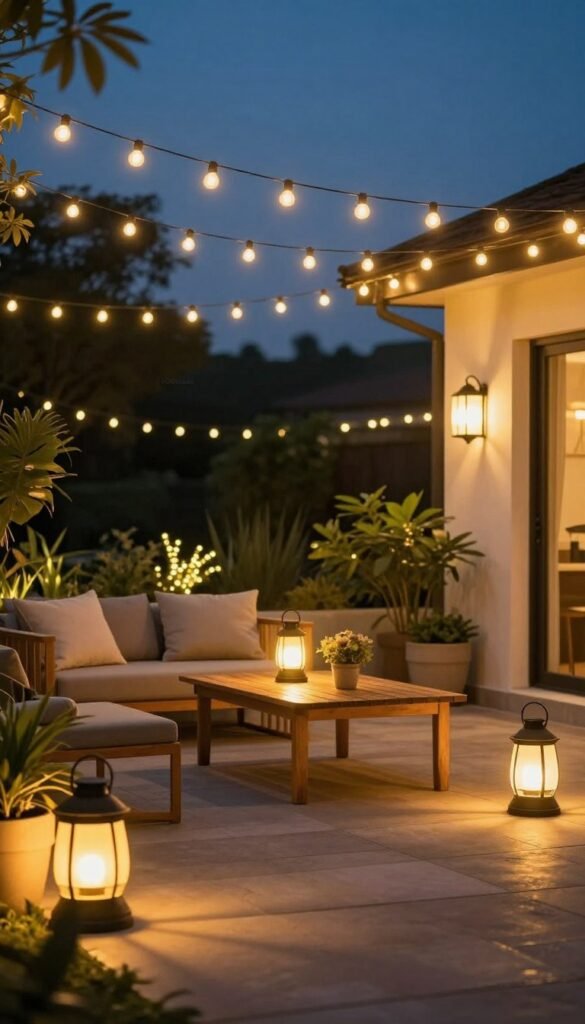
The renter and small-space lane comes first. Portable lamps, battery-operated wall mounts, and solar fixtures avoid hardwiring. They need little tooling and can move as needs change.
Renter-friendly and small-space solutions
Portable usually means flexibility over permanence. Users trade fixed coverage for easy storage and recharge plans. Keep a charging station or spare cells handy.
Large-area and high-output needs
Wide-beam floodlights deliver high lumens and broad coverage. They often require hardwiring but light decks, garages, and yards where string lights fall short.
| Use case | Battery / Portable | Solar | Hardwired / Flood |
|---|---|---|---|
| Steps & paths | Battery-operated stakes | Dusk-to-dawn solar stakes | Low-glare step sconces |
| Task & grill | Rechargeable spot lamps | Solar spot with USB backup | High-lumen flood or hardwired task |
| Large area | Multiple portable spots | Solar arrays (sunny sites) | Wide-beam 1000–3000+ lm floods |
| Ambiance | Rechargeable table lamps | Solar string or sconce | Dimmed hardwired strings |
Decision rule: if you need visibility across bigger areas, prioritize lumens and beam spread. If ambiance is the goal, favor warm color and placement.
Avoid mismatch: solar is convenient but can underperform in shady yards. Battery options are simple, but high-traffic areas may need frequent swaps. Use this framework to shortlist products and move to the quick roundup of options next.
Best outdoor lighting for summer: top picks at a glance
Here’s a compact list that links common evening tasks to a clear product solution. Each entry names who it suits and the problem it solves.
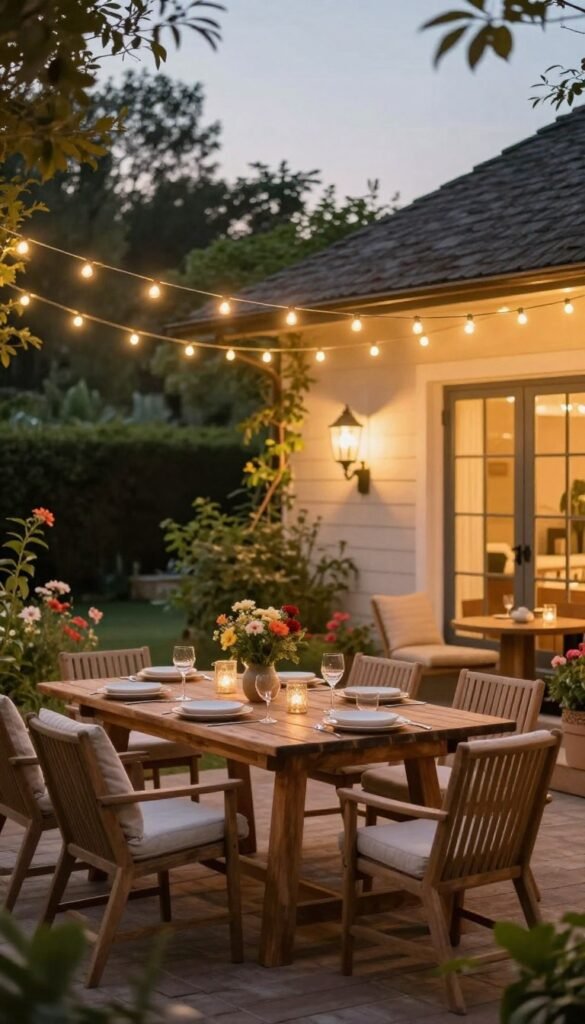
Leonlite security light — best overall motion/security pick
Who it’s for: homeowners who need wide coverage and adjustable heads.
- Solves: driveway and perimeter spotting — 1800 lm, 70 ft sensor, three modes.
- Pros: very bright, rotating heads, IP65, long life (~50,000 hrs).
- Cons: corded install and sensor can be extra-sensitive.
Beams MB360XT — budget motion spotlight
Who it’s for: renters and quick wall-mount needs.
- Solves: short-range motion lighting — 200 lm, battery, 30–35 ft detect.
- Pros: easy mount; no wiring. Cons: beam tweak is fiddly; weak screws.
Feit Electric smart bulb — porch upgrade
Who it’s for: people who already have a fixture and want app control.
- Solves: scheduled porch scenes and adjustable color temp — 1000 lm, app + voice.
- Pros: flexible warmth to cool tones; good runtime. Cons: no motion sensor; fit varies.
Motion-sensor security lighting for safer summer nights
Motion sensors add light only when it matters, cutting constant glare and saving power. They suit households that want on-demand visibility at night without running bright fixtures all evening.
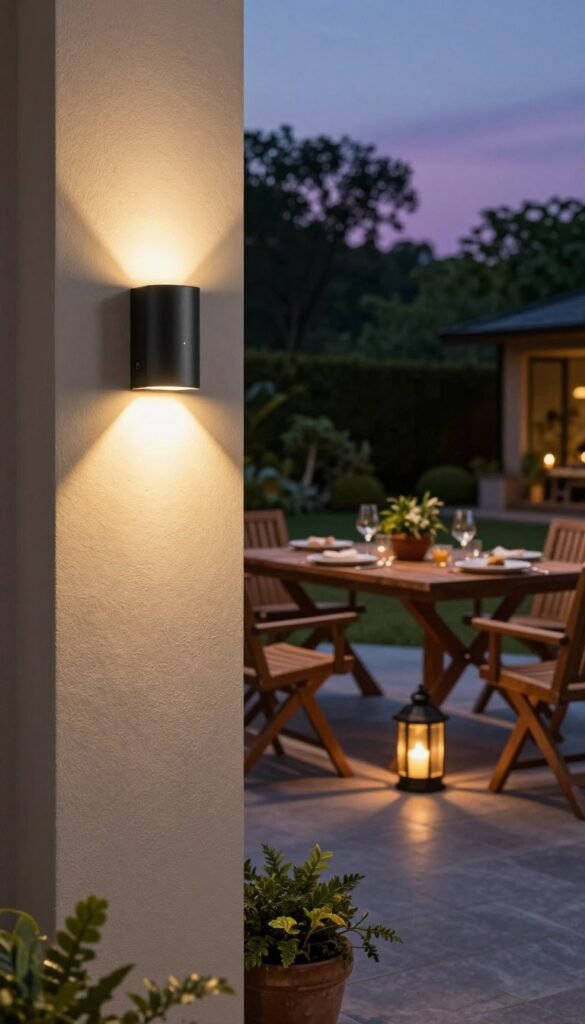
Leonlite security light: long-range coverage
The Leonlite product covers up to 70 ft with a 180° detection angle. Its high output gives earlier notice of movement on driveways and near garages.
Pros: wide spread, strong light, adjustable heads. Cons: the extra-sensitive sensor can trigger often and cause glare through windows.
Beams MB360XT: renter-friendly motion option
Beams MB360XT runs on battery and mounts without hardwiring. It detects movement at about 30–35 ft and stays on ~24–25 seconds.
Pros: easy install, no electrician. Cons: lower brightness than hardwired fixtures and the beam takes time to re-aim precisely.
What to watch for
- Match detection distance to the space.
- Pick adjustable heads to direct light and cut window glare.
- Mount higher and angle down; test trigger patterns and settings before final install.
Floodlights and wide-coverage options for large yards, decks, and garages
Large yards and garages often need a single fixture that covers far more ground than string sets or small sconces can reach. Small accent pieces leave dark pockets. In those big areas, a true flood solution gives practical visibility across the entire footprint.
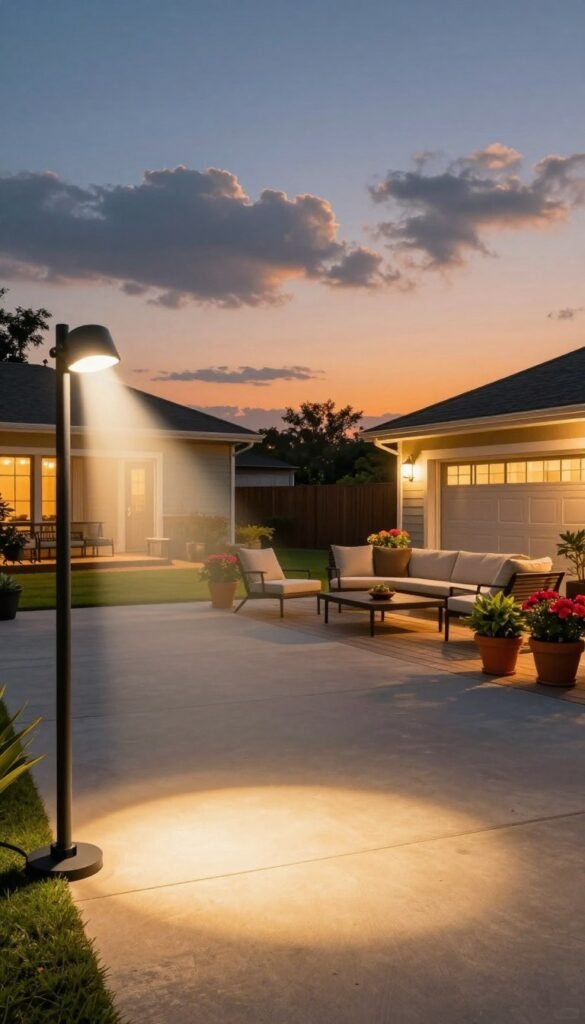
Sansi floodlight: who should consider it and why 6000 lumens matters
The Sansi product delivers 6000 lumens at 45W with a 320° wide beam and IP65 rating. In testing it lit a 50-by-80-foot backyard and deck, turning patchy spots into usable space.
Who it suits: homeowners replacing a junction-box flood or upgrading a garage and deck who want broad, steady coverage. This product is a high-output option when true area visibility is the goal.
Hardwiring realities and installation trade-offs
Install notes: the Sansi must be hardwired to a junction box. Some buyers DIY; many hire an electrician. Renters generally avoid this route. Hardwiring gives steady power and reliability that battery or solar options can’t match in large areas.
Daylight sensors vs motion sensors: practical differences
Daylight sensors run dusk-to-dawn for steady presence and deterrence. Motion sensors light only when needed to cut constant glare and reduce power draw.
Choose a daylight sensor when you want consistent visibility across an area or passive security. Choose motion when you prefer intermittent light and less spill into neighbors’ yards. Aim high-output fixtures away from windows to reduce glare and make seating areas comfortable.
Solar outdoor lights that run hands-off from dusk to dawn
If you want lights that behave on their own, solar fixtures are the hands-off route to steady evening illumination. They charge in daylight and switch on at dusk, so users avoid switches and cords.
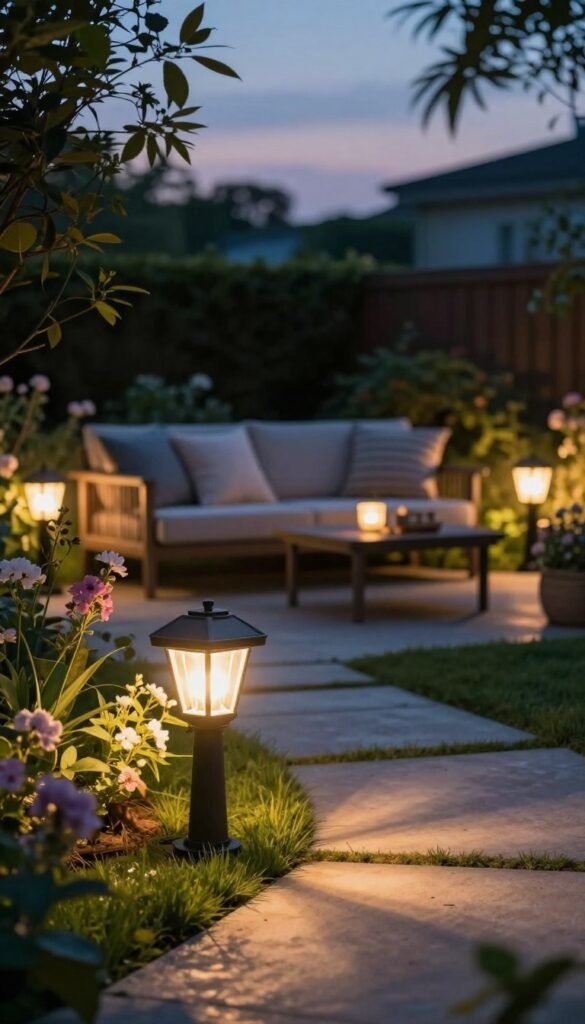
AloftSun solar motion spotlights
Who it suits: path and open-yard placement where water and dust are common.
AloftSun puts out about 800 lumens, has IP68 protection, and a 120° motion sensor that reaches roughly 33 ft. It can mount on the ground and gives a brightness boost when someone passes. Modes may take a short learning period.
Lerekam solar spotlights
Who it suits: seasonal setups and renters who want flexible placement.
Lerekam runs near 1000 lumens and pairs solar charging with USB backup. It stakes or wall-mounts, resists heat and frost, and should be charged two days before first use for full battery life.
Placement, panel charges, and practical notes
Position panels in sun as much as possible. Brightech testing shows panels can charge in direct or good indirect sun, but shaded spots under a tree or heavy canopy cut runtime.
Expect steady dusk activation on most days, though illumination and runtime drop after cloudy stretches. Match the product to the task: path guidance vs task-level power.
| Product | Lumens | Mount | Special feature |
|---|---|---|---|
| AloftSun | 800 | Ground / stake | IP68, motion boost |
| Lerekam | ~1000 | Stake / wall | USB backup, -20–50°C |
| General panel | Varies | Roof / post | Solar panel charges best in direct sun |
When solar is cheaper: small yards, seasonal needs, and low-to-medium brightness tasks where avoiding outlet work saves time and cost.
When it isn’t: shaded sites that need high nightly power; buyers may end up adding units or switching to plug-in or hardwired options.
Outdoor string lights for warm ambiance on patios, balconies, and pergolas
String lights turn small terraces and porches into usable evening rooms with little fuss. They solve one main problem: create warm, inviting space when overhead fixtures are absent or harsh.
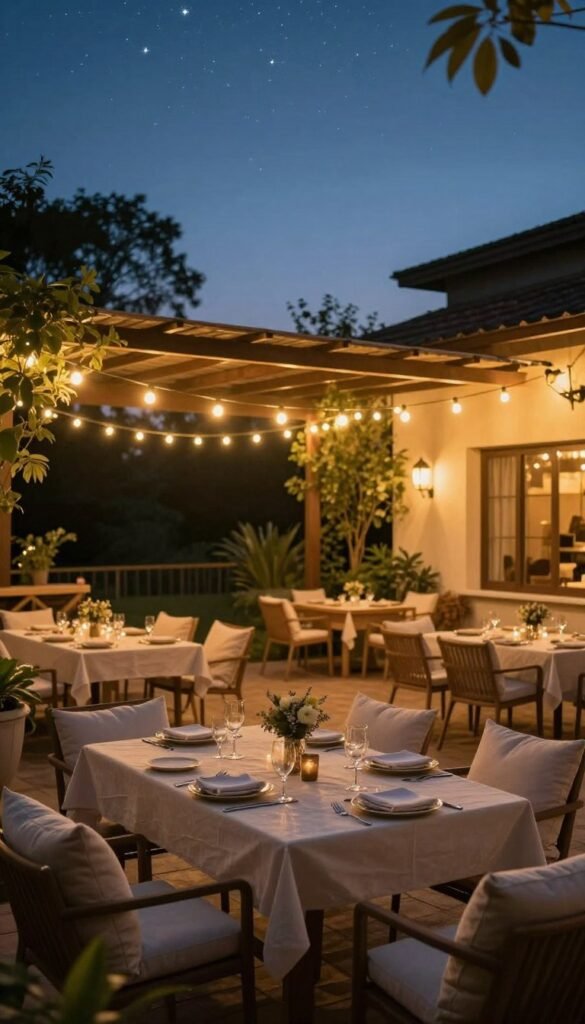
Brightech solar outdoor string lights suit no-outlet zones. A 27- or 48-foot strand with 15 Edison LEDs runs up to 10 hours per charge. The solar panel charges in direct or strong indirect sun, supports manual control, and bulbs last ~20,000 hours.
Renter-friendly tips: hang with removable hooks, railing clips, or pergola ties. Plan where the solar panel rests so it gets sun while the strand stays put. Take strands down in severe storms to avoid sagging or damage.
Alternatives worth considering
- Brightown strings: proven multi-year durability with occasional bulb swaps; good perimeter light.
- Biolite MPOWERD solar string: brighter, camping-style option; housing and panel stay attached, so placement matters.
Quick note: string lights set mood and table-adjacent visibility. They are not a substitute for high-lumen task or security light. Layer a small task lamp near cooking or serving areas to avoid dim corners and keep gatherings comfortable.
Portable table lamps and hanging lights for renters and small spaces
When seating areas lack power, battery-operated table lamps bring focused glow exactly where it’s needed.
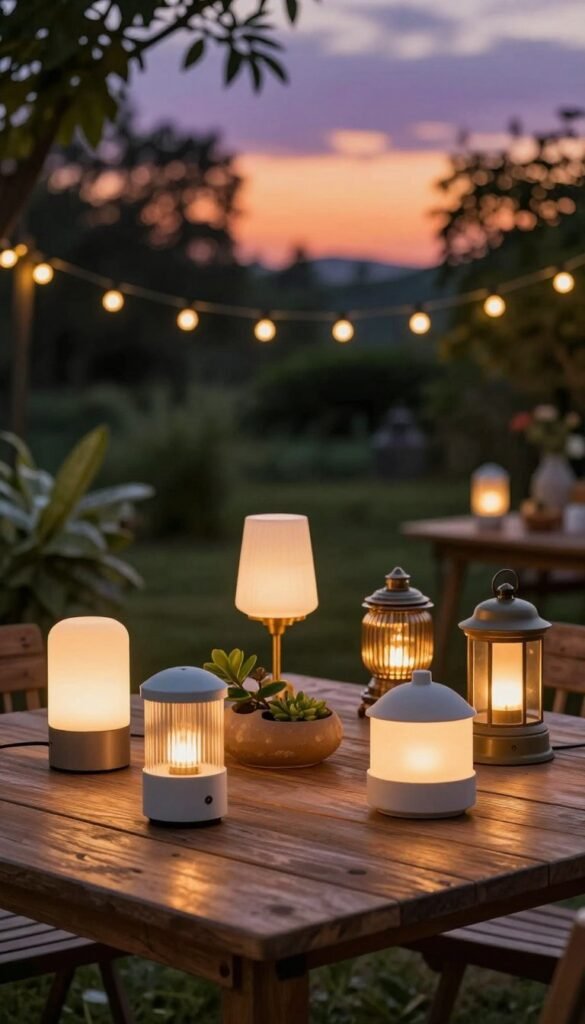
Common renter problem: outlets are often far from the dining spot or the only fixture is in the wrong place. A small lamp on the table solves that without wiring or holes in the wall.
Rechargeable table lamps
Why they work: rechargeable table lamps place light on faces and food. They make meals, games, and small tasks easier without running cords across walkways.
Selection quick-check: choose stable base, warm color that flatters skin, simple controls, and a runtime that matches typical evenings.
Hanging lights you can move
Hanging lights that clip to a tree, umbrella, or hook create a targeted pool of light. They open up corners and make a balcony feel larger without permanent fixtures.
What “portable” really means
Expect to monitor charge time and runtime. Charge indoors after use, bring lights out at dusk, and store them inside in storms. This routine extends life and keeps the mood consistent.
- Practical tip: portable lights suit mood and local visibility, but keep step and path lighting separate to prevent trips.
Pathway and stair lighting to prevent trips after dark
A steady low-level guide and quick motion boost make stairs and paths easier to navigate after dusk. Even well-lit patios can hide steps and edges, so targeted illumination reduces trips and bruises.
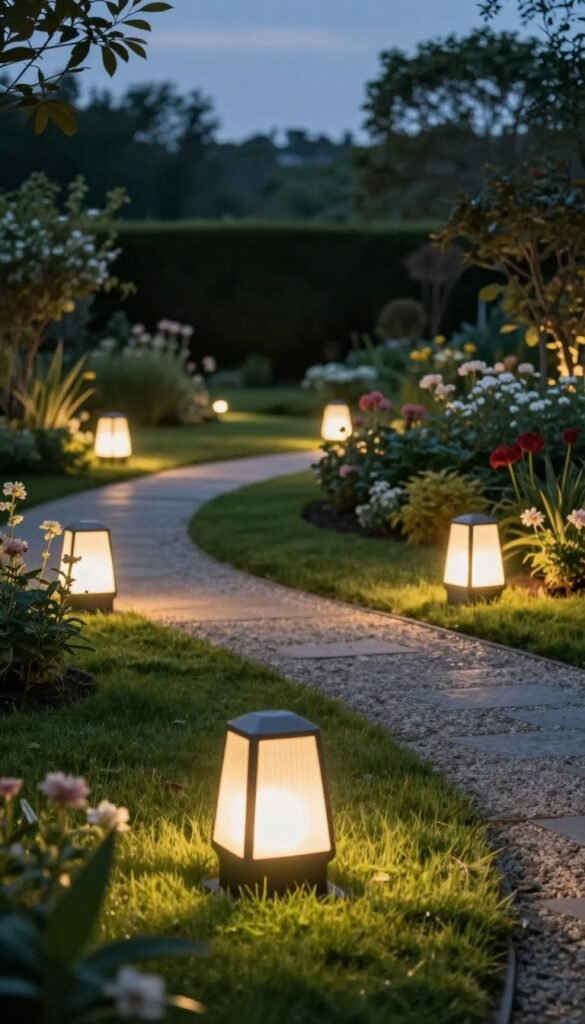
Beams MB350: stair-focused solution
The Beams MB350 is a compact product made to mark steps. It delivers 35 lumens on motion and a 2-lumen glow mode that runs between triggers.
Pros: motion up to 15 ft, timer 20–60 sec, weatherproof and UV resistant. Cons: limited coverage and no gradual dimming—best as a step marker rather than an area light.
Solar stake lights: outline walkways and garden edges
Solar stake lights sit low to the ground and work dusk-to-dawn to trace paths and gardens. They are ideal to show route edges without harsh beams.
Placement basics: space stakes evenly, keep panels clear of foliage, and set stakes in firm ground so lights stay upright. Use removable stakes or adhesive mounts if renting.
- Safety rule: buy step and path light first, then add mood pieces later.
- Renter-friendly: stakes and clips avoid hardwiring and are easy to remove at season end.
Buying considerations that actually matter for outdoor lights
Good choices start with how a fixture handles weather, daily use, and simple upkeep.
IP rating basics
IP ratings show water and dust protection. Pick IP44+ for covered porches and mild rain. Choose IP65 or IP68 when a light sits low, faces sprinklers, or takes wind-driven rain.
Lumens vs watts
Lumens measure brightness; watts measure energy. Compare lumens to avoid buying a fixture that only adds mood when you need real visibility for stairs or cooking.
Color temperature
Warm white flatters skin and sets a relaxed feel. Cooler tones help with tasks but can seem harsh on a patio. Mix a warm string with a task lamp for best design and function.
Installation and maintenance
Hardwired gives steady power but is less renter-friendly. Wall-mounted battery or solar options simplify setup. Ground stakes are fast to place but may need repositioning after storms.
Seasonal longevity
Expect 20,000–50,000 hours in real use: Brightech ~20k, Feit ~25k, AloftSun ~40k, Leonlite ~50k. Lifespan falls with heavy exposure and constant dusk-to-dawn operation. Compare specs and choose replaceable parts when planning to keep lights for years.
Where to place outdoor lighting for maximum illumination and comfort
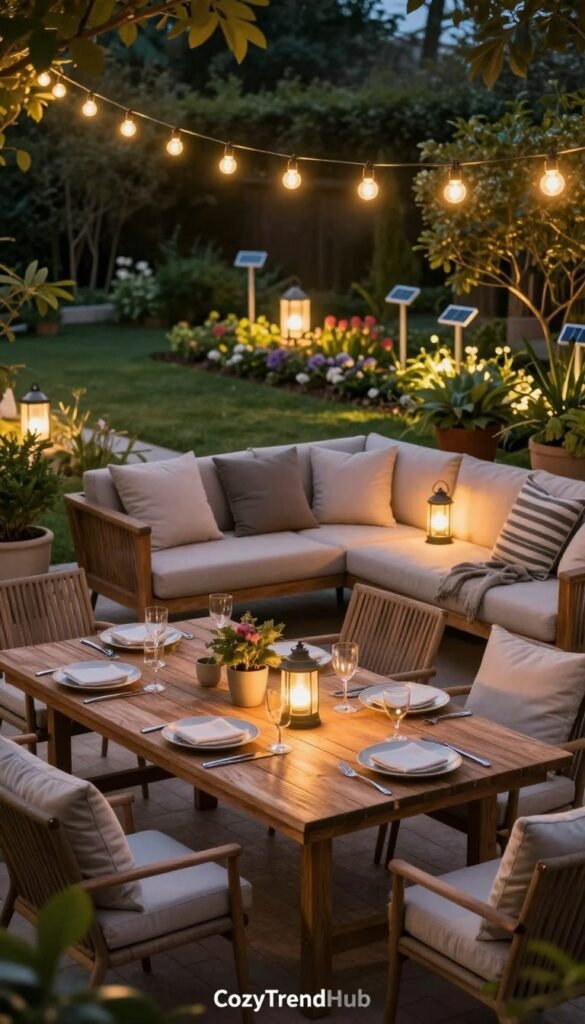
A layered plan beats a lone fixture: combine guide, task, and ambient units in each area to remove dark corners and support activities.
Porch and entry
Use a sconce or lantern aimed down to show locks, steps, and visitors without shining into windows. A smart bulb lets homeowners schedule warm tones and avoid all-night glare.
Tip: mount at eye level and angle slightly down to reduce neighbor complaints. Add a small step light for low-level guidance.
Deck and patio
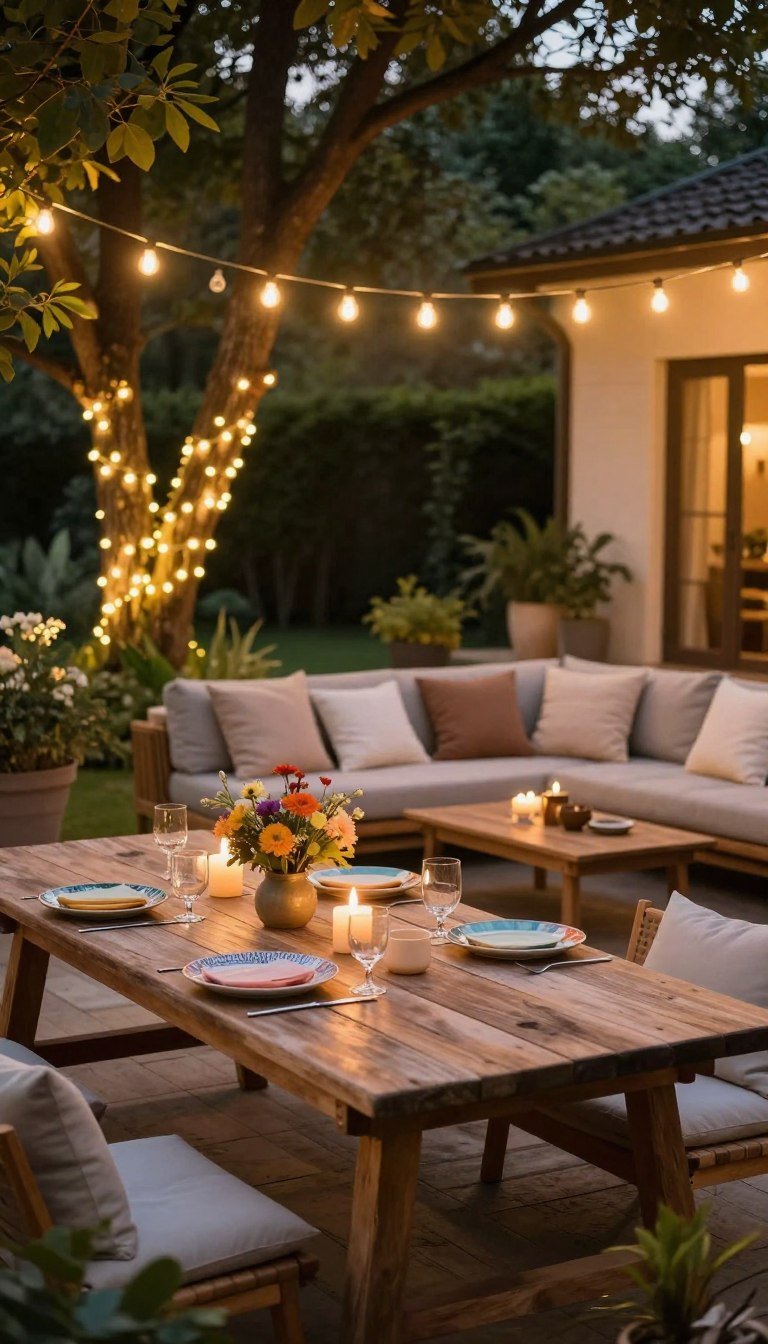
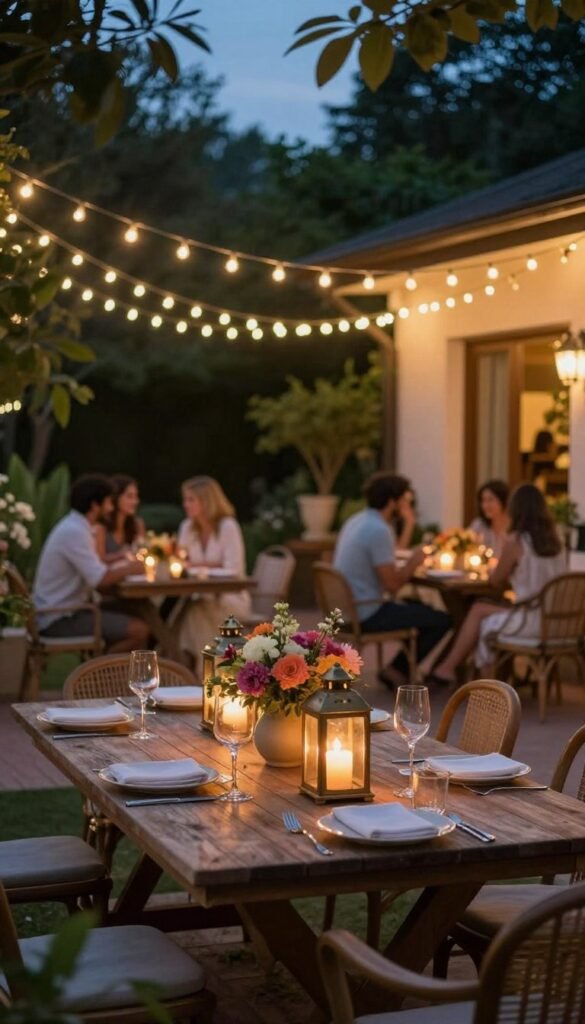
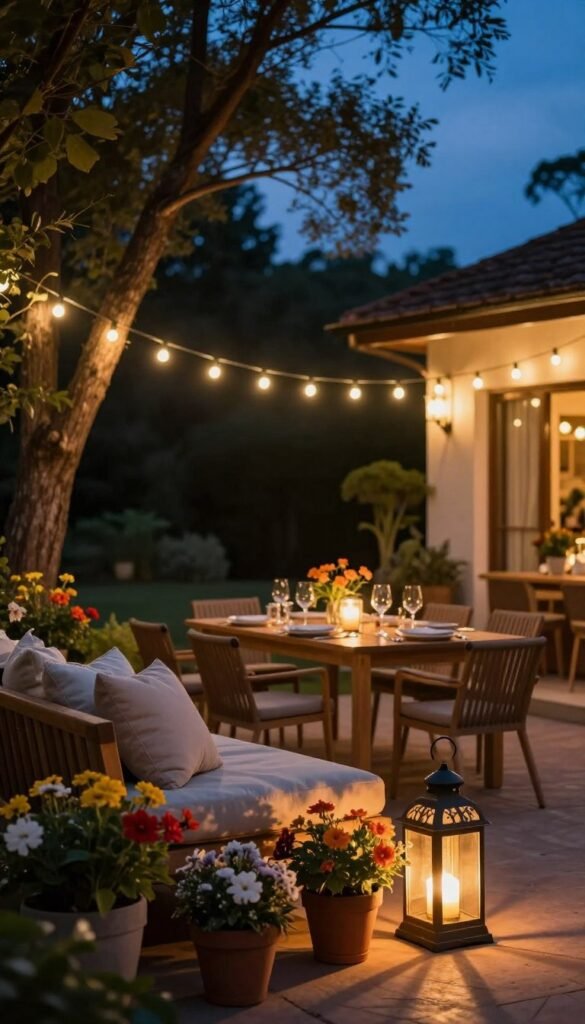
Layer string lights over seating to create ambiance and add a focused task lamp near the grill or service table for cooking clarity. Portable table lamps work well in rental spaces.
Pro renter tip: use removable hooks and battery or solar fixtures to avoid drilling.
Garden and trees
Spotlight a single focal point, like a tree or planting bed, rather than washing the whole garden in brightness. Angle beams away from property lines and windows to respect neighbors.
Keep solar panels in sun even if the head points to a target. Test at dusk to confirm the coverage and avoid surprises.
| Zone | Primary goal | Recommended placement |
|---|---|---|
| Porch / entry | Safe access | Sconce at eye level + step light |
| Deck / patio | Ambiance + task | Strings overhead + task lamp near grill |
| Garden / tree | Highlight focal point | Low spotlight aimed at trunk or bed |
| Paths / steps | Guidance | Low stakes or motion step lights |
Conclusion
Choose the lamp that solves the specific evening task you expect to do most often. Match security needs, wide-area coverage, dusk-to-dawn ease, renter-friendly mood, or clear step guidance to the right product.
Key buying checks matter: lumen output for the job, the power source that fits the site (solar, battery, plug, or hardwired), and an IP rating that suits exposure. Note sensor type, run time, and expected lifespan when comparing items.
If movement detection is the priority, pick motion lights. If broad area visibility matters, choose a flood. If hands-off dusk behavior helps, pick a solar option. If comfort and glow drive the choice, use string or portable lights near seating and garden beds.
Placement matters as much as the product: aim fixtures down, set height to cut window glare, and layer one bright functional light with one softer glow for the best summer night setup.
Tip: use the “top picks at a glance” to buy by space size, install preference, and how nights are spent.