
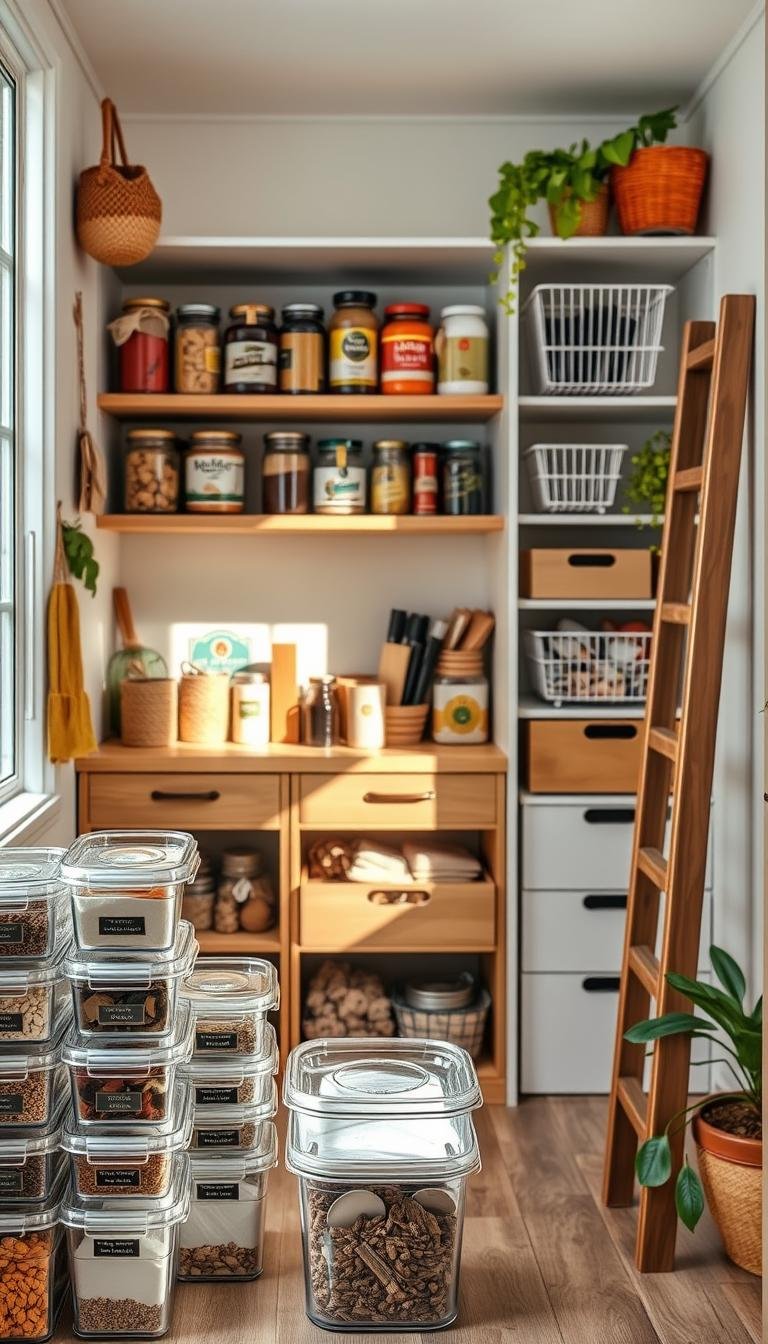
Struggling with a crowded pantry and wasted space? This introduction frames clear, product-focused fixes that match renter needs and compact kitchens. It explains why systems fail: poor visibility, unused vertical room, and hard-to-reach back corners.
The guide lays out practical, no-drill upgrades and removable options that move with you. Recommendations will focus on containers, bins, pull-outs, door racks, shelving, and lighting so readers can spot what fits at a glance.
Start by doing a quick reset: declutter, wipe shelves, check expiration dates, and note weekly use. That step prevents buying organizers that don’t match real habits.
This list is organized by pantry type, then by storage tool. Each pick includes „best for,“ concise pros and cons, and the measurements to take before you click „add to cart.“ Expect simple DIY tweaks and renter-friendly installs that deliver big impact without permanent work.
Key Takeaways
- Common failures: low visibility, wasted vertical area, and deep back corners.
- Do a quick reset: declutter, clean, check dates, track weekly use.
- Article sorts solutions by pantry type, then by product category.
- Buyer criteria: footprint, capacity, weight rating, install complexity, renter-friendly features.
- Most high-impact upgrades are removable and travel with you.
Small-Pantry Problems These Storage Solutions Actually Fix
Many compact layouts punish everyday use by hiding items behind deep shelves and swinging doors.
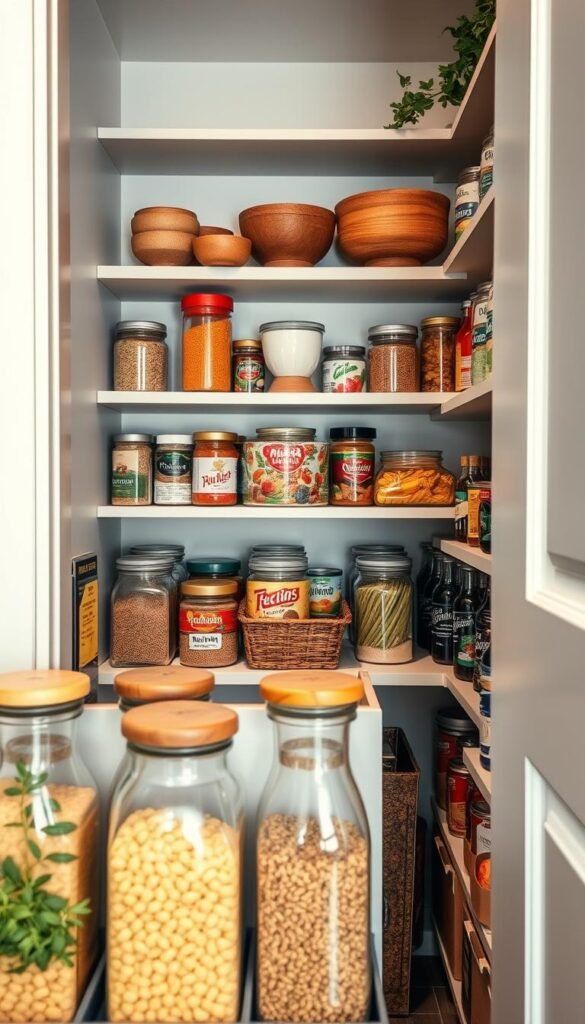
Food getting lost in the back and expiring: Deep cabinets let cans and jars slip out of view. Slide-out shelving, pull-out drawers, and turntables make the back reachable so older food gets used first.
Not enough shelves, drawers, or usable vertical space: When horizontal room is limited, floor-to-ceiling shelving, shelf risers, and adjustable track systems add layers without expanding the footprint.
Door swing and tight clearances: Inside-door racks are handy but fail if the door can’t close. In tight layouts, sliding or pocket-style door solutions keep access without sacrificing aisle width.
Overflow from bulk buys and seasonal entertaining: Labelled bins, dedicated backstock zones, or a temperate closet or mudroom keep overflow out of daily zones. This keeps the kitchen functional during holiday runs.
Quick decision framework: fix visibility first, add vertical layers next, bring in access solutions like pull-outs, then plan overflow for seasonal peaks. Later sections compare renter-friendly options versus permanent installs so readers can pick what matches lease rules and DIY comfort.
| Problem | Solution Category | Renter-Friendly? | Quick Buy Tip |
|---|---|---|---|
| Items lost in the back | Slide-out shelves / turntables | Yes — no-drill pull-outs | Choose full-extension slides, check depth |
| Not enough shelves | Floor-to-ceiling, risers, track systems | Risers and tracks are renter-friendly | Measure vertical clearance before ordering |
| Door swing blocks access | Inside-door racks / pocket doors | Door racks are easy; pocket doors are permanent | Confirm door clearance and weight limits |
| Bulk and seasonal overflow | Backstock bins, external closets | Yes — portable bins and labels | Reserve a labeled bin per category |
Measure First: The Fast Planning Step That Prevents Returns
Measure once and plan with confidence: the right numbers stop most returns. A quick, focused measuring session maps real space and prevents impulse buys that don’t fit. This helps match purchases to routines and keeps renter restrictions in mind.

Map zones by use
Place daily pantry staples at eye level so they are easy to reach. Snacks go in grab bins. Backstock and seasonal goods belong on higher or lower shelves.
Check shelf depth to avoid the “lost quinoa” problem
Deep shelves hide items. Narrow shelves often beat very deep ones when scanning matters. Measure front-to-back depth and note usable depth after baskets or risers are in place.
Confirm door clearance before buying inside-door racks
Measure from the inside of the door to the nearest shelf edge. Choose shallow racks only if the door closes without rubbing packaging. Dowel rods help keep small jars from sliding.
- Quick checklist: interior width, depth, height of each shelf/cabinet, clearance in front of doors, and extension length for pull-outs.
- Do a paper mock (painter’s tape outline) before ordering large drawers or a free-standing cabinet.
| Dimension | How to Measure | Why It Matters |
|---|---|---|
| Interior width | Measure left to right at shelf front | Determines outer dimensions of organizers |
| Depth | Measure back to front; subtract lip or trim | Prevents lost goods and reduces returns |
| Height | Measure floor to shelf and shelf to next shelf | Sets stackable bin and canister height limits |
| Door clearance | Inside-door to nearest edge when closed | Ensures racks don’t block closure or snag handles |
Specs to check: organizer outer vs. usable internal dimensions, label thickness, and handle projection that may add clearance needs.
Best Pantry Storage for Small Spaces: Top Picks by Pantry Type and Layout
Match the organizer to the nook: different layouts need different approaches. Below are clear options tied to common conditions so readers can shop with confidence.
Deep cabinets — pull-out drawers and sliding shelving
Who it’s for: Homes with deep base cabinets where items get lost at the back.
Why it works: Slide-out drawers make the back reachable and reduce waste. Look for full-extension slides, adequate weight capacity, and a secure mounting style.
Narrow gaps — slim rolling pull-out cabinets
Who it’s for: Kitchens with skinny gaps between appliances or cabinets.
Why it works: These narrow units turn dead space into an easy-scan row for cans, pasta, and snacks. Measure wheel clearance and handle projection before ordering.
No cabinet at all — repurposed or stand-alone cabinet
Who it’s for: Renters and homes without a closet or built-in option.
Why it works: A repurposed cabinet or closed pantry cabinet adds flexible shelving without drilling. Anchor for safety and pick doors if you want a neater look.
Closet pantries — adjustable track systems
Who it’s for: Households with seasonal shifts in goods or varied item sizes.
Why it works: Track systems adapt over time and accept drawers, risers, turntables, and labeled bins to support pantry organization.
„Slide-out drawers make the back reachable and keep goods visible.“ — BHG
| Pantry Type | Top Option | Pros | Install |
|---|---|---|---|
| Deep cabinet | Pull-out drawers | Full access; reduces waste | Moderate |
| Skinny gap | Slim rolling cabinet | Uses dead space; portable | Easy |
| No cabinet | Stand-alone cabinet | Renter-friendly; hidden look | Easy |
| Closet | Adjustable track shelving | Flexible; scalable | Moderate |
What to buy first: Fix visibility (drawers or slim pull-outs), add vertical shelving or cabinets next, then fit closet systems or a stand-alone unit as budget allows.
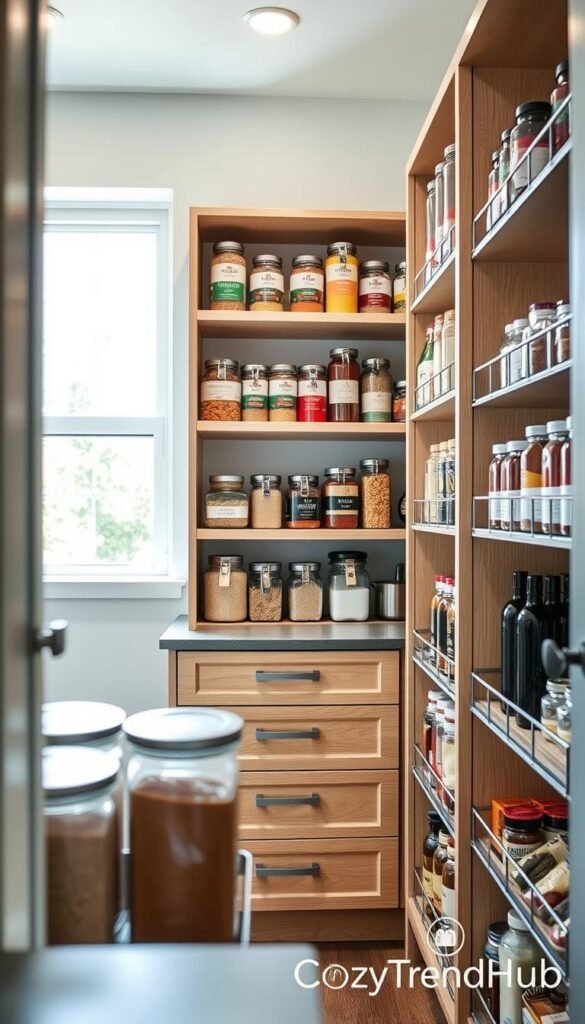
Stackable Airtight Containers That Save Space and Cut Clutter
Replacing bulky packaging with stackable canisters makes inventory and restocking quick and reliable.
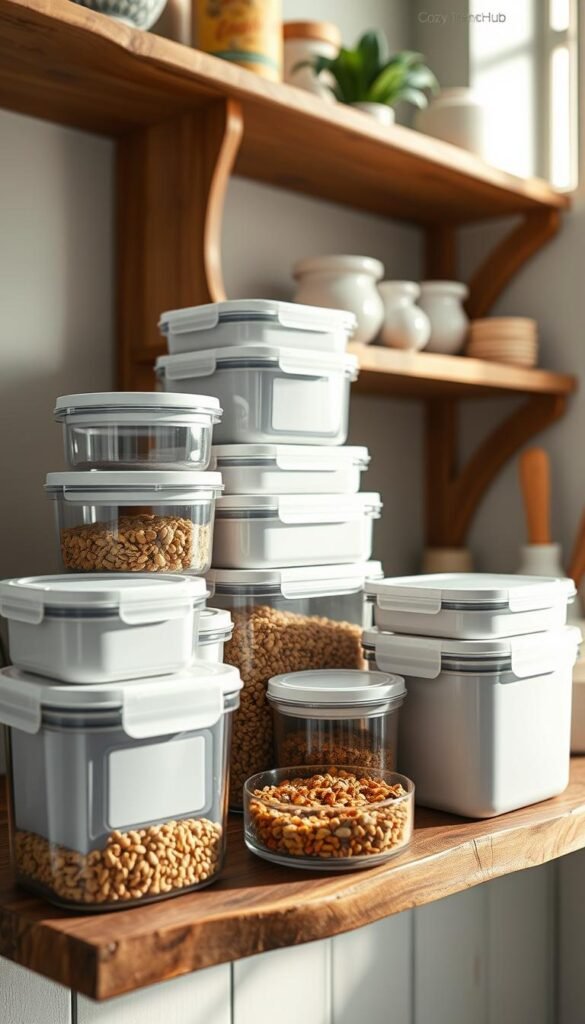
Who should buy these canisters
Households with torn boxes, half-used bags, or messy shelves benefit most. Uniform shapes stack cleanly and reduce wasted air. Clear sides let someone see levels at a glance so food stays visible and restocking is easier.
What to look for
- Flat lids for stable stacking.
- Seal quality: silicone gaskets and locking clips.
- Shape: square or rectangular packs tighter than round.
- Label panels or writable lids for dates.
- Wide openings for easy scooping.
Material note and pros/cons
Glass jars resist odors and look tidy, while plastic storage containers are lighter for high shelves.
„Airtight containers keep items fresher longer and maximize stackable space.“ — BHG
| Feature | Why it matters | Quick tip |
|---|---|---|
| Flat lid | Stable stacks | Measure shelf height before buying |
| Seal quality | Freshness and pest protection | Test the gasket before full use |
| Material | Weight vs. odor resistance | Choose glass for dry goods; plastic for top shelves |
Decanting shortlist: pasta, rice, cereal, lentils, flour, sugar, and baking staples. Keep original cooking instructions separately when needed.
Clear Bins and Baskets for Category-Based Pantry Organization
A category-based system makes scanning shelves and grabbing snacks much faster. Grouping related items keeps one messy shelf from spreading chaos across the cabinet.
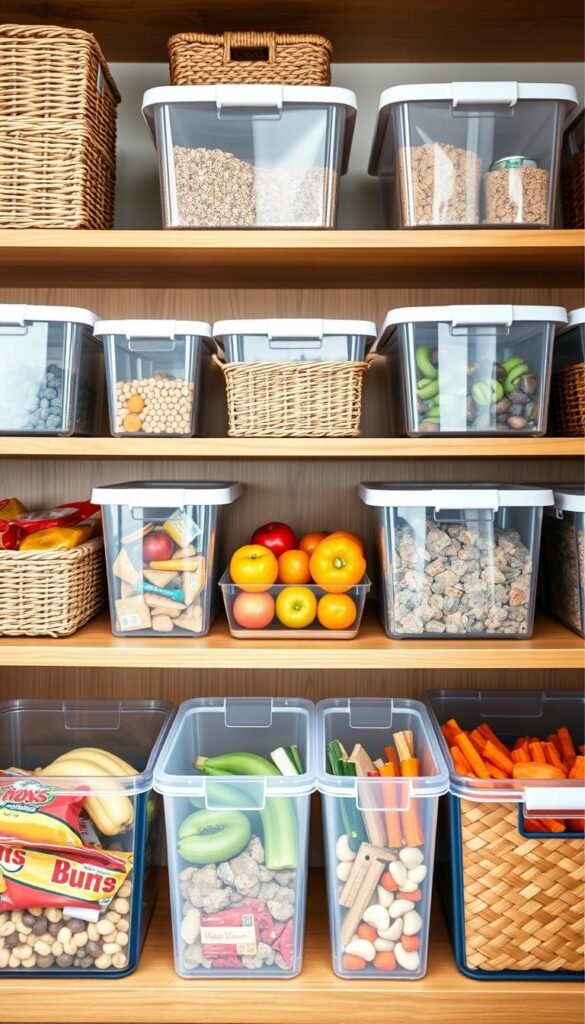
Coordinating bins for grab-and-go items
Who benefits: families, shared kitchens, and renters who need quick access.
Use labeled bins to hold snacks, single-serve drinks, and breakfast packs. Clear bins let users see levels at a glance and speed restocking.
Woven baskets versus clear bins
Woven baskets hide visual clutter on open shelves and make a shelf look tidy. They work well for canned goods sorted by category or as catchalls.
Clear bins excel when visibility matters. They prevent expired items by making inventory checks instant.
Sizing pitfalls and practical pros and cons
- Watch depth: too-deep bins recreate the “lost in back” issue.
- Width matters: oversized bins leave dead gaps; pick consistent widths.
- Handles: allow carry-to-counter use but add clearance needs.
„Coordinating containers turn messy shelves into zones that are easier to maintain.“ — BHG
| Option | Strength | When to choose | Dimension tip |
|---|---|---|---|
| Clear bins | Fast inventory checks; visible levels | Snack bins, grab-and-go items | Pick height to leave 1″ clearance above lids |
| Woven baskets | Reduces visual clutter; decorative | Canned goods, catchalls | Avoid >12″ depth to keep items reachable |
| Hybrid (clear front) | Look of woven, visibility of plastic | When style and function both matter | Measure shelf width to prevent dead gaps |
Quick takeaway: bins and baskets are the simplest system upgrade. They support category-based organization, are fully transferable, and suit renters who want an instant improvement without drilling.
Pull-Out Drawers and Slide-Out Shelving for Deep Cabinets
Pull-out drawers turn deep dark cabinets into instantly usable shelves. They solve the common problem of items disappearing at the back of a shelf.
Who needs them: homes with deep base cabinets where canned goods, jars, and boxed pantry staples stack in layers. Slide-out units keep these items visible and reachable without unloading the front row.
Why reach matters
Full access reduces waste: when the back is reachable, duplicates and expired goods get used before they spoil. Slide-out drawers make inventory checks fast and simple.
Buying checklist
- Weight rating: pick hardware that handles heavy cans.
- Full-extension slides: ensure the drawer pulls completely out to reach the back.
- Mount type: side-mount vs. bottom-mount affects clearance and strength.
- Retrofit-friendly options: removable or limited-drill kits for renters.
Installation and tradeoffs
DIY installs work for light to moderate loads. For heavy canned goods or tricky face frames, hiring a pro is worth the cost.
„Slide-out pantry drawers keep staples accessible and neatly hidden behind cabinet doors.“ — BHG
| Feature | Why it matters | When to choose | Quick tip |
|---|---|---|---|
| Weight rating | Supports heavy goods and stacked cans | Deep base cabinets with lots of cans | Pick at least 100–150 lb rating for canned loads |
| Full-extension slides | Reach entire shelf back | When back visibility is the main issue | Measure depth to confirm full pull-out |
| Mount style | Affects clearance and door fit | Face-frame vs. frameless cabinets | Check hinge interference before ordering |
| Retrofit kits | Renter-friendly and removable | When drilling is restricted | Choose kit with clear install guide |
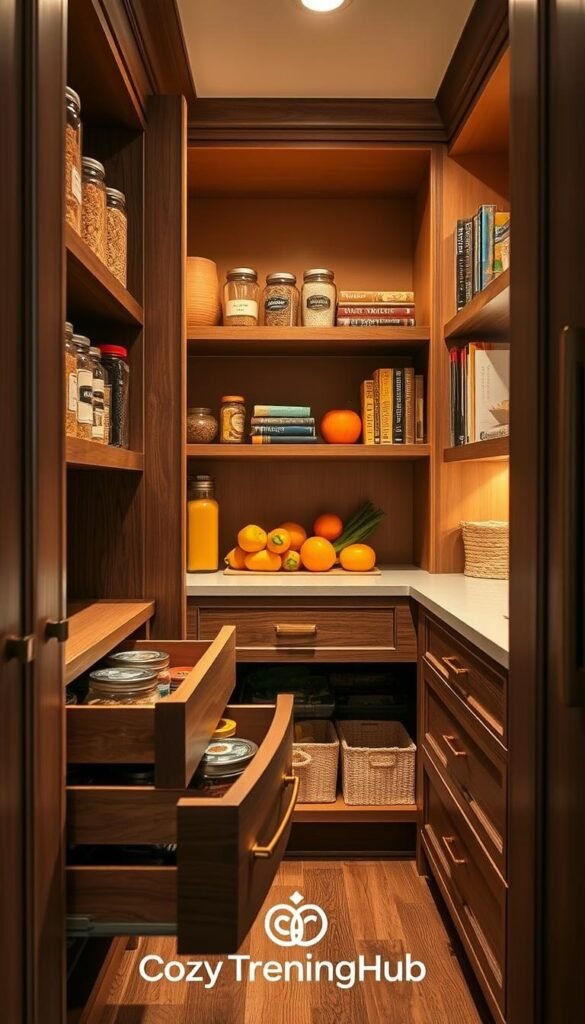
Narrow Shelves and Shelf Risers to Keep Everything Visible
Shallow shelving forces a clear view of every item, so duplicates and forgotten jars become rare.
When shallow options beat deep runs in tiny kitchens
Visibility matters more than raw capacity in compact layouts. Shallow shelves keep the front row within sight and reach. That cuts wasted purchases and expired food.
Use tiered risers to double usable height when a shelf is fixed
Tiered risers make each shelf work harder by adding a second level without tools. This recovers vertical space an inch at a time and fits into renter rules.
- Pick stable, wipeable materials like metal or hard plastic.
- Confirm riser height so tall cans and jars fit under the next shelf.
- Measure shelf depth to avoid overhangs that block access.
Who benefits and practical placement tips
Renters, quick-cooking households, and anyone with many spices and small jars gain the most. Keep daily spices at eye level. Group cans by type on risers and avoid cramming items into a tight corner where hands can’t reach.
| Option | Strength | When to choose |
|---|---|---|
| Narrow shelf units | Better sightlines; fewer lost items | When depth causes hidden goods |
| Tiered risers | Doubles usable vertical space; tool-free | Fixed shelf heights or renter situations |
| Raised platforms | Quick access for jars and small cans | When you need shallow, grab-and-go zones |
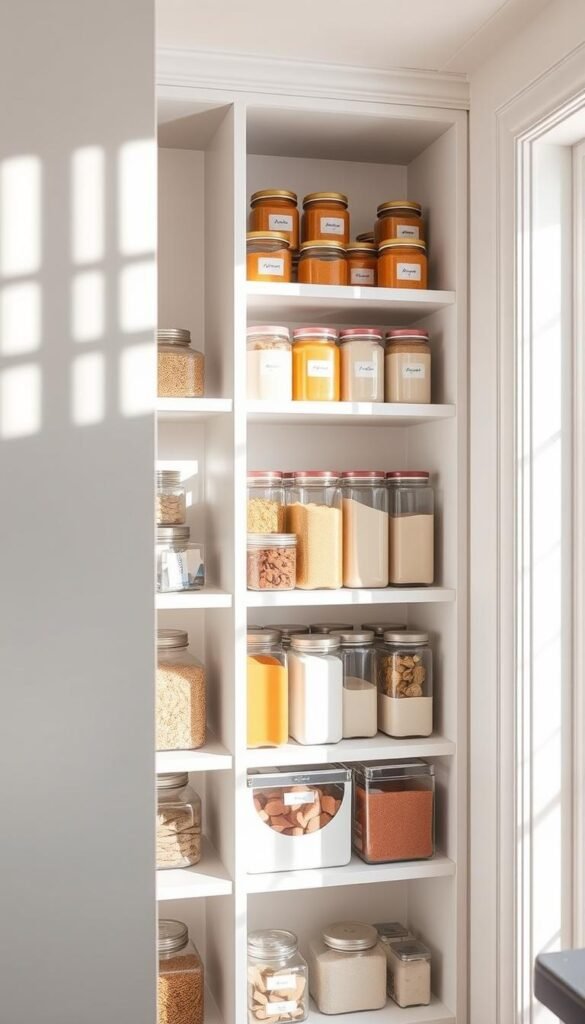
Door and Cabinet-Door Storage That Works for Renters
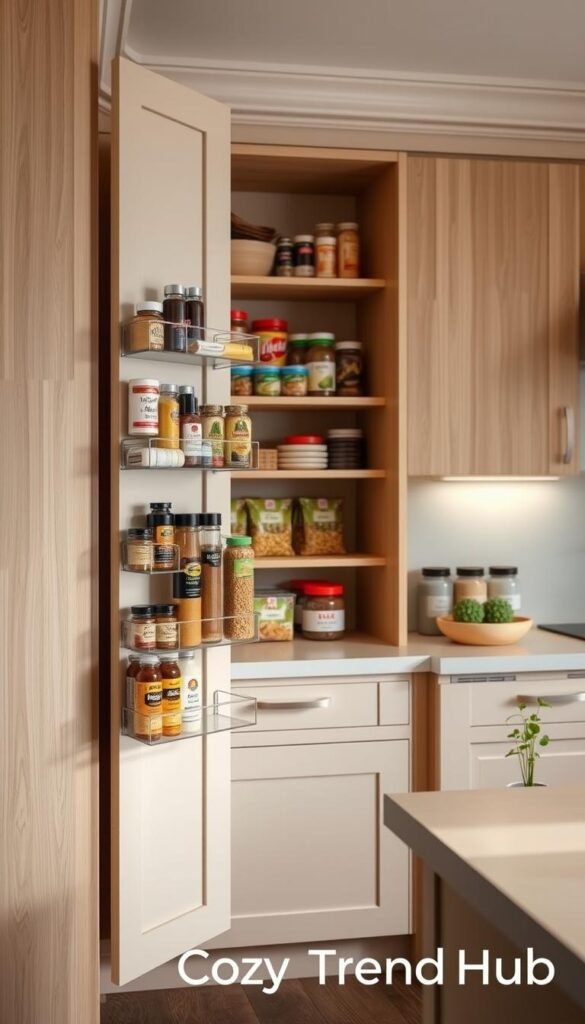
Inside-door racks turn unused door faces into quick-access zones without drilling. This approach adds capacity while keeping shelves free and is ideal when lease rules limit permanent changes.
Shallow shelves with dowel rods hold spice packets, small bottles, and narrow jars upright. Dowel rods stop tip-overs and keep contents visible when the door opens.
What to keep on doors
Light, non-breakable items work best: extra paper towels, trash bags, wraps, and sealed pantry items you grab often. These choices cut strain on hinges and lower the risk of items falling.
Common pitfall and buying guidance
Overloading causes the usual failures: the door won’t close, racks hit shelves, or hardware loosens. Measure door-to-shelf clearance before buying and limit rack depth so the door closes cleanly.
- Mounting: choose adhesive or screw types based on lease rules.
- Materials: rust-resistant metal or coated wire lasts in humid spots.
- Removability: pick systems that peel cleanly or use screw anchors that can be filled later.
„Turn cabinet doors into extra storage with shallow shelves if there’s clearance.“ — BHG
| Feature | Why it matters | Typical value | Quick tip |
|---|---|---|---|
| Rack depth | Prevents snagging and ensures closure | 2–3″ for spices; 4″ max for towels/wraps | Measure inside-door clearance before buying |
| Mount type | Lease-safe vs. permanent | Adhesive or tension + screw options | Choose adhesive for no-drill installs |
| Weight limit | Protects hinges and prolongs life | Keep under 15–20 lb per door | Use doors for lightweight items only |
| Material | Durability in humid kitchens | Coated steel or plastic | Avoid heavy glass on doors |
Lazy Susans and Turntables for Condiments, Oils, and Fridge Overflow
A rotating tray turns cramped corners into instantly reachable zones. Use a turntable on a corner shelf, inside a deep cabinet, or in the back of the fridge to keep oils, sauces, and small bottles visible.
Who should buy one: households that cook often and juggle many condiments. A turntable speeds grab-and-put-back routines and cuts down on rummaging.
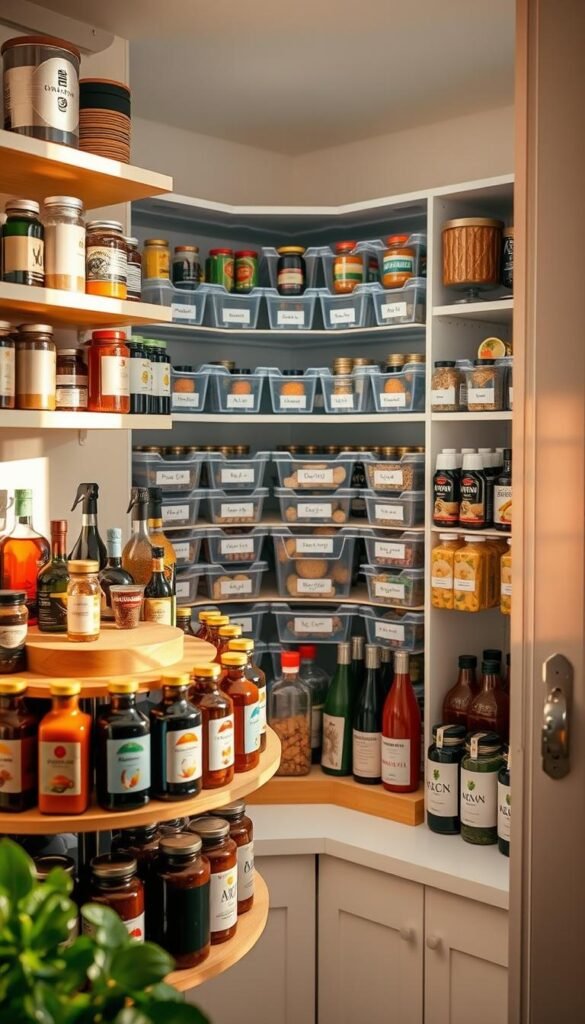
Measure and choose
- Measure usable shelf width and depth, then subtract lips or rails.
- Pick a diameter that rotates freely without scraping walls.
- On narrow shelves, choose a smaller tray or semi-circular design to avoid wasted space.
Pros and cons
Pros: instant access, better visibility, fewer expired items. A turntable reduces time spent hunting for food in deep cabinet corners or the fridge.
Cons: round trays can waste linear shelf area on narrow runs. If the diameter is wrong, the tray may hit walls or leave dead gaps.
„A turntable maximizes shelf use and reduces rummaging by rotating items into reach.“ — BHG
Quick note: choose a durable, non-slip turntable and size it to the shelf. Minimalists who favor straight lines may prefer narrow bins instead.
Adjustable Track Systems for Closet Pantries and Blank Walls
Adjustable track shelving turns a cramped closet or bare wall into a system that can change as needs evolve. It works well in a closet or along an empty wall where fixed shelving would quickly feel dated.
Why choose a track system
Flexibility: tracks let homeowners move shelves and drawers to fit tall cereal boxes, jars, or bulk packs without wasted vertical space. This keeps layouts useful as shopping habits change.
Which modules to prioritize
- Start with open shelving for general flexibility and quick access.
- Add pull-out drawers in deep sections to reach the back easily.
- Use a turntable on a lower shelf for condiments and small bottles.
DIY vs. professional install
DIY works for confident homeowners who use proper anchors and level lines. Renters should get landlord approval or choose freestanding alternatives to avoid lease issues.
| Consideration | Why it matters | Quick tip |
|---|---|---|
| Material strength | Supports heavy loads | Look for steel tracks and high load ratings |
| Shelf depth options | Prevents wasted back space | Match depth to item types (shallow for jars) |
| Adjustability increments | Controls how fine-tuned the layout can be | Choose 1″–2″ increments for tight fits |
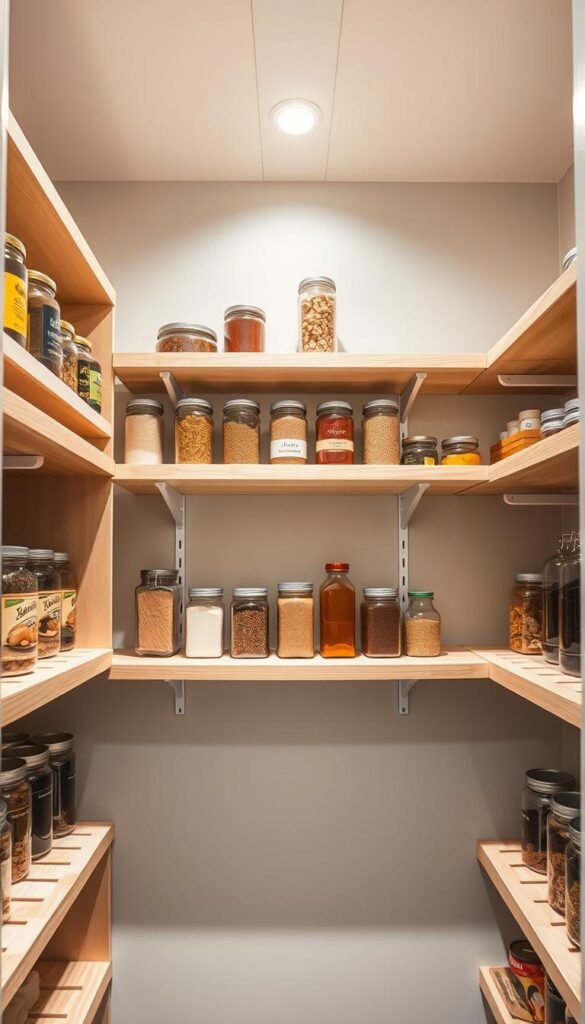
„Track systems adapt over time and accept drawers, risers, and turntables to support pantry organization.“ — BHG
Maintenance tip: keep categories consistent and use clear bins and labels so the added capacity does not turn into clutter.
Stand-Alone Pantry Cabinets and Repurposed Furniture for No-Pantry Homes
Repurposed furniture gives a moveable pantry alternative that suits renters and short-term homeowners.
Why choose a stand-alone cabinet: it adds real capacity without drilling or permanent changes. A closed-door unit keeps visual clutter out of sight and travels from one unit to the next.
Shopping checklist
- Footprint: confirm width and depth to fit the floor nook and allow door swing.
- Adjustable shelves: look for shelf holes or removable shelves for tall cereal boxes and tall jars.
- Anchoring: verify that it can be anchored to prevent tipping, especially in homes with children.
- Material and finish: pick a durable surface that wipes clean easily.
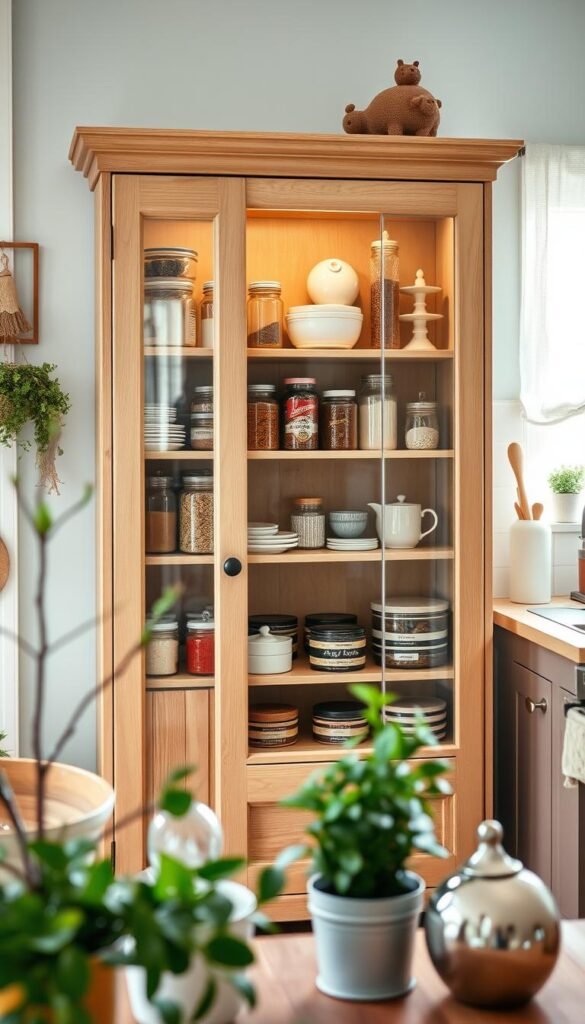
Glass-front vs. solid doors
Glass doors speed inventory checks and reduce duplicate buys because contents are visible. They demand tidy shelves and cohesive containers to avoid a cluttered look.
Solid doors hide mess and make a space feel calmer. They can increase forgotten items unless bins and labels are used inside.
How to organize inside
Set category zones: breakfast, baking, snacks, and backstock. Keep daily items at mid-level and lesser-used goods higher or lower.
Use clear bins to corral small packets and make rotation simple. Label bin fronts and place older items to the front when restocking.
„A stand-alone cabinet serves as a hidden pantry that moves with you while adding defined zones and calm to a busy kitchen.“
| Feature | Why it matters | Quick tip |
|---|---|---|
| Footprint | Ensures fit and door clearance | Measure floor and door swing before buying |
| Shelf adjustability | Accommodates varied item heights | Choose 1″–2″ shelf increments where possible |
| Door style (glass/solid) | Visibility vs. concealment | Glass for inventory control; solid to hide clutter |
| Internal bins | Prevents pile-up and simplifies resets | Use 2–3 labeled bins by category |
Pros: quick capacity upgrade, renter-friendly, movable. Cons: needs floor space and careful measurement for door clearance.
Keep a small backstock zone and rotate older items forward each week. This simple routine prevents the cabinet from becoming overflow chaos and keeps the home orderly.
Vertical Storage Upgrades: Floor-to-Ceiling Shelves, L-Shaped Corners, and Ladders
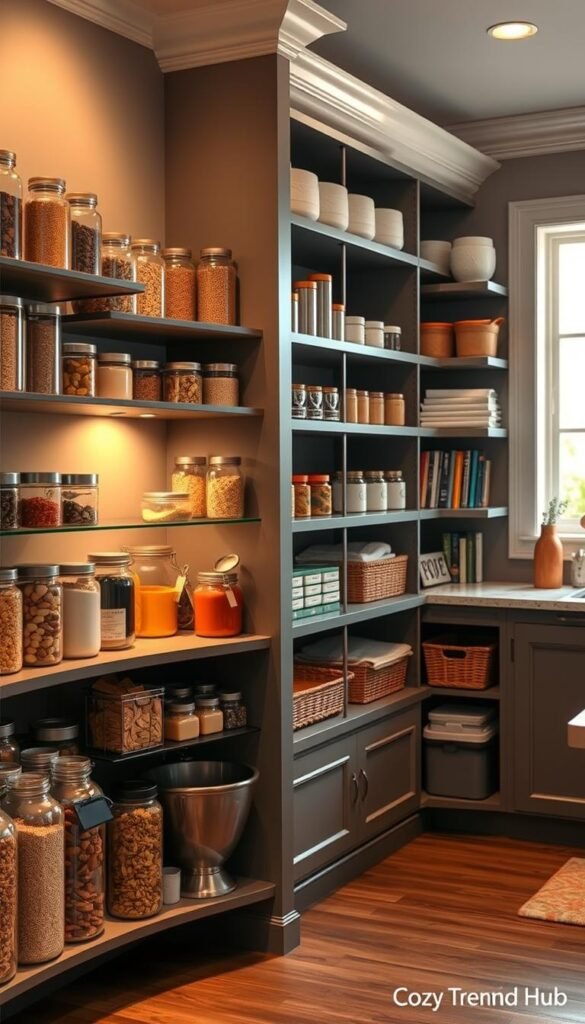
When floor area is maxed out, look up: vertical upgrades reclaim otherwise wasted height. These changes work best when the room has limited floor footprint but unused wall height, such as a narrow closet or a blank kitchen wall.
Floor-to-ceiling shelving uses every inch of vertical space. Put light or seasonal items on the top shelves and daily goods within easy reach. This keeps the top shelves useful without making daily routines harder.
L-shaped and corner shelving solve dead-zone problems. A corner layout wraps usable shelf area into a continuous run so jars and boxes don’t hide in the corner. These layouts mix open shelving and closed bins to balance display and concealment.
Access matters. A foldable step stool is enough for occasional reach. A rolling or library ladder pays off when upper shelves are used weekly and ceilings are tall. Choose stable hardware and plan a dedicated spot to store the stool so it doesn’t block traffic.
- Who benefits: households out of floor room but with tall walls.
- Seasonal tip: store holiday or bulk items up high and rotate them down as needed.
- Safety: keep heavy items on lower shelves and confirm ladder or stool load ratings.
- Small-room note: use narrower shelf depths up high to preserve walking clearance while still gaining capacity by the inch.
| Upgrade | Best use | Quick consideration |
|---|---|---|
| Floor-to-ceiling shelving | Maximize vertical space | Top shelves for light/seasonal items |
| L-shaped / corner shelving | Recover dead corner area | Blend bins and open shelves for visibility |
| Step stool vs. rolling ladder | Access decision | Stool for rare use; ladder if weekly access |
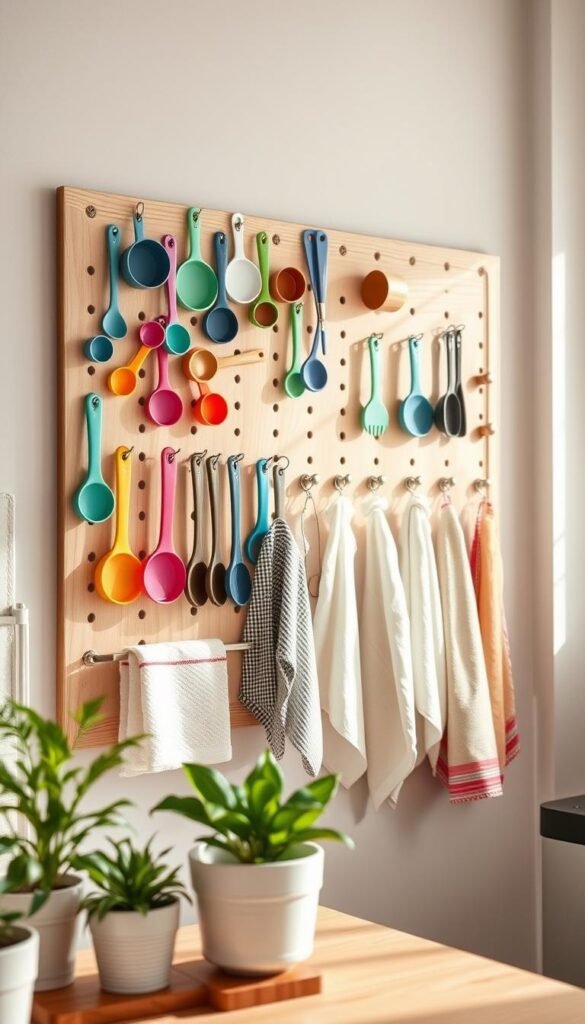
Wall-Mounted Options: Pegboard and Peg Rails for Tools and Towels
Mounting a pegboard or rail converts a blank wall into a working zone that keeps counters clear.
Who benefits: This is ideal in tight kitchens and homes where shelves are overflowing. Households that cook daily or use heavy utensils gain the most.
What to hang: Aprons, cutting boards, towels, and frequently used tools free shelf space and speed prep.
Buying considerations: confirm wall type (drywall, plaster, tile) and pick anchors rated for the load. Check hook compatibility so accessories fit the board or rail.
- Use toggle or sleeve anchors on hollow walls; masonry anchors on tile or brick.
- Match hooks to thickness and peg spacing to prevent slipping.
- Keep heavier pans on studs or use reinforced rails.
| Feature | Why it matters | Quick tip |
|---|---|---|
| Wall type | Affects anchors and safety | Locate studs when possible |
| Load limit | Prevents failure | Keep heavy items on studs or use multiple anchors |
| Removability | Lease-friendly installs | Choose peel-off adhesive rails or rail-mounts with minimal holes |
Organization approach: Group tools by task (prep, baking, cleanup) and hang towels near sinks. This reduces friction and keeps the system useful rather than cluttered.
Pros and cons: Frees shelves and improves access but needs dedicated wall space and careful mounting to avoid damage.
Lighting and Visibility Upgrades for Dark, Cramped Pantries
A few well-placed lights make a large difference in how quickly someone finds items and avoids duplicate buys. Better light reduces wasted groceries and speeds daily routines without heavy work.
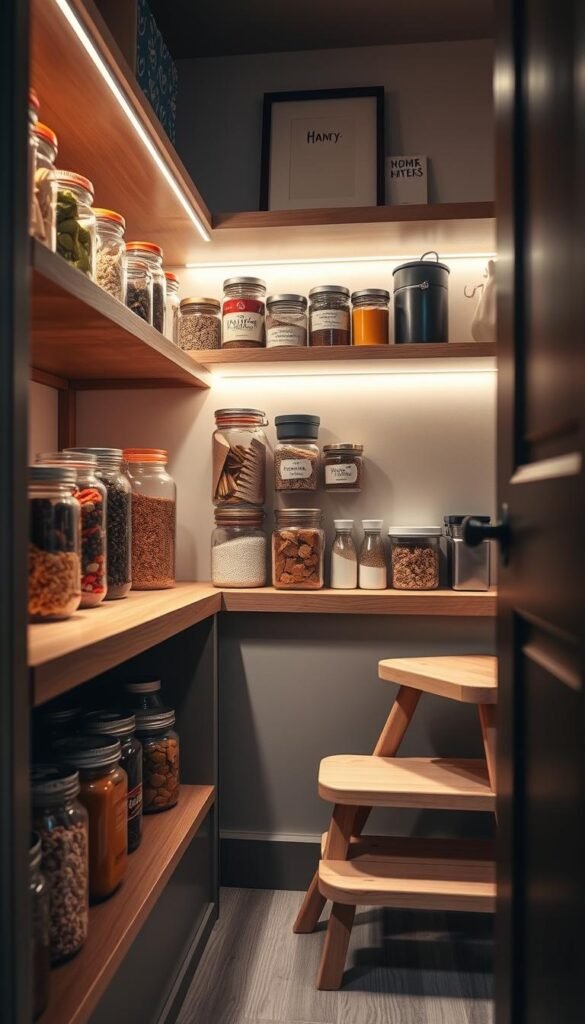
Motion-sensor and under-cabinet lighting to actually find things
Motion-sensor rechargeable LEDs suit renters. They need no wiring and can attach with strong adhesive or magnetic mounts. They turn on automatically when someone opens the door or steps in.
Under-shelf light strips work well when targeted illumination is needed on specific shelves. Hardwired LED fixtures are best during a renovation when permanent wiring is acceptable.
Where to place lights to cut shadows
Mount strips toward the front underside of each shelf so beams hit label faces and the back of cabinets. This placement reduces deep shadows and makes the whole row readable.
Add a second light on the side for tall closets so the top and side rows get light. A forward-top angle helps full-extension drawers show back contents when pulled out.
| Type | Renters? | Brightness / Use | Key considerations |
|---|---|---|---|
| Motion-sensor rechargeable | Yes | Good for quick access; conserves power | Check battery life, recharge method, sensor range |
| Under-shelf light strip | Mostly yes (adhesive) | Targeted shelf illumination; low profile | Adhesive strength, brightness levels, cable routing |
| Hardwired LED | No (homeowners) | Bright, permanent whole-closet lighting | Professional install, switch placement, dimmer options |
Practical checks: confirm adhesive holds on your shelf finish, test sensor triggers in tight aisles, and choose a brightness that reads labels without glare. These choices keep daily access smooth and cut duplicate buys by keeping items visible.
„Task lighting is a high-ROI upgrade because it reduces duplicate purchases and makes meal prep faster.“
Maintenance: wipe fixtures occasionally; a bit of dust or flour can dim LEDs over time. Replace or recharge modules on a predictable schedule to keep shelves and drawers easy to scan.
Seasonal and Bulk-Buy Strategies Without Taking Over Your Kitchen
Treat bulk runs as „active inventory“ with clear zones that keep the kitchen usable. That makes it simple to separate everyday items from overflow.
Overflow in a temperate closet, mudroom, or hallway
Choose a dry, temperate space such as a closet, mudroom, or hall nook. Label bins and set a one-shelf cap so overflow does not creep into living areas.
Upper cabinets and a safe step-stool plan
Use upper cabinets for seasonal items and backstock. Keep a sturdy step stool in one spot and store lighter goods up high to avoid accidents.
Optional: freezer drawer or secondary cold plan
A freezer drawer suits large families and meal preppers who face fridge limits. Consider power use and footprint before adding one.
- Date bulk purchases and keep a short restock list.
- Rotate older items forward when restocking.
- Avoid buying extra containers that encourage overbuying.
„Designate one backstock zone and treat it as the overflow command center.“
Conclusion
Wrap up with a simple rule: fix what causes the most daily trouble, then add longer-term upgrades that match the layout.
Start by clearing shelves, checking dates, and putting frequently used items within easy reach. Store heavy goods low and seasonal items high to keep routines safe and efficient.
Measure, pick the right category—containers, bins, risers, pull-outs, door racks, or a track system—and set clear zones by use. One small change, like a labeled clear bin or stackable canister, often removes the biggest daily friction.
Key buys to check: dimensions, clearance, weight rating, install type, renter-friendly features, and how easy it is to reset weekly.
Use the comparison tables and product blocks above to match an idea to your layout. A steady reset routine—rotate older items forward and keep one backstock zone—keeps the system working long term.

3 Comments