
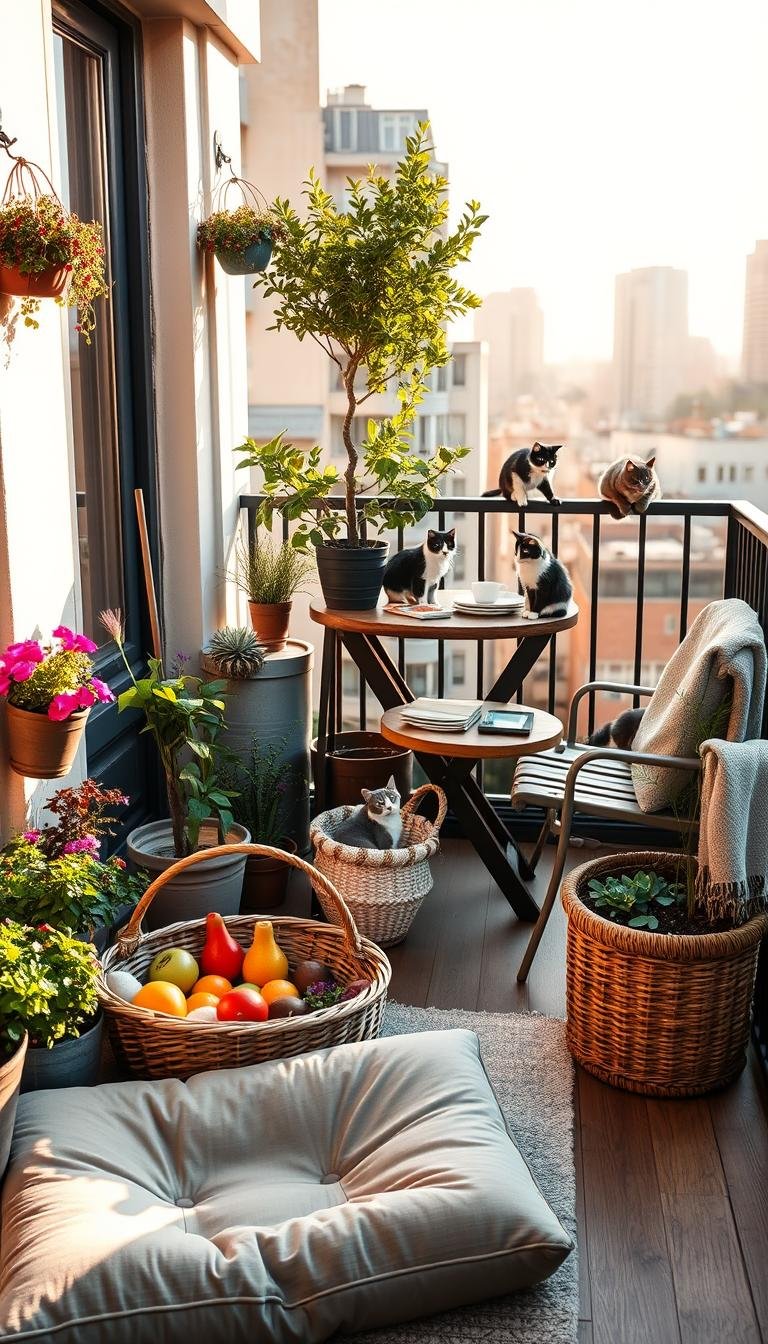
Problem: Many balconies look inviting but are not safe for cats or small dogs. Gaps in rails, hot surfaces, and slick flooring create real risks. Responsible owners must avoid leaving a dog unattended on a balcony and plan with safety first.
Solution approach: This guide is written for renters, small-space residents, and seasonal users who want a safe, usable outdoor space. It starts with safety barriers, then covers surfaces, shade, water, plants, enrichment, furniture, and lighting that fit small spaces.
The article sets buyer intent expectations. Each category will note “best for” use cases (renters vs. owners, cats vs. dogs, hot climates vs. mild seasons). Readers will get practical pros, cons, and what to measure first before buying.
Preview: Expect product blocks on cat-proof systems, clear rail guards, artificial grass, cooling mats, foldable pools, and odor-control pads. The goal is protection plus a clean, attractive outdoor area that works with your home and daily routines.
Key Takeaways
- Safety comes before style; supervision is still required for many pets.
- Start with rail guards or barriers, then choose easy-clean surfaces.
- Compare items by climate, pet type, and renter-friendly features.
- Look for multiuse products that save space and add comfort.
- Measure rail gaps, floor heat, and access points before purchase.
- For seasonal refresh tips, see a related guide on balcony summer styling.
Pet-friendly balcony decor starts with safety, not style
Start with containment and surface protection. Measure rail gaps and note climbable furniture before buying anything. Accidents often happen when cats chase a bird or squeeze through a gap.
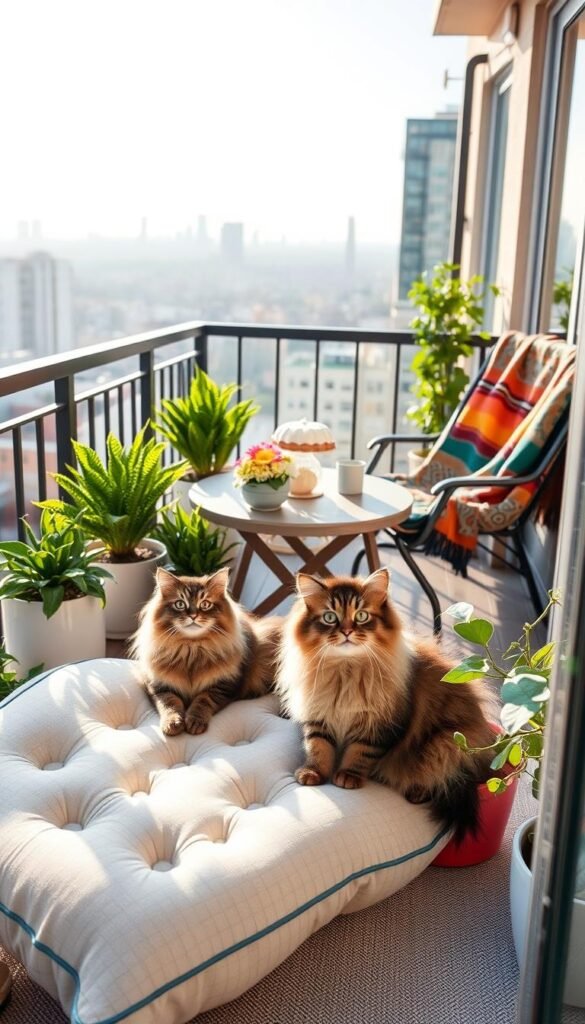
Common hazards in tight outdoor spaces
- Wide rail gaps and low ledges that allow falls.
- Climbable chairs that create an escape ladder.
- Hot decking in direct sun that burns paws.
- Tripping risks from bowls, toys, and loose rugs.
Renter-friendly checklist
Confirm whether drilling is allowed. Ask which removable fasteners meet lease or HOA rules. Check visible-barrier limits before purchase.
When supervision is the right choice
If a cat or dog is a determined climber and the space can’t be fully secured, supervised visits are safest. Prioritize spending on railing containment before cosmetic upgrades.
| Risk | Quick fix | Renter impact |
|---|---|---|
| Wide gaps | Clear rail guard or mesh | Use removable ties or clamps |
| Climbable furniture | Reposition or anchor pieces | No drilling needed for some anchors |
| Hot surfaces | Cooling mats and shaded spots | Temporary shade solves heat |
These steps protect animals and limit wildlife disturbance. For seasonal styling tips, see a helpful summer styling mix at summer styling mix.
Balcony railing safety solutions for cats and small dogs
Rail gaps are the top escape hazard for cats and small dogs on high floors. Addressing that risk first makes the rest of a project practical and repeatable.
Oscillot® cat-proof fence system for high-rise peace of mind
The Oscillot® uses spinning paddles that stop a climbing cat without blocking the view. Kits come in lengths like 20-foot and 40-foot to match typical rail runs.
Who it’s for: households with active cats that need a purpose-built containment solution.
- Pros: weather-ready, durable, preserves the view, backed by a 60-day return and Nature Canada endorsement.
- Cons: higher cost; check if brackets require drilling.
- Renter impact: measure total edge length and confirm hardware rules with a landlord before install.
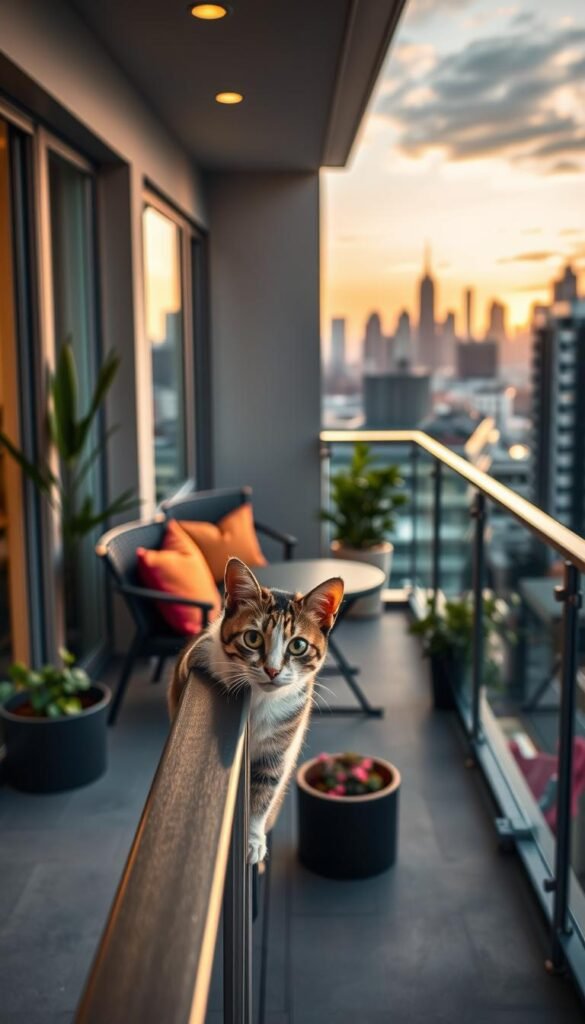
DIY clear acrylic rail guards with cable ties for small gaps
Clear panels (about 12″×10″) are a low-cost alternative to close gaps. Drill tie holes, use white nylon cable ties, and overlap panels so a small pet cannot push through.
- Who it’s for: people on tighter budgets and renters who need removable options for a small space cat or small dog.
- Pros: preserves the view, inexpensive, simple tools required.
- Cons: needs periodic tightening and weather-resistant materials to avoid yellowing.
| Solution | Best for | Install impact |
|---|---|---|
| Oscillot® | Active cats, high-rise owners | May require brackets; check landlord approval |
| Clear acrylic panels | Small dogs, narrow gaps, renters | Removable ties; low-impact, DIY |
Buying considerations: measure rail spacing and height, choose UV-stable materials, and avoid anchors that create new climbing steps. Prioritize options that truly keep cat risks low so the balcony stays safe and usable.
Pet-friendly flooring ideas that handle mess, heat, and zoomies
Hot, slick, and messy floors turn short outdoor visits into a cleanup chore. In small outdoor spaces, a practical surface protects paws, reduces slip risks, and makes fresh air time easier to supervise.
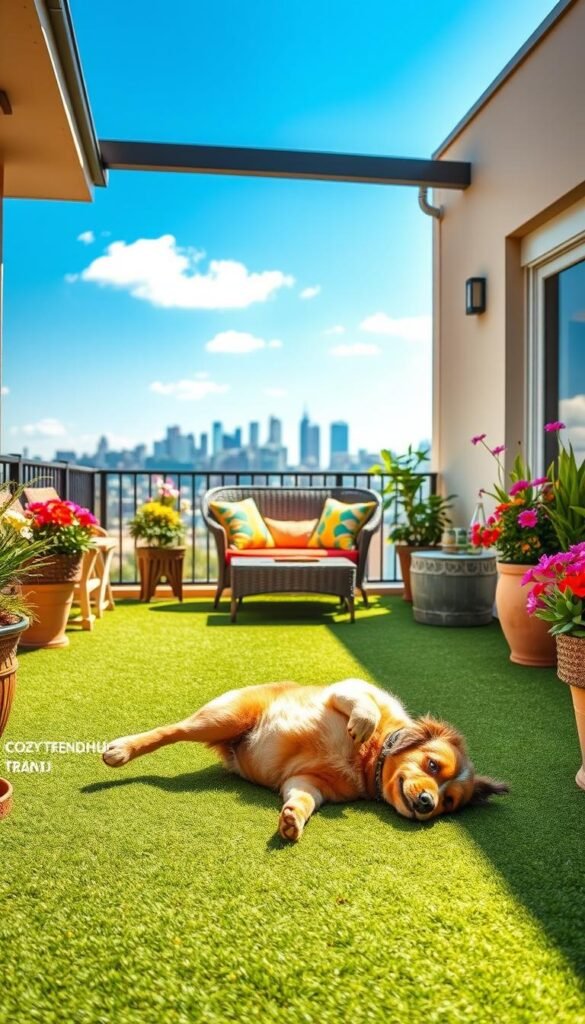
Pet-friendly artificial grass for easy clean-up
Artificial grass suits renters who need a low-impact, roll-up solution. Weather-resistant turf hoses clean and creates a defined place for pets without permanent installs.
Buyer tips: choose turf with a drainage backing, mid-height pile for comfort, and UV-stable fibers that resist matting and debris on windy terraces.
Non-slip mats and quick-dry surfaces
Outdoor mats protect the balcony floor and cut slips during zoomies. Look for rubber-backed, quick-dry materials that resist odors and shed hair easily.
- Materials to prefer: closed-cell foam, micro-perforated rubber, and synthetic jute blends.
- Practical note: pick mats that roll up for seasonal storage to avoid trapped moisture.
Potty options for apartments: natural grass wee pads
Hydroponic grass wee pads absorb urine and cut smell better than plain trays. They are a sensible way for dogs that need frequent breaks in high-rises.
| Option | Best use | Buyer concern |
|---|---|---|
| Artificial grass | Renters, easy cleaning | Drainage, UV stability |
| Non-slip mats | Short visits, anti-slip | Drying speed, odor resistance |
| Natural grass wee pads | Frequent potty breaks | Replacement cycles, odor control |
Final cautions: avoid trapping moisture against the floor, confirm building drainage rules, and choose items that store easily. The right surface keeps outdoor time safe, tidy, and usable through heat and rain.
For seasonal styling ideas that complement flooring choices, see a helpful summer styling mix.
Shade and cooling decor that makes balconies usable in summer
Direct sun can turn a small outdoor space into a heat trap. Heat shortens supervised visits and makes animals avoid the area. Simple shade and cooling choices extend usable hours and improve the outdoor experience.
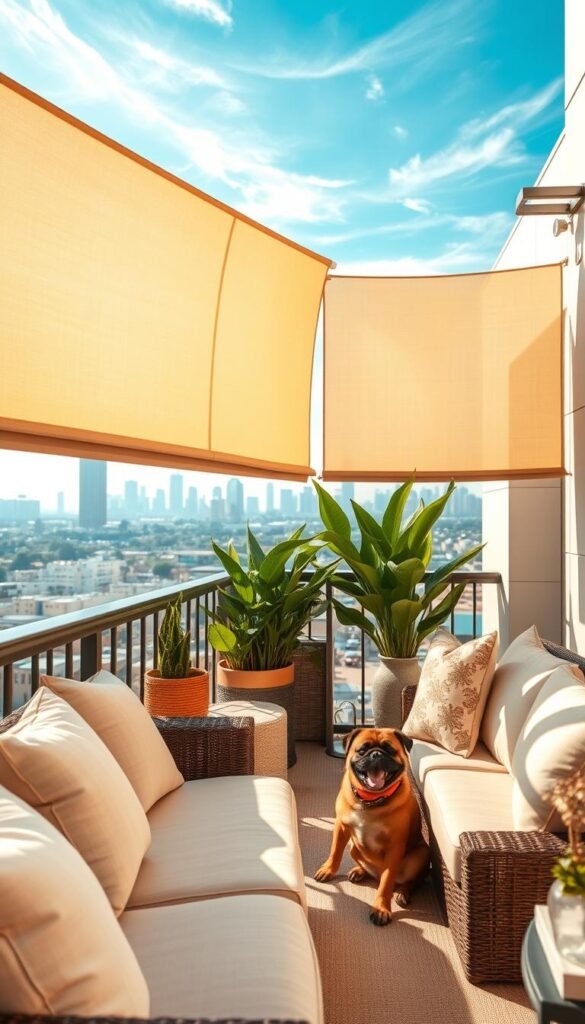
Cooling mats for hot days
Cooling mats are compact and ideal for sun-exposed spots. Many pads can be frozen overnight or chilled in the fridge and rotated for hours of relief.
Who it’s for: sun-heavy climates and short-stay breaks.
Pros: portable, low-profile. Cons: need prep and rotation.
Bamboo screens and privacy panels
Bamboo screens and removable panels add shade without drilling. They cut glare and create a more private, cooler nook while remaining renter-friendly.
Placement tip: secure ties to railings and add weights at the base for wind stability.
Mini shelter nooks and tents
Small tents or DIY shelters give a shaded hideaway that feels safe. Choose breathable fabrics and place the shelter away from rail edges to avoid climb risks.
Pros: cozy, design-forward. Cons: takes up floor space and needs stable anchoring.
| Solution | Best use case | Renter impact | Placement tip |
|---|---|---|---|
| Cooling mat | Sun-exposed, quick relief | Zero-install, portable | On shaded rug or mat; rotate cold pads |
| Bamboo screens | Privacy + shade | Removable ties, no drilling | Fasten to rails; weigh bottom edges |
| Mini tent | Cool hideaway for naps | No permanent changes; needs storage | Set back from railings; allow airflow |
Choose items that match wind stability, fabric breathability, and the available floor space. For a budget-focused summer refresh that pairs well with these shade fixes, see a short patio budget guide.
Water stations and splash zones without cluttering your outdoor space
A small water station can solve thirst without turning a tiny outdoor space into a tripping course.
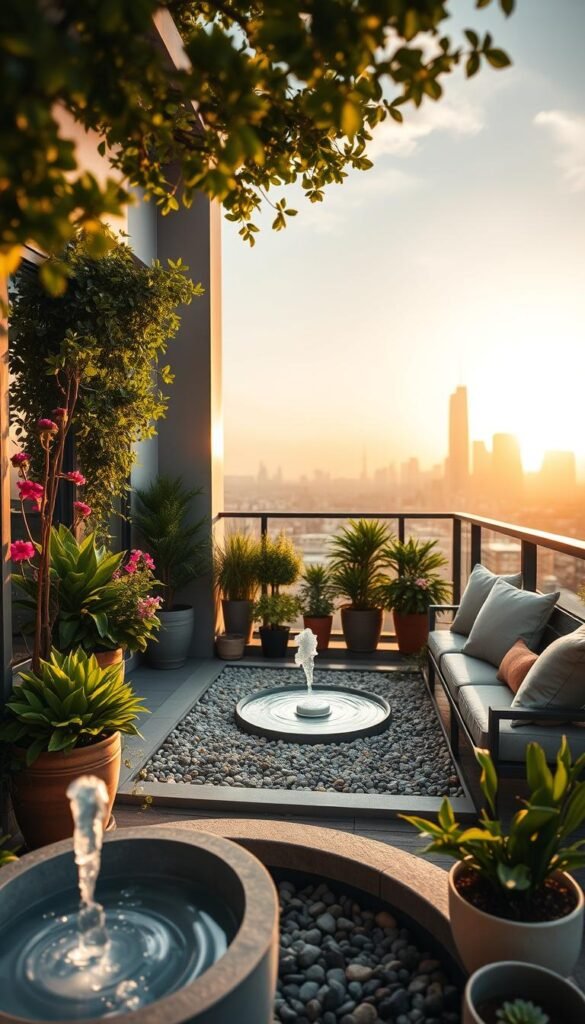
Disguised, tip-resistant bowls in planters
Why it works: A removable drinking bowl hidden inside a planter looks tidy and resists knocks. Use a true drinkable insert so animals get clean water and the outer pot hides spills.
Buying notes: pick a low planter that holds a separate bowl, avoid tall urns, and place the unit near a corner to cut trip risk.
Portable foldable pools for quick summer play
Foldable pools fill fast, drain easily, and fold flat for storage. They add splash without permanent fixtures, which is ideal for renters and short visits.
Cleaning, placement, and safety tips
- Keep splash zones away from doors and traffic paths.
- Use a non-slip mat under water stations to reduce slips.
- Refresh and clean water often to prevent algae and mosquitoes.
| Solution | Who it’s for | Key safety tip |
|---|---|---|
| Planter bowl | Small spaces, renters | Corner placement, removable insert |
| Foldable pool | Summer enrichment | Drain after use, store flat |
| Non-slip mat | All areas | Prevents slips, easy dry |
Bottom line: choose the solution that keeps water accessible without creating clutter or hazards, so outdoor time stays safe and usable.
Pet-safe plants and planters that look great and won’t risk toxicity
Choosing green additions for a small outdoor space requires safety checks as much as style.
Problem: many popular plants are toxic to animals, so pretty greenery can become a hidden health risk.
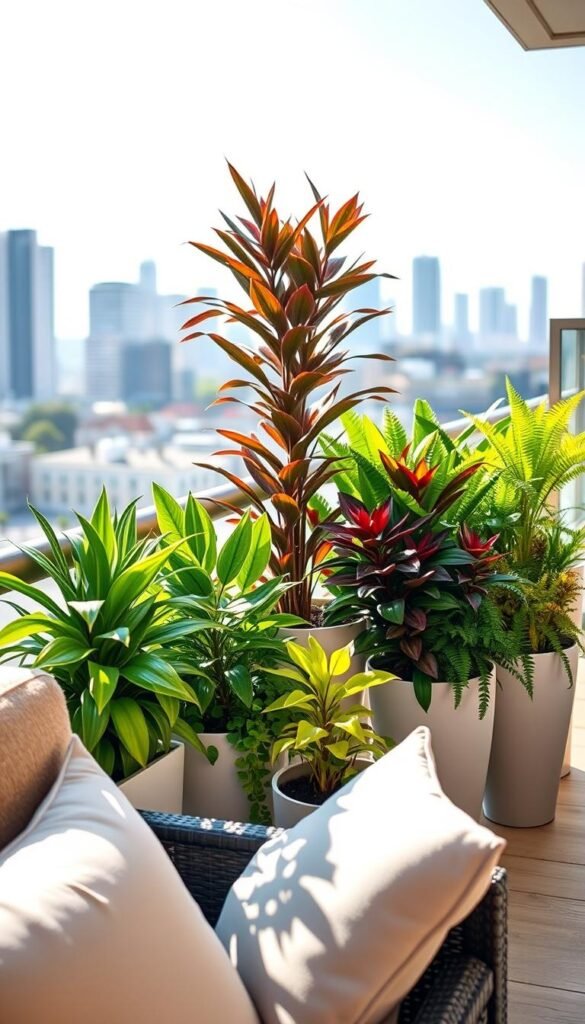
Safe plant picks and what to avoid
Safe examples: plants like spider plants, areca palms, and Boston ferns add shade and a natural feel without common toxins.
Avoid: aloe vera, ivy, and lilies. Double-check any new addition against trusted lists before bringing it home. For more guidance on houseplants that suit homes with animals, see a helpful roundup at pet-safe houseplants.
Planter and placement rules
- Use heavy pots and low centers of gravity so planters resist tipping.
- Place pots in stable corners, not on narrow stands or rail edges.
- Secure vertical planters only if hardware is rated for outdoor wind loads.
Chew behavior and small-space buying checklist
Many furry friends nibble leaves. Choose non-toxic plants even if the pot seems out of reach.
Buyer considerations: pick non-cracking materials, saucers that won’t puddle, and compact pots that fit walkways.
| Item | Why it helps | Quick buyer tip |
|---|---|---|
| Spider plant | Non-toxic, tolerant of varied light | Use a heavy ceramic pot with drainage |
| Areca palm | Provides shade and airflow | Choose a wide base pot; avoid tall narrow stands |
| Boston fern | Soft foliage, non-toxic | Keep saucer dry to prevent slips |
| Plants to avoid | Avoid toxic leaves and sap | Check labels; research before purchase |
Benefit: safe plants improve the environment and bring nature closer without putting furry friends at risk.
Enrichment decor: toys, scratching, and a “designated pet spot” that stays tidy
Planned enrichment keeps animals engaged and reduces risky climbing or escape attempts. Boredom plus fresh air can push a cat or small dog to explore gaps or use furniture as a ladder. A simple layout prevents that.
DIY play zones use weather-resistant storage bins or deck boxes to hold toys and supplies. Keep a low box near a wall for easy reach, and store damp items inside after rain to prevent mold. This keeps the area tidy and cuts trip hazards.
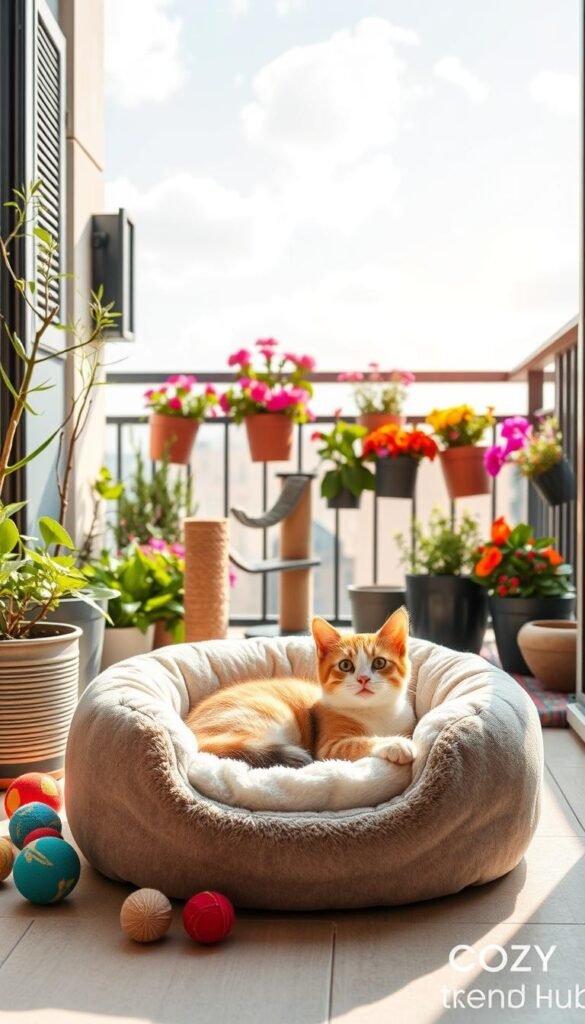
Scratching posts and perches
Offer sturdy posts and secured perches for cats that need outlets. Place them away from rails so they do not create an escape ladder.
- Who it’s for: multi-cat homes and active cats that like vertical play.
- Pro: reduces furniture damage and focuses energy in one area.
- Con: avoid tall, lightweight towers that tip in wind.
Bed placement and bed choices
Choose a sunny spot for cooler days and shade for hot afternoons. Block strong wind paths and keep walkways clear to avoid startling animals.
For bed items, pick waterproof, machine-washable covers and mold-resistant inserts. Synthetic fills dry faster than cotton and resist mildew.
| Use case | Recommendation | Why |
|---|---|---|
| Small space | Elevated PVC bed | Airflow, quick dry, |
| Rainy climates | Mold-resistant insert | Longer lifespan, health safety |
| Multi-cat households | Multiple small beds | Reduces conflict and sharing stress |
Budget option: a DIY elevated PVC bed is a durable, low-cost way to keep a bed off wet floors and allow airflow underneath. It often costs under $20 in materials and suits tiny outdoor spaces.
For practical layout ideas and a step-by-step on making a safe, fun rail area, see a short guide on making a balcony safe and fun. For dog-specific compact ideas and storage suggestions, review a quick roundup at top dog apartment ideas.
Furniture that survives pet hair, claws, and surprise rain
Outdoor seating must handle spills, hair, and quick weather changes without becoming a maintenance chore. Choose pieces that clean easily, resist claws, and store or move when storms roll in.
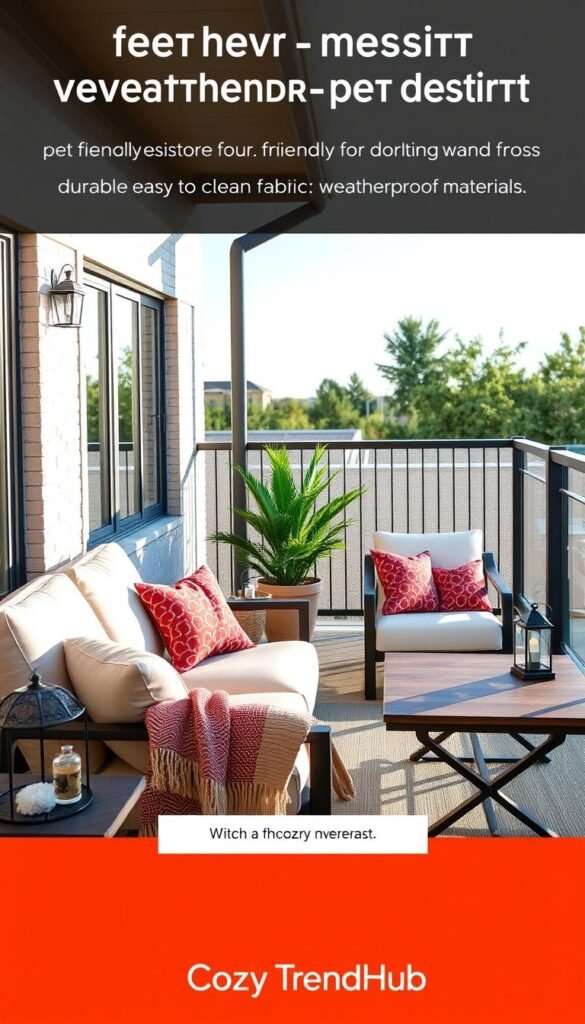
What to buy: prioritize rattan-style resin wicker, powder-coated metal, or molded resin frames paired with removable, washable cushions. Cushions that unzip and stash indoors fast cut mildew and trapped hair.
Material considerations
- Resin wicker: UV-stable, resists splinters and snags.
- Metal frames: pick rust-resistant finishes and welded joints.
- Resin/plastic: lightweight, easy to hose off, dries fast.
Use cases and sizing
Compact bistro sets suit tiny spaces and fold for storage. Storage benches double as toy boxes to keep the area tidy. Lightweight chairs work for renters who often move furniture indoors.
„Confirm walking clearance, door swing, and that furniture won’t create climbable steps near railings.“
| Furniture type | Why choose it | Trade-off |
|---|---|---|
| Resin wicker sofa | Comfort, looks like rattan, resists water | Takes more floor space |
| Powder-coated metal bistro | Compact, durable, low profile | Colder to sit on; needs cushions for comfort |
| Storage bench | Hides toys and cushions, multiuse | Bulkier footprint |
Quick measuring guide: measure door swing, leave at least 24″ walking clearance, and avoid stacking pieces where pets can climb near rails. These checks protect animals and maintain a coherent design for a small outdoor space.
For fabric and cushion choices that resist hair and odors, see this practical guide on pet-friendly fabrics.
Lighting, walls, and accents that stay renter-approved and safe
Low-glare lighting and renter-safe wall updates make small outdoor spaces usable after dark without adding hazards.
Night visibility: choose warm, soft string lights or solar lanterns to reduce glare and improve movement. Solar options cut wiring and suit renters. For product ideas, see a practical lighting guide.
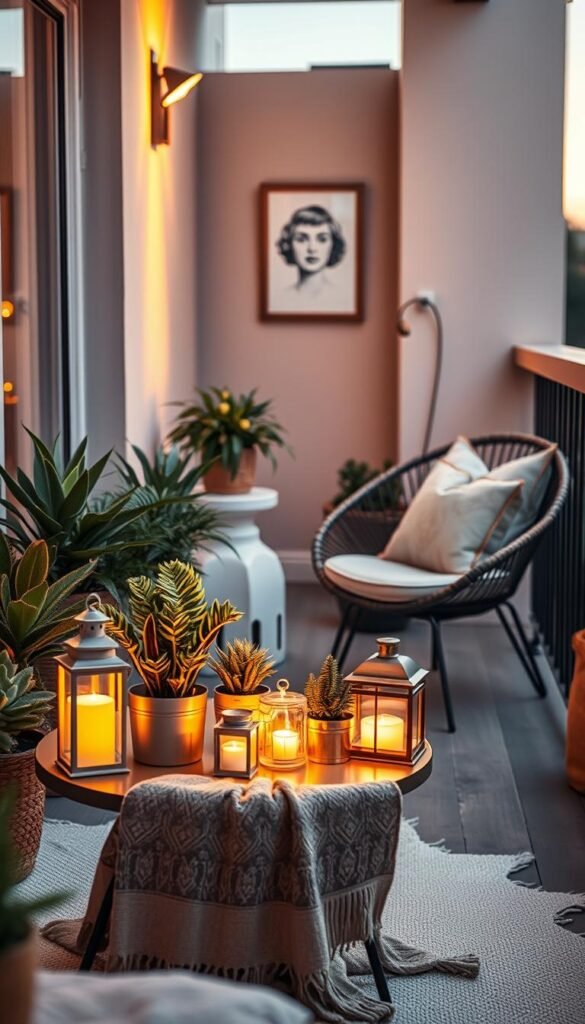
Practical cord and fixture tips
- Secure loose cords and use weatherproof covers for plugs.
- Avoid dangling strands where cats or small dogs can bat or tangle.
- Prefer battery or solar fixtures to limit exposed wiring.
Renter-friendly wall updates and air quality
Removable, VOC-free wallpaper refreshes a wall without fumes. Choose eco-ink prints and matte finishes to keep the view calm and reduce reflections that startle birds or animals.
Keep adhesives rated for outdoor humidity and avoid heavy paste that damages surfaces.
Nature touches: hang bird feeders or seed balls away from rail edges to protect both birds and pets. Clean feeders often and pair them with bamboo screens for privacy and to shape airflow for fresh air without permanent builds.
| Challenge | Renter solution | Quick caution |
|---|---|---|
| Poor night visibility | Warm string lights / solar lanterns | Secure cords; low-glare bulbs |
| Stale or polluted air | VOC-free removable wall coverings | Pick breathable materials; avoid glossy finishes |
| Overstimulated birds or animals | Move bird feeders away from rails; add screens | Clean feeders regularly |
Final note: choose low-impact fixtures and finishes that improve safety, protect air quality, and preserve the view while staying renter-friendly.
Conclusion
Small changes to railings, flooring, and shade make the most difference in daily use.
Start by securing rail gaps, then add a safe surface and shade. These steps form a clear solution that reduces escape, heat, and slip risks while improving the overall experience.
High-level guidance: households with active cats often need stronger railing systems. Homes with small dogs benefit most from easy-clean floors, shade, and potty options.
Quick checklist to act on today: measure rail length and gaps, map a clear walking path, and pick one consistent place for water and rest. Choose one solution per problem to keep purchases focused.
Practical tip: for compact, maintenance-minded upgrades and sourcing ideas, see a short guide to five paw-friendly modifications.
Final note: even with good setup, supervision still matters—especially for curious cats—so test changes slowly and enjoy safer balcony time at home.