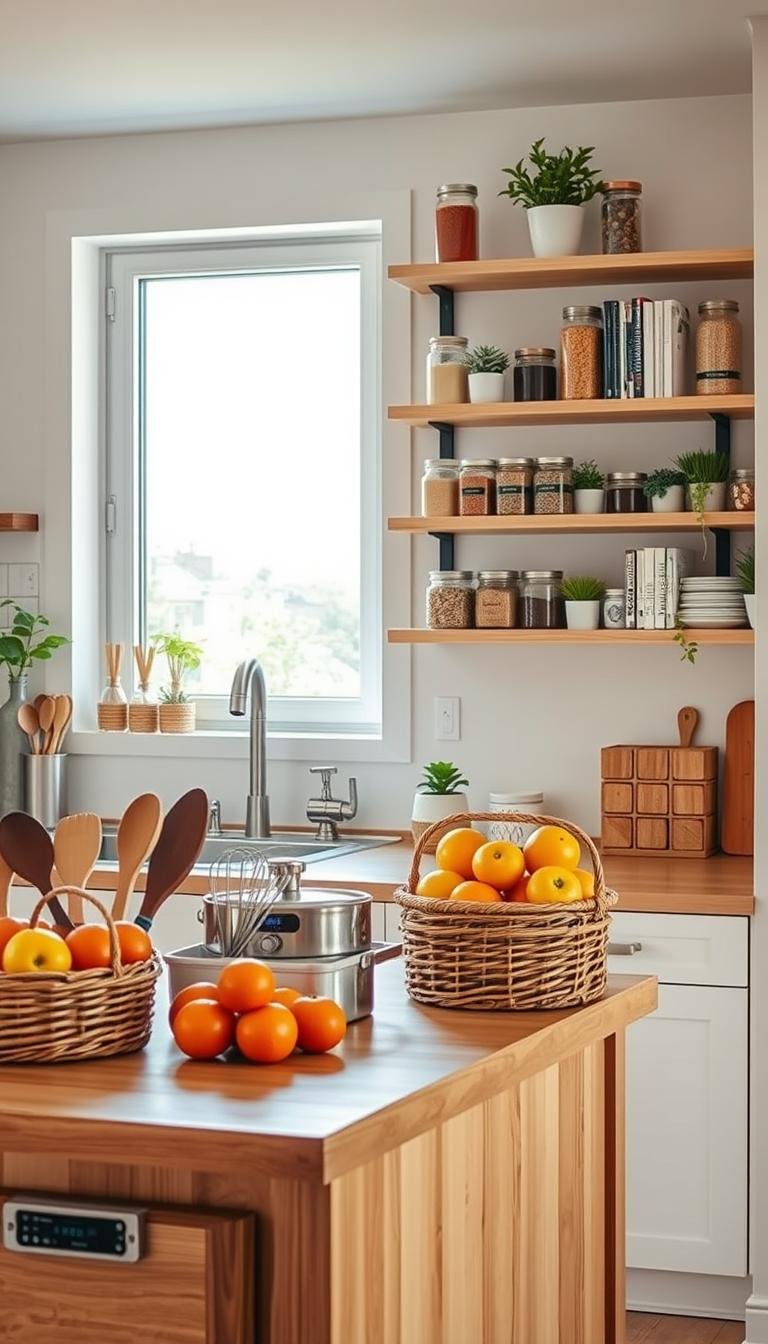
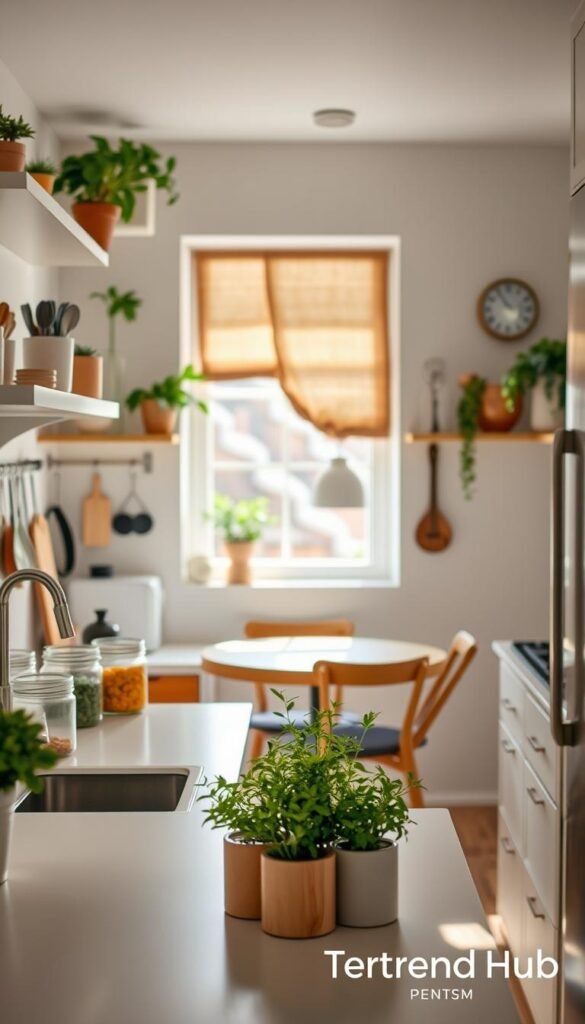
Small apartment kitchens often lack practical room for everyday items. Tenants face tight space, limited cabinets, and rules against drilling that can threaten a security deposit.
This guide frames the problem and offers renter-safe solutions. It covers adhesive hooks and strips, over-the-sink racks that reclaim counter space, over-the-door organizers that expand pantry room, tension rods and clip-on shelves, plus freestanding and rolling carts.
The buying lens stays simple: where it fits, how much it holds, and how cleanly it removes. Each pick is rated for small-space fit and move-out readiness.
Readers will find a quick comparison first, then detailed product-by-product writeups with pros, cons, and fit checks. Measure door thickness, shelf lip, and sink width, and prep surfaces before applying adhesives.
Recommendations focus on daily use—practical ways to tame clutter while keeping the rental neat. A note: some links may be affiliate links and appear near the conclusion.
Key Takeaways
- Limited apartment space and no-drill rules drive the need for removable solutions.
- Five categories—adhesive, over-the-door, tension, clip-on, freestanding—solve different constraints.
- Assess fit by measuring door thickness, shelf lips, and sink width before buying.
- Prioritize how much an item holds and how cleanly it removes at move-out.
- Guide orders: comparison table first, then detailed picks with pros/cons and fit checks.
- Recommendations favor daily usability over purely decorative choices.
What “no-drill” kitchen storage means for renters in the US
A no-drill approach means adding useful fixtures while keeping walls and tiles intact.
In practice, no-drill means avoiding permanent holes in tile, drywall, or cabinet fronts. It also means choosing mounts that leave minimal residue when removed. Tenants use stick-on shelves and Command strips instead of drilling into tile to avoid damage.
Common friction points in small rentals include cramped counters, too few cabinets, odd nooks, limited fridge space, and lease rules that ban hardware. These issues drive the need for removable solutions that still hold up to daily use.
Common renter problems: zero holes, zero damage, zero lost deposit
Zero damage ties directly to deposit protection and landlord inspections. Quick move-outs make tenants cautious about anything that could show permanent marks. Choosing removable options reduces the risk of a failed inspection.
No-drill install types you’ll see
- Adhesive: Works best on smooth, non-porous surfaces. Use for lightweight shelves and hooks.
- Over-the-door: Adds instant capacity to doors and pantry faces with no tools required.
- Tension: A zero-commitment way to create adjustable compartments in narrow spaces.
- Clip-on: Doubles shelf space by hanging under a shelf or lip.
- Freestanding: Gives extra cabinet-like storage that moves with you.
Quick caution: even “renter-friendly” products need surface and measurement checks. Verify paint type, door clearance, and shelf thickness before buying.
Comparison framework ahead: the next section rates options by space gained, hold strength, removability, and typical use cases so readers can match solutions to their needs.
| Option | Space Gained | Hold Strength | Removability | Typical Use |
|---|---|---|---|---|
| Adhesive shelves / Command strips | Small to medium | Medium | High (low residue if removed right) | Spices, paper towels, light utensils |
| Over-the-door racks | Medium | Medium | High | Pantry items, bottles, cleaning supplies |
| Tension rods | Small | Low to medium | Very High | Vertical dividers, under-shelf partitions |
| Freestanding carts | Large | High | High (portable) | Bulk food, appliances, extra prep surface |
Quick comparison: no-drill storage options by space, hold strength, and removability
A quick comparison helps match no-drill options to the specific spots that need room most.
How to use this section: choose by where you need extra room—counter, wall, cabinet, or temporary fill-in. Check weight ratings and surface compatibility before buying.
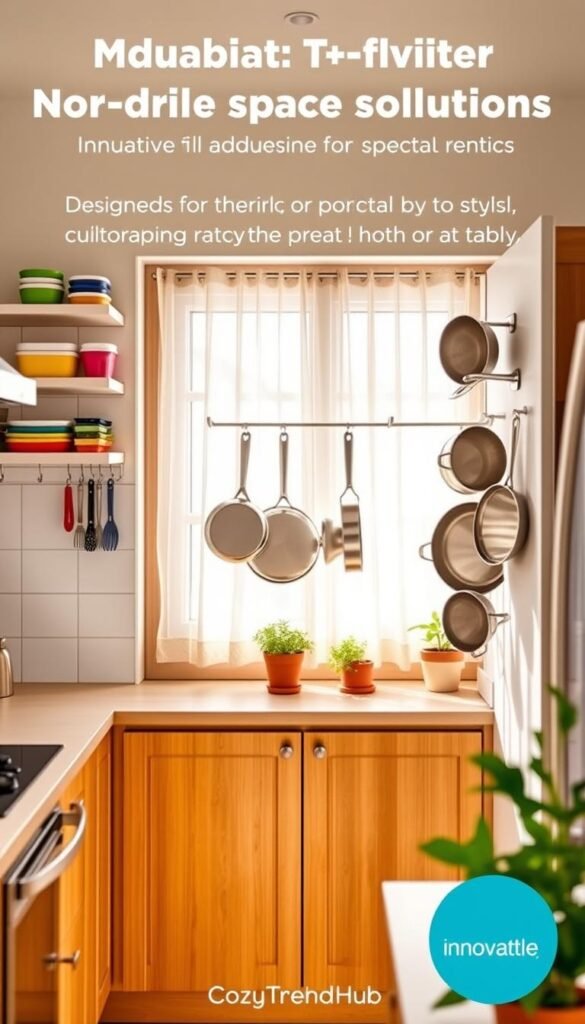
Best for counter space
Over-the-sink racks lift dishes and drying tools off the counter. Wall-mounted adhesive holders also reclaim counter space by holding sponges, paper towels, and small jars.
Best for vertical space on walls and cabinet doors
Over-door racks, adhesive hooks, and inside-door bins use vertical space without tools. They work well on the side of a cabinet or pantry door to store bottles and packets.
Best for cabinets and drawers
Under-shelf clip-on organizers, corner risers, vertical dividers, and tension-rod compartments double usable room inside cabinets and drawers. These add shelves without drilling.
Best for seasonal setups and easy move-outs
Rolling carts and portable bins create instant extra space during holidays and clear out after. They are fully movable and leave no marks when removed.
| Option | Best location | Typical hold strength | Removability | Good for |
|---|---|---|---|---|
| Over-sink dish rack | Counter / sink | Medium | High (portable) | Drying dishes, utensils, freeing counter |
| Adhesive holders & hooks | Wall / cabinet face | Low to medium | High (surface dependent) | Sponges, small jars, towels |
| Over-door racks & bins | Door / vertical wall | Medium | High | Bottles, spices, cleaning supplies |
| Under-shelf / clip-on organizers | Cabinet / drawer | Medium | High | Mugs, plates, lids, dividers |
| Rolling cart / portable bins | Flexible / floor gaps | High | Very high (moveable) | Seasonal gear, bulk items, temporary prep space |
Quick buyer checks: confirm weight rating, surface type (tile, painted drywall, laminate), door thickness and clearance, and whether adhesives list clean removal. Note the tradeoff: stronger hold often needs smoother, sturdier surfaces, while the most removable pieces usually carry less weight.
Best renter friendly kitchen storage picks at a glance
A short list of reliable options helps people add function without permanent changes.
Quick buyer note: measure door swing, shelf depth, and clearances before ordering. Choose removable adhesives for delicate walls.
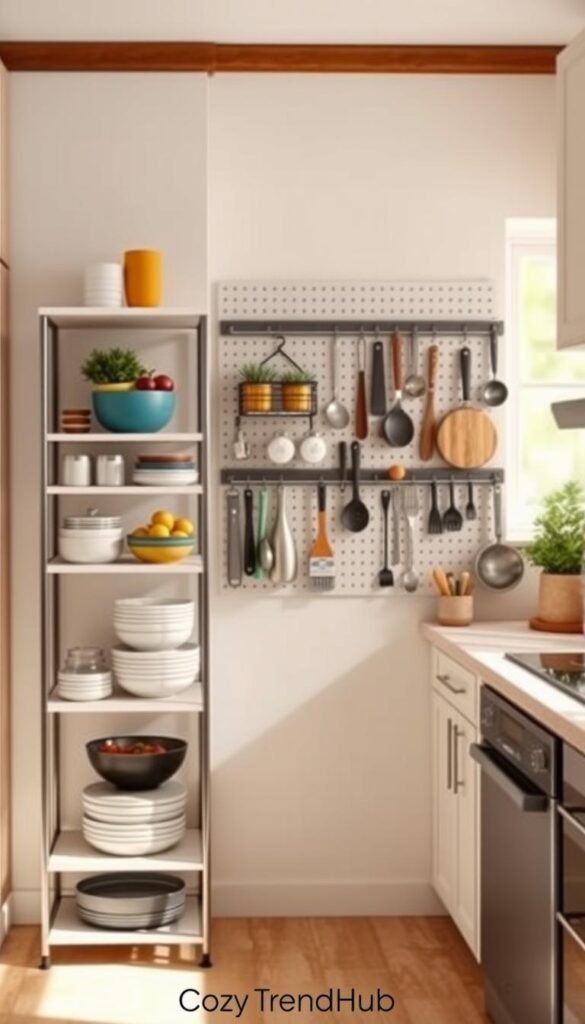
Best for tiny apartments with limited cabinet space
SONGMICS 3-tier rolling trolley, an over-sink rack, or a slim over-door rack creates new zones without remodeling.
Why: frees counter space and adds vertical room for dishes and pantry items.
Best for shared kitchens and roommates
Clear COOBNO fridge drawer organizers, labelled bins, and dedicated hooks keep items separated and visible.
Why: reduces fridge disputes and speeds up shared meal prep.
Best for renters who rearrange often
Tension rods, clip-on under-shelf organizers, and freestanding carts move or remove in minutes.
Why: they create flexible layouts and leave no marks at move-out.
„Choose products that match the exact measurements of your doors and shelves.“
| Scenario | Top pick | Short reason |
|---|---|---|
| Tiny apartment | 3-tier rolling trolley | Creates mobile cabinet space |
| Shared kitchen | Fridge drawer packs | Keeps items visible and separate |
| Often move | Tension rods & clip-ons | Fast to install and remove |
Adhesive wall storage that replaces drilling into tile or drywall
Adhesive-mounted solutions add useful surface space without permanent holes. An adhesive paper-towel holder with a small shelf gives a tidy landing spot for a roll plus a jar or sponge. This frees counters near appliances such as a toaster or blender and keeps prep areas clear.
Who it’s for: Someone with limited counter room who needs a dedicated paper-towel spot and a tiny shelf for daily items. The ZB ZealBoom Adhesive Paper Towel Holder with Shelf is a clear example; it pairs a roll mount with a shallow shelf for a sponge, small jar, or phone.
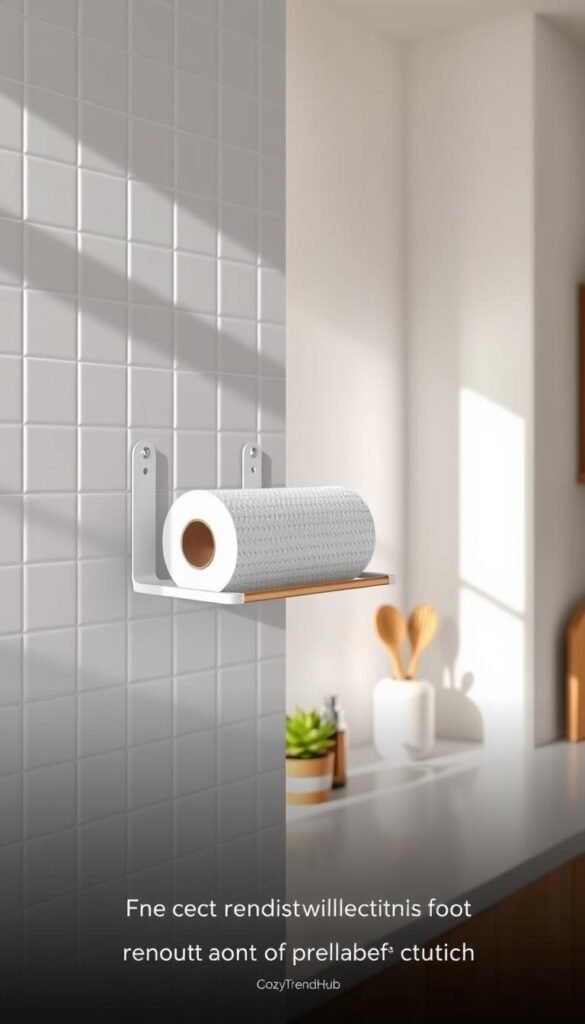
Where it works best
Install on a smooth backsplash, the side panel of a cabinet, or an inside pantry wall. Choose a place that keeps the roll reachable but out of the main prep zone.
Pros, cons, and what to check before you stick it
- Pros: fast install, no drilling, clears counter space, adds a small shelf where none existed.
- Cons: adhesives can fail on textured paint or dusty surfaces; removal may need care; weight limits vary by brand and strips.
Before you stick it: clean and degrease the area, let it dry fully, align with a level, and wait the manufacturer’s cure time before loading weight. Prefer smooth, sealed tile or laminate for the highest hold.
| Check | Why it matters | Tip |
|---|---|---|
| Surface type | Affects adhesive bond | Smooth tile or sealed laminate is ideal |
| Shelf depth | Determines what fits | Measure to fit jars and small items |
| Roll compatibility | Ensures easy tear and use | Confirm roll width and mounting style |
Self-adhesive hooks for utensils, towels, and clutter control
Self-adhesive hooks offer a fast, no-tools fix for the small, everyday items that crowd counters. They install in minutes and make visible assignment simple for shared spaces.
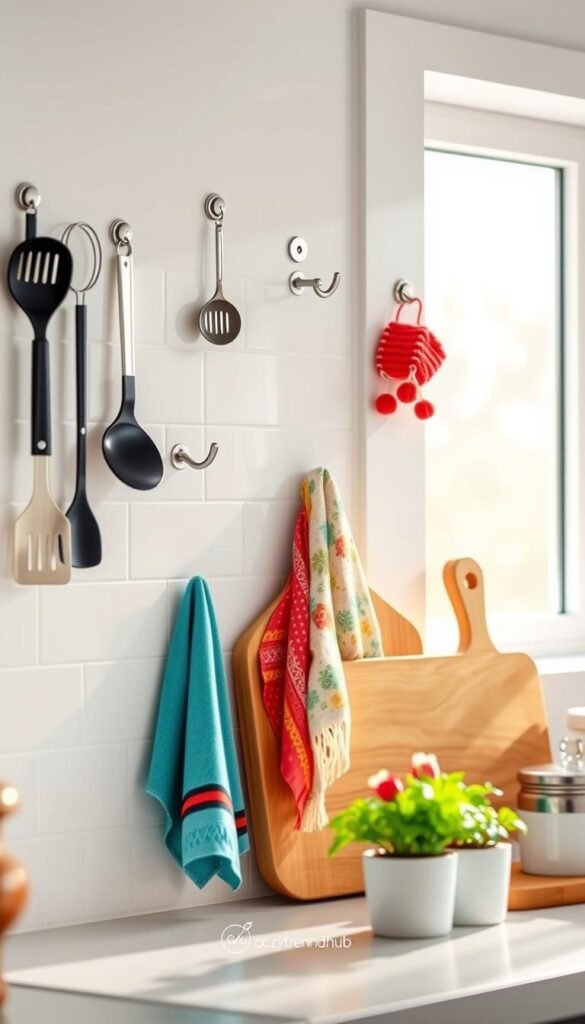
Best for quick wins: multi-pack self-adhesive hooks for doors and walls
Multi-packs, like the BEEWAY Self-adhesive hooks 10 pack, let users create a consistent layout across doors and walls. Use matching hooks for tea towels, cloths, and light utensils so everything has a clear place.
Smart placements: inside cabinet doors, sink area, fridge side panel
Install hooks on inner cabinet doors for towels and dishcloths. Place a pair near the sink for scrubbers and a small utensil. A few on the fridge side panel hold lightweight items without stealing counter room.
Pros, cons, and renter-safe removal tips
- Pros: low cost, quick install, flexible layout changes, clears counters fast.
- Cons: limited hold for heavy tools; adhesives can fail on textured paint or very humid spots.
- Removal tips: warm adhesive gently with a hair dryer, peel slowly at a low angle, and remove residue with a mild, surface-safe cleaner to avoid paint lift.
„Start with a 10-pack to test locations before committing to a full set.“
| Consideration | Why it matters | Tip |
|---|---|---|
| Hook shape | Affects what hangs securely | Choose J hooks for mugs, knob hooks for towels |
| Moisture resistance | Prevents failure near sinks | Pick water-resistant adhesive pads |
| Pad size | Matches load and surface | Larger pads for more hold on smooth walls |
Over-the-door hanging racks for pantry items, spices, and bottles
Turn unused door backspace into an organized zone for oils, packets, and jars. An over-the-door multi-tier hanging rack gives quick vertical room without tools or wall damage.
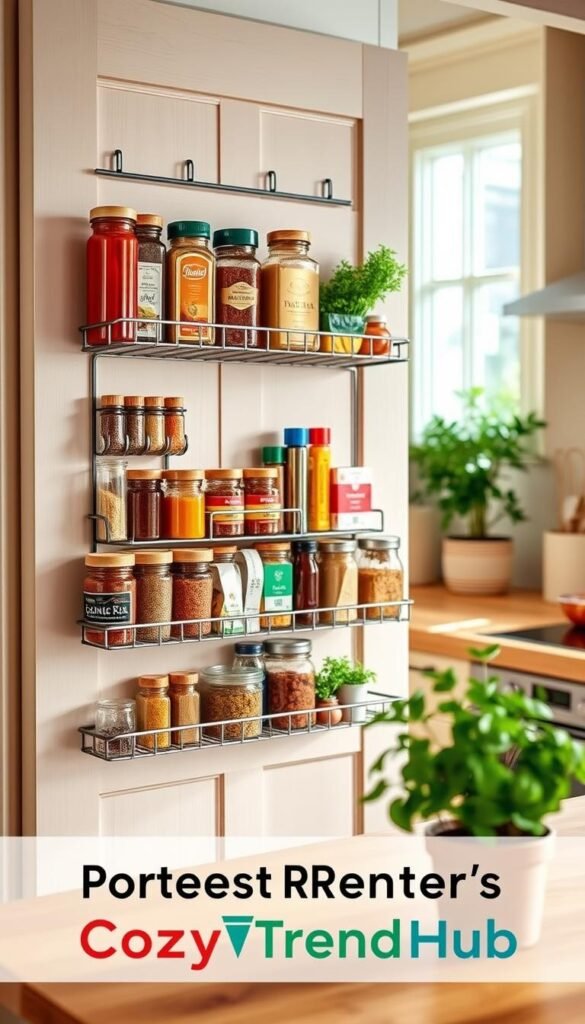
Who it helps: people with no built-in pantry who need easy access to frequently used goods. The Direct Online Houseware 4 Tier Over Door Hanging Rack is a clear example: it uses removable hooks and can hang over a door or rest on a worktop.
What to store
- Top tiers: small jars and spice bottles
- Middle tiers: cooking oils and sauce bottles
- Bottom tier: packets, snack bags, and cleaning items
Fit checks and buying notes
Measure door thickness and top clearance so the door still closes. Check swing space so bottles don’t hit nearby walls. Look for tier depth, rail height to prevent tipping, and protective padding to avoid scuffs.
| Check | Why it matters | Tip |
|---|---|---|
| Door thickness | Ensures hooks sit flush | Measure with a tape |
| Top clearance | Allows door to close | Test with a mock hanger |
| Shelf depth | Fits bottles without overhang | Pick deeper tiers for oils |
| Padding | Prevents scuffs | Choose models with rubber pads |
Pros: large capacity and easy removal for move-out. Cons: may rattle, scuff doors, or reduce swing if deep. For clear buyer intent, this is a simple, portable way to add room in small kitchen layouts and supports common affiliate links when listing models.
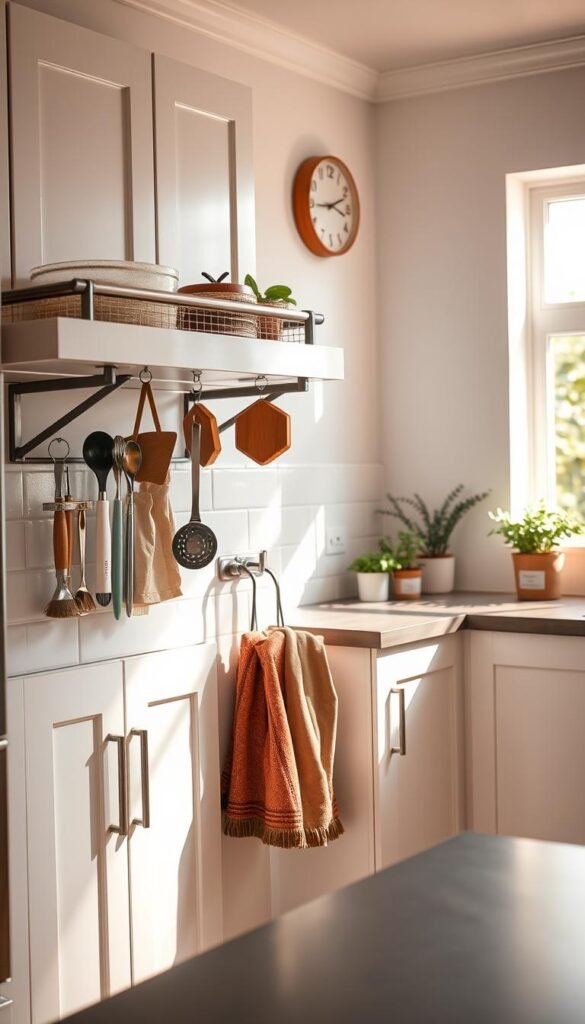
Over-cabinet bars and racks to add towel and tool storage fast
A simple over-cabinet bar can free counter edges and keep damp cloths off surfaces. This quick fix gives an instant hang spot without adhesives or holes.
Daily friction: many small apartments lack a place to hang cloths. That leaves damp items on counters or over oven handles, which looks messy and spreads moisture.
The mDesign over-cabinet towel bar fits over an under-sink door and adds a low-profile bar for quick access. It slips on in seconds and does not alter kitchen cabinets. Use it where a small bar makes the most sense: under the sink or inside a pantry door.
Pros, cons, and how to avoid scuffs
- Pros: instant access, no cure time, easy to move, improves the kitchen look.
- Cons: may rub cabinet fronts, can shift when pulled, and might not fit thick doors.
- Scuff-avoidance: add thin plastic or felt pads where the bar contacts the cabinet. Confirm door clearance so the door still closes and does not catch on under-sink plumbing.
| Check | Why it matters | Tip |
|---|---|---|
| Bar depth | Ensures towels hang flat | Measure towel width before buying |
| Clamp width | Fits cabinet door thickness | Test fit or choose adjustable clamps |
| Under-sink clearance | Avoids plumbing interference | Open door and measure depth |
Under-shelf and clip-on organizers to double cabinet shelf capacity
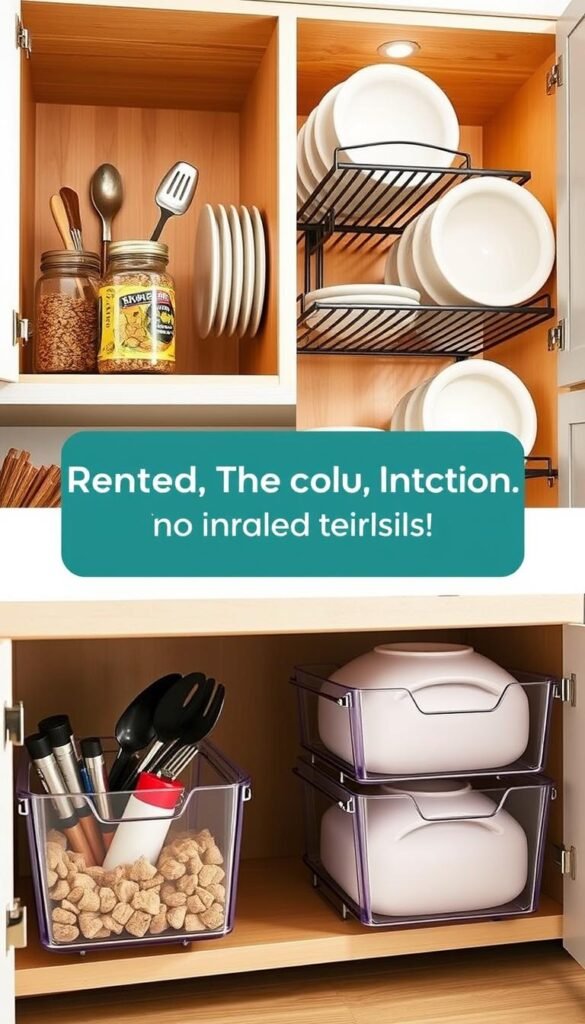
Cabinet interiors often hide wasted vertical room that simple additions can reclaim. Small, no-drill organizers create hanging zones and split levels so everyday items are visible and easy to grab.
Best for mugs and cups: under-shelf mug holder
Top pick: Metaltex Under-shelf mug holder clips under an existing shelf to hang mugs by the handle. It frees the shelf above and reduces stacked clutter.
Buying notes: measure shelf thickness and handle spacing. Check that the cabinet depth lets mugs hang without hitting the door.
Best for stackable storage: cupboard corner shelf risers
Top pick: Maison & White 2-tier cupboard corner shelf separates plates and bowls into two levels. It roughly doubles usable space and improves visibility.
Cons: may limit tall items below; confirm plate diameter fits the riser.
Top for cutting boards and lids: vertical dividers and DIY compartmenting
Use freestanding dividers or tension-based separators to stand cutting boards and lids upright. This way cutting boards are easier to reach and less likely to tip.
- Pros: doubles functional shelf capacity, reduces breakage, speeds daily use.
- Cons: depends on consistent shelf sizing and depth.
Buying considerations: measure cabinet depth, shelf thickness, and plate diameter. For drawers, pick thinner dividers to preserve usable drawer space.
Tension rods for cabinets, nooks, and vertical storage without hardware
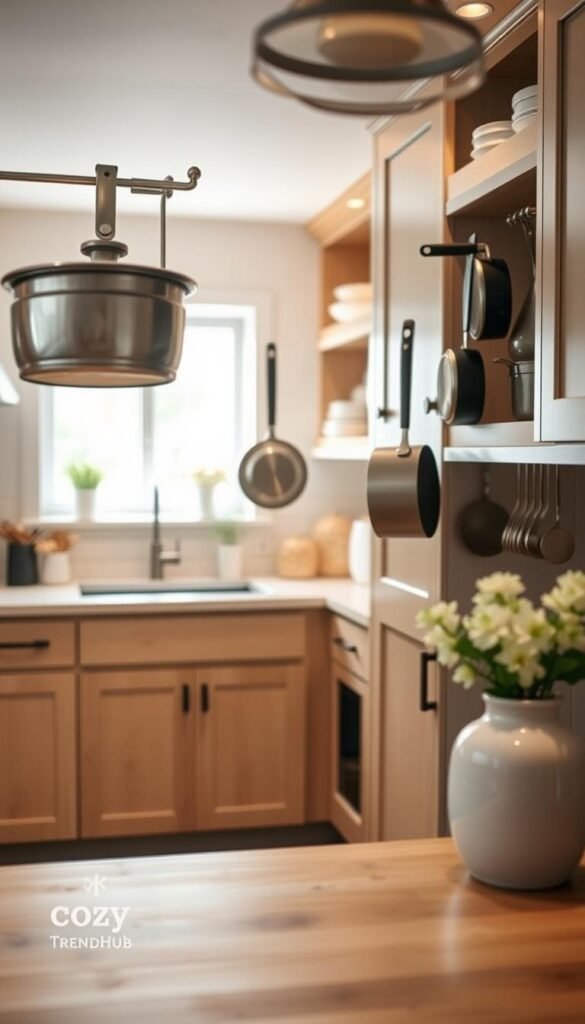
Thin metal rods can turn awkward gaps and cupboard corners into tidy vertical dividers without tools. They make quick use of vertical space and avoid adhesives or screws.
Vertical compartment method for pans and boards
Place rods vertically inside a cabinet to create narrow slots for baking sheets, pan lids, and boards. Items stand upright, which stops tipping and speeds retrieval.
Why it works: upright storage reduces noisy stacks and keeps items visible during meal prep.
How to use rods in odd gaps
Install a rod in a narrow nook beside an appliance or under a shelf to act as a divider. This reclaims small space that otherwise stays unused.
Editor’s pick, pros, cons, and buying notes
Editor’s pick: KXLIFE 2-Pack Tension Curtain Rods ($9.79) as a budget-friendly test option.
- Pros: fully removable, adjustable, works in many cabinet sizes, ideal for frequent movers.
- Cons: needs two solid opposing surfaces; can slip if not tightened correctly; not for very heavy loads.
- Buying checks: rod length range, grip end caps, and whether placement will block other shelves or access.
„Endless possibilities—with zero commitment.“
| Use | Ideal fit | Note |
|---|---|---|
| Vertical compartments | Wide cabinet shelves | Holds sheets, lids, boards upright |
| Narrow gaps | Beside fridge or range | Good for pans and trays |
| Under-shelf divider | Shallow shelf zones | Creates mini barriers |
| Temporary test | Any empty space | Try inexpensive 2-pack first |
Over-the-sink dish racks to reclaim counter space in small kitchens
An over-sink rack shifts daily dish workflow vertically, opening the counter for tasks. For tiny counters this is a high-impact swap: it moves drying and drip zones above the basin where water drains, not across the prep top.
Who will benefit: people with limited counter space who need room for appliances and meal prep. The Mutool 2-Tier Over Sink Dish Drying Rack is a practical example that doubles drying room while keeping items off the surface.
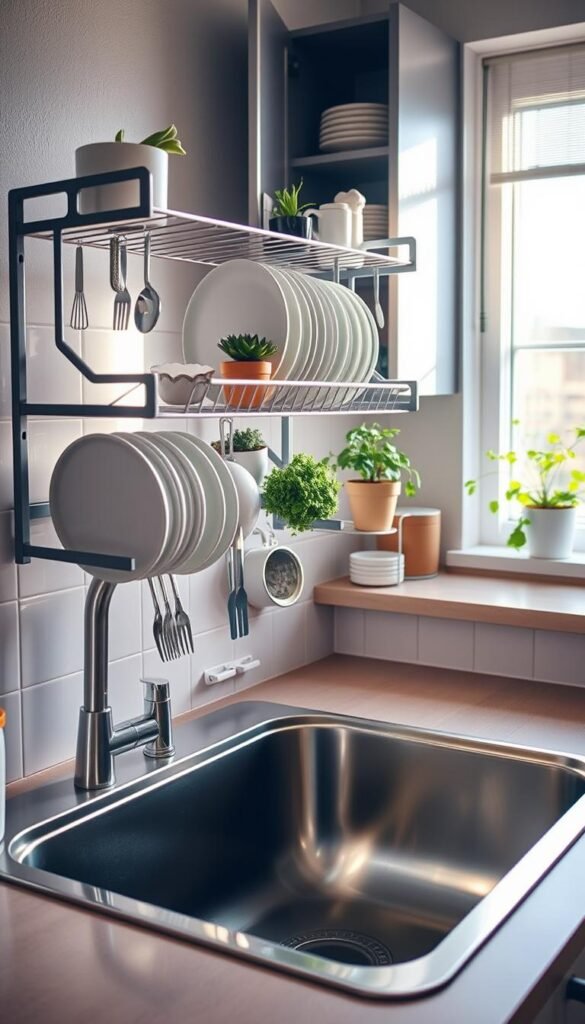
Fit checks before you buy
- Measure sink width so the frame sits securely without overhang.
- Check faucet height and reach so handles still move freely.
- Note any cabinet overhang or window that the rack might block.
Bonus uses
Look for built-in holders on models that store knives, utensils, sponges, and brushes. These features free the counter and keep cleaning tools within reach.
Pros, cons, and buying considerations
- Pros: frees counter space, improves drying workflow, reduces visual clutter, and removes easily when moving.
- Cons: needs correct measurements; can block faucet or window; requires regular cleaning to avoid grime.
- Buying tips: choose rust-resistant material, confirm weight capacity, and ensure the design fits cutting boards or larger pans.
„Measure twice: a secure fit prevents wobble and keeps the rack stable over the sink.“
Rolling storage carts that create instant cabinet space (and move when you do)
For apartments with no built-in cabinet options, a mobile cart adds usable shelving without installation.
The SONGMICS 3-tier rolling trolley ($27.98) is a practical example. It provides three open shelves on wheels so items sit where they’re reachable and visible. Wheels let users push the unit out of the way when traffic is tight or roll it into a new room at move-out.
Who it helps: anyone in an apartment with zero cabinets or awkward cabinet layouts that leave usable floor gaps.
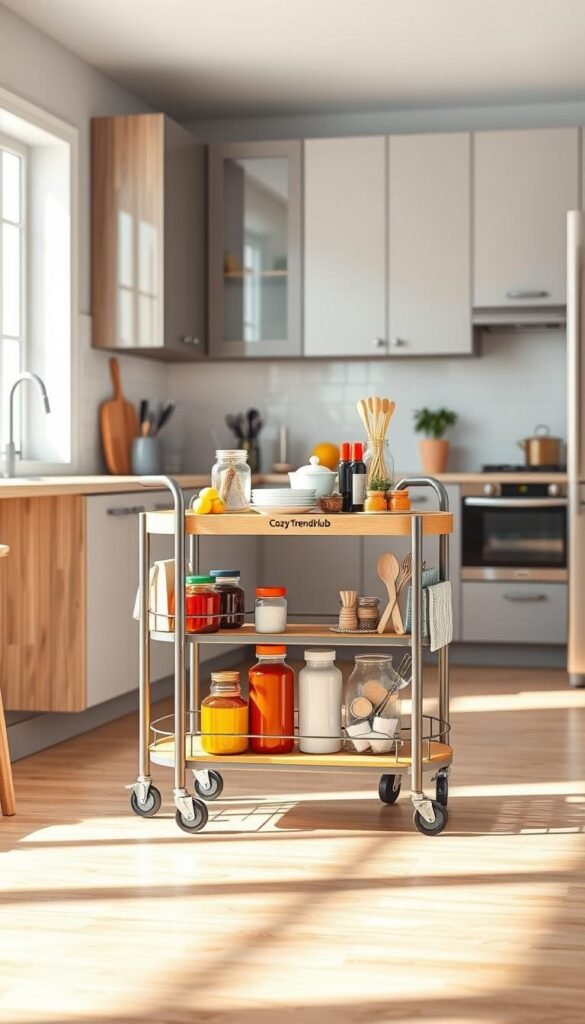
Where it fits
- Beside the fridge for snacks, drinks, and small appliances.
- In narrow gaps between appliances to use otherwise wasted space.
- As a mini kitchen island for prep overflow and serving during gatherings.
Pros and cons for small-space traffic flow
Pros: adds flexible cabinet-like shelving, creates clear zones for daily items, and doubles as a serving cart.
Cons: can block walkways, may need frequent repositioning, and open shelves can look busy without uniform bins.
| Consideration | Why it matters | Action |
|---|---|---|
| Cart width vs. gap | Ensures a proper fit without wedging | Measure gap before buying |
| Wheel quality / locks | Prevents drift and secures the cart during use | Choose locking casters |
| Shelf height | Determines what fits—tall bottles or small appliances | Confirm internal shelf clearance |
| Visual clutter | Open shelves can appear messy | Use matching bins to group items |
Quick tip: use uniform bins and label fronts to keep the cart tidy and speed meal prep when space is limited.
Over-door bins for recycling and trash when floor space is tight
When floor space is limited, the spot for waste and recyclables has to be rethought to keep the area usable.
The solution is a hanging bin that tucks behind a cabinet door. An over-door cupboard bin frees the floor while giving a dedicated place for two waste streams.
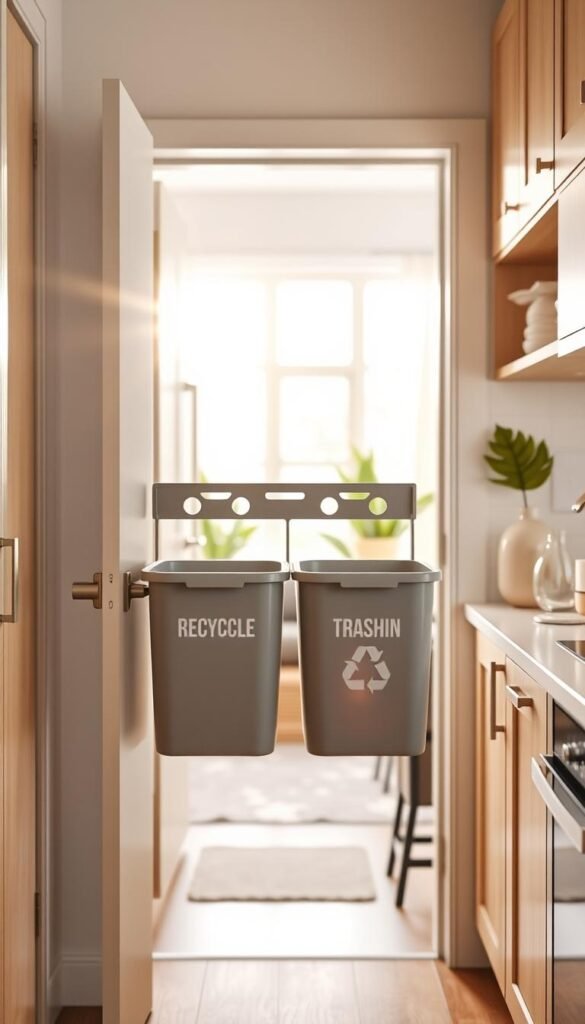
Best for splitting trash and recycling: over-door cupboard bin
The Maison & White over-door cupboard bin hangs on an under-sink door and holds a liner bag. It fits where there isn’t room for two floor bins and keeps the kitchen work area clear of clutter.
Buying considerations: bag size, door swing, and under-sink clearance
- Bag size: confirm standard liner fit so emptying is simple.
- Door swing: test the hinge so the bin won’t hit adjacent cabinets or block traffic.
- Under-sink clearance: ensure the bin does not strike pipes, bottles, or cleaning supplies when the door closes.
| Check | Why it matters | Tip |
|---|---|---|
| Bag size | Makes trash removal easy | Measure liner before buying |
| Door swing | Prevents bumps and jams | Open door fully to test |
| Clearance | Avoids contact with stored items | Watch for pipes and bottles |
Pros: frees floor room, cuts visible clutter, and removes in minutes at move-out. Cons: smaller capacity needs more emptying and may scuff doors without pads. Choose a durable plastic bin and firm hooks so the unit feels stable over time.
Fridge drawer organizers for shared apartments and weekly meal prep
A crowded fridge makes weekly meal prep slower and fuels roommate mix-ups. Clear drawer packs create visible, repeatable zones that cut search time and stop duplicate buys.
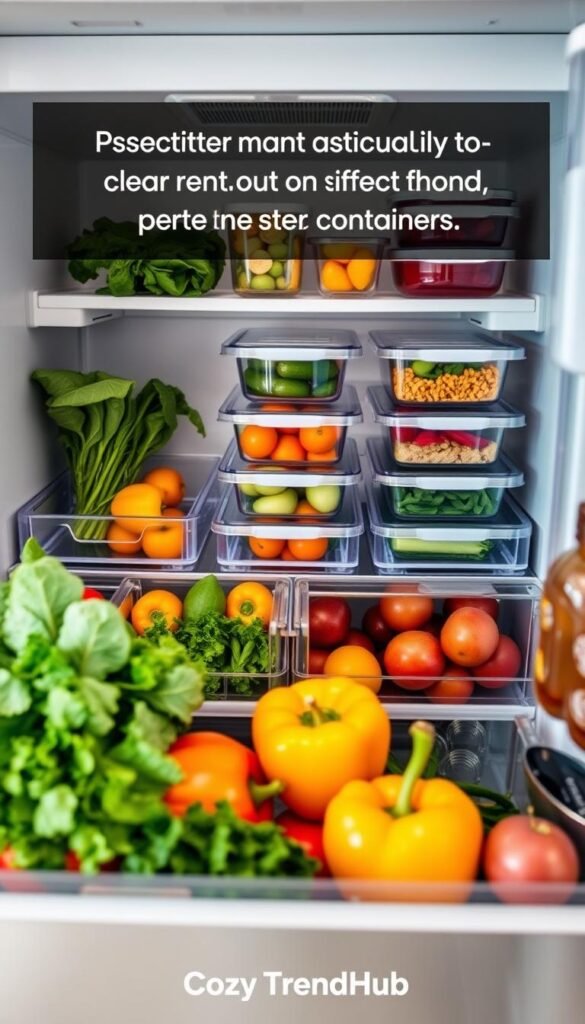
Who benefits and how to use them
Ideal for roommates and weekly planners: clear COOBNO Fridge Drawer Organizer (4 pack) is a solid example. It keeps fruit, veggies, and cheese visible so nothing hides at the back.
What to sort
- Fruit and snack portions for grab-and-go mornings.
- Vegetables separated to stay fresh longer.
- Cheese and deli items on a single shelf for easy checks.
- Condiments and small meal components in one drawer for weekly prep.
Measuring and practical tips
Measure shelf depth and the usable height between shelves in US-style fridges. Confirm drawer width so it slides freely and doesn’t catch on glass or door seals.
Pros, cons, and a simple labeling approach
- Pros: faster access, cleaner categories, easier restocking, and less wasted time during busy weeks.
- Cons: reduces flexibility for tall items, needs regular wipe-downs, and light drawers can slide if unevenly loaded.
- Label idea: use small removable labels by name or day (e.g., „Prep: Mon“) to reduce mix-ups in shared homes.
| Use | Suggested contents | Measure tip |
|---|---|---|
| Top drawer | Cheese, deli | Check height above shelf for stacked packages |
| Middle drawer | Fruit, snacks | Measure depth so fruit sits without rolling |
| Bottom drawer | Veggies, grab-and-go | Confirm front-to-back clearance for sliding |
Baskets and bins that keep cabinets neat (and reduce “lost food” clutter)
Using uniform baskets converts deep shelves into easy-to-scan zones for everyday items. A matched set makes what’s on a shelf visible at a glance. That cuts duplicate buys and expired goods that hide at the back.
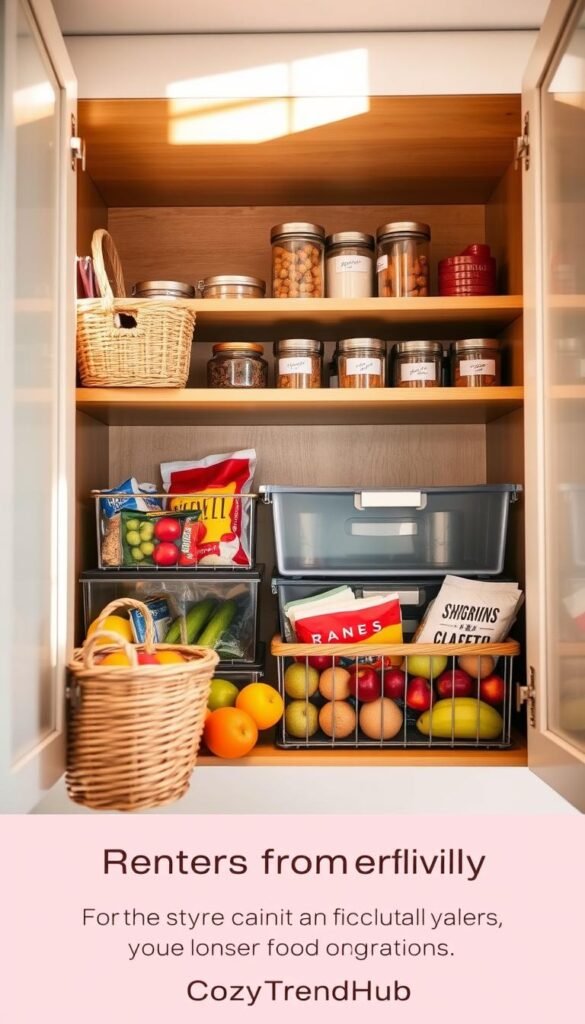
Best for pantry items: matching basket sets for visibility
The whitfurz Storage basket set of 6 keeps cupboards neater and makes cans and packets easy to find. Visible groupings reduce food waste because nothing sits unseen behind tins.
How to group by category to save time and prevent duplicates
Assign each basket a purpose so inventory checks take seconds. Suggested groups:
- Baking (flour, sugar)
- Snacks and breakfast
- Spices and small jars
- Cans and backstock
Why it saves time: meal prep and shopping lists move faster when things are grouped. Quick scans show what’s low before it becomes a last-minute buy.
Pros: flexible, removable, improves visibility, and can move around the home when needs change.
Cons: baskets use some internal space; poor sizing wastes shelf width; open bins may not hold tiny packets well.
Buying checks: confirm basket dimensions, handle style, washable plastic vs. woven finish, and whether sets nest for storage.
Seasonal and temporary storage setups that won’t damage your rental
Short-term demands—like holiday batches or summer gatherings—call for portable, no-damage solutions. These tactics keep an apartment kitchen functional during busy weeks and ensure nothing sticks to walls or cabinets.
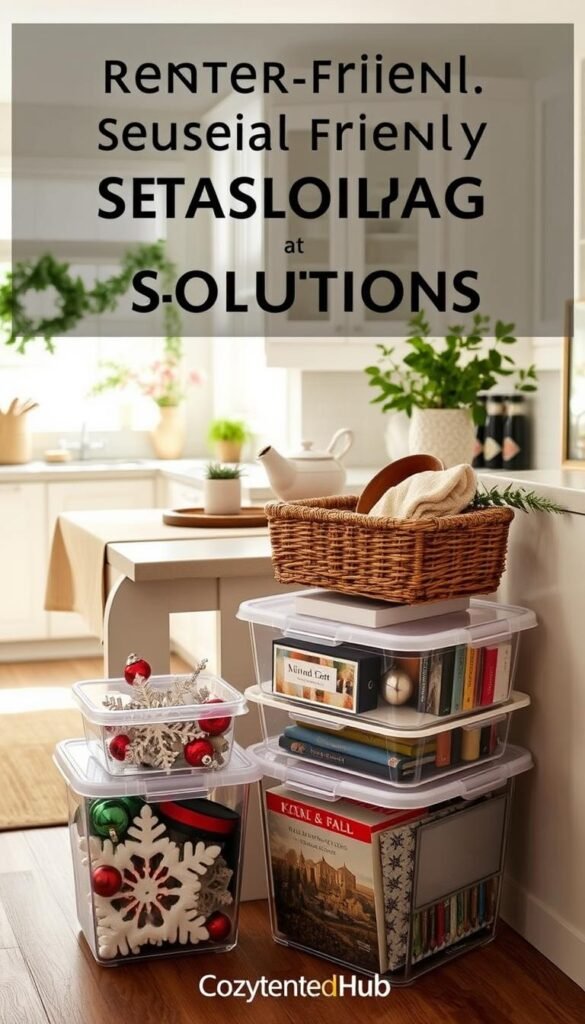
Holiday baking: holding extra boards, sheets, and appliances
Holiday baking brings extra pans, cutting boards, and mixers. Use vertical methods to keep them tidy.
How: fit tension rods upright to create slots for baking sheets and boards. Place mixers and heavy appliances on a rolling cart so they stay off counters and can roll away after use.
Summer hosting: free counter space fast
Summer meals need prep room. Move drying racks and utensils to an over-sink rack or door-mounted hooks. That opens counter space for prep and serving.
Temporary zone idea: reserve one cart tier or shelf as a seasonal staging area. Keep related items together so the rest of the kitchen stays usable.
Quick reset routine and buying checks
After guests, follow a 10-minute reset: clear the cart, return trays to their vertical slots, wipe counters, and stow utensils. This prevents seasonal clutter from becoming permanent.
- Pros: minimal commitment, easy cleanup, flexible use across rooms.
- Cons: can feel crowded if not returned promptly.
- Buying checks: prioritize portability, foldability, and repurpose potential so items work beyond one season.
„Designate one movable zone for overflow—then put things back after the event.“
Cleaning and move-out readiness: tools that help you leave the kitchen spotless
A clean finish matters at move-out; small tools can cut hours of scrubbing when time is tight.
For tenants facing a lease turnover, drill-cleaning brush attachments speed oven and stovetop work. Useful Products is a US-based brand started in 2007 by Anthony LaPolla. Their purpose-built sets sell on Amazon (example price: $14.99) and use color-coded bristles to match jobs.

Best for tough stove and oven cleanup: drill-cleaning brush attachment sets
Who it helps: people in an apartment or rental preparing for inspection, or anyone short on time who needs faster results.
Why: brushes cut scrubbing time and reduce elbow grease, as property manager Alicia Haats noted after using them on ovens and stovetops. Expect to still use a putty knife for very baked-on spots.
How to choose bristle stiffness by surface
Color indicates stiffness. Yellow is medium and works well on most oven interiors and pots. Softer brushes are for coated surfaces and delicate trim. Stiffer brushes tackle cast-iron pans and tough burnt spots.
| Surface | Bristle color | Notes |
|---|---|---|
| Enamel oven walls | Yellow (medium) | Good balance of power and care |
| Cast-iron pots and grates | Hard (dark color) | Use gently; protect edges |
| Nonstick pans and trim | Soft (light color) | Test a small area first |
Safety and use checks: pair brushes with appropriate cleaners, avoid forcing debris into burners or controls, and test on a hidden spot before full use. These tools help restore surfaces so the back of the oven and counters look move-out ready.
„Cut down scrubbing time, but plan for some manual detail work.“
Conclusion
Wrap-up, choose a no-drill way that matches the tightest space problem and work from there.
Start small: add adhesive holders and hooks if the room is chaotic. Add an over-sink rack when counter space is the bottleneck. Use over-door racks or bins if cabinets are limited. Pick a rolling cart when there is almost no cabinet space at all.
Measure doors, shelf lips, sink width, and clearances before buying. Prioritize removability and surface safety to protect the rental and speed move-out.
Matching bins and consistent zones make the room look calmer and make daily cooking easier.
Disclosure: some links may be affiliate links. A commission may be earned at no extra cost to the reader.
Use the comparison tables earlier in the guide to match your apartment problem to the right solution and take the next practical step.