
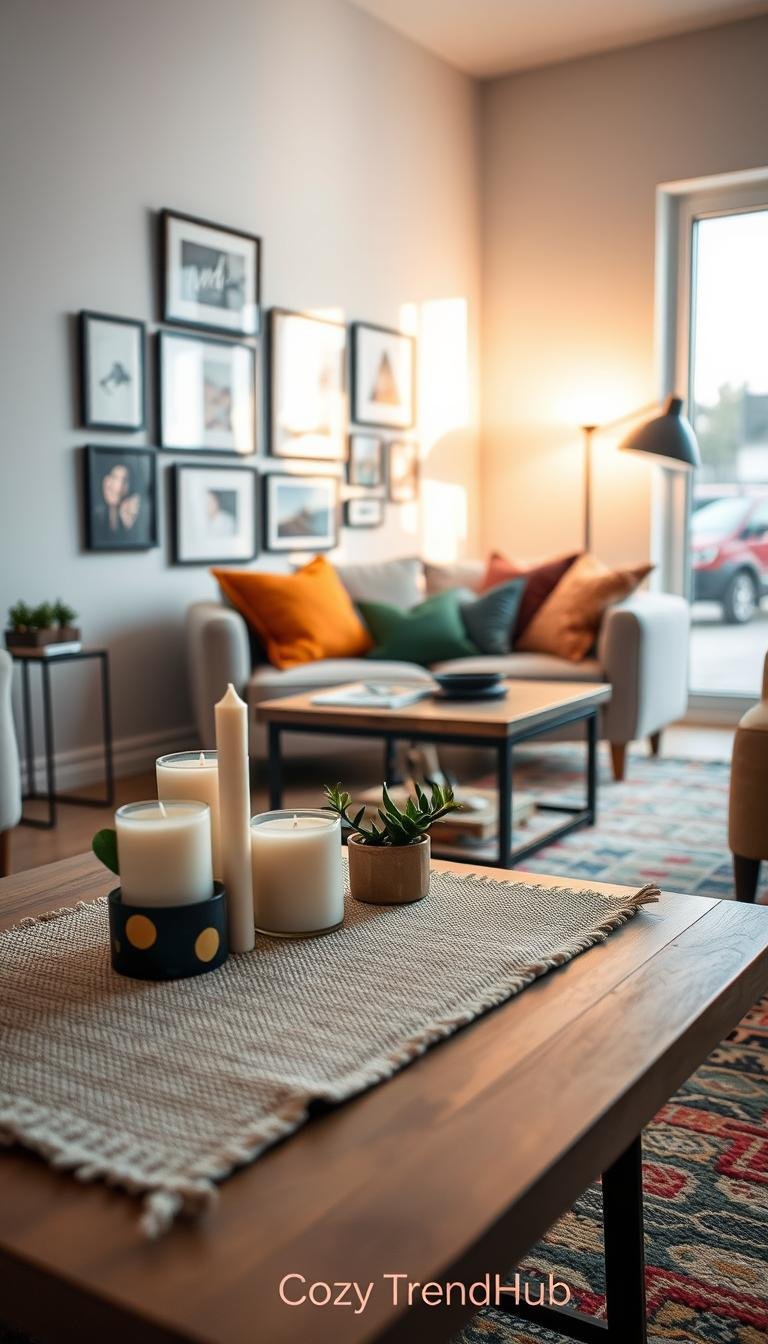
This guide lays out practical, high-impact changes that refresh a room without a full renovation. The focus is on renter-friendly tweaks, small-space solutions, and seasonal resets that deliver clear visual payoff.
Designers note that a few affordable swaps can transform interior feel. Expect suggestions under $100, like dimmers, motion-sensor closet lights, and hardware swaps that need no contractor.
The selection criteria are simple: high visual reward, realistic effort, and options for spaces where painting or drilling is limited. Each item includes a “best for” use, what to measure, what to buy, and a quick pros/cons snapshot.
This guide also flags quick cost and time expectations, renter-friendly alternatives, and the impact level so a reader can pick the right change today. It notes limits too—these fixes improve looks but won’t solve structural failures.
Readers will find both budget picks and small splurge options, plus clear buying cues to support confident decisions.
Key Takeaways
- Practical swaps can alter a room’s look fast with low cost and little time.
- Choices favor renters and small-space dwellers who need nonpermanent solutions.
- Each suggestion lists best-for scenarios and buying considerations.
- Expect clear cost, time, and impact notes to compare options easily.
- The guide warns where an upgrade won’t replace needed repairs.
What “big visual impact” really means in a room (and how to spot the fastest wins)
The fastest visual wins come from changing how light, color, scale, and texture work together.
Define the impact: A true visual shift raises perceived brightness, tidiness, scale, and cohesion. These changes often happen without new sofas or floors. They change how a room feels at first sight.
High-impact levers and the problems they solve
- Color — fixes flat walls and ties finishes for a unified look.
- Light — cures dark corners and harsh overheads with layered lighting.
- Scale — corrects too-small art or oversized furniture to restore balance.
- Texture — masks wear, adds warmth, and refreshes surfaces via textiles.
Quick diagnostic and renter-friendly limits
Scan a room for these signs: glare or too-strong overhead lighting, art that’s undersized, clashing finishes, and visible clutter. Those are the fastest wins to target.
Renter-friendly swaps are reversible: textiles, plug-in lamps, and command-hung art. Items that may need permission include hardwired dimmers, trim or door paint.
Small-space rules and a comparison approach
To avoid a busy feel, limit competing focal points, size key pieces correctly, and keep walkways clear. That improves space feel immediately.
| Action | Impact Level | Cost | Time | Renter-Friendly |
|---|---|---|---|---|
| Textile swap (throws, pillows) | Medium | Low | Under 1 hour | Yes |
| Layered lighting (plug lamps) | High | Low–Medium | Under 2 hours | Yes |
| Rearrange furniture | High | Free | 30–90 minutes | Yes |
| Install dimmer switch | High | Low–Medium | 30–60 minutes | Often needs permission |
Use the chart as a quick way to match impact to your constraints — cost, time, and renter rules — and pick the most logical win for your space.
Bring in greenery that instantly makes your home feel fresher
A single green plant can change how a room reads, turning empty corners into intentional vignettes.
Why it works: Greenery adds organic shape and natural color. It softens hard edges and creates a lived-in accent that lifts mood and visual interest quickly.

Best for
Use plants to fill dull corners, refresh spaces after holiday clear-outs, or anchor an entry with one strong piece.
Buying considerations
- Check the spot’s light level and match it to the plant.
- Note pet safety and drainage needs for your home.
- Choose pot size and weight that fit the floor or shelf.
- Decide if maintenance fits your life—water schedules, pruning, pests.
Pros and cons
Real plants boost airiness and require care. Florals offer seasonal color. Faux suits low-light or travel-heavy households if leaves are matte, varied in tone, and scaled correctly.
Designer ideas: Place one medium tree as a statement or scatter small pots on a shelf to create a living wall effect.
Swap soft furnishings for an easy seasonal reset
A quick textile refresh can change a room’s palette and texture in under an hour. This approach suits renters and seasonal decorators who want reversible impact with low time and cost.
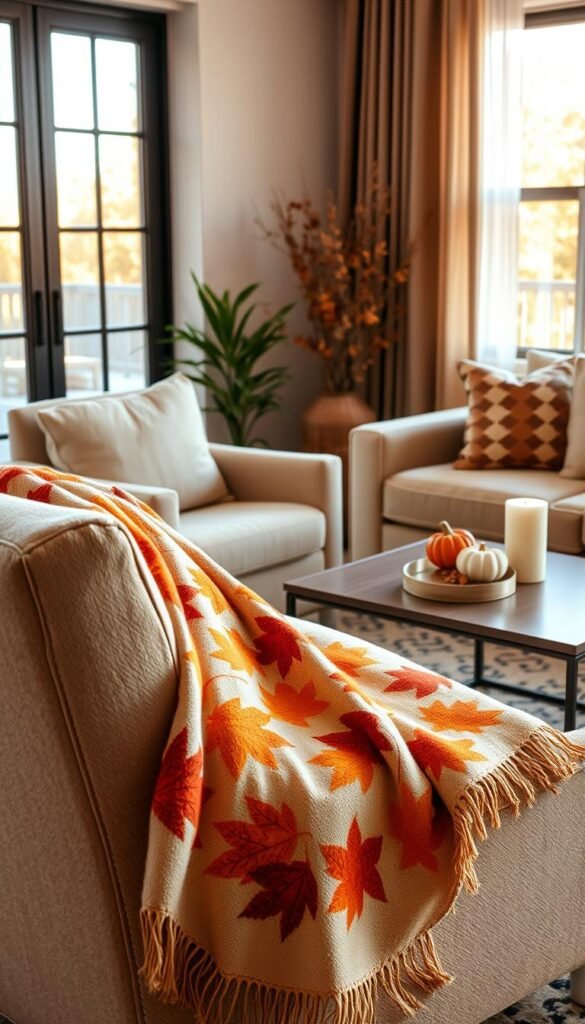
- Start with a throw on the sofa—wool blends or faux fur add winter warmth.
- Replace or add throw pillows with removable, washable covers for easy care.
- Use slipcovers when upholstery feels dated; they hide wear without tools.
Buying considerations
Choose texture for visual depth and removable covers to avoid regret. Look for full inserts so throw pillows keep their shape. Laura Medicus recommends January swaps for a burst of color; Thecla Glueck notes that changing texture through the year elevates design.
Pros and cons
Bold textiles create a quick focal point but may tire faster. Neutral layering keeps the palette flexible and mixes well across seasons.
Mini plan for small spaces: limit patterns to one or two, repeat one color, and keep a single hero throw to keep the room cohesive and uncluttered.
Refresh your walls with paint touch-ups or a full color change
When walls show scuffs or feel tired, a targeted paint refresh clears the visual slate fast.
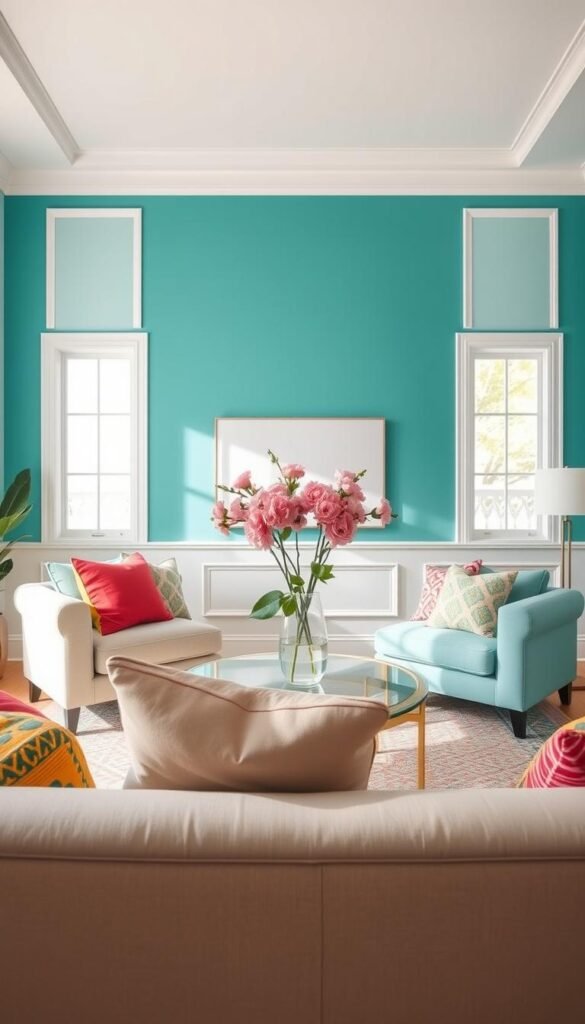
Best for
Scuffs, stains, and rooms that need a clean slate. Touch-ups handle small marks after entertaining. A full repaint resets an entire room for a unified look.
Choosing color for impact
Warmer neutrals soften light and bring cohesion. Tonal palettes layer one hue in different shades to make an interior feel intentional.
Test swatches on multiple walls and observe them across the day before committing.
Finish options that add depth
Standard paint is durable and easy to clean. Limewash or fresco-style finishes add subtle patina and movement, as recommended by designers for aged depth.
Pros and cons
- Touch-up: low cost, quick (touch-up in an hour), renter-friendly when allowed; risk—mismatched sheen or batch flash.
- Full repaint: uniform look, longer lasting; costlier and takes a weekend but often saves time later.
| Approach | Time | Renter-friendly |
|---|---|---|
| Touch-up | 1 hour | Usually |
| Weekend repaint | 2 days | Sometimes (permission) |
Switch around artwork to change the vibe without changing your furniture
Moving art and updating frames can turn blank walls into a clear focal point. This fix suits anyone whose living room or bedroom feels unfinished because walls are bare or pieces are undersized.
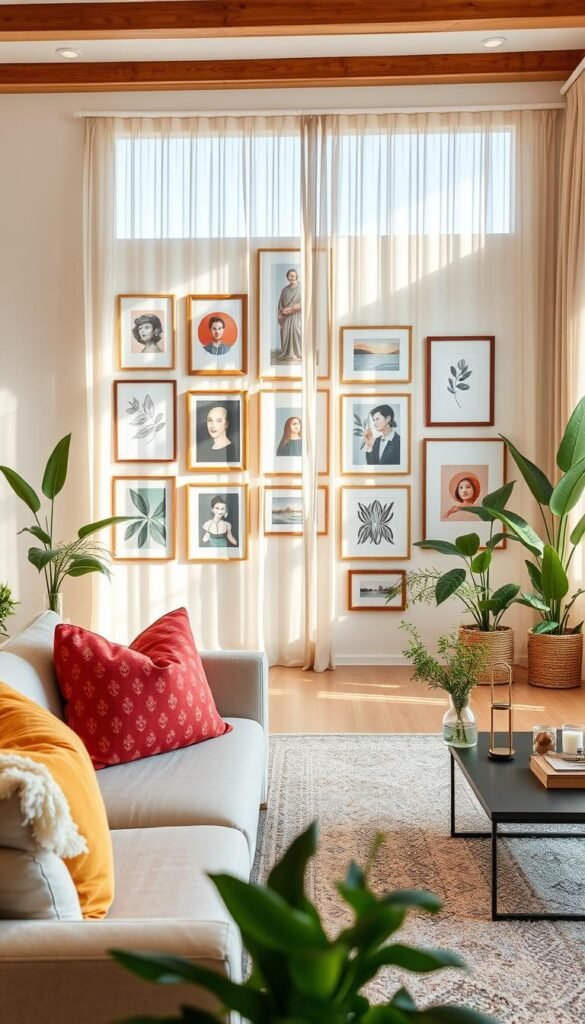
Quick win: Move existing pieces first—no cost, immediate impact. Then add one statement piece above a sofa or bed where the eye naturally lands.
- Thrift-first plan: Shop thrift stores, Facebook Marketplace, and garage sales for solid frames, prints, or vintage tapestries. Look for texture and proportion over trend.
- Scale rules: Choose larger pieces rather than many tiny ones. Anchor art above furniture with 4–8 inches of space and use matting to elevate small prints.
- Glare-free placement: Avoid hanging opposite direct light. Use matte glass or no glass and test sightlines from the sofa and bed to prevent reflections.
„Statement art is a great bang for your buck,“ — Rory Everitt
Purchase-practical ideas: a budget print + new frame combo, an oversized textile as a statement wall, and renter-friendly hanging hardware that won’t damage paint. Consider cost versus longevity: frames and proper hanging make thrift finds feel designer-made.
Declutter surfaces to make your space feel larger and calmer
A focused sweep of tabletops, counters, and nightstands changes how a space reads.
Visual clutter makes a room feel smaller and busier. It also raises cleaning time and stress, especially after holidays. Start by defining the problem: loose mail, unused chargers, and small ornaments crowd sightlines and break calm.
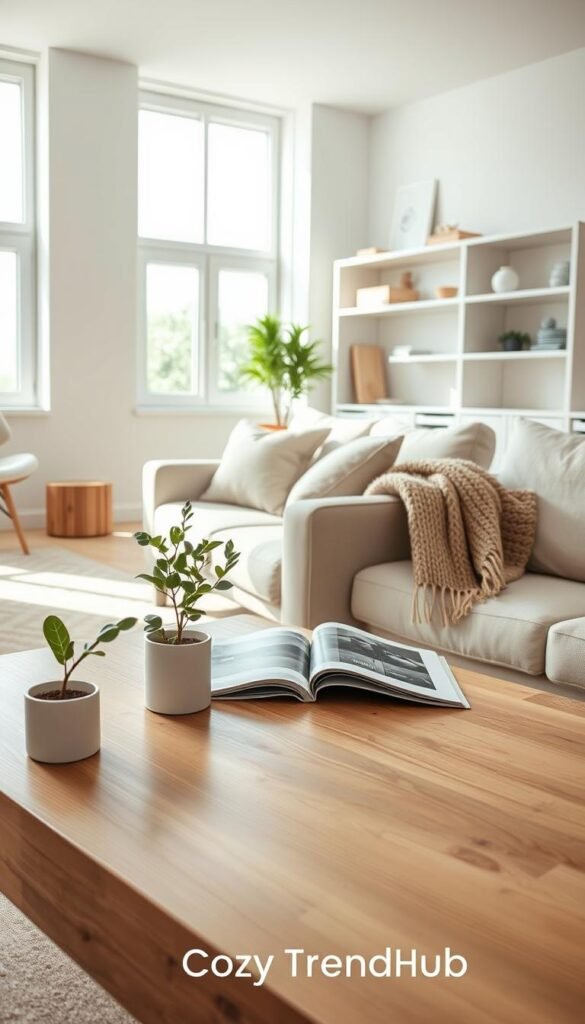
Quick method: edit, store, rotate
Edit: Remove everything from one surface and sort into keep, toss, or relocate piles.
Store: Put items away in a basket, lidded bin, or canister so surfaces stay clear.
Rotate: Display a few seasonal pieces and swap them monthly to avoid tchotchke overload.
Storage buys that solve repeat clutter
- Seagrass baskets for throws and toys; they hide bulk and look textured.
- Lidded plastic or woven bins for “misc” categories—electronics, receipts, and craft items.
- Glass or ceramic countertop canisters for daily essentials like utensils or cotton swabs.
Pros and cons: open vs. closed storage
Open storage reads styled and accessible but needs discipline to avoid mess. Closed storage cuts visual noise but can create forgotten “junk zones” if items aren’t labeled or sorted.
Small-space rule: keep one tray or one intentional object per surface. That single move helps the room feel calm and purposeful.
| Storage Type | Best for | Pros | Cons |
|---|---|---|---|
| Seagrass baskets | Blankets, toys | Textural, breathable, renter-friendly | Needs regular tidying to avoid overflow |
| Lidded bins | Closet misc items | Hides clutter, stackable, cheap | Can hide unlabeled junk if not sorted |
| Countertop canisters | Daily items (cotton, utensils) | Keeps counters useful and tidy | Must match scale or it adds clutter |
Product blocks: best budget basket set, best lidded bin for closets, best matching canisters for a cleaner kitchen look.
Rearrange furniture for a no-cost upgrade that changes the whole living room
A well-planned furniture shuffle can change how a living room breathes without spending a dime. This renter-friendly move fixes awkward layouts, blocked windows, cramped walkways, and seating that doesn’t face the room’s focal point.
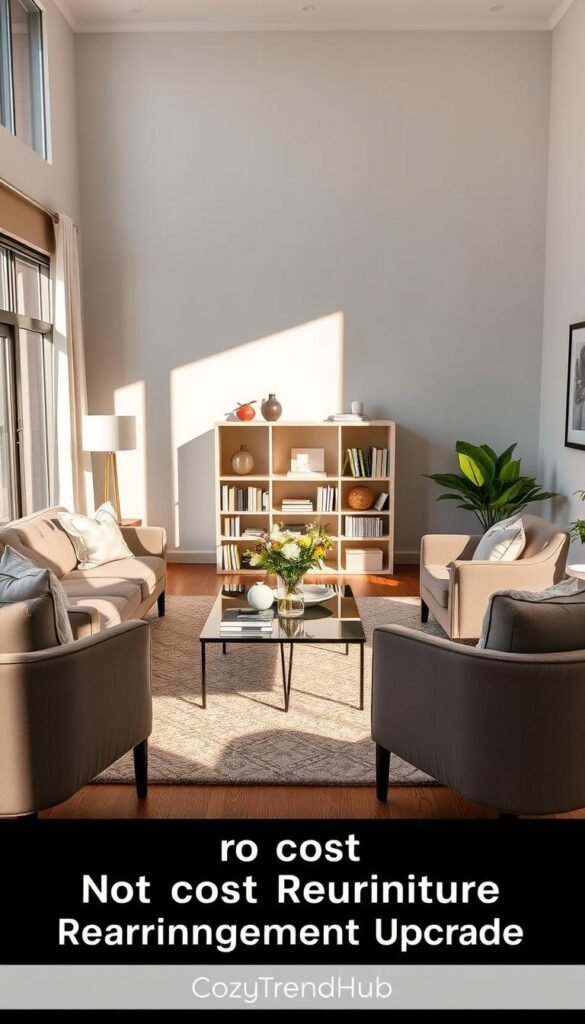
What it solves
- Blocked light and curtained sightlines.
- Cramped paths that force sidesteps.
- Mismatched TV and seating alignment.
- A living room that reads smaller than its floor area.
Step-by-step layout process
- Measure the floor and note main pathways.
- Identify the focal point (window, TV, fireplace).
- Place the largest furniture first to keep circulation clear.
- Float the sofa when possible and define zones with a rug or console.
- Test walkways and adjust until drawers and doors open freely.
Small-space tips: avoid pushing every piece to the wall, keep sightlines to natural light open, and use a slim side table or small lamp if a layout needs a slight boost.
„Move what you own — rehang art, shift layouts, restyle vignettes.“ — Thecla Glueck
Before/after checkpoints: Can people walk through without sidestepping? Do drawers open fully? Does seating face the focal point? If yes, the new layout works.
Upgrade lighting with dimmer switches for better mood and function
Controlling brightness gives a room flexibility—morning tasks and evening wind-downs need very different light levels. Dimmers let one fixture serve multiple moods without changing the fixture or furniture.
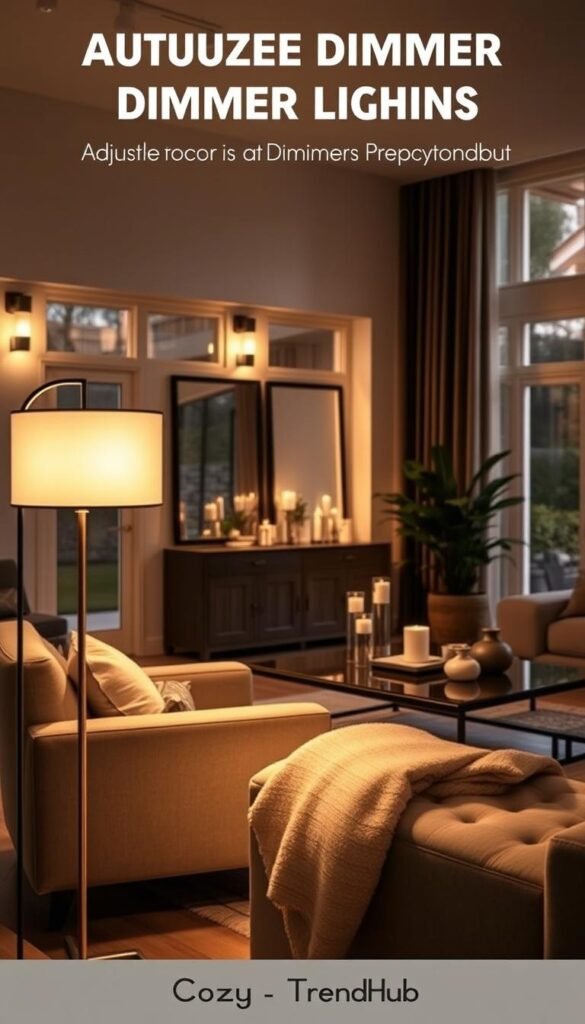
Best for: bedrooms, living areas, and bathrooms that suffer from harsh overhead light. Hayley Kidd notes dimmer switches create ambiance and can cost about $20 per switch.
Buying checklist
- Confirm LED bulb compatibility — not all dimmers work with LED loads.
- Choose standard versus smart dimmer based on control needs and wifi setup.
- Check wall box depth and wiring type; older homes may need an electrician.
- Measure the fixture and circuit so the dimmer matches the load.
Renter-friendly alternatives
If replacing a switch isn’t allowed, use plug-in solutions. A table lamp with an integrated dimmer, a dimmable smart bulb, or a dimmable plug adapter gives similar control without hardwiring.
Pros and cons at a glance
| Option | Pros | Cons |
|---|---|---|
| Dimmers (hardwired) | Clean look, full-range control | May need permission or an electrician |
| Plug-in lamps | Add layer of light, portable | Require surface space |
| Smart bulbs | Flexible scenes, remote control | Can be finicky in mixed fixtures |
Quick decision way: If you can change wiring and want a built-in look, choose a quality dimmer. If you rent or need a fast fix, pick plug-in dimming or smart bulbs to add layered lighting and avoid permanent changes.
Affiliate picks:
- Budget dimmer: basic compatible switch around $20 for standard installs.
- Smart dimmer: for app control and scenes.
- Renter-friendly accessory: dimmable plug adapter that works with lamps and table accessories.
Add motion-sensor closet lighting to make storage feel high-end
Dark closets hide outfits and slow morning routines, but a targeted light fix solves both problems fast.
Best for: deep closets, dark wardrobes, and rental bedrooms that need renter-safe solutions.
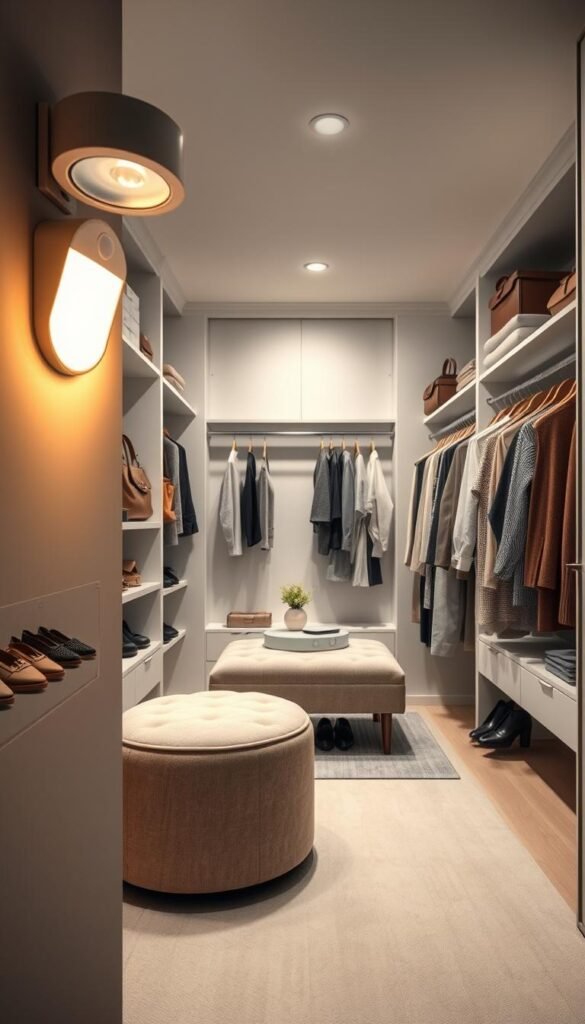
Why this matters
Items get lost in shadowed shelves, which leads to duplicate buys and wasted space. A motion-sensor strip or puck makes everything visible and organized.
Buying considerations
- Type: stick-on LED strip vs. puck lights — strips give even coverage; pucks work well on shelves.
- Battery life: check run time and recharge options so lights don’t die mid-season.
- Brightness & sensor: lumens for corners and sensor sensitivity to avoid false triggers.
- Installation: clean surfaces, use removable mounts, and test placement to avoid shelf shadows.
Pros and cons
Motion sensor: hands-free and premium-feeling but can trigger unexpectedly. Tap lights: simple and reliable but less convenient when hands are full.
| Pick | Why choose it | Cost & time |
|---|---|---|
| Budget strip | Even coverage, adhesive mount | Under $30, minutes to install |
| Rechargeable option | No batteries, USB recharge | $40–$60, quick setup |
| Brightest pick | High lumens for large closets | $60–$100, 10–20 minutes install |
Note: Designers report motion-sensor strips can give a custom-closet look for under $100 without wiring, making this a fast, renter-safe accessory that changes both function and look.
Replace cabinet hardware in the kitchen or bathroom for a fast facelift
Swapping worn knobs and pulls gives a kitchen or bathroom an instant, measured lift.
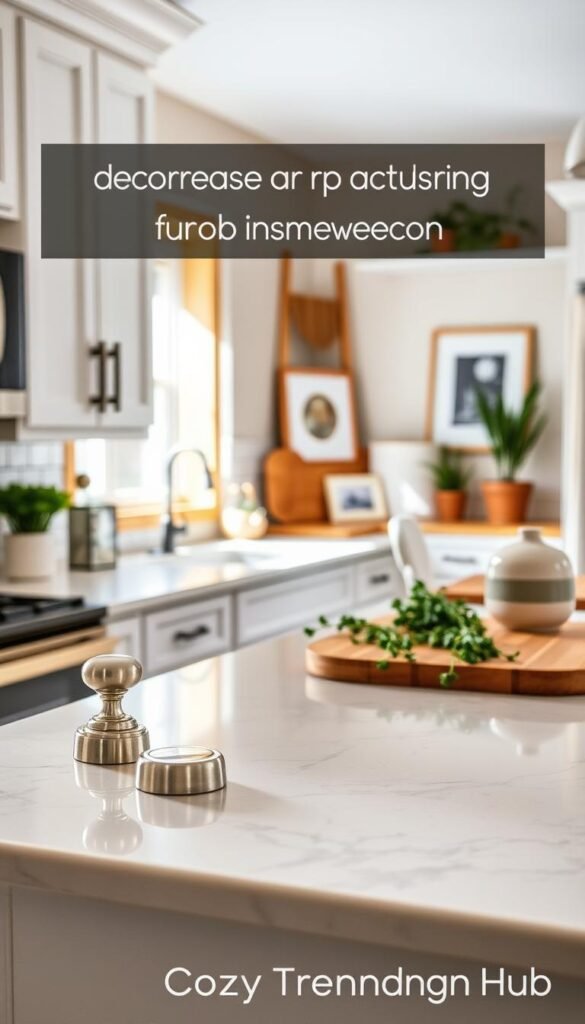
Builder-grade hardware can date cabinets even when the boxes are sound. A targeted swap refreshes the room without a full remodel and usually takes one afternoon.
Buying checklist
- Count doors and drawers before you shop so you buy the right quantity.
- Measure center-to-center hole spacing for pulls and confirm screw length for door thickness.
- Decide knob vs. pull: knobs are compact and cost-effective; pulls ease use on heavy drawers.
- Match finishes to faucets and lighting, or plan a purposeful mixed-metal scheme for cohesion.
Pros and cons
| Option | Pros | Cons |
|---|---|---|
| Knob | Lower cost, classic look | Less leverage on heavy drawers |
| Pull | Modern feel, ergonomic | Taller profile can catch clothing |
| Mixed metals | Layered, designed look | Needs a clear rule to avoid chaos |
When to stop: If cabinet boxes sag, doors warp, or hinges fail, hardware alone won’t fix the problem. Spend on repair or replacement first; new knobs are cosmetic if the structure is compromised.
Tip: Track cost and time before buying—measure, plan finishes, then purchase to avoid returns and mismatched sets.
Refresh your bathroom with upgraded towel bars, hooks, and accessories
A quick swap of visible fittings gives a plain bathroom an intentional, pulled-together look. Secondary baths often feel generic because finishes don’t match or hardware shows daily wear.
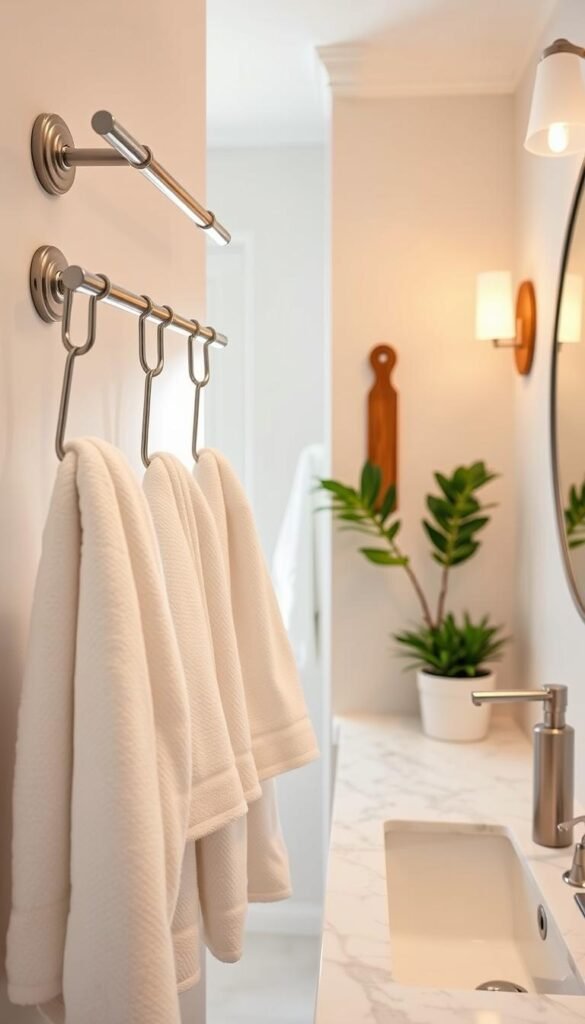
Practical strategy
Pick one finish family — matte black or brushed gold — and replace the most visible pieces first: towel bar, hooks, and toilet-paper holder. Start where the eye lands, then add smaller items to match.
Durability & buying tips
- Choose finishes that resist chipping and hide fingerprints.
- Look for solid mounts and longer screws where towels are tugged often.
- Match or intentionally contrast the faucet and mirror frame for a cohesive design.
Renter-aware options
If drilling isn’t allowed, use strong adhesive hooks and temporary mounts. Save original hardware so the property can be returned to its prior condition.
„Swap the high-contact pieces first — you’ll see the room change overnight.“ — Lee Crowder
Affiliate ideas: budget accessory set, durable finish set, and renter-friendly no-drill hooks.
Use a rug to add warmth, define zones, and hide imperfect floors
A well-chosen rug can unify mismatched floors and carve defined zones in open-plan rooms. It fixes visual problems quickly and makes a living area or bedroom feel intentional without structural work.
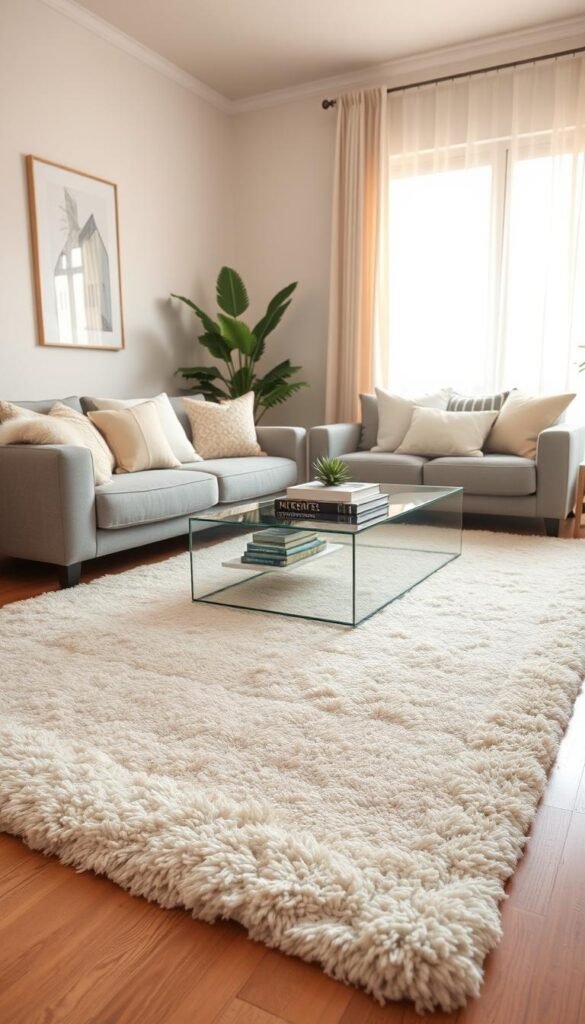
Why this helps
Worn or uneven floor surfaces drag a space down. A rug masks surface flaws and sets a clear edge for seating or sleeping zones. In open plans, rugs create “rooms” inside a larger footprint.
Sizing, pile, and pad rules
- Living room: place front legs of furniture on the rug so seating reads anchored.
- Bedroom: extend the rug at least 18 inches beyond the bed sides for a soft step down.
- Choose low pile for heavy traffic and door clearance. Add a rug pad for grip, longevity, and a finished look.
Vintage-inspired vs. new
Vintage-inspired pieces add character, hide wear, and age well. Heather Goerzen notes they bring history and warmth while often costing less when sourced secondhand.
New rugs offer predictable sizes, easier returns, and modern fibers. Tradeoffs include shedding and variable durability.
| Use | Feature | Recommendation |
|---|---|---|
| Rentals | Durable, low pile | Choose synthetic fibers + pad |
| Cozy warmth | Higher pile | Prefer wool or pile blends |
| Budget buys | Size & pad included | Shop sales and secondhand |
Shop-smart ideas
Watch seasonal sales, check thrift and marketplace listings, and always measure doors and floor area before you buy or pick up.
„Vintage-inspired rugs bring character and warmth at a friendly cost,“ — Heather Goerzen
Try applied wall molding for character without a full renovation
Framing a mirror or headboard with applied molding makes a room feel considered and built-in. Plain walls often make a bedroom or entry read flat, even when furniture and textiles are strong.
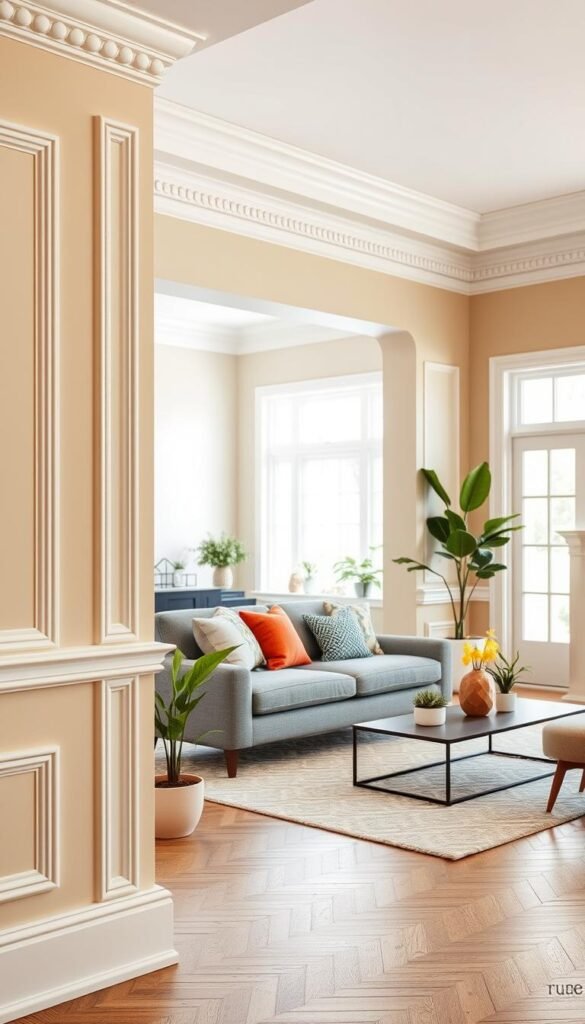
Best for
Bedrooms, entries, and any statement wall that needs a focal point or to frame a mirror, art, or light fixture.
Buying and DIY considerations
- Assess skill level: a confident DIYer can handle straight rails; complex patterns may need a pro.
- Tools: miter box or saw, level, measuring tape, adhesive, finishing nails, and caulk.
- Measure twice, cut once — plan pieces and dry-fit before glue or paint.
Paint strategy and visual effect
Paint the molding the same color as the wall for subtle texture. Use a shade lighter or darker to create definition without heavy contrast.
Pros and cons
- Match the wall: calm, forgiving of small gaps.
- Subtle contrast: more statement but it will show imperfect lines if rushed.
„Applied molding frames objects like mirrors and sconces, giving rooms an architectural finish,“ — Ashley Macuga
Renter note: This is usually homeowner territory unless you have permission. Expect a weekend project for one wall and modest cost for materials and paint.
Paint the front door for instant curb appeal (even on a budget)
A freshly painted front door can change a house’s curb appeal more than a new mailbox. Many homeowners see a big visual shift in one afternoon with modest cost and little time. Danielle Elderkin notes that a vibrant door is a cost-effective way to boost curb appeal quickly.
Define the problem: the exterior looks tired or forgettable and the entry fails to make a clear first impression.
Why it works: the door is a concentrated focal point. A single area of color changes the way the whole facade reads and directs the eye.
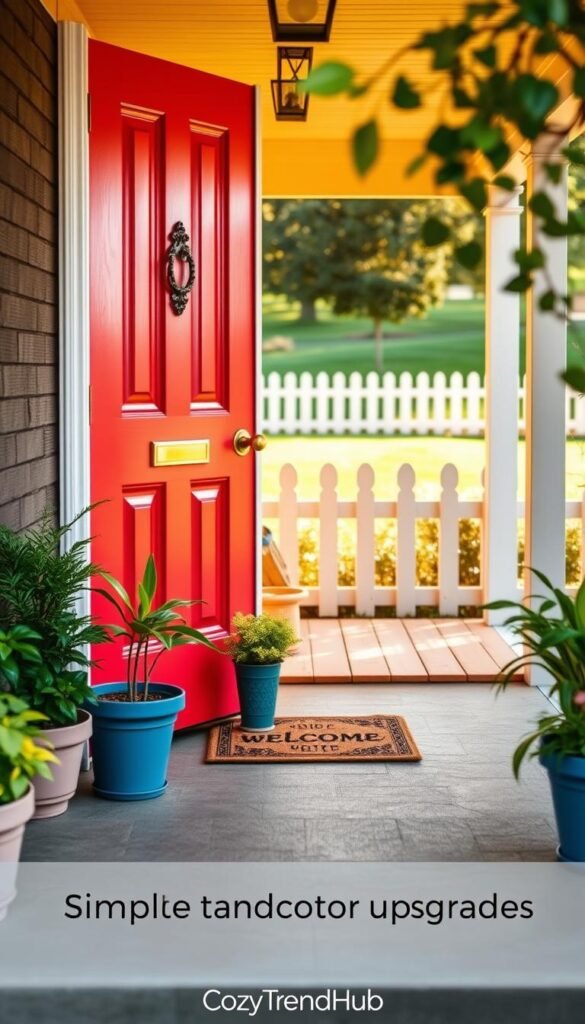
Prep and process
- Clean the surface, remove dirt and loose finish.
- Lightly sand glossy spots and prime bare wood or metal.
- Tape hardware or remove it for a cleaner result.
- Plan dry time and apply two thin coats for even coverage.
Sheen and color choices
Pick a durable, wipeable sheen (satin or semi-gloss) to resist weather and frequent touch. For color, bold hues read energetic and modern but are a stronger commitment. Neutral tones feel timeless and wide-appeal but provide less drama.
Quick checklist for purchase
- Exterior door paint type: acrylic latex exterior or porch & floor enamel for durability.
- Budget tools: sanding block, painter’s tape, angled sash brush.
- Color families: deep navy, warm red, charcoal, or soft taupe to match common design styles.
„A painted door delivers a fresh look in minimal time and cost,“ — practical approach favored by many designers.
Upcycle a tired furniture piece instead of replacing it
Giving an old dresser renewed life often costs a fraction of replacing it and changes the whole room.
This approach suits a dated dresser, a worn chair, or a mismatched side table. Start by identifying the problem: a single dated item can make an otherwise cohesive room feel off.
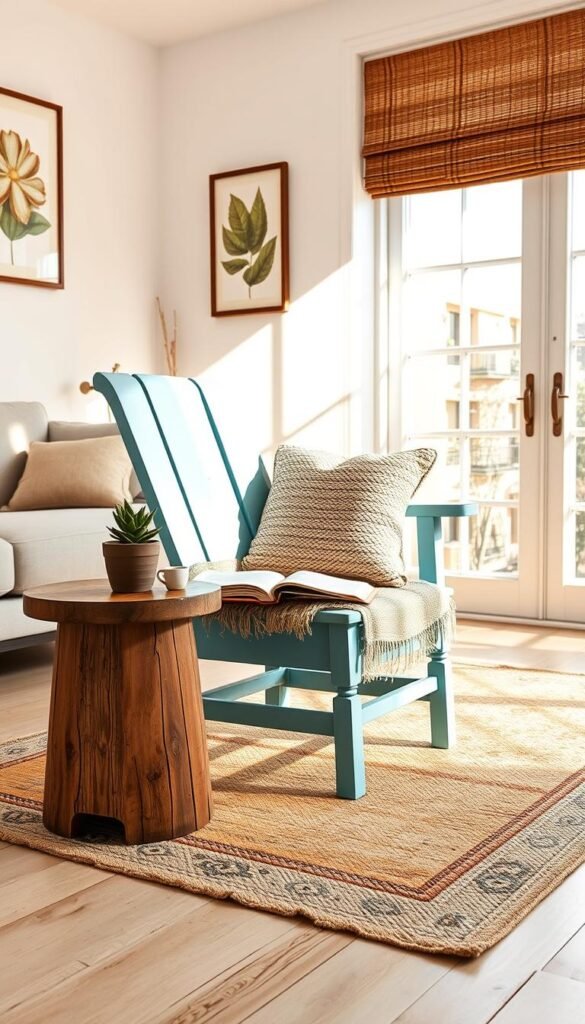
What to do
Clean thoroughly, then lightly sand the surface. Use the right primer for the material and pick a paint formulated for furniture. Finish with a clear topcoat where surfaces see heavy use.
Buying considerations
- Sandpaper grits: 120–220 for initial smoothing and 320 for a final scuff.
- Brush vs. roller: foam brush for trim, small roller for flat panels.
- Low-VOC paint and planned drying/curing time for indoor projects.
When hardware matters
New pulls or knobs change perception quickly. Drawers and cabinet-style pieces benefit most because hardware gets daily wear and signals quality.
Pros and cons
Pros: Lower cost, less waste, and a tailored look.
Cons: It takes time and careful prep; durability depends on technique and use.
| Item | Why it helps | Time & cost |
|---|---|---|
| Sand set | Speeds prep, avoids rework | 30–60 min, low cost |
| Furniture paint system | Durable finish, fewer coats | 2–8 hours drying, mid cost |
| New hardware | Immediate visual lift | Minutes to install, low cost |
„Experiment with finishes — a satin topcoat can feel modern while protecting high-use surfaces.“ — Hayley Kidd
Affiliate picks idea: sanding set, durable paint kit, hardware upgrade for dressers and side tables. These choices save time and reduce redo work while delivering visible results.
How to choose the best simple home decor upgrades for your space and budget
Start with one clear problem in a room and pick the upgrade that directly fixes it. This keeps purchases purposeful and helps the project show progress fast.
Match the upgrade to the problem
- Dark room: lighting, dimmers, or lighter wall paint to raise brightness.
- Cluttered room: declutter, storage baskets, and multi-use table pieces.
- Bland room: art, textiles, plants, and a mirror to add depth and scale.
- Dated room: hardware swaps, upcycling furniture, or a fresh coat on a bed frame.
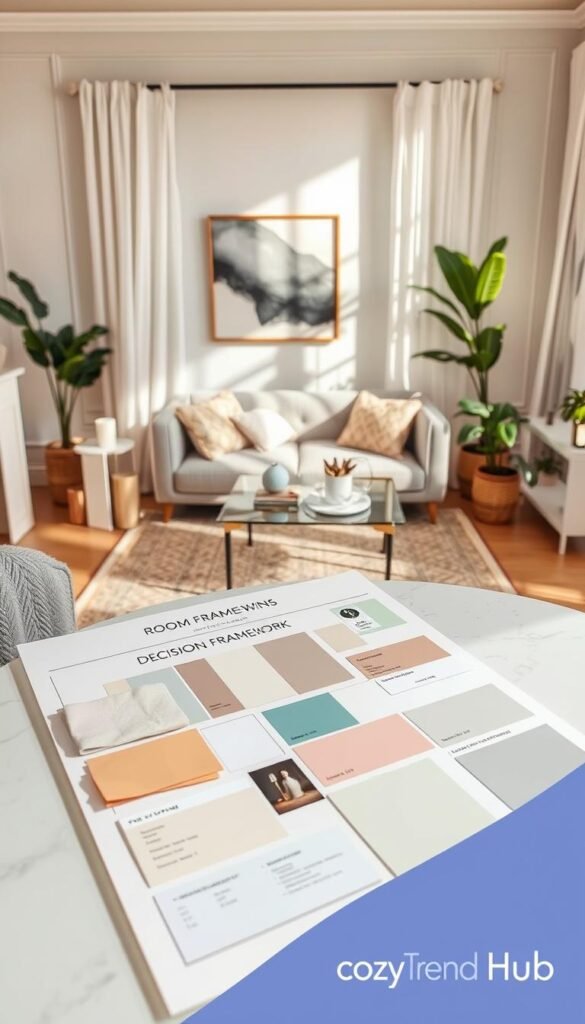
Quick comparison framework
| Action | Cost range | Time | Renter-friendly | Visual impact |
|---|---|---|---|---|
| Rearrange / declutter | $0 | 30–90 min | Yes | Medium |
| Textiles / lighting | $20–$100 | Under 2 hours | Yes | High |
| Paint / hardware | $50–$300 | Weekend | Sometimes | High |
Small-space guardrails and seasonal planning
In tight spaces, pick scaled art and low-pile rugs so a table or bed doesn’t feel crowded. Favor multi-use storage that looks finished.
For seasons: add texture and warm lighting for winter now. Swap in lighter textiles and fresh greenery for spring without redoing the whole room.
Affiliate block template (repeat under each upgrade)
- Budget pick: one low-cost option for immediate impact.
- Splurge pick: a durable, longer-lasting version if budget allows.
- Renter-friendly pick: nonpermanent alternative that returns easily.
- What to measure/check: hole spacing, doorway clearance, light level, and finish compatibility before you buy.
Practical sequence and stop points
Start with no-cost moves (rearrange, edit surfaces), then add low-cost items (textiles, lighting), then moderate projects (paint, hardware). This sequence keeps momentum and limits wasted cost.
Stop points: don’t invest in cosmetic fixes when cabinet boxes sag, bathroom moisture needs repair, or the floor requires replacement.
Conclusion
Start with what’s in view: brighter light, clearer surfaces, and one well-chosen accent to reset a room and the wider interior without a full overhaul.
Quick recap: improve how a space reads by cutting visual noise, adding greenery or textiles, and using art or a mirror as a single focal accent that ties a wall, frame, or bed area together.
Renter-friendly paths favor reversible fixes—plug-in lighting, slipcovers, and repositioned art—that save time and cost while boosting everyday life. Use the comparison table to match ideas to your constraints and pick the right way forward.
Practical next step: choose one action to do this week and one to plan for the season ahead. Prioritize comfort and daily life as much as style—those designer-led choices last longer in real spaces.



3 Comments