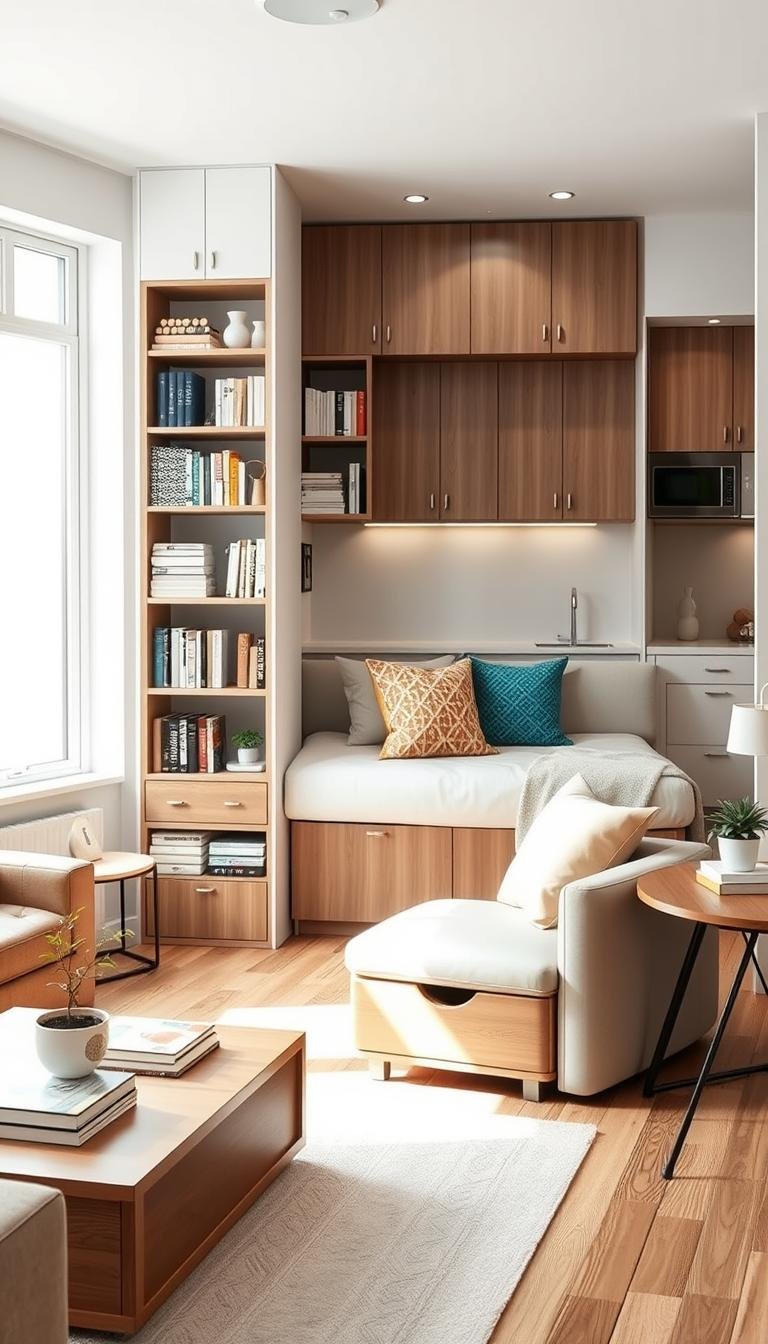
Living in a compact home brings one clear problem: limited storage makes daily items spill into living areas and creates constant reset work.
The guide frames practical, product-led solutions. Smart products here means space-efficient, renter-friendly, and easy-to-maintain items that free floor area without renovations.
This article acts as a buyer’s guide. Each section names a common pain point—shoes piling up, drawers turning into black holes, odd kitchen corners—and matches it to product categories that solve it.
Expect clear comparisons and affiliate-style product blocks. The write-ups will list pros and cons, what to measure first, and trade-offs like open versus closed storage or baskets versus clear containers.
Renter-friendly installs are prioritized: removable adhesive, over-the-door systems, tension rods, and modular add-ons that avoid drilling. Seasonal strategies will show how to move out-of-season clothes and gear off prime shelves.
Key Takeaways
- Defines the clutter problem for compact living and why targeted products help.
- Clarifies what makes a product „smart“: efficiency, renter-safe, low maintenance.
- Previews room-by-room matchups and comparison blocks for quick buying choices.
- Highlights measuring, pros/cons, and install methods to consider before purchase.
- Includes seasonal storage tips to keep prime-access areas clear.
How to Choose Smart Storage Products for Small Spaces Without Wasting Money
Start by taking a few quick measurements so purchases actually fit the room. Note wall space width, door swing and hinge clearance, and the floor space you can’t give up. These three numbers stop common returns and wasted spending.
Measure first: wall space, door clearance, and floor space you can’t lose
Measure vertically and horizontally. Mark door swings so over-the-door racks or double rods won’t hit hinges or trim.
Renter-friendly filters: damage-free hooks, over-the-door racks, and tension options
Prioritize removable fixes: self-adhesive hooks that work on tile, over-cabinet hooks, and tension rods before drilling into any wall.
When clear containers beat baskets (and when they don’t)
Clear containers work for pantry items and seasonal bins—visibility reduces duplicates. Baskets win in living areas where a warmer look and quick toss-in use matter.
What to prioritize for seasonal storage and out-of-season items
Keep seasonal items in lidded bins with handles. Use a simple matrix: daily items at arm’s reach, occasional items higher, seasonal items in protected bins.
| Product | Best for | Pros | Cons |
|---|---|---|---|
| Over-the-door rack | Renters, entryways | No drill, high capacity | Door noise, hinge fit needed |
| Clear bins | Pantry, seasonal clothes | Fast visual inventory, label-friendly | Shows clutter if overfilled |
| Woven baskets | Living room, quick toss | Flexible, hides mess | Can become catch-all without labels |
Check weight capacity, moisture resistance, and vertical space before buying. These simple steps keep purchases useful and lasting.
Entryway Drop-Zone Fixes for Shoes, Coats, Bags, and Keys
A tidy entryway begins with a dedicated landing area that collects daily items before they spread through the room.
Narrow closed cabinets hide shoes, pet gear, and toys behind doors. Shallow units with labeled bins work well when the front door opens directly into living areas.
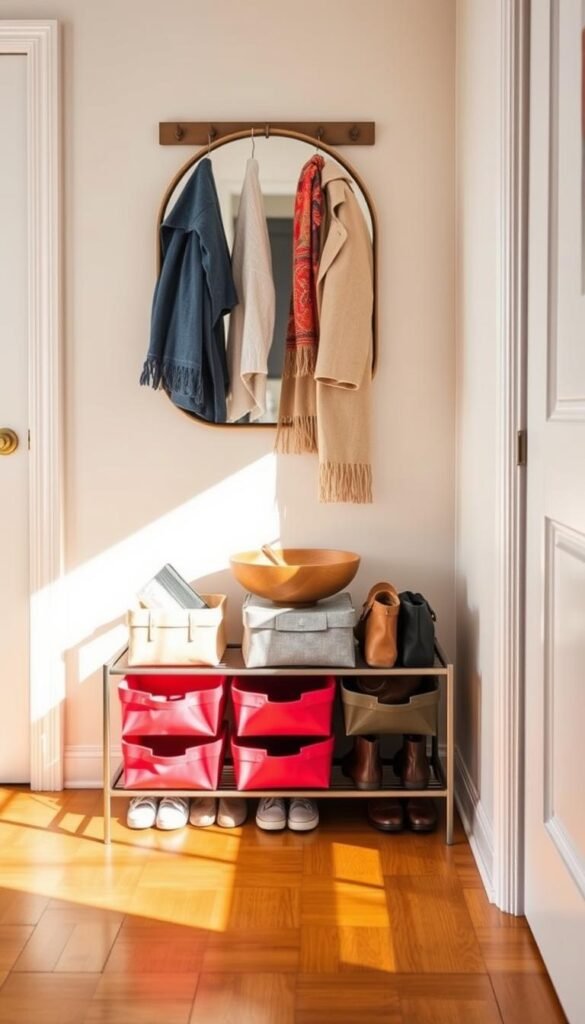
Bench + cubbies + matching bins
A bench gives a seat to put on shoes and cubbies keep pairs contained. Matching bins in upper compartments are ideal for busy households and renters who need fast resets.
Wall hooks at two heights
Install hooks at adult and child height so kids can hang backpacks and coats. Add an interior cabinet hook for leashes or frequently used items.
Wire basket for mail
A wall-mounted wire basket sized for letter mail cuts paper clutter. Pair it with a weekly sort to prevent overflow.
„Define one easy landing spot and daily resets take minutes, not hours.“
| Solution | Best for | Pros | Cons |
|---|---|---|---|
| Narrow closed cabinets | Renters, living-room entries | Hides clutter, tidy look | Needs regular sorting |
| Bench + cubbies + bins | Families, pet owners | Seating + organized storage | Requires floor width |
| Two-height wall hooks + wire basket | Kids‘ routines, mail control | Quick access, saves surfaces | Can look busy if unregulated |
Over-the-Door and Back-of-Door Organizers That Add Storage Instantly
Over-the-door organizers turn unused door backs into instant storage without tools. They free up cabinets and shelves fast and suit renters, dorms, and tight apartments.
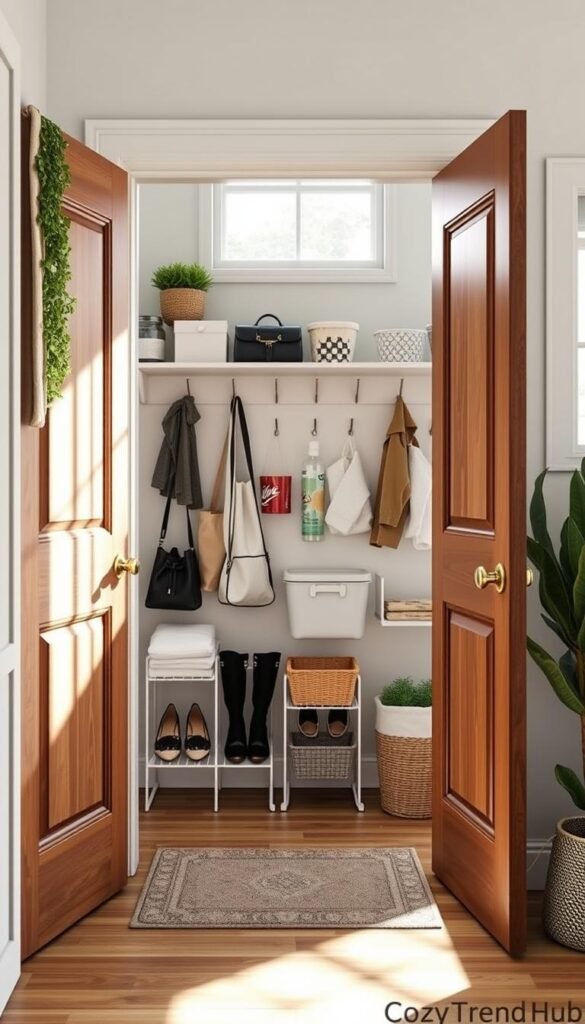
Renter-friendly installs and where they work
No-drill racks and over-cabinet hangers work well on bedroom, bathroom, and kitchen doors. The back door of a pantry or closet holds snacks, wraps, and small tools. Avoid doors with tight hinge clearance or uneven trim.
Buying checklist to prevent returns
- Measure door thickness and hinge-side clearance.
- Check hook type: over-door vs. clamp-on.
- Confirm load limit and measured depth from the door.
Noise, weight, and durability tips
Use felt pads or tighter brackets to stop rattling. Distribute weight across tiers to prevent sagging. Metal racks suit heavier items; fabric pockets work for lightweight daily items.
| Attribute | Typical Value | Why it matters |
|---|---|---|
| Number of tiers/pockets | 2–6 | More tiers = more reachable storage, but added weight |
| Material | Metal or fabric | Metal holds heavier items; fabric is lighter and quieter |
| Hook type | Over-door / clamp | Over-door is simplest; clamp fits thicker doors |
| Measured depth | 1–6 inches | Determines interference with closing and clearance |
Pros: fastest install, renter-safe removal. Cons: can rattle or block closing if sized incorrectly or overloaded.
Best Small Space Organization Hacks That Use Vertical Space (Not More Floor Space)
Empty walls offer the quickest wins when floors are already full. This section shows how to utilize vertical areas to add extra storage without taking up floor space.
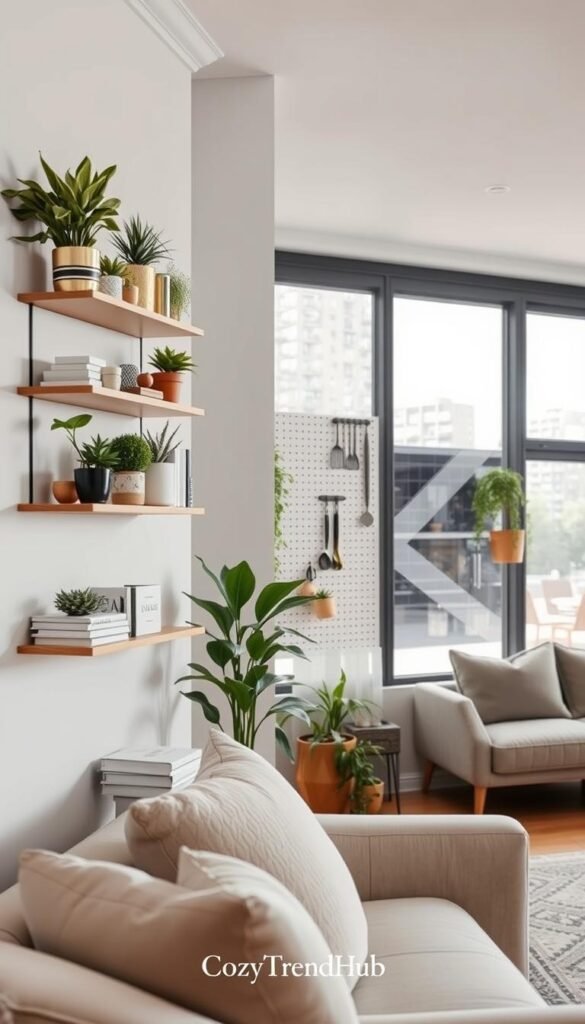
Floating shelves to turn blank wall space into daily-use storage
Floating shelves work for items used every day—keys, toiletries, and cookbooks. Choose a shallow shelf depth (6–10 inches) so the wall adds function without crowding the room.
Hanging baskets for laundry and cleaning supplies
Hanging baskets keep laundry soap, lint rollers, and rags off counters. Mount them at reachable heights in laundry nooks or bathrooms. Metal baskets suit heavier supplies; fabric pockets are lighter.
Self-adhesive hooks for tile and smooth surfaces
Self-adhesive hooks are renter-friendly and damage-free on tile, glass, and smooth plaster. Check packaging for surface compatibility and weight rating before installing.
Open shelving vs. closed shelving: trade-offs
Open shelving reduces friction and makes items easy to grab. Closed shelving hides visual clutter and keeps multipurpose rooms calm. Uniform bins and a limited palette keep open shelves looking intentional.
| Product | Best for | Weight/Capacity | Pros | Cons |
|---|---|---|---|---|
| Floating shelves | Entryways, bathrooms, kitchens | 10–50 lbs (varies by bracket) | Visible access; uses wall space efficiently | Needs proper anchors; can collect dust |
| Self-adhesive hooks | Renters, tile walls | 2–15 lbs (check rating) | Damage-free; quick install | Surface-dependent hold; moisture can reduce grip |
| Hanging baskets | Laundry zones, cleaning supplies | 5–25 lbs (by mount) | Keeps supplies off counters; easy reach | Can look busy if uncoordinated |
Buying note: Prioritize material durability and moisture resistance. For renters, choose removable mounts. For families, pick higher weight ratings and shallow shelving to preserve walking room and decor balance.
Under-Bed Storage Bins for Bedrooms With No Closet Space
The area under a bed can act as a discreet shelf for seasonal clothes, shoes, and spare linens. Treat it as deliberate storage instead of wasted real estate.

Who benefits: renters with tight closets, studio residents, and anyone rotating seasonal wardrobes. Shallow storage bins and sturdy baskets hold bulky boots and prevent overstuffing.
Choosing the right containers
Pick lidded containers for out-of-season clothing to block dust and reduce rewashing. Choose shallow models so items are easy to pull out.
Measure clearance first: bed height determines maximum bin height and whether wheels are useful.
- Measure bed clearance before buying.
- Prefer lids if allergies or dust are a concern.
- Pick pull handles or wheels for quick access.
- Store seasonal clothes and spare linens under the bed; keep daily shoes near the door.
| Attribute | Typical Value | Why it matters |
|---|---|---|
| Bin height | 3–8 inches | Must fit under bed frame and allow easy reach |
| Lid type | Snap, hinged, or removable | Lids protect from dust and pests |
| Handle style | Cutout, strap, or wheels | Improves retrieval and reduces effort |
| Material | Plastic vs fabric | Plastic is dust-proof; fabric folds for storage when empty |
Pros: invisible, high-capacity storage that frees visible surfaces. Cons: items can be forgotten without labels or a simple seasonal inventory list.
Drawer Dividers That Stop Clothing Piles and “Lost” Items
Fixed lanes inside a drawer stop stacks from toppling and make each item easy to see.
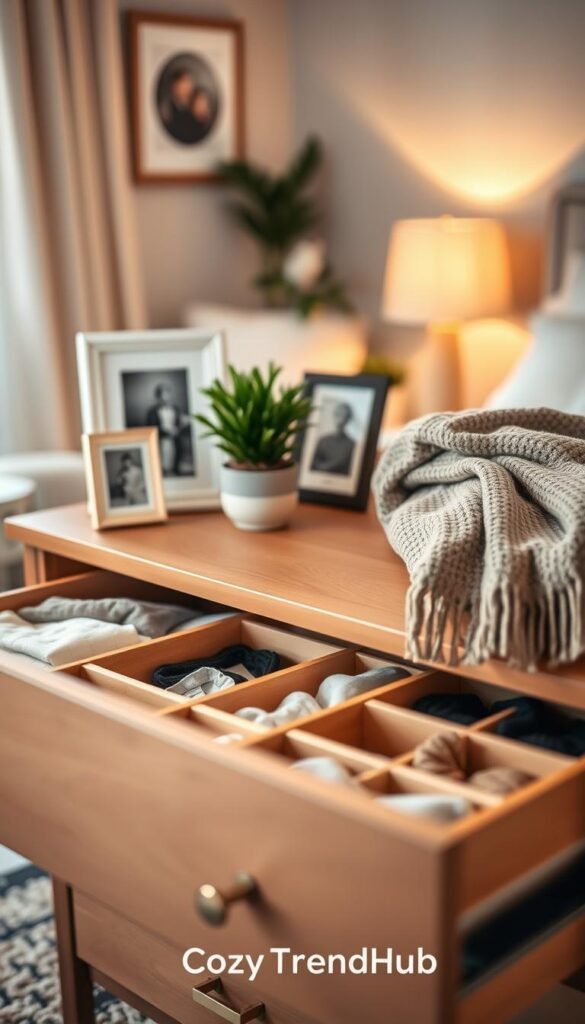
Drawers often turn into messy piles where socks and tees disappear. Divider systems create separate lanes so a single pull doesn’t collapse the whole stack.
Divider styles and what they handle
Adjustable rails work well for long shirts and folded pants. Modular boxes or bamboo inserts suit socks, underwear, and accessories. Diamond or honeycomb systems keep tees upright and visible.
Fit and buying guidance
- Measure internal width and height so dividers fit snugly and do not pop loose.
- Do the one-hand grab test: remove an item easily; if not, the lane is too tight.
- Compare expandability range, material (bamboo, plastic, fabric), and whether tools are required for install.
Who benefits: renters with limited drawers, couples sharing a dresser, and families who need faster morning routines.
| Style | Best use | Pros | Cons |
|---|---|---|---|
| Adjustable rails | Tees, pants | Flexible fit, tool-free | Can slip if not tightened |
| Modular boxes | Socks, underwear | Stable, clear lanes | Less flexible for odd sizes |
| Diamond/honeycomb | Stacked shirts | Keeps items visible | Requires drawer height clearance |
Note: Dividers speed morning choices but need an initial reset and light upkeep to stay effective.
Small Closet Upgrades Using Compartments, Shelves, and Pullouts
A crowded closet clears up fastest when the interior is divided into clear zones for different items.
Create zones for cleaning supplies, linens, and accessories with dedicated compartments and pullouts. This stops things from migrating to the floor or other rooms.
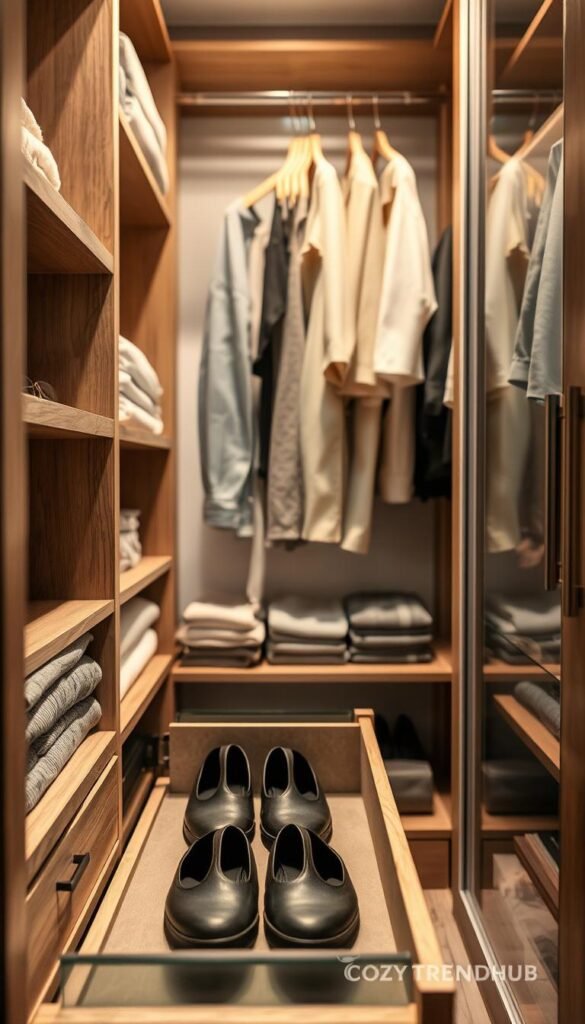
Double rods and hangers
Install a double rod to add a second hanging layer. Pair it with extra-slim hangers to increase capacity without overpacking or wrinkling clothes.
Kids‘ closets and quick routines
Use mesh or wire drawers with labels so kids can see and grab items fast. Clear labeling makes independent cleanups simple.
Modular vs built-in
Modular add-ons are renter-friendly and reconfigurable. Built-in systems look seamless but cost more and need permanent install.
| System type | Install | Adjustability | Included drawers | Label friendly |
|---|---|---|---|---|
| Built-in | Permanent | Limited | Custom | Yes |
| Modular | Clamp/peg | High | Optional | Yes |
| Pullout shelves | Bracket or track | Medium | Depends | Yes |
Buying notes: check closet width, rod height range, shelf load rating, and whether containers and hooks fit the planned layout. Choose flexible parts for seasonal reconfiguration and lasting value in the home.
Small Bathroom Storage: Cabinet-Door Holders and Narrow Cabinets That Actually Fit
A daily bathroom routine gets easier when tools and toiletries have a dedicated place on or behind a cabinet door. This reduces countertop clutter and keeps cords from tangling in shared bathrooms.
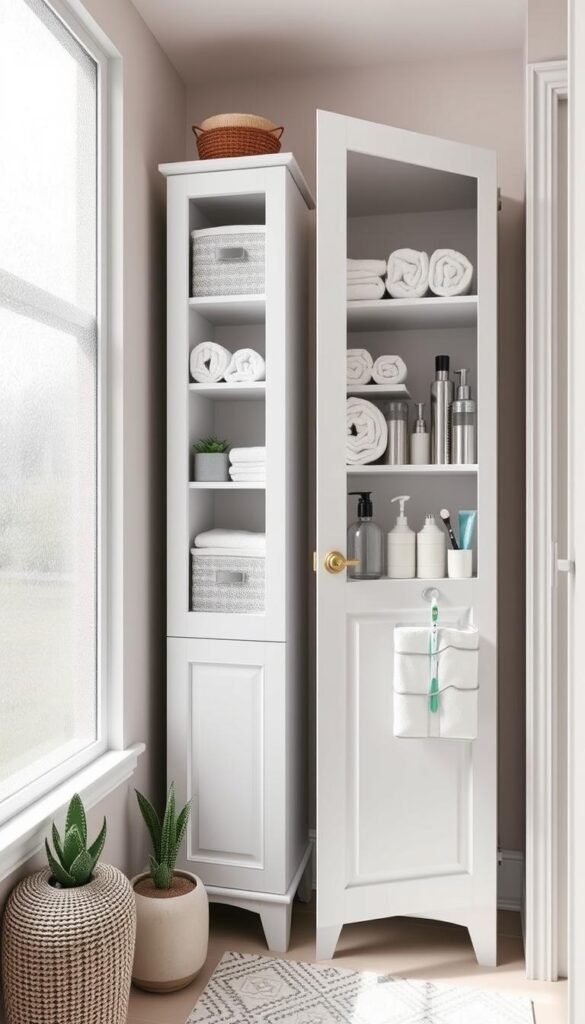
Over-the-cabinet hair tool holders
What they do: hang a hair dryer or flat iron over a cabinet door to free shelf and drawer room. Many include cord clips for neatness.
Best for: people who use hot tools often and need renter-friendly installs.
Narrow storage cabinets that fit tight bathrooms
Narrow cabinets add vertical capacity beside a sink or toilet. Measure width and depth so the unit does not block movement or door swing.
Good for: bathrooms with little counter space and shared vanities.
Using the back of the door
The door back can hold toothbrush caddies, brushes, and hot tools with adhesive trays or over-the-door hooks. Keep daily items here and store backups elsewhere.
Buyer notes and safety
- Moisture resistance: choose rust-proof finishes and washable liners.
- Heat safety: select holders with heat-resistant linings and ventilation for cooling.
- Cleaning ease: wipeable surfaces and removable trays reduce mold risk.
- Mounting: over-door or over-cabinet hooks are renter-friendly; check hinge clearance first.
| Feature | Over-cabinet holder | Narrow cabinet | Back-of-door mount |
|---|---|---|---|
| Heat-resistant lining | Often yes | Depends | Rare |
| Cord management hooks | Common | Possible | Sometimes |
| Mount type | Over-cabinet | Free-standing | Adhesive / over-door hook |
| Ventilation | Open design | Front vents or gaps | Depends |
Quick routine tip: keep only daily supplies at the door; store extras higher or deeper to reduce visual clutter and speed morning prep.
Floating Shelves and Wall Hooks for a Clutter-Free Vanity Area
Freeing the sink area often begins with a slim shelf and a few well-placed hooks. An acrylic or narrow shelf beside the vanity keeps daily toiletries in reach and clears the counter. This approach suits tiny vanities and shared sinks where every inch counts.
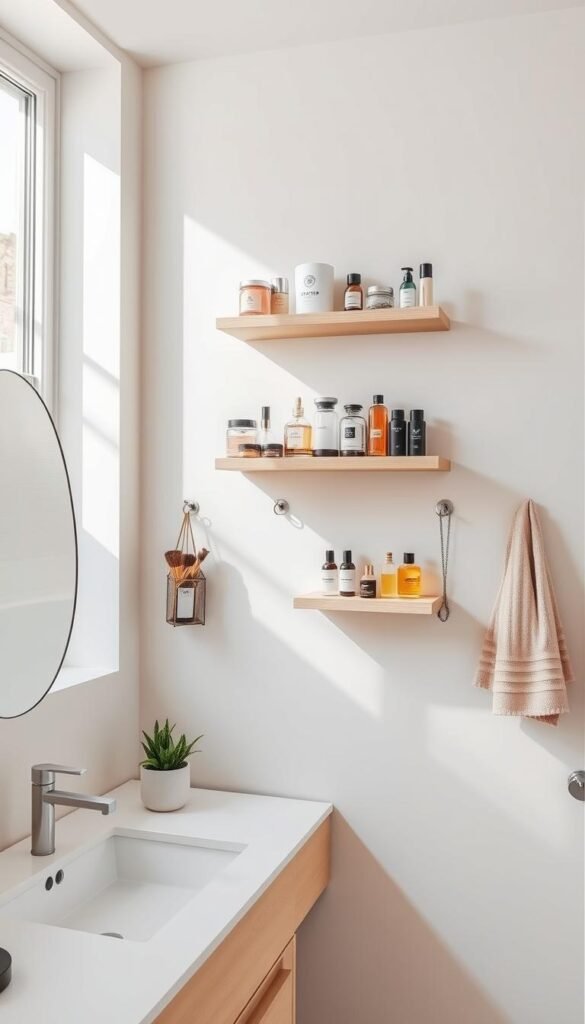
Acrylic or slim shelves for daily toiletries
Slim, easy-to-clean materials matter near the sink because splashes and residue are common. Choose a shelf depth of 4–8 inches so it holds daily items without crowding the mirror or light fixtures.
Hooks under shelves to prevent jewelry tangles
Install two to four hooks beneath the shelf to hang necklaces and bracelets separately. Space hooks 2–3 inches apart to avoid snagging and allow visual access to each piece.
- Who benefits: renters with tight vanities, shared bathrooms, and anyone needing quick daily access.
- Mounting: use removable anchors or adhesive brackets for drywall-friendly installs; opt for wall anchors when load limits exceed anchors‘ ratings.
- Cleaning: acrylic wipes clean easily; choose rust-proof hooks and wipe weekly to remove residue.
| Feature | Consideration | Why it matters |
|---|---|---|
| Shelf depth | 4–8 in | Fits daily items without blocking lights |
| Weight rating | 5–25 lbs | Determines need for anchors vs. adhesive |
| Hook count/spacing | 2–4 hooks, 2–3 in apart | Prevents tangles and allows quick grab |
Pros: keeps counters clear and speeds routines. Cons: open shelves show clutter, so limit stored items to daily-only to keep a neat decor.
Buying note: compare shelf material, included mounting hardware, and hook finish when selecting models for long-term durability and renter-friendly removal.
Kitchen Blind Corner and Cabinet Space: Fix Awkward Storage With Smarter Folding
An awkward cabinet corner becomes useful when linens are stored to be seen and grabbed, not stacked. Deep shelves and blind corners turn towels and napkins into avalanches when one piece is pulled.
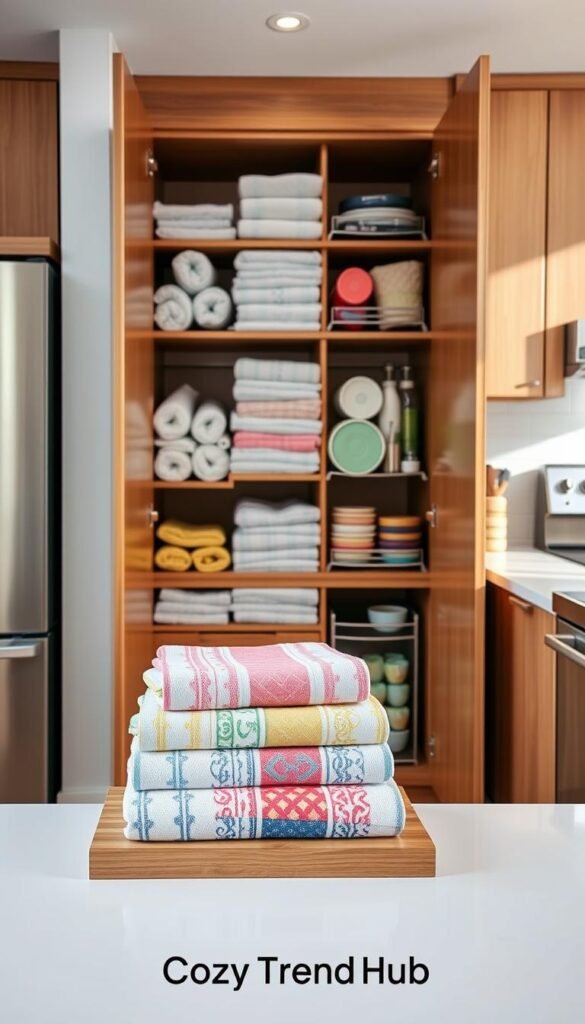
Try the sideways “file” method: fold towels and cloth napkins to a consistent width and stand them on edge like files. Store the files in a shallow bin or against a divider so each item is visible and removable without toppling the pile.
Who this helps
This approach suits renters with older corner cabinets, tiny kitchens with limited drawers, and anyone who uses towels daily. It reduces searching and keeps daily items within reach.
Quick product notes and pros/cons
- Pros: better visibility, fewer avalanches, faster access.
- Cons: works best with consistent folds; takes a brief initial reset.
- Buying tip: match bin width to towel folds, choose handle cutouts for deep shelves, and pick washable plastic or metal for easy cleaning.
| Option | Typical size | Why choose |
|---|---|---|
| Cabinet bin | 12–16″ W | Keeps files upright and easy to pull |
| Shelf riser | 6–10″ H | Adds layered storage without stacking |
| Corner pullout | varies | Best when installation is possible; improves reach |
Magnetic and Side-of-Fridge Organizers That Free Up Counters
The refrigerator’s side is an underrated spot for keeping daily kitchen essentials within reach.
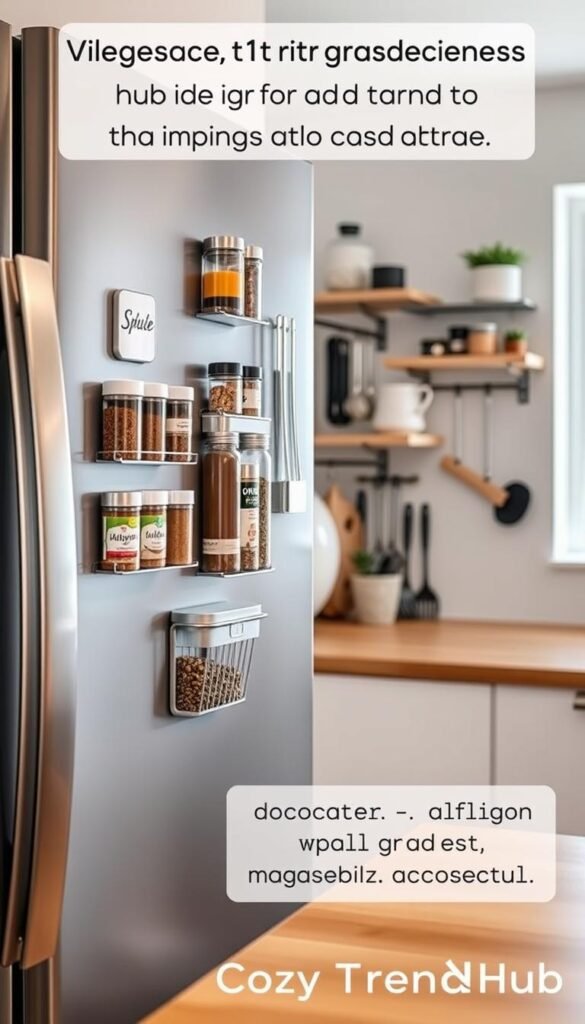
Magnetic racks mount instantly to a fridge and hold paper towels, spices, and grab-and-go items. They give needed storage without drilling or permanent changes, so renters and cooks with limited counters get extra function fast.
What to watch when buying
- Magnet strength: confirm it supports the intended load and covers enough surface area to resist sliding.
- Protective backing: padding or rubber prevents scratches on painted or stainless finishes.
- Rated load: check weight limits for towels, jars, or bottles before mounting.
Keep it tidy: limit the fridge side to daily-use items only. Avoid turning this wall into a cluttered catch-all; frequent resets keep counters clear and cooking flow smooth.
| Rack | Dimensions | Magnet type / coverage | Protective pads | Rated load |
|---|---|---|---|---|
| Paper-towel rail | 12″ W x 4″ D | Strip magnets full-length | Rubber strip backing | 5–8 lbs |
| Spice shelf | 10″ W x 3″ D | Two neodymium blocks | Felt pads | 3–6 lbs |
| Multi-pocket caddy | 8″ W x 5″ D | Single wide magnet | Silicone bumpers | 4–7 lbs |
Skinny Shelves Next to the Fridge for Paper Bags, Tablets, and Household “Paper”
Tight kitchen gaps beside the fridge can become a focused family station for mail, homework, and devices. A shallow shelving unit fits that narrow void and keeps paper out of counters and living areas.
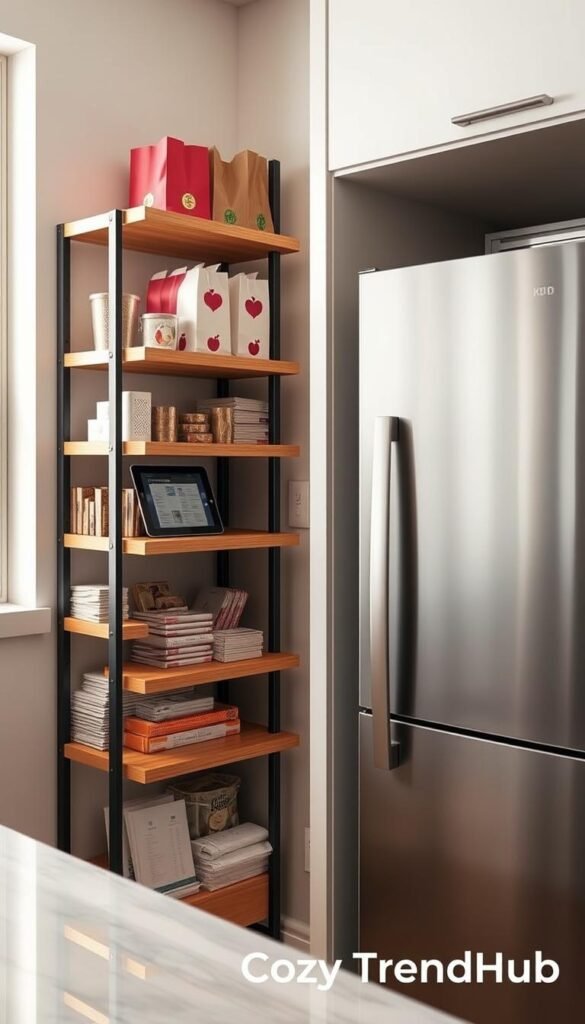
What to store: paper bags, incoming folders, permission slips, a small in/out tray, and a tablet charging spot. Keep daily items at eye level and less-used folders higher so the area stays useful.
Back-of-door additions and routine tools
Mount a clipboard or chore chart on the back door of a nearby pantry to display to-do lists and homework schedules. These add-ons keep routines visible without using wall space in high-traffic zones.
Measurements and safety checks
- Measure the gap width and fridge clearance so the unit won’t block the door swing.
- Confirm the shelving does not obstruct fridge vents or access to the plug.
- Choose units with anti-tip brackets when height exceeds depth, especially near an outlet used for charging.
„A single inbox and one charging shelf cut counter clutter and make daily resets quick.“
| Solution | Typical width / depth | Mount or fix | Why choose |
|---|---|---|---|
| Narrow shelving unit | 4–8″ W x 12–14″ D | Free-standing + anti-tip | Fits gap, holds trays and tablets |
| Door-mounted clipboard system | N/A (door fit) | Over-door hook or adhesive | Keeps chore charts visible without drilling |
| Accessory bins (in/out trays) | 8–12″ W x 6–9″ D | Placed on shelf | Sorts paper to prevent pileups |
Pros: creates a high-efficiency family station and adds charging access when an outlet is nearby. Cons: needs simple rules—daily emptying of the inbox—to avoid overflow.
Pantry and Cabinet Systems: Matching Containers, Glass Canisters, and Stackable Bins
Replacing mixed boxes and bags with matched jars and bins immediately improves visibility and reduces duplicate buys. This approach solves pantry chaos where hidden packaging wastes room and hides inventory.

Glass canisters and produce baskets
Glass canisters work well for staples like flour and sugar. They make it easy to check levels at a glance and often come with wide mouths for scooping.
Open baskets suit potatoes and onions because they allow airflow. Rotate contents and wipe baskets periodically to prevent forgotten items.
Risers, stackable bins, and concealment
Use risers and stackable bins to utilize vertical space on tall cabinet shelves. Stacking creates tiers so jars and containers remain reachable.
For visual calm, add a curtain rod across lower shelves to hide small appliances without remodeling.
Pros, cons, and long-term upkeep
Glass vs plastic: glass resists odors and looks clean but weighs more. Plastic is lighter and cheaper but can scratch and cloud over time.
Labeling keeps the system stable. Waterproof, removable labels cut duplicate shopping and help everyone return things to the right place.
| Item | Typical spec | Why choose | Consideration |
|---|---|---|---|
| Container set | Varied sizes, airtight lids | Unified look, saves space | Measure cabinet depth first |
| Glass canisters | 16–64 oz, wide mouth | Easy visual inventory | Heavier; use lower shelves |
| Stackable bins | Modular, handle options | Utilize vertical, easy pull-out | Pick non-slip bottoms |
| Label type | Waterproof vinyl / removable | Long-term clarity, reduces rebuying | Choose consistent format |
Pegboards and Wall-Mounted Kitchen Storage for Pots, Pans, and Utensils
Mounting a rail or pegboard converts vertical kitchen real estate into an easy-to-reach tool station. This moves frequently used cookware off counters and frees up cabinets for less-used gear.
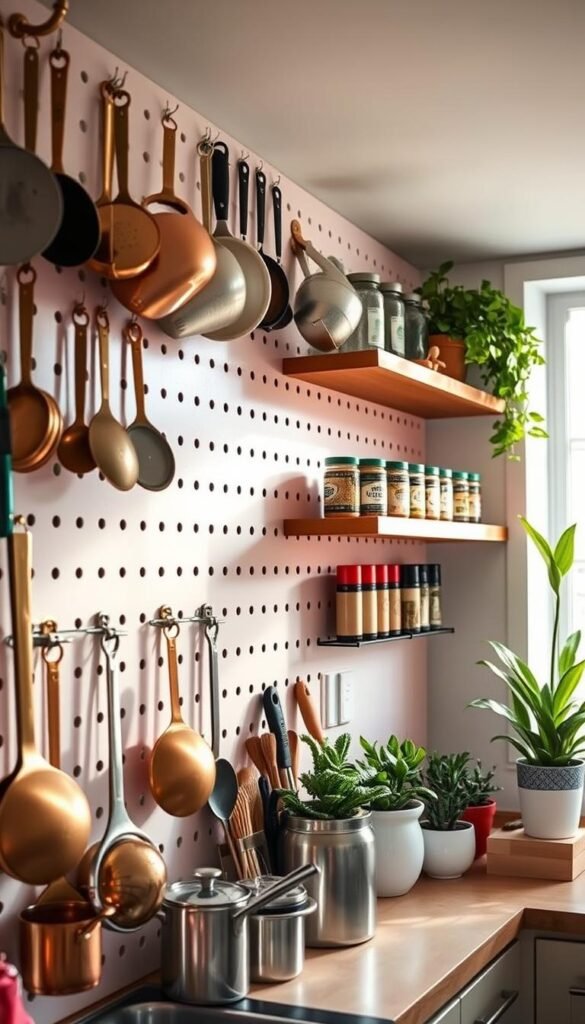
Best for tiny kitchens: keeping cabinets and counters clear
Who benefits: renters and residents with limited cabinet room who want quick access to pans and utensils.
Buying considerations: wall type, mounting method, and weight capacity
Match the mount to the wall: drywall needs anchors, plaster may need toggle bolts, and tile requires special drill bits. Check the board’s weight rating so heavy pans do not pull hardware loose.
Pros and cons: functional storage that can double as decor
Pros: adds visible storage and speeds meal prep. A grouped, tidy layout can read like intentional decor.
Cons: items are exposed to grease and need occasional wiping. If drilling is not allowed, consider freestanding pegboards or tension-based rails but confirm load limits.
| Board size | Included hooks | Material | Weight rating | Hardware included |
|---|---|---|---|---|
| 24″ x 16″ | 10 | Steel | 50 lbs | Yes |
| 16″ x 12″ | 6 | Wood | 30 lbs | No |
| 30″ x 20″ | 14 | Perforated metal | 80 lbs | Yes |
Living Room and Home Office Clutter: Baskets, Fabric Bins, and Magazine Holders
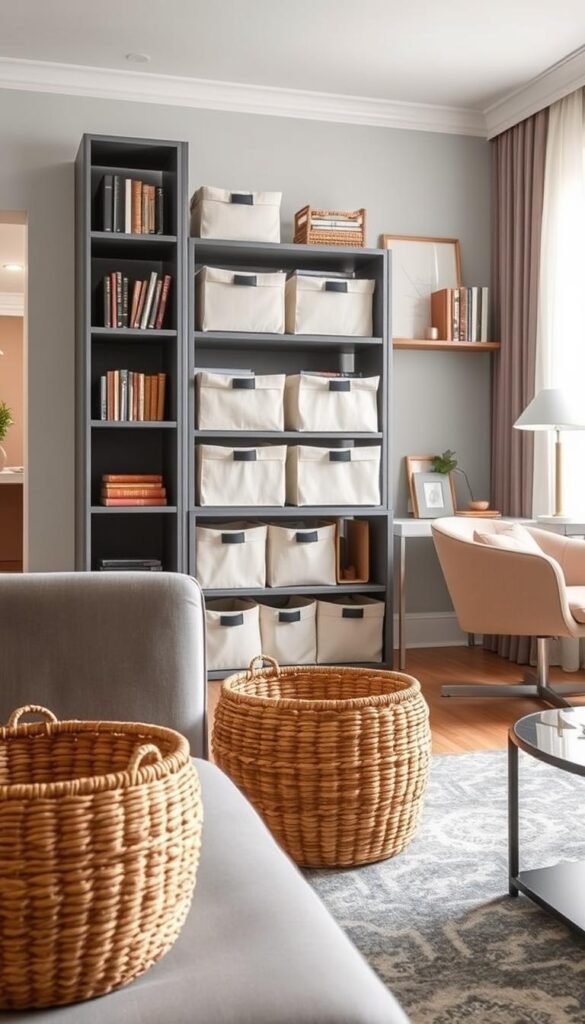
A living room that doubles as a home office needs simple containers to stop clutter from spreading. Clear roles for each holder cut the time spent looking for chargers, mail, and remotes.
Magazine holders for mail and papers
Why use them: they corral bills, school notices, and incoming mail so paper doesn’t migrate to tables.
Best for: households with frequent mail or a steady paper flow. Choose upright holders that fit standard folders and label each slot.
Fabric storage bins for hidden-but-accessible supply
Fabric bins slide into open shelving and hide chargers, notebooks, and spare cables. Pick bins with handles and a firm base for easy pull-out.
Baskets for fast resets in shared rooms
Baskets collect toys, throws, and remotes during quick cleanups. Limit categories to avoid becoming a dumping ground.
Repurposed furniture with hidden storage
Swap a media console for a small dresser or use a storage bench as seating and a stash spot. Measure internal capacity and footprint before buying.
| Item | Size/fit | Why choose | Cons |
|---|---|---|---|
| Magazine holder | Fits letter-size folders | Visible, sorted paper | Needs weekly sorting |
| Fabric bin | Cube-shelf friendly | Hidden, lightweight | Can collapse if flimsy |
| Basket | Round/oval handles | Fast grab-and-toss | Shows contents if overfilled |
| Storage furniture | Measure internal drawers | Large hidden capacity | Higher cost, footprint |
„Assign one container per category and a weekly quick sort prevents clutter from returning.“
Conclusion
Choose products that solve the problem: improve access, boost visibility, hide overflow, or protect seasonal items. Measure door swings, wall width, and clearances before buying so each piece fits and works.
Favor renter-friendly fixes: over-the-door racks, removable adhesive hooks, tension rods, and modular pullouts that move with a tenant. Decide open vs closed storage by how tidy the room must stay day to day.
Simple next steps: entryway first, then bedroom/closet, then kitchen and bathroom. Keep a short checklist of dimensions, mount type, weight limits, moisture resistance, and cleaning needs when comparing products.
Maintainability matters: the system that makes putting items back easier than leaving them out will keep a small home calm and useful.