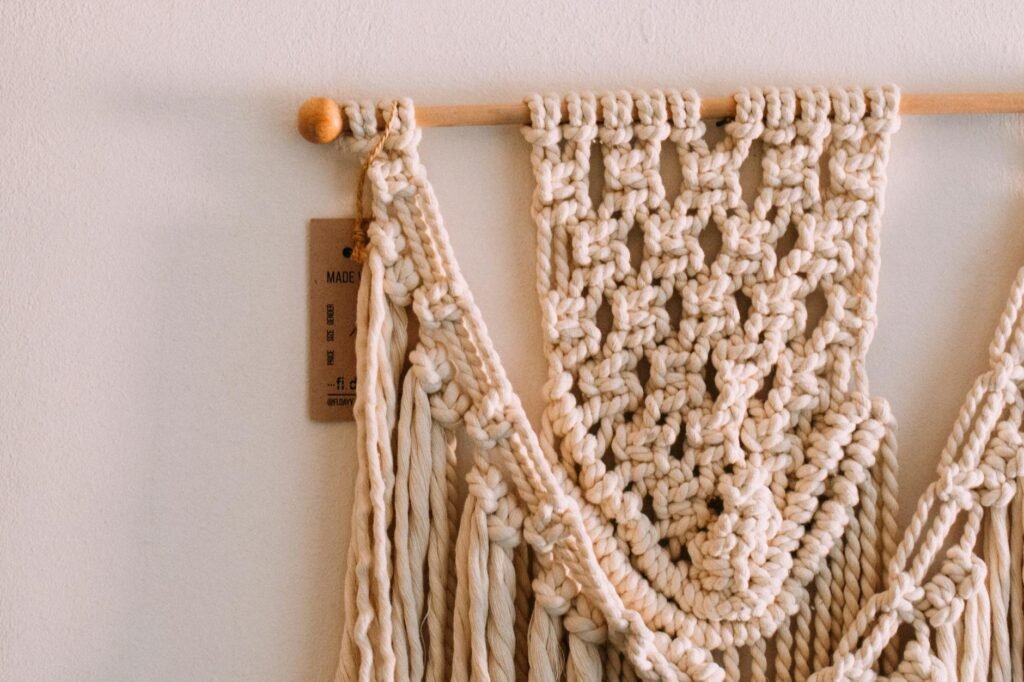
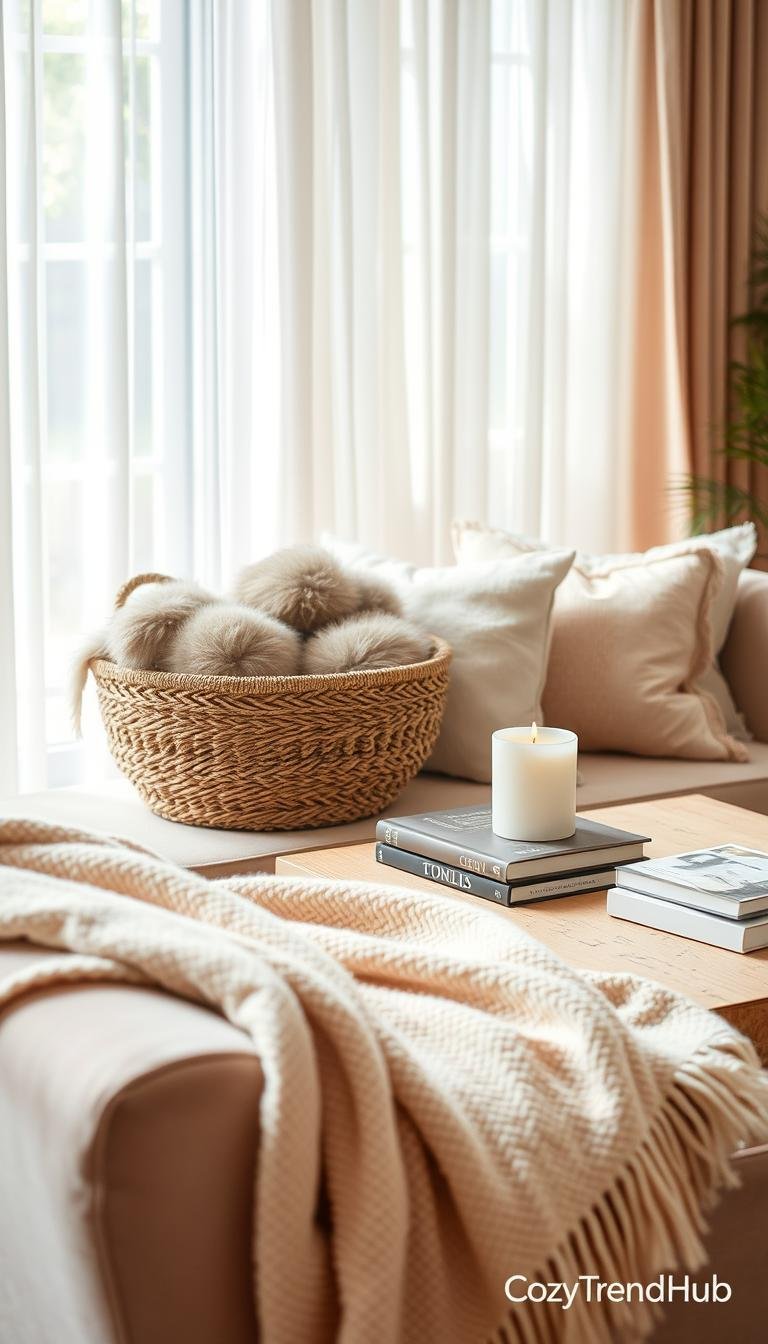
Problem: Rooms can feel cold, echo-y, or unfinished even when they are tidy. Small changes can fix that without ripping up floors or repainting.
Solution: Renter-friendly, small-space, and easy-care options add instant warmth and texture. Textiles like pillows, throws, and rugs are core pieces for comfort. Mirrors and layered lighting add depth and improve how a room reads.
This guide helps readers choose practical pieces and weigh tradeoffs. It organizes choices so shoppers can compare feel, upkeep, durability, seasonal use, and how well an item finishes a space.
Use the guide by starting with the highest-impact fix for your pain point—cold floors, bare windows, or flat lighting—and then build layers. The sections cover pillows, throws, rugs, window treatments, baskets, candles and lanterns, plus mirrors, lamps, and sconces.
Key Takeaways
- Soft touches turn a bland room into an inviting space without renovation.
- Choose reversible, scaled options for rentals and small homes.
- Compare feel, upkeep, durability, and seasonal flexibility when shopping.
- Start with the highest-impact item for your main problem, then layer.
- Focus on lasting, practical choices rather than fast trends.
How to choose soft decorative accents that actually make a room feel warmer
Start with a quick diagnostic. Identify whether the main issue is acoustics (echo), visuals (flat and monochrome), comfort (cold floors or seating), or lighting (harsh overhead only). That single finding will point to the highest-impact solution.
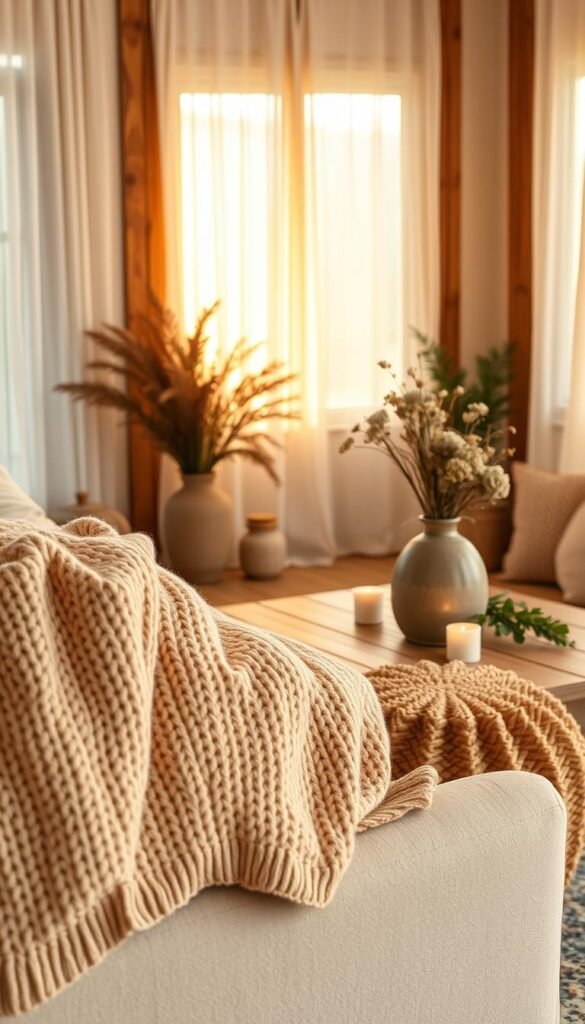
Match the solution to the problem
- Rugs: reduce echo and warm cold floors.
- Curtains: soften bare walls and add visual weight.
- Pillows & throws: fix flat seating and introduce personality.
- Lamps: create layered light and gentle ambiance.
Texture check
Choose according to use: linen and cotton for breathable everyday pieces; wool or chunky knit for warmth; faux fur for instant tactile impact; woven fibers for natural texture and depth.
Scale, color, and care
For small spaces, favor fewer larger pieces over many tiny items. Pick one anchor textile—rug or curtains—then add two smaller elements.
Renter-friendly color strategy: introduce warmth through textiles in camel, rust, olive, or warm whites instead of repainting.
| Constraint | Quick filter | Why it works |
|---|---|---|
| Pets/kids | Removable covers, performance fabrics | Easy cleaning and durability |
| Small layout | One anchor + 1–2 repeats | Creates cohesion without clutter |
| Rental rules | Non-permanent fixes (textiles, lamps) | Adds warmth without damage |
Quick avoid list: fragile fabrics in high-traffic spots, rugs smaller than the seating zone, and heavy scents around sensitive people.
Best soft home decor accents for instant comfort and texture
Focus on a single upgrade that quickly lifts the look and comfort of the space. Start by solving the biggest daily pain—cold floors, flat seating, or harsh light—to get the fastest win.
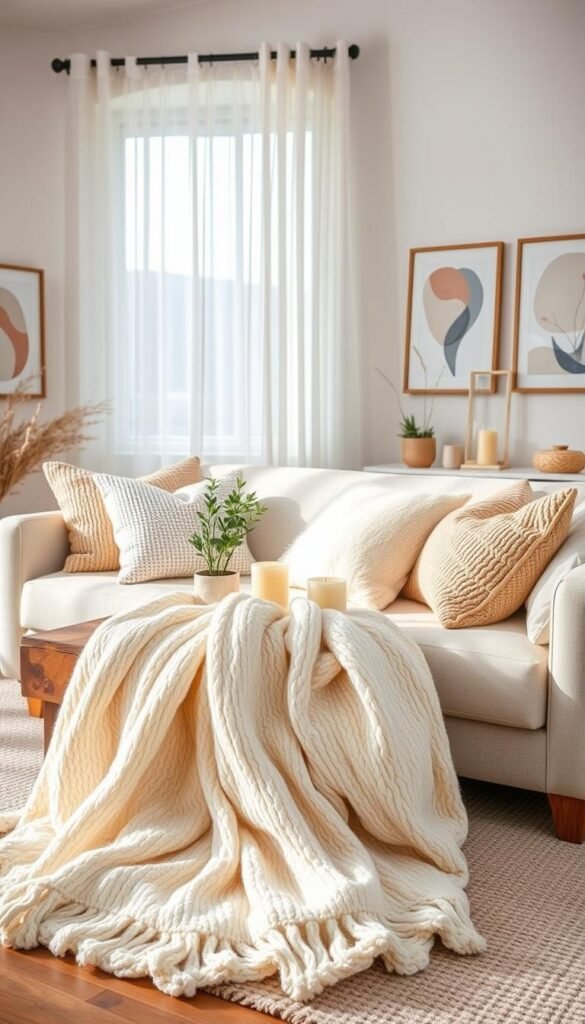
What to prioritize when you want the biggest impact fast
- Area rug: warms floors, reduces echo, defines a zone.
- Throw blanket: adds instant warmth to seating.
- Pillow covers: quick visual refresh with low commitment.
- Curtains: soften bare windows and add vertical layers.
- Lamps & candles: create a softer, more inviting atmosphere.
Quick comparison factors for an at-a-glance table
Use a simple table later with these fields:
- tactile feel
- washability
- pet/kid friendliness
- storage needs
- seasonal flexibility
- visual layering added
| Category | Who it helps | Fast problem solved |
|---|---|---|
| Textiles (rugs, throws) | renters, small-space | cold floors, flat seating |
| Pillows & covers | seasonal decorators | style refresh |
| Lamps & candles | anyone | harsh lighting, atmosphere |
Practical rule: pick one hero accent per zone (sofa, bed, entry). Add supporting items only if they serve a real function.
Affiliate block tip: list dimensions, materials, care, cover type, pile height, and bulb specs to aid buying decisions.
Tradeoffs: higher texture can mean more maintenance; lighter colors show wear sooner. Prioritize comfort and functionality over perfect styling to shop with confidence.
Decorative throw pillows that add personality without taking up space
A few well-chosen throw pillows can change how a room reads without taking extra floor space.
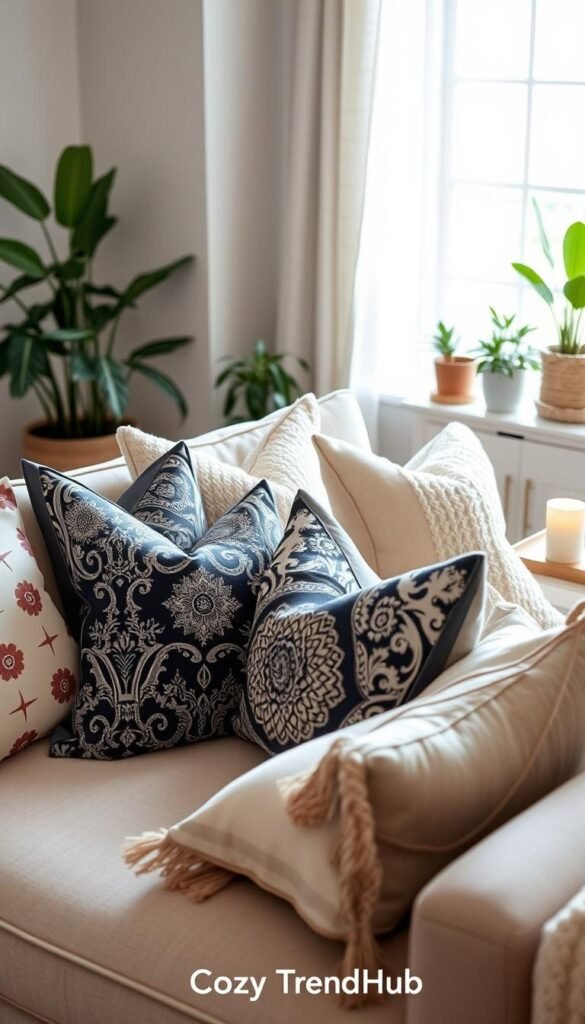
Who benefits: Renters and small-sofa owners gain quick visual lift and extra comfort. Pillows solve a flat look and add warmth where paint or new furniture aren’t options.
Removable covers for renter-friendly refreshes
Look for zip closures and standard insert sizes. Swapping covers lets users change color and style seasonally without storing full pillows.
Mixing sizes and textures for small sofas and chairs
Use a simple combo like one 20″ square plus a lumbar. Pair a smooth fabric with a nubby weave to add dimension without crowding the seating.
Pros and cons: comfort vs. clutter
- Pros: quick style change, added back support, and tactile warmth.
- Cons: can look busy if overdone and needs regular fluffing and cleaning.
Buying considerations
Choose insert type (down vs. down-alternative) for firmness and reshaping needs. Prefer cotton/linen blends for daily use; pick performance fabrics for pets or kids.
| Feature | Why it matters | Practical tip |
|---|---|---|
| Cover washability | Keeps pieces fresh in active homes | Pick machine-washable covers with zippers |
| Insert fill | Controls support and loft | Use firmer inserts for back support; soft for lounging |
| Texture & color | Adds depth and ties the room together | Repeat one color or texture elsewhere for a planned look |
Shopping checklist: cover washability, match with existing rug or curtains, and confirm the pillow adds new texture rather than repeating what’s already there. These quick items help pillows truly add personality to a room and the rest of the home.
Throw blankets that create warmth, layers, and an inviting lived-in look
A well-chosen throw can transform a chilly seat into an inviting spot in minutes.
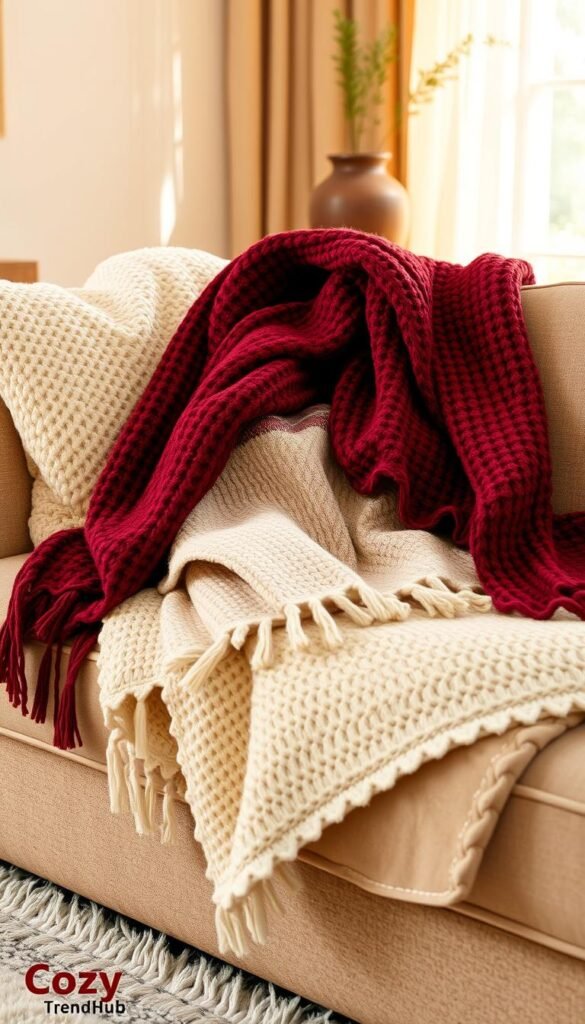
Seasonal swaps and practical picks
Lightweight throws in breathable cotton or linen work for warmer months. They wash easily and keep the room feeling fresh.
Heavyweight options—knit or wool-like throws—add real warmth and tactile texture for fall and winter. Rotate by season to avoid excess items year-round.
Hide what you don’t love
A well-sized throw can soften worn arms, cover dated upholstery, or tame a clashing tone. Drape neatly over an arm or fold on the back to keep the look intentional.
Pros and cons, and buying checklist
Pros: instant comfort, layered textures, and an easy way to add personality to a room. Cons: shedding, pilling, pet snags, and storage needs.
| Feature | Why it matters | Practical tip |
|---|---|---|
| Dimensions | Fit for chair vs. sofa | 50″x60″ for chairs; 60″x80″ for sofas |
| Material | Warmth & care | Knits for texture; woven cotton for machine wash |
| Edge finish | Durability & style | Fringe hides wear; bound edge resists snagging |
| Care | Longevity | Check wash instructions and pilling resistance |
Keep it tidy: one throw per main seating piece and a consistent placement (arm drape or basket) prevents a cluttered look and keeps the room cohesive.
Area rugs and runners that soften hard floors and define a small-space layout
Choosing the right rug turns bare flooring into a deliberate design element that anchors the layout. Rugs reduce echo, add warmth, and make an open plan feel composed rather than scattered.
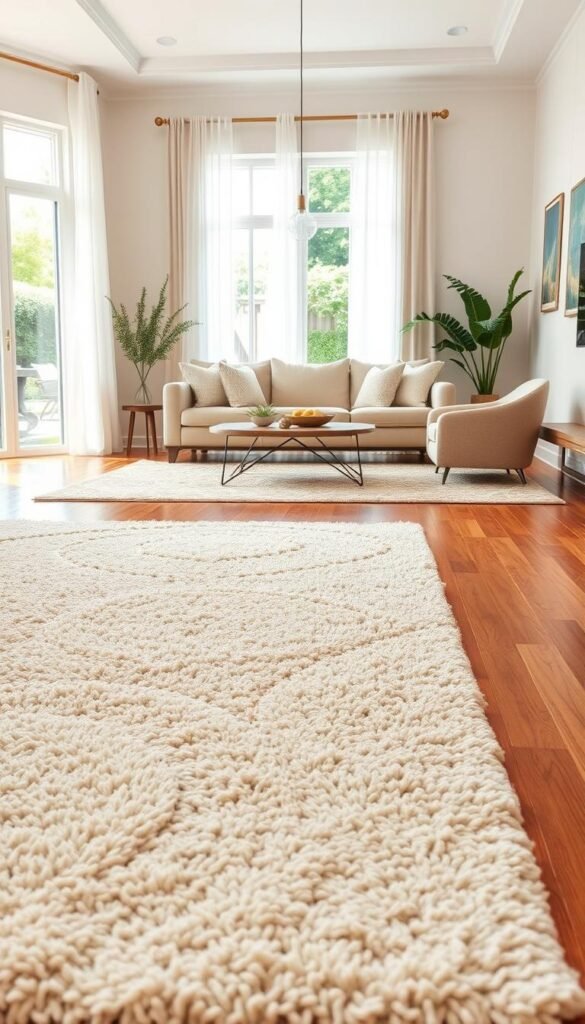
Best for apartments: zoning without walls
Use a rug to anchor seating: place the front legs of sofas and chairs on the rug so the room reads as one cohesive zone. In narrow plans, a runner can mark a circulation path while tying finishes together.
Best for high-traffic rooms: durability and cleanability
Choose low-pile, tightly woven constructions or performance fibers. Patterns and mid-tone colors hide wear. Pick washable or stain-resistant weaves for entryways and active family areas.
Buying considerations: size, pad, and texture
Size rule: confirm furniture footprint before buying—too-small rugs chop a room and reduce visual depth.
Pad matters: adds comfort, keeps rugs from slipping, and protects floors in rentals. Match pad thickness to door clearances.
Texture choice balances feel and upkeep: low pile for easy cleaning; plush for cozy seats and higher maintenance. Coordinate rug color or pattern with pillows, throws, or wall art so pieces and accents feel connected.
„A rug defines where life happens in a room.“
| Feature | Why it matters | Quick tip |
|---|---|---|
| Size | Creates unity | Front legs on rug or full footprint |
| Pad | Grip and protection | Non-stick pads for rentals |
| Texture | Comfort vs. care | Low pile for pets; plush for lounge spots |
Soft window treatments that add warmth and reduce a “bare wall” feel
Windows framed with fabric immediately make a space read as finished rather than temporary. Bare windows and rental blinds can make a wall feel stark and a room colder. Replacing or layering with textile panels is a low-commitment way to add texture, warmth, and visual height.
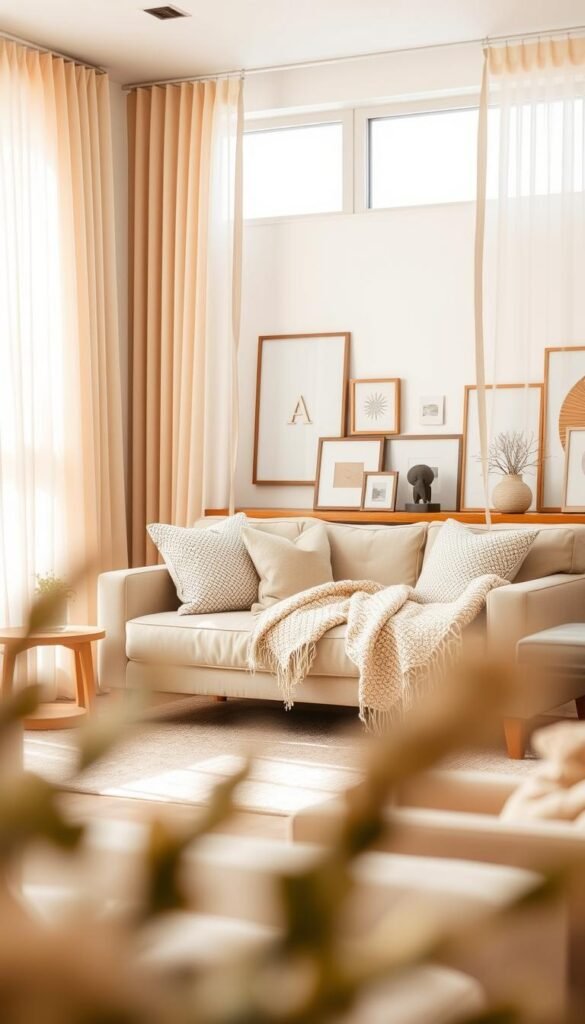
Best for renters: damage-minimizing hanging options
Damage-free fixes include tension rods for lightweight panels, removable hooks for sheer curtains, and clip-on brackets when drilling is not allowed. Choose hardware rated for the fabric weight and confirm easy removal at move-out.
Best for light control: sheers vs. room-darkening
Sheers soften daylight and create a calm ambiance without blocking the view. Room-darkening panels reduce glare and help with sleep or TV viewing. Layering both gives flexible control over light and privacy.
Pros, cons, and buying checklist
- Pros: perceived insulation, visual finish, ties other pieces together.
- Cons: dust buildup, laundering needs, wrinkling, and panels that are too short can look messy.
| Feature | Why it matters | Practical tip |
|---|---|---|
| Panel length | Defines scale | Hang wider and higher than the window to make the wall read taller |
| Header style | Ease of install | Grommet or tab tops slide on tension rods; pinch pleat may need brackets |
| Opacity & washability | Light control & maintenance | Choose machine-washable sheers and room-darkening with care instructions |
„Hang curtains wider and higher than the frame to finish the wall and make room feel larger.“
Woven baskets and fabric storage that add natural texture while hiding clutter
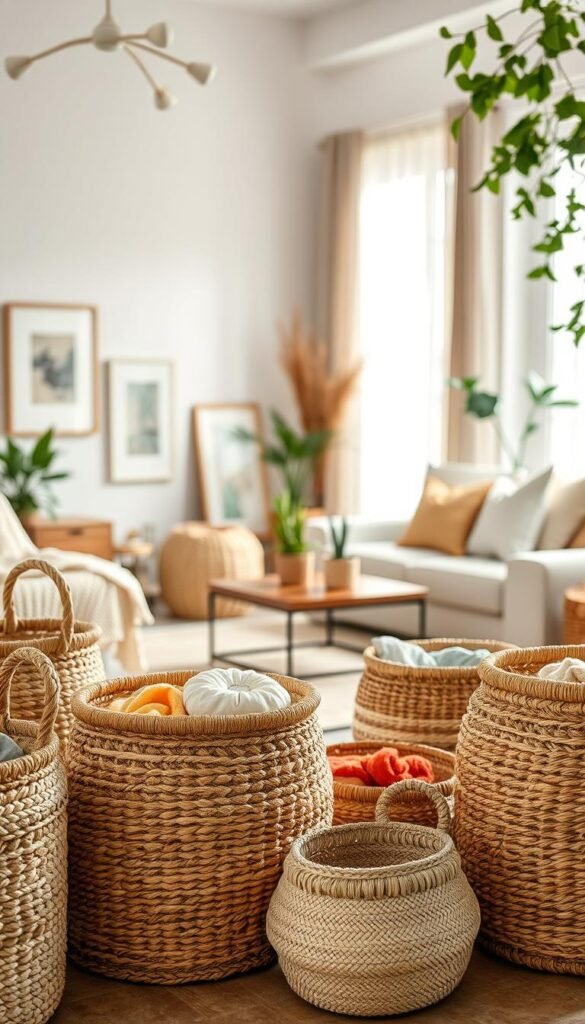
Storage can be beautiful: baskets and fabric bins hide everyday items while adding tactile texture to a room. Small spaces show clutter quickly, so visible-but-ordered storage solves both function and style.
Where these pieces work best
Right-size baskets for throws and pillows so they don’t overflow. Slim, tall shapes tuck beside a sofa or under a console. Low, wide baskets fit under benches and in corners.
When to choose fabric storage
Soft-sided bins suit closets, shelves, and seasonal rotation. They compress for storage and protect delicate items. Use liners for dusty areas or fragile textiles.
Pros and cons
- Pros: quick tidy-up, visual warmth, easy to move, adds texture and home-friendly accents.
- Cons: can collect dust, flimsy weaves lose shape, and some materials snag delicate throws.
Buying considerations
Look for structured sides, sturdy handles, optional liners, and tight weaves to avoid snags. Note dimensions, material, lining, and whether the basket collapses for moving or seasonal storage.
„Repeat one basket material elsewhere—seagrass or woven fiber—to make storage feel intentional, not random.“
| Feature | Why it matters | Practical tip |
|---|---|---|
| Shape & size | Fits intended items | 50″x60″ throw fits a tall basket; lumbar pillows need wider, shallow bins |
| Structure | Shape retention | Choose reinforced sides for high-traffic spots |
| Handles & lining | Moveability and protection | Leather or rope handles; removable liners for washing |
| Weave tightness | Protects textiles | Tight weave for delicate throws; open weave for bulkier items |
Candles, candle holders, and lanterns for cozy ambient light and tactile styling
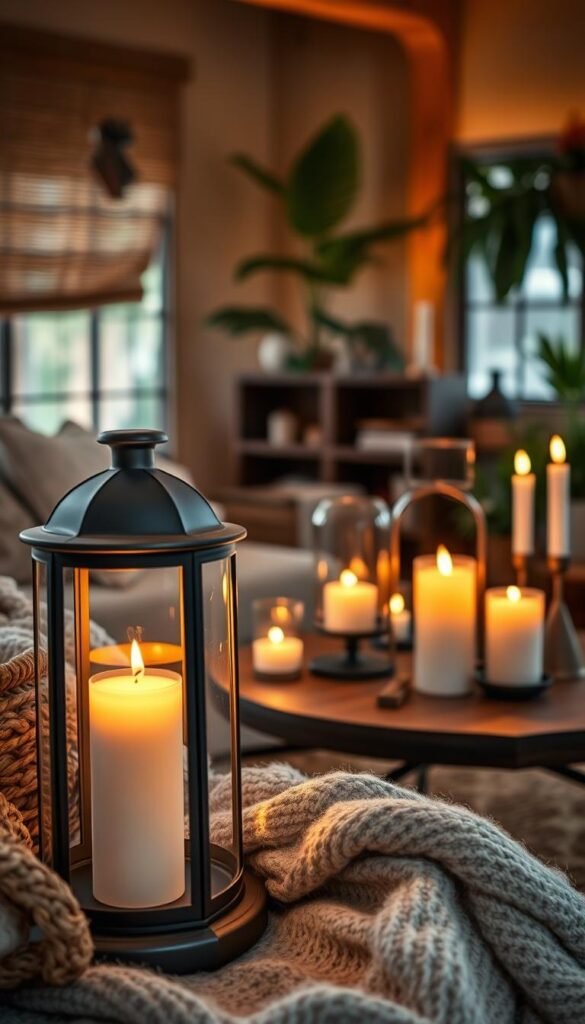
When ceiling lights dominate, layering low sources creates immediate warmth and a measured atmosphere. Overhead fixtures can feel harsh; small candlelight and lanterns add texture and a calmer visual field.
How to create “pools of light”
Use several small sources so glows overlap: a candle on the coffee table, a lantern on a side console, and a votive on the mantel. These overlapping pools make the room feel intimate and balanced.
Real flame vs. battery-operated for busy households
- Real candles: choose for ritual evenings and scent control. They give real warmth but require supervision.
- Battery-operated: pick for kids, pets, or forgetful hosts. Modern LED candles mimic flicker and remove open-flame risk.
Buying considerations and safety
Look for: unscented options if scent sensitivity is a concern, vessel stability to prevent tipping, and burn-time specs for cost-per-use. For lanterns, confirm a secure latch and heat resistance.
| Feature | Why it matters | Practical tip |
|---|---|---|
| Size & burn time | Matches use and lifespan | Choose pillar sizes that suit trays and bowls |
| Holder material | Protects surfaces | Glass or metal with a stable base |
| Safety features | Reduces fire risk | Snuffer, stable base, or LED timer functions |
„Multiple low lights help a space read as intentional rather than harshly lit.“
Pros: instant mood, tactile pieces that layer with textiles and furniture. Cons: open flame needs care; soot can mark surfaces; batteries or replacements add ongoing cost.
Affiliate-ready checklist: candle diameter, vessel weight, fits standard taper/pillar, holder material, lantern door/latch ease, and LED timer options for cordless pieces.
Mirrors, lamps, and wall sconces that boost warmth by amplifying light
Strategic reflection and layered lighting solve a dim, cramped room without moving furniture.
Where to place mirrors in small rooms
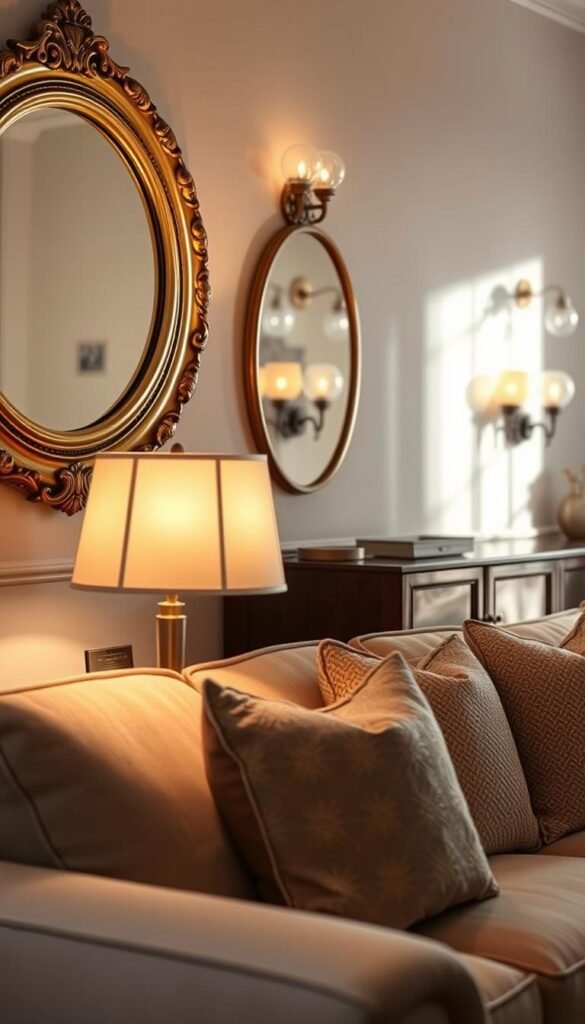
Put a mirror across from a window to bounce natural light. Hang one above a narrow console for balance and function. Place a tall mirror at the end of a hallway to add apparent depth.
Why lamps and sconces are decorative as well as useful
Lamps and wall fixtures create overlapping pools of light that flatter surfaces and add visual interest even when turned off. They act like wall art, shape, and texture while improving usable light.
Pros, cons, and renter-friendly fixes
- Pros: visual expansion, softer light, and added interest without new paint.
- Cons: cord management, bulb upkeep, and possible drill limits.
- Renter tips: use plug-in sconces, adhesive channels for cables, or floor/table lamps where mounting isn’t allowed.
| Spec | Why it matters | Practical example |
|---|---|---|
| Lumen range | Ambient glow | 800–1,200 lm for main ambient lamps |
| Shade material | Warm diffusion | Fabric or frosted glass for softer light |
| Mirror frame | Style & durability | Metal or wood finish to match timeless home decor |
„A round mirror over a narrow console with two matching lamps instantly reads like a curated vignette.“
Conclusion
An intentional buying path makes styling feel less like guesswork and more like problem-solving.
Start by solving the room’s main issue: cold floors, bare windows, flat seating, dim light, or clutter. Then buy in this order: one anchor rug or curtain, one throw for warmth, pillow covers, and a basket for tidy storage.
Prioritize removable, washable, and reversible options to protect deposits and simplify moves. Repeat two textures and two colors across pieces so personality shows up in a calm, cohesive way.
Balance style with maintenance. Choose fabrics and finishes that work with pets, kids, and busy schedules to keep comfort and functionality over the year.
Final tip: pick a few reliable home decor pieces that last, then use seasonal swaps and narrow affiliate comparisons (two materials, two colors) to refine before buying.