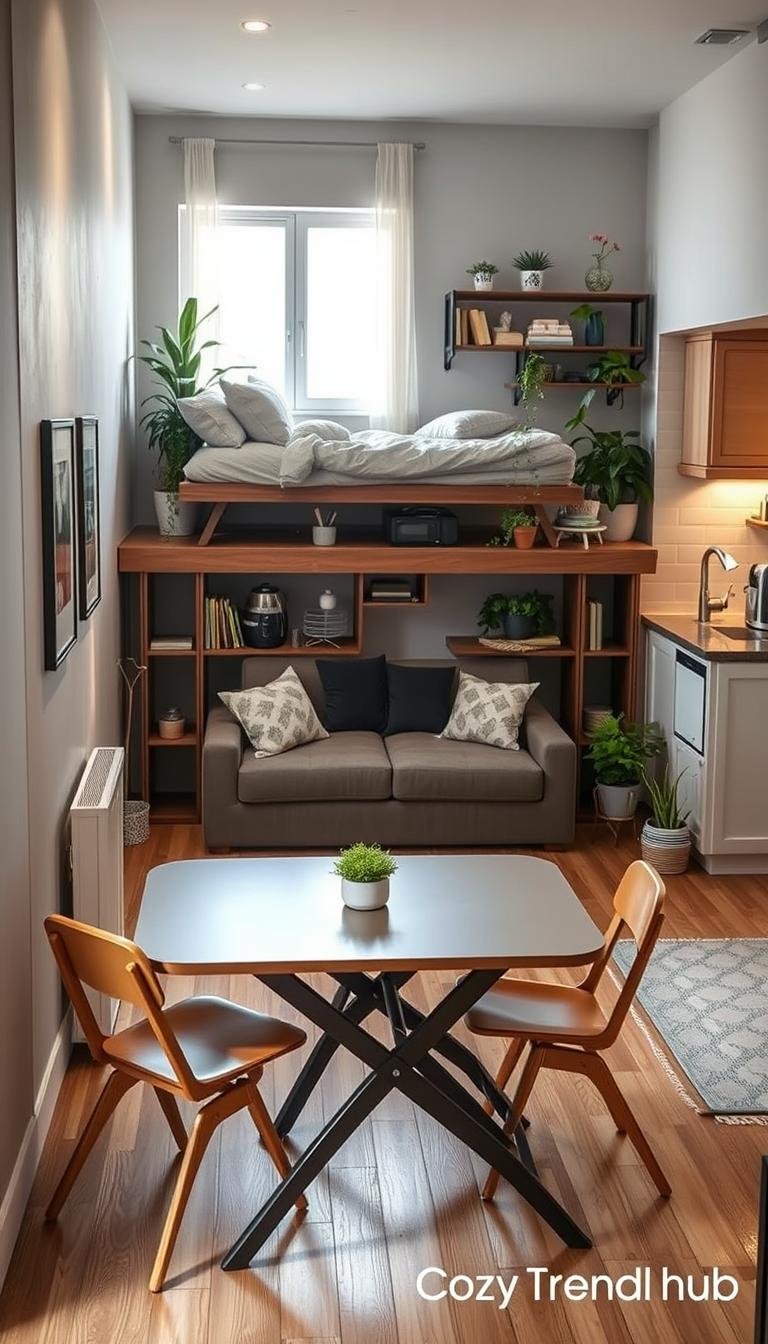
Small apartments and compact houses often run out of usable counter, closet, and cabinet room. That lack of storage makes daily routines slower and more frustrating.
This roundup focuses on renter-friendly fixes that reclaim floor and counter area without a remodel. It highlights vertical fixes, door and cabinet organizers, and seasonal overflow ideas that fit leased spaces.
Readers will find picks organized by room, with clear notes on installation style (no-drill vs. permanent), key measurements, and realistic trade-offs.
Recommendations prioritize durability, daily use, and value over trendy looks. The goal is small-space ROI: remove clutter hotspots like sink-base chaos, narrow drawers, and lost pantry shelves.
Key Takeaways
- Solutions focus on reclaiming counter and floor area without major changes.
- Good for renters, small-house owners, dorm living, and seasonal overflow.
- Each item lists best-for scenarios, install type, and key dimensions.
- Organized by room for faster decision-making.
- Choices favor function, longevity, and clear trade-offs over style alone.
What to look for before buying space-saving products for an apartment
Before buying, confirm exact clearances so an organizer fits without blocking doors or plumbing.
Measurement-first checklist:
- Door swing and hinge clearance — essential for over-door and hinge-mounted racks.
- Cabinet depth and drawer width — check usable interior dimensions, not nominal size.
- Available wall height and clear wall strips for vertical mounts.
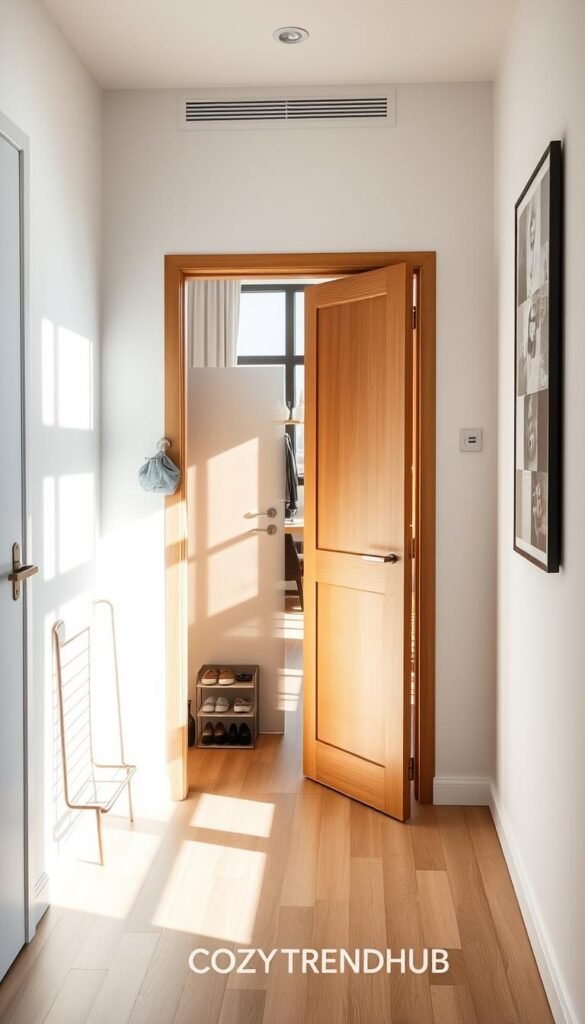
Renter-friendly installs matter. Look for adhesive strips, removable hooks, over-cabinet hangers, tension poles, and hinge-mounted organizers that avoid drilling. Each option trades permanence for load capacity.
Weight and materials: adhesives vary. Towels and cleaning bottles need strong mounts. Prefer coated metal in bathrooms, rust-resistant finishes near sinks, and easy-wipe plastics for fridge or pantry bins.
Small-space ROI: Prioritize fixes that free counter space and reclaim floor area, or that turn dead zones into usable storage. Avoid organizers that block plumbing, rely on weak magnets, or are too wide for laundry gaps.
| Install Type | Pros | Cons |
|---|---|---|
| Adhesive strips | No drill, clean look | Varied weight limits |
| Over-cabinet hangers | Easy install, uses existing cabinet | May reduce door clearance |
| Hinge-mounted | Secure, renter-friendly | Depends on hinge style |
| Tension systems | No wall damage, adjustable | Can shift over time under heavy loads |
How we chose these picks for small homes and seasonal living
This selection starts by testing common daily snags—crowded counters, toppled under-sink bins, and overflowing closets—to find practical fixes. Tests measured how each solution reduced time spent searching and how many usable inches of counter or shelf it reclaimed.

Problem-first testing
Evaluations began with real friction points: counter clutter, crowded cabinets, overflow closets, and the under-sink “everything falls out” pile. Each item was judged on whether it truly stops those failures in everyday use.
Best use cases and criteria
Use case matches the renter, dorm, or small-bathroom scenario to install type and durability. Seasonal picks earn extra credit if they let users rotate bedding or holiday items without new furniture.
| Criteria | Why it matters | Evaluation notes |
|---|---|---|
| Footprint | How much floor or counter area it uses | Small footprint that reclaims counter or shelf inches |
| Installation type | Renter-friendly vs permanent | Adhesive, over-door, hinge, or stud-mounted pros/cons |
| Capacity | Amount of load and grouped items it holds | Measured in usable liters or weight limits |
| Durability | Long-term wear near sinks and heat | Coated metal or rust-resistant finishes preferred |
| Daily impact | How quickly routine improves | Time saved finding things and less clutter |
Best space saving home products you can buy right now
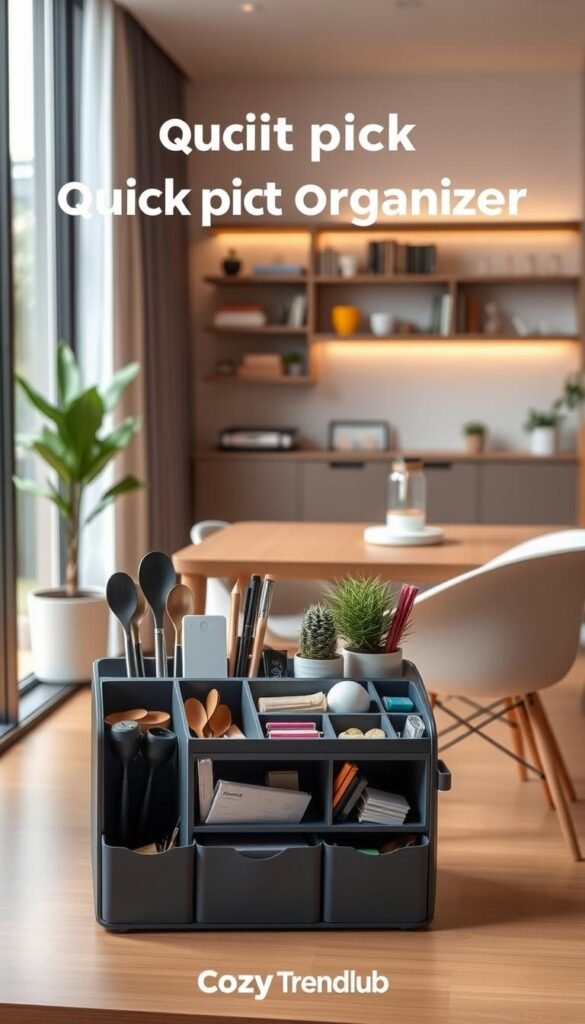
This quick-picks list groups clear, buy-now solutions by room so shoppers can act fast.
How to use it: jump to the room that causes the most clutter, check renter vs permanent labels, then scan pros, cons, and fit notes.
Quick picks by room
- Kitchen — Magnetic knife strip (renter-friendly), under-shelf baskets (permanent-friendly). Fit/measurements: wall width, cabinet depth. Micro-pros: frees counter. Micro-cons: wall anchors may be needed.
- Bathroom — Hinge-mounted towel rack (renter) and over-door pocket organizer (seasonal). Decision factors: door swing, moisture resistance.
- Bedroom — Under-bed bags (seasonal) and space-saving hangers (renter). Note: check bed clearance and closet rod diameter.
- Living room — Nesting coffee table set (set) and floating shelves (permanent). Consider load rating and stud placement.
- Laundry — Rolling utility cart (utility cart) and over-cabinet racks. Measure gap width and caster clearance.
Renter vs permanent
Label each option before buying. Renter-friendly picks avoid drilling and use hooks or adhesive. Permanent installs need studs and may require tools.
„Choose the install that matches your lease and tolerance for tools.“
Expect deeper buying notes later on — magnet strength, stackability, and plumbing cutouts will be covered below.
Living room space-savers that reduce clutter without adding bulky furniture
A few targeted swaps can open circulation paths and give every item a dedicated spot without a full remodel.

Nesting coffee table set for flexible surface area
Why it works: A 3-piece nesting table set like the VASAGLE industrial option offers staged surfaces that tuck away when not in use.
Best for studio layouts and tight seating areas. Measure couch-to-couch clearance and allow 18″–20″ for a usable walkway.
Pros: flexible, compact. Cons: light tables can tip if overloaded.
Floating book shelves to free the floor
Wall-mounted floating shelves free the floor while showing a collection. Use coated brackets for heavier books.
Measure wall stud spacing and shelf depth so books don’t overhang.
Wall-mount media console and VELCRO for remotes
Wall-mount media consoles (60″ models exist) remove heavy cabinets but often need permanent anchors.
VELCRO sticky-back fasteners hold remotes and small accessories. Pros: cheap and removable. Cons: adhesive may fail without surface prep.
Narrow console behind the couch
A slim console fits behind a sofa when a coffee table won’t. Match table height to the couch back and keep 24″ walkway clearance.
Plan optional outlet access if charging hubs are needed.
| Type | When it fits | Lease notes |
|---|---|---|
| Floating | Maximizes floor clearing for small rooms | May require anchors; check lease |
| Freestanding | Easy to move and rent-friendly | No drilling; may use more floor |
Kitchen products that create counter space fast in small apartments
Small kitchens lose function fast when counters become catchalls for knives, boards, and small appliances.
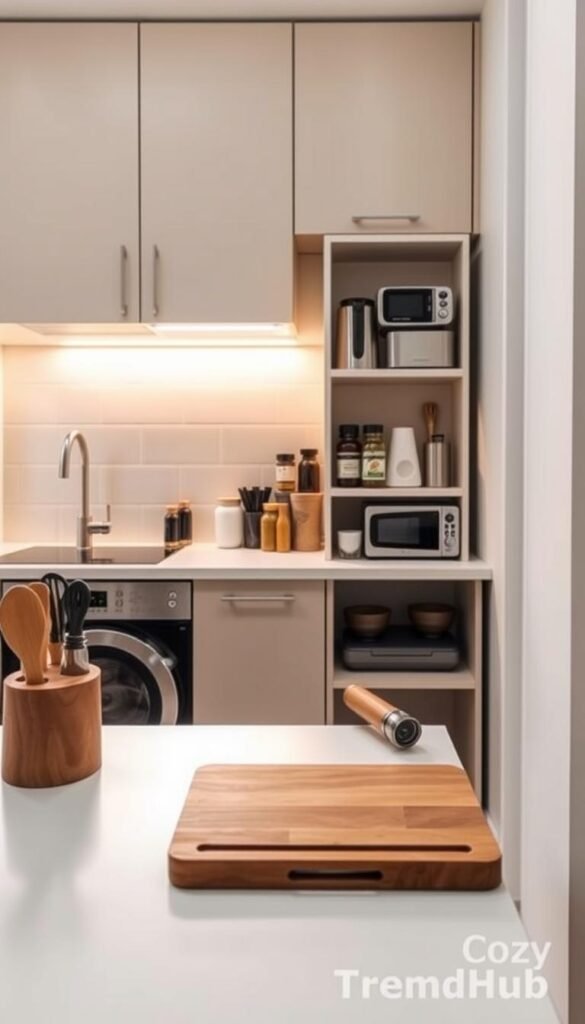
Magnetic knife strip
Why it helps: Removes a countertop knife block and keeps blades visible and within reach.
Who benefits: Frequent cooks and meal preppers who want safer access.
Buying notes: Check magnet strength, wall-mount method, and blade compatibility with stainless and ceramic knives.
Under-shelf basket
Why it helps: Adds a hidden shelf for mugs and utensils without drilling.
Who benefits: Renters and anyone needing one extra shelf. Measure shelf thickness and clearance so mugs fit below.
Over-cabinet door cutting board organizer
Saves awkward sink-base corners by storing boards and thin trays inside the cabinet door. Verify door thickness, hinge clearance, and plumbing routing before buying.
Two-tier lazy Susan
Use a non-skid two-tier turntable to make deep cabinets and cabinets easier to access. Pros: visibility and accessibility. Cons: choose diameter carefully to avoid wasted circumference.
Foldable silicone can and bottle stacker
Silicone grips stabilize stacked cans and bottles so they don’t topple. Foldable designs pack away for seasonal entertaining or extra storage needs.
| Item | Best for | Fit notes |
|---|---|---|
| Magnetic strip | Cooks, quick access | Wall studs or strong anchors; magnet rating |
| Under-shelf basket | Renters, mugs & utensils | Shelf thickness & clearance (min 4″) |
| Over-cabinet organizer | Sink-base reclaiming | Door thickness, hinge clearance, avoid plumbing |
| Two-tier lazy Susan | Deep cabinets, spice groups | Measure cabinet diameter; non-skid base |
| Silicone stacker | Cans, bottles, seasonal storage | Grip quality; fold flat for storage |
Small-space ROI: A magnetic knife strip plus an under-shelf basket clears the most counter clutter fastest and reclaims visible storage space for everyday use.
Spice and pantry organizers for tiny kitchens and crowded cabinets
A clear plan for spice and pantry storage transforms tight kitchen cabinets into an efficient prep zone.

Magnetic jars and fridge-side solutions
Magnetic spice jars free shelf inches by using an exposed fridge side or a metal strip. Hexagon-shaped jars nest tightly. That shape reduces gaps and shows labels at a glance.
Cabinet-door, wall shelves, or countertop — who each fits
- Cabinet-door racks: Hidden from guests and ideal for renters. Check door swing and clearance.
- Wall shelves: Good for frequent cooks who want quick visual access. Require anchors or studs.
- Countertop tiers: Best when few cabinets exist, but they use prime counter area.
Buying considerations and trade-offs
Choose jar size by refill frequency. Strong magnets prevent slipping; test on the fridge before buying. Ensure labels read from standing height.
„Group daily-use jars where they are grabbed most; store backups elsewhere.“
| System | Capacity | Install | Visibility | Best-for |
|---|---|---|---|---|
| Magnetic jars | 12–24 jars | No drill (fridge) | High | Frequent cooks, tight cabinets |
| Cabinet-door rack | 8–16 jars | Over-door or hook | Low | Renters, clutter-free look |
| Counter tier | 6–12 jars | Freestanding | High | Minimal cabinets, guest kitchens |
Quick setup checklist
- Group by cuisine or frequency.
- Keep daily spices within reach.
- Store bulk backups in pantry or top shelf.
Drawer and utensil organization for narrow kitchen drawers
A thin cutlery insert can turn a messy, narrow drawer into an orderly reach-and-grab zone.
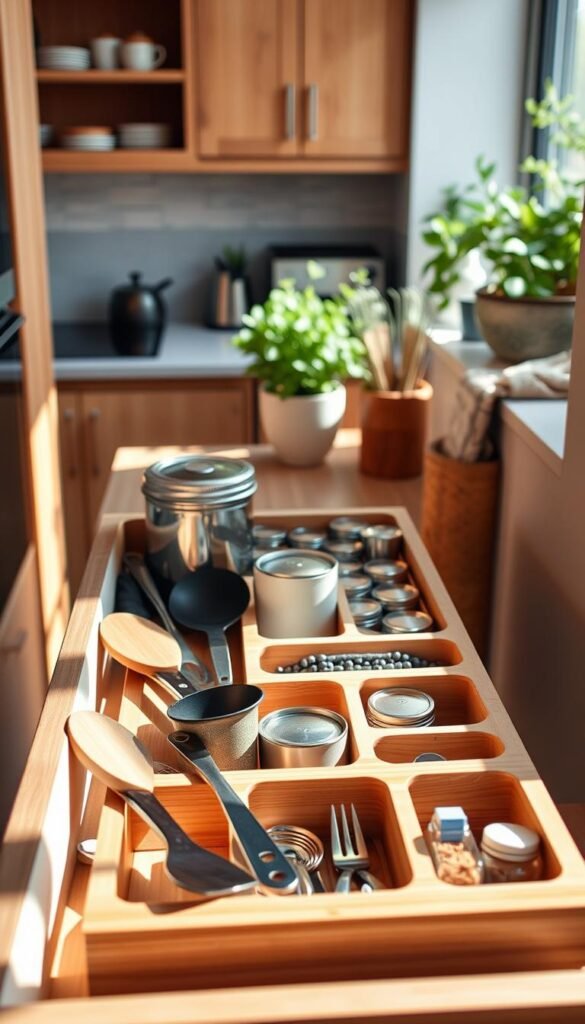
Common problem: In many apartments, narrow drawers become a tangle where small utensils and tools get lost. That slows cooking and can make grabbing a can opener unsafe.
What to look for in a compact cutlery insert
- Footprint dimensions: match internal drawer width and depth, minus tracks and lips.
- Compartment layout: narrow slots for forks, wider bays for odd-shaped tools like whisks and openers.
- Height clearance: ensure the drawer closes with the insert in place.
Best for renters: Low-cost inserts (around $8.99 for common three-style sets) improve daily usability without altering cabinets. They work instantly and are easy to swap if layouts change.
| Feature | When to choose | Notes |
|---|---|---|
| Thin modular trays | Very narrow drawers | Stackable and customizable compartments |
| Single molded insert | Standard shallow drawers | Cheap, durable, limited awkward-tool fit |
| Adjustable dividers | Variable utensil mixes | Good for mixed tools; needs space to adjust |
Pros: faster access, less rummaging, safer grabs. Cons: limited capacity and may not fit oversized utensils.
„Reset the ‚misc tools‘ slot weekly to keep the system working.“
Fridge organizer bins that reduce food waste and maximize storage space
Fridge bins turn hidden corners into clear zones so nothing expires out of sight.
When bins help most
Problem: Food often gets lost at the back of deep shelves. That leads to duplicates, spoiled items, and wasted money—especially in shared refrigerators.
Who benefits most: roommates, families with kids, and meal preppers who store lots of prepped meals and snacks. Bins make it easy to group items and see what needs to be used first.
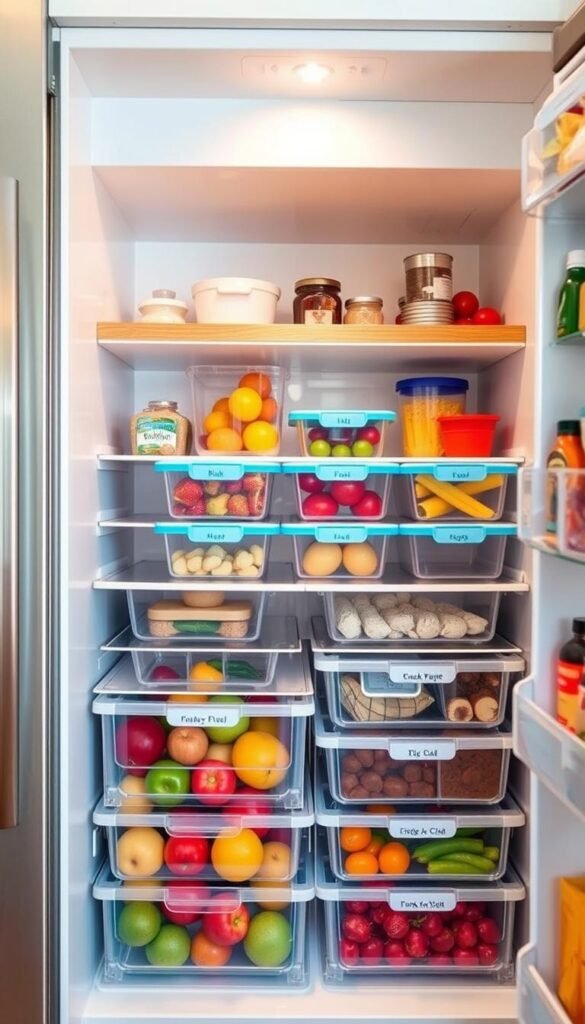
Buying considerations
Measure shelf depth, shelf-to-shelf height, and door clearance so bins slide without blocking the drawer. Account for the shelf lip and any glass thickness.
Handles: Choose easy pull-out grips for quick access. Stackability: Stackable bins save vertical room but must lock or have a stable base to avoid tipping.
Quick system and trade-offs
- Simple category system: snacks, lunch prep, condiments, produce, and “use first.”
- Example pick: Greenco GRC0250 bins (~$40) offer sturdy clear sides and carry handles.
| Type | Best-for | Notes |
|---|---|---|
| Stackable | Maximizing vertical storage | Stable stacking needed to avoid spills |
| Non-stackable | Easy grab-and-go | Better visibility, less tipping |
| Lidded | Longer storage, odor control | Check height before buying |
Pros: better visibility, faster access, less waste. Cons: maintenance time and wrong sizing can reduce usable amount of shelf area.
Bedroom space-savers that make closets and dressers feel bigger
Small closets and shallow dressers often force wardrobe creativity. This short guide shows renter-friendly fixes that expand hanging and folded storage without adding furniture.
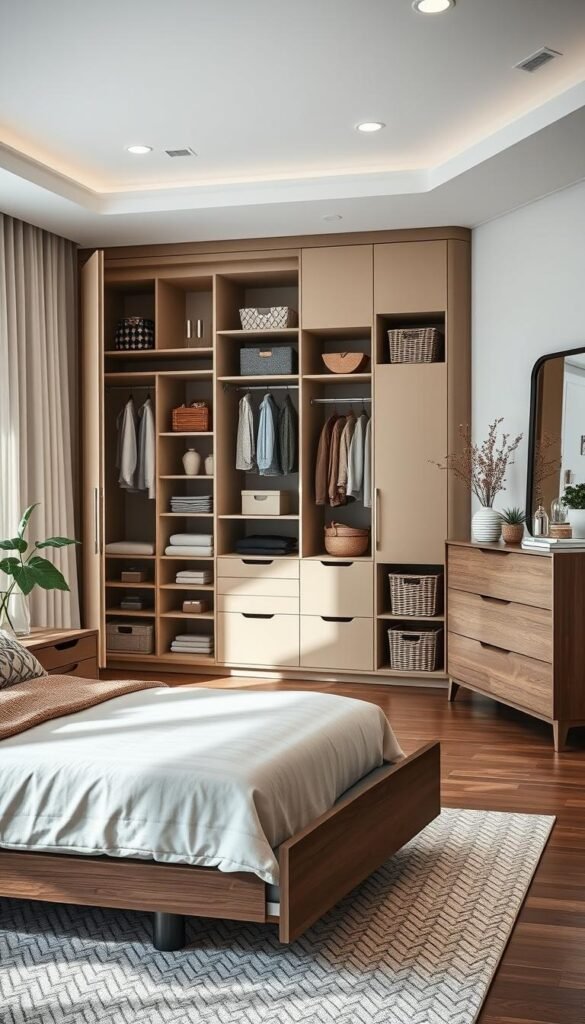
Space-maximizing hangers
Why they work: Cascading metal hangers and compact multi-layer hangers increase hanging capacity and reduce wrinkles.
Who they help: Renters who can’t install closet systems. Measure rod diameter and shoulder width before buying.
Pros: high density and durable. Cons: clothes can be harder to browse when packed.
Adjustable drawer dividers
Dividers stop piles from collapsing and make shirts and socks easy to find. Check minimum and maximum drawer width and divider grip style.
Tip: leave one narrow slot for odd tools to avoid overflow.
Under-bed zip bags and bedside caddy
Clear-top zippered bags store seasonal bedding and winter gear while keeping dust out. They speed retrieval and tuck under a low bed.
Bedside caddies hang from a bed frame and replace a nightstand. Confirm bed frame thickness and pocket layout; some models hold about 20 lbs.
- Quick pros/cons: hangers increase capacity but lower browseability; under-bed bins save floor area but need occasional clean-outs.
„Rotate seasonal items on a set schedule so closets stay usable year-round.“
Murphy bed considerations for small rooms and studio apartments
A wall-mounted Murphy bed can turn a studio from a night-only bedroom into a flexible daytime living area.
Who should consider one: It suits multipurpose rooms where daytime floor use is essential for work, exercise, or entertaining. A queen wall system often sells near $1,200, so this is a medium-to-high investment compared with simple organizers.
Trade-offs: Installing a unit usually requires drilling into studs and solid framing. That raises landlord approval, lease restrictions, and move-out repair questions.
Measurement checklist
- Ceiling height — allow mattress + mechanism travel and mattress clearance.
- Wall width — measure from stud to stud and note adjacent outlets or windows.
- Baseboard and molding — confirm the cabinet base will sit flush.
- Clearance — check free space at sides and foot of the bed for safe operation.
Renter realities and decision filter
Ask for written permission before mounting. Clarify who covers patching and whether studs may be used.
Pros: major floor recovery and flexible room layouts. Cons: higher cost, complex install, and fewer layout options once fixed to a wall.
„If closet clutter is the chief problem, lower-cost storage fixes often return more value than a fold-down bed.“
| Consideration | Typical impact | Action |
|---|---|---|
| Cost | Higher upfront (~$1,200 for queen system) | Budget and compare install quotes |
| Installation | Stud-mounted, requires tools | Confirm landlord permission in writing |
| Room flexibility | Large floor recovery for daily use | Measure clearance and plan furniture layout |
| Move-out | Potential repair obligations | Agree on patching expectations before install |

Bathroom door and wall storage that works in rentals
When a bath has no cabinet room, simple door and wall solutions reclaim usable storage fast. These options focus on renter-safe installs that avoid drilling while keeping towels and toiletries off counters.
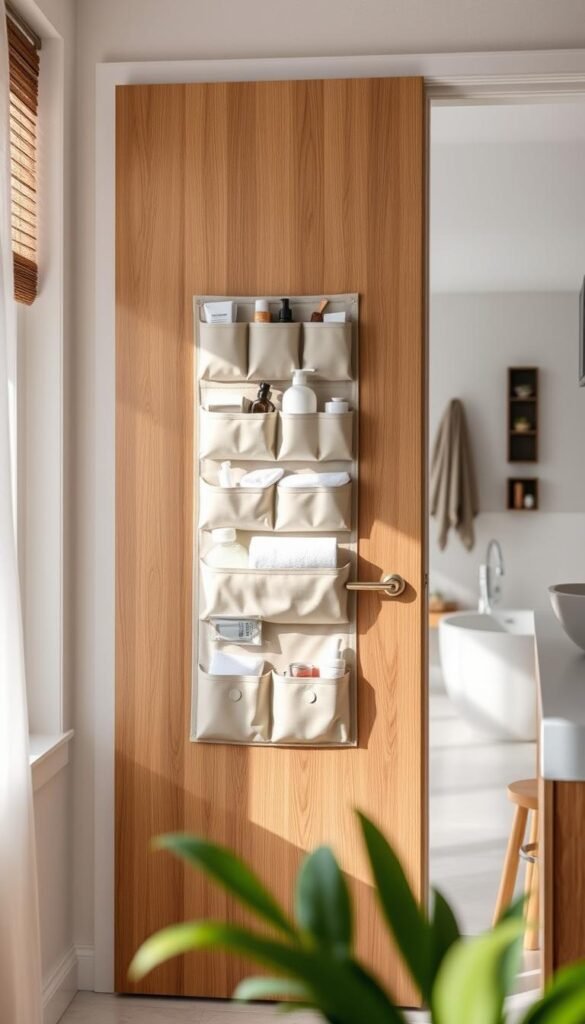
Hinge-mounted vertical towel hanger
Who it helps: Ideal for strict no-drill leases. The hanger attaches to existing hinge hardware and uses door height for drying without losing wall area.
Pros: reversible, easy to install, keeps towels airborne. Cons: limited by hinge spacing and door swing; check that the door closes fully.
Wall towel organizer rack
Who it helps: Households with several towels and little storage. A multi-bar rack or shelf holds rolled towels and small toiletries for quick access.
Pros: higher capacity and neater display. Cons: may need anchors or landlord OK for mounting near wet areas.
- Placement tips: avoid direct shower spray, keep clear of switches and vents, and allow door clearance.
- Material notes: choose rust-resistant steel or coated metal for durability.
| System | Bar count | Material | Max towels |
|---|---|---|---|
| Hinge-mounted (e.g., Command-style) | 3–5 bars | Coated metal / plastic hooks | 2–4 towels |
| Wall rack (e.g., Simple Houseware) | 4–6 bars + shelf | Stainless or powder-coated steel | 4–8 towels (rolled) |
| Floating shelf + hooks | 1 shelf + 2–3 hooks | Wood or composite with brackets | 2–3 towels + small items |
„Choose the mount that matches your lease and your daily routine.“
Under-sink organizers that fix the “everything falls out” cabinet problem
Under-sink cabinets often turn into a messy drop zone where bottles topple and small items disappear. Pipes, odd bottle heights, and no defined zones make daily tasks slower.
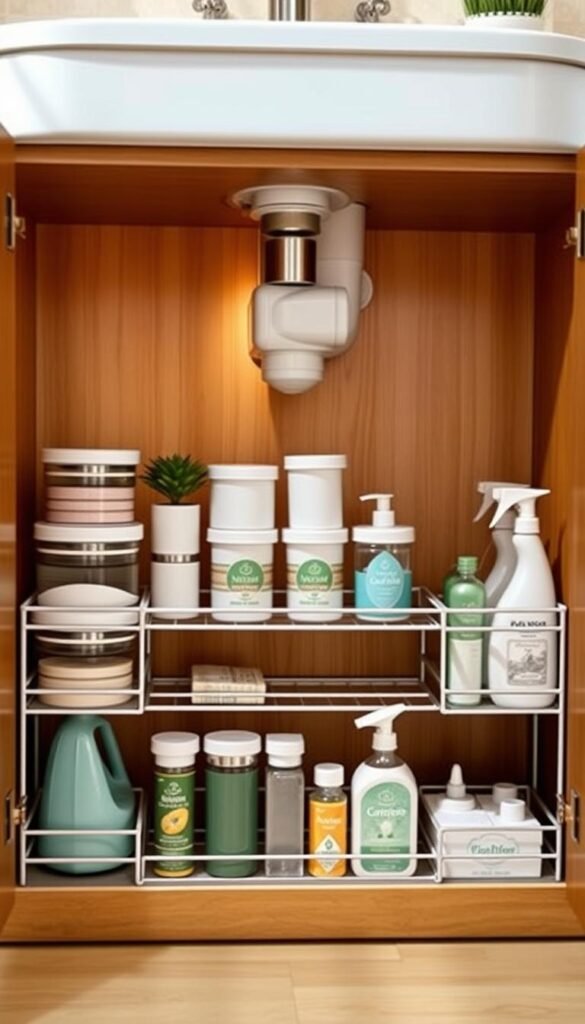
Sliding under-sink drawers for daily essentials and cleaning tools
Why choose: Pull-out drawers (for example, 3-tier sliding under-sink organizers) bring cleaning sprays and tools forward. That reduces kneeling and rummaging.
When it fits: Best where plumbing leaves clear footprints on the cabinet floor and the cabinet depth allows full extension.
Open bins with handles to group items by category and save time
Open handled bins (mDesign, BINO) work well for quick grab-and-go. Group hair-care, first-aid, backups, and cleaning supplies into separate bins for fast restocking.
Pros: Lift-out access and easy visibility. Cons: Overfilling can look cluttered and reduce airflow.
Stackable basket drawers for vertical storage under the bathroom sink
Stackable sliding basket drawers (Simple Houseware style) use vertical space and can be arranged around pipes. They are ideal when shelf height is limited but cabinet height is usable.
Stability note: Choose baskets with wider footprints or non-slip pads to prevent tipping when pulled.
Buying considerations: plumbing cutouts, shelf height, and moisture resistance
- Measure around plumbing cutouts and label clearances before buying.
- Check shelf height for tall spray bottles; confirm the drawer clears the cabinet door when closed.
- Prioritize rust-resistant metal or coated plastic for humid bathroom and sink areas.
„Pick the system that matches the plumbing layout and daily routine — drawers for frequent use, bins for category sorting, stacks for vertical capacity.“
| System | Footprint | Access | Moisture Resistance | Best-for Routine |
|---|---|---|---|---|
| Sliding drawers (3-tier) | Medium — needs full depth | Pull-out | Coated metal/plastic recommended | Daily cleaning bottles and tools |
| Open handled bins (mDesign, BINO) | Small to medium — flexible | Lift-out | Plastic or coated handles best | Category grouping and quick grab |
| Stackable basket drawers (Simple Houseware) | Variable — uses vertical height | Pull-out or slide | Powder-coated metal or plastic | Maximizing vertical storage around pipes |
Laundry and utility small-space products for tight gaps and awkward corners
C many apartments have thin voids beside the washer where supplies pile on the floor or on top of machines. These dead gaps cut usable area and make laundry routines slower.
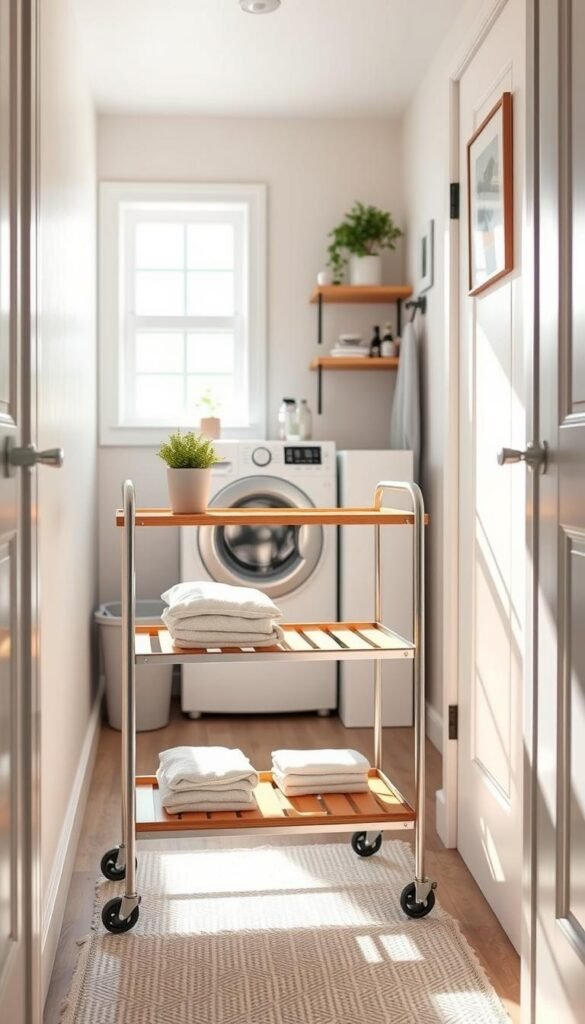
3-tier rolling utility cart
What it solves: A narrow 3-tier utility cart fits slim gaps between machines or beside a stacked dryer. It corrals pods, stain sticks, lint rollers, and small bottles without drilling.
Measure the gap width and allow 1″ clearance so the cart rolls smoothly when loaded. Choose wide casters for wet floors.
Clear over-the-door pocket organizer
Why it helps: A 24-pocket door organizer stores small accessories like sewing kits, spare batteries, and flashlights where they stay visible and reachable.
Hang it on the inside of the closet or laundry door to protect pockets from humidity and keep the area discreet.
- Pros: Cart adds organized tiers; pocket organizer improves visibility and quick access.
- Cons: Cart needs a clear pull-out path; the door organizer requires a door that closes without rubbing.
| Item | When to use | Fit notes |
|---|---|---|
| 3‑tier utility cart | Tight gaps next to machines | Measure gap + 1″ clearance; test caster roll |
| Clear pocket door organizer | Small accessories and odds | Install inside closet door; ensure no rubbing |
| Combined system | Maximize narrow laundry storage | Cart for bulk, organizer for small items |
„Group frequently used items within arm’s reach and store backups on the cart’s lower tier.“
Comparison guide: wall vs door vs cabinet organizers for small homes
When floor room is scarce, a clear rule set speeds decisions: use wall mounts to free the floor, choose door hooks when drilling is off-limits, and pick cabinet inserts when you want hidden order.
Best “no-floor-space” upgrades
Floating shelves and under-shelf baskets add usable surface without widening a footprint. They pull storage higher and keep circulation paths open.
Over-door racks fit on the back of a bathroom or closet door and create quick access for toiletries or tools.
Daily convenience
Map tools to problems: a magnetic knife strip clears counters, magnetic spice jars make labels visible, cutting-board door organizers stop stacks from collapsing, and towel racks speed drying.
Seasonal storage
Under-bed bags and clear bins hold extra linens and holiday items. They rotate easily and keep closets uncluttered.
| Type | Pros | Cons | Ideal for |
|---|---|---|---|
| Wall shelves | Clean look; frees floor | May require anchors/studs | Long-term homeowners |
| Door racks | No drill; renter-friendly | Limited capacity; clearance issues | Renters, small bathrooms |
| Cabinet organizers | Hidden, improves counter coverage | Reduces internal space; measure fit | Kitchen and bath storage |
„Choose wall solutions to free floor area; choose door solutions when walls can’t be altered; choose cabinet solutions to tidy visible counters.“
| Advice | Install type | Measurement |
|---|---|---|
| Affiliate table should include | Mount (adhesive/hinge/stud) | Depth, height, clearance |
| Capacity & fit | Load rating | Volume and item counts |
| Best-for | Renter vs homeowner | Room example (kitchen, bath, bedroom) |
What to check before you add shelves, racks, or organizers to a rental
A quick pre-install checklist prevents damage, wasted purchases, and surprise repair costs when adding racks or a shelf in a rental. Start with lease rules, measure the intended area, and pick mounts that match load and landlord limits.
Lease-friendly mounting and preventing wall damage
Pre-install rental checklist:
- Review lease language on wall anchors and drilling; get written permission if unsure.
- Confirm allowed adhesives or anchors (Command strips, removable hooks, or approved screws).
- Document current wall condition with photos and date stamps for move-out proof.
Mounting choices: removable adhesive works for light loads and avoids drill holes. Hinge-mounted options attach to the door hardware for towels or lightweight racks and reduce lease risk. Heavy racks need studs or landlord sign-off; use toggle bolts only if allowed.
Choosing the right spot: airflow, moisture, and heat sources
Surface prep helps hold: clean walls or door faces with isopropyl alcohol and let adhesives cure per instructions. Poor prep leads to failures and marks.
Avoid trapping damp towels in sealed cabinets. Pick rust-resistant metals or coated plastics near sinks and in bathrooms. Keep organizers away from stoves, radiators, and vents where heat can warp materials or weaken glue.
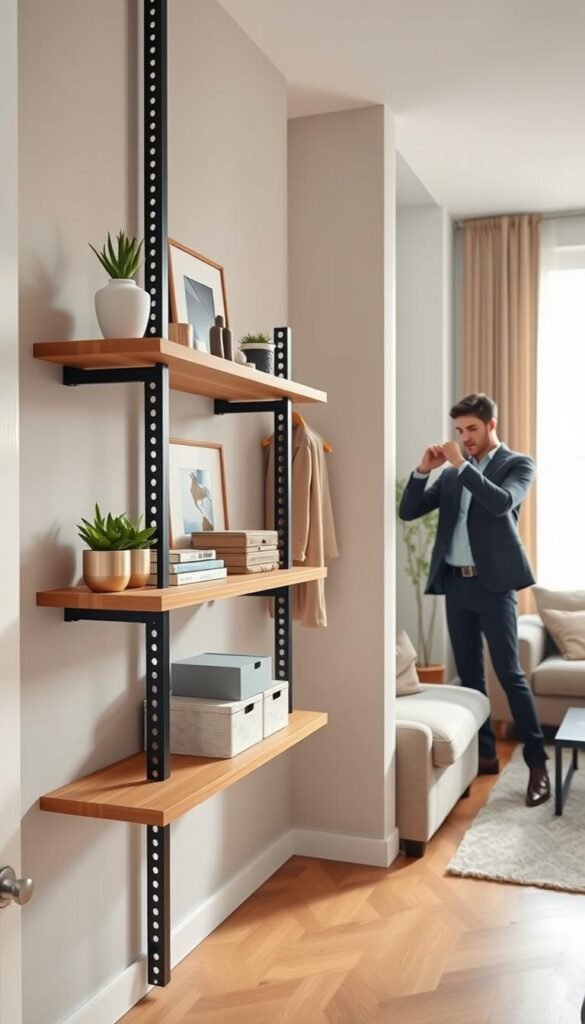
„Test placement with painter’s tape to confirm door clearance and daily workflow before committing to mounts.“
| Issue | Recommended mount | When to get permission |
|---|---|---|
| Light items (towels, spices) | Removable adhesive or hinge-mounted rack | Not usually required |
| Medium load (books, canned goods) | Stud-mounted shelf or heavy-duty anchors | Ask landlord if drilling needed |
| Heavy loads (large racks, wall consoles) | Studs or professional install | Always get written approval |
Conclusion
A targeted organizer that solves one recurring snag can change how a whole room performs.
Start by measuring counters, closets, or the under-sink area. Pick the single fix that removes your daily friction first. If it works, add one more item rather than overfilling the room with gear.
Renter-friendly installs—adhesive strips, hinge mounts, and over-door racks—keep leases intact and make upgrades reversible. Use the wall vs door vs cabinet guide to match limits to function.
Choose durable materials and designs that simplify upkeep. The right storage should reduce chores, not create more parts to manage.
Tip: Treat this roundup as a reference. Return room-by-room when a new challenge appears—seasonal rotation, guests, or holiday overflow—and solve the problem that matters most first.