
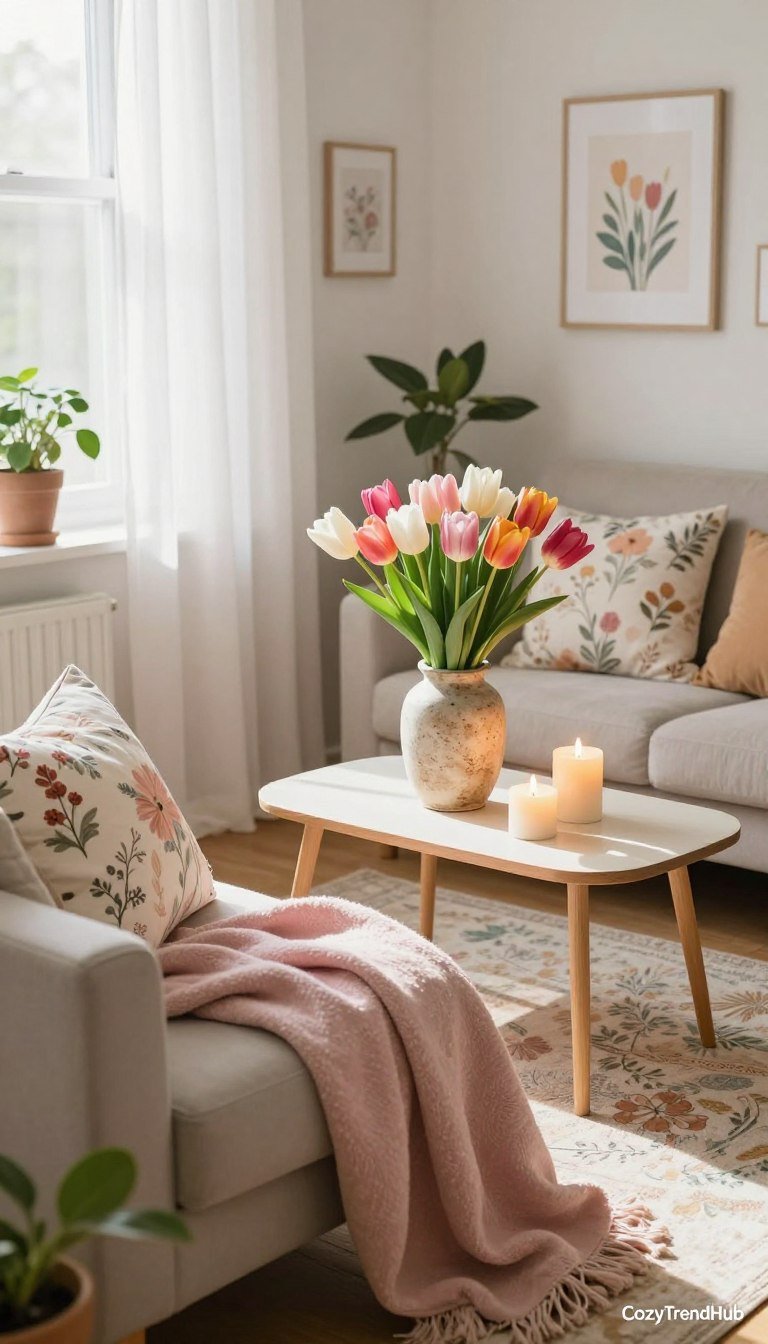
Affiliate note: This post contains affiliate links. Recommendations are chosen for renters and tight footprints.
Problem: Small rooms often feel heavy after winter. Clutter and dark textiles make daily life harder, not just less pretty.
Solution: Start with a quick room-by-room clean, swap textiles, add low-maintenance greenery, and clear surfaces. These moves brighten a room fast without new furniture or permanent changes.
“Actually works” means changes that read as seasonal, avoid added clutter, and can be done this weekend. Expect renter-friendly options like pillow covers, lightweight throws, stems, vases, trays, removable wall swaps, and light-filtering curtains.
The guide focuses on measurable impact: reduced visual weight, easier upkeep, and improved light. Choices favor a small footprint, multi-use items, easy seasonal storage, and value per year.
Readers will get a simple process: quick clean + one big visual change + one functional fix + one spring signal. Later sections cover measurements, palette, and a prioritized shopping list with pros, cons, and buying checks.
Key Takeaways
- Start with a quick clean and swap a textile for immediate lift.
- Choose renter-friendly, low-footprint items that store easily.
- Balance fresh vs. faux based on pets, allergies, and upkeep.
- Prioritize light, reduced visual weight, and multi-use value.
- Follow the simple weekend process to see measurable results.
What “actually works” in a small space in spring
Start with clear goals: cut visual weight, reduce daily friction, and boost light. Small rooms feel heavier after winter because darker textiles, extra throws, and more items left out make surfaces look crowded.
The small-space spring problem
Toys, magazine piles, exposed cords, and dark focal points create constant clutter. These issues make a single room take more time to tidy and shrink perceived space.
The renter reality
Renters often can’t drill, repaint, or add bulky storage. That means choices must be removable, foldable, or flat-packable. Use damage-free hooks, washable covers, and lightweight hardware.
The fastest wins
Textiles change the largest visible surfaces with no layout changes. Swap pillow covers and a lightweight throw to update a living area in under an hour.
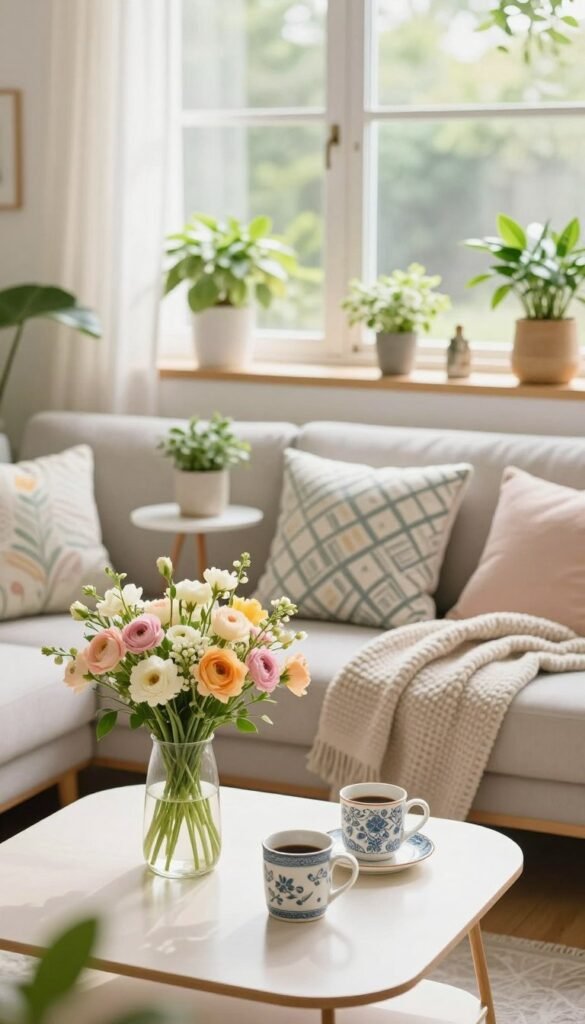
- Add one or two small greenery arrangements instead of many pieces.
- Use a tray on the coffee table to corral remotes and cords.
- Declutter one room per day to make progress without overwhelm.
„Do a quick clean first, then style one focal area, then one shelf—small steps make the change stick.“
Later sections will cover sizes, materials, washability, and damage-free hanging so readers can choose items that match lease limits and real-life use.
How to choose spring decor that fits your space, budget, and lease
Focus on items that deliver clear function and visual lift in a single step. This way readers can pick additions that matter and avoid more clutter.
Measure first
Use a tape measure and check three things: coffee table surface area, shelf depth and height, and minimum walkway clearance (18–24 in.). Record tray max size and shelf limits before you shop.
Palette and pops
Start with light base colors to reflect light. Add one or two accent tones on textiles or a single tabletop moment. Keep accents concentrated so the room reads calm.
Make pieces earn their footprint
Pick multi-use items: an ottoman that doubles as seating, baskets that store throws, and a tray that organizes remotes. If it can be reused next season, prioritize it.
Storage and trade-offs
Store pillow covers flat in a labeled bin. Choose faux stems that nest or fresh stems you can replace. Compare options: fresh gives scent and realism; faux saves time and cost over time.
Renter-friendly checks
- Removable hooks and no-damage adhesives
- Lightweight frames and pieces that don’t need anchors
- Spend on reusable trays or vases; save on changeable items like covers

| Choice | Footprint | Maintenance | Renter-friendly |
|---|---|---|---|
| Fresh flowers | Small vase | Weekly care, recurring cost | Yes |
| Faux stems | Nests flat | Low upkeep, reusable | Yes |
| Multi-use furniture | Earns footprint | Low | Depends (size) |
Best spring decor for small spaces you can buy and use this weekend
Weekend-ready upgrades center on textiles, a single focal surface, and one organizing piece. This plan saves time and prevents over-styling in a tight living room.
Comparison framework: judge items by cost range, footprint, renter-friendly score, storage effort, and seasonal reuse. Use a compact table to compare trays, covers, greenery, curtains, and art before you buy.

Priority buys and why
- Textiles first: pillow covers and a light throw refresh the sofa fast.
- Greenery + vase: one arrangement signals season without clutter.
- Tray or runner: a functional surface to control daily mess on a coffee table.
- Wall swap: a small art change brightens a mantel without holes.
- Curtains/ambiance: choose sheers if the room feels dim.
Affiliate product blocks will show a short „best for“ line, key specs (dimensions/material), and quick pros/cons. Pick one focal surface—coffee table or mantel—to keep styling tight.
| Item | Footprint | Renter | Seasons |
|---|---|---|---|
| Pillow covers | Low | High | Many |
| Trays | Low | High | Many |
| Greenery | Low | High | Varies |
Pillow covers and lightweight throws for a quick living room refresh
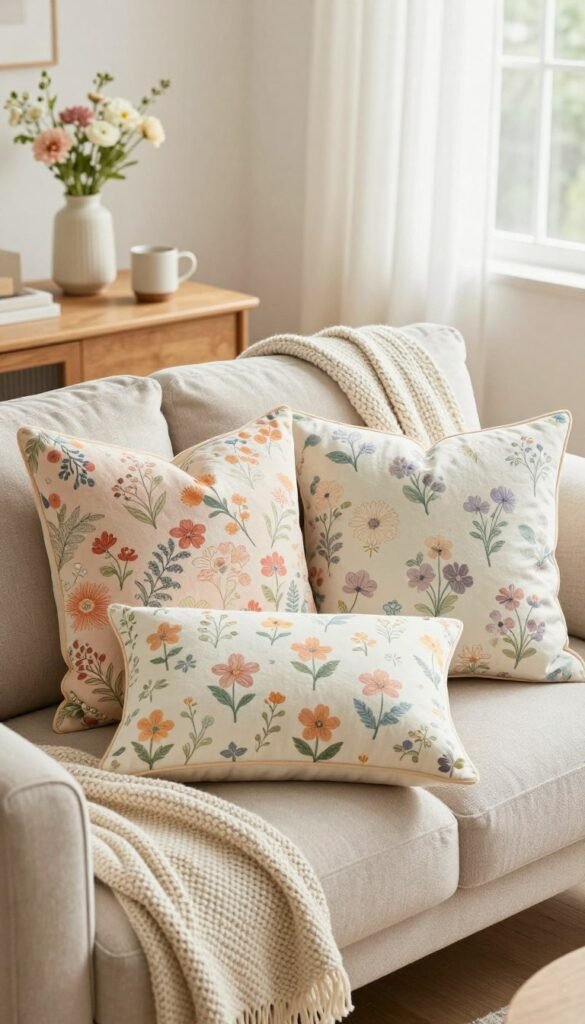
Textiles are the highest-impact, lowest-effort move to refresh a couch and related furniture. A short swap changes color and pattern without adding bulky items or permanent changes.
Best for
This approach suits renters who want change without new furniture. It also helps anyone with a neutral sofa that feels winter-heavy or homes that need washable options.
Why it works
Replacing pillow covers and adding a lightweight throw updates the largest visible surfaces. Covers store flat, so season sets take little closet space.
Buying considerations
- Measure inserts before buying; size up 1–2 inches for a fuller pillow look, or match size for a relaxed fill.
- Check zipper quality and seam strength; hidden closures last longer with frequent washing.
- Choose cotton/linen blends for breathable texture; avoid thick winter knits that weigh down the look.
- Machine-washable covers matter with pets, kids, or regular snacking in the room.
Pros and cons
Swapping covers: low cost, flat storage, repeatable. New pillows: add loft and feel but cost more and need off-season space.
| Option | Storage | Cost | Care |
|---|---|---|---|
| Pillow covers | Flat, compact | Low | Machine wash often |
| New pillows (inserts) | Bulky | Medium–High | Spot clean or wash per fill type |
| Lightweight throw | Folded on shelf | Low–Medium | Machine wash or gentle cycle |
Style pairings & starter set
Soft greens, blush, pale blue, or sunny yellow work well with gray, beige, navy, and white furniture. A simple starter set: 2–4 covers plus one airy throw makes the change feel deliberate and cohesive.
Fresh flowers, faux stems, and easy greenery that won’t overwhelm a small room
A single vase of blooms can signal the season without adding clutter or upkeep headaches. One well-chosen bundle often reads more intentional than many tiny pieces.
Best for: anyone who wants an instant spring cue with minimal effort. Fresh choices suit readers who like scent and natural variation. Faux stems suit busy schedules, travel, allergies, or homes with curious pets.

Fresh flowers on a budget
Check Trader Joe’s for value bouquets and Costco for large bunches to split into smaller vases. To extend life, trim stems and for hydrangeas cut 1.5–2 inches and use tepid, room-temperature water.
Change water every other day and keep arrangements away from direct heat or hot vents.
Faux flowers that look real
Dollar stores, HomeGoods, Amazon, IKEA, and craft stores often carry convincing stems—look for matte finishes and natural tones. Faux works well on high ledges or shelves where watering is a hassle.
Free spring options
Clipped branches or cuttings from a yard or a walk add height and texture with zero cost. Use a narrow jar or bottle to keep the look simple and seasonal.
Pros and cons
- Fresh: fragrance and natural change; recurring cost and short upkeep (replace in days to weeks).
- Faux: reusable and low maintenance; upfront cost and risk of a cheap finish if chosen poorly.
- Free clippings: zero storage and instant seasonal cue; limited longevity and no scent.
„One confident bundle beats multiple tiny pieces in a tight room.“
Practical tip: pick one focal vase, match it to the scale of the surface, and let that single moment carry the look. This gives the most seasonal impact with the least footprint and the best long-term value.
Vases and “nicer containers” that make even simple stems look styled
A thoughtful container turns loose stems into a composed arrangement that reads intentional and tidy.

Why this matters: stems can look random on a crowded surface unless the container gives structure and contrast. The right holder anchors the arrangement and keeps a table feeling deliberate.
Best for
People who struggle to make florals look intentional. One well-chosen piece upgrades fresh or faux stems and reduces the need for extra accents.
Buying considerations
- Height: 8–12″ for low tables, 12–18″ for floor or console use.
- Neck width: Narrow necks make sparse stems read fuller; wide mouths suit big bouquets but can sprawl.
- Stability: Base diameter and weight matter on a coffee table or narrow console—prioritize a wider base or a heavier bottom.
- Materials: glass reflects light, wicker and light wood add warmth, and lightweight metal gives a subtle shine.
- Safety: choose shatter-resistant or weighted bases in homes with kids or pets.
Practical capsule: one medium clear glass vase + one textured neutral (wicker or ceramic). This pair covers most spring arrangements and surface scales.
| Type | Height (in) | Base Dia (in) | Neck Width (in) | Notes |
|---|---|---|---|---|
| Medium clear glass vase | 10–14 | 3.5–4.5 | 1.5–2 | Reflects light, fits table or coffee table, easy to wipe clean |
| Textured wicker/ceramic | 8–12 | 4–5 | 2–3 | Adds warm wood tone, stable, works with faux stems |
| Lightweight metal cylinder | 9–15 | 3–4 | 1.5–2.5 | Shiny accent, low visual weight, hand-friendly to move |
„Pair greenery with a nicer container so the overall look comes together.“
Quick tip: measure the surface before you buy. Avoid oversized vessels that block sightlines or steal the focal point from a small table. Consider how each kind of neck shapes the stems and choose options that match your daily routine.
Coffee table trays and runners that control clutter while adding spring color
A tidy tray can turn a scattered coffee table into a single, useful moment. It fixes the core problem: in a compact living room daily items have nowhere to land except the table, and clutter builds fast.
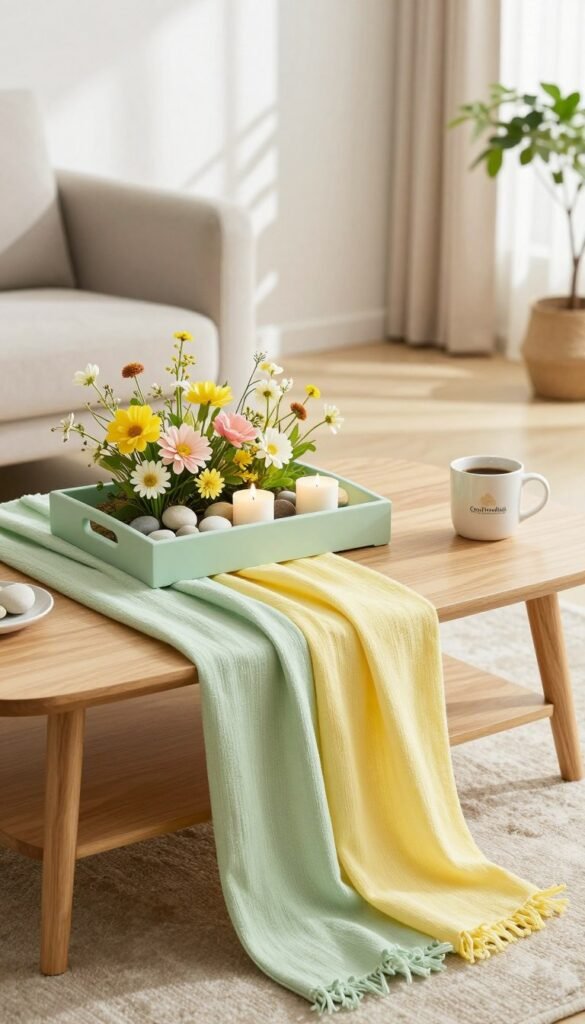
Why a tray works: it visually contains remotes, coasters, and small books. The result is an intentional vignette that’s quick to reset and easy to move when guests arrive.
Buying considerations
- Size: leave space for cups and feet—measure the table and subtract 30–40% so the tray doesn’t dominate.
- Single vs. double-decker: single is tidy; double-decker adds vertical capacity without widening the footprint.
- Material & finish: choose wipe-clean surfaces, non-slip feet, and rounded edges to avoid snags.
- Runner option: use a narrow runner to hide marks and add pattern; it folds flat for storage.
Pros and cons
| Option | Pros | Cons |
|---|---|---|
| Tray | Structured, portable, hides cords | Needs surface space |
| Basket | Soft look, hides mess | Can slump, harder to clean |
| Bare table | Minimal look | Requires constant tidying |
Real-life setup: remotes + a small coaster stack + one spring element (tiny vase or faux stems). Buyer checks: wipe-clean finish, handles or grip edges, and non-slip feet so the tray stays put on a wood table.
Shelf styling in tight spaces without buying all new decor
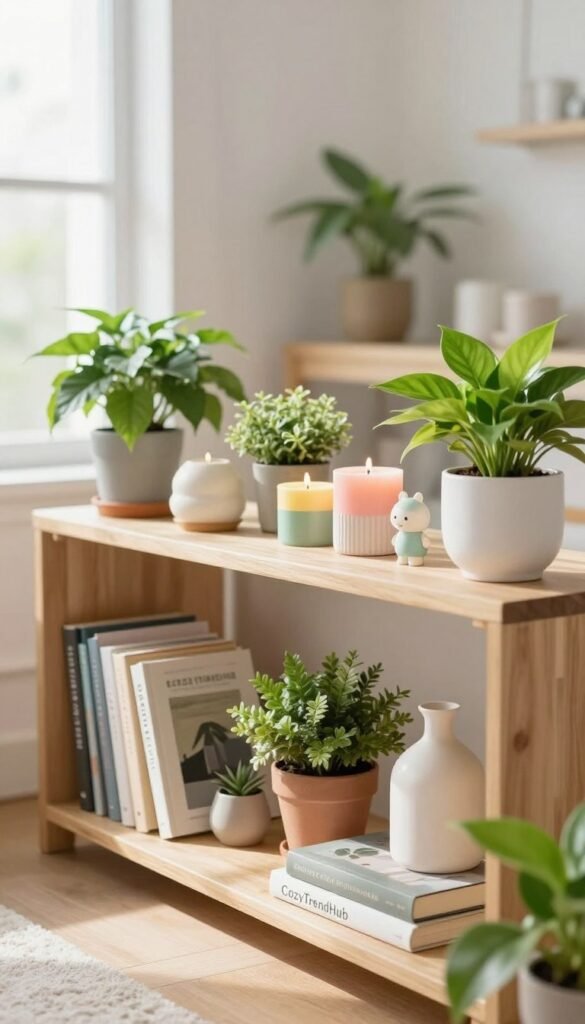
A simple restyle can make a crowded shelf feel airy without adding new items. Start by clearing every shelf, wiping surfaces, and stepping back to plan what stays.
Quick, repeatable method
- Choose three anchors per shelf: a stack of books, a basket, and a frame.
- Add one tall item and one short item so each shelf has height variation.
- Layer items—place one piece slightly behind another to create depth.
Height variation helps the eye read vertical space. Mix tall vases with low stacks so shelves feel open, not flat.
Layering reduces that “store display” look. Put a small tray or book in front of a frame to make the arrangement intentional.
Palette discipline: keep most pieces neutral and repeat one or two seasonal colors as pops. This limits visual clutter and ties shelves together.
Rotate micro-accents by hand each month—one faux stem, one candle, or a small print. Reuse books, baskets, and frames year after year to save time and money.
Budget tweak: spray-paint mismatched metal or ceramic accents in a light gold or pastel to unify pieces. Work outside, ventilate, and test a small area so finishes read fresh, not heavy.
„Start minimal, repeat a color, and let a few layered pieces do the styling.“
Wall and mantel updates that are renter-friendly and removable
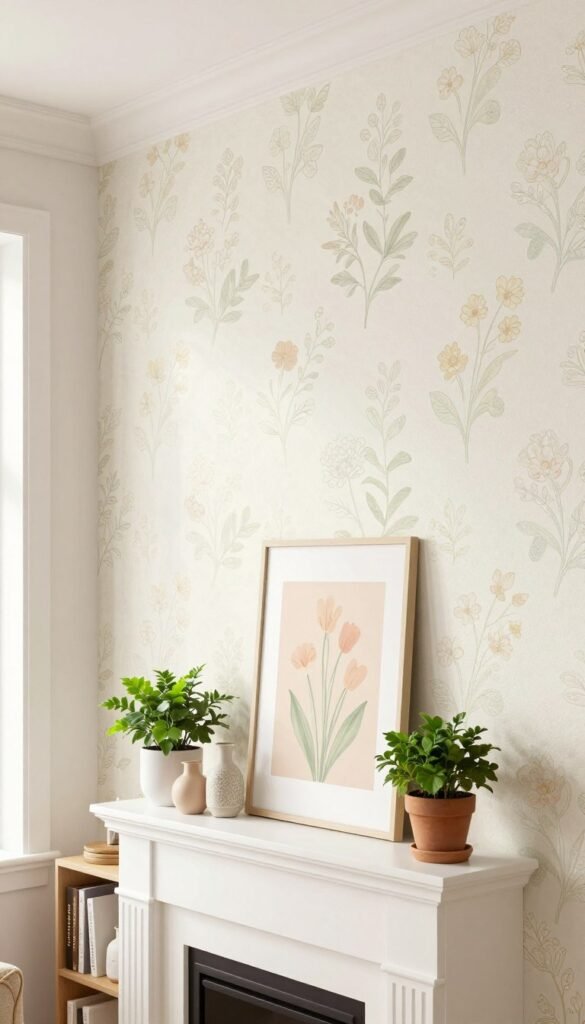
A light art swap or a removable mantel vignette can change a room’s mood without painting or power tools. These moves help when blank wall areas or a dark focal point make a room feel heavy.
Who this helps
This approach is ideal for renters who cannot drill or repaint. It gives a high-impact seasonal update with minimal holes and low-cost storage.
Seasonal art swaps and nostalgic touches
Rotate prints—florals, bright landscapes, and light abstracts—inside the same frames. That saves cash and keeps storage compact. Add a mini gallery of family or travel photos to make the room feel lived-in.
Mantel plan and dark focal-point workaround
On a mantel use one tall anchor, one greenery element in a nicer container, and one personal photo. To soften a dark fireplace surround, try a decorative screen or a lightweight panel that leans in front without damage.
Buying considerations and hanging pros/cons
- Choose lightweight frames and acrylic glazing instead of glass when breakage matters.
- No-damage strips are removable but weight-limited.
- Small nails make tiny holes and hold more weight.
- Leaning frames avoid holes but need stable ledges and a steady hand.
| Method | Holds (lbs) | Damage | Notes |
|---|---|---|---|
| No-damage strips | Up to 8 | None (when removed correctly) | Easy install, check weight rating |
| Small nails | 10–25 | Small hole | Reliable for heavier frames |
| Leaning | Depends on ledge | None | Best for art that can rest on mantels or shelves |
| Decorative screen | N/A | None | Softens dark focal points without fasteners |
„One framed print and a small vase change a wall more than a dozen tiny pieces.“
Light-filtering curtains and textile swaps to brighten a small space
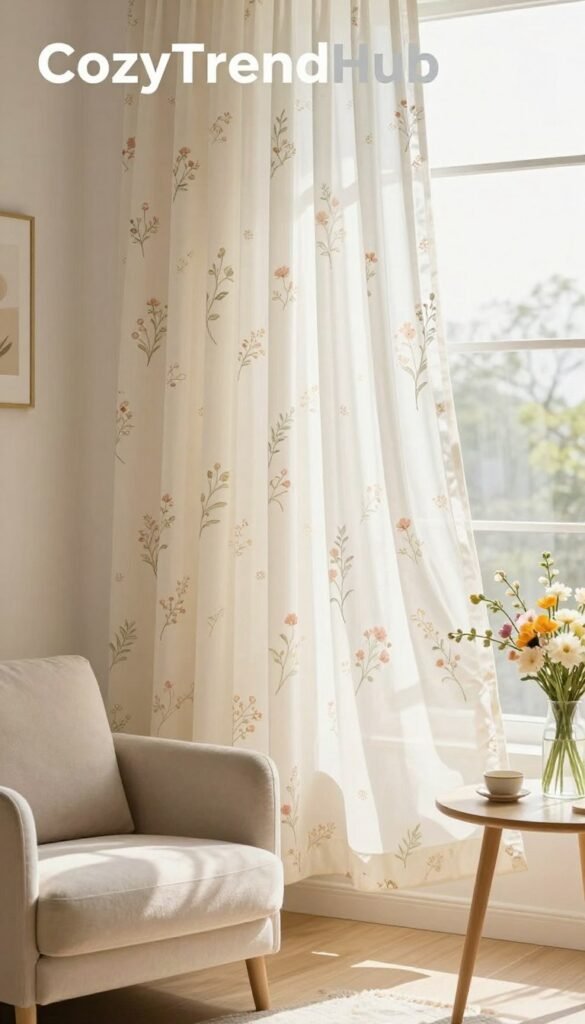
Light-control textiles are an easy swap that changes how a room feels in a single afternoon. Dim rooms feel smaller because heavy winter panels block daylight. A quick change brings immediate visual lift without new furniture or tools.
Best for: apartments with limited windows or north-facing exposures where every bit of daylight counts.
Sheer panels vs. light-filtering panels
Sheers let the most light through and add a soft layer. Choose sheers when brightness matters more than nighttime privacy.
Light-filtering panels balance glow and privacy. Pick these when glare or street-level windows are a concern. Keep heavy drapes for bedrooms or late-season use.
What to measure and a renter-friendly upgrade
- Measure rod width, panel length, and clearance from vents so curtains don’t puddle or block airflow.
- Confirm hardware type (grommet, rod pocket, clip) before buying to match the existing rod.
- Magnetic curtain ties are a no-drill upgrade. They hold panels open fast and boost daylight on busy days.
Pros and cons
| Option | Pros | Cons |
|---|---|---|
| Sheers | Maximum light, airy look | Low privacy at night |
| Light-filtering | Privacy + glow | May still cause screen glare |
| Heavy drapes | Warmth and full privacy | Blocks daylight, bulkier |
Buyer checks: pick easy-care fabrics, white or ivory color for max reflectance, and confirm hardware compatibility. Opening blinds and curtains on sunny days amplifies the impact of lighter textiles and greenery without adding objects to the home.
Spring ambiance upgrades that don’t take up any floor space
Changing scent, light, and hidden backgrounds alters how a room reads without adding bulk.
Define the win: scent, better daylight, and visual calm change perception of a room without new furniture or storage.
Best for: small apartments where every surface must stay useful and extra items become clutter.
Scent solutions: candles, plug-ins, and reed diffusers
Candles (Yankee Candle, Bath & Body Works) suit occasional cozy nights. Plug-in wallflowers (Bath & Body Works) offer adjustable strength and set-and-forget convenience. Reed diffusers (Capri Blue Volcano style) give continuous, low-effort scent with longer life.
Pros and cons: strength control, safety, and ongoing cost
- Candles: manual strength control; risk with pets or kids; recurring buy per use.
- Plug-ins: steady scent; place near outlets; adjust settings to avoid overpowering a room.
- Diffusers: longer-lasting; higher upfront cost; watch for spills on narrow shelves.
Pick one primary method to avoid layering fragrances and extra cost.

Instant spring feel and a quick no-cost hack
Open windows and pull curtains back today. Clear one main surface so light and air read through the room.
Wrapping paper behind glass: measure the panel, cut paper to size, and place it behind TV-stand or cabinet glass to hide cords and DVDs. It takes about 20 minutes and swaps seasonally with no damage. Works well on TV stands, glass-front cabinets, and shelving units.
„Clear surfaces, a single scent, and a tidy backdrop change a house more than new items do.“
Conclusion
Conclusion
A focused refresh in one room can change how the whole house feels this year. Keep moves renter-friendly and low-commitment.
Start here: swap pillow covers and a lightweight throw, add one scaled greenery arrangement in a measured vase, and contain coffee table clutter with a tray or narrow runner.
Measure first, choose a light palette, and pick multifunction pieces that store flat. Buy in this order: (1) textile refresh, (2) stems + vase, (3) tray/runner, (4) removable wall art, (5) curtains or scent as needed.
Reuse frames and baskets, refresh accents with a single spray color, and favor no-damage hangers. Maintain the look with one weekly surface reset, a permanent drop-zone tray, and routine care for fresh or faux stems.
Practical note: spring decorating should make the living area easier to use, not harder to maintain.



One Comment