
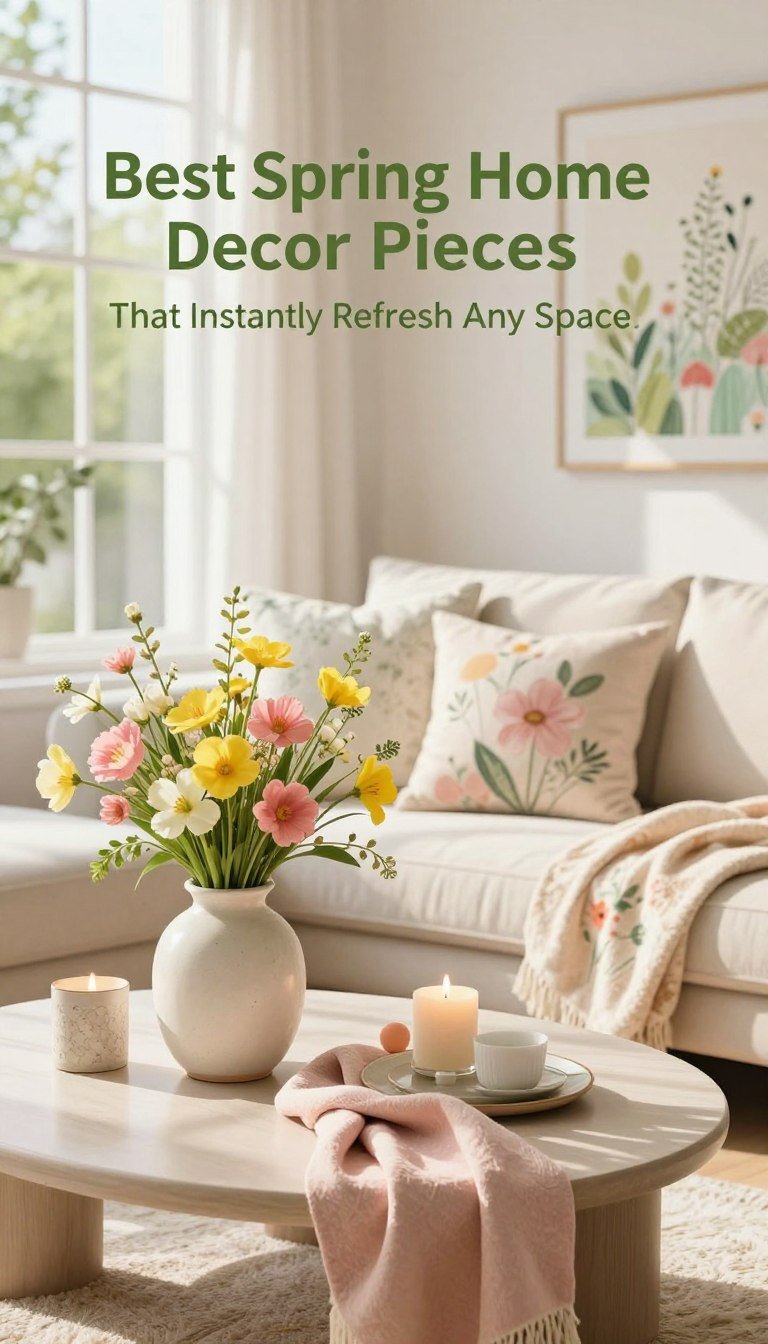
Rooms can feel heavy after winter. Dark textiles and crowded surfaces make even tidy spaces seem stuck. This section promises a clear fix: a short list of high-impact pieces that brighten rooms without clutter.
Focus is on renter-friendly, small-space solutions. No holes, no paint, no permanent changes. The approach favors easy swaps and items that store compactly at season end.
The article will evaluate each pick by who it suits, why it works, and buying considerations. Expect honest pros and cons and practical notes for budget and upkeep.
Key updates center on nature-inspired touches: wreaths, realistic florals, textiles, lighting, and simple countertop styling. Pieces match what blooms outdoors to avoid an out-of-season look.
This guide covers front door, living room, mantel, coffee table or console, kitchen sink, and dining table so readers can jump to the most relevant area.
Key Takeaways
- Start with decluttering and a quick clean to let light in.
- Choose a few high-impact pieces that are easy to swap and store.
- Prefer renter-friendly updates: removable hooks, textiles, and lighting.
- Match faux florals to real seasonal blooms for realism.
- Each pick will list who it’s best for, why it helps, and what to check before buying.
What to Buy for a Spring Refresh That Doesn’t Feel Temporary or Cluttered
Begin by choosing a small set of durable pieces that change a room’s feel without feeling temporary. This is the perfect time to plan, not pile on. Declutter and deep-clean first so light and shape read clearly.
Common pain points: heavy winter textiles, low daylight, and visual hotspots like the entry console, coffee table, and kitchen counter that collect clutter.
Define „not temporary“ as pieces that mix with neutrals, reuse every season, and store flat or in a bin without losing shape. Follow a simple buying priority:
- Clean and declutter.
- Pick one focal upgrade.
- Add one texture layer (textiles or greenery).
- Finish with a small seasonal accent.
How selections will be evaluated
- Best for: use case.
- Why it works: problem solved.
- Pros/cons: real-world tradeoffs.
- Buying considerations: size, maintenance, materials, cost.
Renter rules: choose removable hooks, peel-and-stick ratings, and lightweight items that need no rewiring or drilling. Edit surfaces before adding—fewer objects make the look intentional.
| Field | Why it matters | Quick scan |
|---|---|---|
| Price range | Budget fit | Low–Mid–High |
| Space needed | Room footprint | Small/Medium/Large |
| Setup time | How long it takes | Minutes–Hour |
| Storage difficulty | Seasonal pack-up | Flat bin / Box / Bulky |
Spring Wreaths for the Front Door That Make Your Home Look Updated Fast
A well-chosen wreath signals a season change at the threshold and reshapes visitors‘ impressions before they step inside. This is a renters-friendly upgrade that needs no hardware and gives big curb appeal with little effort.

Who this suits
Best for: apartment entries, rental porches, and narrow foyers where a single vertical focal point replaces bulky planters.
Top styles to consider
- Grapevine + florals: base with faux forsythia, tulip, or lemon accents for bright color and garden energy.
- Eucalyptus looks: a neutral green wreath for calm, year-round appeal.
- Macramé option: boho texture with cord and wood beads for muted spaces that avoid florals.
Buying checklist
- Measure door width and peephole location so diameter won’t block hardware.
- Choose hanger type: over-the-door hook, removable adhesive hook, or ribbon tie.
- Pick materials by porch exposure: UV-resistant faux for uncovered spots; lighter, delicate pieces for covered entries.
„Grapevine bases with moss and faux blooms hold shape in storage and look natural on a front door.“
| Option | Pros | Cons |
|---|---|---|
| Faux floral wreath | Durable, stores well | Can fade in strong sun |
| Mixed greenery (real-touch) | More natural look | May shed; shorter outdoor life |
| Macramé | Textural, light-weight | No floral color; less seasonal pop |
Storage tip: use a shallow wreath box or bag to avoid crushing fuller designs and keep dust off between seasons.
Spring Cleaning and Organizing Tools That Make Decor Look Better
A focused cleaning and storage plan clears the visual noise so seasonal accents read as intentional.
Problem: seasonal accents look cluttered when surfaces and floors hold daily items. Small spaces show that mess fast.
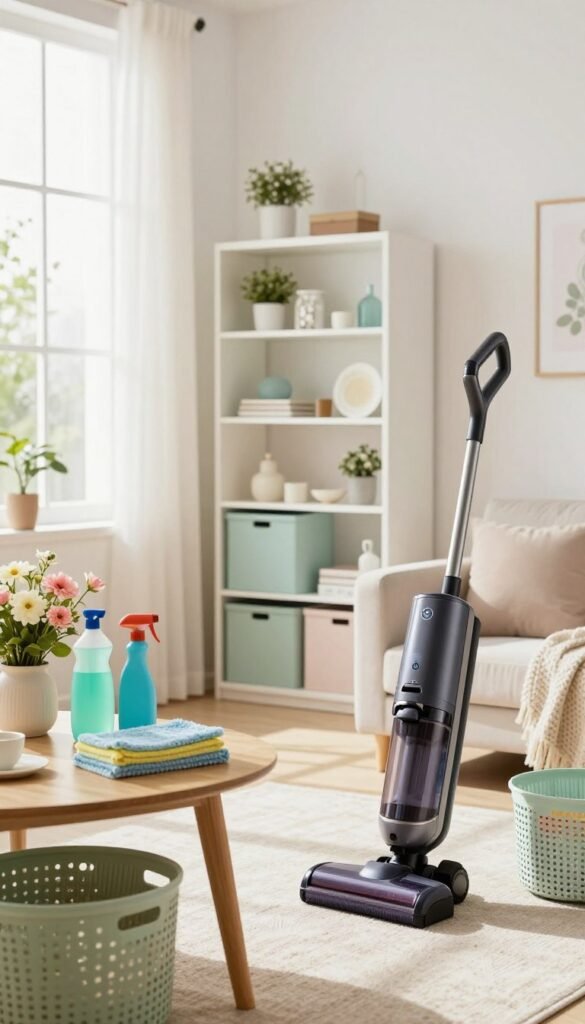
Start a realistic reset: 30 minutes/day of targeted cleaning plus 15 minutes/day of decluttering. This steady rhythm refreshes the room without one long overhaul.
Priorities before adding new pieces
- Clean visual hotspots first: entry console, coffee table, kitchen sink counter, dining table, mantel.
- Use trays to corral daily items like keys and remotes.
- Group bulky winter items in matching baskets to create calm zones.
Buying considerations and renter-friendly tips
Choose baskets that fit shelves, have handles for carry, and are made of snag-free materials. Lidded bins hide clutter but place them near points of use to avoid slow put-away.
„Open baskets offer quick access; closed bins give visual calm—mix both for balance.“
| Tool | Why it helps | Tradeoff |
|---|---|---|
| Trays | Corral daily items | Must be cleared daily |
| Open baskets | Quick stash for bulky items | Can look messy if overfilled |
| Lidded bins | Keep surfaces calm | Slower daily access |
Fresh Flowers and Flower Subscriptions That Instantly Brighten a Room
One well-placed bouquet brings instant life and a subtle scent that changes how a room feels. Fresh stems fix winter flatness by adding color, height, and movement without permanent changes.

Where to place them: Put a fuller arrangement on a dining table as a center focal point. Use a low, narrow bouquet on a coffee table so sightlines stay open. Place a small cluster near the kitchen sink or on an entry console for a quick first-impression lift.
Tulips and simple vase rules
Tulips read as unmistakably spring and work in minimalist or fuller looks. For small spaces, choose a vase height that supports stems about two-thirds up the bloom. Pick a stable base for high-traffic spots and a narrow neck for a tidy silhouette.
Cost, upkeep, and purchase choices
- Weekly replacement: plan for refreshes if you want peak blooms; 6–12 stems fills a table, 3–6 suits a coffee table.
- Grocery bouquets are cheap and flexible but vary in quality.
- Subscriptions offer consistent quality and delivery but add regular cost and require care if travel interrupts service.
„Fresh flowers lift mood and add realism, but they need water changes and occasional trimming.“
| Consideration | Grocery | Subscription |
|---|---|---|
| Cost per week | Lower, variable | Higher, predictable |
| Quality consistency | Inconsistent | Consistent |
| Convenience | Errand-based | Hands-off delivery |
High-Quality Faux Flowers That Look Real (and Don’t Scream “Fake”)
When light is low or schedules are full, high-quality faux stems give a convincing seasonal lift. They solve real problems: allergies, pets, and rooms where live plants struggle to thrive.

Who benefits
Good for: busy households, pet owners, allergy sufferers, and low-light rooms where live plants fail. Faux pieces offer lasting color without daily care.
Seasonal realism rule
Only use blooms that are actually appearing outdoors. Faux tulips, peonies, and forsythia read as believable when they mirror local spring growth.
Display upgrades that sell the look
- Bundle stems in odd numbers for natural rhythm.
- Mix greenery for depth and varied color.
- Choose heavier, collected vessels—vintage pitchers, crocks, or textured vases—to hide stems and add age.
Buying considerations and quick comparison
Look for bendable wired stems, matte finishes, slight petal variation, and „photoreal“ edges. These details cut the plastic glare and add realistic shadowing.
| Option | Pros | Cons |
|---|---|---|
| Ready arrangement | Polished; instant | Less customizable |
| Loose stems to style | Flexible; more natural | Needs time and confidence |
„Occasional dusting and careful storage keep faux pieces looking fresh season after season.“
Greenery and Spring Organics for Texture: Moss, Ferns, and Branches
Layering soft greenery and structural branches refreshes a space without relying on bright color. Neutral rooms can feel unchanged after winter. Natural organics fix that by adding tactile depth, not loud hues.
Moss bowls act as low, soft anchors on a coffee table, dining table, or console. They add layered texture without taking up functional surface. A shallow bowl of moss reads intentional and keeps surfaces calm.
For easy lushness, place potted ferns near hard edges. Live ferns suit bright spots; high-quality faux ferns work in low light and still give a seasonal look.

Height and drama
Pussy willow branches bring vertical movement to a mantel or console without clutter. Forced branches—forsythia or quince—make a striking centerpiece. Trader Joe’s is a common source for forsythia and quince stems.
- Pros: texture-forward, renter-friendly, low footprint.
- Cons: falling buds or pollen; need for heavier vase and drip trays.
| Consideration | Tip |
|---|---|
| Vase weight | Use a heavy base for tall branches |
| Branch height | Match scale to ceiling and sightlines |
| Mess control | Place trays or liners to catch drips and debris |
„Texture sells a season more reliably than color in neutral rooms.“
Lightweight Textiles That Swap in Minutes: Pillows, Throws, Sheets, and Curtains
Swap a few fabrics and a small space can feel brighter and more open in under an afternoon.
Who this helps: renters who can’t paint, small-space residents, and anyone who wants a quick refresh without tools.
What to switch
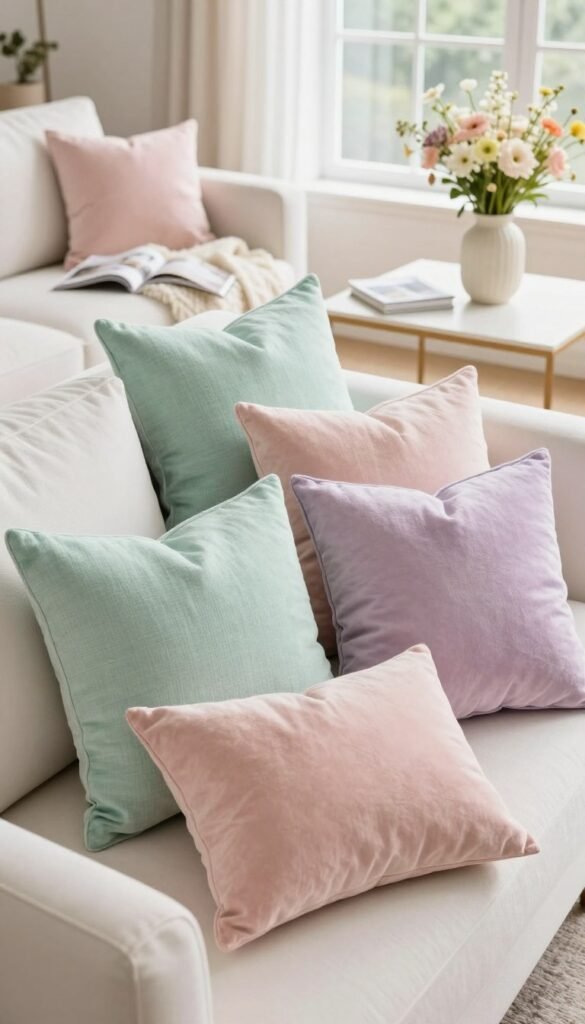
Simple swaps change temperature and texture. Move flannel sheets to breathable linen sheets. Replace chunky winter throws with lighter layered throws. Swap darker pillow fabrics for linen or cotton covers in lighter tones.
Color strategy & window impact
Pick one path: pastel accents for a seasonal cue, crisp white for brightness, or soft greens and blues for a nature-forward feel. For windows, sheer, sun-filtering curtains let daylight expand a room and soften views.
„Pillow covers store flat and let a living room shift in minutes; full inserts read fuller but take more space.“
| Choice | Pros | Cons |
|---|---|---|
| Pillow covers | Cheap, store flat, easy swap | Less plump; needs quality insert |
| Full inserts | Plumper look, structured | Costlier; bulkier to store |
| Sheer curtains | Maximize light; make room feel larger | Less privacy; may need liner |
| Linen/cotton blends | Breathable; hides pet hair better with tighter weave | Can wrinkle; check washability |
Buying considerations: choose washable fabrics, tighter weaves that release pet hair easily, and pieces that fold flat for seasonal storage. These choices save time and keep the look intentional for busy days.
Spring Mantel Decor Pieces That Create a Focal Point Without Overcrowding
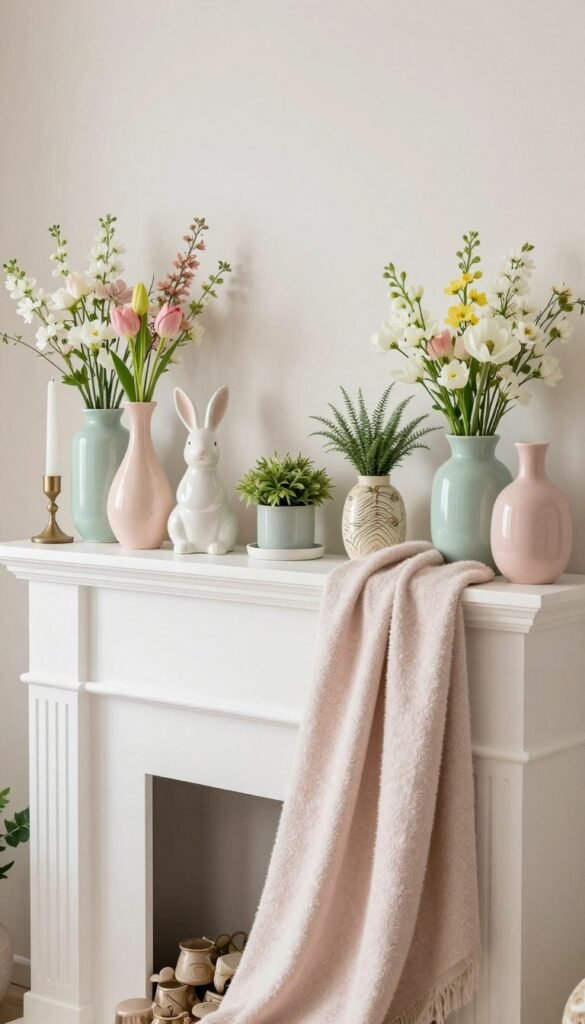
A tidy mantel plan anchors the room and prevents random purchases that crowd the shelf. The fireplace wall often keeps winter weight longest. An unchanged mantel makes the living room feel dated.
Who this suits
Good for: living rooms where the fireplace wall needs a clear, seasonal pivot.
Styling framework
- Start with one tall anchor: mirror or art above the mantel.
- Add two mid-height pieces: candlesticks and a small stack of books.
- Finish with a single seasonal element: a greenery sprig or one figurine.
Theme-led buying
Choose a theme—vintage garden, spring greenery, or vintage Audubon—so each purchase supports the same story. This avoids a mismatched collection and keeps the look calm.
Pros and cons
| Approach | Pros | Cons |
|---|---|---|
| Symmetrical | Calm, formal | Can read stiff in small rooms |
| Asymmetrical | Relaxed, collected | Can look messy without a tight palette |
„Fewer larger items beat many small pieces—clarity wins on a mantel.“
Buying tips: check mantel depth, avoid heat-sensitive materials near a fire, and favor fewer statement pieces over many trinkets.
Coffee Table and Console Table Decor That Still Leaves Space for Real Life
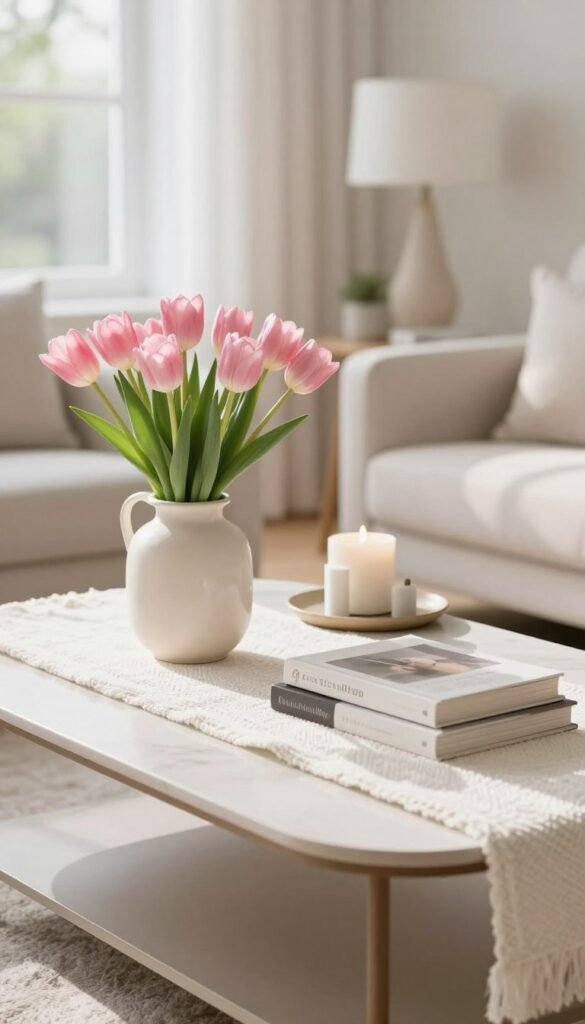
A tidy coffee table can anchor a room or become a catchall; styling should protect daily function while adding charm.
Who this suits: small living rooms and open-plan spaces where every surface influences the sightline.
Repeatable formula: use a tray as a base, add a stack of books for one height, place a low bowl for another, and finish with a vessel for stems or a single vintage accent at the third height.
Practical rules
- Limit items so there’s room for drinks and remotes.
- Choose a tray sized to the table so it corrals but does not dominate.
- Pick wipeable finishes and rounded edges for kid- and pet-proof life.
Seasonal accents and choices
- Select one subtle accent: a ceramic bird, a single egg, or a small rabbit figurine—avoid themed clusters.
- Curated sets speed styling; mixing a few vintage pieces with neutral items reads personal but needs restraint.
| Piece | Why it helps | Tradeoff |
|---|---|---|
| Tray | Corral items, easy to move | Can look heavy if oversized |
| Bowl | Low anchor for keys or small items | May collect clutter; clear weekly |
| Books | Add height and character | Take storage space; rotate titles |
„Keep one clear zone for daily use; style the rest so the table works for actual life.“
Kitchen Spring Decor Ideas That Are Functional: Sink Styling, Towels, and Herbs
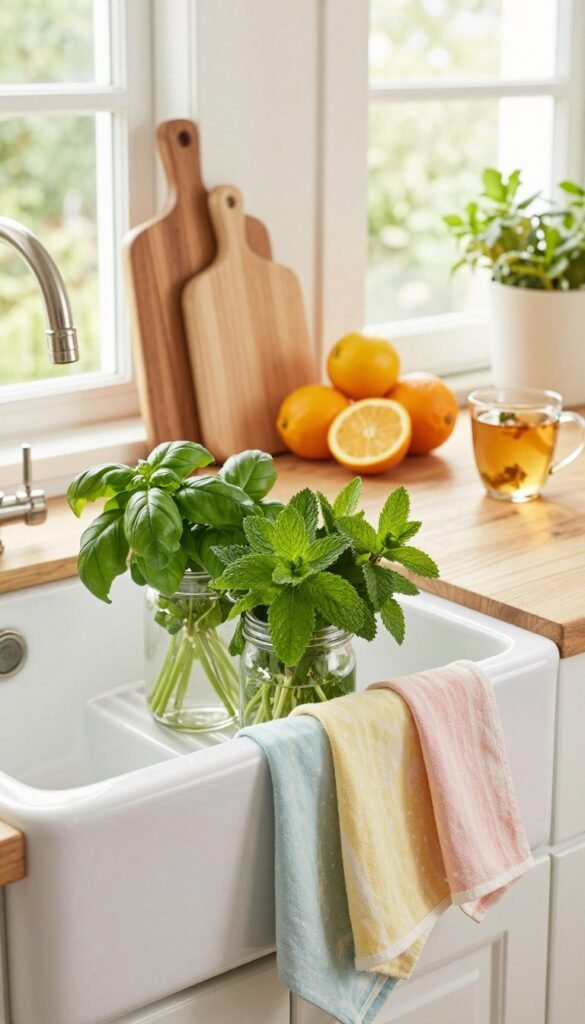
A small, coordinated sink vignette makes a busy kitchen feel intentional each time someone washes a dish.
Who this suits: renters and busy households with limited counter space who want a visible refresh without losing prep area.
Sink-styling checklist:
- One small floral arrangement or single stem in a narrow vase.
- Coordinated soap and lotion with a low-profile soap tray/holder.
- A matching hand towel hung nearby for quick access.
These four things keep the sink tidy while adding a touch of color and scent. The setup is easy to clear during cooking or washing.
Herbs as useful plants
Mint, basil, thyme, and oregano work well on small counters. They add green color and are ready to snip for meals.
Buying considerations
Choose compact pots, a drainage tray to protect surfaces, and a grow light if the window is weak.
| Choice | Pros | Cons |
|---|---|---|
| Live herbs | Smell and taste fresh; useful in cooking | Need water, light, and occasional pruning |
| Faux greenery | Maintenance-free; works in low light | Can collect grease/dust; less authentic up close |
| Sink vignette | High visual impact with small footprint | Needs daily wipe-down in busy kitchens |
„A tight, functional sink setup keeps the counter calm and the kitchen feeling cared for.“
Spring Table Decor and Tablescapes for Everyday Dining (Not Just Holidays)
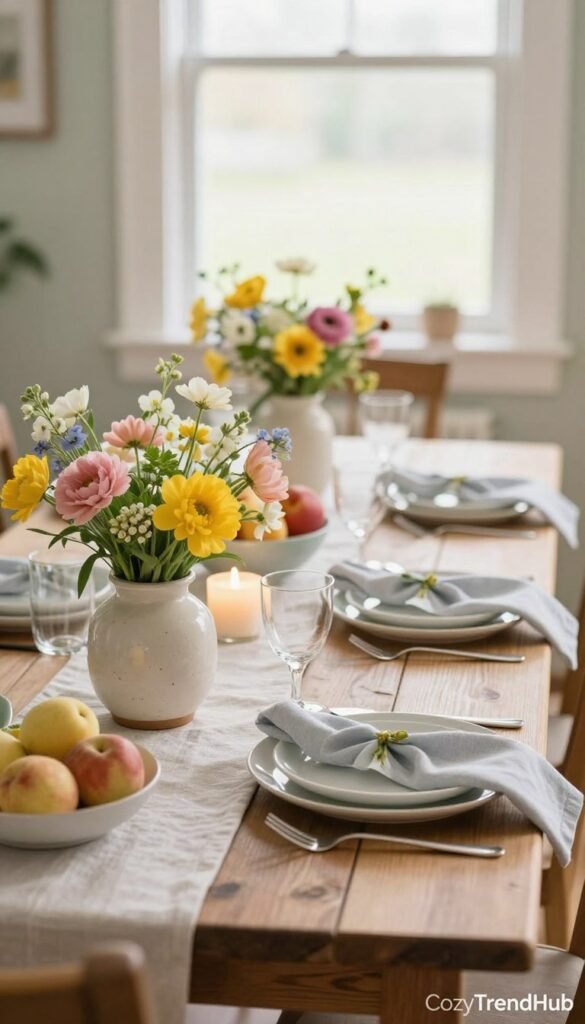
A simple centerpiece routine makes meals feel intentional without fuss. After winter, a dining or kitchen island can seem empty or heavy. Many skip tablescapes because they worry about daily practicality.
Who this helps
Good for: a formal dining room that needs a focal point and kitchen islands that benefit from low-clutter styling.
Centerpiece building blocks
- Woven textures — rattan or wicker tray to ground the display.
- A neutral base runner to protect the surface and keep the look calm.
- One natural branch or small greenery element for height without bulk.
- A single brass-toned accent to add warmth and a vintage nod.
Two style pathways
Retro florals: choose patterned napkins or a small vase of vintage-style blooms for color and pattern lovers.
Modern neutrals: layer linens, a textured runner, and green sprigs for a calm, versatile look that fits most rooms.
Practical rules & buying considerations
- Keep centerpieces low for conversation and easy removal at mealtime.
- Choose runner length with a balanced drop on both ends (12–18″ is common).
- Pick placemats that wipe clean and vessels with a weighted base to avoid tipping.
„A reusable tray plus one vessel and a small accent keeps the table useful and stylish.“
| Piece | Why it helps | Tradeoff |
|---|---|---|
| Runner | Protects surface; anchors look | Needs correct length |
| Placemats | Easy clean; defines place settings | Can clutter if too many |
| Centerpiece vessel | Holds stems; adds character | Must be stable and low |
Best Spring Home Decor Ideas for Renters: Peel-and-Stick Updates and Seasonal Wall Art
Temporary wall treatments and easy-to-swap art give renters clear ways to update color and style without risk.
Problem: many leases forbid paint and holes, which limits how tenants refresh walls. Removable solutions solve that constraint while still making an impact.
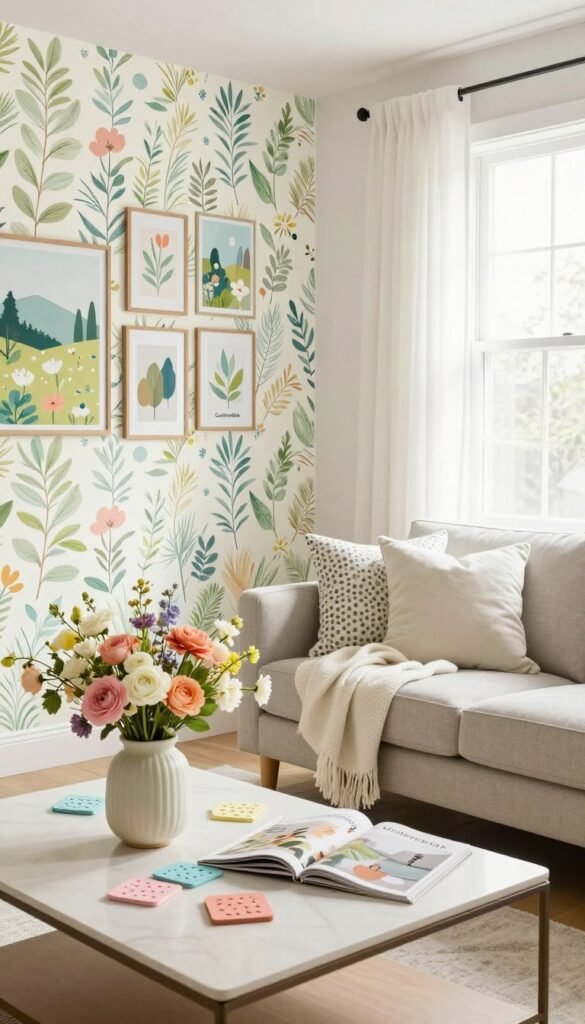
Peel-and-stick wallpaper
High impact: a floral or graphic panel creates an accent wall moment with no glue or long-term commitment.
Test a small section first—textured drywall can reduce adhesion. Walmart and similar retailers offer removable panels with clear return policies.
Framed seasonal prints and swap-art
Framed botanical prints pack flat for storage and swap fast. Use removable strips or over-door hooks to avoid damage.
Switching art is an easy post that shifts a room’s vibe without changing furniture or rugs.
Lampshade and lighting swaps
New shades add color and pattern without rewiring. A brighter shade can make a corner read lighter even when the lamp is off.
„Verify removability ratings, test on wall texture, and favor sellers with clear returns.“
| Option | Pros | Cons |
|---|---|---|
| Peel-and-stick wallpaper | Big visual change; removable | May not stick to textured walls; needs careful removal |
| Framed prints | Low risk; easy storage and swap | Lower impact per piece; needs multiple frames for a strong look |
| Lampshade swaps | Adds color; no electrical work | Subtle change; needs correct size fit |
| Paint touch-ups | Durable; full coverage | Often not allowed; can risk deposit deductions |
Buying checklist: check removability ratings, test a small sample on your wall, confirm return policies, and measure before purchasing to avoid scale issues.
Conclusion
A focused plan turns seasonal refreshes into calm, lasting change. Start by clearing surfaces and choosing one or two focal swaps that alter how a room reads—wreath, textiles, or florals make a quick impact.
Use a simple buying checklist: who it suits, why it works, pros and cons, and renter rules. This keeps purchases practical and avoids impulse clutter.
Pick a starting point that fits daily life: a door wreath for curb appeal, new pillows and throws for an instant shift, or a small bouquet or greenery for a lived-in feel. Protect surfaces first with trays and baskets so accents stay intentional.
Choose pieces that store flat and reuse each season so the home feels refreshed without extra time or excess. Treat this post as a guide to slow, useful updates that last.