
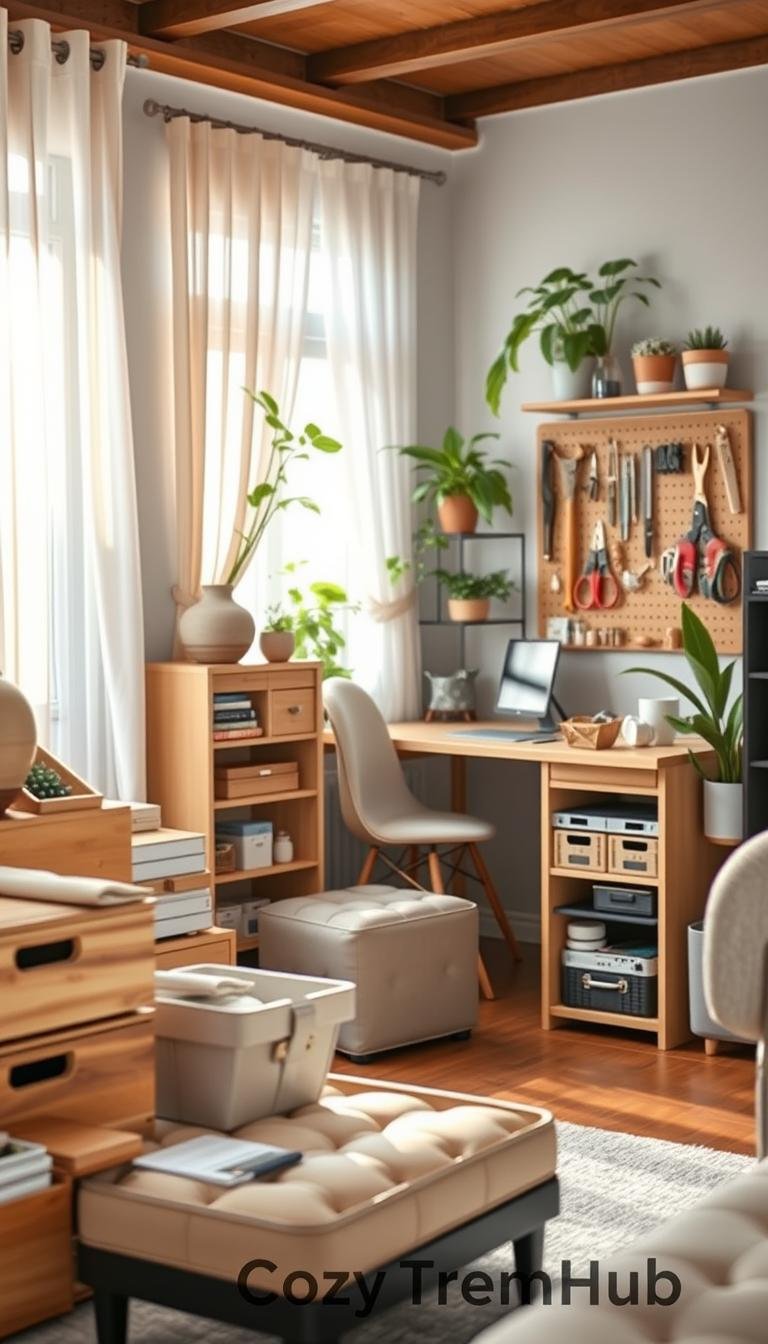
Clutter often starts when items lack a predictable home. This guide helps renters, small-space residents, and seasonal decorators turn messy corners into orderly routines. It focuses on systems that keep order week after week instead of one-time cleanups.
Recommendations are judged by renter-friendly installation, real measurements, weight capacity, durability, and ease of maintenance. Wirecutter testing of shelves, hooks, and underbed bins backs the emphasis on sturdy, load-tested products.
Dormify founder Amanda Zuckerman stresses planning to maximize every inch. Expect practical design tips and clear ideas covering wall mounts, over-the-door hangers, underbed uses, double-duty furniture, drawer organizers, slim dressers, and bathroom fixes.
Each category includes a „best for“ note, pros and cons, and a „what to compare before you buy“ checklist. The picks avoid exaggerated claims and focus on functional value that works in rental lives and seasonal rotations.
Key Takeaways
- Focus on routines that give items repeatable homes to cut daily clutter.
- Choose renter-friendly installs, exact-fit dimensions, and tested weight ratings.
- Look for durable, low-maintenance products that support seasonal rotation.
- Sections cover wall, door, underbed, furniture, dresser swaps, and bath ideas.
- Each entry lists pros/cons and comparison points to guide confident purchases.
How to choose small-space storage that solves your biggest pain point
Start by naming the one spot that frustrates you most each week—then aim fixes at that pain point.
Start with what’s failing
Is the closet overflowing, the counter a constant mess, or is there no clear floor space to walk? Map each pain to a focused category so purchases solve a real need.
- Closet overflow: use vertical shelves and door hooks to reclaim hanging room.
- Countertop clutter: pick drawer organizers and small bins to corral daily things.
- No floor space: shift seasonal boxes under the bed or to labeled bins.
Renter-friendly checklist
Scan this before buying to avoid damage and returns.
- Removable adhesive rating and whether hardware is optional.
- Weight capacity that matches coats, bags, or regularly used items.
- Contact-point protection to keep paint intact.
- Ease of cleaning and material durability.
Measure once, buy once
Measure door thickness and clearance for over-door racks, wall height for shelves, drawer depth for organizers, and under-bed gap for containers or risers. Accurate numbers reduce returns and wasted time.

| Spec | Why it matters | Good target |
|---|---|---|
| Dimensions | Prevents fit issues with doors and drawers | Exact width/height/depth measured in inches |
| Weight capacity | Ensures hooks and shelves hold daily items | Match to coats (20–40 lb) or bins (10–30 lb) |
| Install method | Renter-safe vs permanent | No-drill or removable adhesives preferred |
| Material & cleanability | Longevity and ease of maintenance | Metal or coated wood; wipe-clean surfaces |
Daily vs seasonal: keep everyday items at eye level for quick grabs and move seasonal gear to labeled under-bed bins that rotate easily. Clear labels, dividers, and predictable zones make any system last.
Best storage solutions for small spaces that maximize wall space
Unused vertical wall areas often hide the easiest gains in compact homes. Wall-mounted pieces turn empty walls into repeatable zones for daily items without taking floor area.
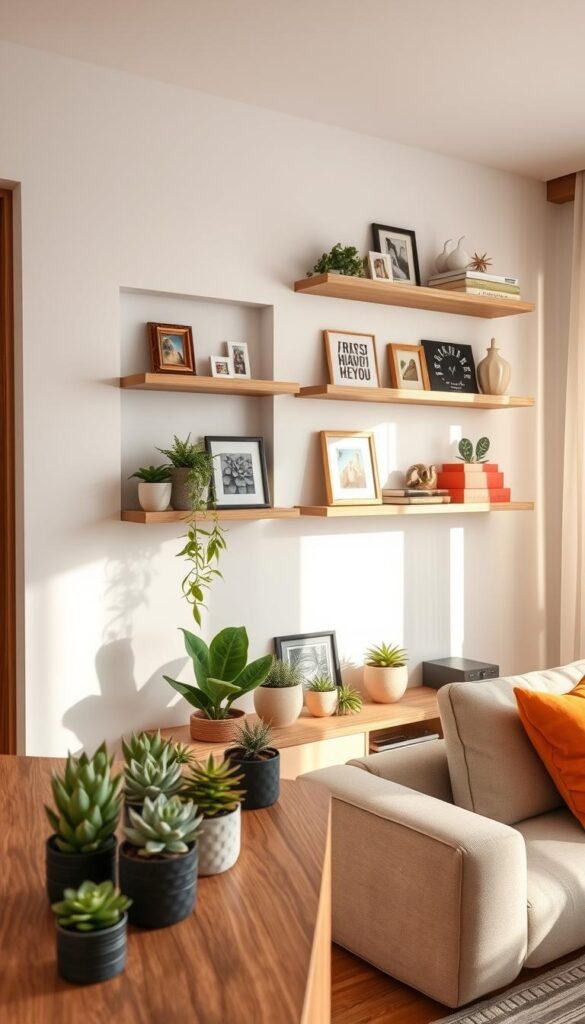
Floating shelves: vertical storage and display
Who it’s for: renters who want minimal holes, people needing book-and-basket spots, and anyone who wants essentials visible yet tidy.
Renter-friendly options: floating shelves with keyhole brackets or removable rail systems that need few small holes or use heavy-duty adhesive rails when weight is light.
Pegboards and wall-mounted organizers
Pegboards adapt as needs change—craft supplies, entryway catch-alls, or a compact office can reconfigure quickly. Choose metal or painted plywood panels that accept hooks and baskets.
Wall hooks and mounted racks
Hooks offer the fastest grab-and-go access for coats, tote bags, and umbrellas. Wirecutter testing shows to match hook ratings to real loads—look for 20–40 lb ratings on coat racks.
What to compare before you buy
| Spec | Why it matters | Target |
|---|---|---|
| Weight capacity | Prevents sag or failure | Match to coats/totes (20–40 lb) |
| Mount type | Renter-safe vs permanent | Stud mount or drywall anchors; removable rails when possible |
| Shelf depth | Limits bump hazards and fit | 6–12 inches depending on use |
Pros and cons
- Pro: Open shelves and hooks make organization obvious and faster to maintain.
- Con: Dust and visual clutter increase unless baskets and grouped pieces are used.
- Tip: Use matching bins to hide small items and keep a strict one-in, one-out rule.
Over-the-door storage that turns doors into usable space
A door can add predictable, grab-and-go storage without taking floor space. Over-the-door systems suit renters who need quick access without drilling. They convert an unused surface into a reliable landing spot for daily items.
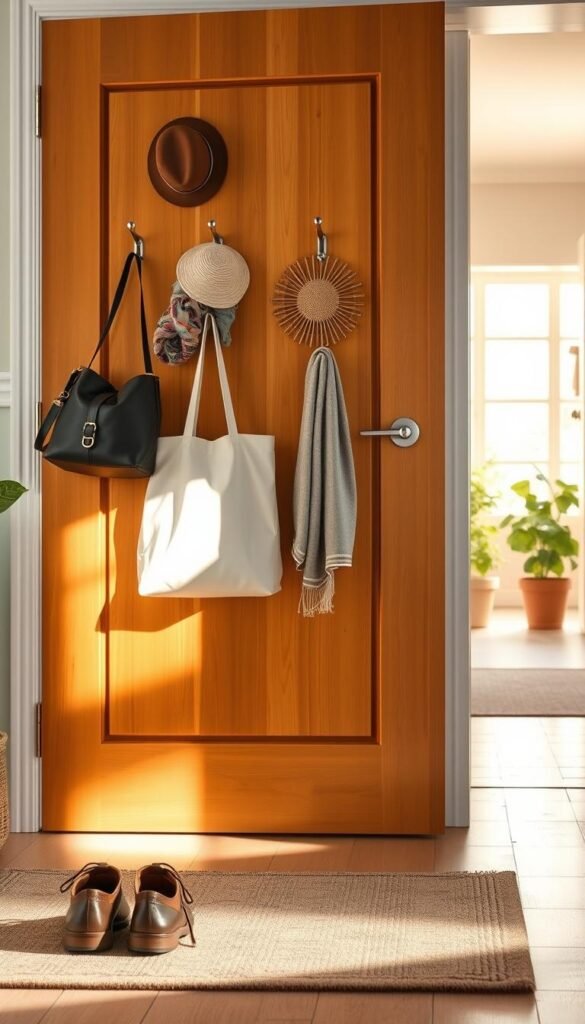
Hooks, racks, and pocket organizers
Over-the-door hooks are ideal for purses, totes, hats, and light outerwear used several times a week. They keep items visible and off chairs.
Racks and pocket organizers work well for shoes, shoe accessories, and bathroom bottles when shelves are full. Pockets make sorting by category fast.
„Use your doors: place hooks over closet or bedroom doors to store totes, crossbody bags, hats, and everyday purses without using closet space.“
Buying considerations
| Spec | Why it matters | Target |
|---|---|---|
| Door thickness range | Ensures hooks fit without force | 0.75–1.75 inches common; check measurements |
| Top clearance | Avoids rubbing on frame or trim | Measure gap between door and frame |
| Number of hooks/pockets | Matches daily load and categories | 4–8 hooks; 8–24 pockets depending on needs |
| Padding & bumpers | Prevents scuffs and reduces noise | Rubber bumpers and felt pads preferred |
Pros, cons, and zone rules
- Pro: Fast install and renter-friendly; easy to move.
- Con: Can look cluttered if overfilled and may block door swing.
- Choose slim brackets and rubber bumpers to cut slamming and keep paint intact.
- Zone rule: limit door hanging to daily-use items; store seasonal gear elsewhere.
Underbed storage and bed risers for instant extra “closet” space
Raising the bed a few inches can unlock a surprising amount of organized space beneath.
Why use the under-bed area: In a room with no extra furniture, the gap under a bed often functions like a mini-closet. Renters can store shoes, a gym bag, linens, and out-of-season clothes without adding bulky pieces.
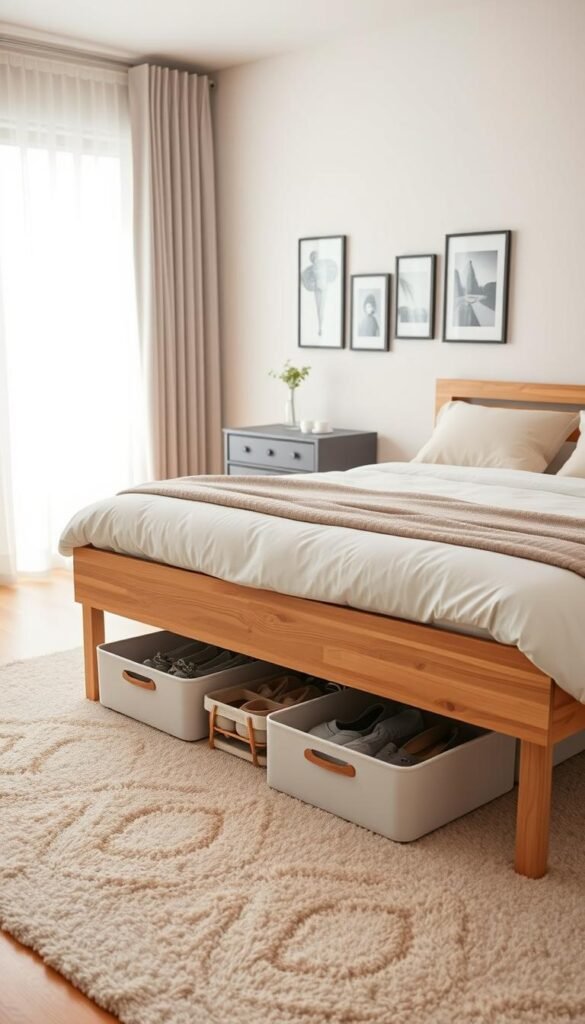
Bed risers: who needs them
Bed risers lift a low frame so containers fit cleanly beneath. Choose metal or heavy-duty plastic risers with anti-slip pads and a tested height increase. Stability matters—avoid risers that wobble when you sit on the edge of the bed.
Containers and when to pick each type
Low-profile containers with wheels slide out easily and protect shape-sensitive items. Soft bags compress into odd gaps and work well for towels or bulky sweaters. Pick containers with lids if dust control matters; choose bags with strong zippers and handles when frequent access is needed.
What to compare before you buy
| Spec | Why it matters | Target |
|---|---|---|
| Internal height | Determines what fits | Measure bed gap minus riser height |
| Wheels vs handles | Ease of retrieval | Wheels for heavy loads; handles for light bins |
| Lid type & seal | Dust control and stackability | Snap lids or gasketed seals preferred |
| Label window | Quick ID during seasonal swaps | Visible slot or clear top |
Pros and cons
- Pro: Maximum capacity without taking up floor area.
- Con: Hard to access if items are needed daily; sliding wheels or a swap box ease retrieval.
Seasonal method: Label by season, keep a transition box near the bed edge, and avoid storing daily essentials under the bed unless access is effortless. Wirecutter-style testing—stuffing towels and jeans—helps judge real capacity before buying.
Furniture that does double-duty when you can’t add more cabinets
When cabinets are at a premium, choosing furniture that hides clutter becomes the fastest way to calm a room.
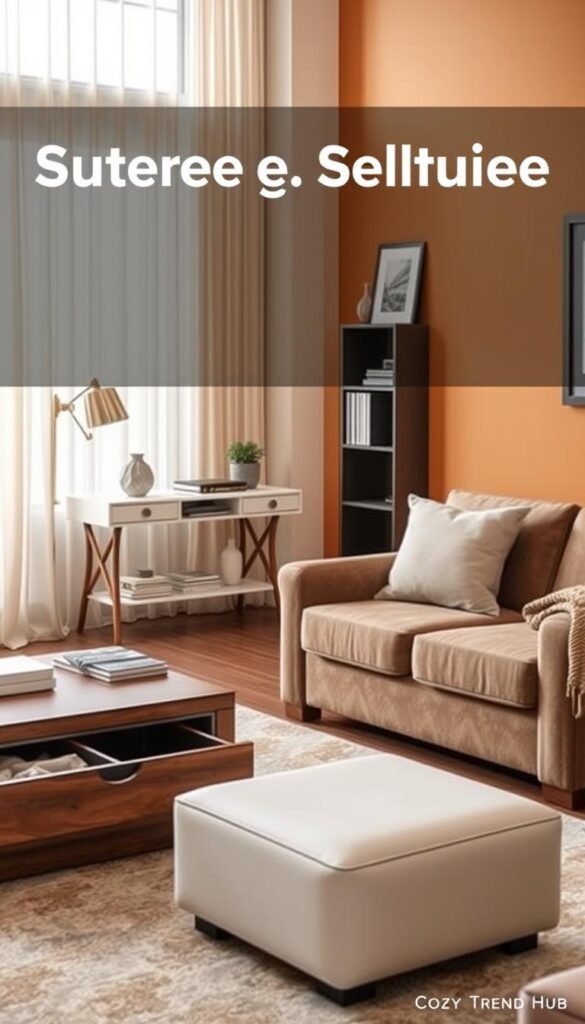
What to pick when visible clutter is the problem. Storage ottomans and benches tuck blankets, games, and chargers out of sight while giving extra seating in a living room or studio. Dormify founder Amanda Zuckerman recommends multifunctional seating—ottomans, storage chairs, and benches—because they add closed storage without wall work.
Desks and nightstand alternatives
Choose desks with deep pull-out drawers or narrow nightstands with drawers to hold mail, electronics, and small essentials. These pieces solve the „no nightstand“ or „no cabinets“ problem without a major furniture swap.
Buying considerations
- Lid safety: slow-close hinges prevent slams and pinched fingers.
- Hinge quality and glide: metal hardware and smooth drawer action stand up to daily use.
- Interior lining and weight rating: fabric lining protects linens; check max weight if you plan to sit on the lid.
| Feature | Why it matters | Target |
|---|---|---|
| Slow-close lid | Prevents injury and extends hinge life | Homes with kids or heavy daily use |
| Drawer glide | Keeps access smooth for mail and electronics | Desks and nightstands used daily |
| Weight rating | Ensures seating is safe to sit on | Ottomans and benches rated 200+ lb ideal |
What to hide and what to keep out. Use hidden compartments for bulky or messy items—extra linens, seasonal decor, and game boxes. Keep daily grab items on a small top tray or open shelf so they stay predictable and don’t make these pieces into junk catchalls.
Pros: quick visual calm, renter-friendly mobility. Cons: potential junk buildup unless you use simple categories (charging, paper, linens).
Drawer organizers, dividers, and slim “dresser” swaps for tiny bedrooms
Slim furniture and smart inserts reclaim usable floor space without crowding a room.
Stop small items from taking over counters
Drawer organizers make clear zones inside a drawer so jewelry, cords, and cosmetics stay put. Use dividers to create a front zone for daily things and a back zone for occasional items.
When to pick narrow furniture instead of a full dresser
Narrow cabinets or shallow IKEA shoe cabinets can act like a slim dresser. They free up floor and still hold folded shirts, socks, and small accessories.

How to choose and maintain the system
Measure drawer depth and height before buying inserts. Match compartment sizes to what you use: trays for perfumes, shallow slots for jewelry, and deeper sections for socks.
| Spec | Why it matters | Target |
|---|---|---|
| Drawer dimensions | Ensures inserts fit and slide | Depth & height in inches; leave 0.5″ clearance |
| Compartment type | Modular vs fixed affects flexibility | Modular dividers for changing needs |
| Material & base | Durability and non-slip behavior | Wipe-clean plastics; rubber base preferred |
| Expandability | Allows future reconfiguration | Expandable organizers or stackable trays |
Pros: Faster morning routines and cleaner surfaces. Cons: Systems need light weekly resets to avoid miscellaneous creep.
Practical tip: Keep one small catchall compartment per drawer and reset it once a week. That small habit keeps organizers working and keeps the room calm.
Small bathroom storage solutions that free up counters and cabinets
In many rentals, the bathroom becomes cluttered because essentials lack a predictable, moisture-safe home.
Wall cabinets and mirrored medicine cabinets add enclosed places when there are no built-ins. Architectural Digest notes a mirror cabinet can sit above a toilet or behind a door, which keeps bottles and medicines out of sight.
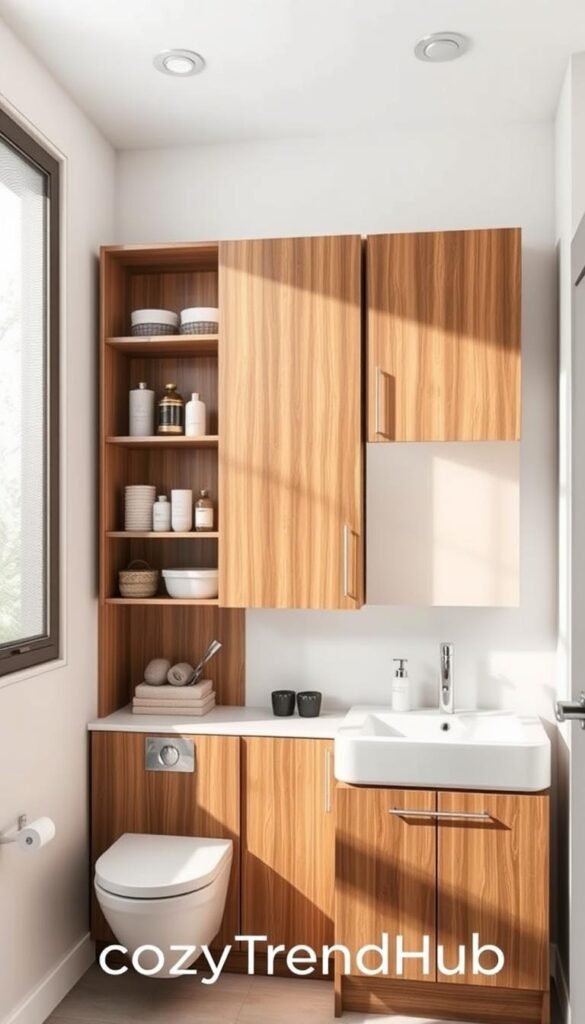
Over-the-toilet shelves create vertical zones. Keep most-used items on lower shelves and backstock higher to prevent countertop creep.
Rolling slim carts and tiered carts work when counter space is tight. They roll away after use and separate bottles by person or task.
Ladder-style racks add height without bulky cabinet pieces. They keep towels visible and dry while saving floor area.
Under the sink, use stackable drawers, labeled containers, and a sink skirt to hide bins on pedestal sinks or narrow vanities.
| Spec | Why it matters | Target |
|---|---|---|
| Material | Resists moisture | PVC, coated metal, or marine-grade MDF |
| Finish | Prevents rust | Powder-coated or stainless |
| Wheels | Roll quality and lock | Rubber wheels with brakes |
„Use wall cabinets when built-ins are missing; mirrored units can be placed above a toilet or behind a door.“
Pros: fewer items on counters; easier cleaning. Cons: open shelves show clutter unless grouped; purge extras regularly.
Conclusion
Start purchases by fixing the one spot that causes daily friction, not by chasing trends. That way, each choice solves a real problem and avoids adding clutter that never finds a home.
Renters should favor no-damage installs, keep measurements handy, and pick pieces that move easily between leases. These small steps reduce returns and make change feel manageable.
A quick recap: use wall options to gain vertical capacity, over-the-door racks to reclaim unused faces, and underbed bins to rotate seasonal gear in tight rooms. In a tight small space, these ideas deliver clear gains.
Double-duty furniture and drawer organizers often change the daily game because they hide mess and speed routines. Label bins, keep categories consistent, and do a short weekly reset to keep systems honest.
Next way: compare dimensions, weight ratings, and materials in the tables and product blocks to match items to your exact niche. Confident buying starts with accurate numbers and realistic use cases.



One Comment