
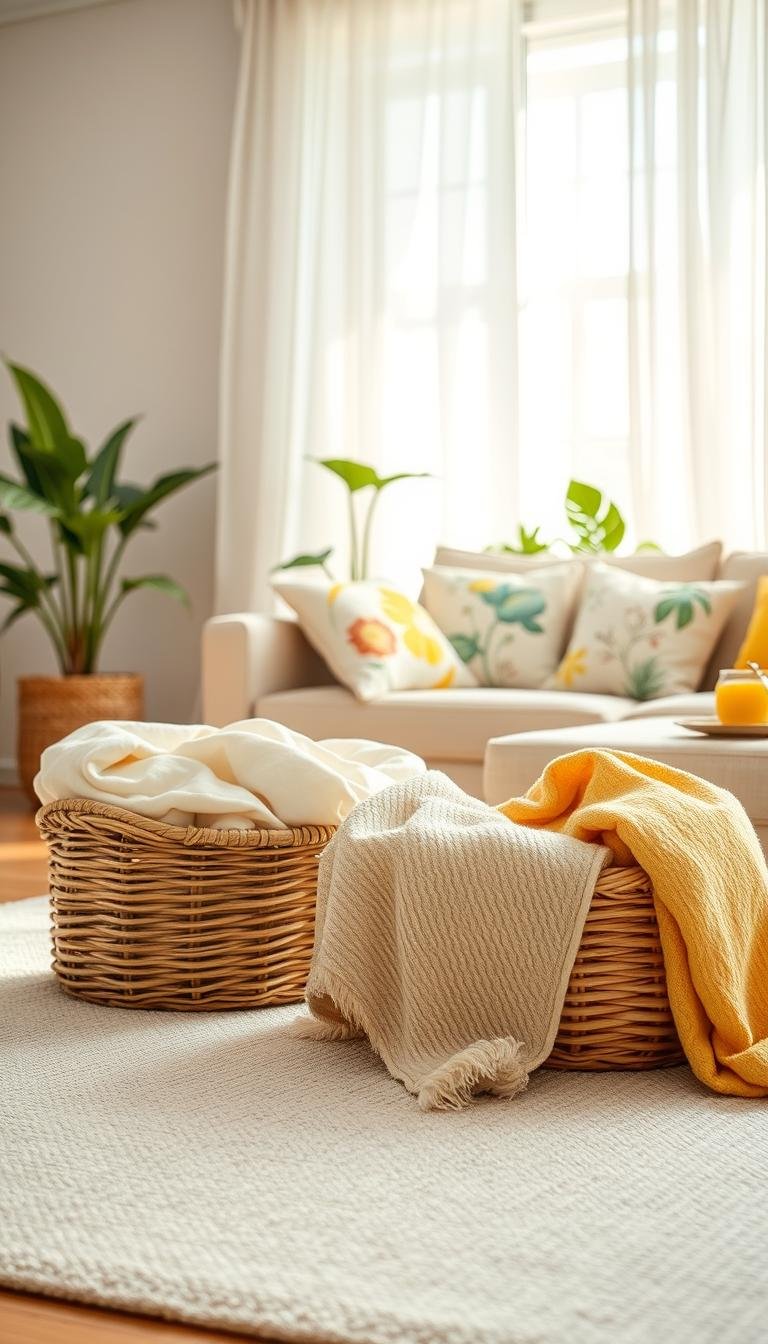
Living in a sun-soaked rental can feel stifling. Heat, heavy textiles, and visual clutter make rooms look and feel warmer than they are. This introduction outlines a clear, practical path: small swaps that ease the feel of heat without structural work.
This guide focuses on renter-friendly, small-space solutions. Expect product-ready categories like curtains, bedding, rugs, fans, and lighting. Each recommendation notes pros and cons, shopping checklists, and whether it stores easily when the season ends.
Start with high-impact changes: swap thick drapes for light, flowy curtains, trade chunky throws for linen or muslin, and replace dense rugs with flat-weave options. These shifts reduce glare, lighten visual weight, and support airflow.
Recommendations aim at comfort and usability, not unrealistic temperature promises. The article will proceed room by room with clear comparisons and renter-friendly notes to help readers choose with confidence.
Key Takeaways
- Focus on light fabrics and flat weaves to visually cool a room.
- Swap heavy textiles for linen or muslin that are easy to launder and store.
- Prioritize windows, bedding, and rugs for the biggest impact.
- Look for renter-friendly installs and portable cooling options.
- Expect product lists with pros/cons and buying checklists.
What to prioritize in a hot apartment without AC
Prioritize swaps that reduce sun, weight, and air stagnation in living spaces. Start by naming the problem: direct sun through windows, dark or heavy textiles, and stagnant air in tight layouts drive most temperature discomfort.
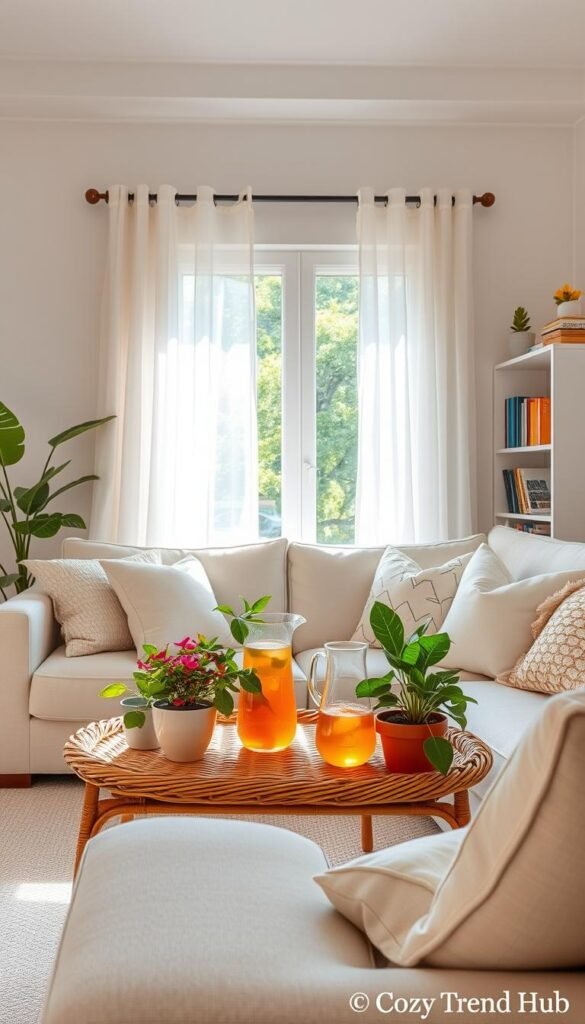
Heat triggers you can actually control with decor
Sun control, lighter materials, and low-pile floor coverings are the main decor-addressable solutions. Mechanical cooling handles what decor cannot.
Renter-friendly rules: removable, no-drill, easy to store
Shop by these guardrails: tension rods, removable adhesives, no-drill hardware, and fold-flat items. These protect lease agreements and make swaps painless.
Small-space strategy: maximum impact with minimal clutter
Use a one-in, one-out rule at all times to prevent hoarding. Replace heavy drapes, blankets, or rugs rather than adding layers.
- Priority order: windows → bed → floors → accessories.
- Measure window width, bed size, rug size, and outlet placement before buying to save time and returns.
„Small, intentional swaps make an interior feel cooler without major work.“
This section sets decision criteria—problem-first, renter constraints, and clutter control—and previews later comparisons across window treatments, bedding weaves, rug fibers, and fan features aimed at specific living room and bedroom scenarios.
Best summer decor for hot apartments that blocks sun and feels lighter
Controlling sunlight at the window changes comfort and the whole room’s appearance quickly.
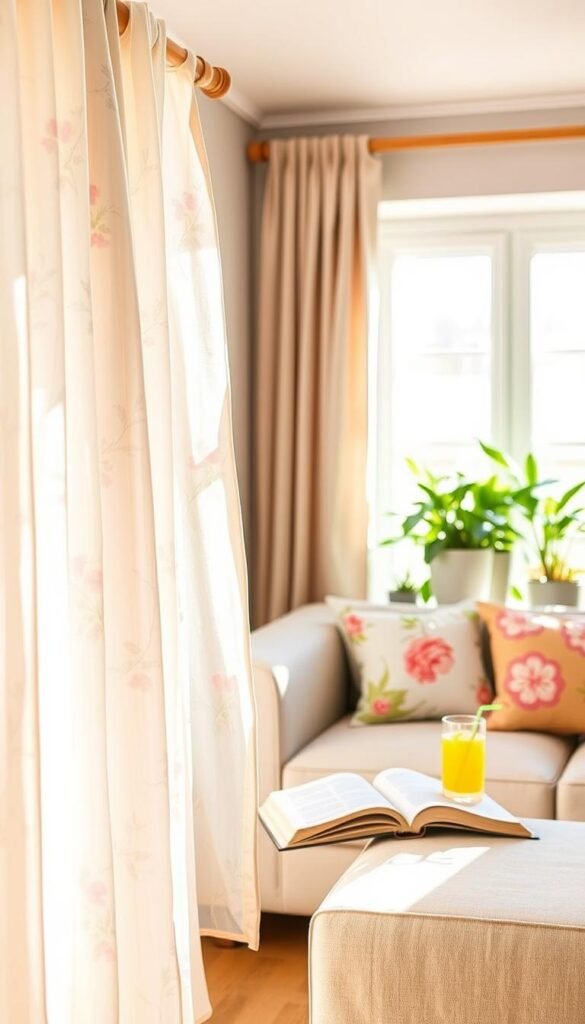
Breezy sheers that make a living room feel airier
Who they suit: shaded rooms, renters who want movement and a coastal look.
Pros: diffuse glare, keep a soft light, and look lightweight. Cons: they do not block strong midday sun.
Lightweight-but-dense panels for glare and solar control
Who they suit: west-facing windows and street-facing units that need privacy and reduced glare.
Pros: better at cutting solar gain and reducing screen reflection. Cons: can dim a room if used alone.
Simple styling and renter-friendly hardware
- Tension rods and removable hooks for no-drill installs.
- Layer sheers with a denser panel for both light and control.
- Hang just above the trim and aim to hover an inch above the floor to avoid clutter.
„Small curtain swaps stop glare and change a room’s look more than new furniture ever will.“
| Type | Best for | Opacity | Care / Notes |
|---|---|---|---|
| Sheer drapery | Shaded rooms, airy look | Low | Machine wash; pairs well with clip rings |
| Lightweight-dense panels | West-facing, privacy needs | Medium-High | Look for washable linen blends; test for hardware fit |
| Semi-sheer single panel | Dark apartments that need light | Medium | Good compromise; use tension rod if renter |
Buying considerations: check fabric, opacity, length, and easy-hang hardware. This way renters get a functional swap that scales with the season and keeps the room bright.
Lighten up your color palette to make rooms feel cooler
Dark paint and heavy textiles make rooms feel smaller and warmer than they are.
Why palette matters: Lighter tones reflect light, reduce visual weight, and make a space read as cooler. This matters most in small rooms, west-facing units, and places with limited daylight.
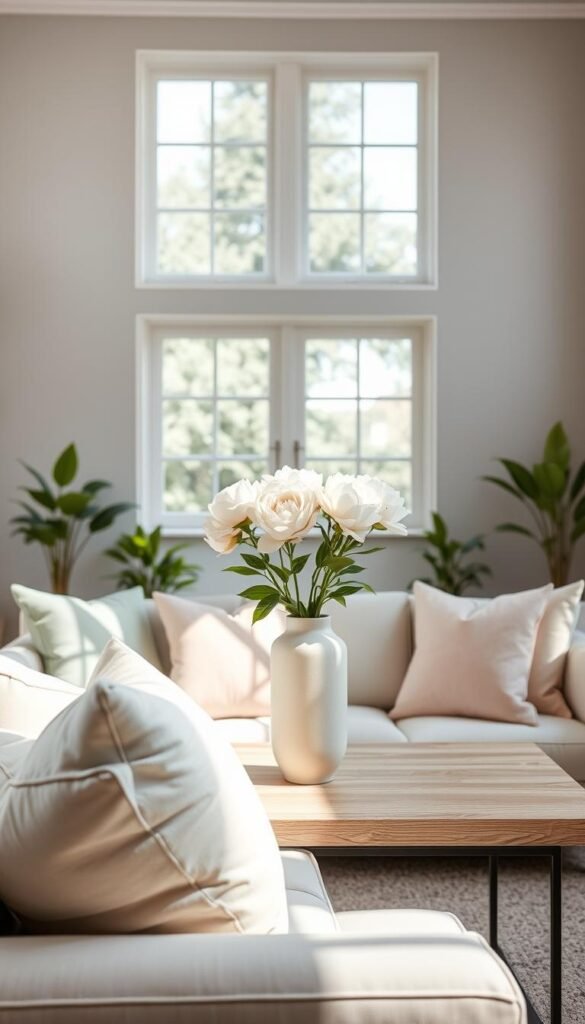
White, cream, and sand basics for walls and big pieces
Practical swap: Choose washable linens, pale rugs, and slipcovers for sofas so large surfaces adopt a lighter color without repainting.
Cool coastal accents: soft blues, gray-greens, and airy neutrals
Use soft blues or gray-green pillows and throws to add calm contrast. Small accents in coral, yellow, or bright blue can pop against a pale backdrop without overwhelming the space.
How to add contrast without making the room feel “hot”
Designers advise: „lighten your lights and darken your darks.“ Use cooler darks—charcoal, slate, deep green—in small doses like framed art or a single side chair.
„Subtle gray bedding adds depth without heaviness.“
| Change | Why it helps | Buy notes |
|---|---|---|
| Pale walls or drop cloths | Reflects light, brightens room | Removable paint options; test swatches |
| Slipcovers & light throws | Large surface shift without commitment | Machine washable; stain-resistant fabrics |
| Small cooler accents | Adds depth; avoids visual heat | Keep one hero color per zone |
Swap in summer-ready bedding for sweaty nights
Swap heavy bedding for breathable layers to stop sweaty nights and restore comfort. Small textile swaps are the fastest way to make a bedroom feel cooler without changing the layout or installing hardware.
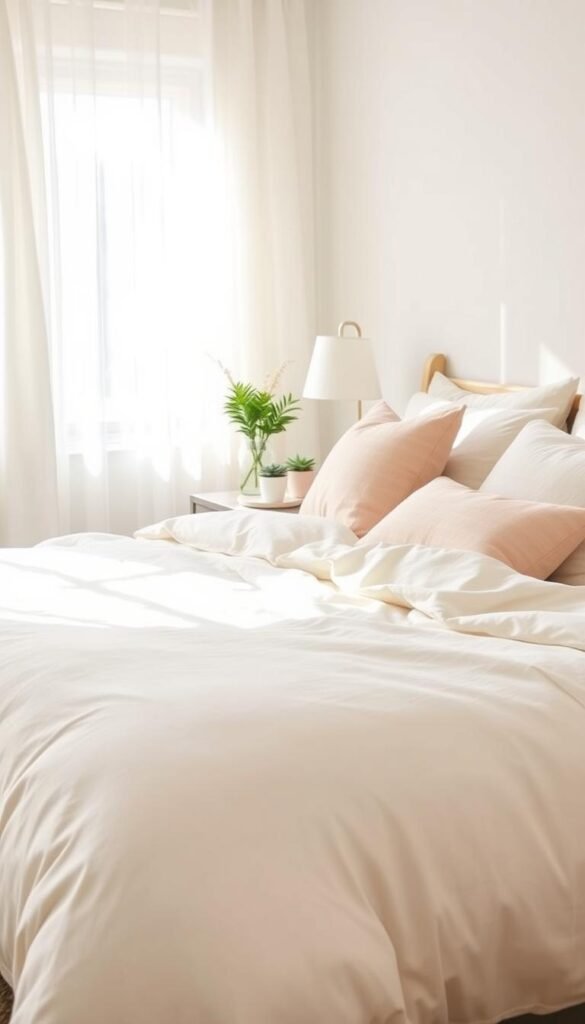
Linen sheets and pillowcases: who should buy them
Linen is the top pick for sleepers who want airflow and natural moisture wicking. It softens with use and breathes well across warm months.
Lightweight throws: muslin and linen over chunky knits
Replace thick cable blankets with a thin muslin or linen throw. These add coverage without trapping heat and roll or fold small for storage.
Which weave to choose: linen vs percale vs blends
| Type | Best for | Tradeoffs |
|---|---|---|
| Linen | Hot sleepers; long-term breathability | Textured at first; wrinkles easily |
| Cotton percale | Crisp cool feel; lovers of smooth sheets | Less moisture wicking than linen |
| Blends | Budget shoppers; low-iron needs | Airflow varies by blend quality |
Small-bedroom tips: keep tones pale and layers minimal. Choose pieces that compress for seasonal storage and wash easily at home to save time and space.
„Swapping heavier bedding for linen sheets and pillowcases creates a breezier look and feel.“
Shopping filters to use: weave type, GSM/weight, wash instructions, and return policy. For more compact seasonal ideas, see concise summer decor ideas that pair with lighter bedding selections.
Throw pillows and covers that look summery without trapping heat
Swap just the covers to refresh a couch or bed without adding storage burden. Lightweight covers let textiles feel breezier while keeping the same inserts. This is a renter-friendly way to change color and pattern quickly.
Materials to choose: linen, cotton, and light open weaves breathe better than dense knits. Linen offers a textured, coastal style but wrinkles easily. Cotton is low-maintenance and often machine-washable. Light weaves (gauze, slub) feel cool to the touch and pack flat for storage.

Patterns and colors that work
Stripes give a clean, coastal look. Florals and playful prints add energy in small doses. Use one bold color, one stripe, and one neutral to keep a small room from feeling cluttered.
Who should buy covers vs inserts
Buy covers if storage is limited or seasonal swaps are planned. Replace inserts only if shape or support is poor. Firmer inserts (loftier fill) make covers look full with less bulk.
Quick buyer checklist
- Zippered covers for easy swaps and laundering.
- Machine-washable fabrics and colorfast dyes.
- Match insert size to cover for a snug fit (buy +1–2″ for a plump look).
„Lightweight throw pillows and breezy textures make a home feel fresher without extra clutter.“
| Cover material | Care | Cool-to-touch | Price range |
|---|---|---|---|
| Linen | Machine wash or gentle cycle; wrinkles | High | Mid |
| Cotton (percale/slub) | Machine wash; low maintenance | Medium | Low-Mid |
| Light gauze / muslin | Machine wash; delicate at times | High | Low |
Pros / cons: linen reads elevated but creases; cotton is easy-care but can lack texture in cheap weaves; printed covers may fade unless dyes are colorfast. Keep a capsule of 2–4 covers to rotate seasonally and avoid clutter.
Flat-weave and natural-fiber rugs to replace heavy piles
Swapping a dense pile for a flat weave instantly lightens a space and cools what you feel underfoot.
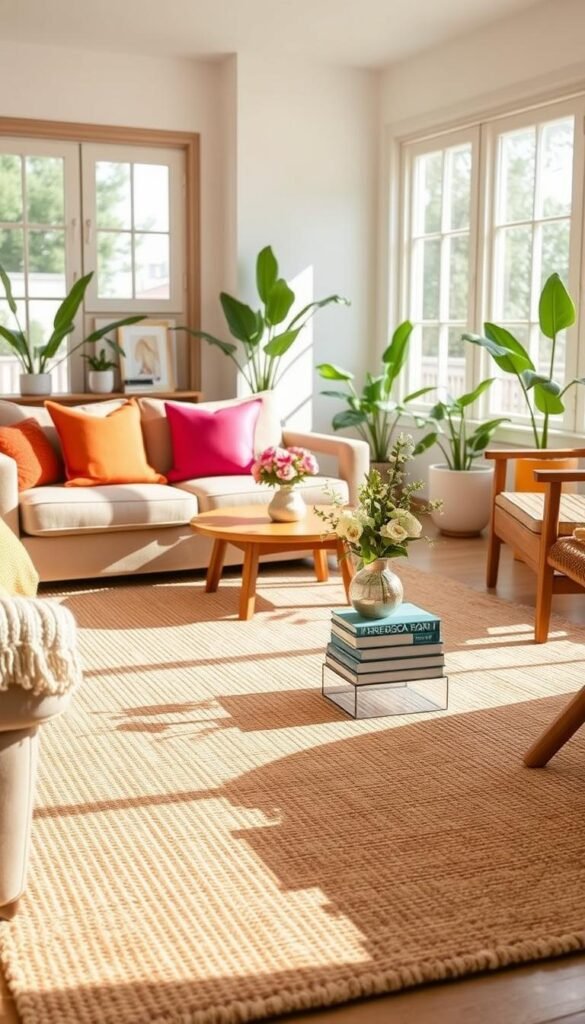
Why remove thick rugs: heavy piles trap dust and hold heat. That can make a small living room feel heavier during warm months. Rolling up a plush rug and bringing in flat-weave options refreshes the visual weight without major expense.
Jute vs cotton: quick guide
Jute brings texture and a coastal look. It reads breezy and low-visual-weight but can shed and feel rough underfoot.
Cotton flat-weaves are softer, easier to spot-clean, and pack small when stored. They lack jute’s rustic texture but win on comfort.
Best use and renter-friendly tips
- Use a smaller rug to define a seating zone in a studio rather than covering the whole floor.
- Choose a non-slip backing or a rug pad to protect floors and furniture placement.
- Rollable flat-weaves are simple to store between months and cost less to clean than heavy rugs.
„One rug per zone keeps a room from feeling layered and visually heavy.“
| Material | Best for | Pros | Cons |
|---|---|---|---|
| Jute | Coastal look, texture | Durable, low visual weight | Shedding, rough feel, spot-cleaning tricky |
| Cotton flat-weave | High-traffic zones, softer underfoot | Machine-washable options, rolls easily | Stains show easier, less texture |
| Sisal/Seagrass | Entryways, casual living areas | Natural look, hard-wearing | Can be stiff; requires careful cleaning |
Buying considerations: check backing, pile height for door clearance, and whether a rug pad is recommended. For practical swaps and style ideas, see this short guide to simple rug swaps.
Fresh flowers and greenery that instantly change the temperature “vibe”
A simple vase on a table can make an interior read cooler and more intentional. This is the fastest fix for a place that feels stale and visually heavy. One small arrangement resets mood without taking floor space.

Seasonal blooms that read bright and breezy
Choose warm seasonal colors—sunshine yellows, zesty oranges, and bright pinks—to add energy. These shades read lively in daylight and lift a room’s vibe more than deep reds or purples.
Tropical plants for a vacation-at-home feel
Low-footprint options like kentia palms and peace lilies bring a biophilic look without major care. Pair them with wood or cork planters to deepen the natural feel.
Best for renters, with practical notes
- Who benefits: renters who can’t paint, tight budgets, and anyone wanting a quick refresh.
- Check light needs and pet safety before buying. Some plants can be toxic to pets.
- Use grocery-store bouquets, simple pitchers as vases, or planters with trays to avoid leaks and markable surfaces.
„Fresh flowers make such a big difference.“
Realism check: greenery won’t replace AC, but it makes a room feel fresher and more intentional. Place one arrangement on a dining or coffee table and one small plant by a sunny window to connect interior and garden views.
Use fruit as functional decor for kitchen and dining areas
A bright fruit display makes a kitchen feel lived-in and requires zero storage when eaten. It’s a quick way to add color and life to a small table or island without extra clutter.

Citrus bowls as a compact, cheerful centerpiece
Citrus—lemons, limes, and oranges—reads fresh and clean. A shallow ceramic or wooden bowl holds a handful without crowding a prep surface. Choose nonporous glazes or sealed wood so cleaning is simple.
Farmers’ market produce in a serving bowl for natural color
Use a medium serving bowl for mixed apples, peaches, or plums. Mixed produce offers more visual contrast than one fruit alone and can act as an edible vignette in a dining area.
- Who benefits: tiny dining nooks, kitchen islands, or anyone who shops weekly.
- Bowl notes: stable base, easy-to-wipe material (stoneware, stainless, or sealed wood), diameter that leaves one place setting free.
- Upkeep: rotate fruit, discard bruised items, and wash the bowl weekly to avoid odors.
„A bowl of seasonal fruit brightens a room and goes away when eaten.“
Summer lighting that feels cooler at night
Swap harsh overhead lighting for soft, layered options to make warm nights feel calmer.
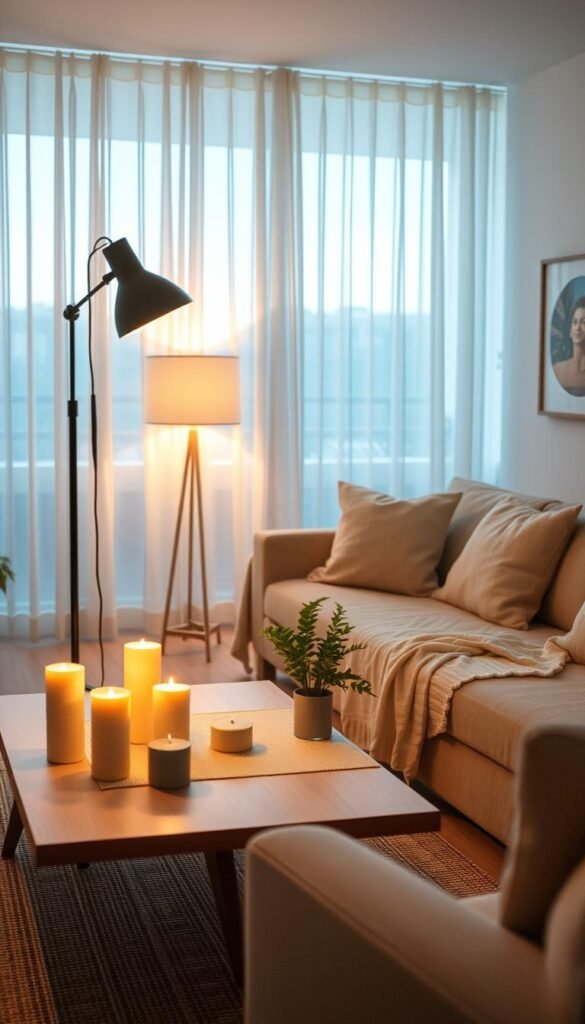
Lanterns and soft lighting for warm evenings without heavy decor
Lantern-style lamps and string lights give a gentle glow and act as portable pieces of decor.
They work well on shelves, side tables, or a balcony table. Choose plug-in or rechargeable models to avoid wiring changes.
Swapping lamp shades to brighten a room fast
Replacing a shade is a low-cost swap that changes the whole look.
Pick light-colored fabrics—beige, wheat, or pleated cotton—to diffuse light without adding visual weight. Match the fitter size to existing lamps to avoid returns.
Buying considerations: bulb color temperature and shade materials
Bulb temperature: aim 2700K for cozy evenings, 3000K for a slightly brighter feel that still reads cool.
Shade materials: linen and paper blends soften light; hard plastics give a harsher glare.
- Who benefits: people who avoid overheads, studio dwellers, and hosts who want ambient evenings.
- Placement: one main lamp by seating and a small accent in a dark corner reduces a cave-like feel.
- Pros/Cons: lanterns add atmosphere but take surface space; shade swaps are low-clutter but need lamp compatibility.
| Feature | Options | Notes |
|---|---|---|
| Bulb temp | 2700K / 3000K | 2700K = warm; 3000K = slightly brighter |
| Shade material | Linen, pleated cotton, paper | Linen = soft; paper = very diffuse |
| Power | Plug-in, battery, rechargeable | Renters: prioritize plug-in or rechargeable |
„Seasonal lighting and scent can make an evening feel lighter and more intentional.“
For quick how-tos and product ideas, see a short guide to seasonal lighting tips and a practical cozy lighting guide. These resources help choose bulbs, shades, and portable lights that suit small spaces and renter rules.
Decor that improves airflow without looking like an appliance showroom
A thoughtfully chosen fan fills a functional gap that textiles and light can’t fix. It moves air, cuts nighttime stuffiness, and can blend into a calm aesthetic.
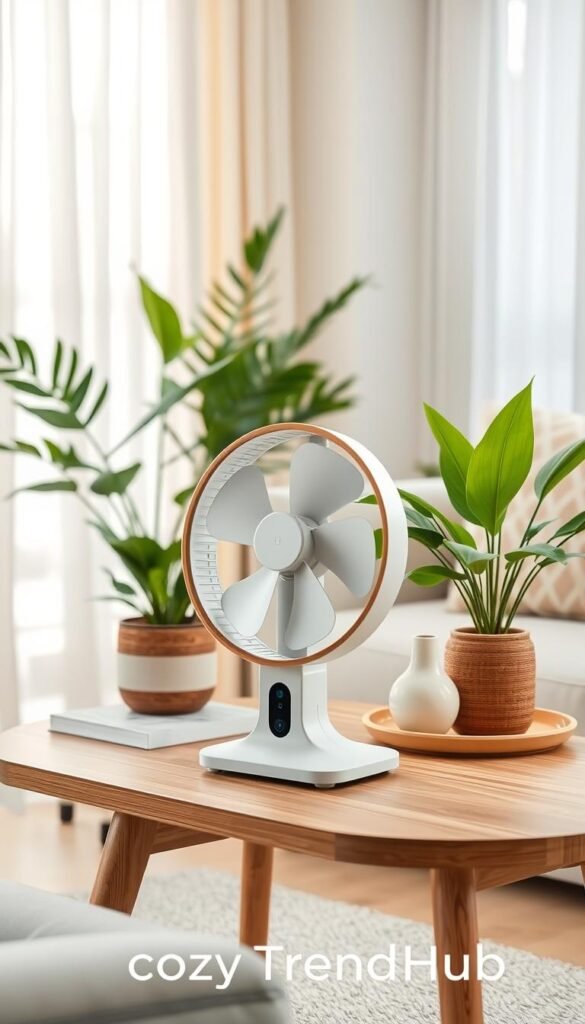
Sleek modern fans for desks, nightstands, and shelves
Who they suit: sleepers who need a focused breeze and anyone with limited floor space.
Choose compact tabletop units with quiet motors and directional heads. Look for low-profile shapes in neutral colors so the device reads as design, not clutter.
Ceiling fans when a fixture already exists
When a ceiling box is present, a simple swap or a low-profile fixture can add broad circulation without stealing floor space. Install before peak heat to avoid last-minute work.
Best for: bedrooms that overheat after sundown
This approach helps bedrooms and small living zones where stagnant air makes the space feel warmer at night. One well-placed fan can serve multiple zones in a studio layout.
Buyer considerations: Compare noise level (dB ranges), footprint (inches and weight), oscillation modes, and how easily the unit disassembles for dusting. Metal grills and removable blades shorten cleaning time. Check power type—plug-in models suit renters best.
| Type | Noise | Footprint | Cleaning |
|---|---|---|---|
| Tabletop / tower | Low–medium | Small; shelf or nightstand | Removable grille |
| Ceiling | Varies (quiet to loud) | No floor space used | Requires ladder; blades wipe down |
| Oscillating floor fan | Medium | Uses corner floor space | Guards lift off for cleaning |
- Renter limits: avoid hard-wired installs unless allowed; prioritize plug-in or rechargeable options.
- Aesthetics: choose simple finishes and clean lines to keep the look intentional and calm.
- Real tradeoffs: more airflow can mean more noise; compact fans save space but cover less area.
„Keep blades and guards free of dust so airflow stays strong when you need it most.“
When chosen with noise, size, and cleaning in mind, a fan is a practical way to improve comfort without changing materials or the overall look of your home.
Coastal textures that make a hot room feel like a breezy staycation
Light, woven textures instantly give a room a breezy, seaside mood without adding weight.
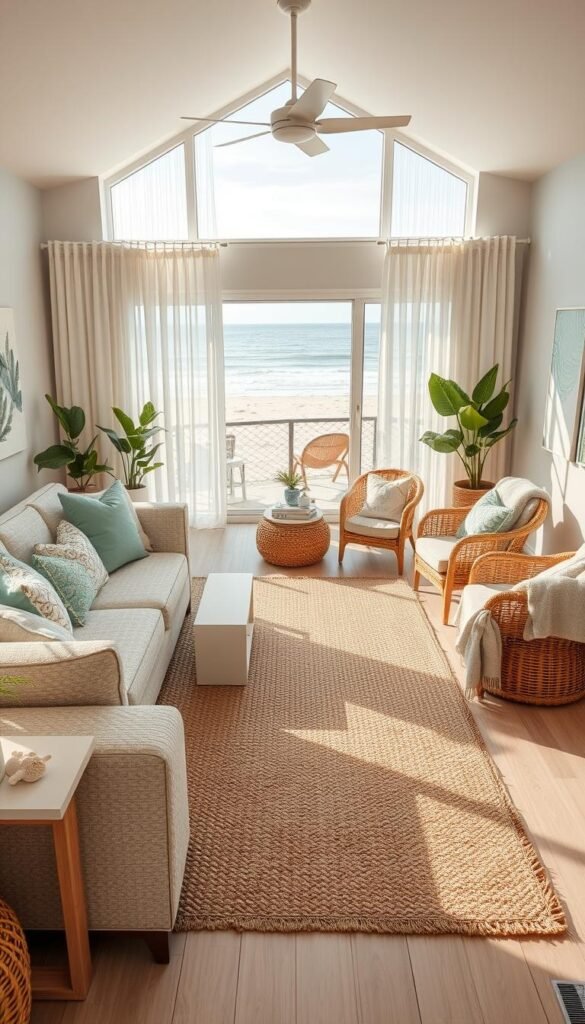
Rattan, wicker, cane, and seagrass: lightweight visual texture
Why they work: these materials read airy and tactile compared with glossy metals or heavy woods. They add depth without crowding a small space.
Buying considerations: check scale and weave density. Small pieces avoid overwhelming a coffee table or shelf. Inspect seams—wicker can snag and seagrass may shed.
Accent ideas: driftwood, shells, blue-green glass, and coral
Use one tray or bowl of shells on a coffee table and a single driftwood sculpture on a shelf. A blue-green vase can hold stems and act as a focal point that suggests vacation and calm.
Best for: living room shelves, coffee table, and small entry consoles
- Keep it minimal: one tabletop item, one shelf accent, and a functional basket that doubles as storage.
- Pros: natural textures feel relaxed and pack flat for seasonal storage.
- Cons: natural fibers collect dust and glass or coral pieces can be fragile in tight walkways.
Practical tip: choose stackable baskets and lightweight sculptures that store easily. For more coastal styling ideas, see coastal summer styling.
„Small, well-scaled coastal pieces make a house feel like a vacation without adding bulk.“
Small-space bar cart and drink station decor for summer hosting
Turn an unused corner into a tidy drink station that keeps counters clear and guests served.
Assign one compact zone—a slim cart or narrow console—next to the kitchen or dining area. This creates a dedicated place for bottles, glassware, and tools without crowding the table or main worktops.
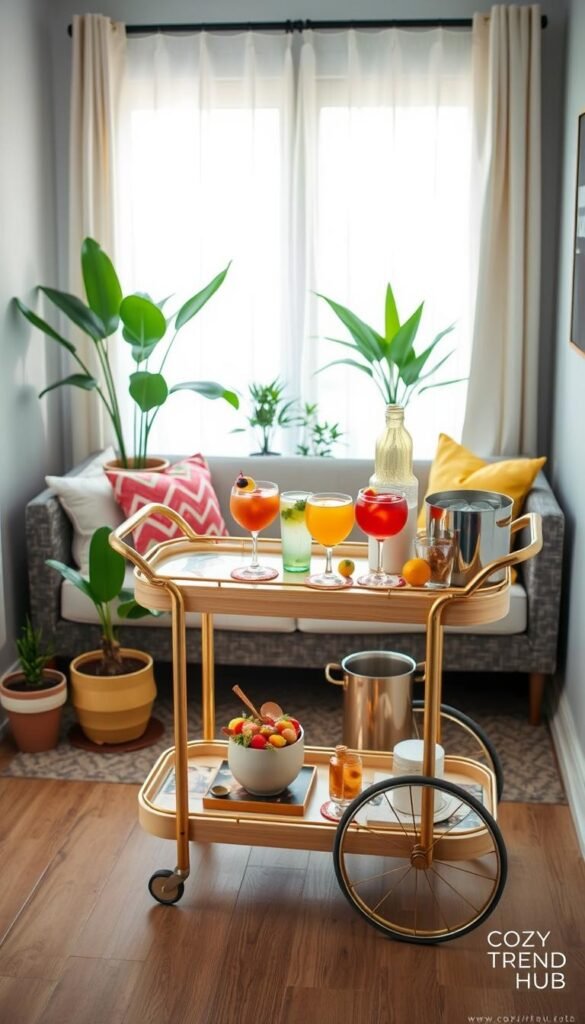
How to turn a corner into a cocktail station without losing counter space
Pick a unit under 24″ deep to sit flush against a wall or beside a small table. Keep only essentials on top: a small tray, a bowl of citrus, and three glass types.
Best for: tiny kitchens, dining nooks, and open-plan living rooms
Who benefits: tiny kitchens that need cleared worktops, dining nooks that need a movable serving point, and open-plan living rooms that want one contained drink area.
Buying considerations: slim footprint, wheels, and easy-clean surfaces
Priorities: width/depth, number of shelves, wheel quality, and wipeable finishes. Weatherproof options work on a covered patio.
| Feature | What to look for | Why it matters |
|---|---|---|
| Width / Depth | <24″ deep, 18–36″ wide | Fits narrow corners; clears doorways |
| Wheels | Locking, smooth casters | Easier to move; stays put when serving |
| Surfaces | Stainless, laminate, sealed wood | Resists sticky juice and spills |
- Multi-use: convert to a coffee station or plant stand off-season.
- Styling tip: limit glassware to three types and use a small tray to group tools.
- Tradeoffs: carts add storage but can feel crowded if oversized.
„A slim cart organizes bottles and tools in one footprint, making hosting simpler without permanent changes.“
Fireplace and mantel styling for summer when you’re not using it
Turn the dark firebox into a summer-ready vignette. A few removable fills make the opening feel intentional instead of heavy.
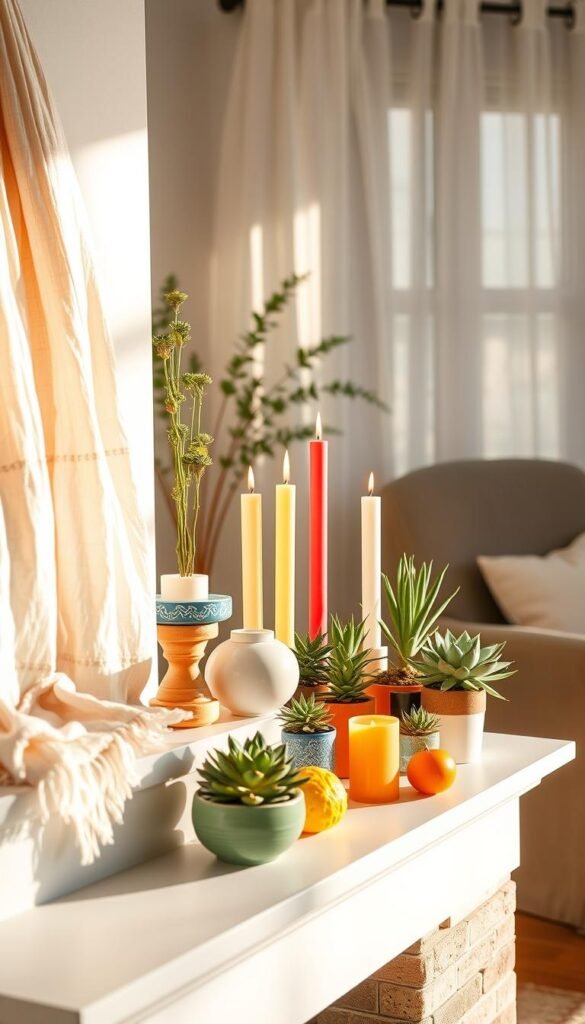
Fill the firebox with candles, coral, or planters
Quick swaps: group flameless candles, a low planter, or a piece of driftwood or coral in the cavity. These add light and texture without permanent work.
Best for: renters, older houses with decorative fireplaces, and small rooms that need one strong focal fix.
Simple mantel styling: petite vases, succulents, fruit, and beach finds
Use the three-part formula: one tall element, one medium, one small. Keep the mantel clear of clutter to avoid visual heaviness.
- Materials: glass, light ceramics, and coastal accents read breezier in warm months.
- Pair nearby surfaces like a coffee table or side table so the room looks cohesive, not themed.
- Affiliate-friendly picks: flameless candles, small vases, and low-maintenance planters with saucers.
„Keep the mantel simple: one tall vase, a medium plant, and a small object create balance.“
| Problem | Solution | Notes / Tradeoffs |
|---|---|---|
| Dark firebox | Candles or planter fill | Candles add ambiance; check soot and safety. Flameless options reduce risk. |
| Heavy mantel | Minimal trio styling | Less is more; avoid over-accessorizing to keep visual lightness. |
| Renter limits | Removable, non-drill additions | No permanent fixtures; choose portable items that store easily. |
Practical cautions: contain candles in glass, dust fills periodically, and never block vents. If using real flames, keep them well away from fabrics and always supervise.
Bedroom wall and pattern updates that don’t overwhelm a small room
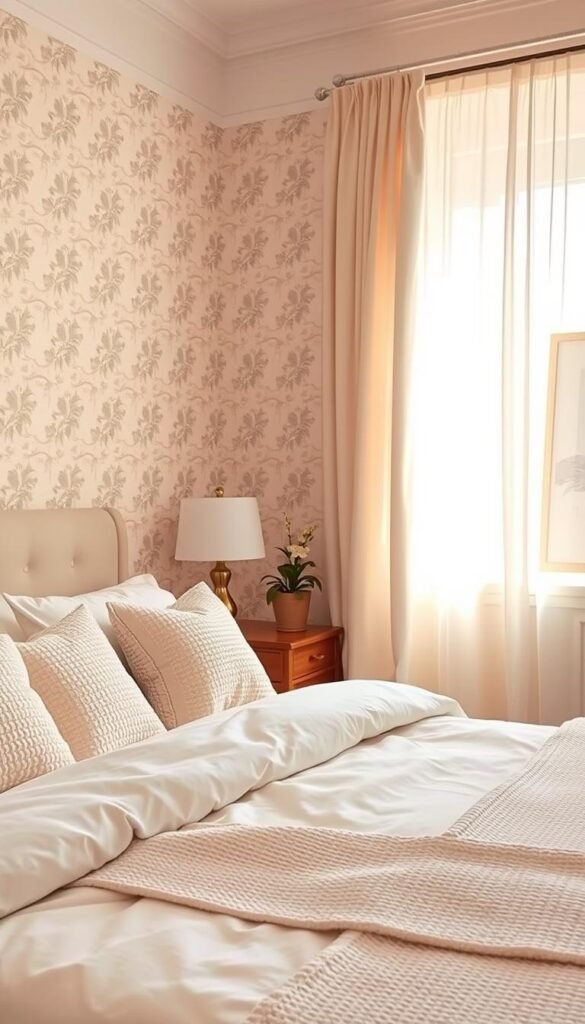
Patterned bedding and swap-in wall decals are the easiest way to change color and mood in a rented space. This solves the problem of unchangeable walls by directing pattern where it counts: linens and removable accents.
Botanical motifs—large leaves, small florals, or mixed greens—work well as a seasonal lift. Use one vivid textile against neutral walls to keep the room airy and calm.
Who this suits
Renters who can’t repaint, small rooms that need personality without extra furniture, and anyone who wants reversible style updates.
Pros and cons
| Approach | Benefits | Tradeoffs |
|---|---|---|
| Bold botanical duvet | Instant color and energy; easy to swap | Can feel busy in tiny spaces if overused |
| Neutral walls + one statement textile | Makes a room read larger; highlights the pattern | May need an accent piece to avoid flatness |
| Peel-and-stick art or decals | Reversible and renter-friendly | Quality varies; test small patch first |
- Print scale: small prints suit narrow beds; large prints suit wider headboards.
- Color compatibility: pick two main colors from the pattern to coordinate pillows and rugs.
- Care: choose breathable fabrics that launder easily.
- Rule: one statement duvet or sheet set, then solids for pillows and throws.
„Bedding is often the easiest and most affordable way to create a bright summer bedroom.“
For compact room ideas and layout tips, see concise small-bedroom design tips.
Balcony, patio, and porch decor that extends your living space
When indoor rooms trap heat, a small outdoor area can act as a calm, usable extra room. A well-planned balcony or porch turns into two zones: a compact lounge and a tiny dining spot. That shift moves evening living outside and eases indoor overheating without mechanical changes.

Create separate lounge and dining zones if you have the square footage
One compact lounge seat plus a bistro table covers relaxing and dining without crowding. Pick foldable furniture or a small loveseat to keep circulation and door clearance easy.
Outdoor rugs, cushions, and lighting to make it feel like a room
Use a weatherproof rug to define the lounge area and add cushions in quick-dry fabrics. Store soft items in a lightweight bin when storms are expected.
Weatherproof bar cart ideas for outdoor happy hours
Choose carts with sealed wood or stainless surfaces and locking wheels for uneven balcony floors. A small footprint and easy-clean top make drink service practical and renter-friendly.
String lights for a soft glow without permanent installation
String lights or battery lanterns give a warm glow without hooks. Use removable adhesive clips or a freestanding pole if there’s nowhere to hang them.
Buyer considerations: check material weather resistance, foldability, and weight—important for walk-up moves. Aim for stackable pieces and UV-resistant fabrics.
„Shifting evening living outdoors can lower indoor discomfort and make a small balcony feel like a true extra room.“
| Item | Recommended footprint | Weather notes | Pro / Con |
|---|---|---|---|
| Bistro table + two chairs | 24–30″ table diameter | Powder-coated metal or teak | Pro: compact dining. Con: can be chilly without cushions. |
| Compact lounge seat | ~30–36″ wide | Quick-dry fabric, removable cushions | Pro: comfortable. Con: needs storage in bad weather. |
| Weatherproof bar cart | 18–24″ depth, slim width | Stainless or sealed wood, locking wheels | Pro: mobile serving. Con: may need anchoring on windy days. |
| Outdoor rug + cushions | 4’x6′ or smaller for balconies | Polypropylene or coated cotton | Pro: defines space. Con: must be dried after rain. |
| String lights / lanterns | Portable; clips or freestanding | LED, weather-rated options | Pro: renter-friendly install. Con: battery or solar upkeep. |
Pros / Cons summary: An outdoor setup adds usable living square footage and can solve late-afternoon indoor heat. Tradeoffs include maintenance, storage, and occasional privacy solutions.
Entryway and front door updates that feel summery on a renter budget
A tidy entryway sets the tone the moment someone reaches the door. Small, removable swaps refresh that first impression without any permanent work.
Seasonal doormats add texture and color with zero installation. Choose a coir or recycled-rubber mat sized to leave one free step. Look for slip resistance and a sealed edge so the mat handles rain and dirt.
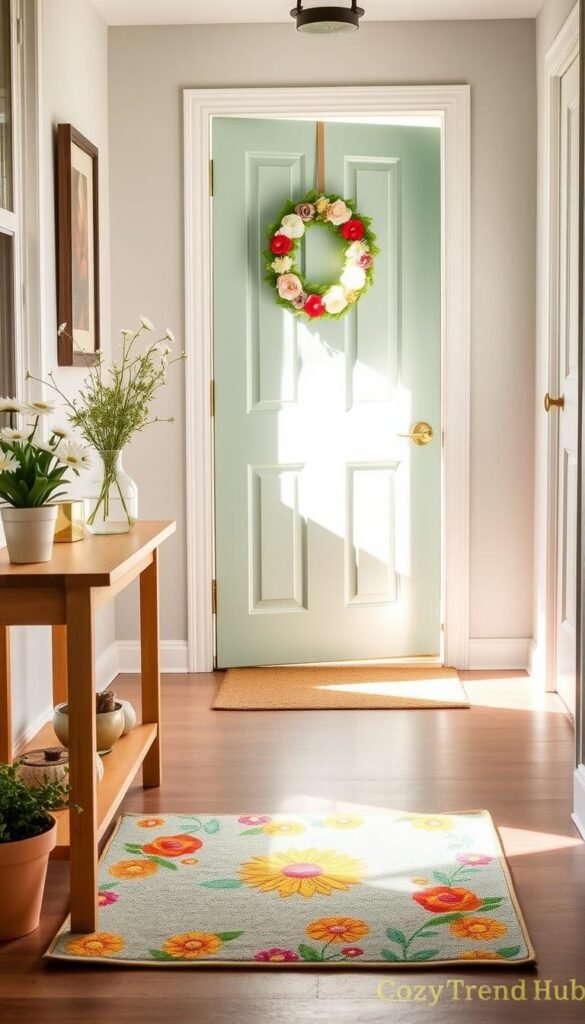
Front door color and easy porch touches
A pop of paint is high-impact but check the lease and get landlord approval first. If paint isn’t allowed, use a removable wreath, a magnetic sign, or a peel-and-stick number plate to add color and personality.
Lanterns, planters, and lighting make a porch feel intentional at night. Pick battery or plug-in lanterns and one low-maintenance planter to avoid clutter near walkways.
„A new doormat is the quickest renter-friendly refresh you can make.“
- Who this helps: renters on a budget, small entryways, anyone needing a quick refresh.
- Buyer checks: mat size, slip resistance, weather durability, and approval for paint.
- Storage: mats and small lanterns roll or stack into a closet at season’s end.
| Update | Cost | Reversibility | Notes / Tradeoffs |
|---|---|---|---|
| Seasonal doormat | Low | Easy (swap back) | Adds texture; limited impact if entry is cluttered |
| Removable door accents (wreath, magnet) | Low | Easy | Instant color; no landlord approval needed |
| Painted front door | Low–Medium | Requires approval; touch-ups later | High visual impact; may need consent |
| Lanterns & planters | Low–Medium | Easy | Soft lighting and greenery; keep walkway clear |
Practical summary: start with a mat and one accent. Add lighting or a planter to build the look. If painting is an option, confirm terms first. For more styling ideas, see a short guide to seasonal table ideas and a compact porch styling roundup.
Conclusion
A few renter-safe updates often make more difference than many small accessories. Start by blocking harsh sun, swapping heat-trapping textiles, lightening the palette, and adding focused airflow. These moves change how a room reads and feels without major work.
Buyer plan: begin with windows and bedding, then address rugs, lighting, and small accents. Choose items based on sun exposure, storage limits, and lease rules rather than trends.
Use the article’s pros/cons and checklists to narrow choices fast. Rotate items seasonally and store pieces that add clutter. For practical cooling tips and timing—like when to close windows—see a short guide to staying cool without AC.
Next step: pick the hottest room, make two changes (window + textile), then reassess before buying more. Over time, function and intent will outdo many small trinkets.