
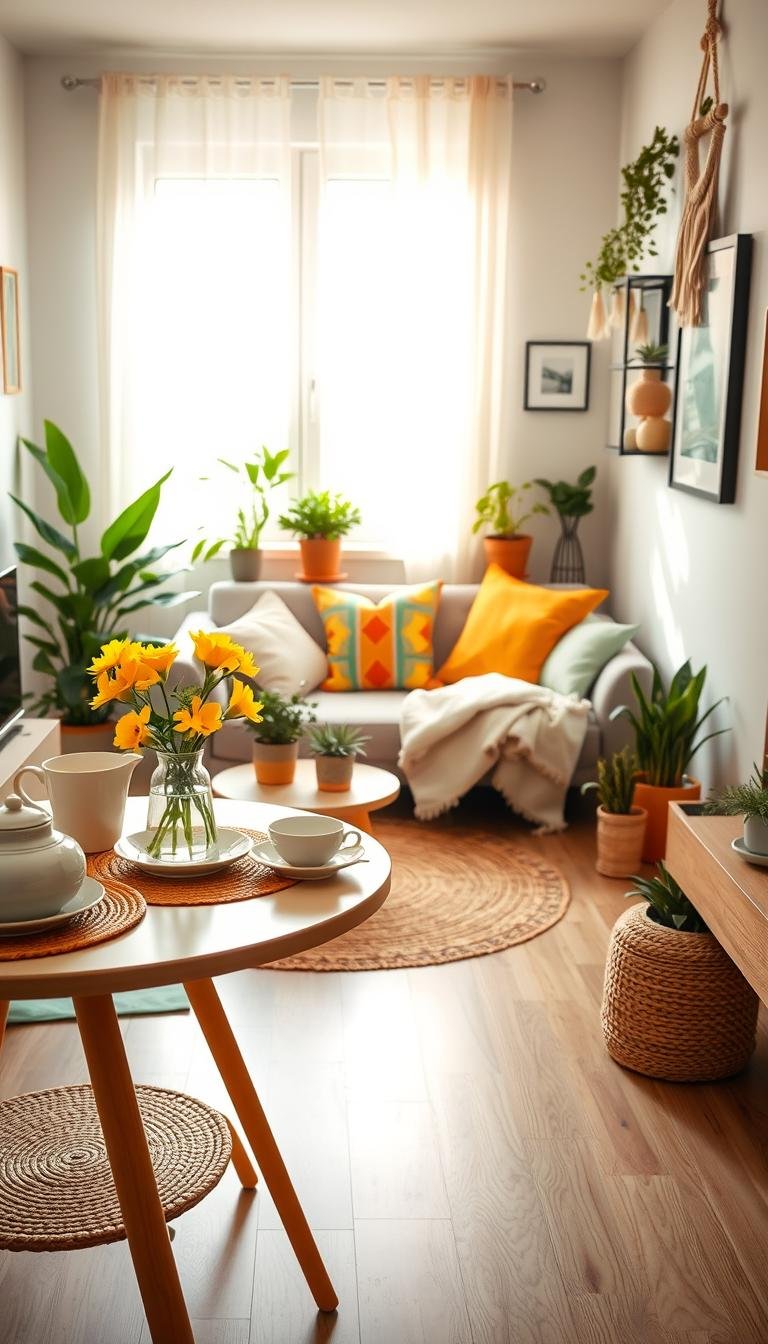
Start with less to gain more. Small studios and compact rooms often feel heavy when they keep winter pieces and clutter. The core problem is visual overheating: dark corners, bulky textiles, and items that can’t be stored easily.
This guide focuses on fast, renter-friendly swaps that lift light and air without drills or paint. It highlights low-footprint upgrades — textiles, lighting, vertical greenery, and multiuse furniture — chosen to be easy to stow when the season ends.
Recommendations are organized to help buyers: quick picks first, then category-by-category options with a short „best for“ use case, key measurements, care notes, and renter-safety tips. The goal is a brighter, uncluttered home that keeps pathways clear and adds comfort.
Adopt a „swap, not stack“ approach: replace heavy throws and dark accents with lighter covers and reflective surfaces. Polishing mirrors and windows amplifies natural light and makes the room read larger.
Key Takeaways
- Declutter first to open sightlines and boost natural light.
- Choose compact, dual-purpose pieces with easy storage.
- Swap textiles (pillow covers, throws, rugs) to shift mood fast.
- Use vertical styling and reflective surfaces to save floor area.
- Each product suggestion will list „best for,“ measurements, and renter notes.
- Find practical examples and quick picks at this guide.
Quick picks: summer decor upgrades that work in a studio apartment</h2>
Focus on removable, low-footprint pieces to refresh a compact room fast. The aim is fast wins that don’t harm renter agreements and are easy to stow.
Quick pick categories:
- Peel-and-stick hooks (weight limits noted) — best for: frequent movers.
- Linen pillow covers (no inserts) — best for: pet owners (washable).
- Light-filtering shades or glare-friendly panels — best for: WFH setups.
- Compact mirror or mirrored tray — best for: rooms needing extra light.
- One statement planter (unbreakable) — best for: those who want greenery with little upkeep.
- Plug-in sconce and tension-rod curtains — best for: renters who can’t drill.
- Summer candle or diffuser (gentle scents) — best for: quick mood shifts.
Storage-friendly items that fit one bin include pillow covers, foldable throws, faux stems, unbreakable vases, and a small tray for countertop styling. These compress or nest and make seasonal swaps painless.
Quick buyer checks (60 seconds): measure walkway clearance, confirm adhesive weight limits, and verify fabrics are washable for sweat or spills.
| Item | Cost range | Removability | Storage needs |
|---|---|---|---|
| Peel-and-stick hooks | $5–$15 | High | None |
| Linen pillow covers | $12–$30 | High | Small bin |
| Compact mirror | $20–$60 | High | Flat |
| Plug-in sconce | $25–$80 | High | Small box |
Quick pros: fast change, low commitment. Quick cons: cheap adhesives can fail, glossy mirrors show fingerprints, scented items may irritate sensitivities.
For deeper, room-level plans and product lists that expand these picks, see a fuller guide at this styling resource.
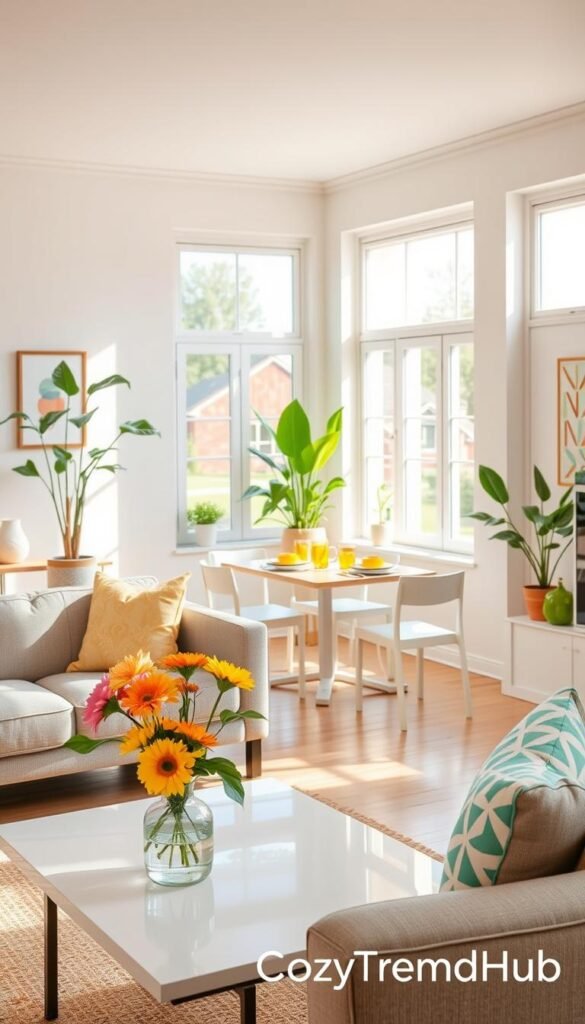
What to look for when shopping summer decor for small spaces</h2>
Start each buy with a short checklist to know how a piece will behave in a tight layout. This makes comparing products faster and prevents surprises at home.
- Small-space summer decor checklist: footprint (W x D), height, depth, and clearance impact on pathways.
- Renter-risk: adhesive vs. anchored weight limits, residue potential, and whether drilling is needed.
- Storage note: is the item stowable — folds flat, nests, compresses, or disassembles without tools? Measure closet and under-bed capacity first.
Why vertical pieces matter. Wall-friendly shelving and hooks save floor area and keep a studio from feeling like one stacked zone. High storage lifts clutter away from entryways and preserves walking room.
Choose multiuse objects. A tray-topped stool, storage ottoman, or hook rail replaces piles rather than adds them. This approach keeps design purposeful and functional.
Visual lightness tricks: open bases, glass or acrylic shelving, low-profile silhouettes, and light tones reduce visual weight. Note pros and cons: open shelving looks airy but needs tidier styling; glass reads light but shows smudges.
| Check | Why it matters | Quick pro/cons |
|---|---|---|
| Footprint & height | Prevents furniture from overwhelming a room | Pro: fits scale. Con: lower storage capacity |
| Material & care | Durability and cleaning needs | Pro: glass looks airy. Con: fingerprints show |
| Hanging method | Renter safety and permanence | Pro: peel-and-stick is easy. Con: weight limits apply |
One simple rule: adopt a „one-in, one-out“ habit when swapping seasonal items to keep storage and balance under control. For tabletop ideas that follow these checks, see table styling suggestions.
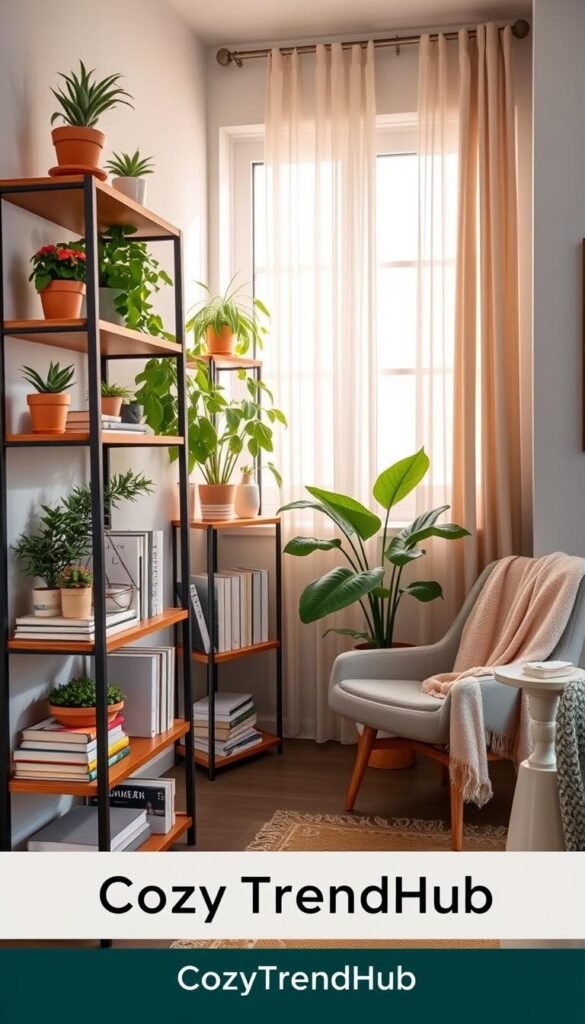
Best summer decor for small spaces that instantly brightens your home</h2>
A few targeted swaps can instantly lift a dim studio and make it feel brighter and airier. Start with textiles and reflective surfaces to address limited daylight and heavy winter layers.
Light-colored textiles to cool down the look of a living room
What to change: pillow covers, slipcovers, and lightweight throws in cream, sand, or ivory. Best for dark sofas and compact living rooms.
Care: choose washable, fade-resistant fabrics that endure sun and pets. Avoid delicate linens if you plan to fold and store them tightly.
White and neutral accents to boost brightness without repainting
Small accents—vases, trays, lamp shades, and white dishware—brighten surfaces without permanent work. They read as cohesive color points that lift the overall room feel.
Polished mirrors and shiny objects to reflect summer light
Place a thin-framed mirror across from a window when possible. Keep finishes easy to clean; fingerprints and smudges reduce reflective gain.
- Buyer notes: pick mirror sizes that don’t overwhelm narrow walls and keep seating clearance in mind.
- Pros: instant brightness, renter-safe swaps, flexible styling.
- Cons: white shows stains, mirrored surfaces need frequent polishing, and cheap textiles may look wrinkled.
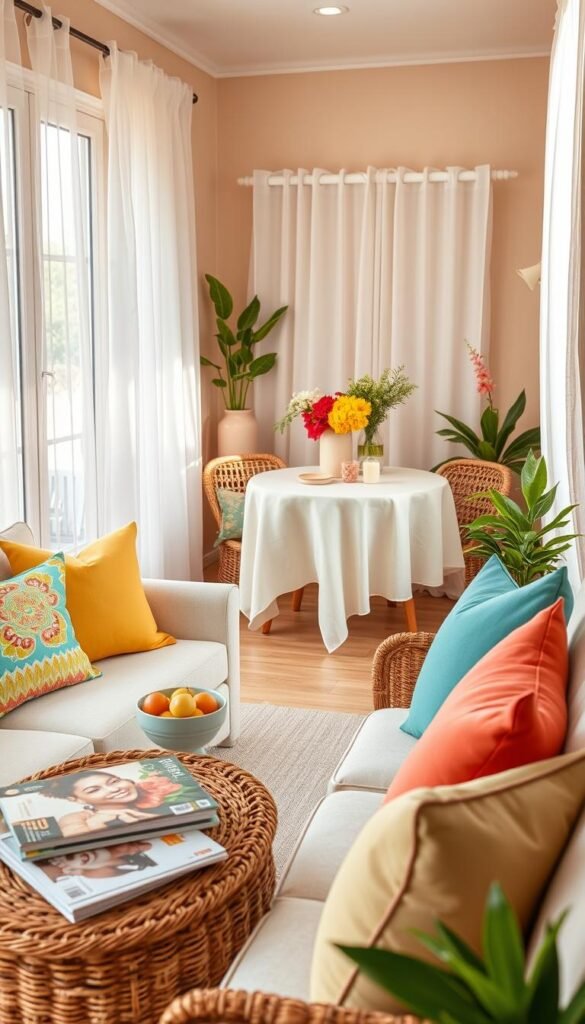
„Swap out dark covers for light ones and store heavy throws in a labeled bin to make seasonal flips painless.“
Find more practical styling ideas in this aesthetic decor guide.
Renter-friendly wall decor that doesn’t eat floor space</h2>
Smart wall styling frees floor space and adds practical zones for daily use. Shift visual weight upward with removable solutions that hold art, coats, and everyday items without crowding a living area.
Leaned art on mantels and shelves creates a flexible mini-gallery when wall space is limited. This approach is best for frequent refreshers and renters who avoid holes. Use non-slip pads and low-profile shelf backing to keep frames steady.
Oversize hooks hung high form an entry drop zone while protecting walkway clearance. Mount hooks above shoulder height for occasional bags and hats, and keep daily items at reachable levels. Check adhesive and hardware weight limits; most removable hooks list lb capacity on the package.
Creative wall-hung objects that double as storage—baskets, rail systems, and hanging bins—replace countertop clutter with tidy vertical storage. These are ideal for kitchens, entries, and narrow walls where floor storage is impractical.
| Option | Who it suits | Renter checks |
|---|---|---|
| Leaning art on shelving | Frequent refreshers, renters | Use anchors on shelves; non-slip pads |
| High-hung oversize hooks | Tight entries, commuters | Verify surface compatibility and weight limit |
| Wall baskets & rail storage | Kitchen users, tidy minimalists | Confirm adhesive strength or removable anchors |
Quick pros: frees floor space, creates functional zones, and highlights a focal place without bulky furniture. Quick cons: overload can fail, and open storage needs careful curation to avoid visual clutter.
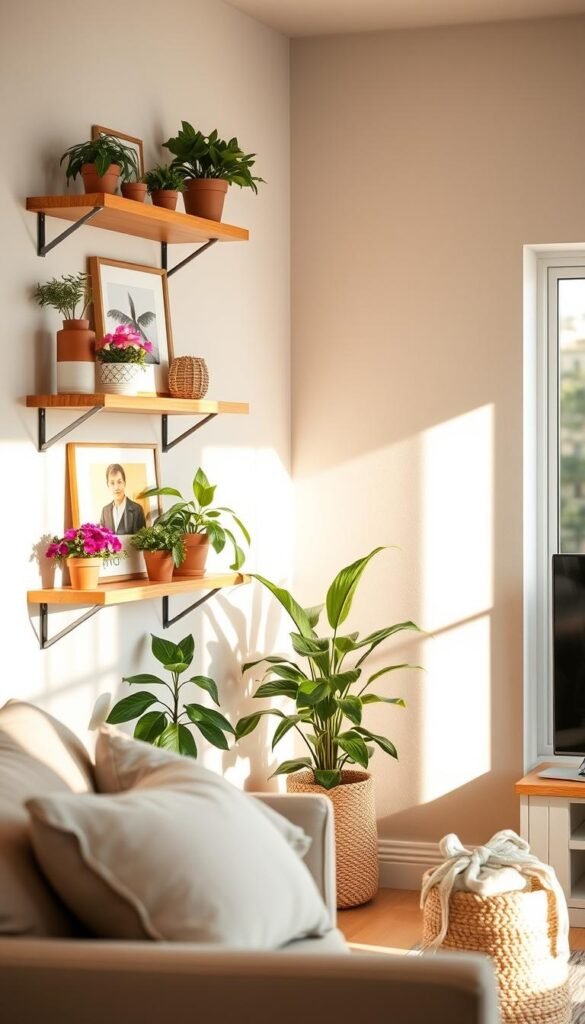
Measure before you buy: allow at least 18–24 inches of clearance under hooks for traffic, and size shelves so frames can lean without tipping. For practical examples and styling inspiration, see a short guide at leaned-art and hook ideas.
Summer greenery and florals without sacrificing square footage</h2>
Greenery lifts a room quickly, but plants often compete with limited surfaces in compact homes. A focused plan keeps plants from becoming clutter and makes them part of the layout rather than an afterthought.
Windowsill succulents are ideal for a tight kitchen. Line up tiny pots to save counter area and give plants a sunny home. Succulents need little water and simple light checks, so they work well in busy households.
One compact statement planter replaces a cluster of small pots. A single, well-styled planter reduces visual noise and simplifies care. Choose a planter with a drip tray and a manageable weight when watered.
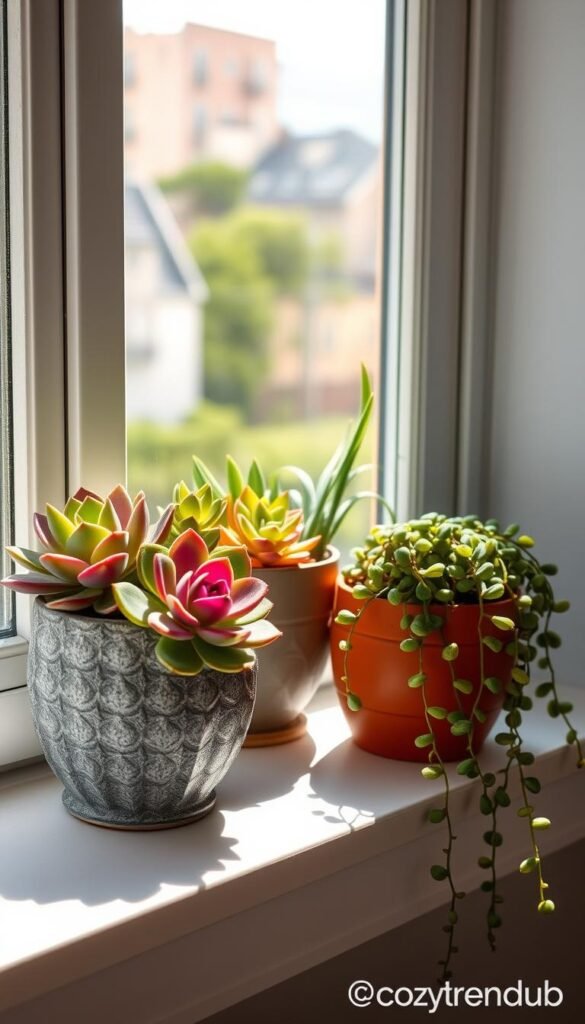
Hanging baskets and window boxes free floor space on porches and balconies. Use secure mounts and check wind exposure. Keep lighter pots in breezy spots and anchor heavier planters to prevent tipping.
Faux vs. fresh: faux stems suit frequent travelers and low-light rooms; they need UV-resistant materials to avoid fading. Fresh plants suit those who enjoy daily care and seasonal flowers with fragrance.
| Option | Care effort | Storage note |
|---|---|---|
| Succulents on sill | Low | Nest small pots in a bin |
| Single statement planter | Medium | Store as one unit or empty pot |
| Hanging baskets/window box | Medium | Remove and stack during off season |
„Choose plants that match light levels and your routine; one intentional planter often reads cleaner than many tiny pots.“
Quick pros/cons: fresh plants add life and scent but need water and can drop leaves. Faux options store easily but collect dust. Use collapsible baskets or nesting planters for seasonal storage.
Textiles that make a small living room feel like summer</h2>
Light, washable textiles change a room feel more than bulky furniture swaps. Focus on breathable covers and thin throws that pack flat and wash easily. These swaps refresh seating without altering layout.
Linen and cotton throw pillow covers for sofas and chairs
Linen and cotton covers are ideal for renters and budget shoppers. Covers store flat and wash faster than full pillows.
Choose pillow sizes that keep seating usable: 18″ for chairs, 20″–22″ for a standard sofa. This keeps cushions cozy without shrinking pathways.
Lightweight throw blankets for reading corners and movie nights
Pick thin cotton or chambray throws that breathe and fold compactly. Machine-washable labels are a must for pets and frequent use.
Best for: those who read or relax on a loveseat. Keep one folded in a basket by the chair to avoid clutter.
Rugs that zone a studio and define living vs. sleeping space
Use a neutral rug to anchor the living area and separate it from the bed. Size guidance: front legs on the rug for sofas, or a 5’x8′ to define a small seating group.
Add a non-slip pad to prevent shifting and protect floors.
Patterns that work in tight rooms: stripes, lattice, and small florals
Stripes elongate; lattice adds structure; small florals soften without overpowering. Stick to one patterned piece and pair it with solids to keep the room calm.
Pros and cons: natural fibers like jute vs. easy-clean synthetics
| Fiber | Pros | Cons |
|---|---|---|
| Jute | Airy, tactile, natural look | Sheds, stains, needs careful cleaning |
| Synthetic | Fade-resistant, easy to wash, pet-friendly | Can feel less natural underfoot |
Buyer checks: machine-washable tags, fade resistance by windows, recommended rug pad, and pet-friendly ratings. These help pick textiles that last and keep a compact home feeling open.
Small-space lighting and window moves that open up the room</h2>
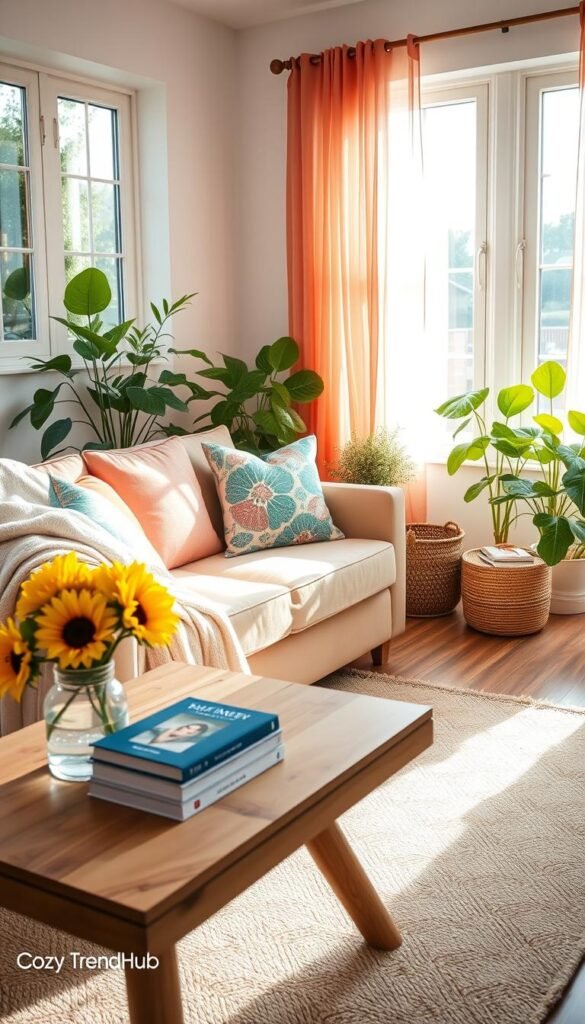
Small changes to window treatments and nearby seating can make a living area feel larger and more useful. Focus on treatments that keep daylight while controlling glare, and use the window wall as a place for seating and low-profile storage.
Roman shades and light-filtering treatments
Why choose them: Roman shades allow light to stream through while giving privacy. Light-filtering panels reduce screen glare without darkening the whole room.
Renter tip: pick tension-rod or inside-mount shades when possible. Look for peel-and-stick brackets if drilling isn’t allowed.
Measurement steps: inside-mount: measure exact frame width at three points and use the narrowest. Outside-mount: add 2–3 inches each side to block light gaps. Check clearance so shades don’t hit cranks or trim.
Window seats and slim shelving to use the window wall
A low bench or storage ottoman beneath the window creates seating without taking floor space. Add narrow shelving above to hold books or plants.
This combo keeps the living area open and adds functional storage without bulk.
When to place the room’s focal point toward the view
Orient seating to the window when the view or light is an asset. If the view is poor, create a bright focal place with a mirror and layered lighting.
- Pros: more daylight, improved mood, room reads larger.
- Cons: premium treatments cost more; some installs need landlord approval.
- WFH note: light-filtering options cut glare while keeping the room bright for video calls.
| Option | Who benefits | Installation risk |
|---|---|---|
| Roman shades / light-filtering | Low-light apartments, WFH setups | Low with tension mounts; medium if drilling |
| Window bench + slim shelving | Those who need seating and storage | Low; shelves need proper anchors |
| Focal shift (mirror/lighting) | Rooms with poor views | Low |
„Do a quick layout test: tape the bench and shelf footprint, then walk the path to confirm clearance.“
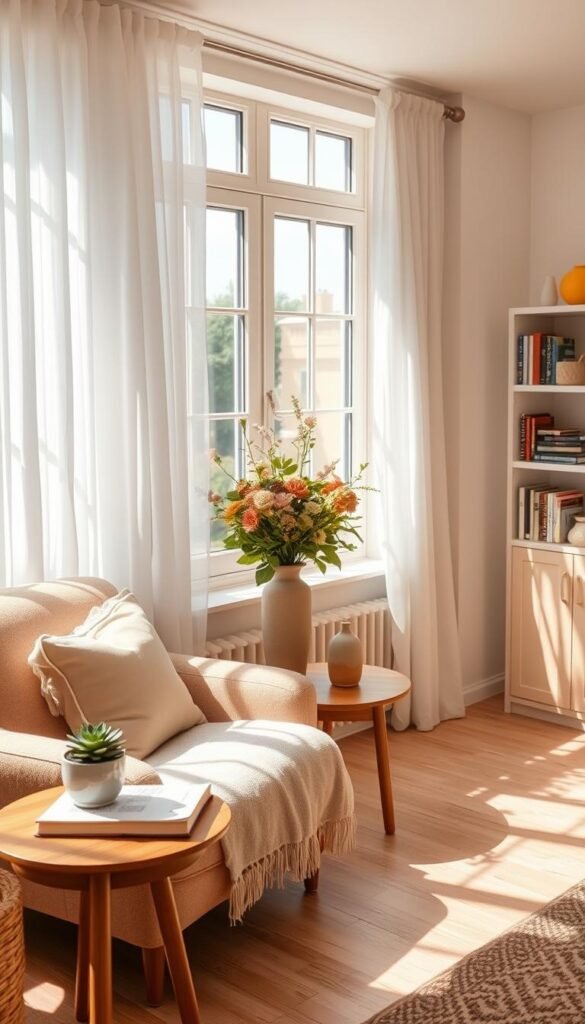
For cooling and glare tips that pair well with treatments, see this short guide at cooling a small room.
Multiuse furniture that doubles as summer styling</h2>
When floor area is limited, choosing convertible items lets the room shift from work to rest in minutes.
Fold-up tables and convertible surfaces
What they solve: no room for an extra surface during the day and a dine/work surface at night.
- Best for: renters who WFH or eat at home and need to reclaim floor space daily.
- Buyer checks: folded thickness, locking stability, and usable height for dining and laptop use.
Daybeds vs Murphy beds
Daybeds act as a sofa by day and a sleeping spot at night. They are renter-friendly and simple to place.
Murphy beds free the entire floor when tucked away. They maximize openness but may need installation and a higher budget.
- Best for guests: a daybed or a wall bed setup offers overnight options without a bulky sleeper couch.
Storage ottomans and hidden compartments
Hidden storage keeps linens and seasonal items out of sight and reduces visual clutter in a tight living layout.
Summer styling tip: pick light upholstery or breathable slipcovers to lift the room’s look while keeping the piece functional.
| Item | Pros | Cons |
|---|---|---|
| Fold-up table | Flexible, compact | Stability varies |
| Daybed | Dual seating/bed | Less mattress depth |
| Murphy bed | Max floor openness | Install, cost |
„Choose hybrids that reduce pieces, not compromise comfort.“
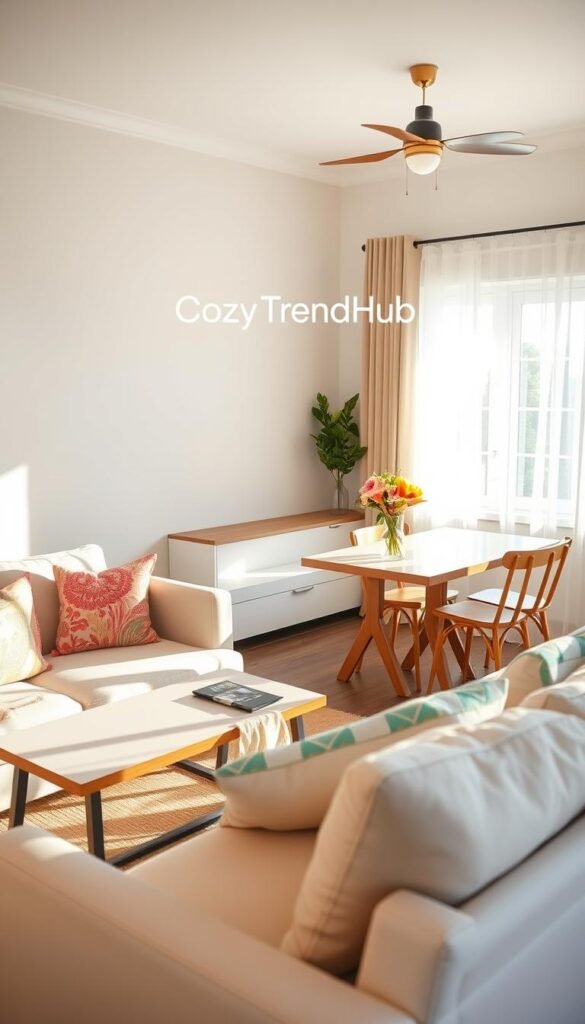
Dining area refreshes for tight layouts and everyday living</h2>
Make circulation the design driver: pick a table that opens paths instead of blocking them. In compact homes, the right shape and base solve the „dining takes over the room“ problem by improving movement around the meal zone.
Downsizing when you rarely host
Best for those who host infrequently: choose a smaller footprint dining table and keep foldable extra seats on hand. Measure the table diameter or length and allow at least 30″ of chair pull-out space plus a 24″ minimum walkway behind seating.
Round pedestal and trestle options
Who they’re for: narrow paths and a small family. A round pedestal or trestle table reduces knee and leg conflicts. Centered bases keep legs out of traffic, making movement easier in tight plans.
Benches and banquettes
Benches tuck in cleanly and read visually lighter than chairs. They can squeeze an extra person in a pinch.
Banquettes maximize every inch and create a built-in feel. They work well against a wall or under a window.
| Option | Pros | Cons |
|---|---|---|
| Benches | Visual lightness; extra seating; easy storage | Less back support; harder to slide |
| Banquette | Maximizes seating; cozy, built-in look | Less reconfigurable; may need cushions cleaned |
| Chairs | Movable; easy to reconfigure and clean | Can add visual bulk |
- Buyer checks: table diameter/length, 30″ pull-out, 24″ walkway minimum.
- Durability: pick wipeable surfaces, stain-resistant fabrics for family use, and lightweight seating for easy cleaning.
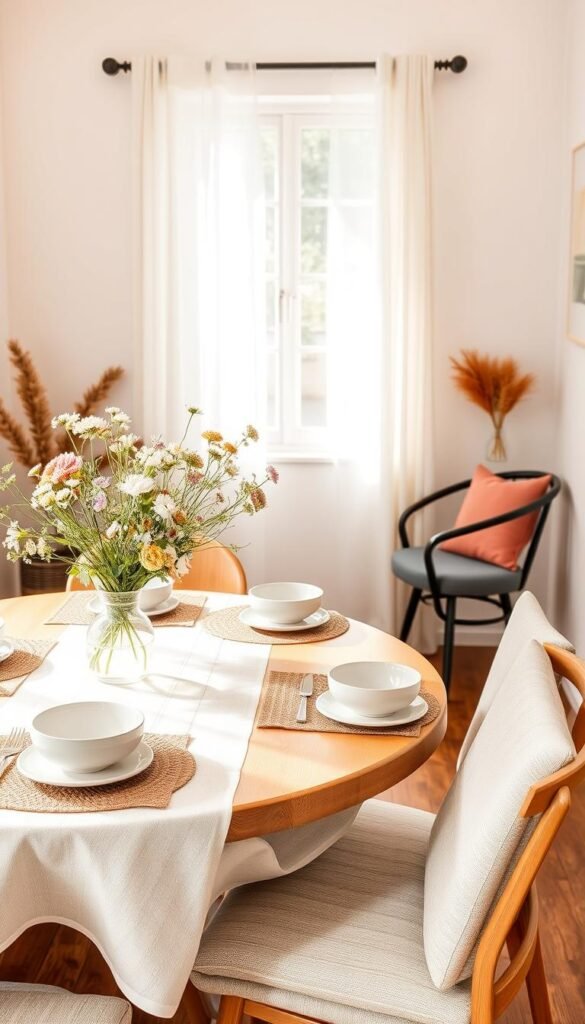
„Focus on circulation first — a well-chosen table makes a compact dining zone functional and calm.“
Kitchen and entryway decor that’s functional, not fussy</h2>
Clear counters and a planned entry area cut daily friction and keep a home looking calm. This section focuses on low-footprint updates that reduce clutter and speed routines without adding visual weight.
Start with what you use every day. Keep daily items in reach and hide the rest. Think in terms of light-reflecting surfaces, smarter drawers, and one tidy drop zone at the entry.
Open and glass shelves to reduce visual weight
Why it works: Open or glass shelves make a kitchen read lighter than solid cabinets and admit more light into the area.
Styling tip: show only daily-use items, group like materials, and leave breathing room between objects. Overfilled shelves look cluttered fast.
Renter note: use removable brackets or tension-mounted glass where drilling isn’t allowed.
Drawer peg systems and pull-out corner organizers to clear counters
What to buy: a peg kit to organize pots and a vertical pull-out for awkward corners. These items keep cookware stable and stop duplicates from piling up on counters.
Buyer checks: measure cabinet depth and check hinge clearance. Confirm pull-outs fit your cabinet frame before ordering.
High-hung hooks and a simple basket for a clutter-free entry
Simple system: mount high-hung hooks for bags and jackets and place one basket below for shoes or seasonal gear.
Pros: clears walkways and makes the entry area feel bigger. Cons: adhesives can fail—verify weight limits and wall finish compatibility.
| Solution | Best use | Renter risk | Quick pro | Quick con |
|---|---|---|---|---|
| Glass/open shelving | Tidy households wanting lighter design | Low with removable brackets | Reduces visual weight | Shows mess |
| Drawer peg system | Cookware and pan storage | Low; fits inside drawers | Clears counters | Requires correct drawer size |
| Pull-out corner organizer | Deep corner cabinets | Medium; check cabinet frame | Stops lost items | Install may be fiddly |
| High-hung hooks + basket | Entry drop zone | Low; check adhesive/wall | Frees entry area | Overloading causes failure |
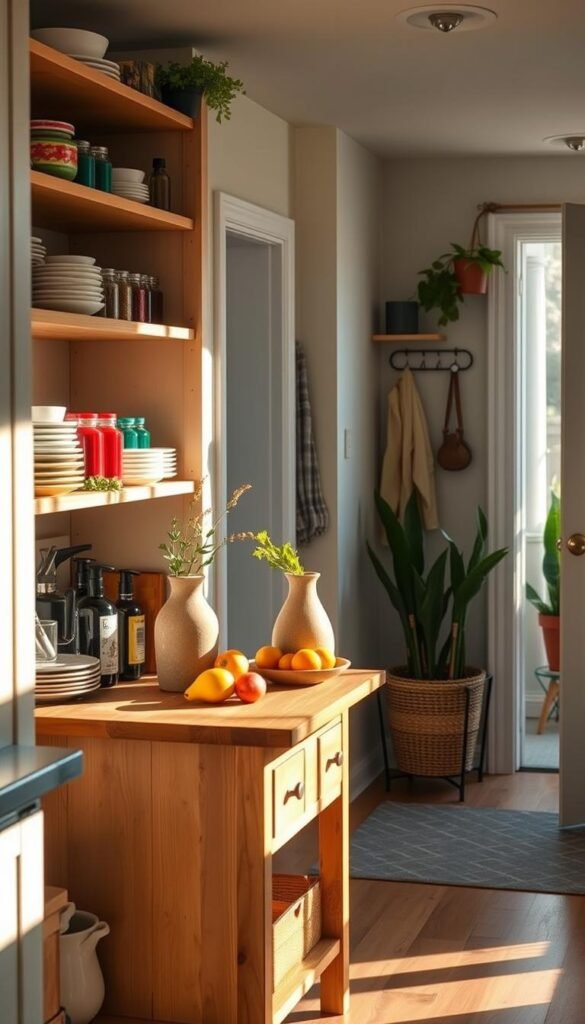
„A single edit—clear counters and one neat basket—often makes a home feel larger and easier to live in.“
Smart storage decor that keeps small rooms from feeling crowded</h2>
Pick storage that doubles as styling so clutter becomes part of the design. Choose pieces that hide or corral items while improving flow. This turns overflow into a considered layout choice, not an eyesore.
Quick buying guidance:
- Rolling carts — ideal in bathrooms and compact kitchens. Check width to fit between fixtures, wheel quality, and rust resistance in humid areas. Move the cart away when guests arrive.
- Closet shelf systems — add shelves under hanging garments to keep shoes and bags off the floor and out of sight.
- Two-tier mantel and floating shelving — add vertical display without losing floor room. Edit groups and keep similar objects together to avoid cluttered shelves.
- Hidden or disguised storage — flush doors, ottomans with compartments, and built-in cabinets keep seasonal items tucked away; label bins to prevent junk accumulation.
| Solution | Where it fits | Buyer checks |
|---|---|---|
| Rolling cart | Bathroom/kitchen | Width, wheel lock, rust-proof finish |
| Closet shelving | Under hanging clothes | Height under rod, shelf depth |
| Floating / two-tier | Above mantel or narrow wall | Studs/anchors, load capacity |
Simple organization rule: store by frequency — daily items at eye level, weekly higher, seasonal in labeled bins. This keeps the room tidy and routines faster.
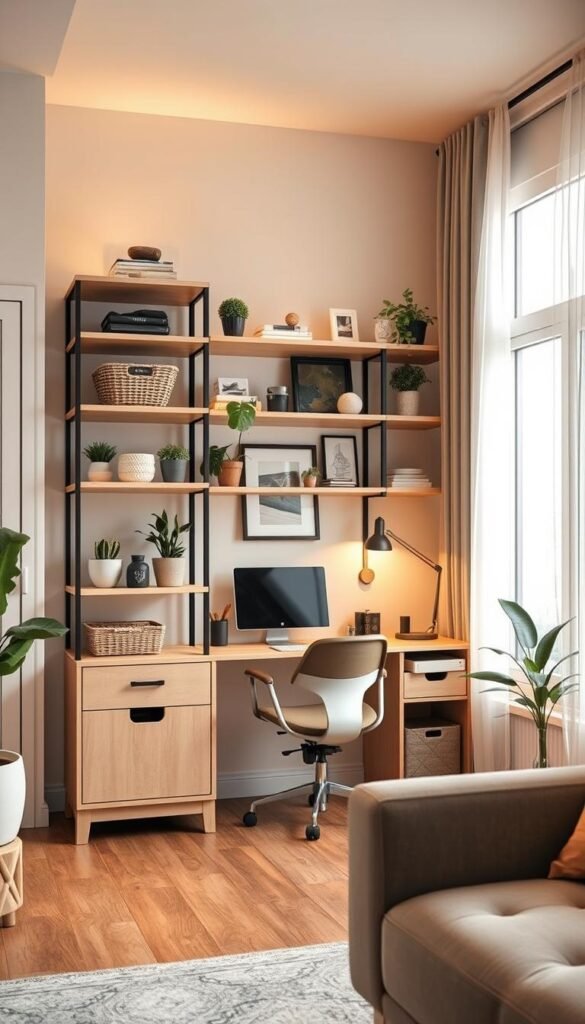
Find related bathroom shelving ideas at bathroom shelving ideas.
Corner and niche solutions that make studios feel custom</h2>
Many studios hide useful square footage in corners and alcoves that get ignored. Treat these areas as opportunities to add purposeful function without crowding the main room.
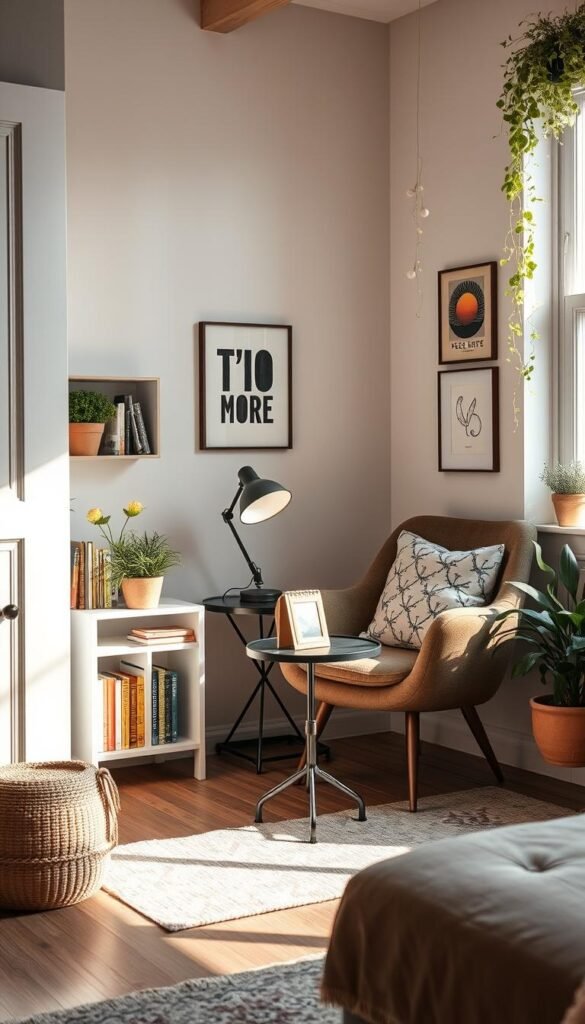
Quick renter-friendly fixes
Corner shelves, slim desks, and angled cabinets reclaim underused areas and slip in without anchors. These pieces are ideal when drilling is off the table.
Renovation-level options
Corner sinks and built-ins under arches create a seamless, custom feel. These need owner approval and trades but offer the cleanest long-term solution.
How to carve a micro nook
Measure width, depth, and outlet access before buying. Start with a compact desk and a chair, add one wall shelf, one task lamp, and a basket to hide supplies.
| Solution | Best for | Measure first |
|---|---|---|
| Corner desk | WFH residents | Width, depth, outlet |
| Built-in shelving | Owner upgrades | Wall stud location, depth |
| Reading nook (chair + lamp) | Book lovers | Seat clearance, lamp cord |
„A tight palette and scaled furniture make a niche read intentional, not crowded.“
Quick pros: custom feel, more usable floor area. Cons: overfurnishing can block paths and make a place feel cramped. Keep tones calm and elements scaled to the corner to preserve flow and good design.
Color and pattern strategies that don’t overwhelm a small room</h2>
A controlled palette can stop visual noise and make a compact room feel calm. Covering large items in a single hue reduces contrast breaks and keeps the eye moving across the space.
Monochrome moments that keep the eye moving
What it does: match a sofa or bookcase to wall tones to visually merge pieces and open the room. Best for: studios and one-room layouts that need cohesion.
White walls and ceilings to make a room feel bigger
Why choose white: it reflects light and brightens low-light rooms. Renters can use peel-and-stick removable film or decals as an alternative to paint.
When bold wallpaper works better than more furniture
Use wallpaper on a single vertical plane to add personality without taking up floor area. Pros/cons: high impact but harder to remove; choose peel-and-stick if renting.
Using a neutral rug to ground mixed decor objects
A neutral rug ties varied objects together and hides wear when it has a subtle pattern. Look for fade resistance and washable or low-maintenance fibers for sunny rooms.
- Quick buyer checks: request samples, check washability, and confirm fade ratings.
- One-move rule: pick paint, wallpaper, or rug—don’t stack multiple strong statements at once.
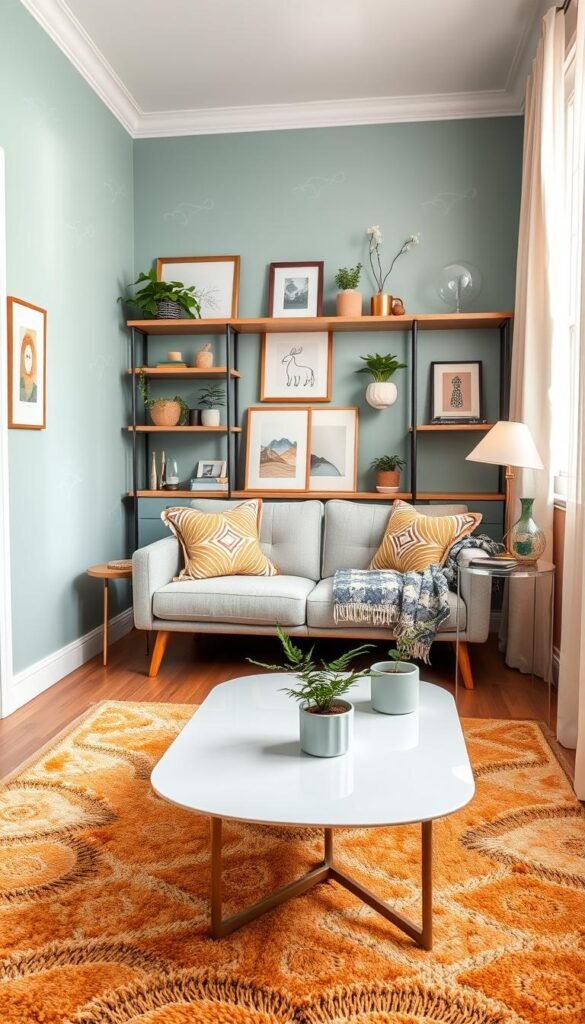
„Choose one statement move to change how the room reads; keep supporting elements quiet.“
Small balcony, porch, or patio summer decor that won’t feel cramped</h2>
Outdoor spots can feel crowded fast; pick each item so it earns its footprint. A single statement planter and one seating piece usually reads cleaner than several small pots. This keeps the porch open and usable for daily life or a quick cup of coffee.
Vertical planters and sculptural pots
Why they work: vertical planters lift greenery off the floor and free walking room. Sculptural pots add visual interest without many individual pieces.
Best for: renters and anyone with a narrow balcony. Stability note: choose planters with low centers of gravity and secure rail fasteners; avoid lightweight pots that tip in wind.
Seasonal wreaths with greenery and hydrangea-style blooms
Why choose them: wreaths add curb appeal with almost no floor impact. Faux greenery with hydrangea accents stores flat and can be reused year after year.
Best for: non-hosts who want a quick visual lift. Storage note: stash wreaths in a box or hanging bag to protect them from dust and pollen.
Table-ready outdoor dining checklist
Keep a compact table setup simple: thin placemats, one live centerpiece (small potted herb), and wipeable materials that resist spills and sun.
- Who: casual diners and those who host one or two guests.
- Durability: choose UV-resistant fabrics and coated placemats.
- Pros/cons: pro—easy to set up; con—outdoor textiles can fade over time.
Bar-stool-as-bar-cart trick
Use a sturdy bar stool topped with a removable tray as a compact bar cart. Keep bottles and glasses in a single contained zone and move it inside after entertaining.
Best for: occasional hosts who need a mobile solution. Storage note: a single stool stores easily and passes through narrow doors.
| Item | Best for | Storage & care |
|---|---|---|
| Vertical planter | Renters, narrow balconies | Hang/lean; check wind stability; empty to store |
| Wreath (faux) | Non-hosts, low-maintenance | Flat storage box; dust occasionally |
| Bar-stool + tray | Occasional hosts | Bring indoors after use; wipe clean |
Buyer considerations: weather resistance, whether items pass through narrow doors, and off-season storage. Keep restraint: one sculptural planter plus a single seating piece and a pared-down table setup usually fits the limited space best.
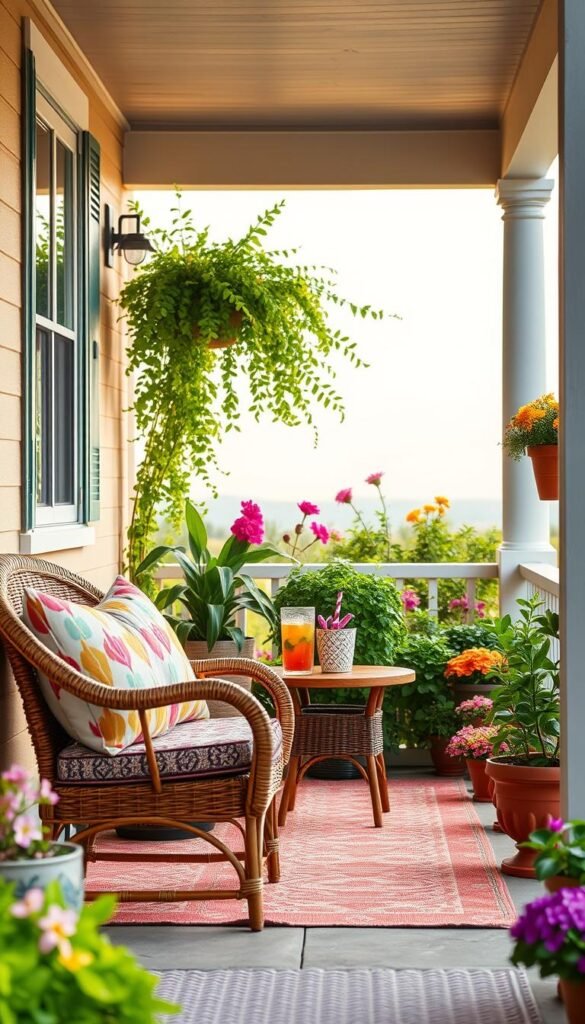
See practical balcony styling ideas to expand these low-footprint suggestions.
Micro-upgrades that deliver “summer vibe” fast (and store easily)
When time and storage are limited, micro-upgrades give visible results with very little commitment. These are low-cost moves that work as the final layer after decluttering and layout fixes.
Swap in summer scents. Choose coconut, citrus, ocean, or light florals in candles, diffusers, or cleaners. Best for: renters and busy people who want an instant mood shift.
Pros: fast impact and easy to stow.
Cons: fragrance sensitivities—pick cleaner, low-throw options.
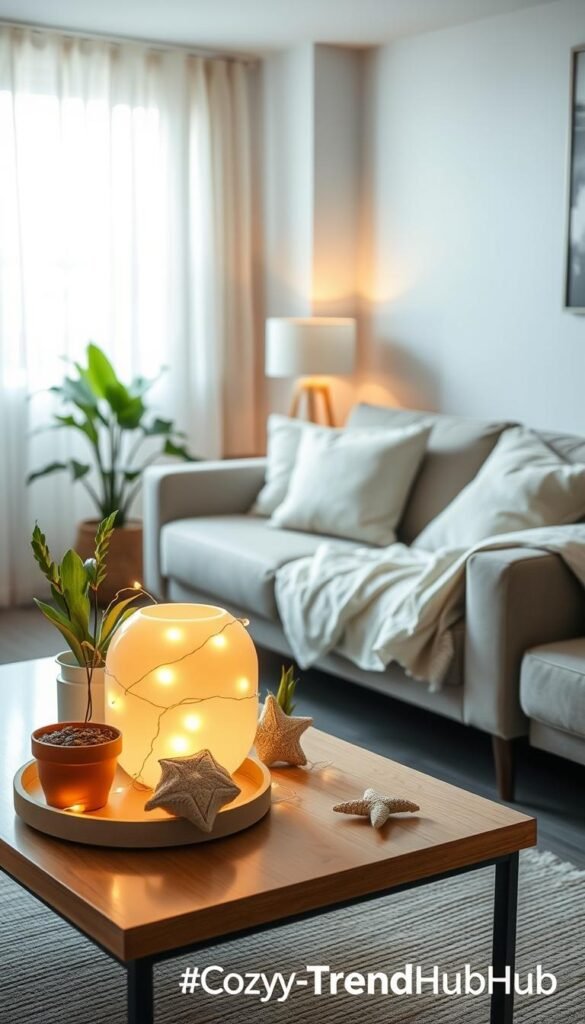
- Citrus bowl for the kitchen: a bowl of lemons, limes, or oranges brightens counters without clutter. Best for a quick visual pop. Con: fruit can spoil and attract insects if not refreshed.
- Seasonal photo swaps: change one shelf or frame to reflect current light and mood. Best for small displays; requires printing but stores flat.
- Lightweight bedding: linen or cotton sheets and thin throws keep a bed cool on hot nights. Best for bedrooms that trap heat; check wash instructions before buying.
Quick buyer checks: candle burn time and throw, diffuser refill size, bedding care labels, and container size so the upgrade does not add visual weight. Store extras in one bin or slim drawer.
„Tiny edits take minutes and can change how a home feels without adding clutter.“
| Upgrade | Who it suits | Storage note |
|---|---|---|
| Scents (candle/diffuser) | Renters, time-poor households | Small box; keep lids |
| Citrus bowl | Kitchen counters needing color | Refill weekly; store bowl in cabinet |
| Seasonal photos | Shelf displays, renters | Flat storage in portfolio or bin |
| Light bedding | Warm sleepers, small bed rooms | Fold flat; label for off-season |
Pros/cons summary: scents and citrus are instant but may need frequent refreshes; photos are personal but need printing time; bedding improves comfort but requires off-season storage. These moves cost little, take little time, and store easily—ideal as the finishing touch on a tidy, functional home.
How to compare products before you buy (for affiliate blocks and tables)
A clear, repeatable comparison framework helps shoppers turn inspiration into confident purchases.
Measurements to check
Always capture exact numbers before ordering.
- Footprint (W × D): list in inches to verify floor or shelf fit.
- Height: note total and usable height beneath or above the item.
- Clearance paths: drawer swing, chair pull-out, door swing, and walking lanes.
Materials and care
- Washable covers (pillow and seat), fade resistance for sunny windows, and wipeable finishes.
- Rust resistance for carts and moisture-prone zones; fabric durability for family and pets.
Renter risk check
- Installation type (adhesive vs. anchored), published weight limits, wall-surface compatibility, and removability claims.
- Are replacement parts available? Note warranty and return windows.
“Best-for” guidance and pros/cons template
Tag products for guests, family use, pet households, or WFH setups. Use a short pros/cons card:
- Pros (3): function, compact footprint, easy care.
- Cons (2): maintenance needs, storage or install tradeoffs.
| Field | Example | Why it matters |
|---|---|---|
| Footprint | 30″ × 18″ | Prevents overcrowding in a tight room |
| Installation | Peel-and-stick hook | Renter-safe but check lb limit |
| Best-for | Guests / WFH | Clarifies intended use and tradeoffs |
Final buyer step: measure twice, confirm returns and warranty, and make sure the item replaces an existing piece to avoid extra clutter.
Conclusion</h2>
End with a focused plan: pick one area, clear it, and add two purposeful pieces that earn their footprint. This keeps the space bright, the home uncluttered, and the overall design calm. Use light tones and reflective surfaces to boost natural light and breathing room.
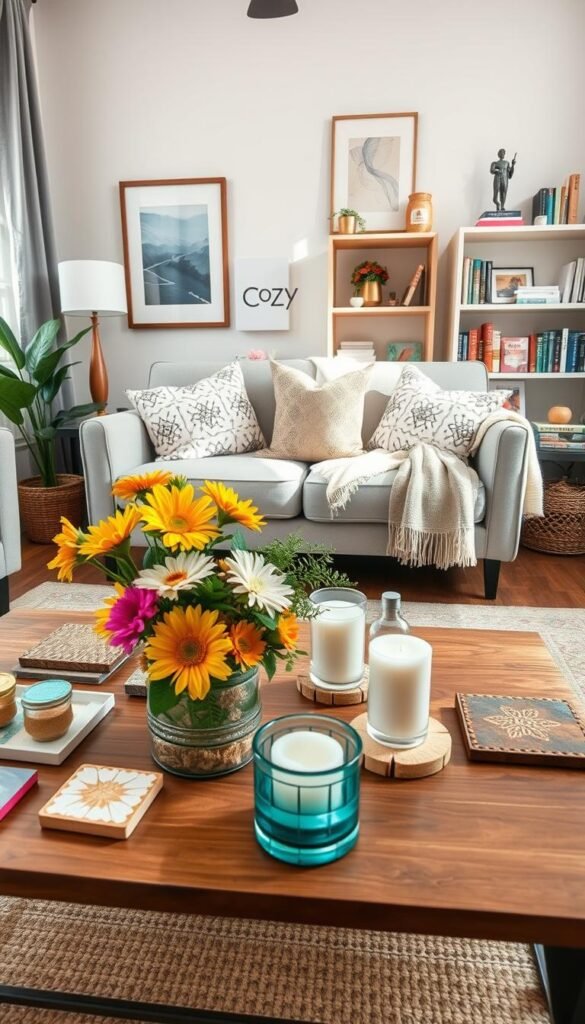
Fast wins: in the living room swap pillow covers and a lighter rug; in the kitchen clear counters with organizers and add one seasonal accent. Replace excess objects on a coffee table with a single tray to simplify styling and save time.
Buyer tips: choose removable wall pieces, high-hung hooks within safe limits, and window treatments that maximize light without permanent changes. Use the product comparison checklist to confirm measurements, care, and renter risk before purchase.
Keep a weekly edit habit: clear surfaces, store extras in one bin, and rotate photos or textiles. Small, storable ideas done well will make daily living easier and keep every corner of the home useful and calm.