
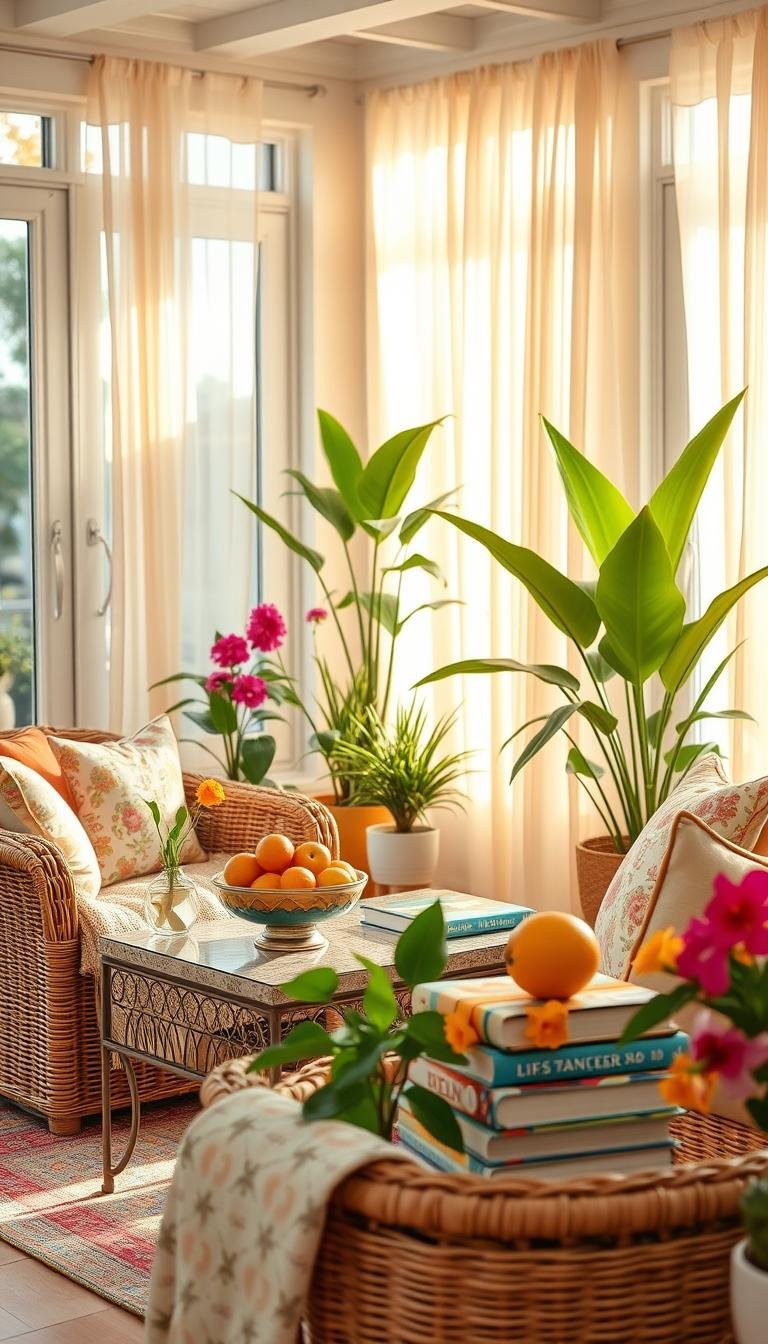
After a long winter, many spaces feel heavy, dim, and cluttered. This introduction outlines a clear, practical path to lighten a home without major work. Readers will find renter-friendly, small-space focused solutions that improve light, airflow, and mood.
The guide targets the common problem: darker rooms, thick textiles, and layouts that resist warm-weather living. It promises a compact list of swaps and styling moves that lift brightness and create better airflow. Each suggestion explains who benefits most — renters, north-facing rooms, or balcony owners — and what to buy or skip.
The piece previews a cohesive approach named the best summer decor mix: a pared palette and repeatable natural materials to make small spaces feel intentional. Recommendations focus on real value, with clear notes on care, durability, and storage for seasonal items.
Expect practical swaps: curtains, linen bedding, lightweight rugs, breathable pillows, brighter lighting, easy greenery, and smarter entries. The tone stays factual and helpful to support quick comparison and confident purchases for U.S. homes and apartments.
Key Takeaways
- Find quick wins that brighten rooms without renovations.
- Choose lightweight textiles and natural materials for airflow.
- Each idea includes who it suits and what to avoid.
- Prioritize renter-friendly, small-space options with easy storage.
- Look for durability, care needs, and value before buying.
How to choose summer decor ideas that actually brighten a home
Many homes keep winter habits that make a space look darker than it needs to be. The problem is simple: dark textiles, heavy drapes, and layered throws block both sun and airflow.
Start with a quick assessment: note which pieces block windows, which fabrics trap heat, and where clutter collects. This frames a clear, renter-safe plan without renovation.
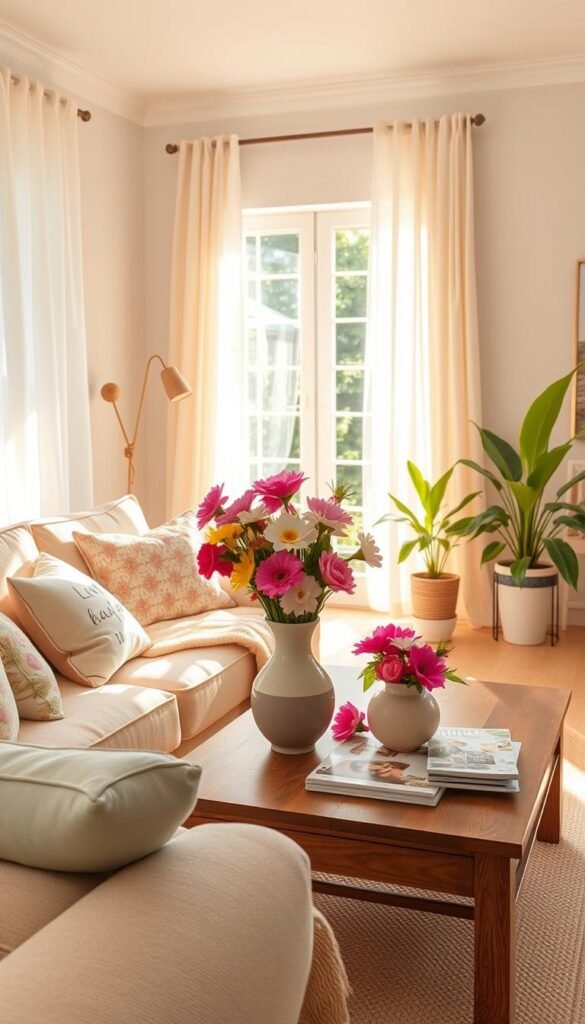
Problem and practical checklist
- Remove heavy drapes and thick throws that absorb light.
- Increase reflectivity with whites and soft neutrals.
- Add breathable textures like linen and cotton.
- Declutter surfaces to open sightlines and improve airflow.
Renter rules and small-space strategy
Prioritize swaps that are removable: slipcovers, pillow covers, lightweight curtains, rugs, and plug-in lighting. Use peel-and-stick hooks for vertical accents.
Choose two to three high-impact pieces per room — one textile, one tabletop accent, and one vertical element such as a mirror. This avoids crowding while boosting visual and actual light.
„Invite as much light as possible“ — prefer mirrors and sheer panels to welcome natural light.
Decisions should favor cleanability, sun-fade resistance, and flat storage. For further seasonal ideas and easy implementation, see seasonal refresh tips.
Best summer decor mix for renters and small spaces
A focused approach makes seasonal updates simple in a compact home. Start with one neutral base and a single accent family so rooms feel linked rather than cluttered.
Color plan that travels through the home
Base: white or off-white for walls and large textiles.
Accent: pick a controlled family—sea-glass green, pale coral, or sunny citrus—and use it sparingly in cushions and small art.
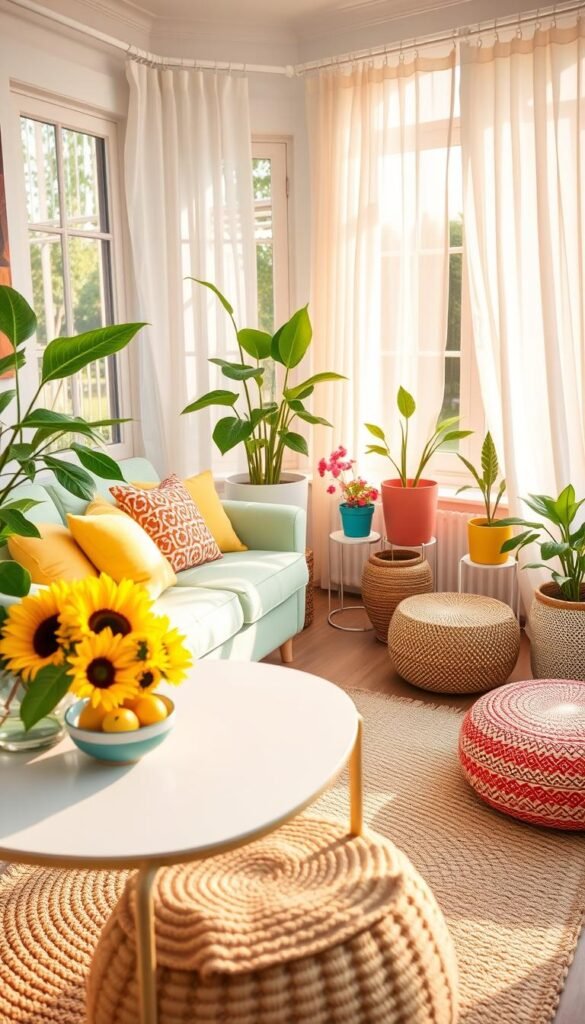
Go-to materials that read like summer fast
Repeat a short list of materials across rooms: linen, jute or sisal, rattan, and light-wash wood. These elements keep the overall style calm and easy to pack at lease end.
Where to spend and where to save
- Spend on daily comfort: linen bedding, lightweight curtains, and a quiet fan.
- Save on trend accents: pillow covers, tabletop pieces, and seasonal baskets.
„Repeat one wood tone and one weave type across rooms to avoid mismatch.“
For shopping ideas and practical examples, see this small-spaces guide.
Lighten the room with white and soft neutrals
When a room lacks sun, simple swaps to white and soft neutrals can open sightlines and mood. This approach works well in a shaded living room or a north-facing bedroom where light is limited.
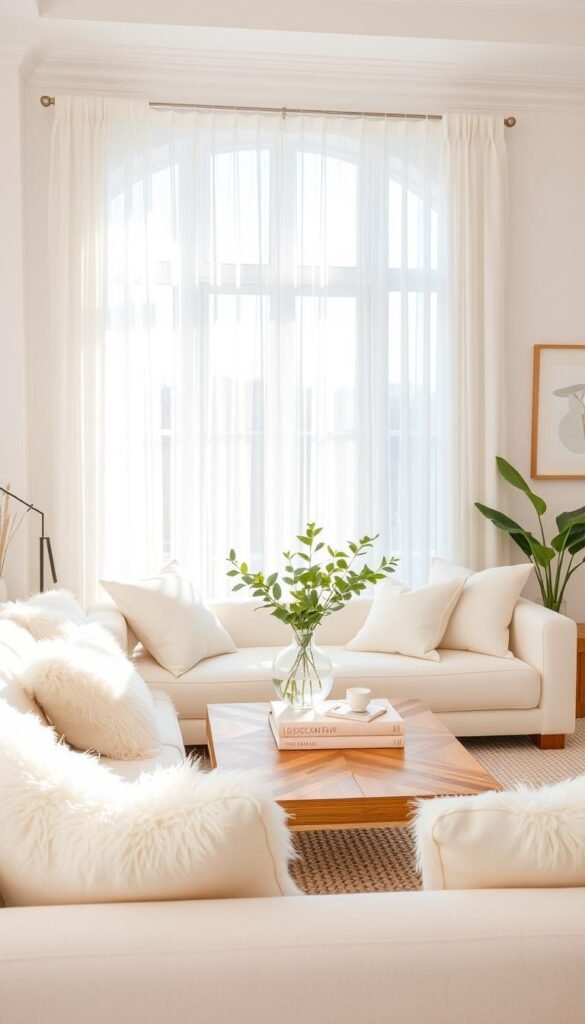
Why it helps: Pale walls, textiles, and rugs reflect what light is available. Tamsin Johnson’s „keep it light with white“ idea and Parachute’s note on white bedrooms both show how pale surfaces make spaces feel airier without remodeling.
Renter-friendly swaps and buying tips
Choose washable sofa slipcovers and neutral pillow covers instead of a full upholstery change. Opt for lighter-toned rugs that lift the floor plane but can be rolled and stored.
- Slipcovers: machine-washable, correct fit (box vs. T-cushion), and a linen-look cotton that resists heavy wrinkling.
- Undertones: warm whites (cream or sand) pair better with wood; cool whites read crisp and can feel stark under warm bulbs.
- Paint finish: eggshell reflects more light than matte but will show wall flaws—check lease rules before painting.
Tradeoffs: Neutrals are versatile and easy to layer, yet they reveal spills and need more frequent washing in high-traffic rooms. Still, for renters they offer the quickest route to a brighter look with minimal commitment.
Swap in breathable linen bedding for hot summer nights
Hot nights and leftover winter blankets often make a bedroom feel stuffy and restless.
Solution: trade heavy layers for lightweight, breathable bedding. Choose either linen for a relaxed, airy feel or percale for a crisp, hotel-like sheet set.

Linen vs. percale: who each fabric is best for
- Linen: ideal for hot sleepers and humid climates. It breathes, wicks moisture, and softens with every wash.
- Percale: suits people who prefer a cool, smooth surface and immediate crispness on the bed.
What to look for: weave, weight, care, and color
Check the weave and weight—lightweight linen or percale (around 200–300 thread count equivalent) works best in peak heat. Expect linen to wrinkle; machine washes make it softer over time.
Color tip: white or off-white brightens a room quickly. Pale pastels add subtle color without warming the palette.
Pros and cons for renters
- Pros: seasonal bedding compresses for compact storage, refreshes a small bedroom fast, and moves easily between units.
- Cons: linen can cost more and feel textured at first; percale may feel too crisp for those who want plush softness immediately.
„Swap heavy bedding for breathable sheets to improve sleep and cool the room more quickly.“
Hang sheer or lightweight curtains to maximize natural light
Windows are the room’s lungs—treat them so air and sun can circulate freely. Heavy drapes often darken rooms and trap warmth, which feels worse in hot weather.
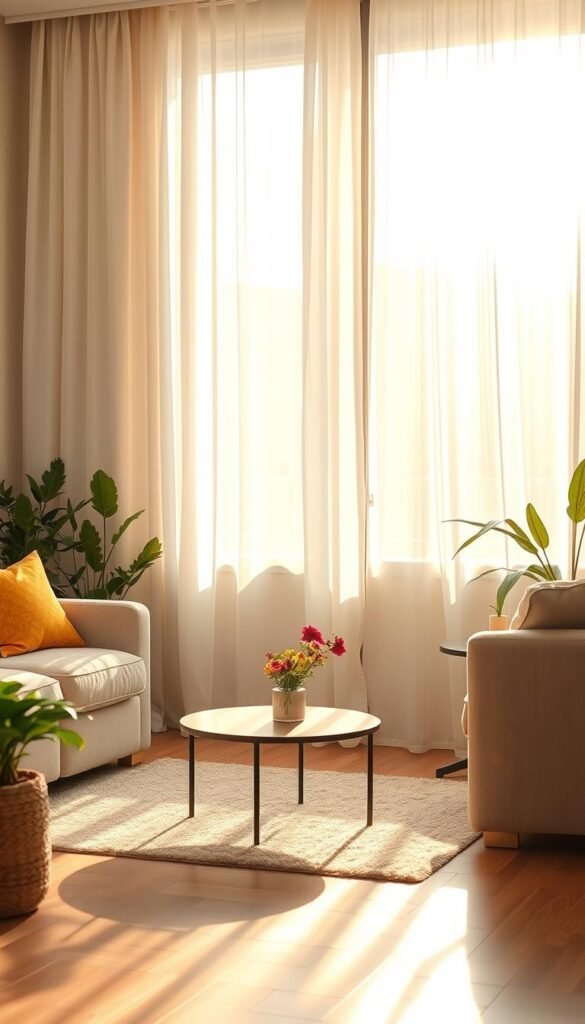
Practical solutions by need
Sheers let the most light in and cost less. Linen panels filter sun and add privacy. Tie-up shades work well in small kitchens or windows with a short sill.
Measuring and no-drill hanging
- Measure width beyond the frame to reduce light gaps and make windows feel larger.
- Choose longer panels to visually raise the ceiling.
- No-drill options: tension rods, adhesive brackets for lightweight rods, or twist-and-fit rods for rentals.
Buying considerations and tradeoffs
Pick opacity—sheer vs. semi-sheer—based on privacy needs. Opt for washable fabrics for pollen season. Polyester sheers are inexpensive; linen blends look refined but may wrinkle and sometimes need liners.
„Rod + panels + clip rings“ is a simple bundle to adjust height without hemming.
For curtain shopping that suits renters, see this curtain guide.
Add decorative pillows and swap cushion covers for instant color
A neutral sofa can feel anonymous once the weather warms and routines change. Decorative pillows provide a quick, renter-friendly refresh that requires no furniture purchases.
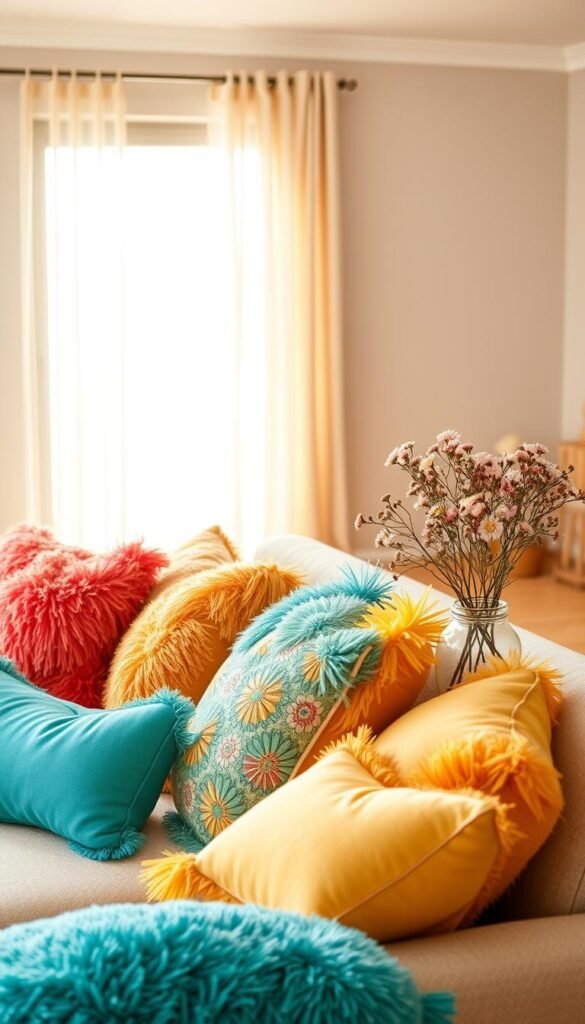
Who benefits: neutral sofas, studio apartments, and hosts who need a fast way to update before guests arrive.
Patterns and scale that work in small rooms
Choose one larger-scale pattern—stripe or floral—and pair it with solid covers. This keeps the sofa lively without making a small room feel busy.
Buying considerations: covers, inserts, and sun resistance
Prioritize zippered, washable covers in cotton or a linen blend. For inserts, use down-alternative for allergies and feather for a relaxed flop.
| Feature | Recommended | Why it matters |
|---|---|---|
| Cover fabric | Cotton/linen blend | Breathable, washable, crisp color |
| Insert | Down-alternative / feather | Allergy-safe or plush comfort |
| Sun-fade | Solution-dyed acrylic | Resists fading on bright windows or porches |
Practical tip: store spare covers flat in a tote for easy seasonal swaps. For buying ideas and ready-to-use options, see seasonal throw pillows.
Tradeoffs: covers are affordable and compact to store, but cheap zippers and thin fabric can look limp. Investing in quality inserts pays off across seasons.
Bring in summer flowers and easy greenery to liven up any room
A single vase on a table brings color and life that furniture swaps rarely achieve. A living element solves the common problem: rooms can feel stale in warm months, especially in rentals where big changes aren’t allowed.
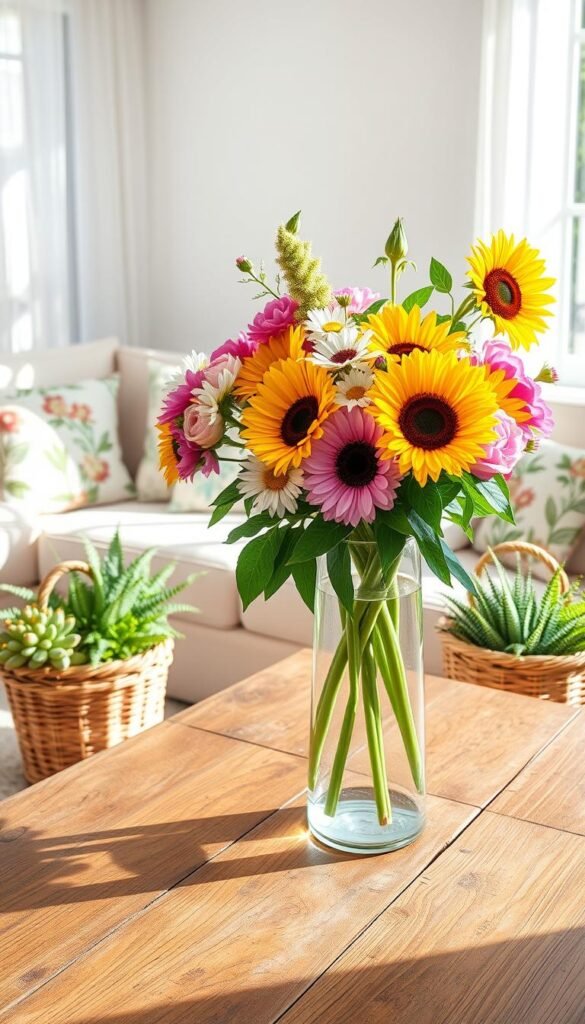
Fresh-cut vs faux: routine and budget tradeoffs
Fresh flowers give scent and a lively focal point. They suit weekly routines and kitchen tables that get daily use. Expect a small, ongoing cost and basic care—trim stems and change water.
Faux saves money over time and fits erratic schedules or allergy concerns. Dusting replaces watering, and high-quality stems can read very natural.
Low-maintenance plants for limited light
Pick resilient options for apartments: snake plant, pothos, and ZZ plant do well in bright indirect light and tolerate forgetful watering. Place one small pot in a bedroom or on a narrow shelf to add a green touch without crowding surfaces.
Vase and planter picks for small tables
Choose narrower vases (6–8″ tall, 2–4″ mouth) for narrow tables and wider, low bowls for coffee tables. Clear or light-colored vessels keep arrangements feeling airy and minimize visual weight. Give priority to a stable base to avoid tipping.
„Start with one bloom or one pot to test routine and light before adding more.“
- Pros: plants and flowers boost perceived freshness and add color.
- Cons: live plants need water and occasional pest checks; faux needs dusting.
- Starter idea: one clear vase, one small planter, and a tiny watering can or plant food for an easy bundle.
Use citrus bowls and bright tabletop accents for a quick kitchen refresh
A simple bowl of citrus can change a kitchen’s mood without taking up prep space. It adds color, scent, and function all at once.
Problem: winter styling can leave counters looking dull, yet extra items quickly become clutter in small zones.

Quick solution: place a shallow bowl of lemons or oranges on one clear surface. The bowl acts as usable storage and a visual accent, so it never feels like extra stuff.
Who this helps: small kitchens, open-plan living where the counter is always on display, and renters seeking a zero-install refresh.
- Buying tip: pick a shallow, easy-to-clean bowl—ceramic, clear glass, or light wood—sized so it doesn’t block chopping space.
- One-surface rule: limit accents to one counter or table zone: bowl + one small vase or a bright dish to avoid clutter.
- Style note: choose a bowl color that echoes an accent used elsewhere to keep the room cohesive.
Pros: fresh fruit looks lively and invites healthy snacking. Cons: fruit needs replacing; artificial pieces avoid waste but may read less natural.
For visual examples and tabletop inspiration, see a styled citrus vignette and curated table ideas at a citrus styling post and this tabletop ideas guide.
Add a natural-woven rug to change the whole look of a space
A well-chosen woven rug brightens floors and defines a seating area without major work. It solves a common problem: heavy rugs or dark flooring can make a room feel warmer and visually heavy in warm months and high-traffic zones.
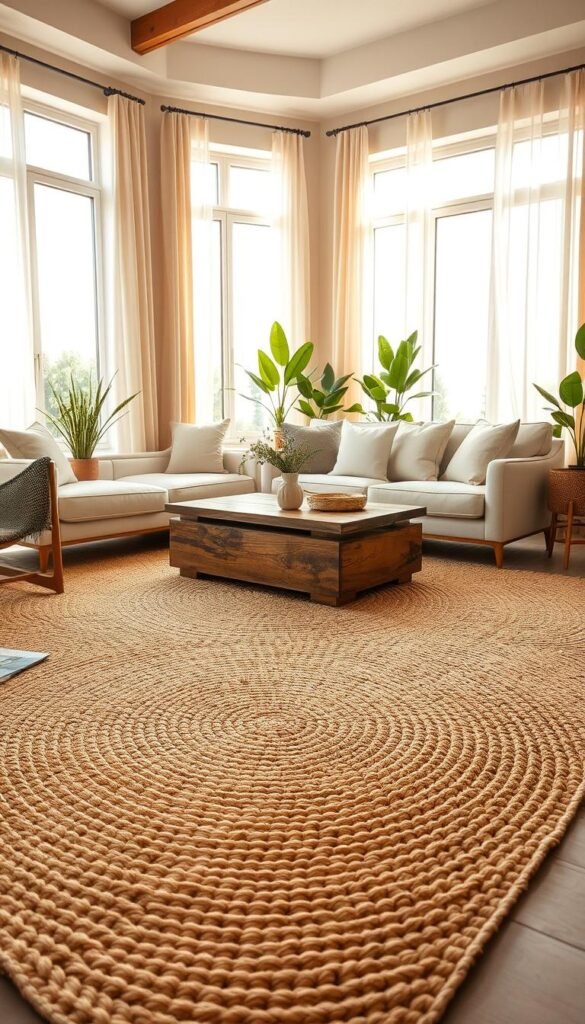
Solution: swap to a natural-woven area rug to add subtle texture, reflect light, and anchor furniture in a compact living room or dining area. These rugs read neutral and layer easily over existing floors.
Jute vs. sisal: texture, durability, and cleaning realities
Jute feels softer underfoot and looks casual. It suits low- to medium-traffic seating areas and lends warmth to a space.
Sisal is more structured and durable. It stands up better in higher-traffic entryways and dining zones but can feel rougher to bare feet.
| Attribute | Jute | Sisal | Practical note |
|---|---|---|---|
| Texture | Soft, relaxed | Firm, coarse | Choose jute where comfort matters; pick sisal where durability wins |
| Durability | Moderate | High | Sisal tolerates heavy foot traffic better |
| Cleaning | Stains quickly; blot promptly | Resists wear; can trap dirt in weave | Use a pad and quick blotting for both |
| Best placement | Living room seating, low-traffic areas | Entryways, dining areas, high-traffic halls | Layer a washable runner in dining spots if spills are likely |
Buying considerations and renter pros/cons
Look for a non-slip rug pad and a low-profile backing to prevent shifting and protect floors. Size the area rug so furniture legs either sit fully on the rug or the front legs anchor it—this defines a seating grouping.
Cleaning realities: natural fibers can stain if spills sit. Prompt blotting and a rug pad help. In dining areas, consider a removable top layer or a tighter weave to limit snagging.
- Renter pros: anchors furniture, hides worn floors, and moves easily between homes.
- Cons: sheds at first; can snag with pets or heavy-duty use. Households with frequent spills may prefer a layered washable rug over the natural weave.
For a deeper look at scale and how a larger rug can change a room, see how a 10×14 rug can transform a.
Bring in earthy textures like rattan and wood for a breezy summer feel
A single woven piece can shift a space from flat to layered and breezy.
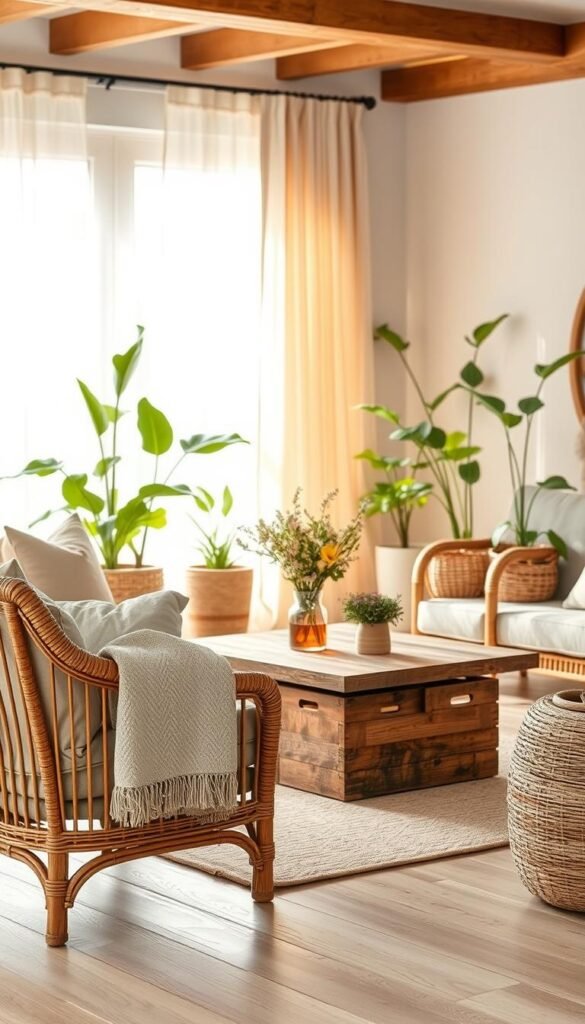
Choose one or two functional pieces that earn their footprint. Look for lidded baskets to stash throws and gear, a slim wood side table for a lamp or drink, a tray to corral a coffee table, or a woven pendant to soften overhead light.
Top product picks for small spaces
- Lidded rattan baskets — store blankets and hide clutter while adding texture.
- Light oak side table — narrow footprint, stable surface for a lamp or plant.
- Serving trays (woven or wood) — keep small items tidy and easy to move.
- Woven pendant or sconce shades — diffuse bulbs and add a breezy look.
Buying considerations
Check weight and finish. Renters benefit from pieces that are easy to move and have sealed wood to resist water rings.
Inspect weave tightness. Looser rattan can snag fabric or pet fur and catch dust more easily.
| Item | What to check | Renter-friendly tip |
|---|---|---|
| Lidded basket | Snug lid, tight weave, handles | Choose lightweight sets for stacking and easy storage |
| Side table | Finish seal, leg protectors, compact diameter | Pick one with felt pads to protect floors |
| Tray | Flat base, low profile, non-slip surface | Use as a movable staging surface to reduce clutter |
| Woven lighting | Tight weave, UL-listed, easy-clean finish | Install with a plug-in kit if hardwiring is not allowed |
How to keep it cohesive: repeat a finish tone—light oak or honey—across two rooms so the style reads intentional.
„Woven pieces add warmth and airiness, but they do collect dust; plan quick vacuum or wipe routines.“
Pros: earthy materials add tactile interest and functional storage. Cons: they can snag, be heavier than expected, and need dusting.
Affiliate suggestion: consider a starter bundle: a 3-piece basket set, a woven tray, and felt pads to protect rental floors.
Create summer wall decor with mirrors, floating shelves, and memories
Vertical updates turn empty walls into useful, light-catching surfaces that change a room instantly.
Small rooms often lack floor space for accents, and renters avoid permanent changes. The simple solution is to work up the wall: mirrors to reflect light, narrow wood shelves for purposeful styling, and lightweight gallery walls for personal touches.
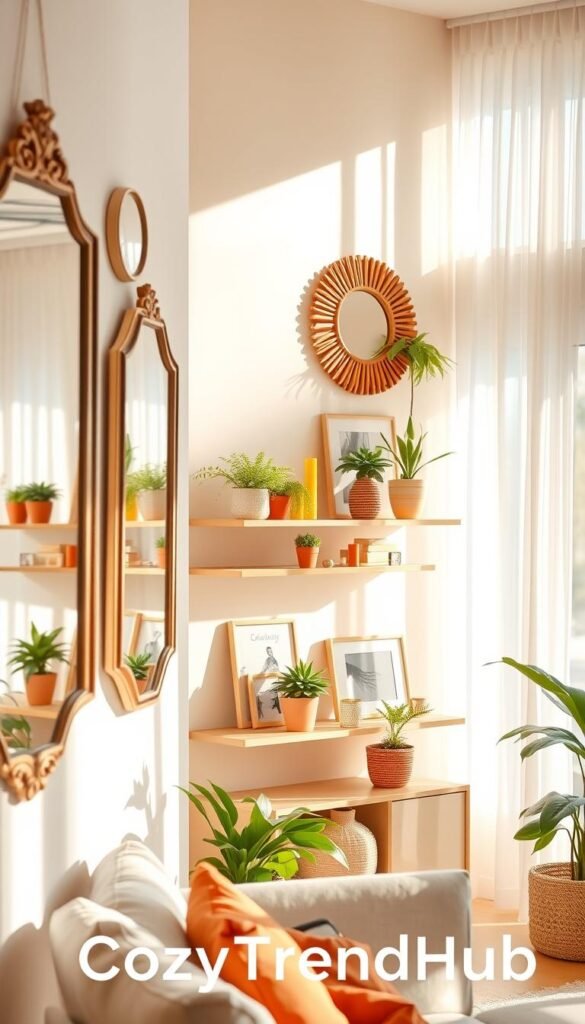
Mirror placement to reflect light and make a room feel bigger
Place a single large mirror opposite or adjacent to a window to amplify daylight. Size matters more than quantity; pick a mirror that fills a wall section rather than several small ones.
Wood floating shelves for small-space styling
Choose shallow shelves (8–10″ depth) in a matte wood finish for a clean look. Style with a capsule set: two books, a small plant, and one tray to avoid visual clutter.
Gallery walls with postcards and photos: renter-safe hanging options
Use removable picture strips, tiny nails where allowed, or lean frames on shelves. Check weight limits on strips and test compatibility with your wall surface.
„Limit items per shelf and prefer one mirror to multiple mirrors for a clearer sense of space and light.“
| Item | Key spec | Renter tip |
|---|---|---|
| Mirror | Size: 24–36″ wide; Frame: matte or thin metal | Hang with two anchors or lean to avoid holes |
| Floating shelf | Depth: 8–10″; Weight rating: 15–25 lb | Use wall anchors rated for drywall or removable brackets if needed |
| Hanging hardware | Removable strips vs small nails; weight limits listed | Choose strips for most rental walls; reserve nails for allowed studs |
Compare by mirror size, shelf depth/weight rating, and included hardware before buying. For more ideas on seasonal wall updates, see a curated list at summer styling ideas.
Refresh your entryway with a painted front door and a lighter doormat
Your entryway sets the tone for the whole home; a small change at the door can make the rest of the space feel fresher.

Choosing a door hue that complements the exterior
Pick a color that works with fixed elements like brick, siding, trim, and roof tones. Vibrant choices—yellow, red, or turquoise—read lively when they harmonize with stone or neutral siding.
Practical rule: test a swatch in daylight and view it from the street before buying a full can.
Doormat materials: thin, quick-drying, and easy to shake out
Swap heavy winter mats for thinner, quick-dry options that don’t trap moisture. Lighter tones lift the visual weight at the threshold.
- Choose coir blends or textured rubber with low pile for fast drying.
- Look for mats you can easily lift and shake or hose off.
- Match the mat tone to an indoor runner or basket for cohesion.
When to paint and what renters should do instead
Homeowners can repaint a front door for high impact—use exterior-grade paint and the right finish for durability. Confirm HOA rules first.
Renters should avoid permanent changes. A lighter mat, a new wreath, or a painted removable door hanger gives a similar lift without approval delays.
For paint how-tos, see a practical front door refresh guide. For broader summer decor ideas, see this quick resource at cozytrendhub.
„Paint makes a statement but takes time and approval; a mat swap is fast, renter-safe, and still effective.“
Make a patio or porch feel like an outdoor living room
A practical plan turns a patio into a usable living area with clear zones and weather-ready pieces.

Many patios and porches sit unused because seating is mismatched, lighting is harsh, or the layout blocks flow. Treat the space like a small living room: zone for lounge and dining, keep a clear walkway, and choose hardy materials.
Layout fixes for balconies
- Place a slim bench or two compact chairs and a small bistro set to create separate lounge and dining zones.
- Anchor each zone with an outdoor rug or low tray table so the space reads intentional.
- Leave a 24–30″ path for safe movement and service access.
Outdoor lighting
Use lanterns and string lights to add warm evening light. Compare solar vs. plug-in: solar saves wiring but dims on cloudy days; plug-in gives steady output and supports higher-lumen bulbs.
Pros and cons; storage & furniture prep
Outdoor rugs define zones and add comfort but can trap moisture. Choose quick-dry, breathable weaves.
Weatherproof cushions improve comfort; store them in a small deck box or stackable bin to prevent mildew.
| Item | Buying note | Renter tip |
|---|---|---|
| Rug | Polypropylene, quick-dry | Roll and hang to dry; choose reversible patterns |
| Cushions | Solution-dyed covers, quick-dry fill | Use a lightweight deck box or tall basket for storage |
| Painted furniture | Prep for rust, use outdoor-rated spray or brush paint | Paint only sturdy frames you plan to keep; test a small patch first |
„Paint is an easy way to unify mismatched furniture, but prep and finish matter more than color.“
Add a bar cart or drink station for summer entertaining in tight spaces
Entertaining in tight quarters often trips over one simple problem: drinks and glassware crowd the dining table and interrupt flow.
A compact bar cart or a slim drink station creates a dedicated footprint. It keeps bottles, glassware, and tools off the main table and gives hosts one place to stage service.

Who benefits
Best for: apartment balconies, small patios, and homes that want easy indoor-outdoor flow. A cart frees up seating and protects fragile stemware from crowded surfaces.
Buying considerations
- Materials: choose powder-coated metal, treated teak, or all-weather rattan for outdoor use to resist rust and sun damage.
- Wheels: pick casters with a locking mechanism and larger wheels if thresholds or uneven paving are present.
- Shelf height: ensure the middle shelf fits tall bottles. A practical height range is 10–12″ between shelves for most spirits and mixers.
- Width and clearance: aim for a cart under 24″ wide for narrow walkways; measure door clearance before ordering.
Space planning and measurements
Measure walkway width and leave 18–24″ clear beside the cart when it is parked. For console-style setups, a depth of 12–14″ keeps the footprint slim while still holding glasses and a small ice bucket.
| Feature | Recommendation | Why it matters | Buyer note |
|---|---|---|---|
| Material | Powder-coated metal / teak / all-weather rattan | Durable outdoors; resists corrosion and UV | Choose teak for warmth; metal for modern looks |
| Wheels | 2″–3″ locking casters with rubber tread | Smooth roll over thresholds; locks for stability | Test on a similar surface if possible |
| Shelf spacing | 10″–12″ vertical clearance | Fits standard bottles and glassware | Adjustable shelves add flexibility |
| Footprint | <24″ wide, 12″–14″ deep | Fits narrow patios and tight indoor spaces | Measure doorways and aisles first |
Pros and cons
- Pros: adds function and style, rolls away when not in use, and creates a clear serving zone.
- Cons: can become clutter if not curated; some materials still require storage in harsh weather.
„A dedicated drink station keeps the table for dining and preserves flow between indoor and outdoor zones.“
For a united look, match the cart’s finish to nearby furniture and use a removable tray or hook-on ice bucket for handling. Thoughtful design choices make a small serving cart a reliable summer host tool.
Cool and scent the space with ceiling fans, candles, and diffusers
Small air and scent updates fix the two things that often leave homes feeling sticky and stale.

Ceiling fans: what to check before you buy
Problem: warm weather can make a home feel hot even with lighter textiles.
Match blade span to room size and check the airflow rating (CFM). Look for quiet motors for bedrooms and a reversible motor for seasonal use.
- Blade span: 36″ for small rooms, 52″ for living areas.
- Airflow & noise: higher CFM with low sones is best.
- Installation: confirm the ceiling box and landlord permission for rentals.
Summer scents to try and safe use
Use diffusers or low-wick candles to add a fresh profile with minimal clutter.
- Eucalyptus — crisp and clearing for humid days.
- Lavender — calming for bedrooms.
- Peppermint — bright and cooling in shared rooms.
Safety note: ventilate when burning candles and prefer flameless options around kids, pets, or strict rental rules.
Fireplace styling for warm months
Replace stacked wood with grouped candles to keep the hearth light and intentional.
„Grouped candles keep a focal point without the heat and mess of a fire.“
Pros: fans give immediate comfort; scents lift mood. Cons: fans need installation and scents can trigger sensitivities—start light and test what works for your space.
Conclusion
A handful of consistent choices—colors, textures, and a simple plan—can refresh every room fast. This approach fixes three common problems: heat (use linen bedding and a fan), darkness (choose soft neutrals, mirrors, and light curtains), and clutter (capsule accents and storage baskets).
Quick buying checklist: one breathable textile swap, one light-maximizing window or mirror update, one seasonal tabletop touch, and one comfort upgrade like a fan or scented diffuser.
Rotate items by packing heavy throws and dark pieces first. Store them in a labeled bin and bring out lighter colors and natural materials for the warmer months. Start in the most-used space—living area or bedroom—and then move to entry and porch.
Focus on comfort and function. Practical summer decorating helps a home feel ready for the season without big cost or commitment.



One Comment