
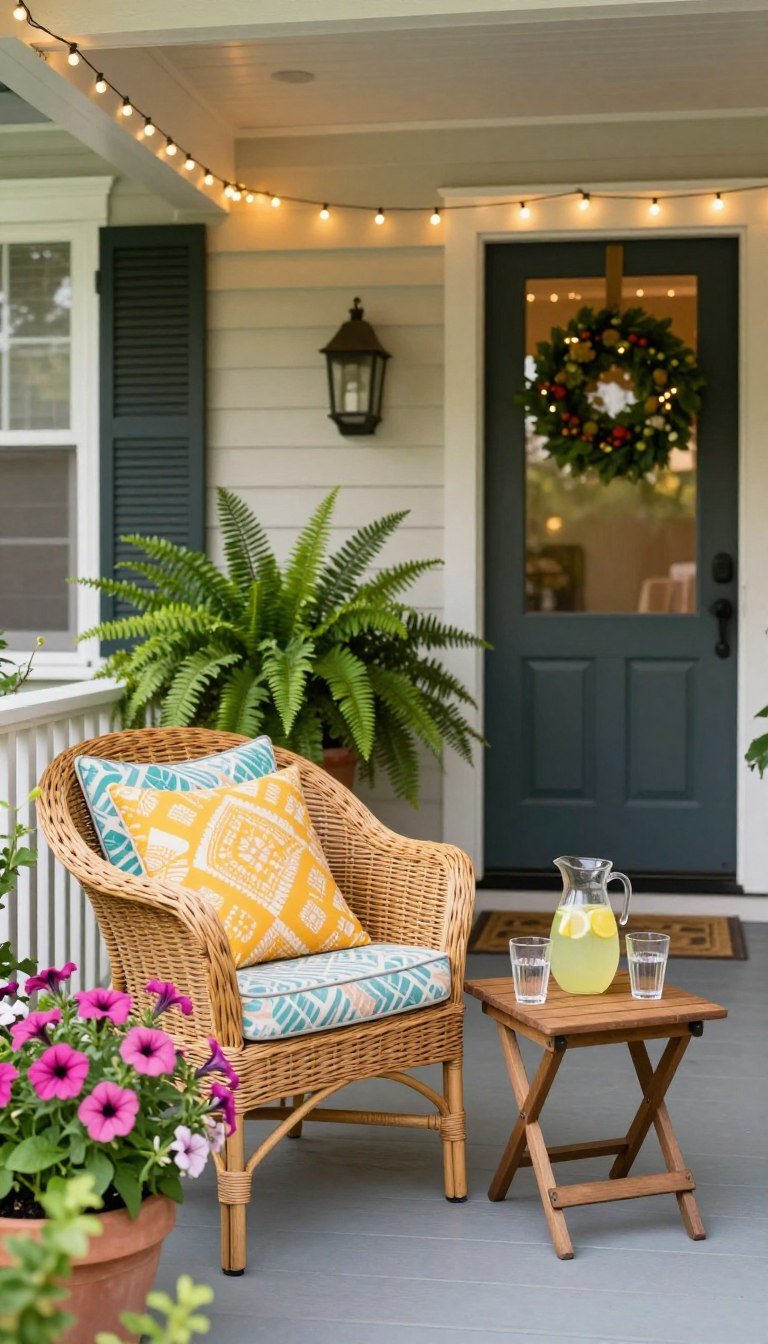
Problem: Entryways often feel unused, cramped, or weatherworn. This guide offers clear, practical solutions to make any threshold more inviting without major work.
Approach: Recommendations focus on one anchor piece plus a few swap-friendly accents. That „capsule“ strategy keeps updates quick and renter-friendly.
Readers will find options for tiny stoops and wider covered spaces. Each category explains who it fits, how it solves a real need, what it costs in upkeep and space, and what to check before buying.
Priorities for renters and small-space dwellers appear throughout: no-drill hooks, battery or solar lighting, light planters, removable covers, and quick-dry fabrics. The guide also previews side-by-side comparisons based on footprint, upkeep, durability, and seasonal storage.
Key Takeaways
- Use one anchor item and a few swap-friendly accents for easy seasonal updates.
- Choose renter-safe fixes like adhesive hooks and battery lighting.
- Match solutions to space: small stoops need compact pieces; larger porches need defined zones.
- Evaluate footprint, upkeep, durability, and storage before buying.
- Focus on low-maintenance textiles and lightweight planters for easier care.
Start Here: Choose Your Porch Goal and Fix the Biggest “Why It Feels Off” Problem
Decide what you want the entry to do, then solve the largest visual or functional gap first. A clear goal keeps purchases purposeful and saves time.
Quick porch goal picker: curb appeal, a place to sit, evening ambiance, or low-upkeep color. Choose one and read the matching fix below.
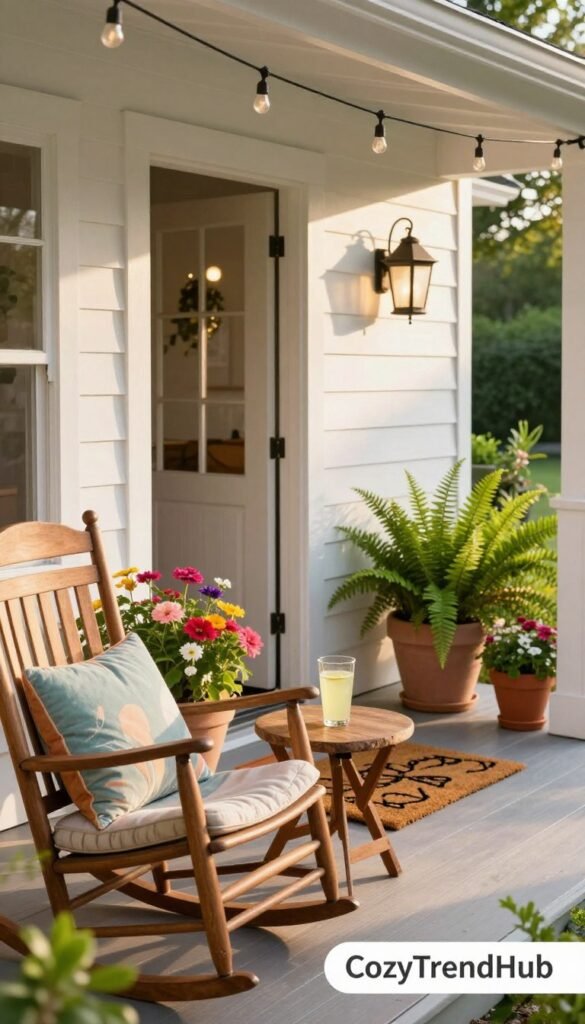
Too small to decorate without clutter
Use a capsule piece: one chair or bench claims visual real estate so the space reads styled, not crowded. This single anchor limits clutter and makes seasonal swaps fast.
Feels bare and unwelcoming
Layer a rug under a doormat, add one or two pillows, and place 1–2 planters for height. This formula adds warmth without changing permanent fixtures.
Looks dark at night
No-wiring lighting like solar lanterns, string lights, or battery lanterns gives safety and ambiance. Choose brightness for the walk path and softer fixtures for seating areas.
High-maintenance setups
Pick quick-dry polypropylene or polyester rugs and low-water plants that stay full. Renters should favor removable hooks and lightweight planters that store easily between seasons.
- Next: the article moves into layout fixes tied to these four problems so readers can match solutions to their space and design needs.
Quick Layout Plans for Small Porch, Stoops, and Alcove Entryways
When floor area is tight, a few measured choices turn a narrow entry into useful, welcoming space. These plans protect door clearance and create a clear traffic path while adding simple furniture and accents.
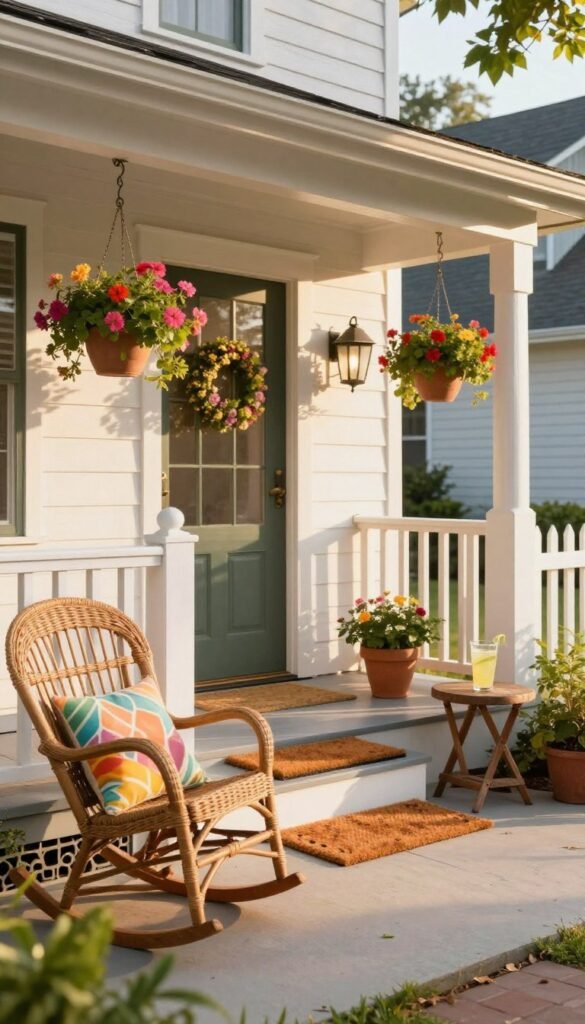
The single-chair setup that still feels styled
Who it fits: tiny stoops or alcoves with one narrow side. Allow 24–30″ clear in front of the door so it can open fully.
Layout: place a single chair (Adirondack or rocking) angled toward the walkway. Add a slim side table or a stacked plant stand beside it for a functional anchor.
The slim bistro moment for tiny front porch space
Who it fits: readers who want a quick coffee spot. Keep the table tight to the wall or rail and allow a 30″ path to the door.
Layout: a 24″ round bistro table with two folding chairs tucks neatly and stores easily if needed.
Using vertical space when floor space is limited
Install wall hooks, a narrow shelf, or hanging planters to draw the eye up. Use one medium piece to avoid visual clutter near the entry.
- Traffic flow checklist: leave 24–36″ for path; designate a slim tray for packages; keep shoe drop to one side.
- Product block: one chair, one slim table/bistro set, one vertical decor item for affiliate placement.
Layout Plans for Large Porches and Wraparound Porches That Need “Zones”
Large wraparound entries work better when functions are grouped into distinct zones. Zoning keeps traffic flowing and gives each area a clear purpose.
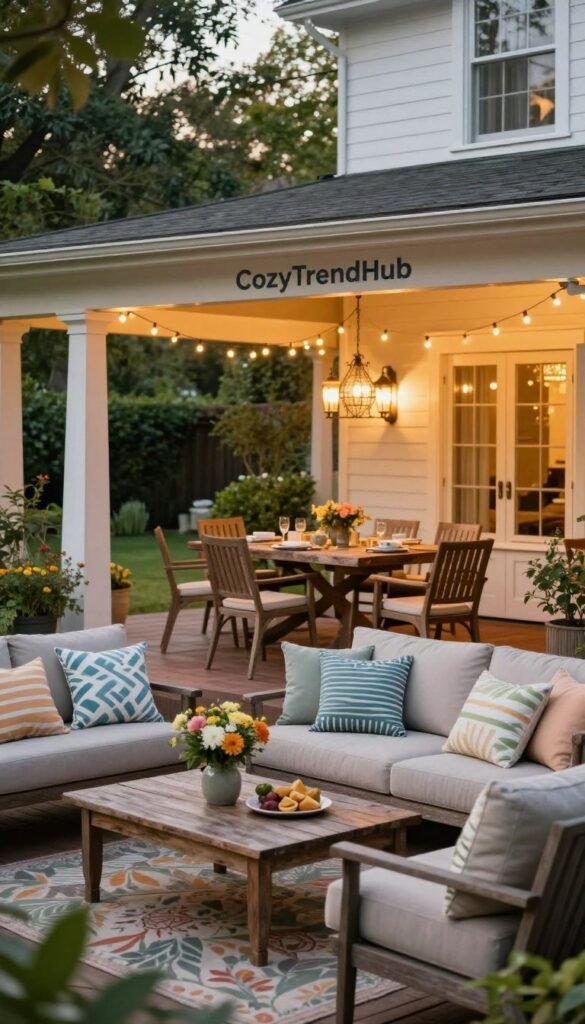
Conversation zone vs. entry zone
Entry zone: keep the area immediately in front of the front door open. Use lightweight accents—doormat, pair of matching planters or lanterns—to frame the door without blocking the path.
Conversation zone: place a weather-resistant conversation set with comfortable seating and a central table a few feet from the door. This creates a social hub for guests and daily use.
Symmetry and when to break it
For formal facades, mirror planters or lanterns for curb appeal and balance around the front door. For wraparound corners, an asymmetrical layout can feel more relaxed. Choose symmetry for a polished look; choose asymmetry to highlight unique angles.
- Buying logic: invest in durable furniture for the conversation zone; keep entry items light for seasonal swaps.
- Pros/cons: zoning improves use and entertaining but may add storage needs for cushions and seasonal pieces.
| Zone | What to buy | Why | Storage impact |
|---|---|---|---|
| Entry | Pair of planters / lanterns | Frames the door; keeps path clear | Low—moveable |
| Conversation | Conversation set + side table | Comfortable seating for guests and relaxing | Medium—cushions need storage |
| Flex / storage | Lightweight bench or storage ottoman | Holds cushions and seasonal accessories | High—solves clutter |
Seating That Solves the “No Place to Sit” Problem
Seating is the single highest-impact buy for an entry. A seat fixes function and doubles as a focal piece. Choose one main item and a small accent table for utility.
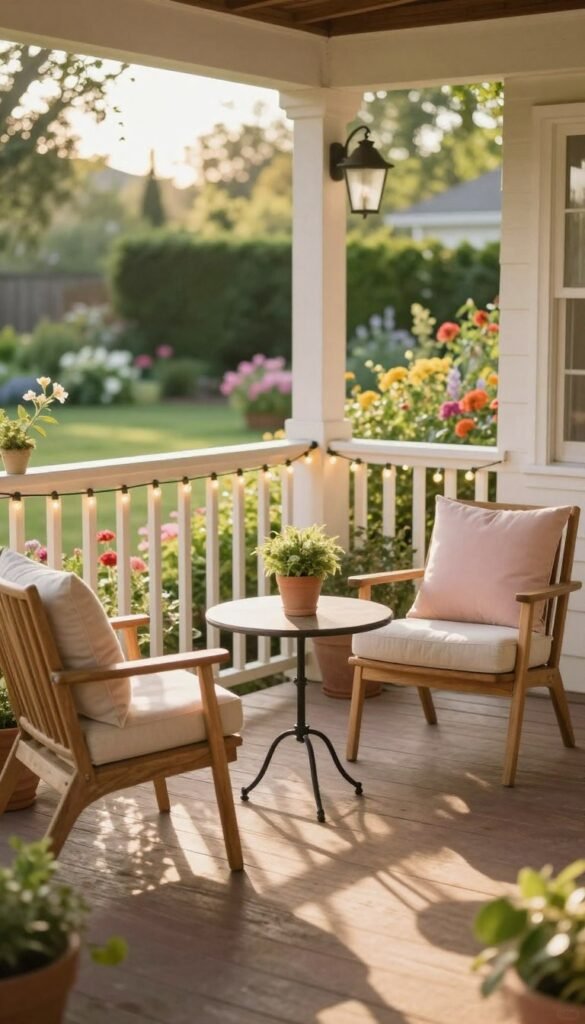
Rocking chair vs. Adirondack
Rocking chairs suit readers who want gentle motion and classic curb appeal. They offer comfort for short sits and friendly conversation.
Adirondack chairs work well on narrow stoops because they read as styled anchors. They are sturdy and low to the ground, but they take slightly more footprint than a slim rocker.
Porch swing or hanging daybed
A porch swing or hanging daybed invites lingering and entertaining. Verify ceiling support and clearance before installing.
Renters should prefer movable free‑standing swings or hammock chairs to avoid permanent mounts.
Small outdoor sofa vs. bench
Small sofas favor families and longer visits. They add comfort but need cushion storage in storms.
Benches fit tight entries and store easily. They trade lounging comfort for a slimmer profile and easier traffic flow.
Space-saving bistro and conversation sets
Bistro sets pair two chairs and a small table for quick chats and morning coffee on the front porch. Conversation sets scale up for groups but require more storage for cushions.
Buyer notes and pros/cons
Buyer notes: pick rust- and mildew-resistant materials, check weight for seasonal moves, and plan where cushions will dry or be stored.
| Seating type | Best for | Material tip | Tradeoff |
|---|---|---|---|
| Rocking chair | Casual conversation, compact spots | Teak or treated wood for weather resistance | Moderate footprint; easier to move |
| Porch swing / daybed | Lounging, entertaining | Powder-coated metal or synthetic wicker | Needs mounting/clearance; storage heavy |
| Small sofa | Families, long visits | Outdoor fabric cushions with quick-dry cores | Cushion storage required; heavier |
| Bench / bistro set | Narrow entries, quick chats | Aluminum or composite for light weight | Less lounging comfort; saves storage |
In short, pick seating that matches how the space gets used and how often pieces will move. Thoughtful choices add comfort, curb appeal, and practical function without overwhelming the entry’s traffic flow.
Outdoor Pillows and Cushions That Add Color Without a Full Redesign
Pillows and cushions offer an instant, low-commitment way to add color and comfort to an entry. They change how seating looks and feel without replacing furniture or repainting.
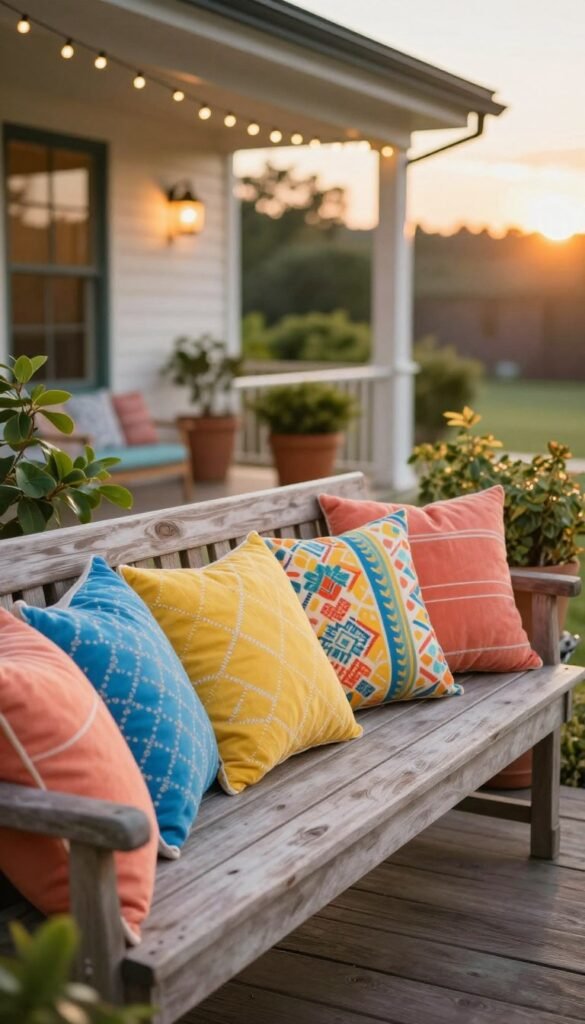
Best for renters: instant upgrades with removable textiles
Removable covers and lightweight inserts let renters swap looks quickly. Store covers in a tote or under a bench between seasons for easy rotation.
Buyer notes: fabric, fade resistance, and cleaning
Choose outdoor-rated fabric with UV protection and mildew resistance. Look for washable covers or quick spot-clean options to handle pollen, spills, or muddy paws.
Pros and cons: comfort and style vs. storage
Pros: fast color updates, low cost, and flexible style shifts.
Cons: cushions need a storage routine in storms and prolonged sun can fade fabrics.
| Item | Price range | Number of covers | Upkeep |
|---|---|---|---|
| Standard throw pillow (18″) | $15–$40 | 1 cover per pillow | Machine wash / spot clean |
| Cushion insert (water-resistant) | $10–$30 | Replace every 2–4 years | Air dry; quick-dry fill |
| Storage tote / bench | $25–$120 | Holds 4–8 covers | Low—keep dry |
Rugs and Layered Doormats to Anchor a Front Porch
A well-chosen rug instantly ties a front porch together, even with minimal furniture.
Anchor strategy: place one larger outdoor rug under a smaller welcome mat to create depth and guide the eye to the front door. The larger piece sets scale; the small mat provides contrast at the threshold.
What to buy: choose polypropylene or polyester outdoor rugs. These materials dry fast, resist mildew, and stand up to storms better than absorbent fibers. Plastic, water-repelling options also shed stains and hold color.
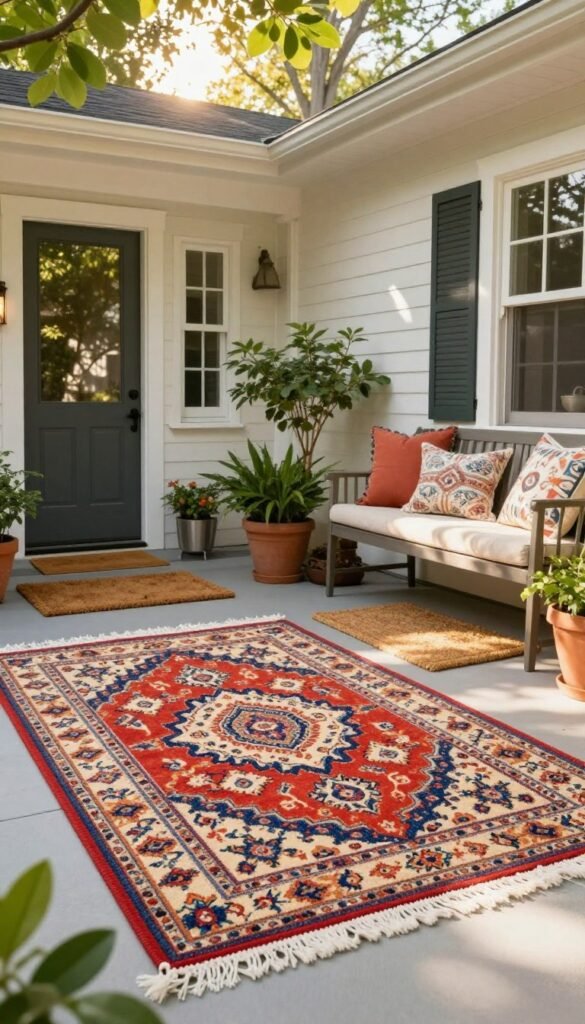
Fit and upkeep
Allow 6–12 inches of rug beyond the doormat so the layout feels intentional. Keep 2–3 inches clear of door swing to prevent catching or a trip hazard.
„Layered mats add instant polish and protect high-traffic areas.“
| Size option | Drying time | Slip resistance | Cleaning |
|---|---|---|---|
| 24″ x 36″ mat | Fast | Moderate | Shake or hose |
| 4′ x 6′ rug | Faster (polypropylene) | High with backing | Hose and air-dry |
| 6′ x 9′ runner | Moderate | High with outdoor backing | Hose; occasional brush |
- Pros: adds traction and warmth, defines the way to the door.
- Cons: edges can curl; manage with rug tape, weight, or regular shake-outs.
Planters, Hanging Baskets, and Window Boxes for Instant Summer Color
A quick row of well-placed containers brings color and life to an entry without a major overhaul.
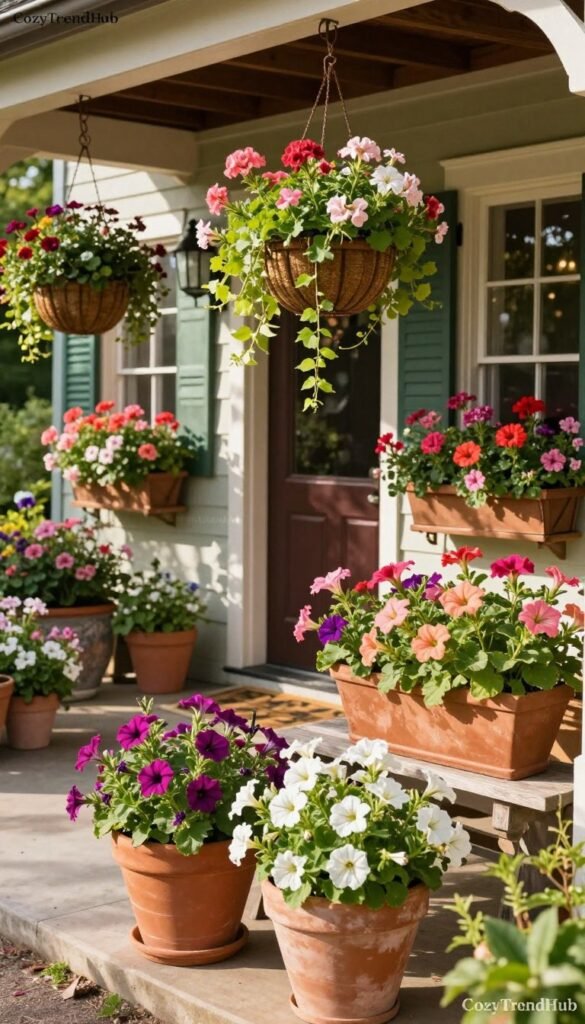
Why planters work: Containers add flowers and green plants fast. They change the mood of the front door and require no paint or structural work.
Who each type fits
Matching urns or planters: ideal for formal entries and homeowners who like symmetry. Two identical pieces on either side of the door bookend the entry and improve curb appeal.
Hanging baskets & window boxes: perfect for small spaces. They save floor space and keep the walking area clear while adding color at eye level.
Create depth with levels
Mix tall, trailing, and short plants to build layers. Tall specimens add height. Trailing flowers soften edges. Short plants fill the foreground.
Buyer notes and quick maintenance
- Check weight for moves—choose lighter composite urns for renters.
- Confirm drainage to avoid stains; use saucers or trays for cleaner entries.
- Move planters under cover when storms come; rotate seasonal plants to refresh color.
| Type | Best for | Key check | Maintenance |
|---|---|---|---|
| Matching urns | Formal entries | Weight & symmetry | Weekly watering; occasional cleaning |
| Hanging baskets | Small porches / stoops | Strong hook & drainage | Frequent watering; light trimming |
| Window boxes | Rail or window area | Secure mount & liner | Weekly watering; deadhead flowers |
Pros: big visual impact with minimal change. Cons: extra watering and some mess; a simple wipe and saucer routine keeps the side area tidy.
Low-Maintenance Summer Greenery That Still Looks Lush
A low-effort plant plan keeps an entry lively while freeing up time for other tasks. This section focuses on easy wins that read full without daily care.
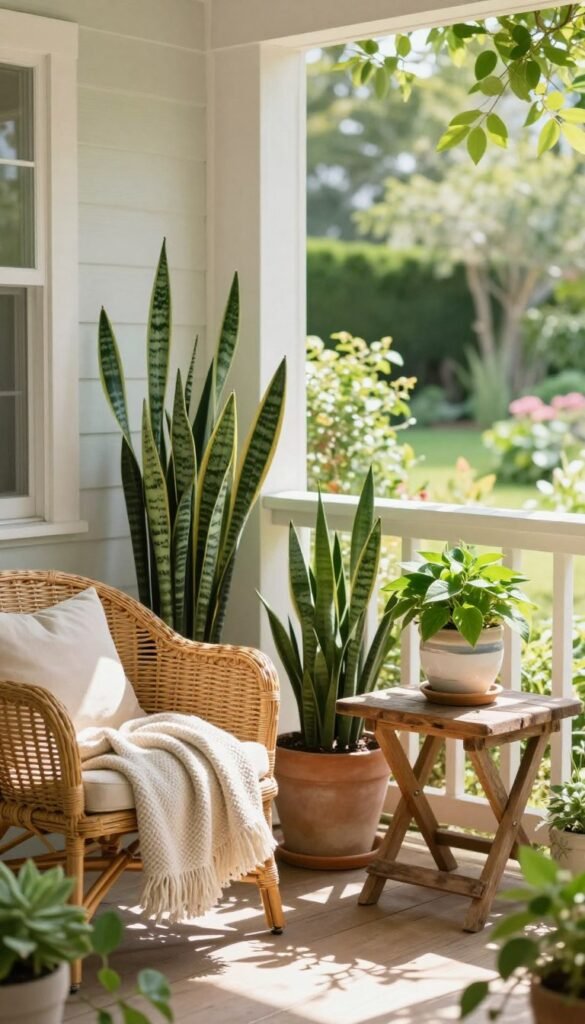
Ferns for a classic, leafy look
Why they work: Ferns fill planters with soft texture and look full even without constant attention.
Who they suit: shaded entries and readers who prefer greenery over blooms. Ferns handle indirect light and hide light soil mess.
Green plants vs. flowers: fewer chores, more forgiveness
Green plants generally need less watering and no deadheading. They tolerate brief travel and heat better than many blooms.
Flowering pots reward with color but demand more water, deadheading, and watching for heat stress. Choose flowers only if someone can check them a few times a week.
Faux florals when zero maintenance is the priority
High-quality faux hydrangeas or ferns give a realistic look with no watering or mess. They work best in protected entries where sun and rain won’t fade materials.
Tradeoffs: zero upkeep and perfect posture vs. lower weather tolerance and occasional cleaning.
„A mix of real greenery and selective faux pieces reduces chores while keeping a porch inviting.“
| Option | Upkeep | Realism | Weather tolerance |
|---|---|---|---|
| Ferns | Low—weekly water | High | Good in shade |
| Green plants (foliage) | Low–Moderate | High | Good—varies by species |
| Flowers | Moderate—frequent checks | High | Heat-sensitive |
| Faux florals | None—occasional dusting | Medium–High | Poor in direct sun/rain |
Placement tips: keep heat‑tolerant pots in sun and ferns in shade. Raise planters off hot surfaces and group containers for shared watering needs. This simple thing reduces fuss while keeping a summer porch feeling lush.
Seasonal Blooms That Do the Heavy Lifting for Summer Porch Decor
A few well-chosen flowering pots can transform an entry overnight with minimal fuss. Seasonal blooms give big visual impact without many extra accessories. They are a direct purchase that pays off fast.
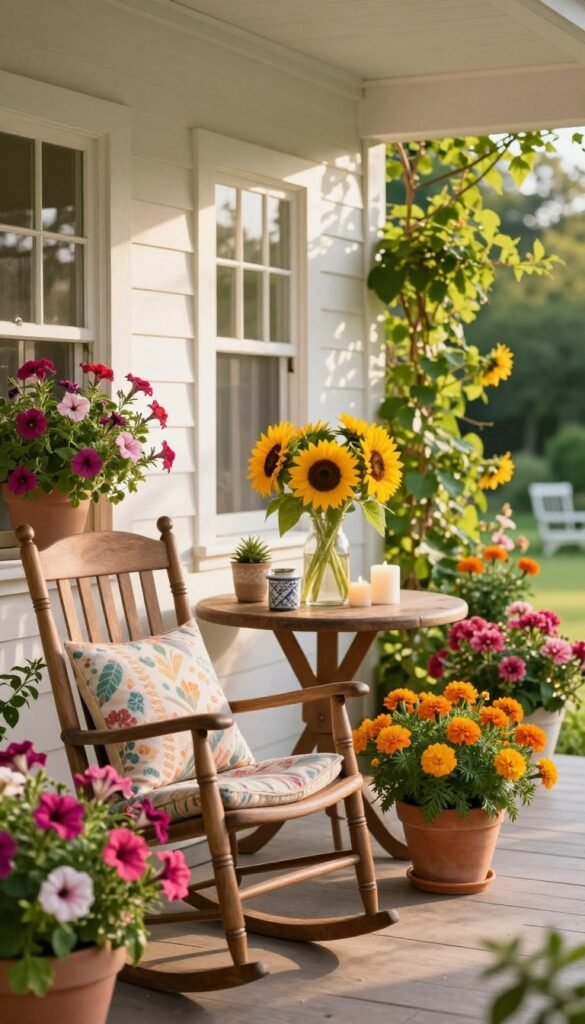
Hibiscus: bold color for sunny spots
Who it fits: gardeners who want bright, tropical color and a porch that gets sun most of the day.
Care reality check: hibiscus blooms often need daily water in heat and protection from late frost. Expect regular deadheading for continuous blooms.
Hydrangeas: a fuller, statement look
Who it fits: those after a softer palette and visual weight that anchors a seating area.
Hydrangeas read as a focal piece. They suit shaded or part-shade porches and can stay potted or be moved to the yard later for long-term value.
Mix now, plant later: extend value for years
Buy potted flowers for instant porch impact, then transplant strong specimens to the yard in fall. This approach gives seasonal curb appeal and stretches the purchase across years.
- Color tip: pick blooms that echo one pillow or rug hue for a cohesive look.
- Buyer notes: choose appropriately sized pots (12–16″ minimum), check wet weight before buying, and plan where plants will live after the season ends—yard bed or large container at the house.
„Potted blooms deliver fast curb appeal and long-term value when you plant them out later.“
Lighting That Makes Your Porch Feel Safer and More Inviting After Sunset
Solve the “dark at night” problem with no‑wiring options that add safety and atmosphere fast. These picks favor renters, small entries, and anyone who needs seasonal, moveable solutions.
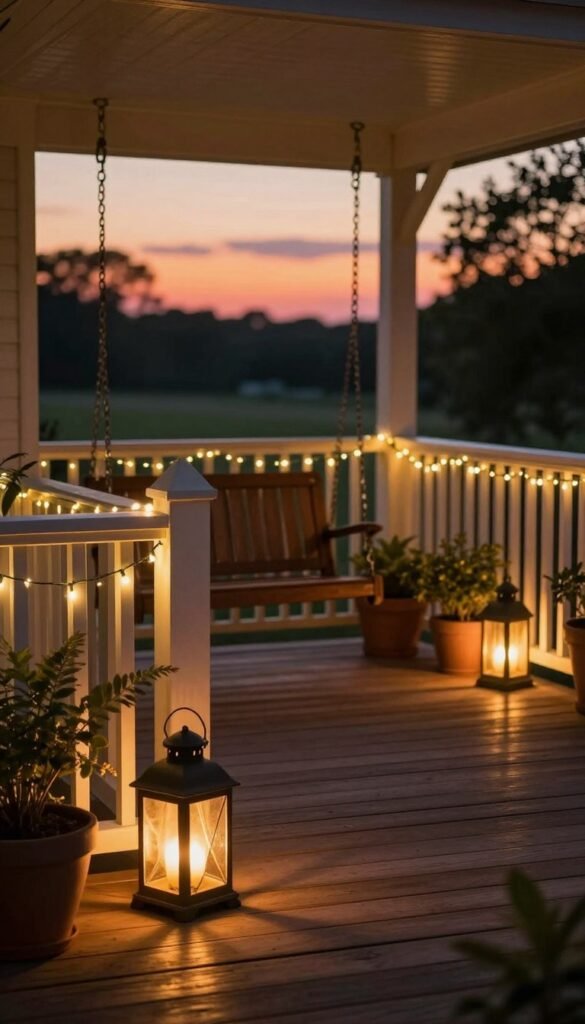
String lights for a warm, cozy glow
String lights layer ambient light and work well for evenings with guests. Hang along the ceiling line or rail to avoid visual clutter. Use warm white bulbs for a welcoming tone.
Lanterns with battery-powered candles
Lanterns with battery candles are renter-friendly and easy to move. They provide real flame-like light without wiring and store flat for off-season.
Solar lanterns for low-effort seasonal lighting
Solar lanterns recharge by day and run at night. Check panel exposure and run-time claims, especially after storms. They score high for low maintenance.
Mason jar fairy lights for budget-friendly sparkle
These small lights add charm on a tight budget. Place near the door or tuck into a planter for subtle sparkle that won’t overwhelm a small space.
| Type | Power source | Brightness | Renter-friendly |
|---|---|---|---|
| String lights | Plug / battery | Medium–High | Medium |
| Battery lanterns | Battery | Low–Medium | High |
| Solar lanterns | Solar | Low–Medium | High |
| Mason jar lights | Battery / Solar | Low | High |
„Good lighting is both a safety upgrade and a comfort upgrade—simple changes extend porch use after dark.“
Buyer notes: confirm brightness (lumens) so lights do more than look pretty. Check weather ratings and solar panel placement. For the front porch, prioritize path lighting near the door for safety and drainable fixtures for wet weather.
Door Decor: Summer Wreaths That Set the Tone for Guests
A simple wreath can change how guests perceive a home before the door opens. It’s a high‑ROI purchase because it’s the first visual cue visitors see and it updates the entry fast.
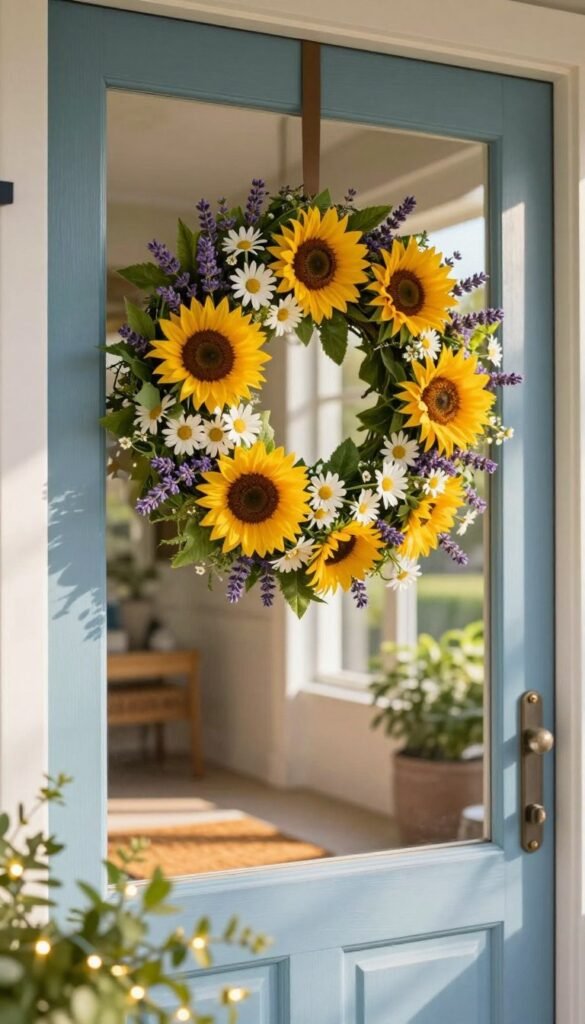
Quick seasonal swaps for a low-effort refresh
Interchangeable bases and clip-on florals let a household shift looks without bulky storage. Choose a neutral base and snap on light florals or citrus accents for a fresh vibe.
Styles that read like summer without going overboard
Lean toward greenery-forward wreaths, small light blooms, or a lemon motif to signal the season. Coordinate one or two key colors with planters or pillows for a polished entry.
Pros, cons, and a simple product comparison
Wreaths deliver big visual payoff but can fade in harsh sun and need off‑season storage. Store flat in a shallow box or hang inside to avoid crushing.
| Type | Upkeep | Longevity | Sun tolerance |
|---|---|---|---|
| Faux | Low—wipe clean | High | Medium |
| Preserved | Low—keep dry | Moderate | Poor |
| Live | Moderate—water | Variable | Varies by plant |
„A cheerful lemon wreath sets a bright first impression for guests.“
Wall Decor and Vertical Styling for Small Spaces
Vertical accents make small entries feel taller and more intentional without taking up floor space. This approach is ideal when a small porch has limited room but still needs personality.
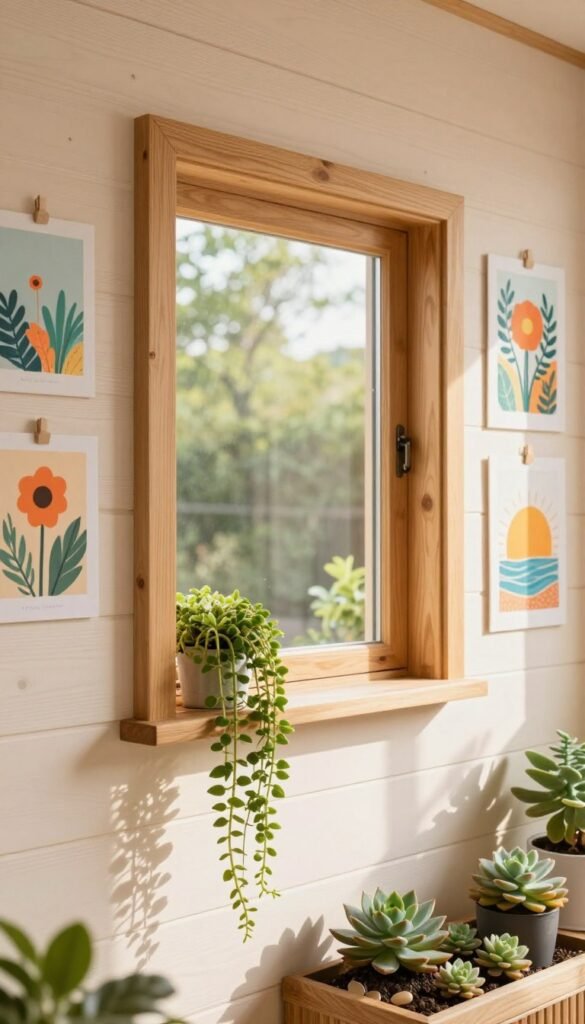
Windows, wood rounds, and signs that draw the eye up
Old window frames, wood rounds, and simple signs create layers without clutter. A reclaimed wood frame suits farmhouse style. A painted sign reads classic. A clean metal rack suits modern design.
Mounting, decision rules, and renter-friendly picks
Use removable hooks or heavy-duty adhesive strips for lightweight pieces. Choose pieces under 8 lbs when possible. Pick door decor when a single focal point is wanted; pick wall decor when the door already has hardware or glass that competes visually.
Clutter avoidance and simple repeats
Keep to one main vertical statement and repeat materials—wood plus black metal, for example—to reduce visual noise. Add one small hanging accent and seasonal clip-ons rather than many small items.
| Piece | Style fit | Weight tip | Upkeep |
|---|---|---|---|
| Old window frame | Classic / farmhouse | Light — use hollow frames | Wipe clean |
| Wood round | Rustic / modern | Under 8 lbs | Seal if outdoors |
| Sign / metal rack | Modern / classic | Thin metal or composite | Wipe; touch paint |
„Vertical styling is the easiest way to add scale without losing floor function.“
Color Strategy: How to Add Summer Color Without Replacing Everything
Tiny changes can refresh an entry quickly. Start with small swaps that are reversible, then consider a single paint move for higher impact.
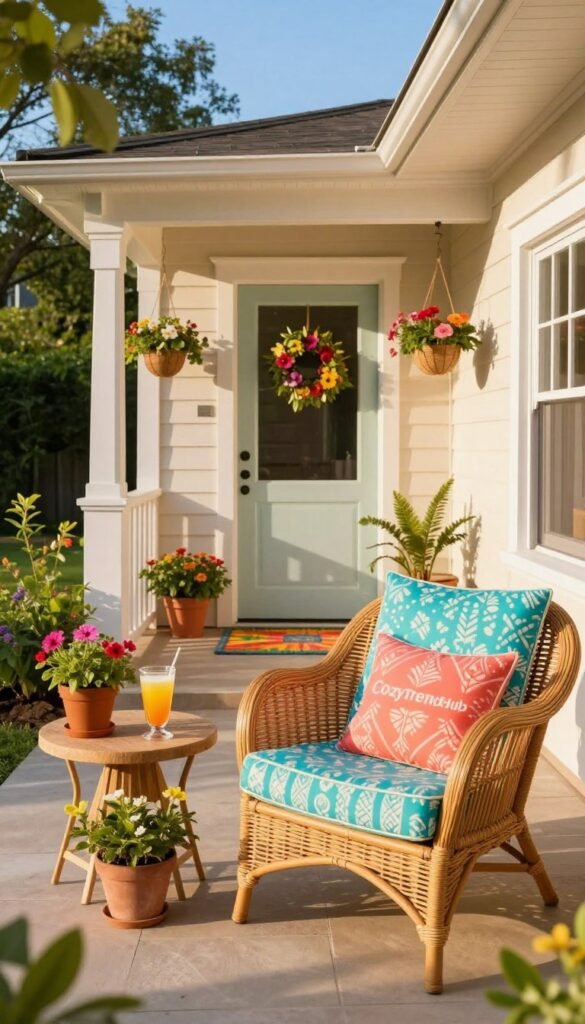
Small pops that matter
High‑ROI items: pillows, a layered rug, lantern candles, and planters. These carry color affordably and store flat or in a tote.
They are easy to swap when tastes or seasons change. Pillows and a rug reset scale and mood without heavy lifting.
Bigger update option
Painting the front door is a single weekend project that changes curb appeal and draws the eye. Homeowners who want a clear refresh should pick a durable exterior paint and prep properly.
Renters should check HOA or landlord rules and consider a removable door film or an over‑door panel as an alternative.
Keeping a cohesive palette
Pick a neutral base, then choose 1–2 accent colors. A blue-and-white palette reads calm and classic. A bright-and-cheerful mix reads playful and energetic.
„Limit accents to two colors so small swaps feel tied together.“
Sun/fade check: bright textiles fade faster in direct sun. Choose UV‑resistant fabrics for rugs and outdoor pillows when the door faces south.
| Option | Cost | Time | Reversibility |
|---|---|---|---|
| Small swaps (pillows, rug, candles, planters) | $50–$200 | 1–3 hours | High |
| Paint update (front door) | $40–$200 (materials) | 4–8 hours | Low–Medium |
Seasonal Touches That Don’t Become “Extra Stuff” to Store
Good seasonal styling starts with a stable base and a tiny swap pile. This keeps the entry useful through the year and cuts the time spent packing and unpacking boxes.
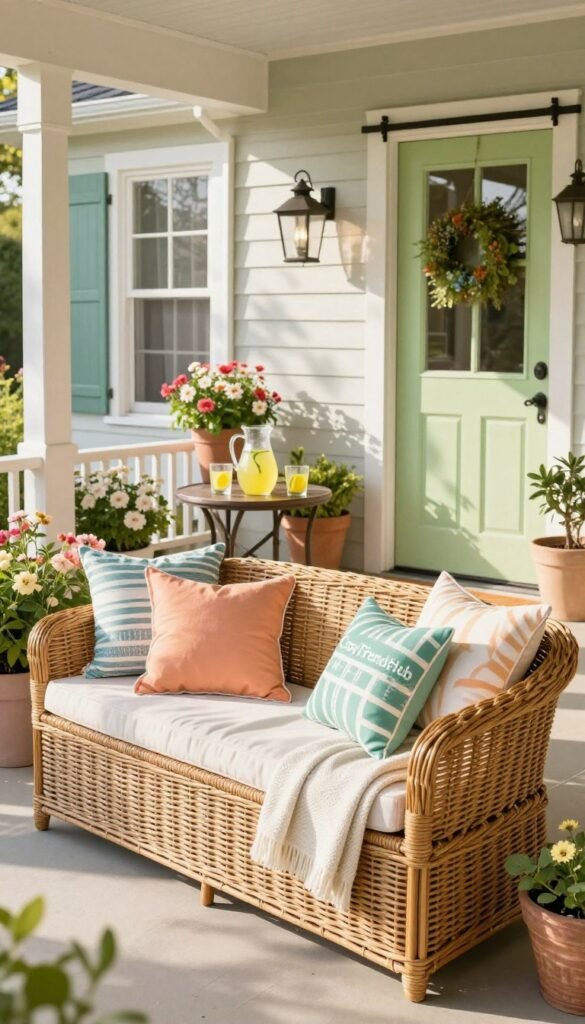
Year-round base items to keep
Keep these on hand or outdoors:
- One durable chair that anchors the space.
- A quick-dry rug sized to the entry.
- Sturdy wreath hooks and a neutral wreath base.
- Weather-rated lanterns that work in any season.
What to swap each season
Rotate only a few items: floral stems, pillow covers, and a small accent piece. Clip-on florals refresh a wreath without extra storage space.
Storage and sustainability tips
- Use slim bins or an under-bench tote for covers and small accents.
- Label one wreath box so it’s easy to find next year.
- Choose durable pieces to reuse across multiple seasons to cut waste.
„A compact base plus a tiny swap kit saves time and keeps the entry from becoming storage work.“
Buying Guide: What to Check Before You Add Anything to Cart
Before clicking checkout, confirm that each item fits your entry’s usable footprint and won’t block the door or main path. A short checklist prevents returns and keeps the update practical.
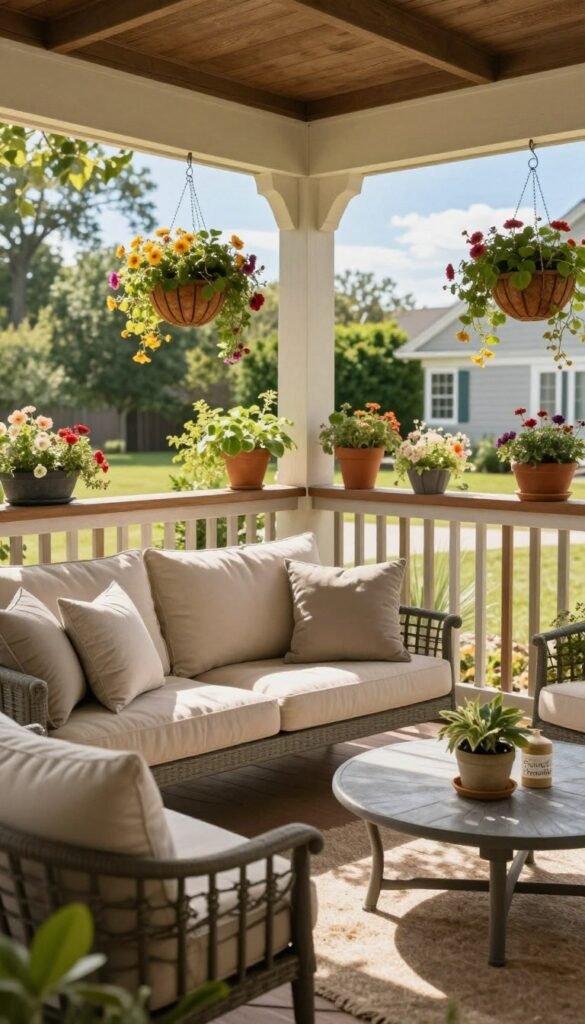
Measurements and clearance
Measure the total space and mark the door swing. Allow 24–36″ of walking clearance in front of the door so traffic flows easily.
Sketch where the capsule furniture will sit and re-measure to avoid surprises.
Weather and sun exposure
Note full-sun, part-shade, or covered areas. Sun fades textiles, metal can rust, and absorbent rugs can get mildewy if they stay wet.
Choose quick-dry materials and sealed finishes for longer life.
Renter-friendly rules
Prioritize no-drill lighting (battery or solar), removable hooks, and lightweight planters that won’t damage surfaces.
Budget strategy
Spend on one anchor capsule piece and a durable rug or planters. Save on seasonal swaps like pillow covers and faux stems to stretch the budget strategy.
| Item | Footprint | Durability | Upkeep | Renter-friendly |
|---|---|---|---|---|
| Capsule furniture | Medium–Large | High (choose treated wood/metal) | Low–Medium (covers/cushion care) | Medium (choose lightweight options) |
| Rug | Small–Medium | Medium (polypropylene best) | Low (hose off; quick-dry) | High |
| Lighting | Small | Medium (check weather rating) | Low (battery/solar) | High |
| Planters | Small–Medium | Medium (composite/lightweight) | Medium (watering/drainage) | High |
„Measure first, match materials to exposure, and spend on the piece you will keep longest.“
Best summer porch decor ideas by Use Case
A short, use-case focused kit helps shoppers pick a clear path and skip extra browsing.
Small entryway kit: one compact chair, a layered rug, and a vertical accent. This combo claims visual space while keeping a 24–30″ clear path.
Entertaining kit: a conversation set, targeted lighting, and matching planters. It supports guests for evening visits without a full remodel.
Low‑maintenance kit: greenery-forward planters, selective faux accents, and solar lighting. Suited for busy households and travelers who want a steady look with little upkeep.
Quick refresh kit: a new doormat, a seasonal wreath, and a couple of colorful pillows. These swaps change the front door mood in a single weekend.
Curb-appeal kit: symmetrical planters flanking the entry plus one bold color accent. The result reads intentional and tidy from the sidewalk.
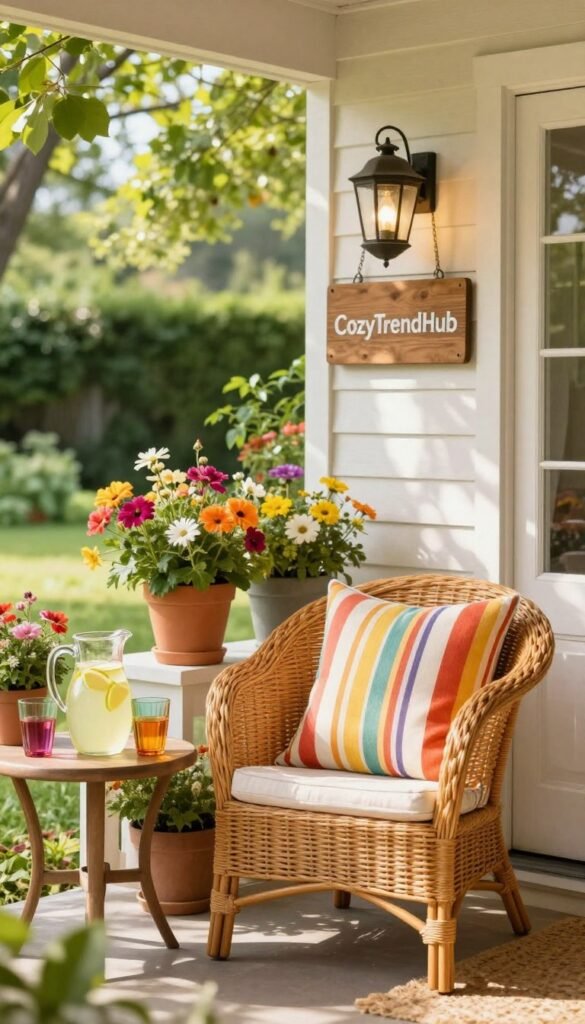
Use the table below to compare price, footprint, upkeep, renter-friendliness, and who each kit suits.
| Kit | Price range | Footprint | Upkeep | Renter-friendly | Best for |
|---|---|---|---|---|---|
| Small entryway | $150–$400 | Small | Low–Medium | High | Tiny stoops, renters |
| Entertaining | $500–$2,000 | Large | Medium | Medium | Hosts, families |
| Low‑maintenance | $100–$350 | Small–Medium | Low | High | Frequent travelers, busy households |
| Quick refresh | $40–$150 | Minimal | Low | High | Fast weekend updates |
| Curb appeal | $150–$600 | Small–Medium | Low–Medium | High | Front door focal upgrades |
Conclusion
Pick one practical change that solves the biggest daily annoyance at your door. Measure the area and mark the door swing so purchases fit and traffic flows.
Follow the capsule method: choose one anchor furniture piece and add a few seasonal swaps—rugs, pillows, or a pair of planters—to set style without clutter.
Match choices to constraints: small entries need clear walkways; larger porches work in zones; renters should favor removable hooks, lightweight pieces, and battery or solar lighting.
Use the buying guide checks—clearance, weather exposure, drying time, and storage—then pick a kit from the use-case table to buy with confidence.
Next step: measure, buy one capsule item, and add one lighting element or planter pair to make the front door welcoming for guests.



One Comment