
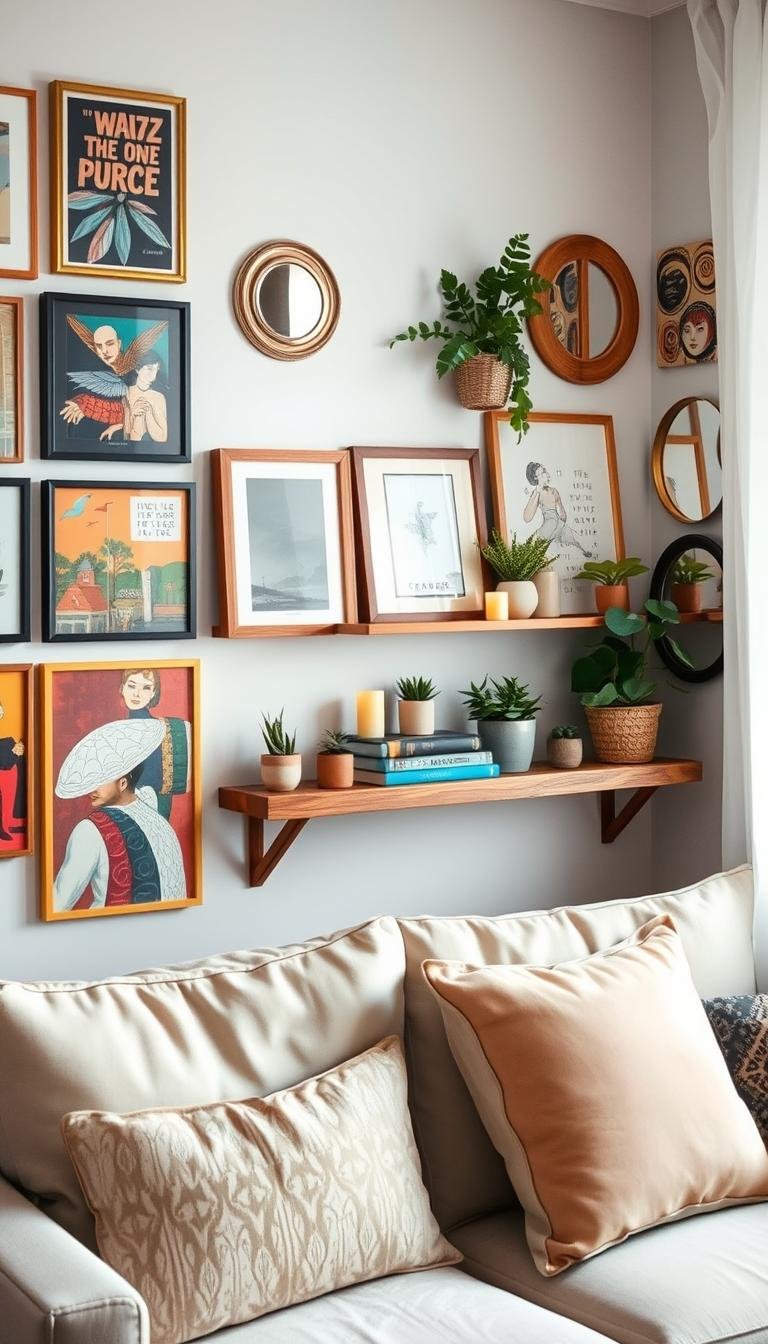
Small rooms often feel cramped when floor area fills with furniture and clutter. This guide treats walls as prime real estate and shows how smart wall decor can save floor space, reduce visual noise, and boost light and openness.
Readers will get a practical buyer’s guide. It explains what to measure, which styles visually open a room, and which product types suit renters and narrow layouts. The focus stays on real-life constraints in U.S. homes and apartments.
The page previews major product groups: oversized art, gallery sets, mirrors, floating shelves, decals, sconces, textiles, and planters. Each option is evaluated by visual impact per inch, bulk added, performance in low light, and ease of hanging or swapping seasonally.
Choose fewer, stronger pieces over many small items. That approach clears floor space, reduces clutter, and keeps a room feeling bright and open while staying renter-friendly.
Key Takeaways
- Use vertical solutions to free floor space and improve flow.
- Measure before you buy; match scale to narrow walls and clearances.
- Pick renter-friendly systems that are easy to hang and swap.
- Favor high-impact items (mirrors, large prints) over many small pieces.
- Evaluate visual impact, bulk, light handling, and seasonal flexibility.
Why Small Rooms Feel Cramped and How Wall Decor Fixes It
Tight rooms feel cramped when the eye has nowhere to rest. Limited floor area, too many small objects, and the absence of a clear focal point make a room read as cluttered and boxed-in.
Using vertical wall space protects floor space by moving storage and interest up. Tall shelves, mounted lighting, or hanging planters reduce the need for extra furniture and keep walking paths clear.
A single strong focal point—an oversized print or a mirror—creates instant depth. The eye goes to one destination instead of bouncing among many small pieces. That perceived depth makes the room feel larger without adding bulk.
Brightness also changes scale. Mirrors and reflective surfaces amplify natural and artificial light so the space reads as open rather than enclosed. Even a narrow room looks airier when light spreads across surfaces.
- Problem-led fix: pick items that solve one issue—clutter, flatness, or low light.
- Practical tip: later sections match these fixes to living rooms, bedrooms, and hallways, including renter-friendly options.
What to Measure Before You Buy Wall Decor for a Tight Room
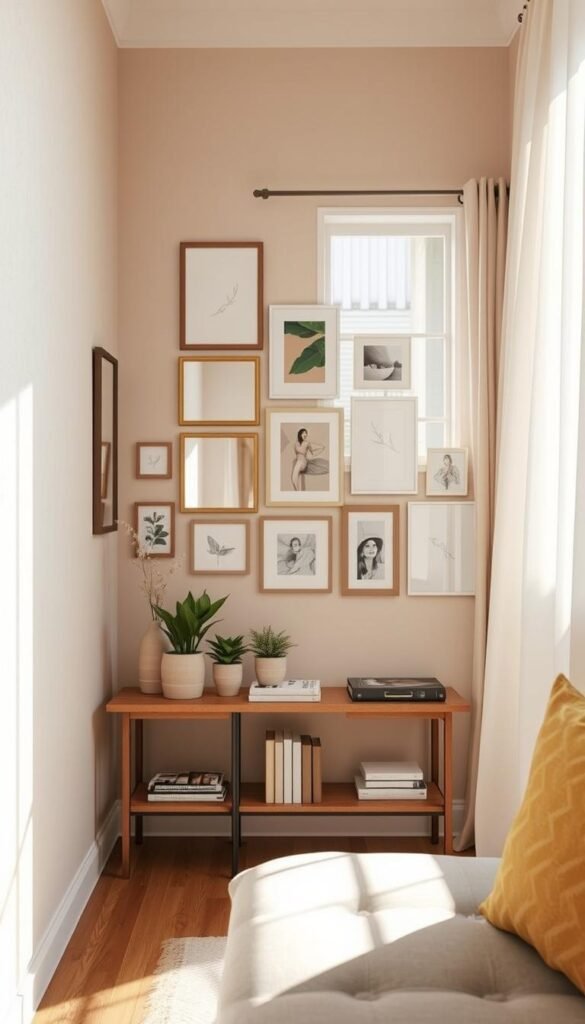
Start with precise measurements: wall width, height, and the furniture footprint under the planned artwork. This ties the piece to the room’s main anchor and avoids a floating look.
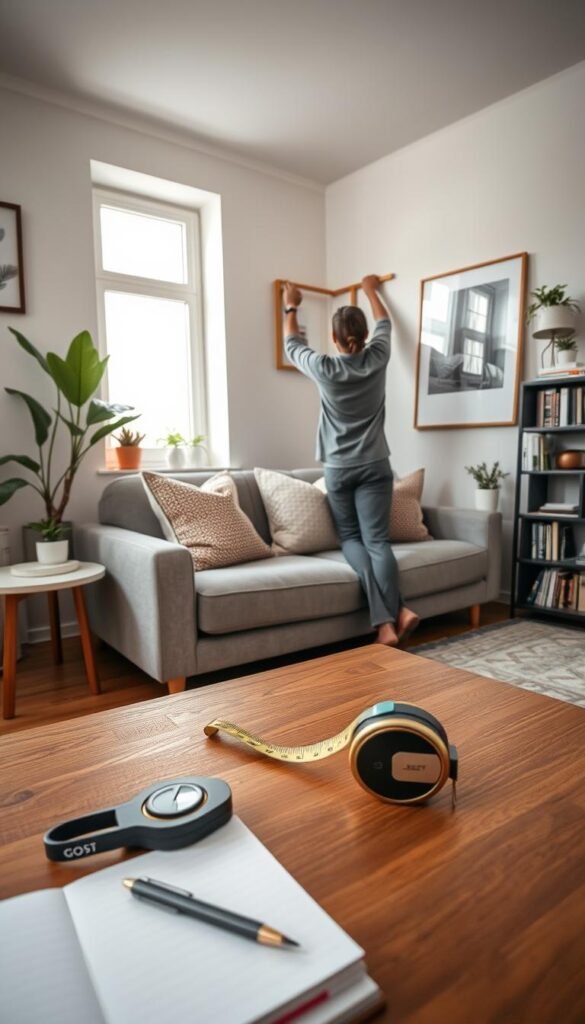
Measure twice, buy once. Note wall trim, outlet locations, and clearance above furniture. Mark studs and check weight limits so hanging choices match drywall or plaster and renter rules.
Avoid many small pieces if the wall is narrow. Multiple tiny prints with uneven spacing read busy and make the room feel cluttered. A single large canvas or a cohesive set with consistent gaps reduces visual noise.
Think about visual weight: thick frames, wide mats, and dark color palettes feel heavy. Lighter frames and pale backgrounds keep the walls feeling set back and airy.
Do a simple light check. Track where daylight falls and which corners stay dim. Reflective surfaces or light-background art bounce light; dark artwork can deepen shadows.
- Make paper templates or mockups before purchasing.
- Plan for renter-friendly hangers and adhesive options when studs aren’t available.
- Compare framed vs. canvas formats by weight and edge profile.
| Format | Weight | Visual Edge | Rental Friendly |
|---|---|---|---|
| Framed print | Heavier | Defined frame, can feel heavier | Use anchors or picture hooks |
| Canvas panel | Light | Flush, less visual weight | Often fits damage-free hangers |
| Gallery set | Varies | Cohesive spacing reduces clutter | Plan templates and use removable hooks |
best wall decor for small spaces: What Actually Works (and What Doesn’t)
A focused approach beats scattering: pick items that directly address darkness, clutter, or cramped sightlines.
Large-scale art vs. clustered prints — works: One large canvas or framed print creates a clear focal point and reduces visual clutter. It solves a busy look and makes a room read larger.
Large-scale art — doesn’t: Too many oversized pieces can overwhelm very low ceilings. Measure above seating and walkways first.
Flat wall art vs. dimensional hangings: Flat prints and paintings suit narrow walkways and over beds where depth could snag heads. Mirrors, textiles, and sculptural pieces add texture and perceived depth without extra furniture.
Color and contrast: Light, airy palettes open a room. High-contrast art can work well as a single controlled accent that draws the eye without shrinking the space.
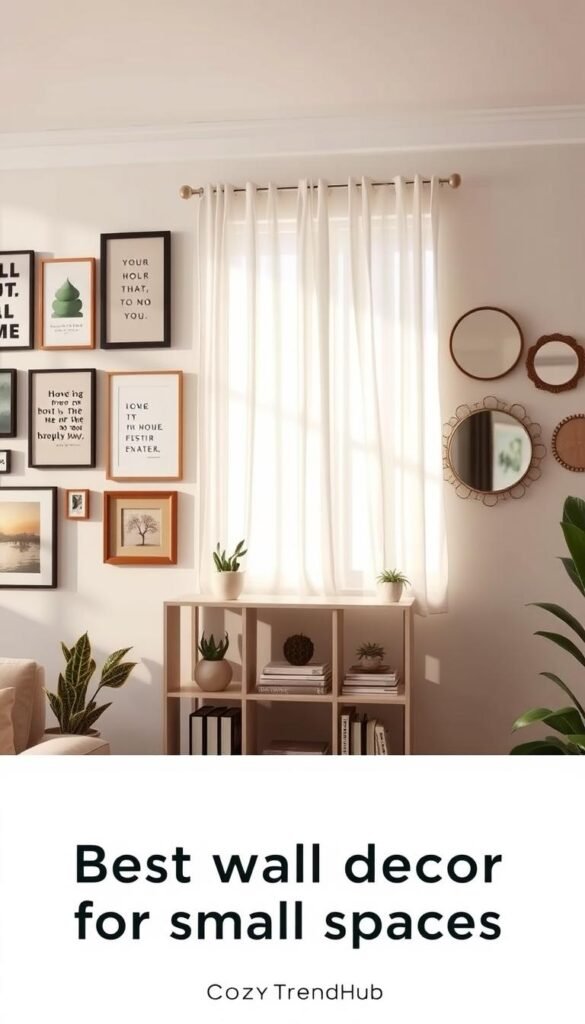
- Quick rule: One statement piece or one tight gallery set. Avoid scattering unrelated items around the room.
| Choice | Works When | Doesn’t Work When |
|---|---|---|
| Large print/canvas | Need single focal point; reduce clutter | Low ceilings or many competing elements |
| Clustered prints (gallery) | Renters who want variety; cohesive themes | Poor spacing discipline; narrow vertical strips |
| Dimensional hangings | Adds texture and depth; light boosting with mirrors | Above clearances where depth causes obstruction |
Top Picks Overview: Best Product Types for Small-Space Wall Decor
This compact guide pairs each product type with what it solves, buying points, and common watch-outs. Use these blocks to choose a single targeted solution and avoid cluttering limited floor area.
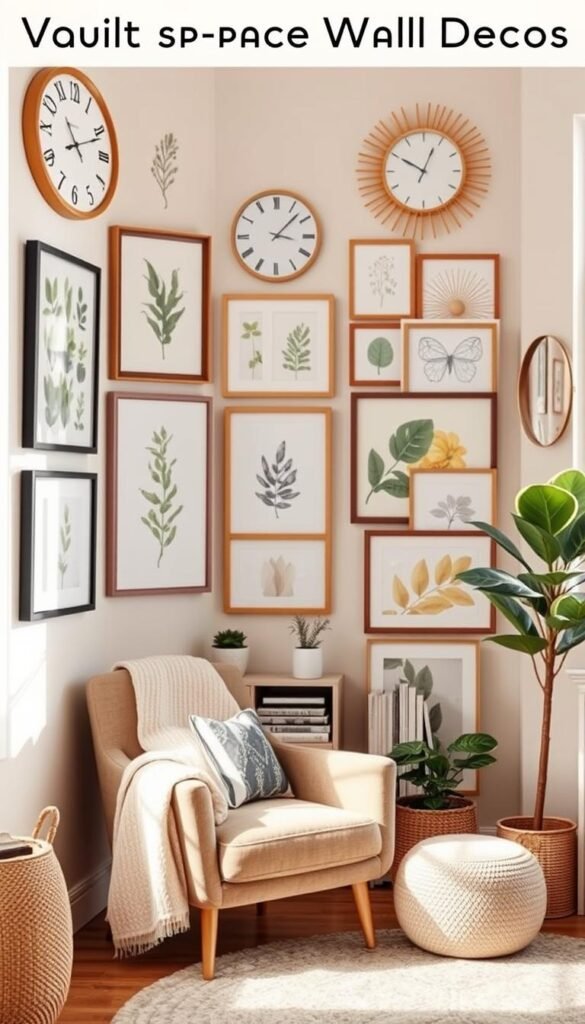
Oversized framed prints and canvas art
Best for: creating a single, clear focal point in a living room or bedroom.
Solves: visual clutter and scattered attention by anchoring the room with one strong piece.
Key buying considerations: choose canvas to reduce weight; match frame scale to furniture width; check hanging hardware.
Watch-outs: avoid pieces that overwhelm low ceilings. Seasonal swaps are easy with removable hooks.
Attributes: visual impact high; depth off wall low to medium; weight medium; hanging difficulty medium; swap-ability medium.
Mirrors that reflect light
Best for: brightening dim rooms and expanding perceived depth.
Solves: low light and cramped sightlines by reflecting windows or lamps.
Key buying considerations: place opposite a window or near a light source; pick a slim frame to reduce visual weight.
Watch-outs: mirrored clusters can feel busy if too many small pieces are used. Renter-friendly adhesive mirrors are available.
Attributes: visual impact high; depth off wall low; weight low to high; hanging difficulty low to high; swap-ability medium.
Floating shelves and decorative hooks
Best for: adding vertical storage and display without taking floor or table space.
Solves: lack of surface area while keeping objects organized and elevated.
Key buying considerations: check shelf depth and weight rating; use anchors for drywall; stagger heights for flow.
Watch-outs: overloading shelves creates clutter. Use lightweight frames and plants to balance.
Attributes: visual impact medium; depth off wall medium; weight variable; hanging difficulty medium; swap-ability medium.
Removable decals and damage-free hanging
Best for: renters and frequent movers who need seasonal swaps with no patching.
Solves: lease restrictions and the need to change style often without repairs.
Key buying considerations: choose tested adhesive brands; follow temperature and surface instructions.
Watch-outs: some adhesives fail on textured paint. Store decals flat between seasons.
Attributes: visual impact low to medium; depth off wall none; weight none; hanging difficulty low; swap-ability high.
Tapestries, woven hangings, and textiles
Best for: adding texture and warmth when a room feels flat or echoey.
Solves: harsh acoustics and a sterile look without adding bulk.
Key buying considerations: pick lightweight mounts or rods; scale to wall width; prefer washable fibers for seasonal swaps.
Watch-outs: busy patterns can shrink a room visually. Layer with a single framed print for balance.
Attributes: visual impact medium; depth off wall low; weight low; hanging difficulty low; swap-ability high.
| Product | Visual Impact | Depth Off Wall | Weight | Hanging Difficulty | Swap-ability |
|---|---|---|---|---|---|
| Framed prints / Canvas | High | Low–Medium | Medium | Medium | Medium |
| Mirrors | High | Low | Low–High | Low–High | Medium |
| Floating shelves | Medium | Medium | Variable | Medium | Medium |
| Removable decals | Low–Medium | None | None | Low | High |
| Textiles / Tapestries | Medium | Low | Low | Low | High |
Oversized Wall Art That Makes a Small Room Feel Bigger
Oversized art is a practical tool for studios and compact living rooms that need one calm focal point. A single large canvas print reduces visual noise by giving the eye a clear place to land. That focused view often reads as more open than many scattered small pieces.
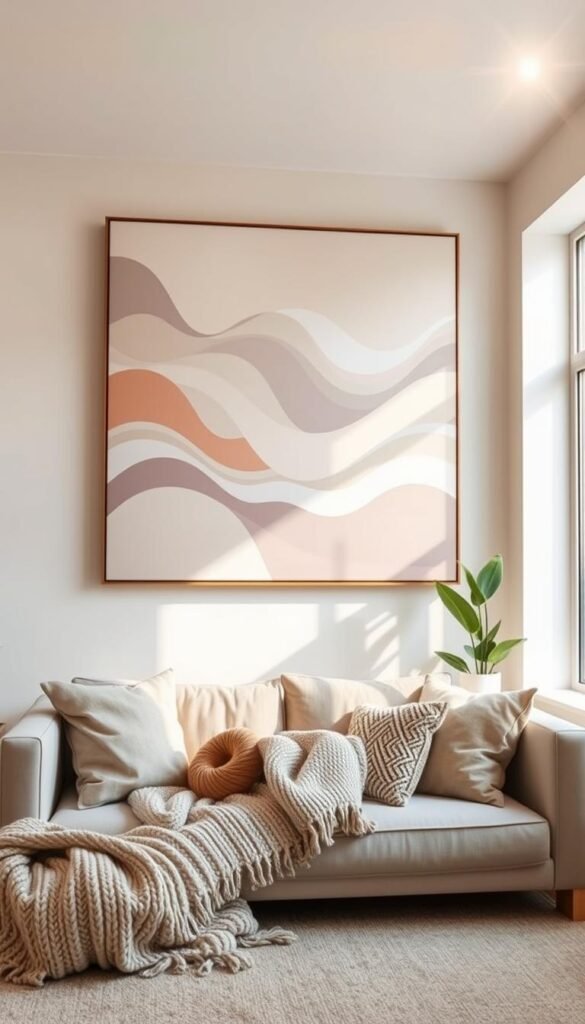
Who this suits
This approach fits someone in a studio or a tight living room who wants tidy, calming visuals rather than lots of small items. One strong piece brings order and helps a room feel intentional without extra furniture.
Buying considerations: canvas vs. framed prints
Canvas often looks lighter because it sits flush and avoids bulky frames. Frameless or float-style canvas reduces visual weight and usually hangs with lighter hardware.
Framed prints add structure and a finished edge. Choose thin frames and lighter mats to avoid making the room feel heavy.
Buyer checks: measure wall width and viewing distance, verify weight and hanging hardware, and confirm studs or suitable anchors.
Pros and cons
- One big piece: simpler to hang, clearer focal point, less visual clutter.
- Multiple small frames: flexible layouts but risk looking busy if spacing or palette aren’t controlled.
- Renter note: lighter canvas formats and fewer holes usually meet lease limits better than heavy multi-piece installs.
„A single large canvas print can make a room feel larger by creating a strong focal point and reducing visual clutter.“
Gallery Wall Sets for Small Spaces Without Visual Clutter
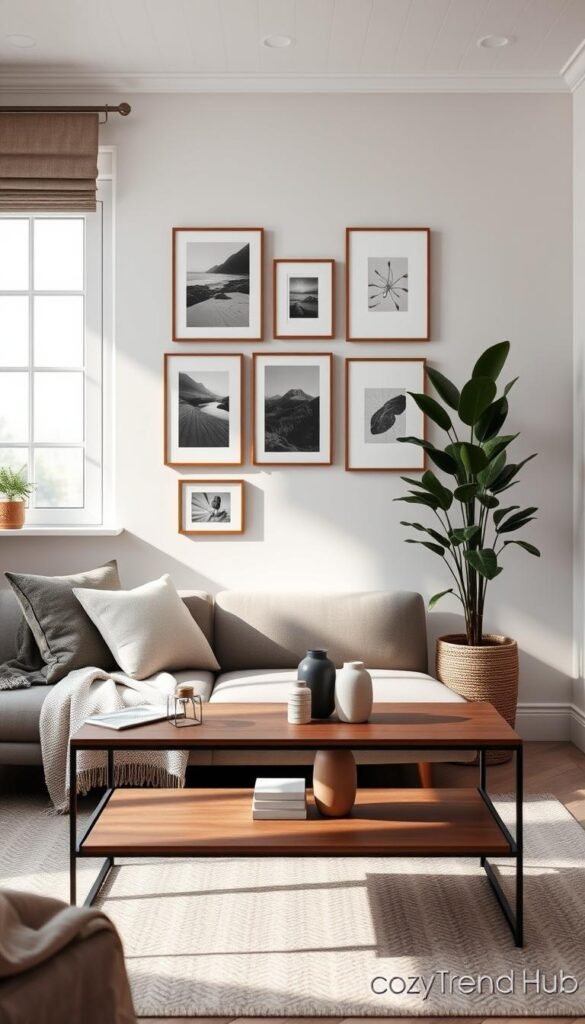
Lightweight prints arranged with consistent spacing create a polished, renter-friendly focal area.
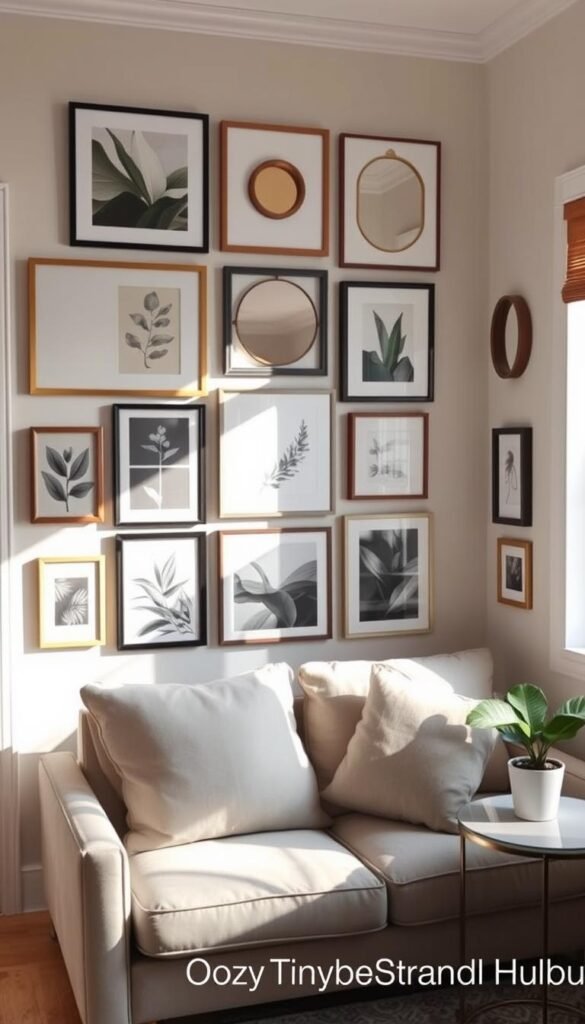
Who this suits
Ideal for renters and residents who want impact but prefer small, moveable pieces. A curated gallery reduces holes and keeps things easy to swap.
How to keep spacing consistent
- Measure first: pick a consistent gap (2–3 inches works in tight rooms).
- Mock it up: cut paper templates to match each print and tape them to the wall before committing.
- Level and anchor: use a small laser level and removable hooks when studs aren’t available.
Choosing a theme
Stick to one palette. Black-and-white or tonal sets keep the look calm. Botanicals add life, abstracts bring modern simplicity, and landscapes add perceived depth.
Pros and cons
- Pros: personality, flexibility, and coordinated pieces that avoid random clutter.
- Cons: takes planning; mixed palettes or irregular spacing can make a gallery feel busy.
Buyer tip: check listings for print count, mixed orientations, and whether frames are included to avoid surprises.
„A well-planned gallery gives the eye a single destination without crowding the room.“
Mirrors for Small Rooms: The Fastest Way to Add Light and Depth
Mirrors are a quick, low-effort way to lift shadowed corners and give a room a sense of depth. They work best where adding furniture is not an option and the goal is to make the area feel brighter and more open.
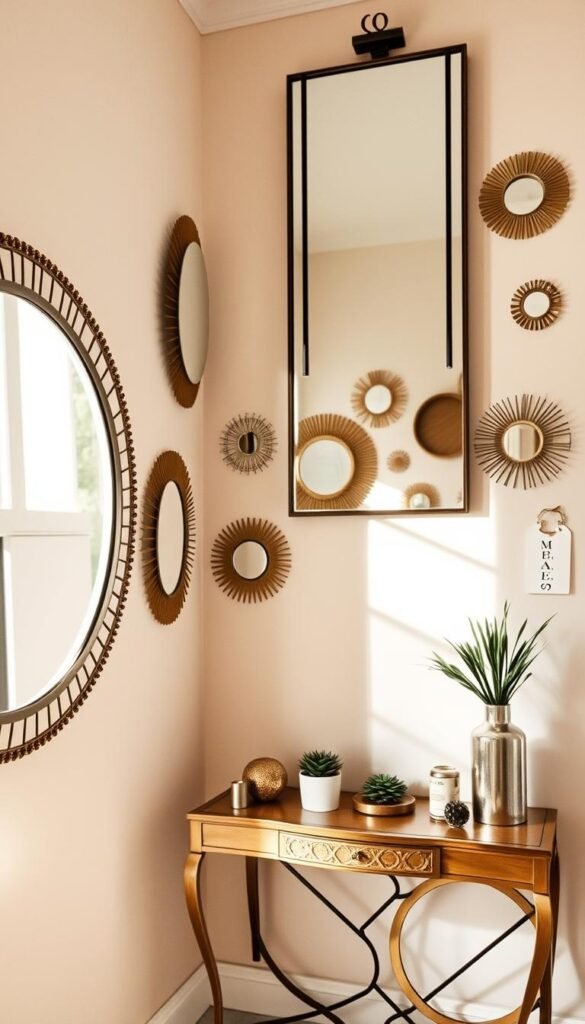
Best candidates
Ideal spots include dim rooms, windowless corners, and narrow hallways where improved light and perceived depth matter more than color or pattern.
Placement that multiplies light
Aim mirrors across from a window or beside a lamp to bounce light deeper into the room. Avoid angles that reflect cluttered views; the mirror should send the eye to brightness, not mess.
What to look for when buying
- Size: Match mirror width to the furniture or wall span—oversized panels boost impact.
- Frame thickness: Thin frames feel lighter and reduce visual weight.
- Clarity: Check for distortion; avoid concave/convex pieces that warp reflections.
Pros and cons
| Type | Pros | Cons |
|---|---|---|
| Large mirror panels | Maximize reflected light and perceived depth | Heavier; may need anchors and are less renter-friendly |
| Decorative mirrors | Add style and focal interest | Smaller pieces reflect less light and can fragment the space feel |
Safety note: heavy mirrors require proper anchors and professional hanging when needed. Lightweight options and adhesive mirrors work well for renters.
„Placed opposite a window, a mirror can double the perceived daylight in a room.“
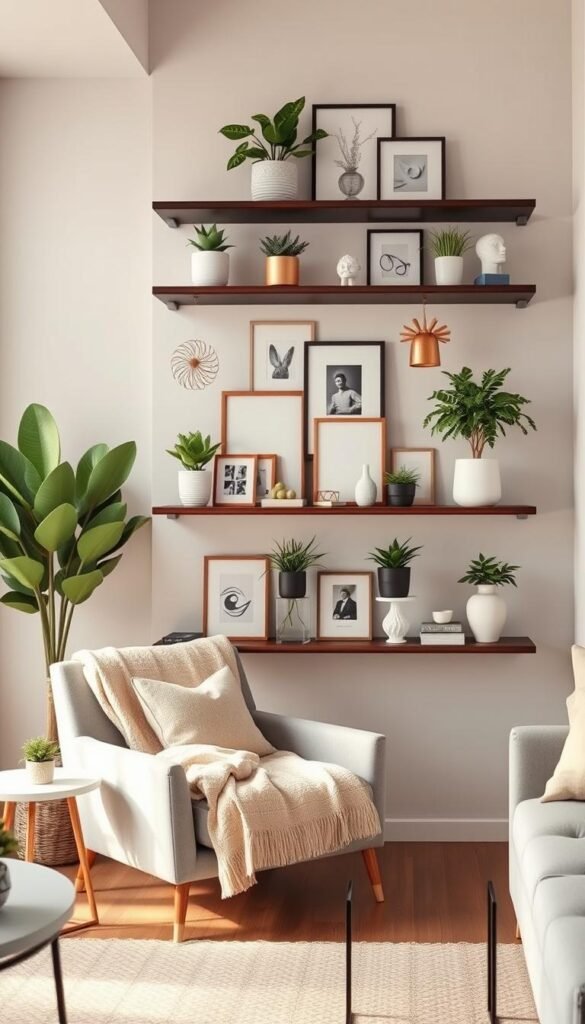
Floating Shelves and Picture Ledges That Add Style Without Taking Floor Space
Floating ledges turn vertical inches into useful storage without crowding pathways. They free the floor and give a narrow room a layered, lived-in look without extra furniture.
Best for
Use these in a compact living room or a bedroom that needs storage but can’t add bulky pieces.
They work well above sofas, dressers, or narrow consoles.
What to display
Show a mix of framed prints, small artwork, and useful items like a small lamp or a book stack.
Keep objects light and stagger heights so the ledge reads intentional, not crowded.
Buying considerations
Check shelf depth so items don’t stick into a walkway. Match weight limits to your wall type and use anchors on drywall.
Verify the mount hardware and measure stud placement when possible.
| Factor | Recommendation | Renter note |
|---|---|---|
| Shelf depth | 4–8 inches for living areas | Shallower ledges limit damage risk |
| Weight limit | 10–30 lbs per shelf (check spec) | Use anchors or toggle bolts on drywall |
| Wall type | Drywall: anchors; plaster: toggle anchors | Removable ledges reduce many small holes |
Pros: Adds function, vertical storage, and easy seasonal swaps.
Cons: Shelves add physical depth and need careful styling to avoid visual clutter.
„A single well-styled ledge can replace a side table and keep the floor clear while showing personal items.“
Renter-Friendly Wall Decor That Won’t Damage Paint
Temporary solutions let a leased apartment feel like home without creating repair work later.
Practical renter choices focus on lightweight pieces, removable adhesives, and clear weight limits. These options make seasonal swaps simple and reduce patching at move-out.
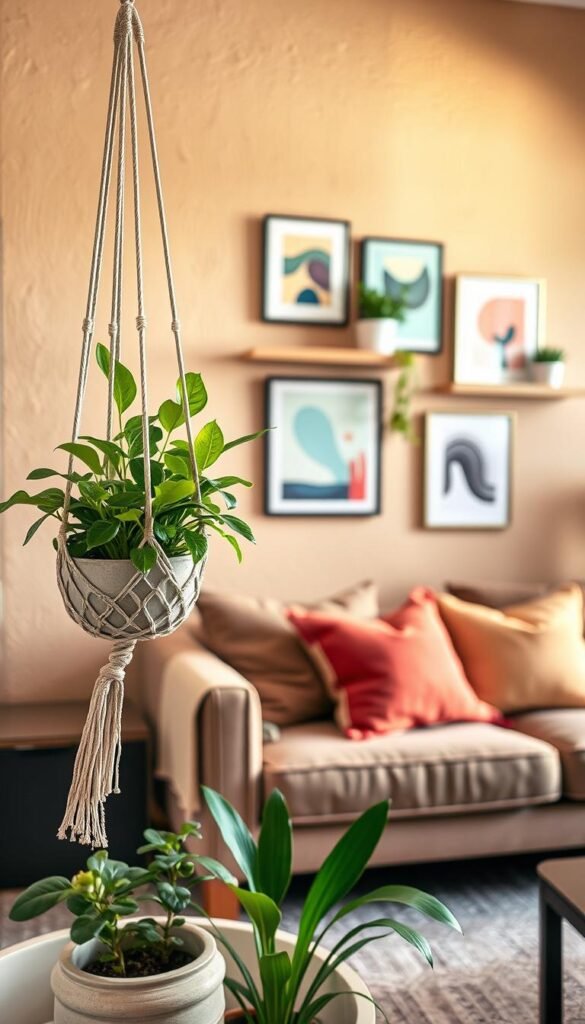
Removable wall decals for seasonal style changes
Why use decals: They swap quickly and store flat, so seasonal refreshes fit tight closets and small storage bins.
Damage-free hanging options for framed prints and canvas
Choose strips or hooks with stated weight ratings. Check paint finish compatibility and follow the maker’s removal steps. Test one strip on an out-of-sight area before full use.
Best for: apartments with strict lease rules and frequent moves
- Define use: renters who need style without repainting.
- Shopping tips: look for clear size/weight specs, multi-packs, and surfaces supported (painted drywall vs textured walls).
- Practical kit: keep extra strips, small level, and a soft adhesive remover in a swap kit to make seasonal changes fast.
| Option | Use | Weight / Surface |
|---|---|---|
| Removable decals | Seasonal accents, murals | Light / painted smooth surfaces |
| Damage-free strips/hooks | Framed prints, canvas | Check ratings (up to 8–16 lbs) / smooth paint |
| Adhesive mirrors | Light-reflecting panels | Low to medium weight / avoid textured walls |
„Damage-free depends on wall condition and proper removal; test a small area first.“
Wall Sconces and Wall-Mounted Lighting to Free Up Tables
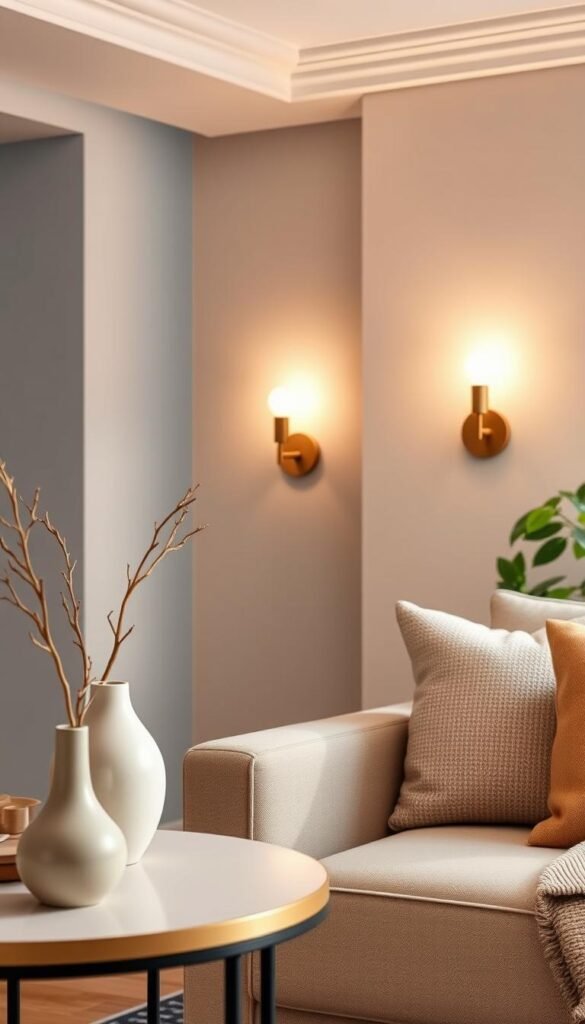
When table tops are crowded, shifting light to the wall clears surfaces and tightens a room’s layout. Wall-mounted fixtures remove the need for bulky bedside or side lamps and improve task lighting without adding furniture.
Best for
Bedrooms and living rooms where nightstands or side tables are full of essentials. Sconces fit narrow layouts and reduce clutter on a table.
How lighting highlights texture and artwork
Sconces add soft, indirect glow that brings out wall texture and frames a piece of artwork as a cozy focal point. Layered light guides the eye and creates depth without extra furniture.
Pros and cons: plug-in vs. hardwired
| Option | Pros | Cons |
|---|---|---|
| Plug-in | Rent-friendly, flexible placement | Visible cord, needs outlet |
| Hardwired | Clean look, switch control | Requires installation, less flexible |
Buying considerations and styling
Check shade direction, brightness, and switch location. Plan cord management so cables don’t create visual noise. Coordinate metal finishes and colors with nearby frames and hardware for cohesive design.
„A mounted light can replace a table lamp and make a room feel more open and intentional.“
Textiles, Tapestries, and Woven Hangings for Warmth Without Bulk
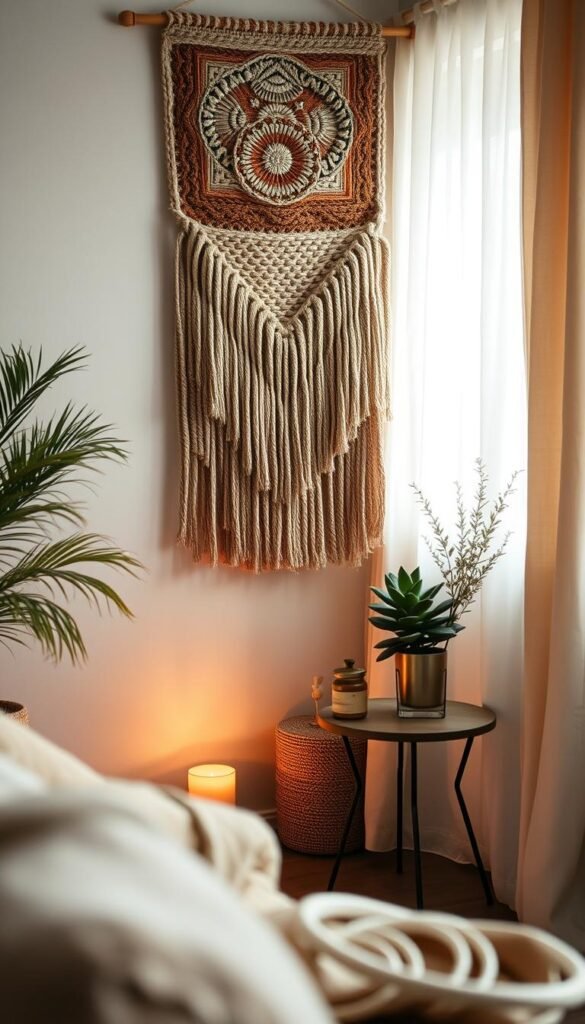
Soft fabrics on a wall can quiet echoes and add tactile interest without crowding the floor. They suit minimal rooms that feel cold, flat, or unfinished.
Who benefits and what problem they solve
Best for echoey rooms and rooms with hard surfaces. A textile absorbs sound and introduces warmth without adding furniture. That makes a room feel cozier while keeping pathways clear.
Layering and style
Layer a tapestry with a single framed print to create a multidimensional gallery that adds visual depth. Keep the palette tight so texture reads as intentional rather than busy.
Buying considerations
- Scale: Match the textile to the wall width; narrow panels work above headboards.
- Pattern and color: Choose tonal or low-contrast prints in compact rooms to preserve an open look.
- Material: Lightweight woven fibers are easy to hang and wash; heavier tapestries add more insulation but weigh more.
Hanging and renter-friendly tips
Use thin rods, clips, or removable hooks to avoid damage. For seasonal swaps, choose mounts that let you change textiles quickly without extra holes.
„Textiles add surface interest and softness, giving rooms a finished feel without bulk.“
Wall-Mounted Planters and Greenery for Small Spaces
Mounted planters bring greenery up and out of the way without sacrificing personality. They suit anyone who wants color and life but can’t spare shelf or table room for pots.

Who benefits and why
These vertical planters keep surfaces clear and reduce clutter. That makes a room feel more open and easier to maintain.
Real vs. faux in low-light rooms
Real plants add scent and seasonal change but need appropriate light and watering routines. Faux greenery gives steady color with no upkeep and works well in low-light areas.
Buying considerations
- Weight: check filled weight and anchors.
- Leak protection: pick removable liners or trays.
- Wall care: add a moisture barrier to protect paint.
- Placement: avoid tight walkways and keep planters above items that water could damage.
| Option | Maintenance | Light Needs | Renter-Friendliness |
|---|---|---|---|
| Real plants (mounted) | Medium — watering, occasional pruning | High to medium depending on species | Use lightweight pots and removable hooks |
| Faux greenery | Low — occasional dusting | None — ideal in low-light rooms | Very renter-friendly; lightweight mounts |
| Modular planter systems | Varies — removable liners ease care | Choose plants by light availability | Pick damage-limiting brackets |
Renter note: prefer lightweight systems and anchors rated for your wall type to protect paint and avoid excess holes in your home.
„Vertical planters add life without taking surface real estate.“
Framed Prints vs. Canvas: Choosing the Right Format for Tight Rooms
Deciding between a framed print and a canvas often comes down to perceived weight and hanging needs. Both formats look good, but they behave differently in narrow rooms and rental situations. This short guide gives a clear framework to pick the right format based on visual weight, projection from the wall, and ease of installation.
When frameless or float-style canvas is the better small-space choice
Gallery-wrap and float-style canvas sit nearly flush to the wall and remove the boxed-in look that bulky frames create. Choose canvas when wall width is limited, ceilings are low, or a clean edge helps the room read larger.
Canvas often weighs less and needs simpler hardware. That makes it easier to hang with minimal anchors—useful in rentals.
Frame thickness and finish: how to avoid a heavy, crowded look
Thin profiles and light finishes reduce visual weight. A slim matte black or natural wood frame adds structure without dominating the wall.
Avoid deep, dark frames on narrow walls; they create a visual ledge that shortens sightlines. If a framed print is preferred, pick narrow molding and pale mats to keep the piece from feeling heavy.
Best for: renters who want lightweight pieces with easy hanging
Renters often benefit from canvas or lightweight framed prints that match adhesive hooks or low-impact anchors. Confirm total weight, included hanging hardware, and how far the piece projects from the wall before buying.
- Practical checklist: confirm total weight; verify hanging hardware; note projection depth; check return/repair policy.
- Quick tip: pick canvas when lightness and minimal projection matter; choose framed prints when a crisp, finished look is essential.
„Gallery-wrap canvas reduces visual bulk and usually hangs lighter—ideal where every inch of wall counts.“
Color Palette and Artwork Style Choices That Keep Small Rooms Feeling Open
Picking a restrained palette ties artwork to the room and keeps sightlines calm. Cohesion reduces visual interruption and helps the eye move across a wall without stopping.
Neutrals and tonal prints for cohesion
Neutral tones and tonal prints make a compact room read brighter and less busy. Choose soft beiges, cool grays, or pale blues that match existing upholstery and trim. Match undertones (warm vs. cool) so frames and textiles feel unified.
Using one accent color as a focal point
One well-placed accent color creates a controlled focal point without shrinking the space. Keep the rest of the palette muted and repeat the accent in a pillow or plant to tie the art to the room.
Modern minimal vs. textured global style
Modern minimal pieces give visual quiet and work when the goal is calm. Textured global art adds depth when used sparingly—repeat a pattern or material in two places to avoid visual clutter.
- Shopping tip: filter by dominant color and select prints with clear undertones.
- Buyer guidance: avoid busy patterns; pick lighter palettes or ensure stronger lighting for darker art.
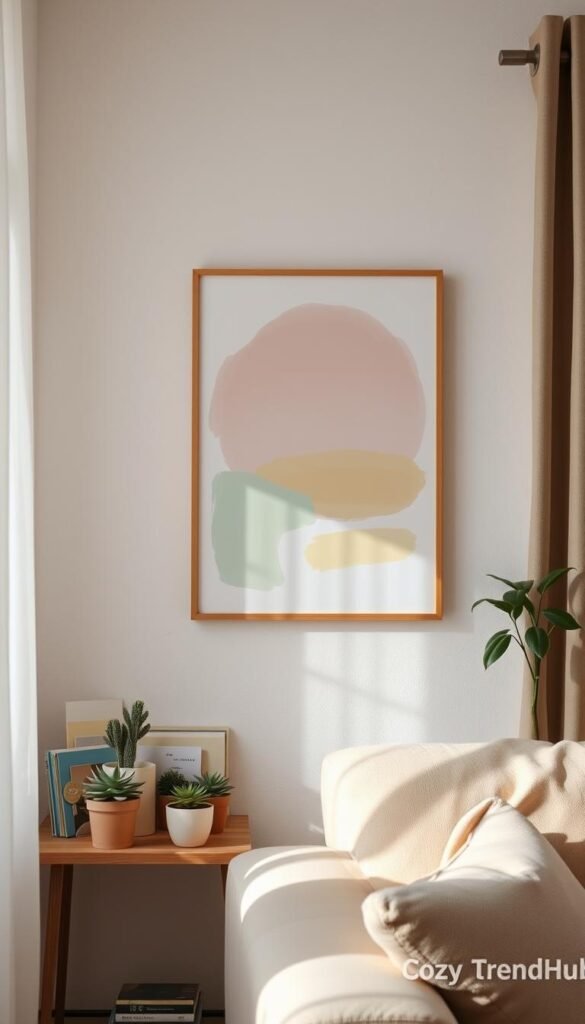
„Coordinate art with the room’s palette to keep sightlines smooth and the space feeling open.“
Placement Rules for Tight Rooms: Height, Balance, and “Vertical Flow”
Placement choices should make a room feel taller, unify furniture and pictures, and avoid visual clutter.
Goal: create vertical flow so the eye moves up rather than across many competing zones. This lets a narrow room read taller and cleaner.
Drawing the eye upward with vertical arrangements and diptychs
Use tall pieces—long woven hangings, narrow mirrors, or stacked diptychs—to pull attention up. Hang the centerline of a vertical grouping slightly above eye level to suggest extra height.
Quick measurement tip: allow 4–6 inches between stacked pieces, and keep the bottom of a vertical set at least 8–12 inches above furniture tops.
Above-bed and above-sofa placement to elongate walls
Align the art width to 60–75% of the furniture below so the pair reads as one unit. For a bedroom, center a horizontal piece 6–12 inches above the headboard to extend the wall visually.
In a living room, center art over the sofa and keep the bottom edge 6–9 inches above the back of the sofa for best balance.
Balancing mixed sizes without chaos
Plan a dominant piece first, then add supporting pieces at smaller scale. Keep gaps consistent (2–3 inches for tight rooms) so the layout looks intentional, not scattered.
Mock up with paper templates, use a level, and step back after each hole. Fewer, well-placed pieces beat many tiny pictures across multiple walls.
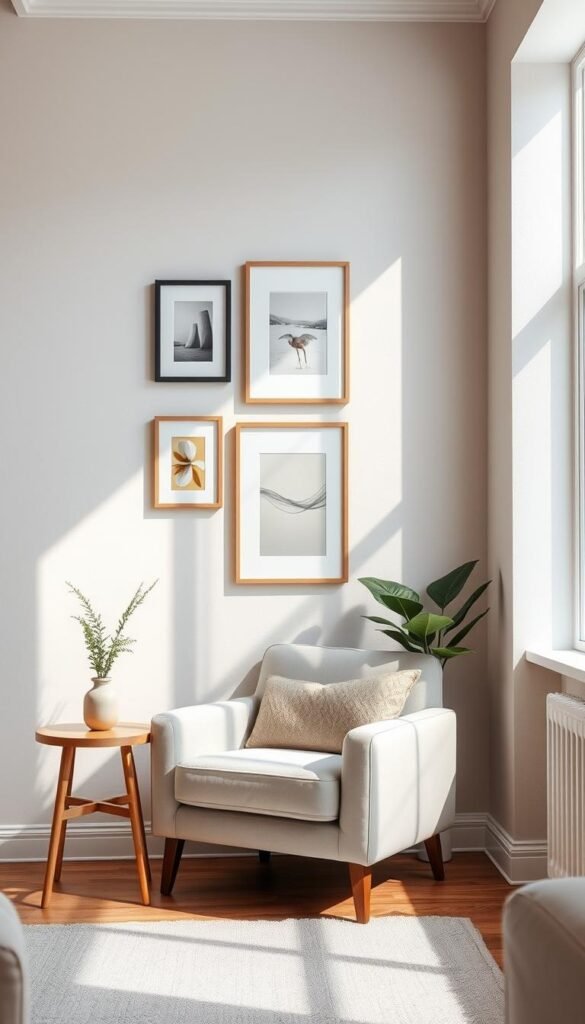
| Placement Goal | Measurement Rule | Typical Use |
|---|---|---|
| Vertical flow | Centerline 5–8 inches above eye level; 4–6 in gaps | Mirrors, woven pieces, stacked prints |
| Above furniture alignment | Art 60–75% of furniture width; bottom edge 6–12 in above | Above-sofa and above-bed installations |
| Balanced mixed sizes | One dominant piece + 1–3 supporting pieces; consistent spacing 2–3 in | Gallery sets, diptychs, small collections |
„Measure, mock up, and hang with restraint—vertical flow and careful balance make narrow rooms feel taller and calmer.“
Seasonal and Temporary Wall Decor Swaps for Small Spaces
A quick seasonal swap can refresh a compact room without adding bulky storage needs.
These methods suit holiday refreshes and short-term styling that won’t overwhelm a renter or a tight floorplan.
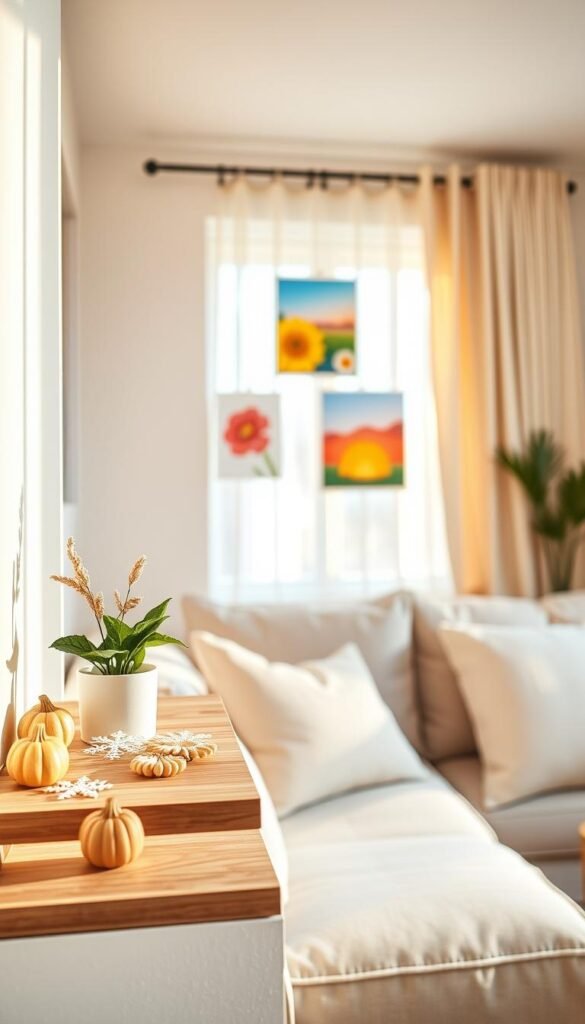
Best for holiday refreshes without storage headaches
Ideal users: seasonal decorators who want a clear visual change with minimal commitment.
Choose lightweight formats that roll or fold flat and avoid fragile glass. That keeps off‑season storage simple in a small home.
Quick-change options
- Removable decals: instant theme swaps and zero-hole hanging.
- Textiles: tapestries or fabric prints that roll into a tube.
- Lightweight prints and canvas: thin canvas panels or unframed prints that slide into a slim tube or envelope.
Buying and storage considerations
Pick pieces that fold, roll, or pack flat. Avoid framed glass if closet space is tight. Keep a single base palette so seasonal items layer without forcing a full redesign.
- Store prints in a rigid tube or flat envelope to prevent bends.
- Use under‑bed bins or slim closet organizers to save room.
- Label boxes and keep a small swap kit: removable hooks, a level, and extra strips.
Vintage pieces add character but should be a single accent to avoid visual clutter. For renters, consistent hanging methods limit patching and simplify move‑out.
„Quick, light swaps keep a home feeling seasonal without creating storage or repair headaches.“
Conclusion
Practical choices start by matching one solution to one problem. Measure the wall, note furniture widths, check light, and judge visual weight before buying. These steps keep purchases useful and predictable.
Shoppers should choose by need: renters lean to decals, lightweight prints, and plug-in lights; dim rooms benefit from mirrors and pale palettes; storage needs point to shelves and hooks.
Favor one strong focal piece or a tight gallery over many scattered pieces. Restraint in palette, contrast, and spacing creates perceived depth and reduces clutter.
Next step: pick a product category from the overview, compare framed vs canvas, and map placement on the wall before ordering.