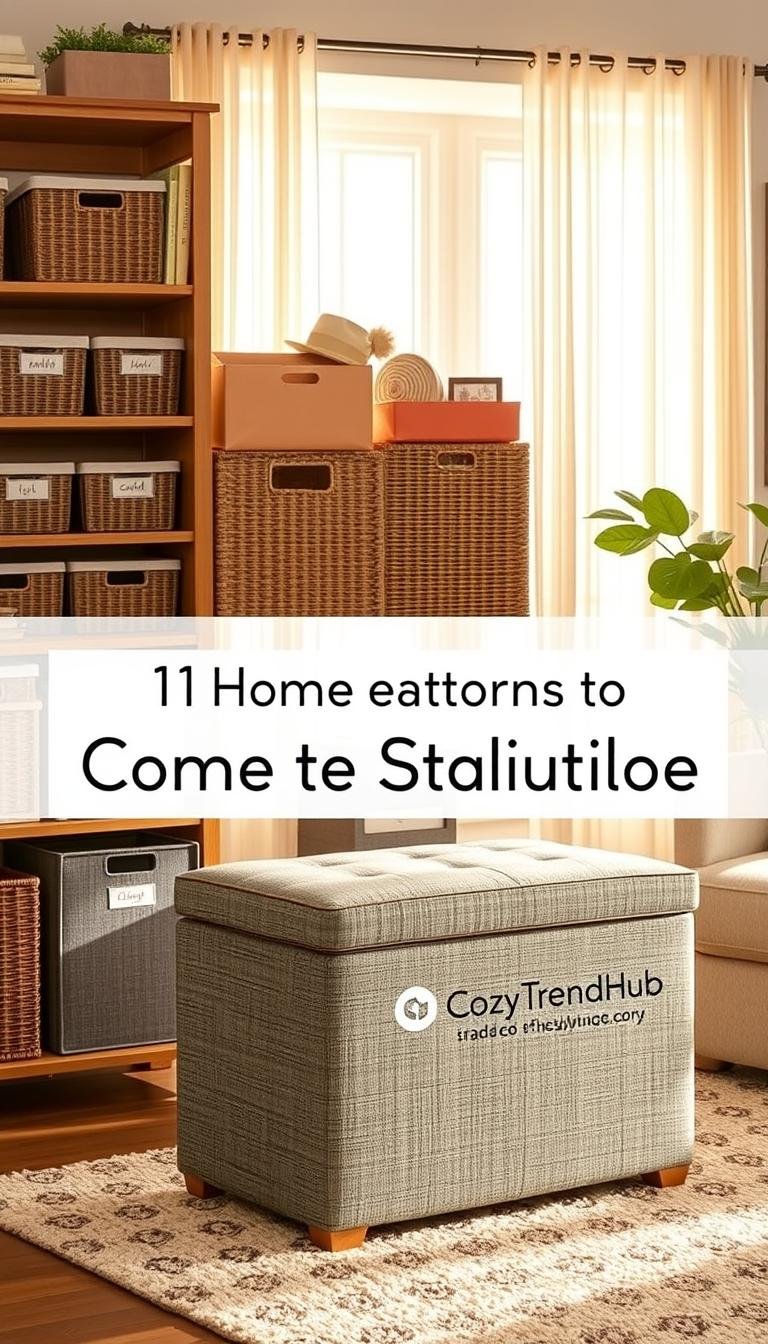
This guide helps renters, small-space dwellers, and seasonal organizers choose smart solutions that fit real life.
Clutter often grows because available storage doesn’t match daily routines—drop zones, tiny kitchens, packed closets, and holiday overflow all add up.
These picks form a budget storage mix of low-cost items that work together across rooms instead of one costly system.
Selection focused on affordability, durability, renter-friendly design, and usefulness in tight space. Each entry shows „best for,“ „why it works,“ buying considerations, and simple pros and cons.
The list maps to common pain points: visibility, access, vertical use, and category containment. Some ideas stay in the home; others point to off-site options when space ends.
Readers can skim quick mini-reviews to compare items room by room and make confident buying choices fast.
Key Takeaways
- Targets renters and small homes with practical, low-cost solutions.
- Each recommendation includes „best for,“ reasons, and buying checks.
- Focuses on visibility, access, vertical space, and keeping categories put.
- Mixes in-home fixes with off-site options when needed.
- Selection criteria: affordability, durability, renter-friendliness, usefulness.
How to choose a budget storage mix that actually fits your space
Start with a short audit: list daily items and seasonal overflow, then match each to an appropriate solution.
Start with the problem
Separate daily clutter (keys, snacks, mail, toiletries) from seasonal overflow (holiday décor, winter gear). Daily-use items should be visible and easy to grab.
Seasonal items can prioritize stacking and protection since they get less access time.
Measure once, buy smart
Measure shelf height, cabinet depth, closet width, under-bed clearance, and usable wall space in one pass. Write sizes down and carry them when shopping.
Renter-friendly rules
Choose non-permanent options first: over-the-door systems, removable hooks, and no-drill shelving. These work with most leases and protect walls.
| Need | Recommended way | Key benefit | Watch for |
|---|---|---|---|
| Daily access | Open bins or wall pockets | Fast visibility and reach | Too-deep bins hide items |
| Seasonal items | Stackable containers | Compact stacking and protection | Brittle plastic or weak lids |
| Renter constraints | Over-the-door & removable hooks | No wall damage, easy removal | Load limits and door fit |
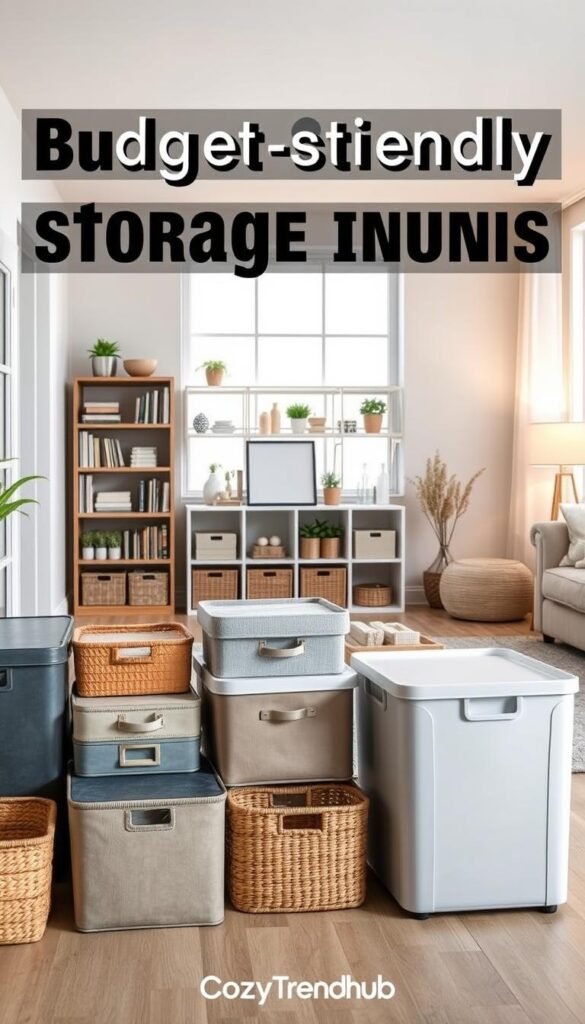
Standardize sizes for containers to cut wasted space and speed restocking. Label groups of like items so nothing gets forgotten.
Finally, think about time and money: the right fit avoids returns, duplicates, and replacing cracked boxes. Later sections show product picks by room and use case so readers can match needs to real options.
Quick comparison: budget storage finds by room, size, and use case
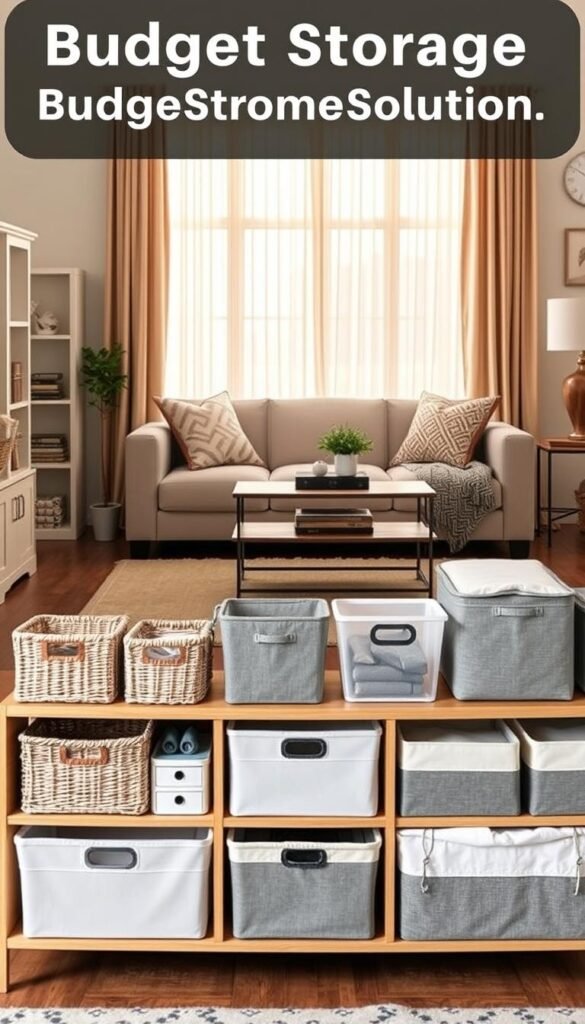
Seeing options in a compact grid makes it faster to pick the right solution for each area of the home.
Use this short layout to match a product to a room, typical sizes, and what to prioritize: visibility, stacking, vertical use, or dust protection.
Small-space winners for apartments and dorms
Over-the-door organizers, under-bed bins, and vertical closet add-ons save floor area and boost reach. Measure door width, under-bed clearance, and closet height before buying.
Best picks for garages, attics, and basements
Ceiling-mounted racks, heavy-duty shelving, pegboards, and clear bins keep items off the floor and protected from dust and pests. Prioritize load ratings and bin durability for long-term use.
Best for renters who can’t drill
Tension rods, removable hooks, and adhesive-mounted wall pockets work without hardware changes. Choose options with tested weight limits and easy removal.
| Room / Use | Best for | Typical sizes | What to prioritize |
|---|---|---|---|
| Kitchen | Open bins & over-door racks | Small bins / 6–12″ depth | Visibility, category labels |
| Bedroom / Closet | Vertical closet add-ons, under-bed bins | Door-mounted / under-bed: 8–14″ high | Vertical use, fit to door/bed frame |
| Entryway | Wall hooks & small bins | Narrow shelves / 10–18″ wide | Fast access, drop-zone design |
| Garage / Attic | Ceiling racks, shelving, clear bins | Large bins / 18–48″ shelving | Durability, dust/pest protection |
Quick tip: Measure once and match product dimensions to avoid wasted space. Each following section expands on pros, cons, and buyer checks to support confident purchases.
Stackable bins and labeled containers for cabinets and pantries
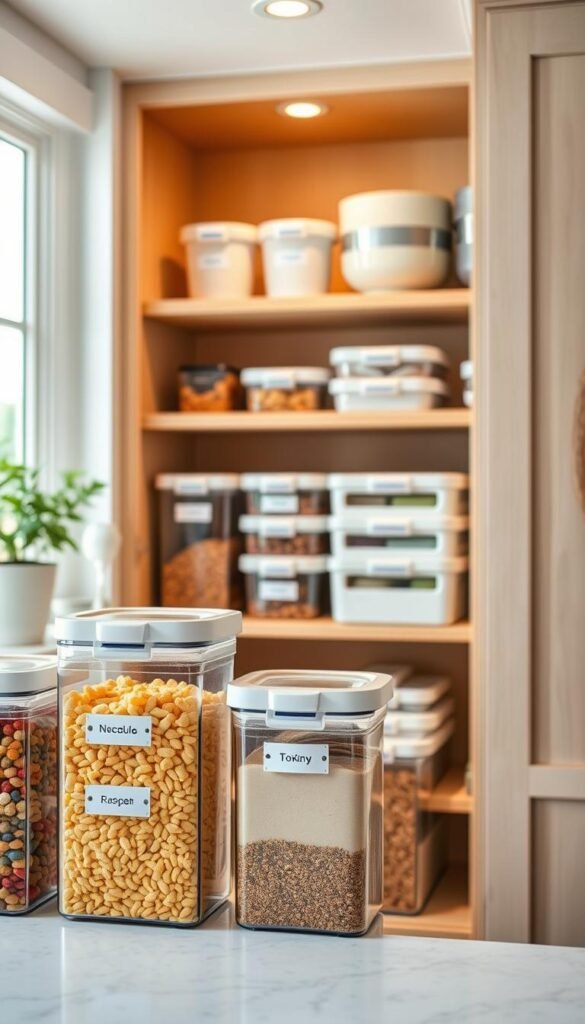
Sliding categories into stackable bins turns messy shelves into an easy, find-and-grab system.
This setup is best for kitchens with crowded shelves and the “where did that go?” frustration. People who keep backups, spice bottles, and single-serve packets benefit most. One container per category makes the whole group slide out together for quick access.
Why it works
Grouping similar items—baking, snacks, oils/vinegars—reduces duplicate buys and speeds meal prep. A single lift shows every item in that category. Labels keep the system consistent after grocery day.
Buying considerations
- Measure shelf height and depth so bin height fits and does not waste vertical space.
- Choose bases that stack without wobble and handles that are comfortable to pull.
- Pick containers with flat, label-friendly surfaces; water-resistant labels survive pantry spills.
- Decide clear vs. opaque: clear helps find frequent items; opaque looks tidy but needs strict labeling.
„A simple group-and-label method turns lost packets into visible, easy-to-grab supplies.“
Pros and cons
Pros: fast resets after shopping, fewer lost items, easier inventory at a glance.
Cons: mismatched bin sizes can waste space, and over-stacking heavy bins cuts access.
Use this way to restore order and keep the kitchen functional.
Over-the-door organizers that add storage without taking floor space
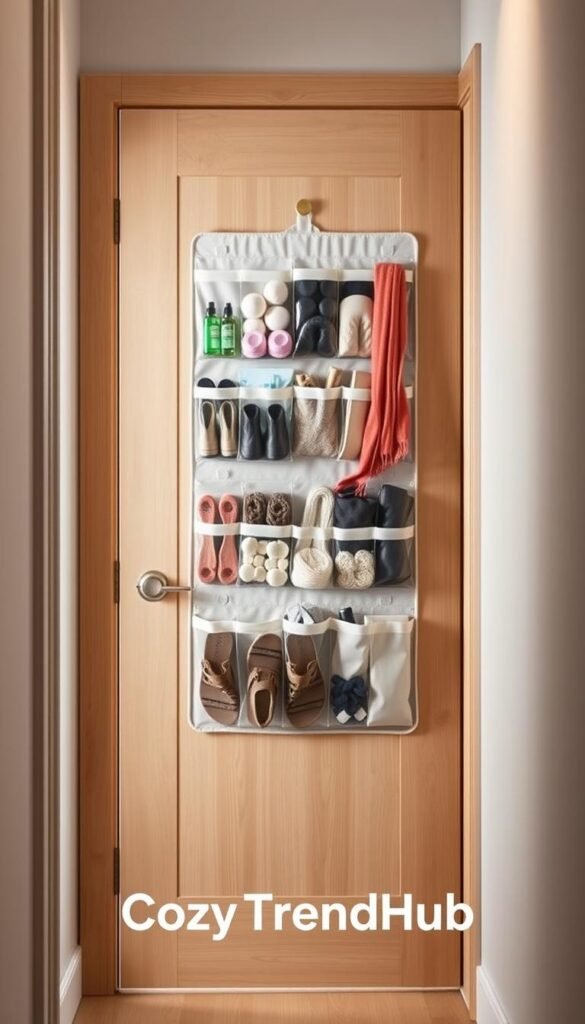
A clear pocket organizer delivers quick access to pantry packets and tools without installing shelves.
Small homes run out of drawer room fast. Frequently used categories then scatter across counters and closets.
This option is ideal for renters, dorm residents, and anyone who can’t add permanent shelving. It creates vertical capacity on the back of a door with near-zero impact on the rest of the home.
Where to use it
- Pantry packets, snacks, and single-serve items for the kitchen.
- Cleaning refills, batteries, and small tools in tight closets.
- Hair tools and toiletries in dorms or tiny bathrooms.
Buying checklist
- Confirm door thickness and clearance so hooks fit without damage.
- Choose clear plastic pockets for visibility to avoid duplicate buys.
- Pick pocket depth that won’t sag when loaded and test hook padding so it doesn’t scrape paint.
- Label pockets so roommates or family know where items belong.
Pros: installs in minutes, adds capacity with almost no floor use, and keeps items visible and reachable.
Cons: pockets can swing or rattle, and overloaded pockets may tear or warp hooks over time.
For more practical picks that suit small apartments, see these best organization picks.
Baskets and thrifted boxes that make open storage look intentional
A row of identical baskets instantly makes open shelving read as intentional, not chaotic.
This approach solves visible clutter. When items sit on bookcases or cubbies, rooms feel messier even if things are “put away.”
Who benefits: people with open shelves in living rooms, bedrooms, and entryways. Baskets and thrifted boxes group cables, toys, blankets, pet supplies, and mail into clear categories.
Buyer tips
Test handles for strength and check for snags. Avoid thin cardboard that collapses under weight. Standardize footprints so containers line up on furniture and shelves.
Mix sizes: use large baskets for bulky throws and smaller boxes for daily grab-and-go items. That way each shelf holds what it needs without wasted space.
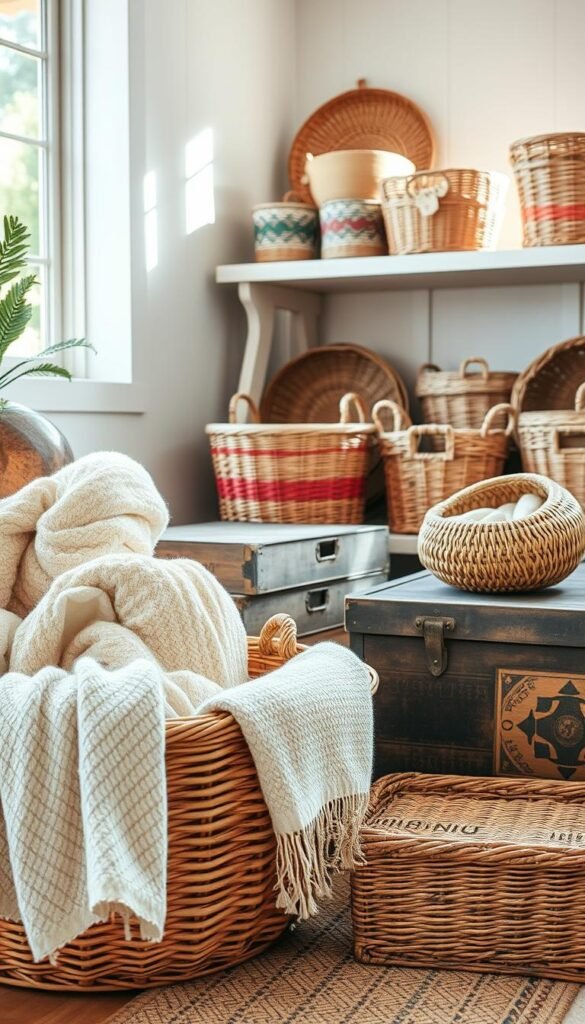
Pro tip: shop thrift stores for unique boxes that match décor and cut costs.
| Use | Recommended size | Material | Key check |
|---|---|---|---|
| Blankets | Large (14–18″) | Woven or fabric | Sturdy base |
| Small electronics | Small (6–10″) | Hard box with liner | Labelable lid |
| Mail & papers | Medium (10–14″) | Cardboard or wicker | Handles & no snags |
Pros: inexpensive, flexible, and visually calmer than loose piles.
Cons: opaque containers can hide duplicates unless labeled, and odd shapes may waste shelf space.
For decor-forward yet practical options, see curated picks for aesthetic decor for small spaces.
Mason jars and large glass jars for small items and pantry staples
A row of clear jars turns scattered bits into an easy-to-scan shelf that saves time.
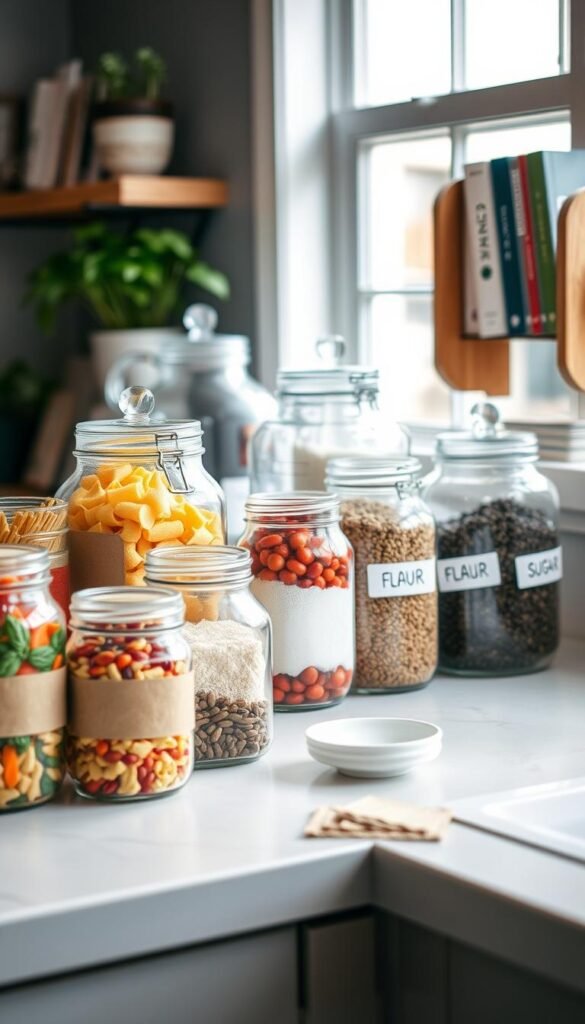
Best for: craft rooms, a home office, and pantries with lots of tiny items. Jars make small items visible and keep categories tidy.
Why it works
Screw-top lids protect dry goods and reduce spills. Clear glass shows contents at a glance, which cuts duplicate buys and speeds restocking.
Buying considerations
- Wide-mouth jars are easier to fill, scoop, and clean; regular-mouth jars save shelf depth.
- Measure shelf height — lids add extra inches when rows are stacked.
- Label fronts for quick ID so the shelf stays usable for daily needs.
| Type | Best use | Pros | Watch for |
|---|---|---|---|
| Wide-mouth | Bulk pantry staples | Easy scoop & clean | Taller height |
| Regular-mouth | Spices & small craft bits | Compact fit | Harder to fill |
| Large glass jar | Office supplies or baking mixes | High visibility, wipe-clean | Breakable in high-traffic areas |
„Mason jars cost about $11 for 12 and work throughout the home.“
Pros: clear visibility, easy to wipe clean, and fewer duplicate purchases.
Cons: glass can break in kid-heavy areas, so place jars where handling is calm.
For pantry-specific jar ideas and practical picks, see this collection of best pantry organizers to find the right way store dry goods and small supplies.
Drawer organizers that stop the “junk drawer” spiral
Unstructured drawers turn useful items into a daily scavenger hunt that adds friction to simple tasks. A few targeted organizers create clear zones so items are visible and grab-able.
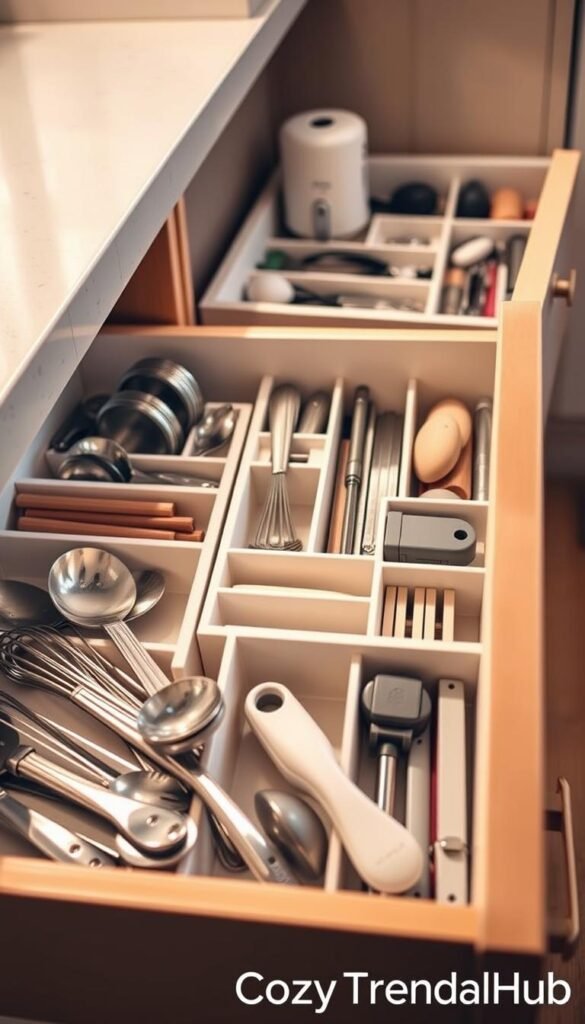
Honeycomb inserts for deep drawers
Best for: dressers and deep kitchen drawers. Honeycomb slots keep socks, utensils, or small tools from shifting and clanking.
Tray plus small cups for office items
Use a flat tray filled with small cups or bowls to separate rubber bands, clips, and labels. Remove bulky packaging and store it elsewhere so the office drawer stays tidy.
Mini loaf pans for bathroom and vanity
Mini loaf pans corral sponges, brushes, nail polish, and perfume. They stop bottles from tipping and make morning routines faster.
Buying considerations
- Match modular sizes to drawer dimensions so pieces fit without wasted space.
- Choose non-slip bases to keep compartments in place during use.
- Pick easy-to-wipe materials for kitchen and bathroom areas where spills happen.
„Create instant categories so everyone knows where items belong.“
Pros: fast sorting that saves time daily. Cons: layouts may need a quick reset when categories change, so favor modular pieces over fixed inserts.
For a quick kitchen reset, see this useful pick and for more desk drawer ideas check a practical kitchen reset guide and an office organization roundup.
Closet and wardrobe hacks for renters and small bedrooms
Small bedroom closets often hold everything; a few targeted changes free usable space fast.
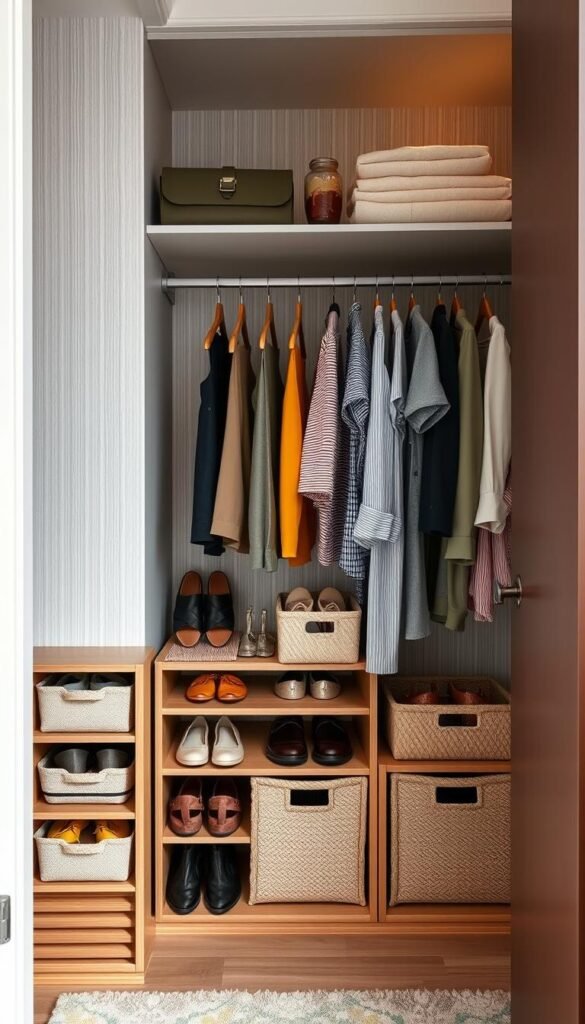
Define the pain: one closet becomes clothes, accessories, and off-season items piled together. This makes daily dressing slow and creates duplicate buys.
Plan outfits to speed mornings
Hanging day-of-week tags let busy people pre-select outfits. Tagging five or seven hangers saves decision time. It keeps outfits neat and reduces morning mess.
Renter-friendly add-ons that expand capacity
Choose hanging organizers, stackable shelves, and under-closet bins to add layers without drilling. These options create clear zones for daily wear and seasonal items.
Use depth and vertical space
For deep closets, add a second tension rod or a removable shelf. This turns the back area into usable hanging or folded space instead of a forgotten pit.
| Hack | Best for | Why it works | Watch for |
|---|---|---|---|
| Day-of-week hanging tags | Busy routines | Pre-plans outfits; cuts morning time | Keep weather changes in mind |
| Hanging organizers | Folded shirts, shoes | Add vertical layers without shelves | Fabric sag when overloaded |
| Tension rod / extra shelving | Deep closets | Creates two hanging tiers; uses back space | Rod weight limits and secure fit |
| Under-closet bins | Off-season gear | Out-of-the-way access; stackable | Labeling needed to avoid repurchases |
Buying considerations: check closet bar weight limits, test fabric organizer durability, and prefer clear or labeled bins for fast access.
„Labeling keeps the system usable through season changes and roommate turnover.“
For more renter-focused ideas and small-bedroom options, see these small-bedroom storage solutions.
Entryway drop zones that keep clutter from spreading
A defined drop zone near the door prevents daily items from colonizing every surface in the home. This is a low-effort way to stop pile-ups before they travel to counters and chairs.
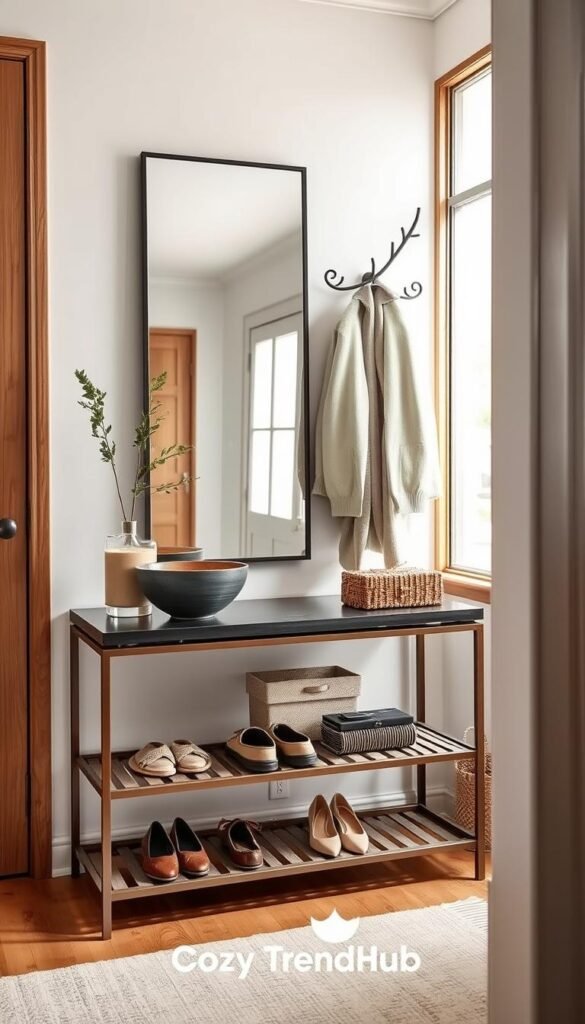
Personalized buckets for each family member fit neatly on a low bookcase shelf. Choose buckets that sit flush on a shelf so the solution works in narrow foyers and apartment doors with no closet.
Who benefits
This method suits families and shared households that need a single place per person. It works best where the door is tight on space and a closet isn’t available.
How to size and stock buckets
Measure shelf depth and height first. Pick buckets that leave a few inches of clearance so lids or papers don’t stick out.
- What goes inside: shoes, hats, dog-walking gear, school papers, and small daily items.
- Optional upgrades: primer/paint for a unified look, name tags for accountability, and magnets or notes if buckets are metal.
Realistic upkeep
Pros: fast drop-and-go reduces daily friction and keeps common areas clearer.
Cons: buckets can become mini-junk zones. A weekly cleanout is the realistic habit that keeps the system working.
„One spot per person quickly lowers household clutter and saves time each morning.“
For more entryway ideas and a fuller approach to mudroom-style setups, see these mudroom ideas and renter-focused renter organization ideas.
Garage and attic budget storage that’s easy to maintain
When seasonal gear lands in a corner, finding one box can mean unstacking the whole pile. That pattern makes garages and attics hard to use and hard to keep tidy.
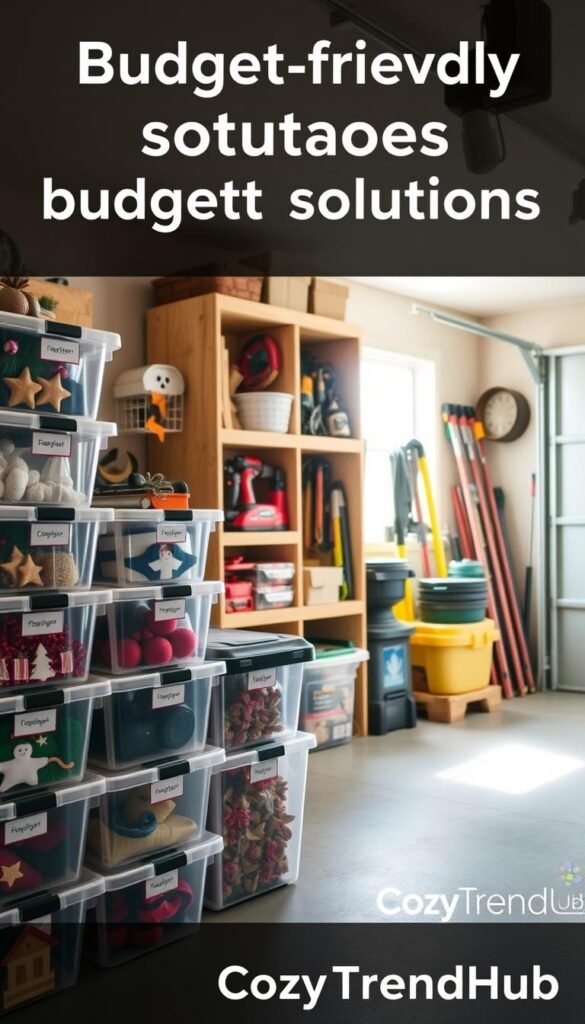
Ceiling-mounted racks for bulky seasonal décor and gear
Best for: seasonal decorators and anyone who needs floor space for parking or projects.
Ceiling racks free floor area and keep bulky items like wreaths and snow gear out of the way.
Pegboards for tools
Best for: DIYers and tool owners. Pegboards make tools visible and reduce time spent searching.
Clear plastic bins and shelving units
Clear plastic containers protect items from dust and pests and speed identification. Pair them with sturdy shelving to stop the “unstack everything” cycle.
„Group like items—camping, holiday décor, keepsakes—so retrieval is predictable and re-shelving is fast.“
| Option | Best for | Pros | Key check |
|---|---|---|---|
| Ceiling racks | Bulky seasonal gear | Frees floor space, high capacity | Ceiling type & load rating |
| Pegboard | Tool visibility | Fast access, customizable | Wall studs and anchor strength |
| Clear containers & bins | Attic protection | Dust/pest barrier, visible contents | Bin standardization for shelves |
| Shelving units | Organized stacking | Prevents damage, easy retrieval | Weight limits and footprint |
Buying considerations
Check load ratings, confirm stud or ceiling type for anchors, and standardize container sizes so shelves stay efficient.
For a full how-to on smart garage and attic options, see the smart garage and attic storage guide.
When your home has no more space: storage units and portable containers
When a home truly runs out of room, off-site options step in to protect belongings and free living space. This section helps readers decide whether a traditional unit or a delivered container better fits their needs.
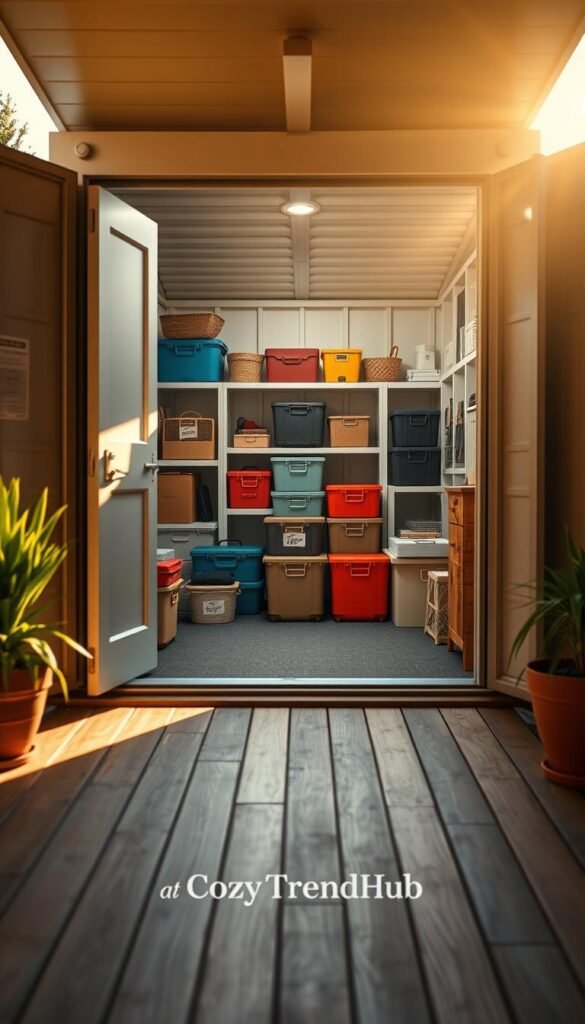
Traditional self-storage units
Best for long-term overflow and items rarely needed. Choose a facility near home to cut travel time and compare rental terms for flexibility.
Portable/mobile containers
Best for moves and renovations. A container arrives, the household loads at its own pace, and the company hauls it away. This reduces truck rental and multiple trips.
Hidden cost checklist
- Truck rental and fuel
- Repeated facility trips and time spent loading
- Access fees or after-hours surcharges
Right-size the unit
Estimate cubic volume and sketch a simple layout. Stack boxes on shelving and leave a center aisle so the paid area is usable.
Best practices
- Label every side and group boxes by category.
- Use shelving to maximize vertical space and stability.
- Factor convenience vs. base cost—spending a bit more now often saves money later.
For practical local options and price comparisons, see these affordable storage solutions to match unit size and access preferences.
Conclusion
Conclusion
Start by matching how often you use items to the solution you buy—daily gear needs quick reach; seasonal goods can live higher and farther.
Adopt a simple approach: define the problem, choose a few reliable containers and vertical pieces, and add one drawer or closet system that fits your furniture and habits.
Renters should favor no-drill, moveable options so solutions travel with the household. Labeling and standard sizes save daily time and make resets fast.
Work room-to-room: tackle the kitchen first, then the office, living areas, and seasonal zones. If home space isn’t enough, compare a local unit with a portable long-term option by access and total cost.
Use the quick comparison and product blocks above to pick the best-fit blocks for your area and needs, then act—small changes add up.