Problem: Harsh overhead glare, dark corners, and eye strain can make a small rental or compact home feel tiring and awkward.
This short guide offers ten practical solutions that focus on better-distributed, controllable light — not just more brightness. It explains a simple lighting comfort mix in practical terms: layered sources that reduce glare and place light where people sit, read, and get ready.
The recommendations are renter-friendly and sized for small spaces. Each idea will include a quick „best for“ note and clear buying criteria: installation difficulty, renter safety, outlet needs, dimming options, and bulb compatibility.
LEDs are highlighted for efficiency and low upkeep — they can use up to 90% less energy and last up to 50 times longer than incandescent bulbs, which matters for high or hard-to-reach fixtures.
This introduction sets expectations: realistic pros and cons, simple measurement tips, and table-ready blocks to help shoppers compare options fast. For more on selecting fixture styles and layouts, see this best decor reference.
Key Takeaways
- Layer ambient, task, and accent sources for more flexible control.
- Focus light where people use rooms to reduce glare and eye strain.
- Choose LEDs to lower energy use and maintenance needs.
- Look for renter-safe installs and easy outlet or plug-in options.
- Each pick will list „best for,“ pros/cons, and what to measure.
Start With the Problem: Why Your Room Still Feels “Off” Even With Enough Light
A single bright fixture can still leave a room feeling off because it creates glare, deep shadows, and a one-size-fits-all mood.
That central ceiling source often causes harsh contrast on faces and screens. It also leaves corners dark and makes clutter look worse. Small spaces amplify these problems: one fixture cannot serve every task in a tight space.
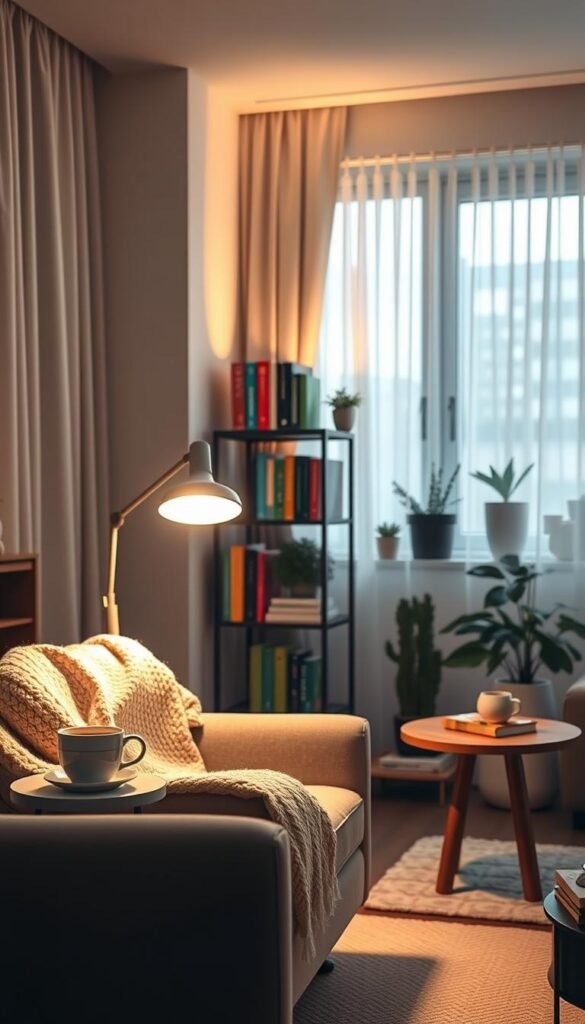
Bedside table areas are a common friction point. Nightstands fill with chargers and essentials, so bulky lamps can add clutter instead of help. Older rentals may have few outlets, which forces awkward cord runs unless plug-in sconces or floor lamps with built-in outlets are used.
Rewiring or new ceiling boxes are usually off limits in rentals. That means adhesive mounts, cord covers, and plug-in fixtures matter more than ever when planning upgrades.
Quick diagnostic checklist before you shop
- Where does glare hit screens or faces?
- Where do people read, work, or get ready?
- Which corner is the darkest?
- Where can cords and outlets be routed safely?
How to choose right
Comfort improves when sources are layered and placed intentionally rather than when wattage is increased. Use task fixtures for desks and bedside table needs, floor lamps to fill dark corners, and plug-in wall sconces where outlets are limited.
| Common Problem | Best Fixture Category | Why it Helps |
|---|---|---|
| Glare from a single overhead | Floor lamp with adjustable head | Redirects beam and softens contrast at eye level |
| Dark corners in a small space | Plug-in wall sconce or LED strip | Adds targeted fill light without rewiring |
| Crowded bedside table | Wall-mounted swing-arm sconce | Saves surface space and frees outlets for chargers |
| Limited outlets in an older rental | Floor lamp with built-in outlets / power strip | Creates new plug points and centralizes cords |
For specific product ideas that match renter rules and small rooms, check the best cozy options.
Build a Lighting Comfort Mix That Works in Any Space
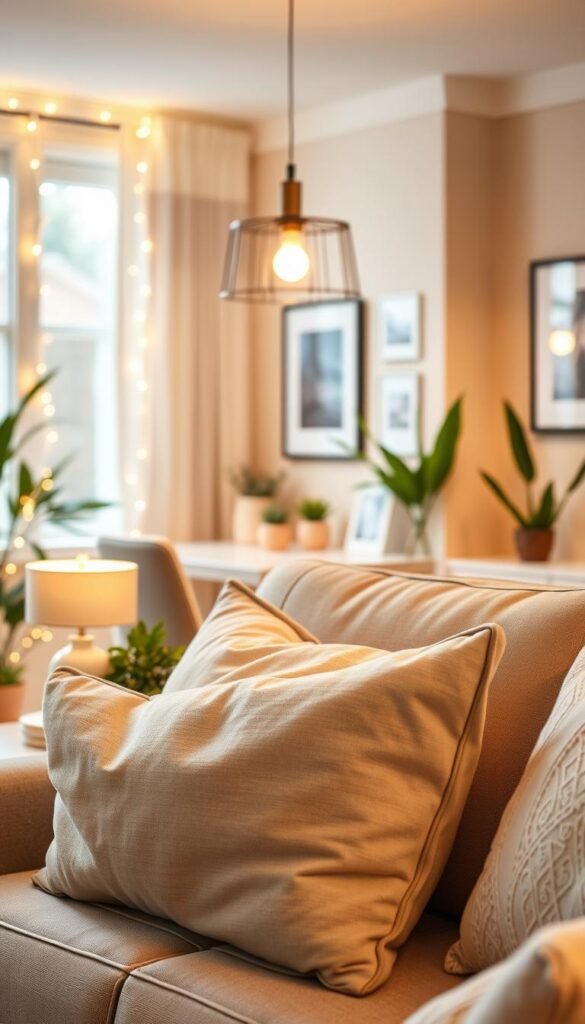
A reliable three-layer plan helps any small room feel balanced throughout the day. The formula is straightforward: one dependable ambient source, one or two task lights for work and reading, and at least one accent layer to soften contrast.
Ambient for even atmosphere
Ambient lighting spreads light to cut harsh shadows and reduce glare from a single ceiling fixture. It sets a flexible atmosphere for everything from chores to winding down.
Buying notes: choose diffusers, dimmable LEDs, and beam spreads that match room size.
Task for focused needs
Task lighting directs controlled beams where people read, work, or get ready. That protects eyes and prevents over-brightening the entire room.
Buying notes: pick adjustable heads, directed beams, and LED-friendly dimmers for desks and bedside areas.
Accent for warmth and depth
Accent lighting adds low-glare highlights to art, shelves, or corners. It improves perceived depth and creates a calmer mood without raising overall brightness.
When to add dimmers and renter-friendly options
Add dimmers when the same fixture must handle cleaning, tasks, and relaxed evenings. Renters can use plug-in dimmer switches, smart bulbs, or inline cord dimmers to get the same flexibility without hardwiring.
- Plan with natural light: map sun angles, then place lamps to balance bright and dark sides.
- Buying checklist per layer: brightness control, beam direction, shade diffusion, LED dimmer compatibility, and outlet needs.
Renter-Friendly Comfort Lighting Ideas That Don’t Require Hardwiring
Renters can use plug-in and freestanding options to add layered, controllable light without any rewiring.
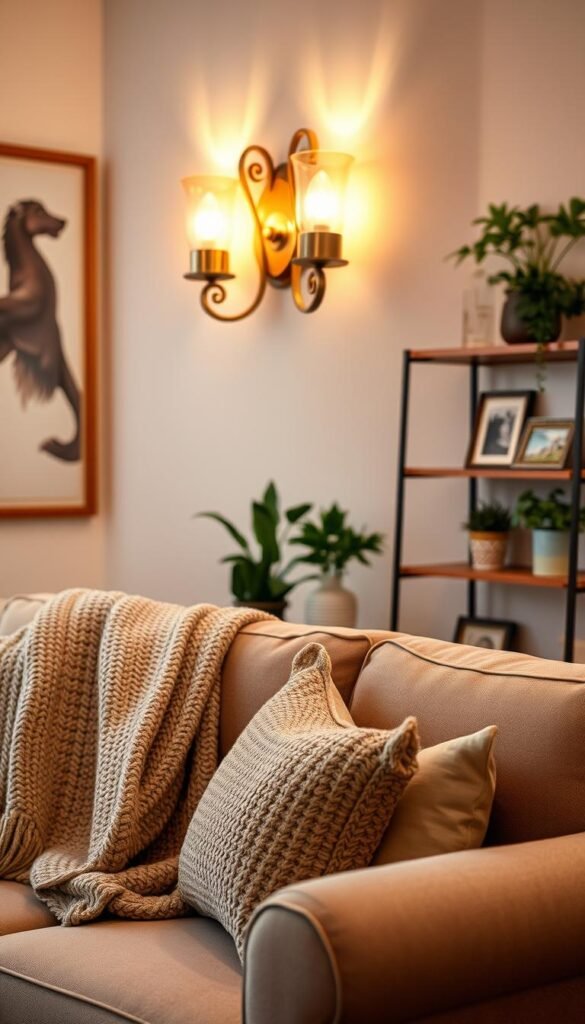
Wall sconces that save space
Best for: small bedrooms and nightstands that need to stay clear.
Plug-in wall sconces free surface area and give targeted reading beams. Swing-arm options are ideal for readers who change position or couples who share a bed.
Buying checks: cord length, on/off placement, shade diffusion, and whether a cord cover can be run cleanly along the wall.
Floor lamps as “no-install” ceiling replacements
Best for: rooms home occupants want to soften without drilling.
Uplight models bounce light for low glare. Pharmacy-style arms provide directed task beams. Some floor lamps add shelves or outlets for limited-plug areas.
Table lamps and quick layout changes
Best for: seasonal rearrangers and renters who need a portable fixture.
Table lamps are portable and fast to add. Watch for surface clutter and choose diffusers to reduce harsh spots.
LED strip lighting for modern ambient glow
Place LED strips under a bed or behind a headboard to create a gentle, navigational glow. They brighten areas without overwhelming the whole room.
| Option | Best for | Pros | Cons |
|---|---|---|---|
| Plug-in wall sconces | Small bedrooms | Saves nightstand space; focused beam | Cord routing, needs outlet nearby |
| Swing-arm sconces | Readers & couples | Aimable light; reduces wake-up glare | Requires solid wall mount; cord cover may show |
| Floor lamps | Living rooms & bedrooms | No hardwiring; multiple styles (uplight, task) | Stability concerns; floor space taken |
| LED strip lights | Under-bed / headboard | Low profile; soft ambient glow | Adhesive longevity; color choice impacts mood |
Affiliate block fields: best for: renters; measures to take: measure cord reach and outlet location; installation level: plug-in; pros/cons: see table; pair with: plug-in dimmer + warm LED bulbs.
For renter-safe decor that pairs well with these picks, see best cozy decor for apartments.
Ceiling Lights That Add Comfort Without Overwhelming Small Rooms
Ceiling fixtures can anchor a small room when chosen for scale and glare control. For low ceilings, choose flush mounts or semi-flush mounts that sit close to the ceiling and use diffusers to soften output.
Flush mounts and semi-flush mounts for low ceilings and rentals
Flush mounts are best where head clearance is limited and a clean look matters. Look for a diffuser (frosted glass or fabric shade) that reduces hotspots.
Buying checks: diameter relative to room size, bulb compatibility with dimmers, and whether the fixture supports LED modules for long life.
Pendants over dining tables or kitchen islands
Pendants work well over islands and small dining tables because they deliver focused beams while leaving adjacent space softer.
Measure: hang pendants about 30–36 inches above a table and space multiples evenly. Shade direction matters—downward shades reduce eye-level glare for seated areas.
Statement chandelier placement for open-concept rooms and foyers
A chandelier can act as a single statement piece in a foyer or open plan room. Pair it with wall sconces or lamps to avoid stark shadows and uneven brightness.
Tip for renters: if a ceiling box exists, swapping may be allowed with landlord approval. If not, refer back to plug-in or freestanding options discussed earlier or check plug-friendly alternatives.
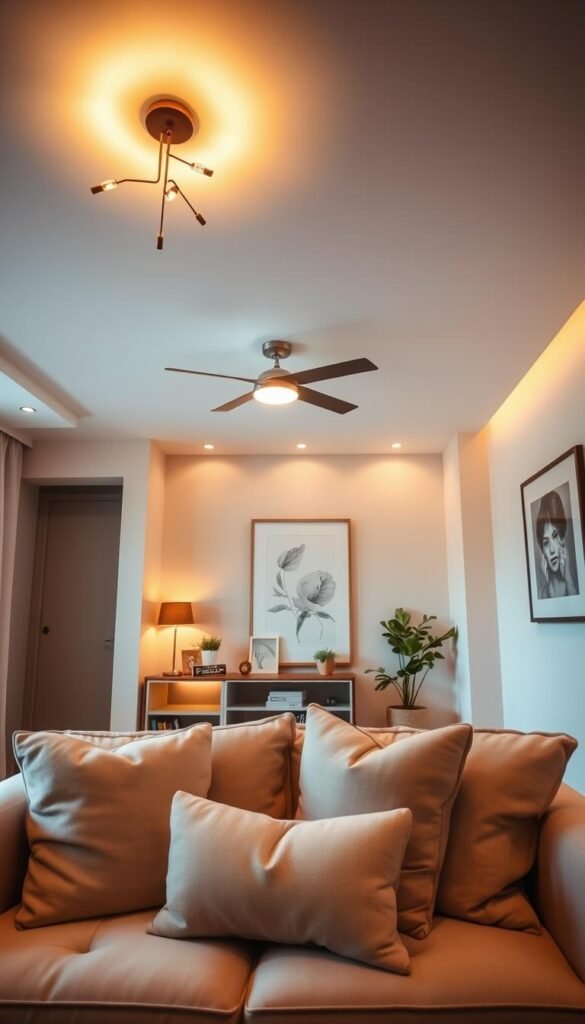
| Fixture Type | Best for | Key buying checks | Rental notes |
|---|---|---|---|
| Flush / Semi-flush mounts | Low ceilings, small rooms | Diameter vs room size; diffuser type; dimmer compatibility | Often easy swap if ceiling box present; ask landlord |
| Pendants | Islands, dining tables | Hanging height; shade direction; spacing for multiples | Lightweight fixtures OK; heavier pieces need support |
| Chandelier (statement piece) | Foyers, open-concept rooms | Scale to room, support for weight, layered lighting pairing | May need pro installation; consider landlord approval |
Visual Comfort Signature Collection is a useful place to find matching finishes across pendants, sconces, and ceiling fixtures for a coordinated look. For more renter-friendly ceiling ideas, see best cozy ceiling options.
Task Lighting Solutions for Reading, Desk Work, and Bedside Comfort
Task-focused fixtures make daily activities easier and cut eye strain where it matters most. Good task lighting puts directed light on reading, desk jobs, and bedside routines so the room can stay relaxed without being underlit.
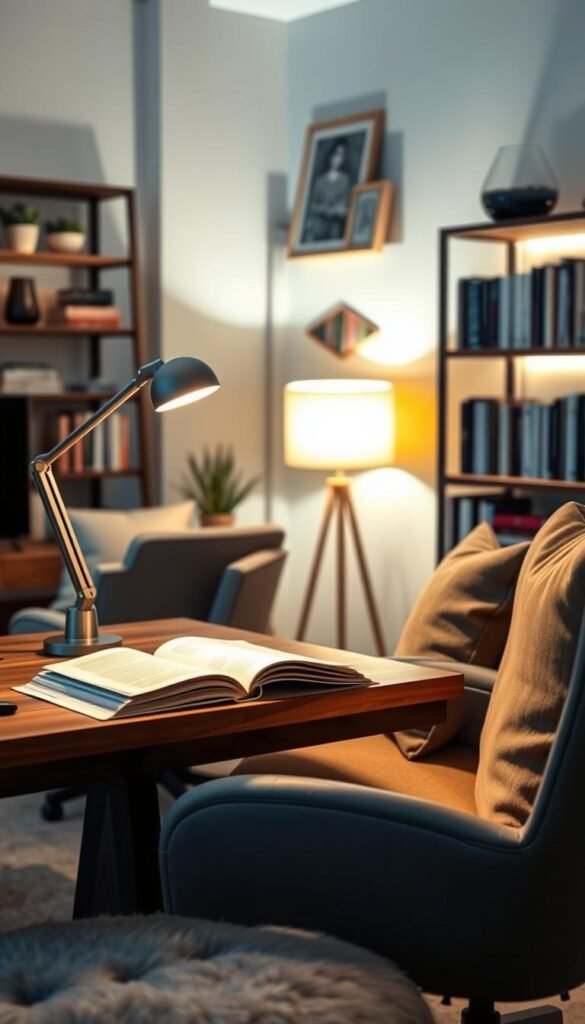
Bedside table lamps vs. wall sconces: who each is best for
Best for table lamps: renters who want no wall drilling and easy swaps. Table lamps sit on nightstands and are simple to move.
Best for wall sconces: tiny nightstands and shared beds where precise, aimed light reduces partner glare. Sconces free surface space and offer clearer beams for reading.
Buying checks: switch reach from bed, shade opacity, and whether the head can point to the page without lighting a partner’s face.
Desk lamps for home office setups
Best for remote workers: an adjustable desk lamp with an articulated arm and a focused beam. These reduce screen reflections and improve visual comfort for long sessions.
Consider lamp height, head articulation, and dimmer compatibility. A shaded head avoids bare bulbs in the line of sight.
For product testing and reviews, see a trusted buyer’s guide for the best desk lamps.
Adjustable floor lamps near seating
Best for: reading corners, nursing chairs, and rooms that need a single moveable source to serve multiple uses.
Choose a lamp with an adjustable arm and a soft diffuser. Check base stability and cord length for tight areas.
Track lighting to fill gaps
Best for: rooms with dark zones where portable fixtures can’t reach. Track systems let users aim multiple heads to cover problem areas without many fixtures.
Track heads pair well with warm LEDs and dimmers for balanced visual comfort across areas.
| Option | Best for | Pros | Cons |
|---|---|---|---|
| Table lamp | Easy swaps, renters | Portable; no wall work | Uses surface space; cord clutter |
| Wall sconce | Small nightstands, shared beds | Saves surface; focused beam | Needs mount; cord routing |
| Desk lamp | Home office, screen work | Adjustable; reduces glare | Must be positioned correctly |
| Floor lamp | Reading corners, multiuse rooms | Moveable; covers tall areas | Floor footprint; stability |
| Track lighting | Dark zones, directional fill | Flexible aiming; covers multiple areas | Ceiling install; may need pro |
Screen comfort checklist: avoid exposed bulbs, use diffusers, place the lamp off to the side based on handedness, and pair with dimmable warm LEDs.
For bedside-specific efficiency tips, check this guide on efficient bedside options.
Accent Lighting That Instantly Makes Rooms Feel Cozier
Accent layers can break up hard shadows and add clear visual depth without raising overall brightness. These smaller sources shape the room by lowering contrast and directing attention to surfaces and textures.
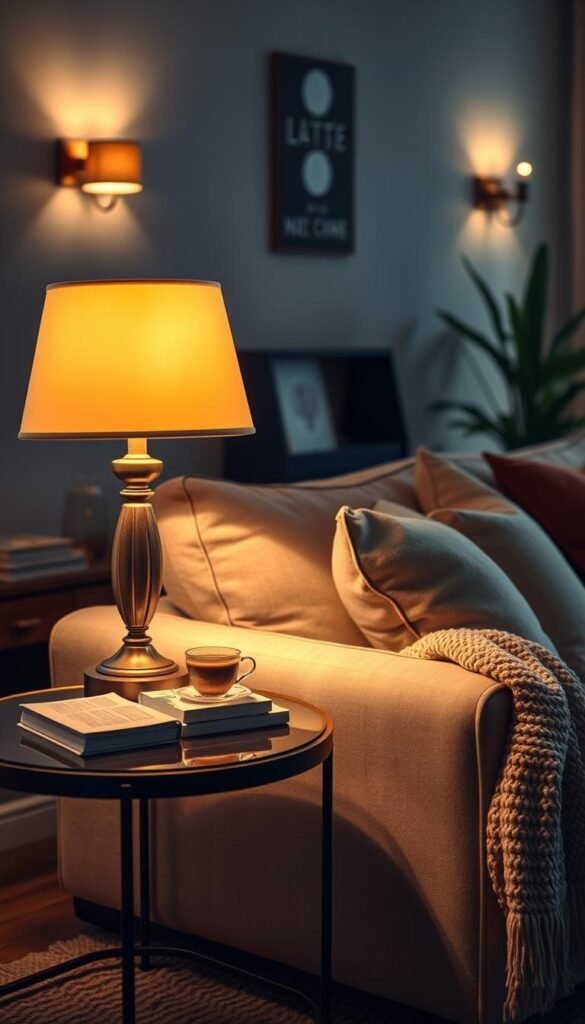
Tinted glass shades for mood and softer atmosphere
Tinted or dark glass shades pair well with lower-watt bulbs to create a moody atmosphere. They reduce glare while keeping enough glow for relaxed activities.
Best for: people who dislike stark brightness at night—bedrooms and lounges.
Upward-directed light to add depth
Uplights and wall-wash fixtures bounce light off ceilings and walls. That reduces harsh contrast and makes ceilings feel taller.
Best for renters: freestanding torchieres and plug-in wall washers that need no rewiring.
Lighting that doubles as art
Illuminated wall decor and sculptural fixtures act as a focal point without clutter. Use them to highlight texture or a single shelf.
Best for: small rooms that need visual interest without adding floor pieces.
Neon as a controlled statement piece
A dimmable, low-output neon-style sign makes a bold but contained statement. Keep it out of direct sightlines from sofas and beds to avoid glare.
- Buying checks: bulb brightness, dimmer compatibility, outlet needs, and safe placement.
- Placement tip: use accent layers to support—not replace—task sources; avoid pointing accents into eyes.
| Accent Type | Pros | Cons |
|---|---|---|
| Tinted glass | Soft atmosphere; reduces glare | May need higher bulbs for safe navigation |
| Uplight / wall wash | Expands perceived height; renter-friendly | Can leave task areas underlit |
| Art-like fixtures | Adds focal interest; low clutter | Cost varies; needs careful placement |
| Neon / sign | Strong visual statement; low output options | Style-specific; may not be for all seasons |
For practical examples of how accent sources change scale in small rooms, see this guide on atmosphere and a piece about fitting an accent to small spaces from BlissLights.
Choose the Right Fixtures by Room and Use Case
Select each fixture to solve a specific problem: dark counters, reading corners, or mirror shadows. Start with the room’s main function, then add the minimum layers needed for good visual comfort without crowding a small footprint.
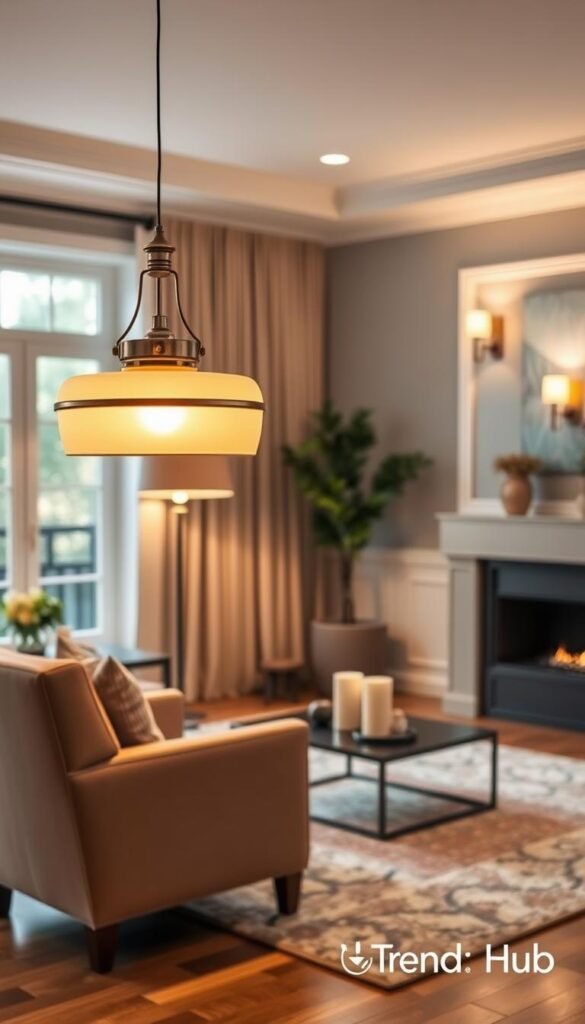
Living room
Best for: open-plan spaces. Use a chandelier or a scaled ceiling fixture as the focal source. Add a floor lamp near seating for reading and small accent pieces for shelves or art.
Kitchen
Best for: safe task work. Bright ceiling lights plus under-cabinet task lighting reduce counter shadows. Install pendants over an island for focused beams without glare.
Bedroom
Best for: flexible evenings. Choose warm-toned, dimmable ceiling lights and pair them with bedside table lamps or wall sconces depending on nightstand space. Add soft LED strips for low-night navigation.
Bathroom
Best for: grooming accuracy. Pick flush mounts or small pendants for general illumination and vanity fixtures at mirror height to cut face shadows. Check damp-rating before purchase.
Home office
Best for: focused work. Combine a steady ceiling source with a directed desk task lighting to reduce screen reflections and eye strain.
Entryway & guest room
For an entry, use a statement pendant or chandelier sized to the space and balanced wall sconces to avoid harsh shadows. In guest rooms, one simple overhead fixture plus adjustable bedside options helps visitors control their own light.
Pairing tip: keep finishes consistent across rooms—brands like Visual Comfort simplify matching. When in doubt, choose right by prioritizing function, scale, and renter-friendly installation options.
Conclusion
Small, targeted upgrades can transform a room from harsh and flat to calm and usable without heavy installs. Start with one ambient fix and one task piece, then add accents as needed.
Core takeaway: a simple lighting mix replaces one glare-heavy source with layered solutions that support real tasks and a calmer atmosphere.
Buyers should favor plug-in sconces, floor lamps, or strips for rentals; flush mounts and uplights for tight rooms; and adjustable task lighting for work areas. Choose warm, dimmable LEDs—they can use up to 90% less energy and last far longer than incandescents.
Quick checklist before you buy: measure the room, map task zones, confirm outlets, pick warm/dimmable bulbs, and plan cord routing. Compare options side-by-side by installation level, dimming method, beam direction, shade diffusion, and glare reduction.
For notes on daylight and LED health effects, see the health benefits of daylight and LEDs. Consider Visual Comfort & Co for coordinated finishes. When in doubt, consult a licensed electrician for hardwired dimmers or complex installs.