This practical guide helps people solve common dark corners, TV glare, and not enough light for reading or working on the couch.
The picks focus on renter-friendly and small-space fixes. Expect plug-in, battery-powered, and low-damage options that avoid hardwiring when possible.
The method is simple: identify the problem, choose a fixture type, size it correctly, pick a warm white bulb (2700K–3000K), and check dimmer and compatibility.
Each product entry will list who it’s best for, key buying considerations, pros and cons, and quick setup tips. That makes side-by-side comparison easy.
How to use this guide: skim the Quick Picks, then jump to the section that matches your ceiling height and layout.
Promise: five trusted picks for common layouts and five budget options that actually solve problems without a full renovation.
For more small-space ideas and decor that pairs well with these choices, see a related guide on aesthetic decor for small spaces.
Key Takeaways
- Layer light: aim for ambient + task + accent for balanced illumination.
- Choose warm white (2700K–3000K) for cozy comfort.
- Renters: prioritize plug-in and low-damage fixtures to avoid hardwiring.
- Measure outlet access, cord length, and dimmer compatibility before buying.
- Use Quick Picks to match product features to your layout and needs.
Quick picks for renter-friendly and small-space living rooms
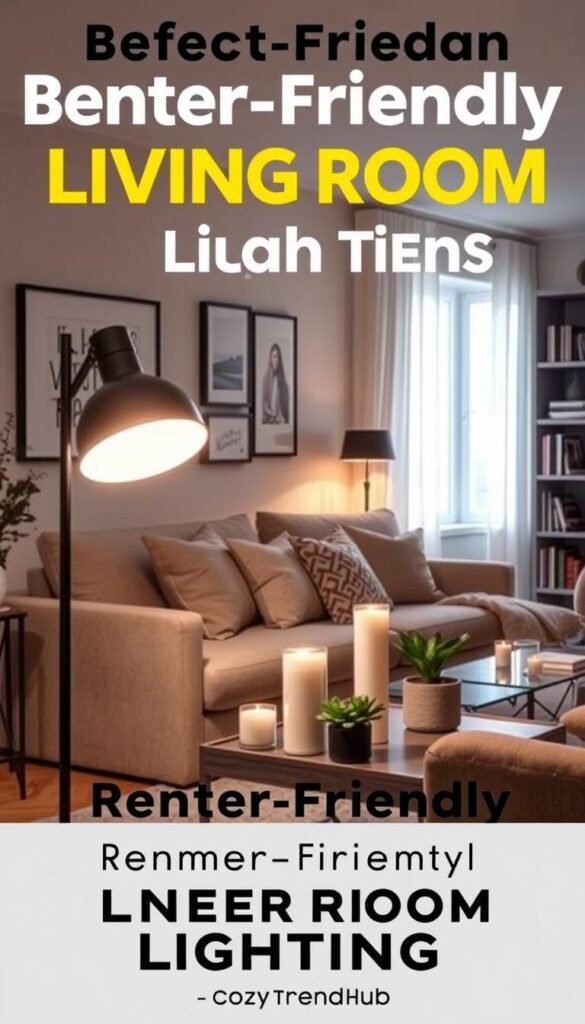
Here are compact, renter-friendly options that boost brightness and cut glare in tight layouts. Each pick ties a clear problem to a specific user scenario so buyers can act fast.
Best overall — layered light for one small space
Problem solved: uneven light across a single-room studio.
Best for: one-bedroom renters who want ambient + task in one place.
What to buy: plug-in pendant + dimmable LED bulb (diffuser, dimming).
Brightness goal: medium. Glare control: diffuser. Footprint: ceiling-to-floor clear. Control: dimmer or smart bulb.
Quick setup: hang near the seating zone using a removable hook and balance with a small table lamp.
Best for low ceilings and apartments
Problem solved: low headroom and visual clutter.
Best for: studios and 8-foot ceilings that need even ambient light.
What to buy: semi-flush LED fixture (low profile, diffuser).
Brightness goal: bright ambient. Glare control: full diffusion. Footprint: low and wide. Control: wall dimmer compatible.
Quick setup: center on the ceiling; add plug-in sconces for task zones instead of hardwiring.
Best for reading corners and couch seating
Problem solved: eye strain and poor task lighting.
Best for: readers who need focused, adjustable light behind seating.
What to buy: adjustable arc floor lamp + adjustable arm (plug-in switch).
Brightness goal: focused task. Glare control: directional head. Footprint: narrow base. Control: inline switch or dimmer.
Quick setup: place the floor lamp behind and slightly beside the seat for bounce light over the page.
Best for cozy, warm ambiance
Problem solved: harsh overhead light and cold color temperature.
Best for: anyone who prefers a soft, relaxed vibe for evenings.
What to buy: table lamp with warm 2700K bulb (fabric shade, dimmable).
Brightness goal: soft ambient. Glare control: shaded light. Footprint: tabletop. Control: switch or smart bulb.
Quick setup: pair two small table lamps to reduce shadows and create even glow.
Best budget pick for flexible placement
Problem solved: limited outlets and tight budgets.
Best for: movers and renters needing fast, affordable fixes.
What to buy: plug-in multi-head floor lamp (adjustable heads, low-cost).
Brightness goal: adjustable. Glare control: individual heads. Footprint: compact. Control: built-in switches.
Quick setup: use near an outlet and angle heads to cover dark corners without extra wiring.
„Layer smaller fixtures to avoid single-point glare and get more even coverage.“
What problem are you trying to solve with living room lighting?
First, pinpoint the hours and corners that feel underlit so solutions match actual use. Note when the TV wall causes glare and where shadows collect during evening hours.
Dark corners and uneven light
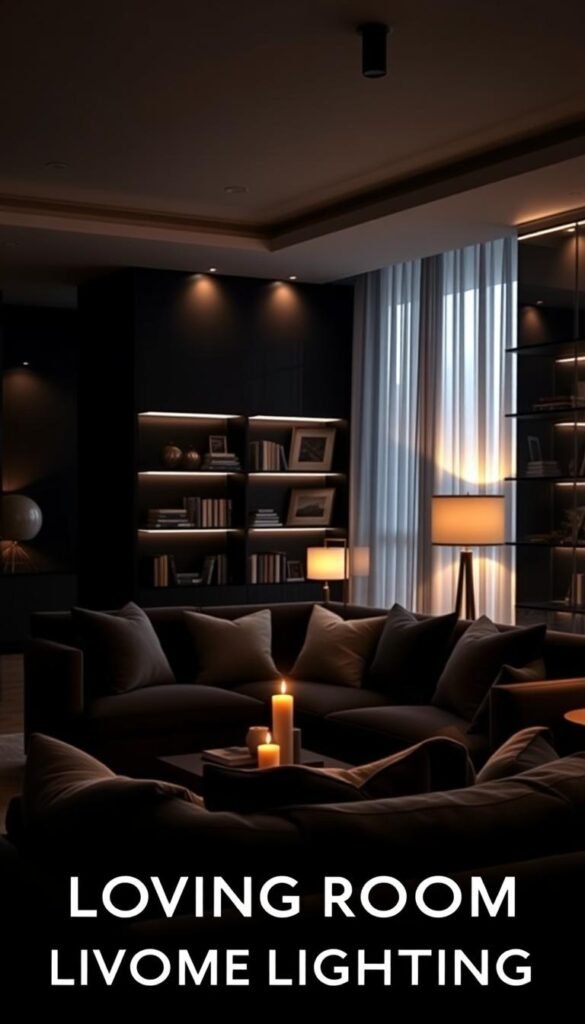
Dark corners usually want a second source, not a single brighter bulb. Add a floor or table lamp with a diffuser to soften shadows.
Tip: multiple smaller fixtures create a more even glow than one harsh central fixture.
Glare during TV time
Keep directional lamps or shaded sconces out of the TV sightline. Use warm-dimming bulbs and diffusers to cut reflections on screens.
Task needs — reading, crafts, work-from-couch
Task work needs focused beams aimed at the activity. Choose adjustable heads or arc lamps to direct the light where it matters.
Rental limits and seasonal use
Renters should prioritize plug-in floor lamps, table lamps, and plug-in sconces to avoid hardwiring. Plug-in sconces allow seat-by-seat control without damage.
Seasonal note: winter gloom may require longer on-hours and dimmable warm light. For hosting, layer zones so the same space adapts fast.
„Start with the problem, then pick fixtures that place light where people use it.“
Once the issue is clear, layering and sizing choices become much easier. See a concise cozy lighting guide for practical inspiration.
How to build a layered lighting plan that actually works
A repeatable, three-part plan helps choose the right fixtures and positions for everyday life.
Ambient as the baseline glow
Ambient provides the room’s base level of light so corners don’t feel like caves. Use a single ceiling fixture or a plug-in floor lamp sized to the space.
Task where people sit, read, and work
Task light aims at activities: reading, laptop work, or hobbies. Choose an adjustable table lamp or an arc floor lamp to reduce eye strain and direct beams where needed.
Accent for art, shelves, and features
Accent adds depth without extra wattage. Small plug-in sconces or picture lights highlight shelves and artwork and create layered ambiance.
- Minimum viable plan: one good ambient source + one task lamp by seating + one accent (sconce or shelf light).
- Renter-friendly swaps: plug-in floor lamps for ambient, adjustable table lamps for task, and plug-in sconces for accents.
- Placement rule: light should come from at least two directions to cut harsh shadows on faces and seating areas.
Seasonal tip: use dimmable fixtures and smart bulbs to shift from bright for hosting to soft for movie nights.
For product matches and small-space design comparisons, see a related guide on minimalist living room decor.
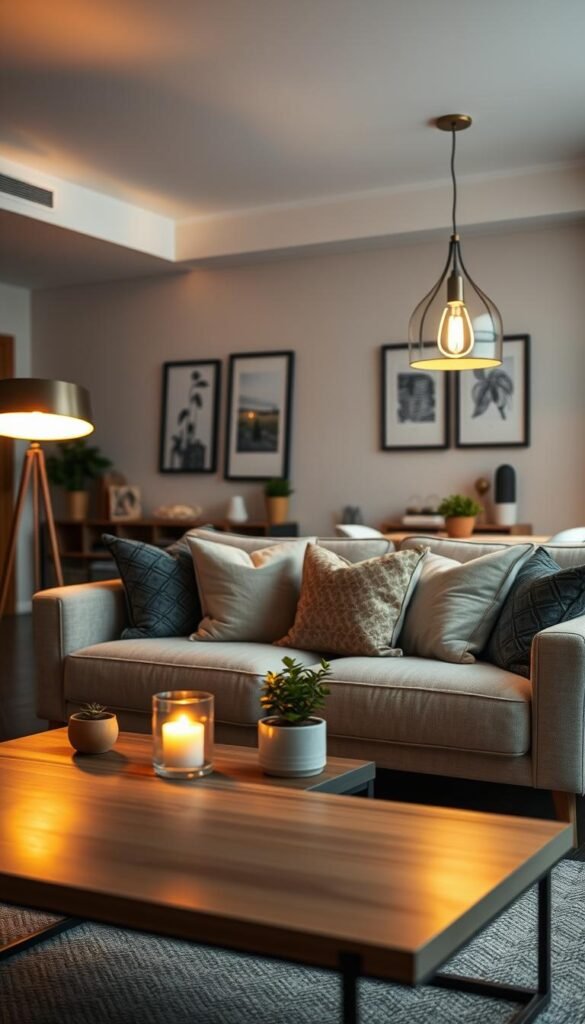
Ceiling lights that fit your space and ceiling height
A simple rule makes ceiling choices easier: prioritize headroom and even spread. Start by measuring the distance from floor to ceiling. That single step narrows options and prevents a fixture that feels too low or too small.
Flush mount ceiling light for standard 8-foot ceilings
For ceilings 8 feet or lower, a flush mount keeps the profile tight. These fixtures sit close to the ceiling, reduce bumps, and give broad ambient glow with low glare.
Best for: small spaces and older rentals where headroom matters.
Semi-flush mounts for 9-foot ceilings
Semi-flush options hang about 4–8 inches below the ceiling. They add style and depth without dropping into sightlines. Choose a diffuser to soften direct beams and cut screen reflections.
Pendant clusters and chandeliers for 10+ foot ceilings
High ceilings allow pendants or chandeliers. Keep the bottom of the fixture ~6–7 feet above the floor to avoid crowding walk paths. Clustered pendants send light farther and create a clear focal point.
Renter tip: if hardwiring is not permitted, use a plug-in swag pendant kit where allowed to get a similar look without altering wiring.
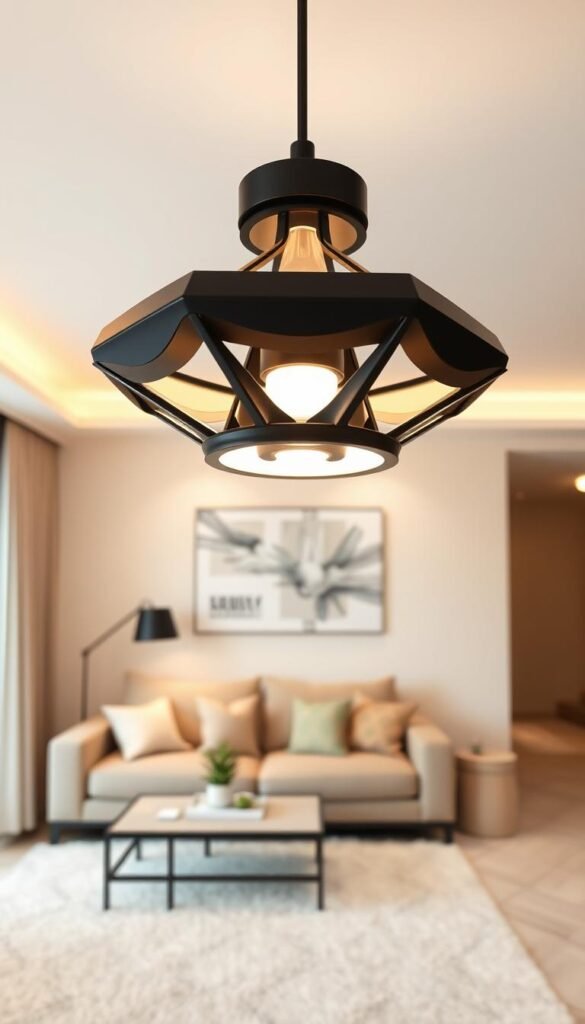
| Type | Ceiling Height | Headroom | Glare Control |
|---|---|---|---|
| Flush mount | ≤ 8 ft | High | Diffused |
| Semi-flush mount | ~9 ft | Medium | Moderate (use shade) |
| Pendants / Chandeliers | 10+ ft | Low (allow 6–7 ft clearance) | Directional or diffused options |
Fixture sizing made simple so your light doesn’t look out of scale
A simple measurement rule helps pick fixtures that feel balanced and deliberate.
The quick formula: add the room length + width (in feet). Use that total as the fixture diameter in inches.
Example: a 15 x 18 space → 15 + 18 = 33 → ~33-inch diameter fixture suggested.
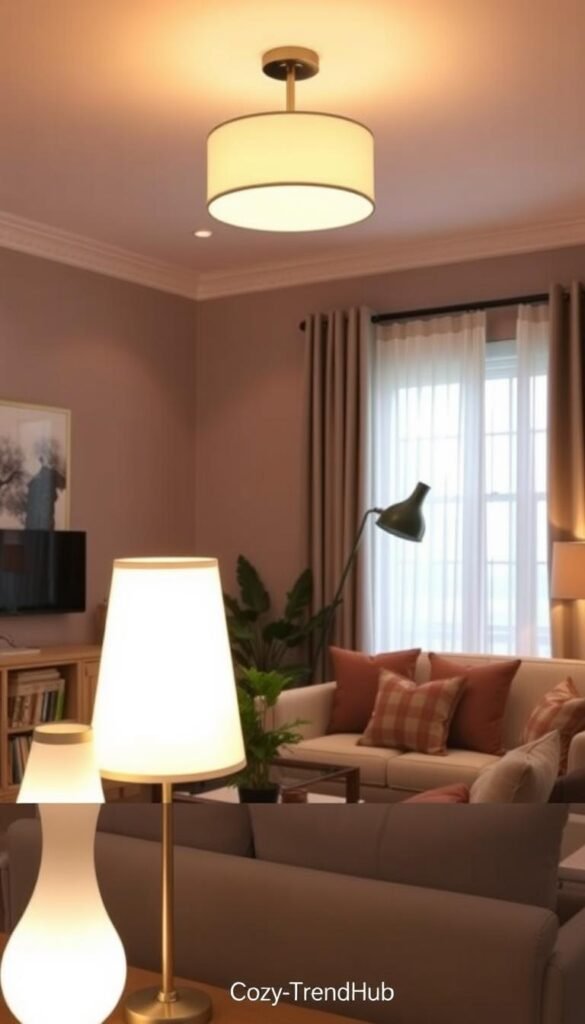
The tradeoffs: too small vs. too large
- Too small: spotlight effect and patchy glow; seating zones stay shadowed.
- Too large: crowded ceiling, visual overwhelm, and awkward drop heights.
When to pick a statement chandelier or a low-profile fixture
Choose a statement chandelier when ceilings are high, the seating group is defined, and the goal is to anchor the space visually. A chandelier works well over a centered seating cluster or coffee table.
Pick a low-profile ceiling fixture for low ceilings, busy ceiling lines, or when glare control and diffusion matter most.
„Size the fixture to the seating area in open plans, not to the entire combined footprint.“
Quick online-shopping checklist
- Confirm diameter matches the formula.
- Check height/drop and canopy size for head clearance.
- Verify bulb counts and compatible bulb types.
- For open plans, size fixtures to the seating zone, not the whole area.
Result: the right scale cuts returns and installation headaches and makes purchases feel like the right match. For small-space decor that pairs well with correctly sized fixtures, see cozy decor for small spaces.
Color temperature and bulbs: getting the right ambiance without regret
Choosing the right bulb color and fixture type shapes how a space feels at different hours.
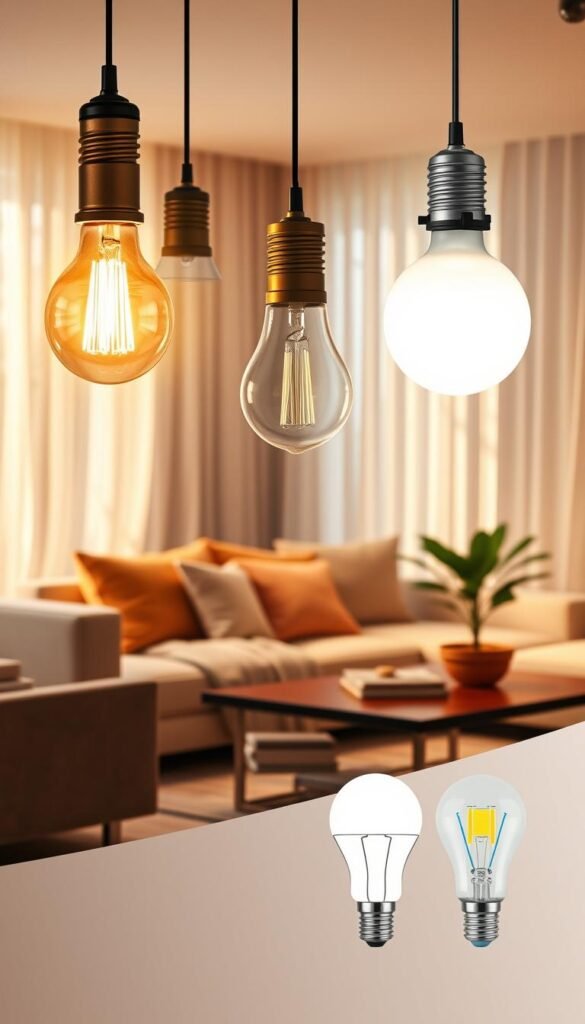
Why warm white 2700K–3000K is the safe bet
Warm white (2700K–3000K) creates a soft, relaxed ambiance for evenings and TV time. It reduces eye fatigue and keeps metallic and glazed surfaces from looking harsh.
When cooler light makes sense for task zones
Cooler color temps read as sharper and help focus. Use them for a desk, craft table, or any work area where detail matters.
Tip: avoid mixing temps in the same seating cluster. Mixed color can make the space feel off.
LED and integrated LED: what to check before you buy
For LEDs confirm three specs: color temperature (K), brightness (lumens), and whether the source is replaceable.
Integrated LED looks sleek and diffuses well, but check the rated lifespan and warranty. If unsure, pick fixtures with replaceable bulbs to avoid regret.
| Color Temp (K) | Best Use | Effect |
|---|---|---|
| 2700–3000 | Main living room lighting | Cozy, soft ambiance; low glare on screens |
| 3500–4100 | Task zones (desks, craft areas) | Clearer detail; sharper contrast |
| Replaceable LED | Flexible fixtures | Easier updates; less risk of style regret |
„If in doubt, choose replaceable bulbs so the look can be fine-tuned later.“
Dimming, controls, and smart compatibility to future-proof your setup
A simple control plan reduces returns by matching fixtures and switches to how people actually use their seating zones.
Dimming matters because it turns one setup into many: bright for cleaning, medium for hosting, and very dim for movie nights.
For homeowners who can change wiring, choose a dimmable fixture plus an LED-compatible dimmer. Renters should prefer standard fixtures with smart bulbs or plug-in controls to avoid rewiring.
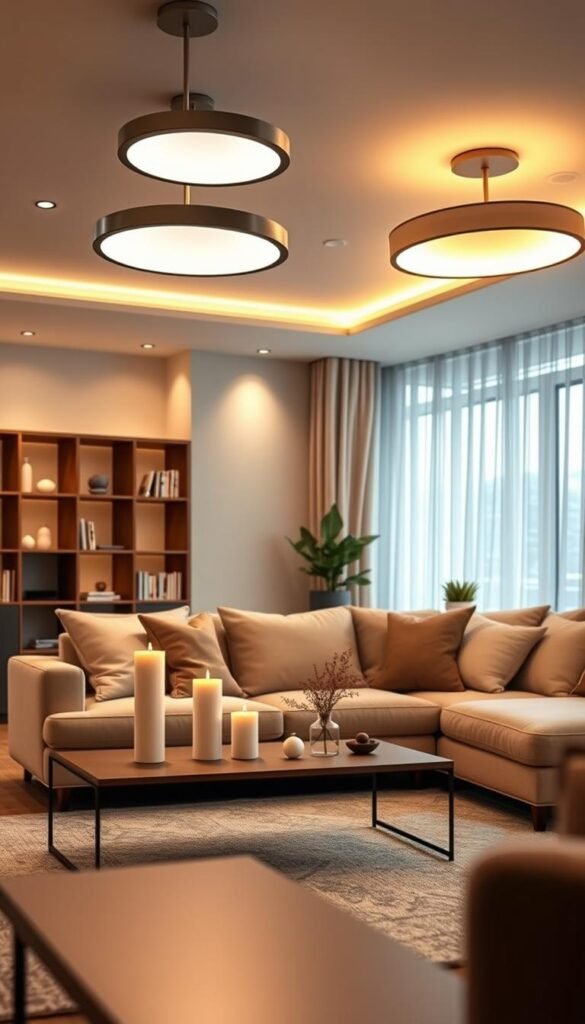
Compatibility checklist
- Dimmable-rated bulb or fixture (confirm label).
- Dimmer type: LED-compatible triac or electronic low-voltage (match spec).
- Minimum load: ensure dimmer supports low-watt LED totals.
Plug-in sconces, inline dimmers, and smart plugs offer flexible options for renters and seasonal setups. They let users create scenes without an electrician.
„Check dimmer and bulb specs before you buy to avoid flicker, buzzing, or limited dim range.“
| Control | Best for | Notes |
|---|---|---|
| Hardwired dimmer | Homeowners | Best range; check LED compatibility |
| Smart bulbs | Renters | No switch change; needs hub or app |
| Plug-in dimmer | Flexible placement | Easy install; limited scenes |
Installation reality check for renters and homeowners
Start by matching the household’s permissions and skills to the kind of install planned. That prevents returns and keeps things safe.
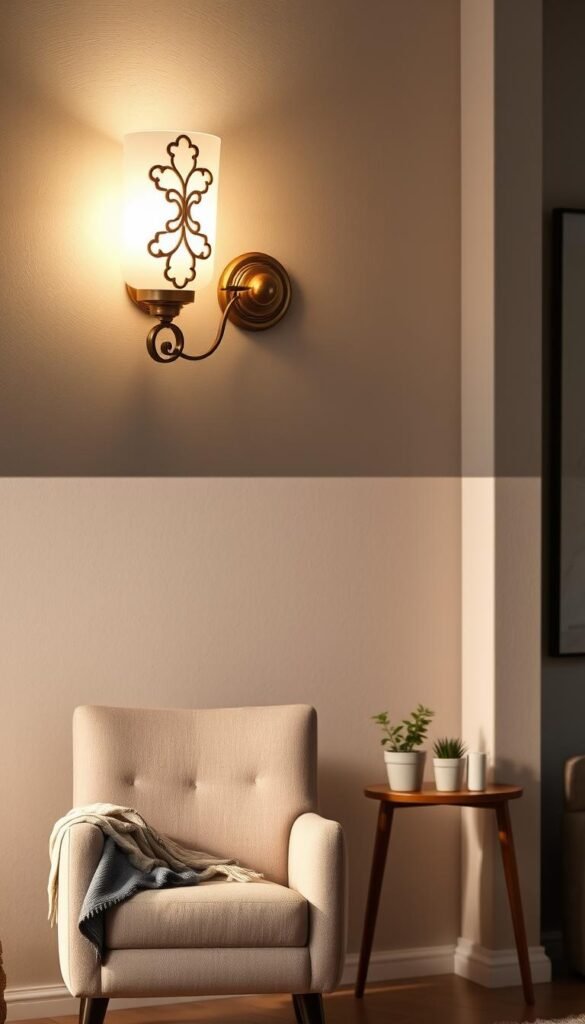
Plug-in options that avoid electrical work
Plug-in choices let renters upgrade a space with no wiring. They work fast and are reversible.
Quick winners: floor lamps, table lamps, plug-in sconces, and plug-in pendants where allowed.
Use removable hooks and cord covers to keep cords tidy and avoid drilling into prohibited surfaces.
Hardwired fixtures: when to hire a licensed electrician
Hardwiring makes sense when a fixture is unsafe, a new ceiling box is needed, or a heavy chandelier requires support.
Safety standard: if the junction box can’t support weight, or the wiring is unfamiliar, hire a licensed electrician.
Wall sconce mounting height guidance for comfortable light
Mount a wall sconce about 60–72 inches from the floor. That puts the glow near eye level and reduces glare for seating and passageways.
Measure from the floor to the center of the fixture, not the bottom. For taller ceilings, aim toward the higher end of the range.
„Choose fixtures that match skills, permissions, and timeline before you click buy.“
| Install Path | Best For | Typical Options | When to Call an Electrician |
|---|---|---|---|
| No‑tools / Plug‑in | Renters, quick updates | Floor lamps, table lamps, plug‑in sconces | Never, unless outlet circuits are faulty |
| Hardwired | Permanent upgrades, heavy fixtures | Ceiling fixtures, wired sconces, chandeliers | Replacing old wiring, adding boxes, heavy loads |
| Hybrid | Renters who can make minor changes | Swag pendants, anchored fixtures with noninvasive kits | When anchors hit unknown wiring or structure |
Renter note: use removable hooks, nonpermanent anchors, and cord covers where allowed. If a lease bans drilling, pick plug‑in options instead.
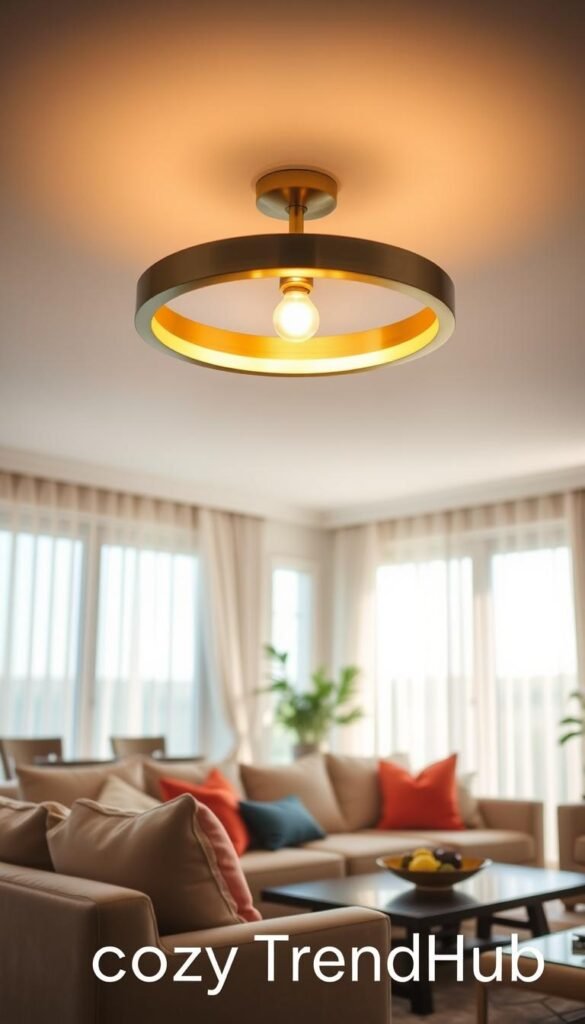
Best overall ceiling light fixture for a brighter living room
A single well-sized ceiling light can change how bright and balanced a space feels.
Who it’s best for and the problem it solves
Who benefits
Homeowners or long-term renters who can replace an existing ceiling fixture will get the most value. This pick suits anyone who wants a reliable baseline glow without harsh hotspots.
Problem solved
The right fixture reduces overall dimness and cuts shadowed corners. It creates an even ambient layer so lamps can add warmth and task beams without the space feeling clinical.
Buying considerations: ceiling height, beam spread, and dimming
- Ceiling height: confirm fixture drop and head clearance for 8–10+ ft ceilings.
- Diffuser quality: a frosted or fabric shade softens beams and cuts glare.
- Beam spread & lumens: aim for wide spread and 1500–3000 lumens for typical US living room sizes.
- Dimmable rating: choose LED-compatible dimming to support hosting and movie modes.
- Finish & install: check canopy size and whether it fits your ceiling box.
Practical pros
- Cleaner ceiling look: fewer visible cords and a unified focal plane.
- Better baseline brightness: fills the main zone so lamps refine rather than rescue.
- Fewer dark zones: when paired with one or two accent lamps, coverage is even.
- One-switch control: simple everyday use with dimming for scenes.
Practical cons
- Requires ceiling box access and possibly an electrician for hardwiring.
- May still need focused task fixtures for reading or crafts.
- Poor diffusion or thin shades can create glare instead of soft glow.
Pair it with: a directional floor lamp for corners and a small table lamp for eye-level warmth. These cross-sell items work well as affiliate add-ons.
„A broad, diffused ceiling fixture creates a reliable baseline so other fixtures can perform their job.“
| Feature | Recommended Specs | Why it matters |
|---|---|---|
| Ceiling height fit | Flush to semi-flush for ≤9 ft; pendant for 10+ ft | Prevents low hang and ensures even coverage |
| Diffuser type | Frosted glass or fabric shade | Reduces glare and softens beam spread |
| Lumen output | 1,500–3,000 lumens | Bright baseline for most living room sizes |
| Dimming | LED-compatible; 0–10V or triac | Creates scenes for hosting and low-light viewing |
Best flush mount for low ceilings and small living rooms
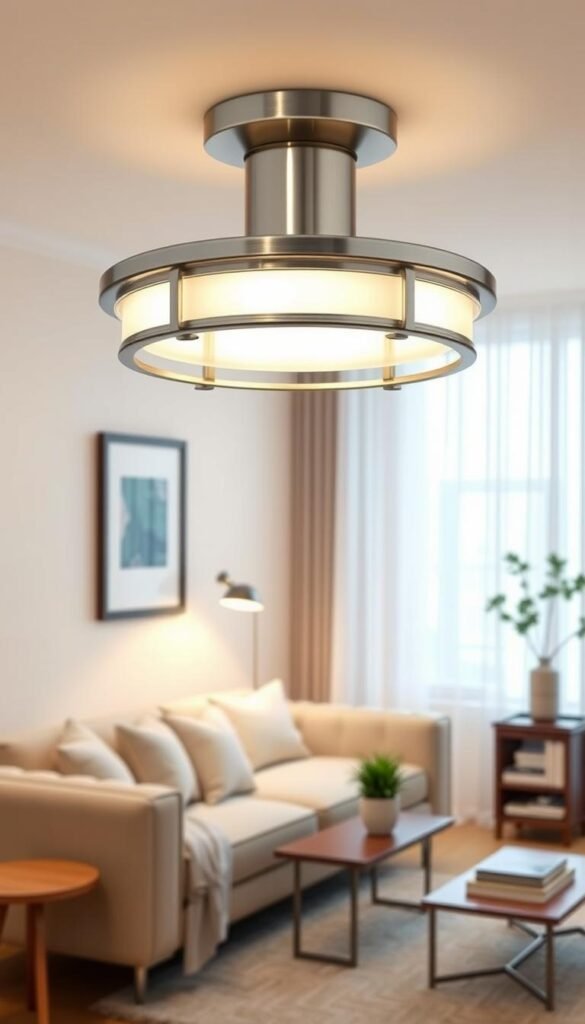
A low-profile ceiling fixture can instantly free up headroom and make a small space feel more open.
Why these fixtures work at 8 feet or less:
Deep pendants steal clearance and make tight areas feel crowded. A flush design keeps the fixture close to the surface and removes sightline interruptions.
What to look for
- Low profile depth: under 4 inches is ideal for tight ceilings.
- Strong diffuser: frosted glass or acrylic to soften LEDs and cut glare.
- Wide spread: broad beam to avoid hot spots and dark corners.
- Dimming compatibility: ensures scenes for hosting and TV time.
Pros
Space-saving: preserves clearance in walkways. Easy to clean and often renter-friendly.
Cons
Can look flat if undersized. Thin diffusers may still cause glare and steal a focal point.
Ideal setups
Best for studio apartments, basements, and older rentals with variable ceiling heights. For quick shopping, see a curated selection of flush and semi-flush mounts.
Finish tip: pick a neutral finish to keep the ceiling visually quiet or match existing hardware for a seamless look.
| Feature | Recommended |
|---|---|
| Profile | <4 inches |
| Diffuser | Frosted glass or acrylic |
| Dimming | LED-compatible |
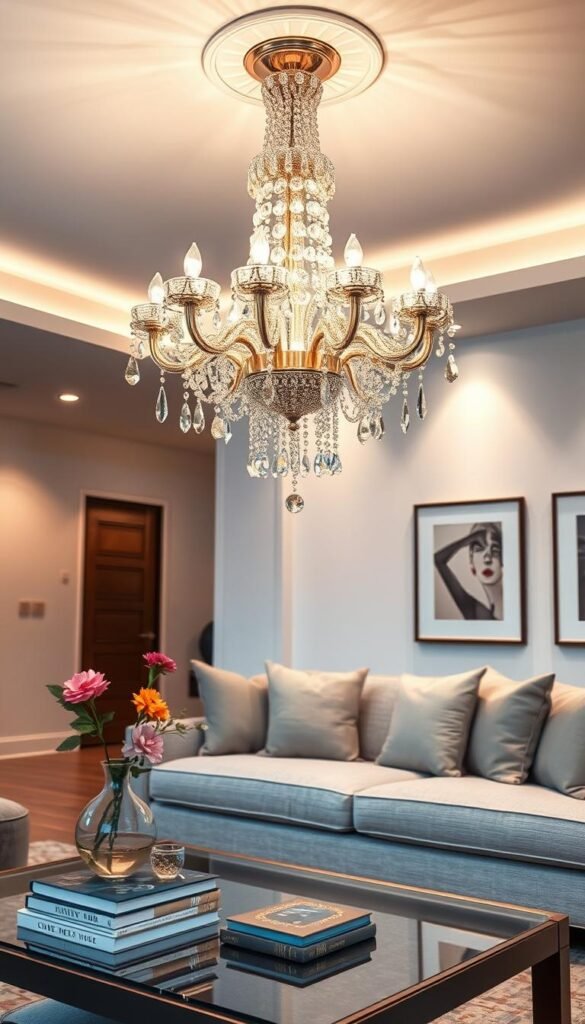
Best chandelier for a statement look without overpowering the room
A chandelier can anchor a tall space while also serving as the room’s primary ambient source.
Who should buy one
Best for: homeowners with 10+ foot ceilings, open living room plans that need a focal point, and anyone able to hardwire safely.
Not for: small or low-ceiling spaces, renters without permission to swap ceiling fixtures.
Scale and hanging-height rules
Use the room-size formula for diameter. Hang so the bottom sits about 6–7 feet above the floor. Keep it out of main traffic paths.
Pros and cons
- Pros: anchors the layout, finishes vertical space, and doubles as ambient plus decorative light.
- Cons: can overpower small areas, may expose clutter, and often needs support and electrician work.
„Choose an open-frame design if the ceiling is visually busy; it reads lighter at scale.“
| Feature | When to Pick | Quick Tip |
|---|---|---|
| Statement chandelier | 10+ ft ceilings, open plans | Match diameter to room formula; 6–7 ft clearance |
| Open-frame style | Busy ceilings or layered decor | Looks lighter; reduces visual weight |
| Hardwired fixture | Permanent installs | Hire electrician; confirm box rating |
For curated options and similar ceiling ideas see a selection of chandeliers and finishes. For seasonal pairing and outdoor ideas, check summer lighting tips.
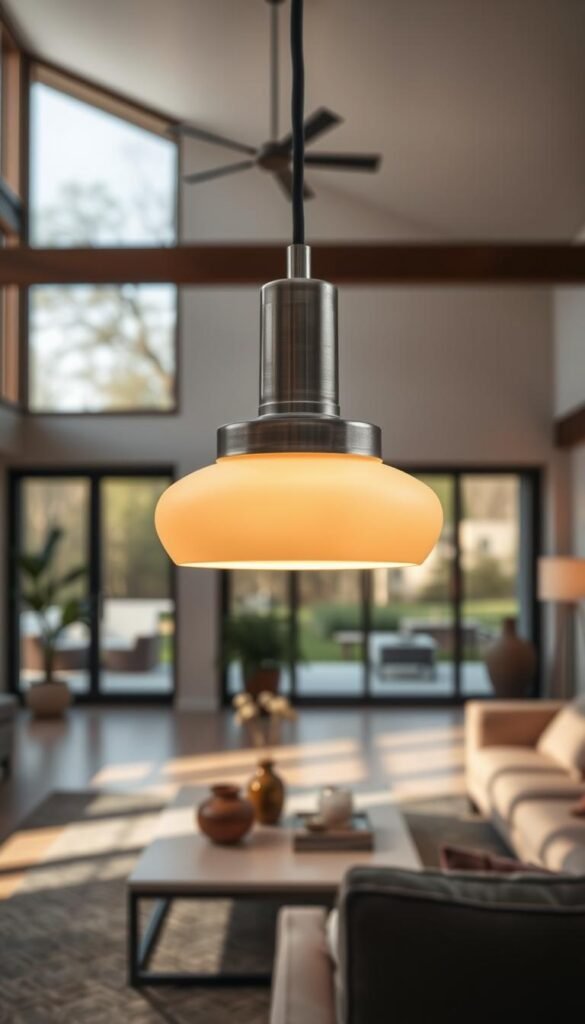
Best pendant light for flexible task lighting in open-concept spaces
In open layouts, a well-placed pendant can carve out a clear seating zone without heavy remodeling.
Best for: defining zones in open layouts
Who benefits: open living/dining combos and homes that need a focused seating anchor.
Clustered pendants work well over conversation groups or a coffee table. Single pendants suit side seating or task areas.
What to check: adjustable drop length and placement
Buy checks: adjustable drop or stem, canopy size, diffuser or shade for glare control, and dimmer compatibility.
Drop guidance: aim for 30–36 inches above a table or 60–70 inches above a floor surface in seating zones, adjusted for ceiling height.
Pros
- Defines space: creates a visible zone in open plans.
- Task-ready: delivers more focused light than a flush ceiling fixture.
- Style impact: clustered or single pendants add visual interest with minimal decor change.
Cons
- Can hang too low in tight ceilings and feel intrusive.
- Exposed bulbs may cause glare without a diffuser or shade.
- Often requires hardwiring; renters should consider an alternative.
Renter alternative: a plug-in swag pendant mimics the look without rewiring (confirm landlord rules).
„Use a pendant to define the seating area, not just to fill the central ceiling space.“
| Feature | Recommended | Why it matters |
|---|---|---|
| Drop length | Adjustable 12–48 in | Fits varied ceiling heights and placement needs |
| Glare control | Shade or diffuser | Protects screens and reduces eye strain |
| Control | Dimmable compatible | Creates task and ambient scenes |
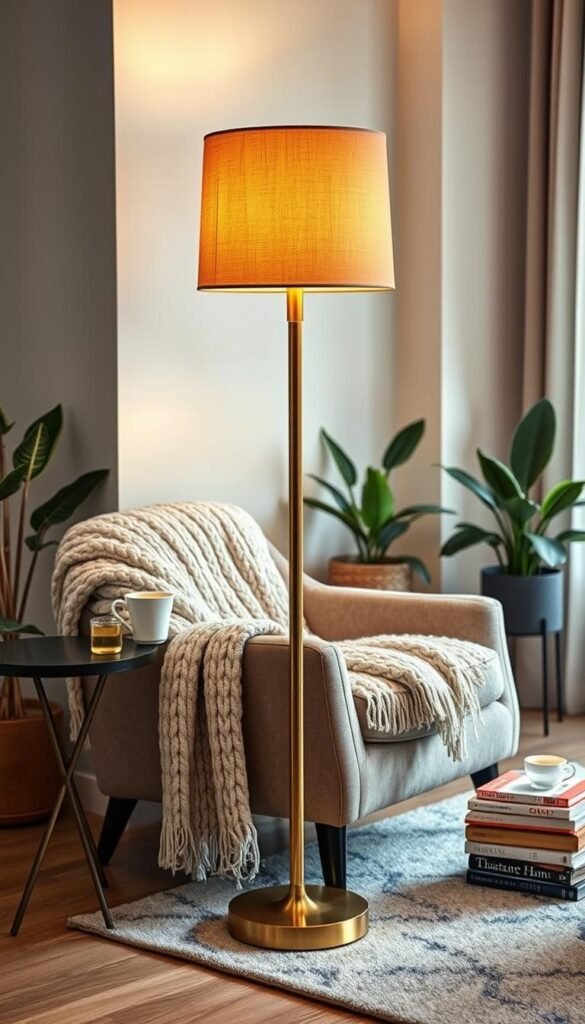
Best floor lamp for reading corners and “no overhead light” rooms
A well-placed floor fixture can turn a dark corner into a useful reading nook in minutes. This pick solves missing or harsh overheads without any wiring or tools.
Best for
Apartments with limited ceiling fixtures, renters who can’t hardwire, and anyone needing a dedicated task light by a couch or chair.
Placement tips
- Behind seating: place the lamp just behind or beside the seat so the shade directs light onto pages without shining in eyes.
- Bounce light: aim the head toward a nearby wall from a dim corner to diffuse light and reduce the cave effect.
- Reduce screen glare: avoid pointing a bare bulb toward TV sightlines; use a shaded head instead.
Pros
- Zero electrical work: plug-and-play convenience for renters.
- Easy to move and reposition as needs change.
- Strong task support for reading, crafts, and laptop use.
Cons
- Takes floor space and can crowd narrow walkways.
- Cords may require tidy routing to avoid trips.
- Poor shades can cause glare or reflect on screens.
„A floor lamp delivers focused task light fast — no wiring or drill required.“
Buyer checklist: stable base, good shade diffusion, switch type (foot vs. inline), and bulb compatibility for dimming or smart use.
For renters who want more ideas on how to add light without altering wiring, see how to light a space without.
Budget options that still look good and solve common lighting problems
Smart budget choices focus on diffusion, stability, and dimming rather than designer flair. The aim is fewer shadows, less glare, and reliable function for renters and small spaces.
Budget flush mount option for rentals with low ceilings
Best for: renters with 8-foot ceilings who need a simple ambient upgrade.
Choose a flush mount with a quality diffuser and replaceable bulbs. Tradeoffs: limited style range but strong glare control. Use warm bulbs (2700K–3000K) for cozy color.
Budget floor lamp option for adding light without installation
Best for: quick corner or reading fixes with zero wiring.
Prioritize a stable base and a shaded head that softens output. Tradeoffs: takes floor space and needs cord routing.
Budget table lamp option for soft, eye-level glow
Best for: side tables where table lamps add warmth and balance.
Two matching table lamps beat a single overhead for even glow. Pick shades that diffuse and bulbs that are dimmable.
Budget wall sconce (plug-in) option for accent light
Best for: adding accent light by seating or artwork without hardwiring.
Plug-in sconces add depth but plan cord management and mounting. Choose models with secure brackets and soft shades.
Budget pendant-style option for defining a zone
Best for: open layouts that need a defined seating zone.
Swag or plug-in pendant lights mimic the look of a hardwired pendant. Tradeoffs: may need landlord approval and careful drop length planning.
Prioritize: shade diffusion, stable base or secure mount, replaceable bulbs, and true dimming compatibility to avoid flicker and reduce returns.
For simple how-tos and noninvasive tricks, see a short guide on non-invasive lighting hacks.
Comparison tables and buying checklist to choose fast
A compact comparison plus a pre-buy checklist prevents common mistakes and speeds checkout.
What higher spend usually buys: better diffusion, stronger finishes, smoother dimming, and longer warranties. These perks reduce glare, cut callbacks, and improve long-term value.
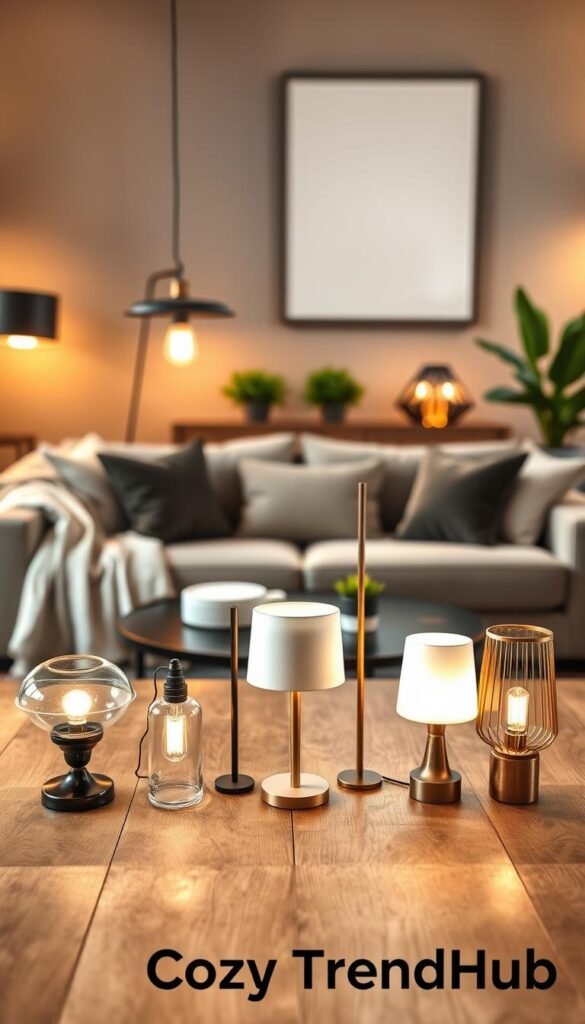
Quick spec comparison
| Price Tier | Fixture Type | Best-for Problem | Ceiling Fit / Install |
|---|---|---|---|
| Premium | Hardwired semi-flush / pendant | Even ambient + style | 9–12 ft / hardwired (dimmable) |
| Mid | Flush mount / integrated LED | Bright baseline for standard heights | ≤9 ft / hardwired or adapter |
| Budget | Plug-in floor or swag pendant | Flexible placement; renters | Any / plug-in (smart-ready) |
| Accent | Plug-in sconce / table lamp | Dark corners & task zones | Any / plug-in |
Room-by-room quick checklist
If small space: choose diffusion + low profile.
If open concept: zone with pendants or multiple smaller fixtures.
If high ceiling: size up and plan drop; use dimming scenes.
If renter: prefer plug-in, swag, or smart bulbs to avoid hardwiring.
Finish and style cohesion
Keep it calm: use one finish across major fixtures for visual unity.
Mixing metals: limit to two finishes and repeat one across at least three pieces to feel intentional.
Color note: warm metals and soft white shades pair best with warm white bulbs for a cozy view.
„View product details before buying and confirm dimmer and return policy to avoid surprises.“
Final pre-buy check
- Measure ceiling height and fixture diameter/drop.
- Confirm bulb base, lumens, and dimming compatibility.
- Check install type: plug-in vs. hardwired and return policy.
- For decor pairing, view a short guide for cozy accents: best cozy decor under $50.
Conclusion
Conclusion
The simplest path to better light is practical: identify the main problem, pick one solid ambient source, then add targeted task and accent pieces as needed.
Comfort usually comes from diffusion and placement, not just higher watts. For TV glare and reflective surfaces, prioritize soft shades and measured positions. Flush mounts work well for low ceilings; mount wall sconces about 60–72 inches high for eye-level glow.
Renters should start with plug-in upgrades — floor lamps, table lamps, and plug-in sconces — before swapping hardwired fixtures. Confirm warm white (2700K–3000K) for main zones, cooler light only for focused tasks, and check dimming compatibility to avoid flicker.
Use the checklist and comparison tables to pick one best option or a budget alternative today, then add a second layer later. For more practical ideas see best living room ideas.