
Too much clutter makes a space hard to clean and feel unhealthy. This introduction shows simple, practical fixes that cut dust and daily friction without buying useless bins.
No-container organizing is defined here as limiting items, creating zones, and using visibility first—then adding products only when they solve a clear problem like freshness or stacking. This approach fits renters, small-space households, and low-maintenance organizers.
The guide covers five clear upgrades (lighting, risers, wall/door storage, a kid snack zone, inventory with original packaging) and five container strategies for times containers truly help. Each idea lists „best for,“ step-by-step setup, and tradeoffs in cost, install effort, cleaning, and durability.
Readers will get buying cues tied to performance factors—seal strength, footprint, stackability, and material—so choices match real use, whether avoiding plastics for chemical concerns or choosing bins for moisture-prone basements.
For practical shopping and comparison-ready picks, see a curated mix of kitchen solutions at best kitchen organization mix.
Key Takeaways
- Start with limits and zones; add containers only for specific needs.
- Solutions suit renters, apartments with shallow pantries, and seasonal storage.
- Each idea includes best-for, setup steps, and tradeoffs for quick comparison.
- Reduce dust by minimizing exposed items and using easy-to-clean surfaces.
- Choose products by seal strength, footprint, stackability, and material.
When “No-Container” Organizing Works Better Than Buying More Bins
Buying another bin is a tempting quick fix, but it frequently reduces usable shelf space and hides what matters. In small kitchens and pantries, the wrong footprint creates bin-stacking barriers that make deep shelves harder to use. Routines break down fast when people are in a rush or others share the space.
Common clutter patterns this solves
- More bins get bought, yet usable shelf space shrinks because shapes waste depth and block access.
- Counters become drop zones and floors fill up as frequently used things hide behind rarely used items.
- Once a bin is full, there’s no room to cram—so overflow migrates to other surfaces.
„Without limits, shelves become cluttered as soon as others use the space or you’re in a rush; once a container is full, it’s full—no cramming.“
When skipping containers backfires (and what to do instead)
Skipping containers works best for high-turnover goods like snacks, breakfast staples, and weeknight cooking supplies where visibility beats decanting time. It saves money, avoids drilling or adhesives, and keeps a rental room flexible.
Choose a container when foods need long-term freshness, resist pests, or stack poorly in original packaging. Simple rule: if it must stay fresh or its package collapses, buy a container; if it’s used fast and the pack is sturdy, keep it as-is.

Healthy-Home and Material Choices That Matter in 2026
Smart storage starts with the right materials—pick what handles moisture, turnover, and daily wear.
Fewer hard-to-clean surfaces and fewer impulse buys are practical goals. Shoppers often cut back on plastic in kitchens and living areas to lower dust collection and reduce long-term clutter.
Some buyers worry about phthalates, PVC, and bisphenols. These concerns are common but best addressed by balanced choices rather than fear. For many homes, simple swaps reduce exposure and make cleaning easier.
Material guide: where each option works best
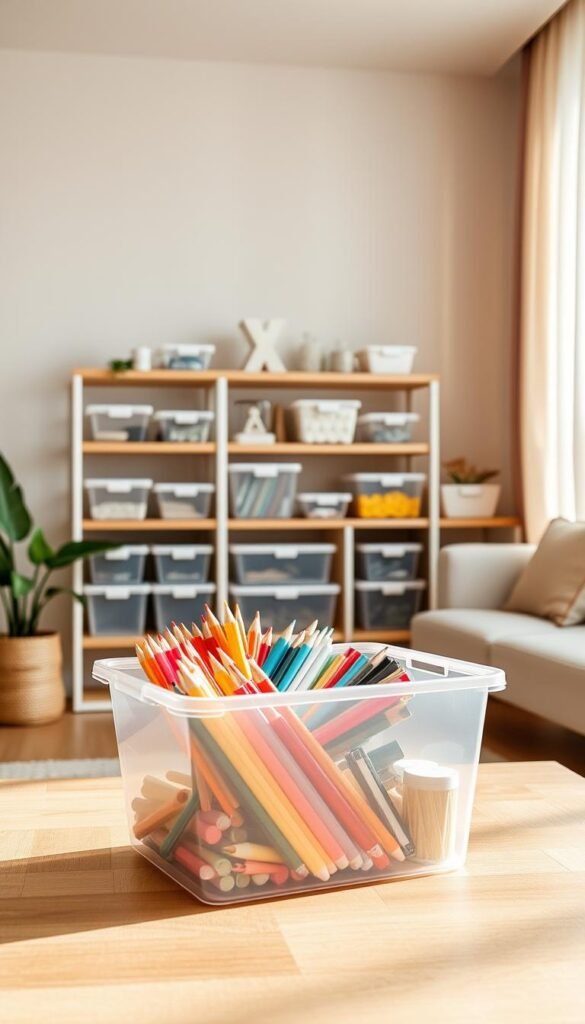
- Wire: airflow and moisture control. Good under sinks and for wet basements.
- Rattan/jute: lightweight corrals for visible shelves and pantry categories.
- Canvas zip bags: protect textiles and off-season clothes in dry closets.
- Paperboard: budget-friendly boxes for dry spaces only; avoid damp areas.
- Solid wood or bamboo: choose these over MDF/particle board to lower VOC risk.
| Material | Best for | Tradeoff |
|---|---|---|
| Wire | Moist areas, under-sink | Less visual warmth |
| Rattan | Open shelving, light items | Sensitive to humidity |
| Canvas | Textiles, seasonal bags | Needs dry storage |
| Plastic bins | Garage, holiday boxes | Less aesthetic, highly durable |
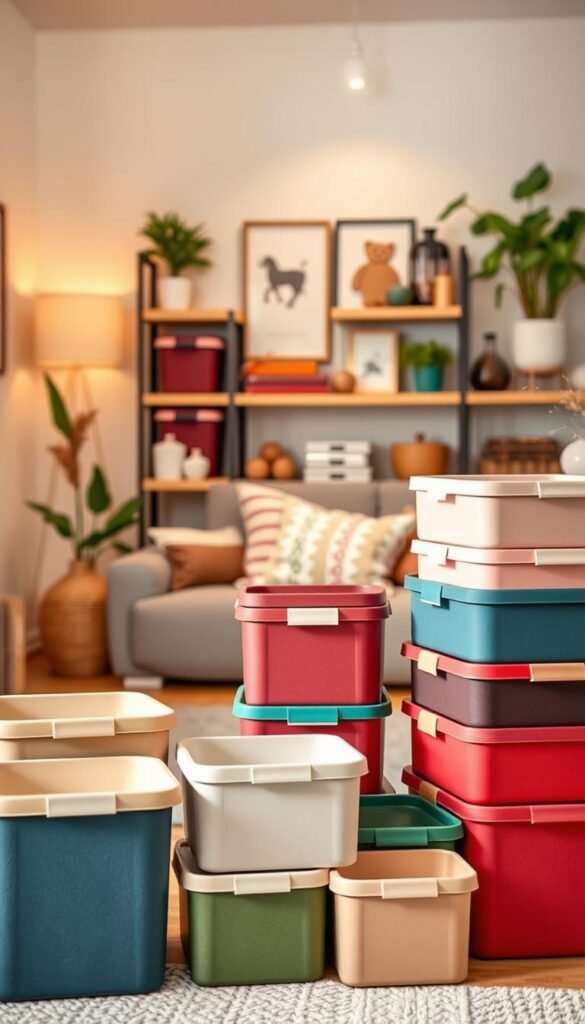
Where plastic still makes sense: for long-term holiday boxes, garage totes, and basements that face moisture and pests. In those cases, lidded plastic bins protect items through temperature swings.
no-container organizing: the rules that keep shelves from turning into piles
Before buying anything, apply three straightforward habits that protect shelf order. These rules work for renters and small pantries and keep shared areas tidy without extra gear.
Set limits so clutter can’t expand (full means full)
Full means full acts as a clear boundary. When a spot is full, stop adding items or move extras to a designated backstock area.
Use shelf-width boundaries, one-shelf-per-category, and a simple „one in, one out“ rule for overflow-prone staples.
„Once something is full, it’s full—no cramming.“
Create zones like a grocery store to reduce “where does this go?” stress
Group items by use: breakfast, baking, snacks, backstock, and non-food supplies. Treat each shelf like a mini store aisle so everyone knows where to return things.
Use visibility on purpose (open storage that stays cleanable)
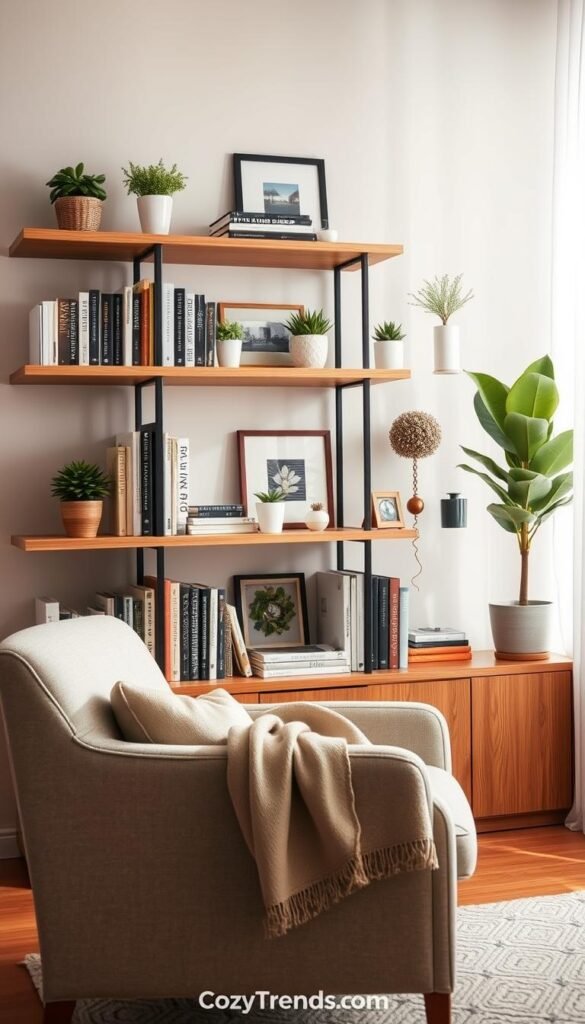
Visibility helps spot low items and avoid overbuying. Only keep open shelves if they can be wiped quickly.
Cleanability checkpoint: if you can’t wipe a shelf in under a minute, reduce items or add spacing.
Next: lighting, risers, and wall/door solutions boost visibility and free shelf space so zones stay intact.
No-Container Idea: Make shelves easier to use with lighting and visibility upgrades
A small light upgrade often saves more time than a new stack of bins. Door-activated lighting reveals what’s on deep shelves and in the back of a pantry so items stop getting missed.
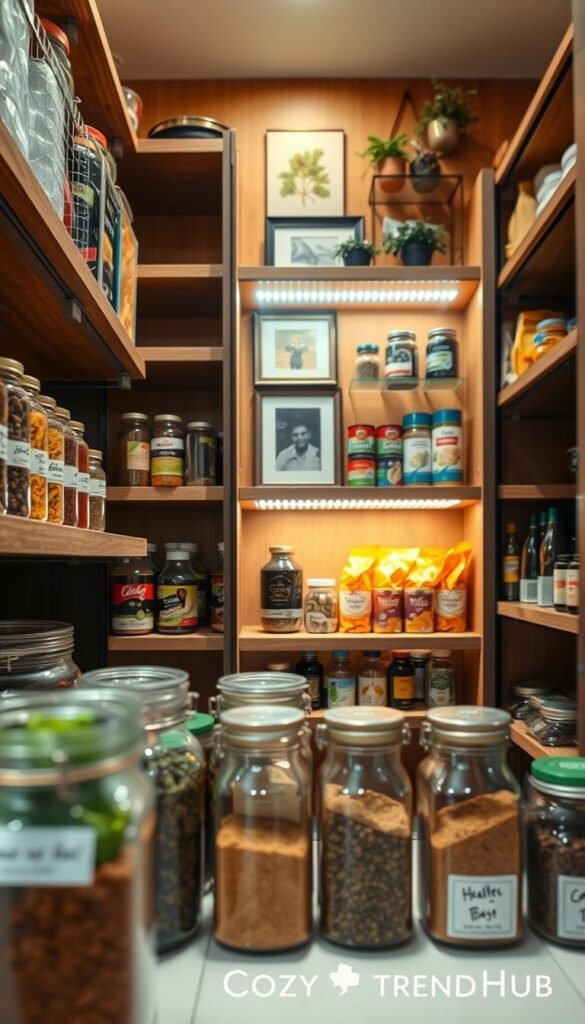
Door-activated pantry lighting for faster grab-and-go
How it works: a jamb switch or motion sensor turns lights on the moment the doors open. Chris Loves Julia used door-jamb triggers to improve visibility immediately, reducing search time and expired goods.
What this is best for
- Dark closets and deep cabinets where overhead light doesn’t reach.
- Rental pantries that can’t be hard-wired.
- Any shelf-run that creates hidden corners and wasted space.
Pros, cons, and renter-friendly install tips
- Pros: faster retrieval, fewer lost items, safer use of high shelves, and better daily flow without adding containers.
- Cons: battery upkeep, adhesives that can fail on textured doors, and checking door clearance before mounting.
- Buy tips: check lumens, battery type vs. rechargeable, and how many linear feet of shelving you need to light.
- Renter-friendly options: battery stick-on LEDs, motion pucks, or removable adhesive mounts to avoid drilling.
„A sensor that flips on with the door makes grab-and-go faster and cuts accidental duplicates.“
Quick measurement checklist: door swing space, shelf depth, and shadow zones so lights are placed to reduce glare and dark corners. These small changes deliver clear, low-effort solutions that save time and reclaim space.
No-Container Idea: Add risers and vertical helpers instead of more storage containers
Many kitchens overlook the empty zone above a stack of plates — risers turn that gap into a second usable tier.
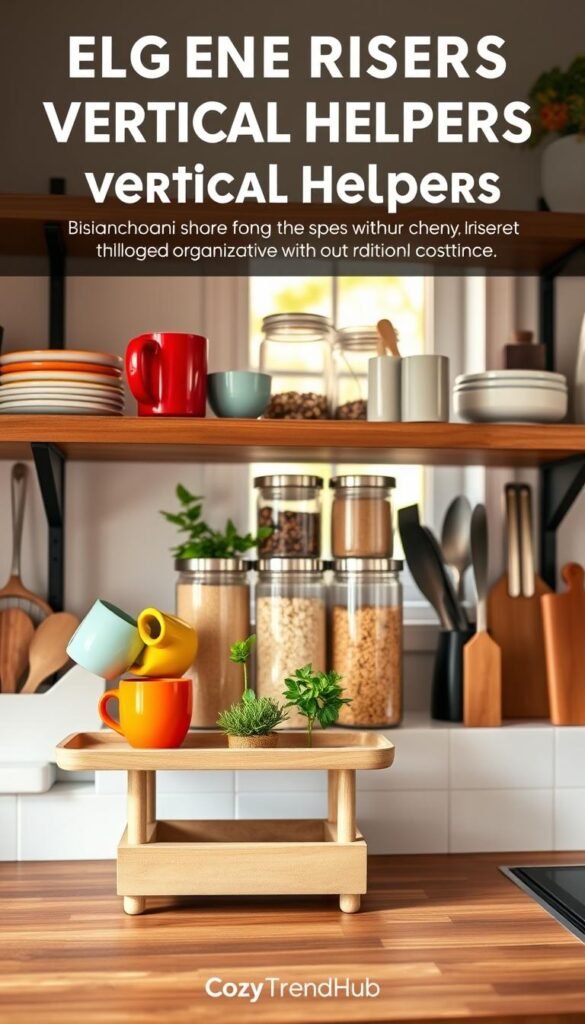
The core problem: stacks of plates, bowls, and serveware waste vertical space and raise breakage risk when items are pulled from the bottom.
Acrylic or clear risers to double usable shelf space for breakables
Clear acrylic risers create a second level without hiding items in bins. Laura Kinsella of Urban OrgaNYze often puts special-occasion dishes on the upper tier and keeps everyday pieces below for quick access.
What this is best for
- Small kitchens and narrow pantries with tall stacks.
- Cabinets where shelf height is generous but unused.
- Dish and serveware stacks that feel unstable when pulled.
What to measure before you buy
- Measure shelf width and usable shelf depth.
- Check riser leg footprint so it fits flat shelves.
- Record the height of the tallest item that must fit beneath the riser.
Pros, cons, and quick layout suggestion
- Pros: better visibility, safer access to breakables, easy to remove when moving, and low visual clutter with clear acrylic.
- Cons: reduces flexibility for oversized items, can slide on slick surfaces without grips, and cheap risers may wobble under heavy dishes.
Layout tip: Keep everyday items on the lower, easiest-to-reach level and place special-occasion pieces higher, following Kinsella’s approach to zone by frequency.
„Acrylic risers double usable space without disrupting the look of open shelves.“
| Measure | Why it matters | Target |
|---|---|---|
| Shelf width | Riser must fit without overhang | Leave 1/2″ clearance each side |
| Shelf depth | Ensures riser base sits fully | Match riser footprint |
| Item height | Prevents cramped tiers | Riser height + item |
Buyer prompts for affiliate blocks: “best clear risers for deep shelves,” “best risers for heavy plates,” and “best budget risers for rentals.” Use one or two durable products rather than many small items to keep supplies simple and reliable.
No-Container Idea: Use wall space and door space to clear floors and counters
Freeing vertical wall and door space clears floors and makes small rooms feel bigger.
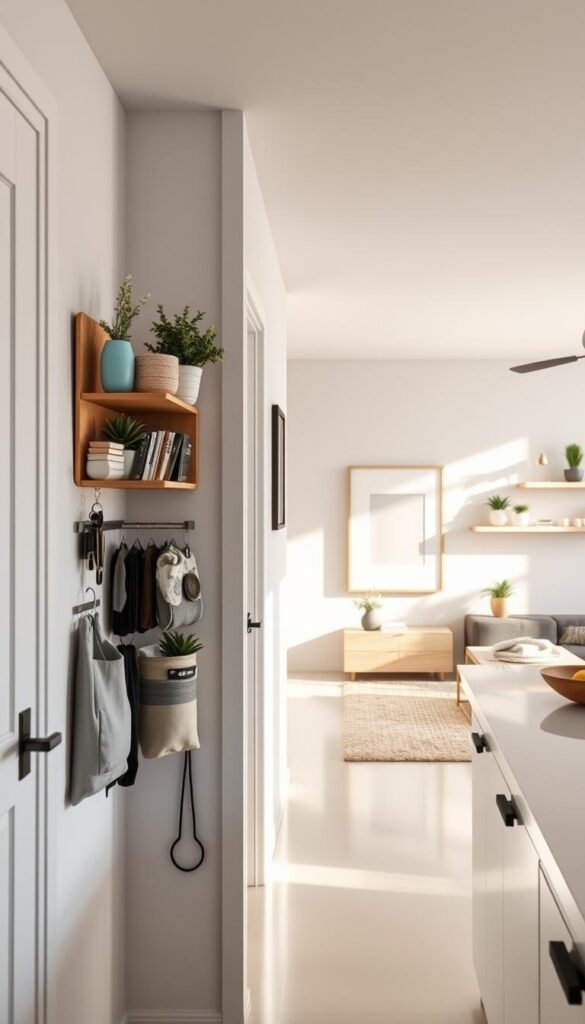
The problem: tall tools and cleaning supplies take up floor space, tip over, and block access in tight apartments and utility closets.
The vertical advantage is simple: hang brooms, mops, and vacuums so walkways stay clear and a pantry feels larger without adding bins.
Where this works best
- Behind doors and over-the-door racks for quick access.
- Utility closets and laundry nooks with little floor room.
- Pantries that lose „no floor space“ when groceries arrive.
Renter-friendly mounting options
- Heavy-duty adhesive hooks rated by weight.
- Over-the-door racks that use existing doors.
- Tension poles and clamp systems that avoid drilling.
Safety note: confirm wall type and weight ratings. Avoid sticking heavy vacuums to weak adhesives.
Simple zoning helps: dedicate one vertical strip for tall tools, another for refills and paper goods, and keep daily cleaning supplies within reach. This reduces dust in corners and makes sweeping easier.
When small refills become loose, add one wire bin or basket rather than many mismatched containers—see vertical storage hacks for more detailed solutions.
No-Container Idea: Build a kid-friendly snack zone that stays organized
A defined, eye-level snack zone for kids reduces pantry rummaging and speeds up mornings. Ashley Hines of The Tailored Life recommends placing approved snacks at child height so children can choose independently without creating chaos.
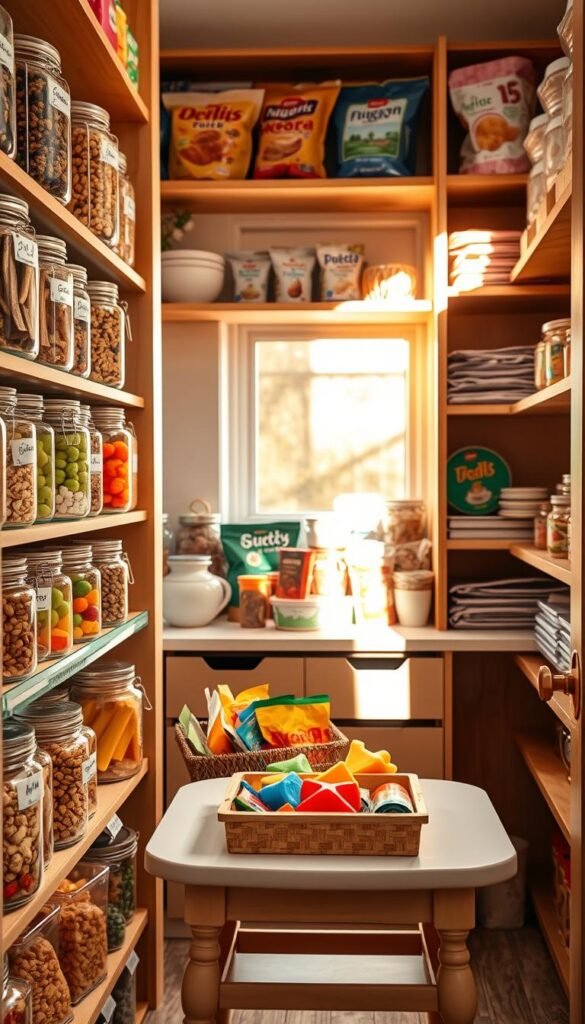
Eye-level placement for independence
Problem: kids often turn a pantry into a mess when snacks are hard to find or mixed with adult cooking items. This leads to spills, crumbs, and lost time.
Solution: dedicate one shelf at kid height for approved snacks. Keep only what fits on that shelf and face items forward so kids don’t dig in the back.
What this is best for
- Family pantries and shared kitchen zones where speed matters.
- Households with school-age kids and busy after-school routines.
- Homes that want to encourage independence while controlling access to treats.
Pros, cons, and boundaries without bins
- Pros: more independence, fewer spills from climbing, and faster lunch packing.
- Cons: choices can expand quickly; small packages look messy; some foods still need airtight storage to stay fresh.
Keep boundaries: limit snack types to what the shelf holds, rotate older items forward, and use visible rows only. Schedule one weekly reset to restock and clear crumbs.
„Place approved snacks at child height so kids can grab safely and adults reclaim time.“
If crumbs or staleness become frequent, use a single airtight container for the trouble item (crackers or cookies) rather than adding many bins. For quick inspiration on snack layouts see a snack station infographic and smart pantry picks: snack station ideas and a short guide to best pantry organizers.
No-Container Idea: Take inventory and store items in their original packaging (on purpose)
A quick pantry audit and smart use of original packaging can cut wasted time and counter clutter. Many people buy containers with good intentions but never finish decanting. That leads to half-open bags, scattered labels, and more work.
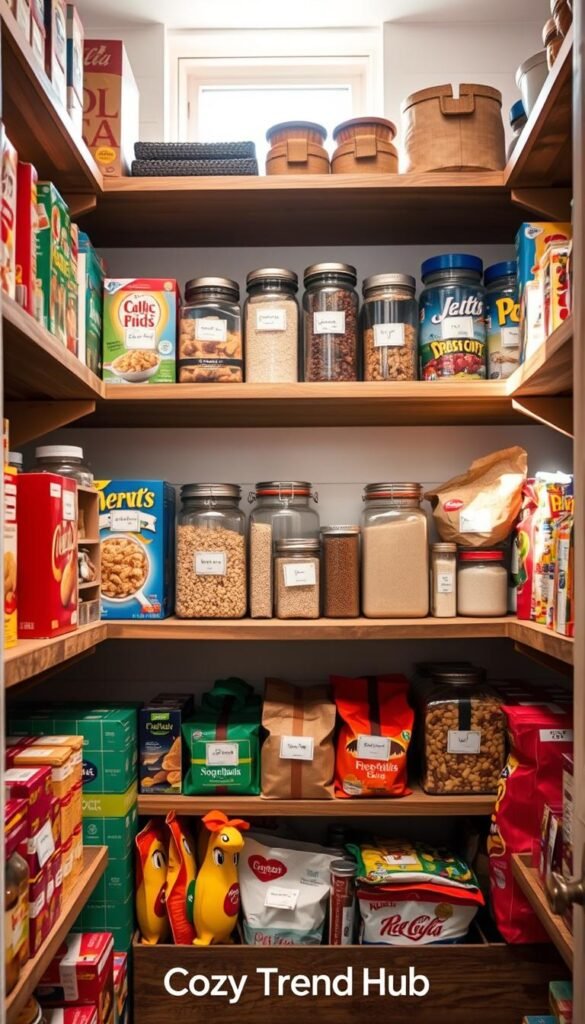
Which foods do fine in their original packs? Fast-turnover snacks, sturdy boxes, sealed jars, and items with reliable closures usually do well as-is. These types save time because they need no extra decanting and stay visible on the shelf.
When to keep packaging and when to decant
Keep originals if the item moves quickly and the pack reseals or won’t collapse. Examples: boxed pasta, snack bars, canned goods, and sealed jars.
Decant when bags are flimsy or the product attracts pests or stale air. Typical trouble items: crackers, cereal, flour, sugar, and baking mixes.
Simple inventory methods to stop overbuying
Pick one low-effort system and stick to it: a dry-erase list on the inside door, a notepad, or a phone note updated when an item is opened.
- Open-it-once rule: when original packaging no longer reseals reliably, move that type into a proper container.
- Weekly glance: take 60 seconds once a week to mark low items and avoid duplicate buys.
„A short inventory habit prevents duplicate purchases and saves money in the long run.“
Best for: busy households, small pantries, and anyone who wants a low-maintenance way to keep food visible and usable. For more pantry clutter-proof ideas, see genius pantry clutter-proof ideas.
Container Ideas and Product Picks That Actually Solve Specific Problems
Practical storage choices stop food waste and reclaim shelf space. Below are targeted container types tied to specific pantry problems, who they help most, and quick pros/cons to guide purchases.
Airtight clear canisters for freshness and fast restocking
Best for: crackers, cereal, flour, sugar—anything that goes stale. Clear walls speed restocking and prevent surprise shopping trips mid-recipe.
What to buy: Rubbermaid Brilliance–style sets are a benchmark: tight seals and transparent sides. In testing they kept Goldfish crackers crunchy for three weeks.
Stackable square containers to reclaim vertical shelf space
Best for: bulk staples and baking supplies. Square shapes waste less depth than round ones and stack safely on tall shelves.
Commercial option: Rubbermaid Commercial Space-Saving Square Food Containers are wide for scooping but can feel bulky in small cabinets—measure shelf depth first.
Glass canisters and canning jars for plastic-free food storage
Best for: households avoiding plastic for daily dry goods. Options include Williams Sonoma Hold Everything stacking glass and Ball or IKEA canning jars.
Tradeoffs: glass is breakable, often limits stack height, and many jars don’t fit a measuring cup easily.
Woven baskets and wire bins for category control
Best for: snacks, packets, and backstock that otherwise migrate across shelves. Baskets hide visual clutter while wire bins allow airflow in moist zones.
Choose rattan or woven baskets on dry shelves; use wire under sinks or in humid areas.
Canvas zip bags and lidded totes for seasonal and holiday storage
Best for: textiles, holiday decor, and off-season items. Canvas bags protect against dust in dry interiors. Use plastic bins only for garages, basements, or long-term storage where moisture and pests are risks.
| Type | Best for | Who it helps | Key tradeoffs |
|---|---|---|---|
| Airtight clear canisters | Crackers, cereal, flour | Busy cooks, meal planners | Great visibility; measure shelf depth; plastic vs glass choice |
| Stackable square containers | Bulk staples, baking supplies | Large households, bakers | Maximizes space; can be bulky in small cabinets |
| Glass canisters & jars | Dry goods, plastic-free storage | Plastic-averse buyers | Breakable; limited stacking; measuring-cup fit |
| Baskets, wire bins, canvas bags | Snacks, packets, seasonal textiles | Families, renters, seasonal decorators | Airflow (wire); aesthetics (rattan); canvas needs dry area |
For layout ideas and product mixes that match these picks, see curated kitchen solutions at best pantry storage mix and practical styling tips at kitchen organization ideas.
How to Choose Between Bins, Baskets, Boxes, and No-Container Options
Start with what you use every week, then pick a storage type that solves that single problem. This keeps decisions practical and budget-friendly for renters and small kitchens.
Quick decision tree: Apply limits and zones first. If visibility or turnover is the issue, keep goods as-is. Choose bins, baskets, or boxes only when freshness, pests, or unstable packaging causes trouble.
Buying checklist: measure shelf depth and container footprint first
Measure shelf depth, shelf height, and door clearance before buying anything. Aim for containers that use the full shelf depth to avoid lost goods in the back.
Airtight seal vs open storage
Airtight for crackers, flour, and pest-prone food. Open baskets for fast-turnover snack packs and grab-and-go groups that need visibility more than a seal.
Transparency vs hidden clutter
Clear containers speed restocking and stop duplicate buys. They can look busy, so limit categories and keep labels consistent.
Stackability and shape
Square, stackable bins reclaim vertical space and fit narrow shelving better than round or tapered tubs.
Budget option: repurposed deli/takeout tubs
They work short-term and stack, but tapered shapes waste space and sizes often don’t match pantry needs. Use them temporarily, not as a long-term fix.
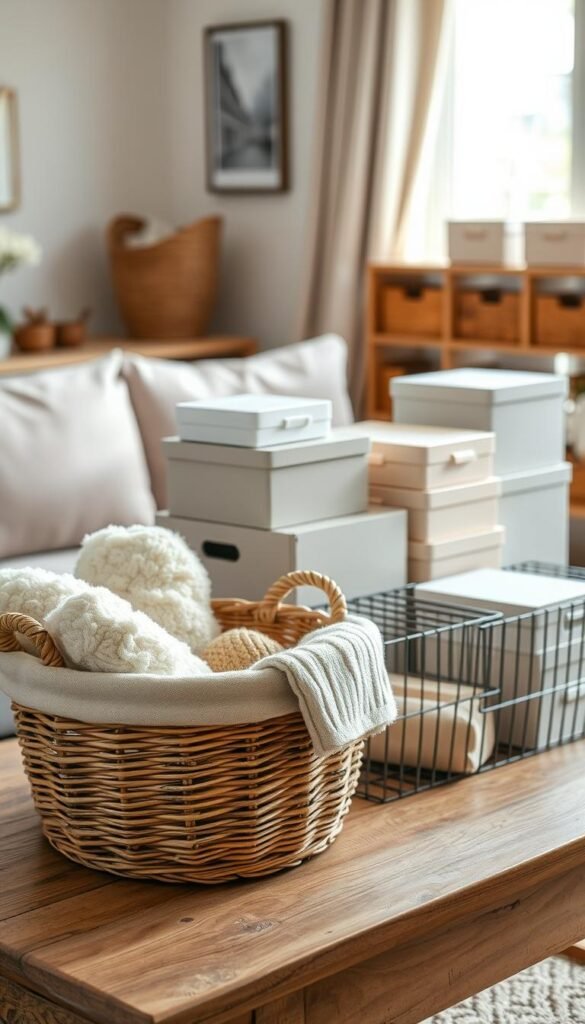
| best for | sizes | materials | pros | cons |
|---|---|---|---|---|
| bins (backstock) | large, deep | plastic, wire | stackable; durable | bulkier look |
| baskets (grab-and-go) | small–medium | rattan, wire | visible; airy | not airtight |
| boxes (dry closets) | medium | cardboard, canvas | cheap; tidy | limited moisture protection |
For a deeper product comparison and pro picks, see curated storage reviews at best storage bins and baskets. Use the table fields—best for, sizes, materials, pros, cons, seal quality, stackable (Y/N), renter-friendly (Y/N)—for affiliate blocks and clear buyer guidance.
Conclusion
Small steps often beat big purchases. A few upgrades—better lighting, risers, and vertical hooks—free shelf space and cut dust-trapping clutter faster than buying many bins.
Action plan for the next hour: pick one pantry shelf, set a clear boundary for one category, and remove overflow so the shelf stays cleanable. Then decide if a single container is truly needed.
Who benefits: busy households gain from quick inventory and keeping original packaging; families get calm with a kid snack zone; renters win with removable lights and door hooks.
Measure before you buy, pick square stackable shapes when space is tight, and use airtight products only for foods that need them. For more practical tips and product picks see tidy snack ideas, a short guide on declutter rules, and recommended cabinet organizers.