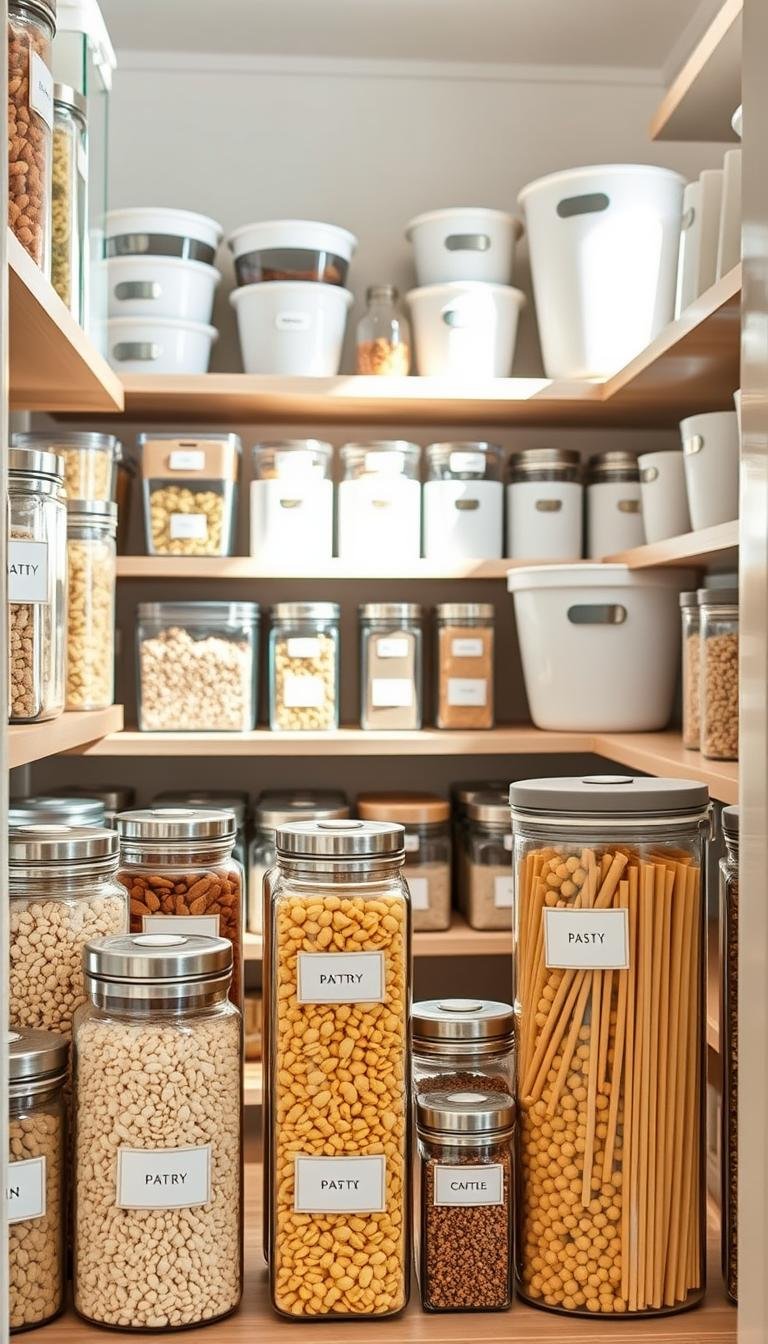
Problem: High-traffic kitchen shelves swallow groceries, and items get lost behind boxes. Households with kids, roommates, or limited space face frequent waste and clutter.
This guide compares two complementary tools: clear storage for fast access and airtight storage containers for longer freshness. It helps renters, small-space residents, and seasonal hosts pick a system that fits shelves and lease limits.
The article uses a practical 5 + 5 format. Each product is matched to a real problem—lost inventory, floppy bags, bulky boxes, overflow stock, and seasonal baking surges. Every pick lists who it’s best for, what it solves, and tradeoffs like seal quality, stackability, and cleaning effort.
Outcome: Readers get an at-a-glance comparison and table-ready layouts to choose quickly and confidently. The focus is on functional storage solutions that save space, cut clutter, and make weekly food storage and organization easier.
Key Takeaways
- Guide compares quick-access organizers with airtight storage containers for freshness.
- Designed for renters, small kitchens, and seasonal hosts who need non-permanent solutions.
- Each product is tied to a common shelf problem and shows practical tradeoffs.
- The 5 + 5 layout and comparison table speed up buying decisions.
- Prioritizes solutions that reduce clutter and reclaim usable space.
Why Clutter Happens in Small Kitchens (and What the Right Organizers Fix)
Small kitchens fill up fast, and a few simple organizers solve most everyday chaos.
Limited shelf depth and narrow cabinets force people to stuff groceries where they fit. That leads to clutter, lost items, and repeat trips to the store.
Common pain points are obvious: shapeless bags tipping over, mismatched boxes wasting vertical space, and small packets sliding to the back of a shelf.
Problem-solution match
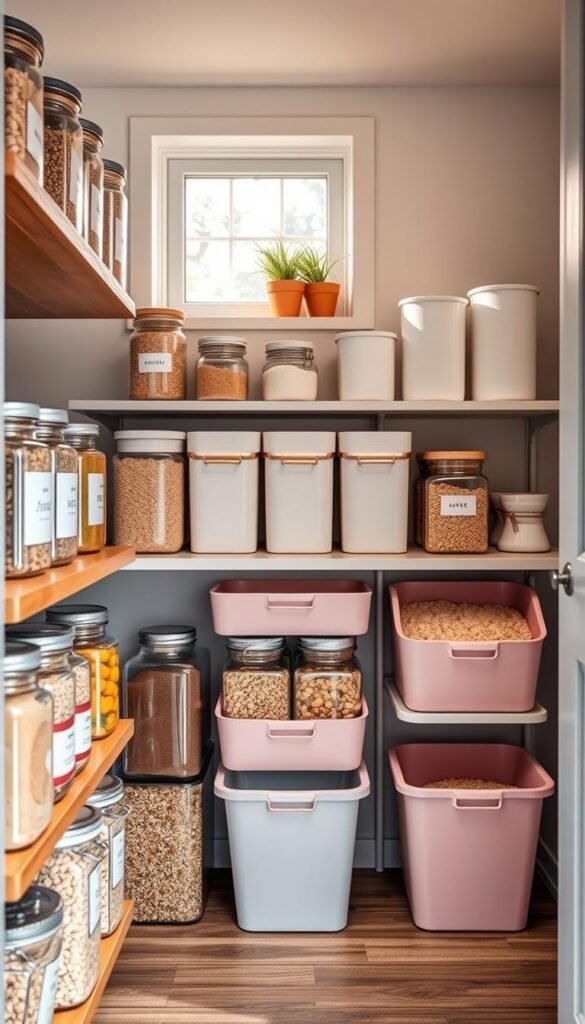
When handled bins group snacks and pouches, they create grab-and-go zones that speed mornings. For cereal, flour, rice, and pasta, airtight storage containers keep food fresh and stack neatly.
Renter-friendly wins come from no-drill upgrades—handled carry options, stackable containers, and over-the-door add-ons that move with you and reclaim space.
| Problem | Best Fix | Why it Works |
|---|---|---|
| Lost items at back | Pull-out or handled organizers | Improves visibility and access |
| Shapeless bags tipping | Clear airtight containers | Stabilizes contents and maintains freshness |
| Mismatched boxes wasting height | Uniform stackable containers | Maximizes vertical shelf use |
| Renters who move often | No-drill storage add-ons | Portable and lease-friendly |
Next, the article matches specific product types to these problems in a step-by-step way. For quick guidance on fitting solutions into tight shelves, see the best pantry storage for small spaces.
How We Chose These Pantry Bins and Storage Containers
Candidates were evaluated in kitchens, not just on paper. Review criteria mirror real buying decisions: freshness, visibility, stackability, footprint, and daily upkeep.
Airtight seal for freshness and pest resistance
Airtight means a lid that locks consistently, feels secure in daily use, and slows staleness while limiting pests. In testing, Rubbermaid Brilliance kept crackers crisp for three weeks.
Transparent materials to spot low inventory fast
See-through plastic or glass lets users detect low staples before they run out. That simple visibility cuts duplicate buys and last-minute trips.
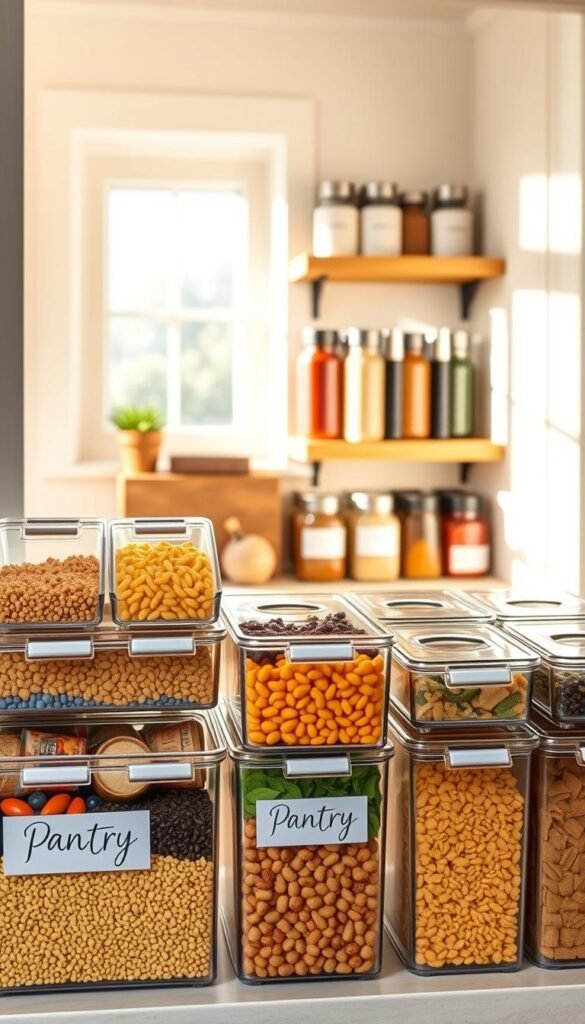
Stackability and shelf-height efficiency
Good stackability needs flat lids, stable bases, and shapes that use vertical space. Square or rectangular storage containers save more space than tapered round tubs.
Footprint fit: measuring shelves before you buy
Measure shelf width, shelf depth, and usable height. Match product footprint so nothing blocks cabinet doors or creates dead zones at the back.
Cleaning and daily usability
Dishwasher-safe containers speed upkeep, but sealed jar lid pieces may need hand-washing to protect seals. Plastic is light and forgiving; glass looks clean but is heavier and can break.
| Feature | What to test | Tradeoff |
|---|---|---|
| Airtight | Lid lock, seal feel | Better freshness vs more careful cleaning |
| Shape | Square vs round footprint | Space-efficient vs easier pouring |
| Material | Plastic vs glass | Light/durable vs aesthetic/heavier |
Quick Comparison: Best Pantry Bins vs Best Food Storage Containers
Deciding which storage style fits your kitchen starts with a simple tradeoff: speed versus shelf-life.
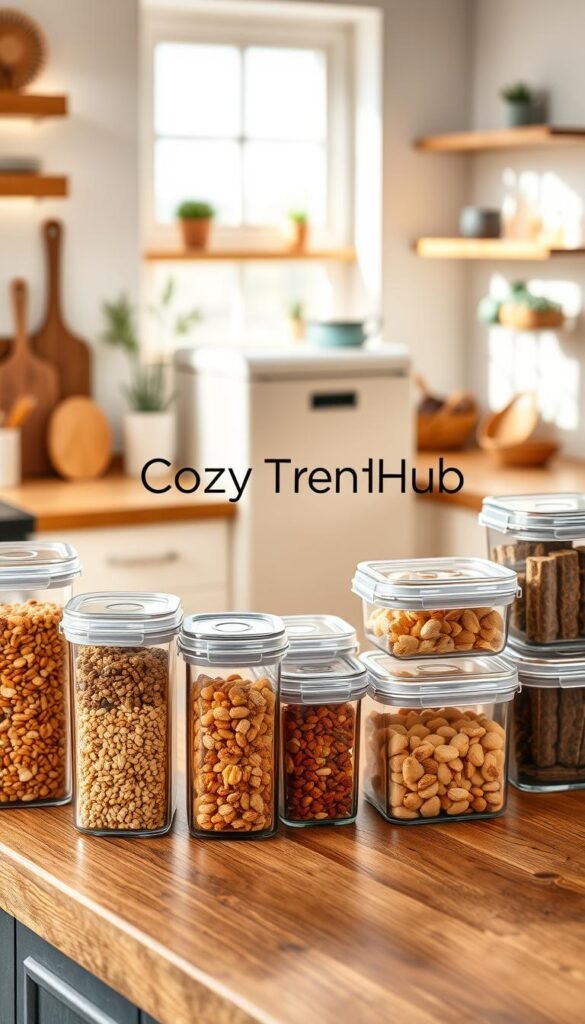
Use this compact guide to pair product types with tasks. For snacks and grab-and-go items, choose accessible organizers that make reaching items easy for kids and roommates. For cereal, flour, rice, pasta, and baking supplies, pick airtight food storage containers that keep dry goods fresh and stack uniformly.
„Deep acrylic units show backstock at a glance; wire baskets work well for wraps and bagged goods that don’t need sealing.“
| Product type | Best use case | Visibility | Seal | Stackability | Works in fridge? |
|---|---|---|---|---|---|
| Clear organizer | Snack zone, grab-and-go | High | No | Medium | Sometimes |
| Airtight storage containers | Dry goods: cereal, flour, rice | High | Yes | High | Yes |
| Wire basket | Wraps, bags, bulky items | Medium | No | Low | No |
Decision framework: Choose clear organizers for speed and sorting. Choose sealed containers for freshness and uniform stacking. Consider wire baskets for flexible, breathable storage of bagged goods.
Quick note: some products stay fine in their original boxes or resealable packaging if they move fast. Don’t buy containers you won’t use regularly; match investments to actual needs and shelf measurements.
Best Pantry Bins for Everyday Grab-and-Go Organization
Well-chosen daily organizers turn a crowded shelf into a quick-access snack zone. These picks are renter-friendly and fit small shelves or a fridge drawer.
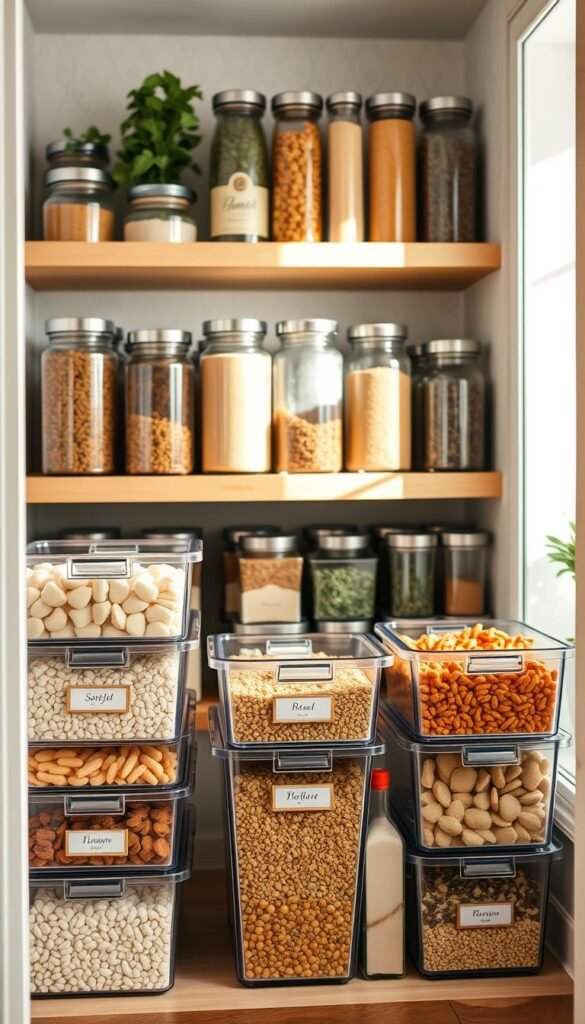
The Home Edit Stacking Pantry Bins
Best for families: Labels let parents assign snack zones to kids and roommates. Clear sides show low stock at a glance.
Pros: Excellent visibility, stackable, easy labeling. Cons: Not airtight; wipe clean only. Measure shelf height before buying.
Hudgan Stackable Pantry Organizer Bins
Budget pick: Works in both cabinets and the fridge. Lightweight and simple to move when cleaning or re-arranging.
Pros: Affordable, versatile, dishwasher-safe. Cons: Thinner plastic; limited spill protection.
AOZITA Stackable Wire Basket with Bamboo Top
Wire alternative: Best for bagged goods and wraps. Bamboo tops provide a small extra surface and help spot low items quickly.
Pros: Breathable, stylish, adds shelf surface. Cons: No seal and crumbs can collect; hand-wash recommended.
Ajioda Metal Mesh Steel Basket
Handled carry option: Ideal for snack runners who move items to counters. Sturdy handles make quick carry-ins painless.
Pros: Strong, portable, good airflow. Cons: Not stack-friendly; may scratch delicate shelves.
| Product | Best for | Visibility | Stackable | Cleaning |
|---|---|---|---|---|
| The Home Edit | Family snack zones | High | Yes | Wipe clean |
| Hudgan | Budget multi-use (shelves & fridge) | High | Yes | Dishwasher-safe |
| AOZITA Wire | Bagged goods & wraps | Medium | Yes | Hand-wash |
| Ajioda Mesh | Carry-in/carry-out routines | Medium | No | Wipe or hand-wash |
Measure shelf depth and height, then pick the set that matches your layout. For more budget-minded options, see the best budget organization products.
Best Airtight Storage Containers for Dry Goods and Freshness
For households that buy in bulk or keep snacks on hand, the right sealed container makes daily life simpler.
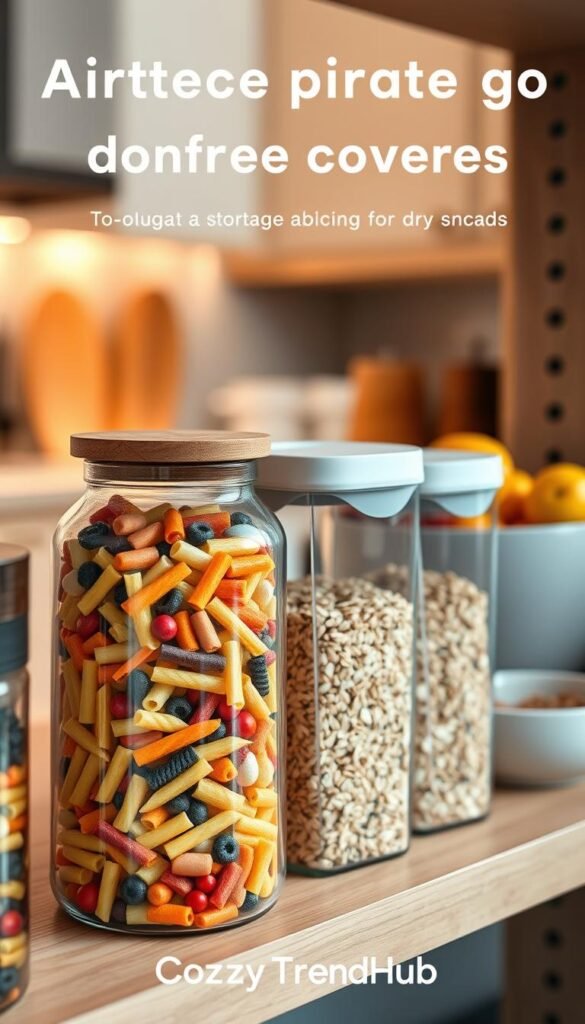
Why airtight matters: Sealed containers stop cereal from going stale, keep flour from clumping, and protect rice and pasta from pests. In humid kitchens or long storage cycles, a good seal saves food and money.
Rubbermaid Brilliance Pantry Food Storage Containers — Best overall
Best for: Everyday dry snacks and staples that need a reliable seal and clear visibility.
These plastic containers showed strong performance in testing. Rubbermaid Brilliance kept Goldfish crackers crunchy for three weeks. Expect easy stacking and clear sides for fast inventory checks.
Rubbermaid Commercial Space-Saving Square Food Containers — Best for bulk
Best for: Bulk buyers and serious bakers who need scoop-friendly, heavy-duty containers.
Sizes range from 2 to 22 quarts. The wide, square shape is ideal for scooping sprinkles, piping tips, and large baking ingredients. Tradeoff: very durable but bulky on small shelves.
Caraway Airtight Glass Container — Best glass pick for short shelves
Best for: Renters and small-shelf owners who want glass with easy access.
The push-button lid opens quickly and fits short cabinet heights. Editors noted rice staying fresh for months. Expect heavier weight and slightly longer decanting time than plastic.
Gencywe Glass Storage Jars with Bamboo Lid — Best budget glass styling
Best for: Countertop-ready storage that looks cohesive without a big price tag.
Bamboo jar lid sets make a tidy display and keep ingredients visible. They suit lower-turnover staples; glass offers clarity but adds weight and fragility.
What to expect: Decanting takes time; labeling prevents mix-ups. Square shapes typically save more shelf space than round jars.
| Product | Best for | Seal | Material | Tradeoff |
|---|---|---|---|---|
| Rubbermaid Brilliance | Daily snacks & staples | High (3-week test) | Plastic | Great seal; moderate footprint |
| Rubbermaid Commercial Square | Bulk & baking supplies | High (industrial) | Plastic | Very durable; bulky |
| Caraway Glass Container | Short shelves, renters | High (push-button) | Glass | Elegant fit; heavier |
| Gencywe Glass Jars | Countertop styling on a budget | Moderate | Glass + bamboo jar lid | Affordable look; not stack-maximizing |
Need help matching a container to your shelf layout? See our guide to the best pantry organizers for measured solutions and product information.
What Each Pick Is Best For (Match the Product to Your Storage Problem)
Match each common kitchen snag to a clear solution so shopping is faster and smarter. Below are direct pairings that help renters and small-space households choose fast.
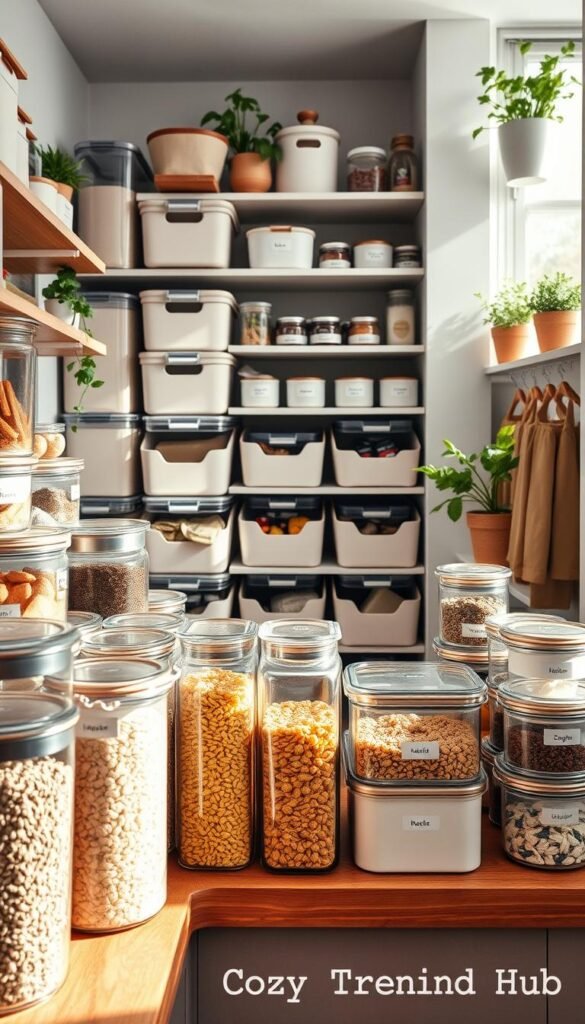
Kids and roommates: assign-a-bin systems to stop snack chaos
If the problem is: little hands mix snacks and arguments follow.
Best pick: labeled, handled organizers placed on lower, eye-level shelves.
Labels assign ownership and keep items from migrating. This saves time during busy mornings and reduces duplicate buys.
Small shelves: low-profile containers that still hold a full box of cereal
If the problem is: short cabinet height or tight shelf gaps.
Best pick: low-profile storage containers and shallow glass options that fit short spaces.
Choose containers with flat lids so a full cereal box or canned goods sit without awkward angles. This helps save space and keeps shelves tidy.
Deep shelves: pull-out and bin systems that prevent “lost inventory”
If the problem is: items get pushed to the back and go missing.
Best pick: clear pull-out organizers or acrylic draw systems for backstock visibility.
Pull-outs surface items and cut repurchasing. Visibility prevents wasted food and keeps counts accurate.
Bulk buyers: when wide, scoopable containers outperform tall canisters
If the problem is: frequent baking, large bags of flour or rice, messy scooping.
Best pick: wide, square containers that allow easy scooping and fast refills.
Wide shapes reduce spills, speed measuring, and stack neatly to save space on shelves.
Seasonal hosting: quick-reset zones for baking and entertaining
If the problem is: seasonal overflow during holidays or parties.
Best pick: portable organizers and labeled containers that pack away after the season.
Create a dedicated baking zone for sprinkles, pans, and extras. When the season ends, store the set to reclaim space and cut clutter over time.
| Problem | Quick pick | Why it works |
|---|---|---|
| Snack chaos | Handled, labeled organizers | Assigns items, speeds morning routines |
| Short shelves | Low-profile containers (glass or plastic) | Fits full boxes without awkward angles |
| Lost backstock | Pull-out clear organizers | Improves visibility; reduces repurchases |
| Bulk baking | Wide, scoopable containers | Easier measuring; fewer spills |
Need help choosing sizes or sets? See our short guide on picking the right products for practical tips on measurement and selection.
Renter-Friendly Pantry Storage Upgrades That Add Space Without Remodeling
The right no-drill accessories turn awkward shelves and doors into usable space. These add-ons free up room without altering a lease, and they move with you when it’s time to relocate.
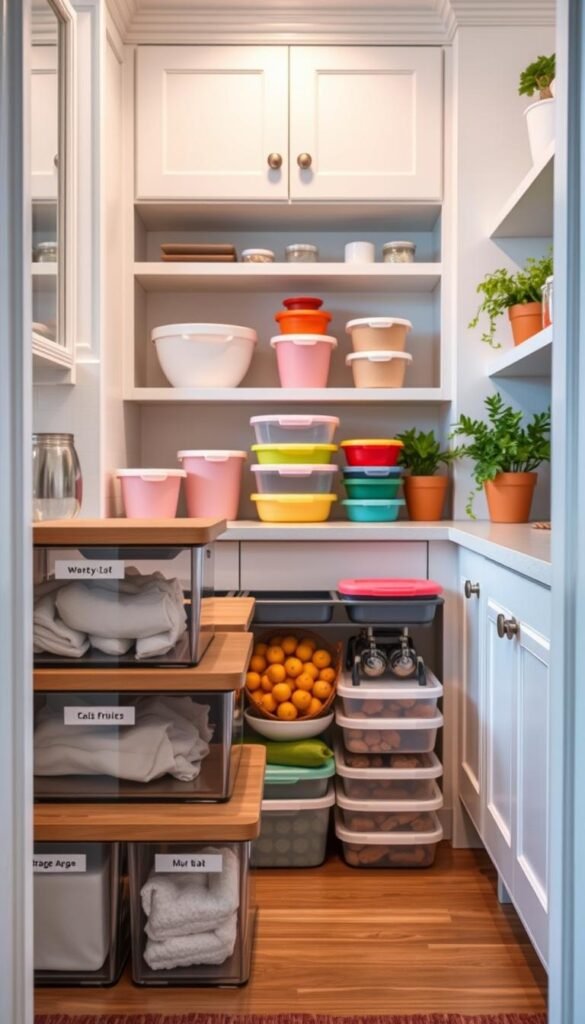
Over-the-door organizers for vertical gains
Best for: spices, snack packets, and small jars that vanish on shelves.
Over-the-door systems reclaim wall and door surfaces to create reachable tiers. They hang without screws and work on most cabinet and closet doors.
Pull-out cabinet organizers to rescue deep shelves
Best for: heavy jars, mixers, and forgotten backstock.
Pull-out drawer-style units glide out so items don’t get lost at the back. They speed inventory checks and reduce wasted purchases.
Lazy Susans to keep oils and condiments visible
Rotating turntables keep bottles from hiding behind each other. Place one in a corner shelf or inside a door-mounted shelf for instant visibility.
- Why renters benefit: Add-ons increase usable space without drilling and can be packed up for the next move.
- Fit notes: Measure door clearance, cabinet depth, and shelf width before buying. Bulky upgrades can crowd narrow kitchens.
- Pairing tip: Combine these upgrades with clear containers and a single storage box for backstock so zones stay consistent.
| Upgrade | Best use | Quick fit check |
|---|---|---|
| Over-the-door organizer | Spices, snacks, small packets | Measure door thickness and swing |
| Pull-out cabinet drawer | Deep shelves, heavy jars | Check cabinet depth and shelf height |
| Lazy Susan | Oils, dressings, condiments | Confirm shelf diameter and clearance |
For small-space ideas that pair well with these add-ons, see a compact guide to small pantry solutions to match layouts and storage choices.
Small-Space Layout Tips: Where Pantry Bins and Containers Work Best
A simple zoning plan saves space and time. Keep an eye-level “daily drivers” zone for snacks and frequently used food. Reserve the top shelf for backup and low-turn items. Add a dedicated shelf or box for seasonal baking and hosting supplies.
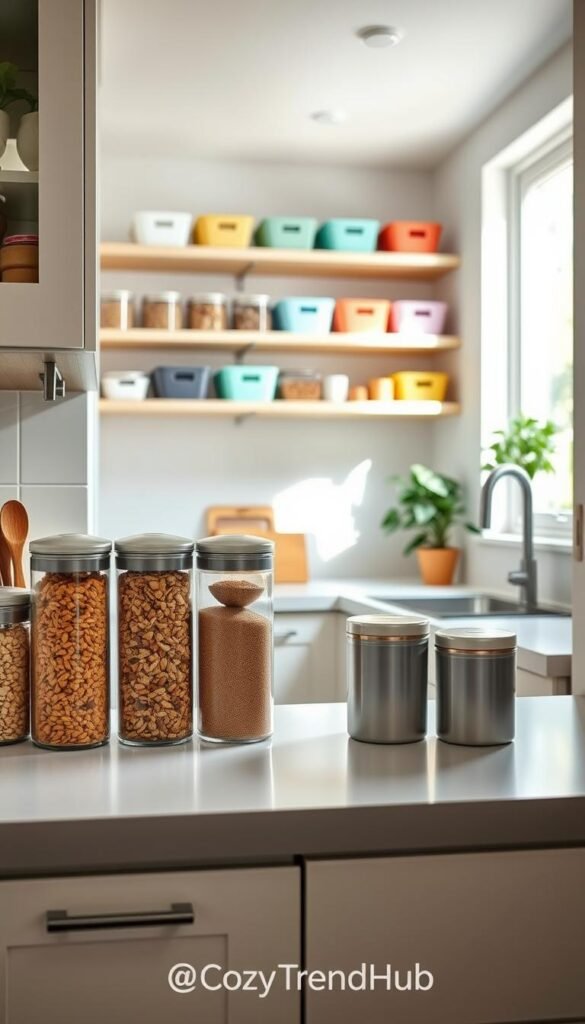
Eye-level “daily drivers” zone vs top-shelf backup zone
Place the most-used items where hands naturally reach. That makes grab-and-go faster and cuts reshuffling.
Top shelves are best for overflow stock and long-term containers that don’t need daily access.
Using shelf risers to prevent can stacks and duplicate buys
Shelf risers lift cans and spice jars so every label is visible. Seeing everything at a glance reduces overbuying and wasted time.
Fridge crossover: when clear bins belong in the refrigerator instead
Some clear organizers work better in the fridge for yogurt, cheese sticks, and produce add-ons. Moving those items frees shelf space in a small kitchen.
Countertop overflow: when a small rack beats cramming the pantry
A compact rack for oils and spices near the stove keeps cooking items handy and prevents pantry crowding. Choose a narrow rack that fits the counter depth and removes the need to decant repeatedly.
Practical reminder: Layout should reduce search time, not add upkeep. Pick one or two product styles that the household will maintain easily and avoid over-complicating the system.
For more measured ideas, see small-kitchen storage ideas.
Buying Considerations That Actually Matter (So You Don’t Waste Money)
Smart buying focuses on usable sizes, reliable seals, and shelf fit. Before adding a set to your cart, check how each shape and lid performs in real use. Small mistakes lead to returns and wasted price premiums.
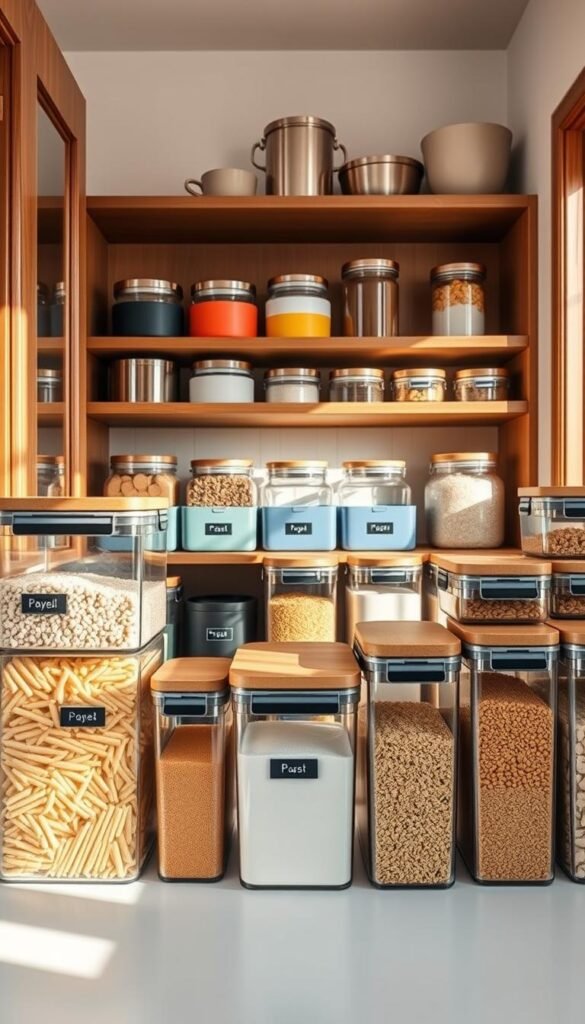
Container shapes: square vs round and why dead space adds up
Square or rectangular containers usually save the most space on standard shelves. They sit flush, stack neatly, and cut the dead space that round or tapered deli tubs create.
Round tubs often top out near one quart and leave gaps between units. For cereal, rice, or flour, choose wider, square shapes for easier scooping and fewer wasted inches.
Lids and seals: what “airtight” should feel like in real use
Test lids for a consistent snap, no warping, and a gasket that stays flexible after washing. A true seal should close the same way after months of daily opening.
Tip: Try a water test at home: fill, seal, and tip the container to check for leaks before buying multiples.
Material tradeoffs: plastic vs glass (and when each is worth it)
Plastic is lighter, less breakable, and often easier to stack in small kitchens. Glass looks cleaner on a counter but is heavier and more fragile.
Choose plastic for heavy use and tight shelves. Pick glass for low-turn items that stay on display and won’t be moved often.
Set sizing: avoid paying for pieces you won’t use
Ignore headline piece counts. Match set sizes to what you store: cereal, flour, rice, pasta, and snacks. Extra tiny containers add price without real value.
- Fit checklist: shelf height, shelf depth, and clearance above for lid opening.
- Price check: compare cost per usable container size, not just the total price of the box.
- Measure first: measure a shelf and a baking box to confirm the set will fit before buying.
| Buying point | Quick check | Why it matters |
|---|---|---|
| Shape | Square preferred | Reduces dead space; stacks better |
| Lid seal | Consistent lock & no warping | Maintains freshness; avoids leaks |
| Material | Plastic vs glass | Durability vs aesthetic/display |
For cost-effective bulk planning, compare containers by usable size at checkout and read real-world reviews. If buying in larger quantities helps your budget, see a practical guide to buying in bulk. For fitting ideas and cabinet-friendly options, check this cabinet organizer guide.
Practical Pros and Cons of Pantry Bins vs Storage Containers
Choosing the right mix of organizers comes down to how fast items are used and how long they must stay fresh. The following comparisons help renters and small-space cooks decide which pieces to use where.
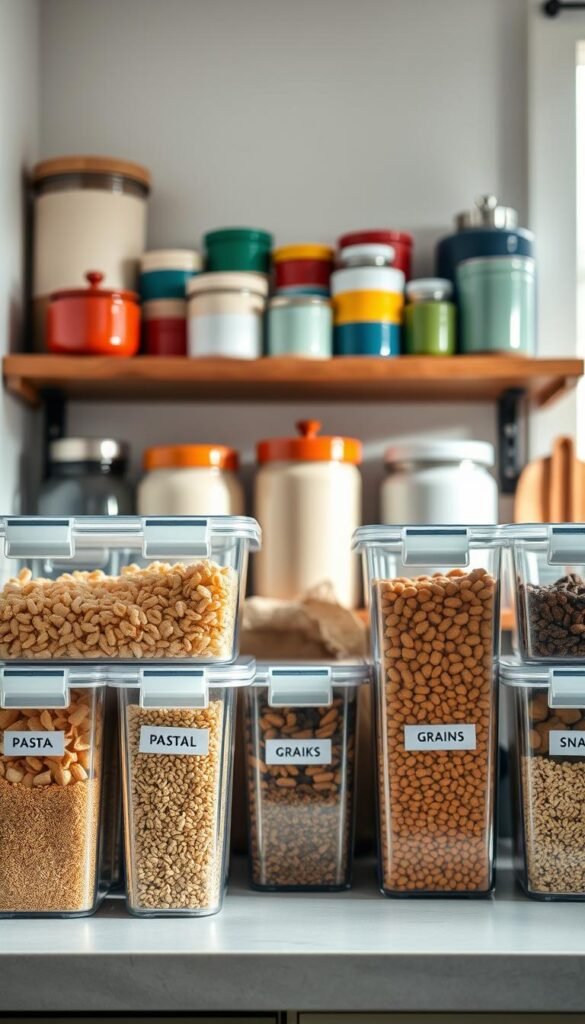
Quick-access organizers
Pros: Fast sorting, high visibility, easy labeling, and quicker routines for snacks and meal prep. They help shared households stay organized.
Cons: Most are not airtight, so rely on original packaging for fine powders or long-term storage.
Airtight containers
Pros: Seals preserve freshness, resist pests, and stack uniformly to cut visual clutter.
Cons: Decanting takes time and requires upkeep; inconsistent refilling or missing labels can create confusion.
Wire baskets
Pros: Breathable and ideal for wraps or bagged goods. They make inventory obvious at a glance.
Cons: Offer little spill protection and are not suited for loose powders without inner packaging.
| Type | Best use | Main benefit | Main drawback |
|---|---|---|---|
| Quick-access organizer | Snacks, grab-and-go | Speed & visibility | Not airtight |
| Airtight container | Cereal, flour, rice | Freshness & stackability | Decanting & upkeep |
| Wire basket | Bagged goods, wraps | Breathability & access | Less spill protection |
Bottom line: Mix systems: use quick organizers for speed, airtight containers for staples, and a basket for awkward packages. For renter-friendly ideas and product picks, see a short guide to choosing organizers and storage ideas for renters at best home storage ideas for renters.
Conclusion
A simple, targeted setup solves the most common kitchen storage headaches.
Start by fixing the biggest friction: snacks, cereal, baking, or backstock. Choose quick-access organizers for everyday grab-and-go items and airtight storage containers for cereal, flour, rice, and long-term food storage.
For renters, pick portable, no-drill storage solutions and measure shelves before buying. A small, measured purchase beats a full overhaul.
Recommended starter kit: one clear organizer for snacks, one airtight container set for staples, and one wire basket for wraps and bagged goods. This mix saves food and cuts duplicate buys by improving visibility and access.
Revisit the quick comparison table, then jump to the product blocks to match a solution by problem and price. For a practical organizing guide, see this organizing guide.