
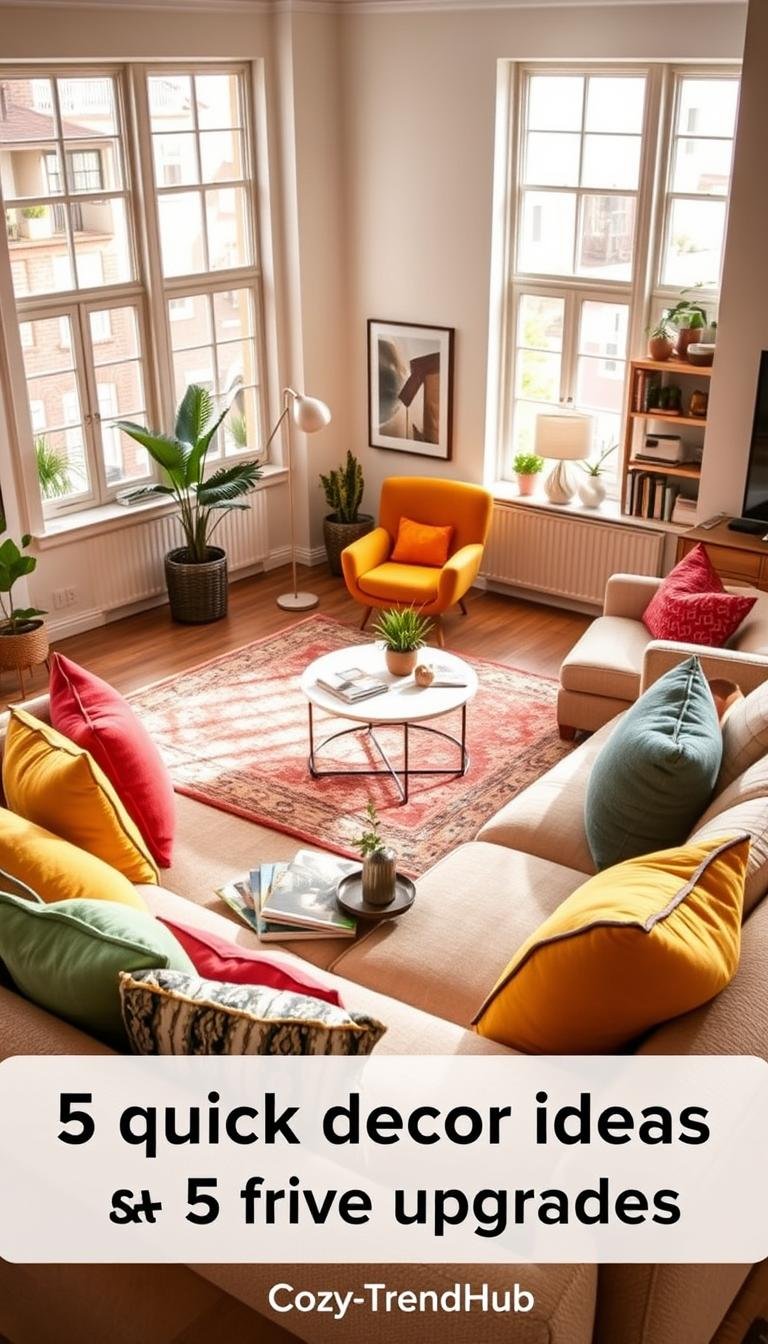
Problem: A dated living room can feel heavy and inefficient, but it rarely needs a full remodel to improve function and style.
Solution: This guide separates no-cost or low-cost fixes you can do today from smart upgrades that take a weekend or a bit of shopping. Each tip ties to a common problem—clutter, poor light, blank walls, worn textiles, or awkward layout—and lists practical pros and cons.
The living room is often the best space to refresh first because it has no plumbing or large appliances driving up cost. Small swaps—new bulbs, plants, a rug or peel-and-stick wallpaper—can change the look dramatically without major work.
Readers will get clear “best for” guidance for renters, small apartments, pet homes, and seasonal decorators. Later sections include comparison tables and affiliate-ready product categories to make shopping easier. For starter gear and smart buys, see a curated round-up at best simple home decor upgrades.
Key Takeaways
- Defines „quick living room updates“ as high-impact, low-disruption changes.
- Five fixes need little or no cash; five upgrades are short projects or purchases.
- Advice targets common problems with clear pros and cons.
- Options include renter-friendly and small-space swaps.
- Comparison tables and product picks follow for fast decision-making.
What “dated” usually means in a living room and the fastest ways to fix it
When a room feels stuck, it’s often because of cluttered surfaces, harsh light, or mismatched walls. Define “dated” as functional and visual friction: blocked pathways, tired textiles, empty or busy walls, and lighting that reads too dim or clinical.
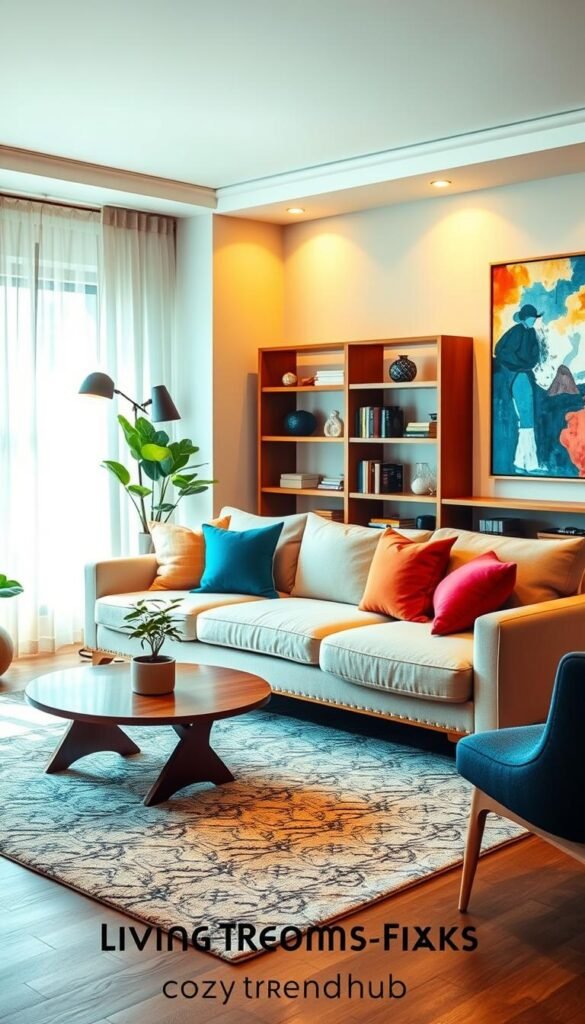
Fast diagnostic checklist
- Daylight test: Where does your eye land first? If it’s a mess, that’s the edit zone.
- Night test: Does light feel harsh or flat? Identify dark corners and glare sources.
- Flow test: Can two people pass without moving furniture? If not, the layout blocks traffic.
Zero-spend fixes vs. upgrades
Zero spend: edit shelves, swap items between spaces, rearrange seating. Upgrade: rugs, lamps, peel-and-stick wallpaper, paint—typically a day to a weekend.
„Remove everything, then add back only what you love and can group with breathing room.“
| Problem | Zero-spend Fix | Typical Upgrade |
|---|---|---|
| Cluttered surfaces | Edit and group items | Decor storage trays |
| Poor lighting | Move lamps, change bulbs | Floor lamp or dimmer |
| Blank or busy walls | Rearrange art from other walls | Peel-and-stick wallpaper |
Renter-friendly rules: avoid hardwiring, use removable adhesives, and hold purchases until you edit and measure. For suggested decor mixes that work after editing, see a vetted roundup at best cozy decor mixes.
Quick living room updates you can do without buying anything
Reworking how pieces relate to one another is the fastest way to refresh an area you already own.
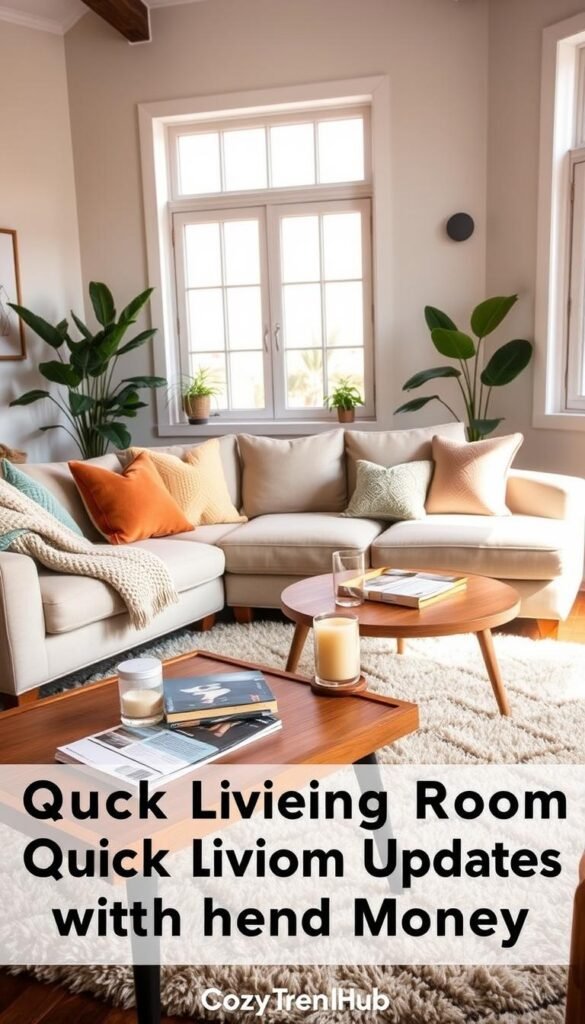
Reconfigure furniture for better sight lines and flow
Start with layout. Float a sofa a few inches from the wall. Angle a chair toward the main seating to invite conversation. Check pathways: two people should pass without moving a seat.
Measure: walk the traffic line and note any blocked sight lines to the TV or windows.
Clear decor clutter by editing surfaces
Remove everything from shelves, tables, and mantels. Add back three to five curated pieces with mixed heights and materials.
Result: less visual noise and a more intentional focal point.
Swap pieces between rooms to test new looks
Rotate lamps, art, baskets, and throws from another room in the home. This tests scale and color before buying.
„Float the sofa, rework the conversation area, and clear a visual pathway.“
| Reset Step | What to check | Quick outcome |
|---|---|---|
| Layout | Pathways & sight lines | Improved flow |
| Declutter | Surface edit (shelves, tables) | Calmer area |
| Swap | Test items from other rooms | Better scale and color |
Refresh pillows, throws, and texture for an instant sofa upgrade
A sofa’s whole personality can change with a few well-chosen textiles. Small swaps solve the common problem of a tired or mismatched sofa without painting or heavy work. Textiles refresh scale, color, and comfort in a single afternoon.
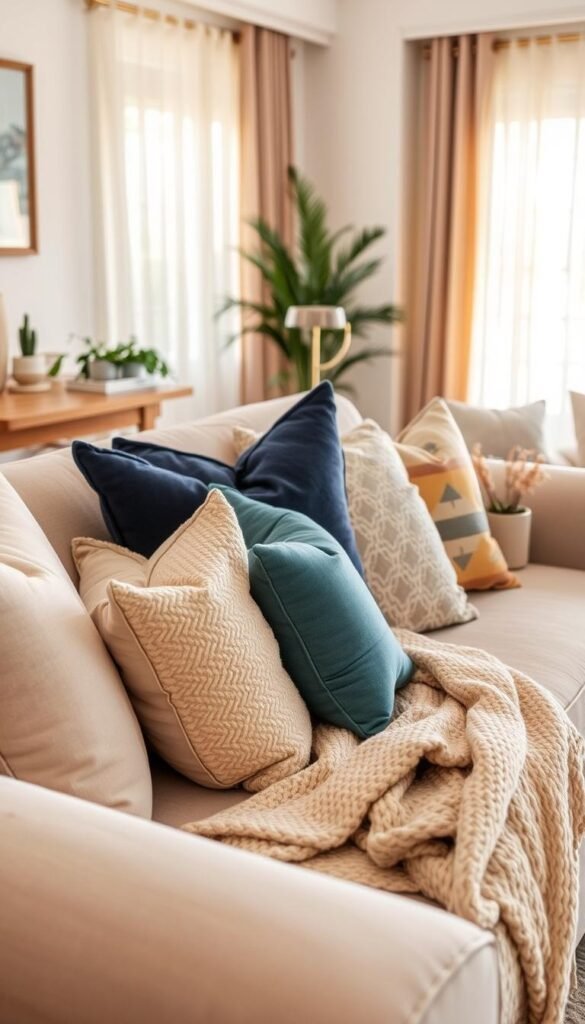
Best for renters, small spaces, and seasonal style changes
This approach suits renters who can’t alter walls, small-space residents who need flexible choices, and seasonal decorators who rotate palettes. Use removable covers and machine-washable throws for easy care.
What to buy and sizing guidance
- Cushion covers: tailored look; cheap to swap.
- Throw pillows (2–3 per sofa): pick one large, one medium for balance.
- Cozy throw: fold over an arm to soften the silhouette.
- Tip: stick to 2–3 colors, favor varied texture over many patterns.
Pros and cons
Pros: fast, reversible, budget-friendly.
Cons: too many small accessories can create visual clutter.
| Category | What to prioritize | Why it matters |
|---|---|---|
| Covers | Fit, washability | Tailored look and easy cleaning |
| Inserts | Fill power, durability | Shape and comfort |
| Throws | Weight, texture | Seasonal warmth and softening |
„Fewer, larger pieces often read calmer than many small ones.“
For renter-friendly decor ideas and seasonal picks, explore a curated guide at best patio decor for renters.
Update the coffee table and side table setup to make the room look styled, not messy
One well-arranged coffee table signals intentional design and makes daily cleanups faster. The goal is to create a clear home for daily items so surfaces read styled, not like a catch-all.
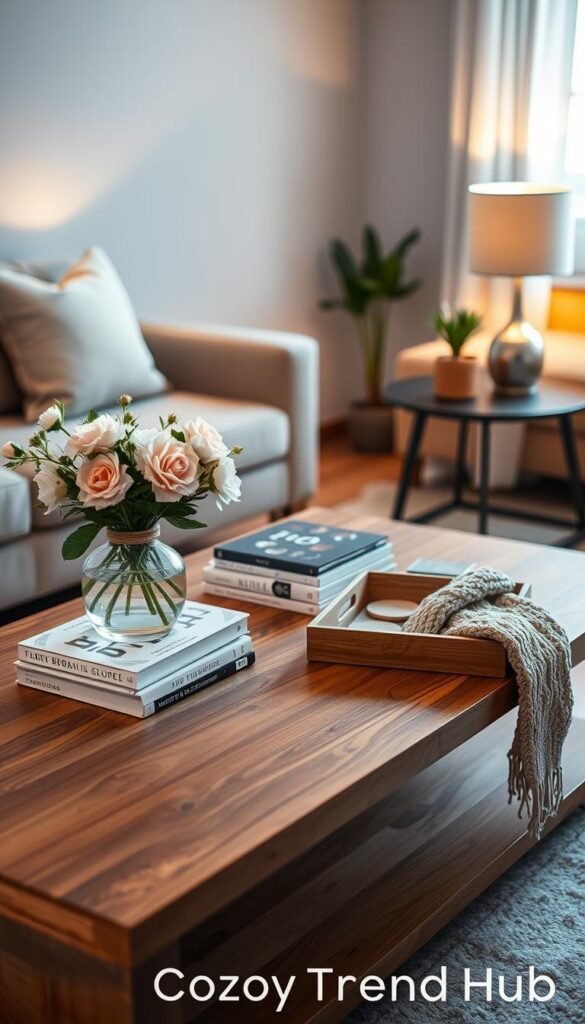
Best for
Homes where „everything ends up on the table“—busy households, pet and kid homes, and small spaces that rely on the table for daily function. Function should lead the design.
What to buy
- One appropriately sized tray as an anchor for remotes and coasters.
- One lidded decorative box or small basket for loose items.
- A shallow bowl or catchall for keys and change.
- A short stack of books for height and a single decorative piece.
Buying considerations
- Scale: choose items that fit the surface — not too small, not overfilled.
- Finish: wipeable surfaces and durable materials for spills.
- Safety: rounded edges and stable pieces for kids and pets.
„Large anchor + practical container + one life element = low-effort, high-impact styling.“
| Problem | Simple fix | Outcome |
|---|---|---|
| Catch-all table | Tray + box + bowl | Faster tidy and less visual clutter |
| Too many small items | Limit accessories to 3–4 pieces | More intentional design |
| Spills and wear | Wipeable finishes | Longer-lasting surface |
Fix flat lighting with warm bulbs and easy lamp swaps
Adjusting where and how a room is lit is the fastest way to change its mood at night. A few small swaps often deliver big impact without rewiring.
Best for
This helps spaces that feel harsh, dim, or clinical after dark. Renters, small-space dwellers, and homes with a single overhead fixture benefit most.
What to buy
- Bulbs: 2700K warm white LED bulbs (soft, warm tone).
- Dimmers: plug-in or switch dimmers where allowed to control light through the day.
- Floor lamp: one floor lamp for a dark corner; choose a stable base.
- Shades: swap old shades—diffused fabric for soft glow, directional shades for reading.
Placement tips
Layer light: combine ambient, task, and accent sources.
- Brighten dark corners with a floor lamp angled toward the seating area.
- Add a table lamp beside a chair for reading and to pull focus to the sofa or favorite seat.
- Use picture lights or LED strips to highlight artwork and add depth.
Pros: affordable mood change, fast to implement, renter-friendly when using plug-in fixtures.
Cons: limited by outlet placement and existing wiring; major fixture swaps may need permission or an electrician.
| Category | What to buy | Benefit |
|---|---|---|
| Bulbs | LED 2700K, dimmable | Warm, natural color all day and night |
| Floor lamps | Neutral shade, sturdy base | Fills dark corners and lifts a seating area |
| Dimmers & shades | Plug-in dimmer, diffusing shade | Control brightness; soften glare and create layering |
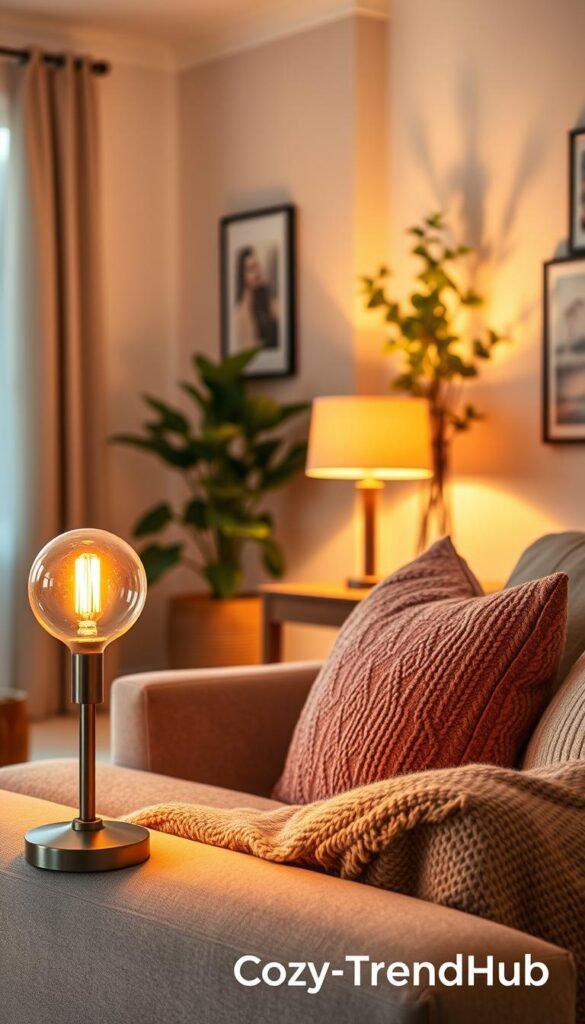
„Swap to 2700K bulbs and add one floor lamp—then evaluate light in evening hours to fine-tune placement.“
Add greenery to bring life to a stale living room look
A few well-placed plants can turn a flat space into a fresher, more inviting corner. Designers often recommend live greenery to breathe life into a neutral palette and soften hard lines.
Best for: renters, seasonal decorators, and small-space residents who want a reversible change that adds vertical interest without heavy furniture.
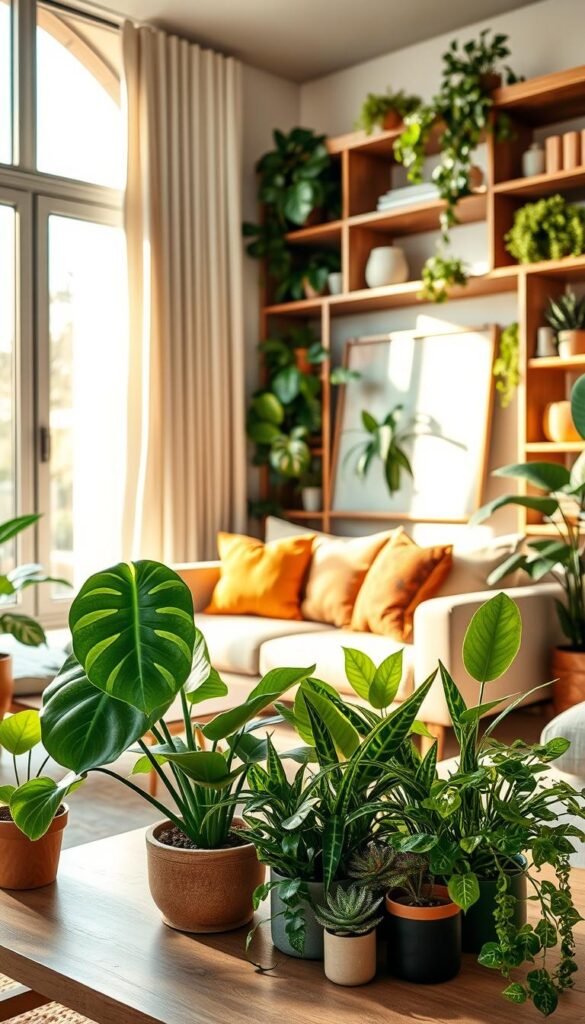
What to buy
- Low-light houseplants (snake plant, ZZ) for north-facing windows.
- Small succulents for shelves and side tables where sunlight is limited.
- Planters that match the room palette and a couple of simple plant stands for height.
Placement and styling
Cluster plants in odd numbers and vary heights for a balanced composition. Keep patterns simple and avoid scattering tiny pots everywhere; one intentional group reads cleaner.
Pros and cons
- Pros: instant life and color, softens the look, and feels affordable to change.
- Cons: care needs, light limits, and pet-safety considerations for some species.
„Build a small collection slowly rather than buying many at once; it prevents clutter and wasted spend.“
| Light level | Plant type | Why it works |
|---|---|---|
| Low | Snake plant, ZZ | Hardy, low maintenance |
| Medium | Pothos, philodendron | Fast growers; add vertical interest |
| High | Succulents | Good for sunny spots and shelves |
Upgrade your walls with peel-and-stick wallpaper, art, or a mirror
Swapping a blank wall for a statement surface is an easy way to alter scale and mood. This tackles two dated signals: empty walls that make a space feel unfinished, and flat lighting that needs reflection.
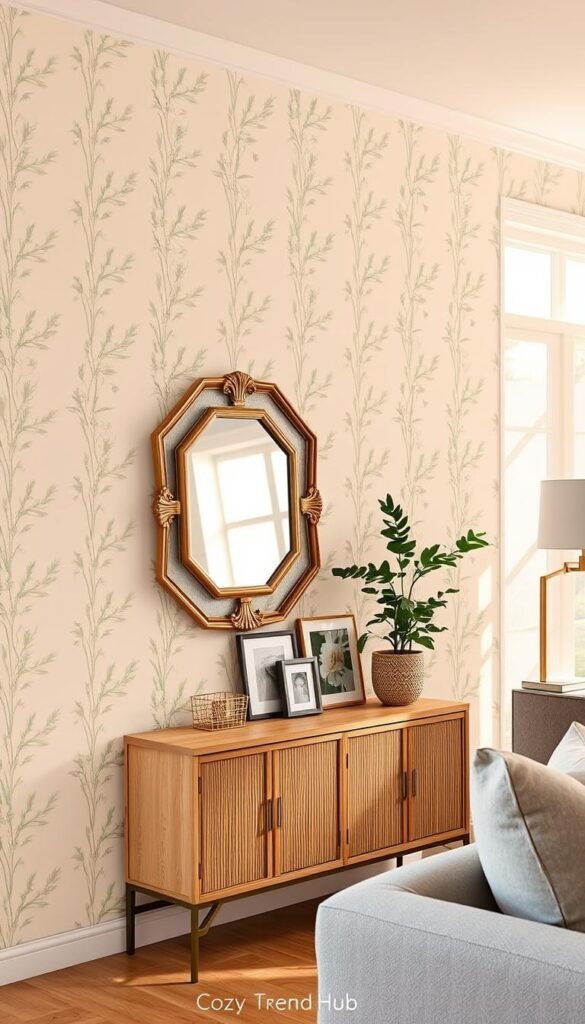
Best for renters and small spaces
Removable options let renters try pattern without permanent change. Peel-and-stick is forgiving: it can be repositioned or removed if there’s an air bubble, as designer Jessica Shaw notes.
When to choose each solution
- Peel-and-stick wallpaper — choose when a bold pattern or statement is needed.
- Art — pick large-scale pieces to add personality without clutter.
- Mirror — use to reflect a window or lamp to add light and depth.
Buying considerations
Removability: confirm adhesives that won’t damage paint. Size: match frames and mirrors to wall scale. Placement: check what the mirror reflects—avoid reflecting ceilings.
| Problem | Best fix | Why it works |
|---|---|---|
| Blank walls | Peel-and-stick or large art | Adds pattern and a focal point |
| Flat lighting | Mirror | Reflects light and expands the view |
| Cluttered gallery | One large piece | Less visual noise, stronger style |
For renter-friendly wallpaper options and roll sizes, see a curated selection of peel-and-stick wallpaper choices.
„Start on a clean surface, choose a manageable pattern scale, and know you can peel and redo if needed.“
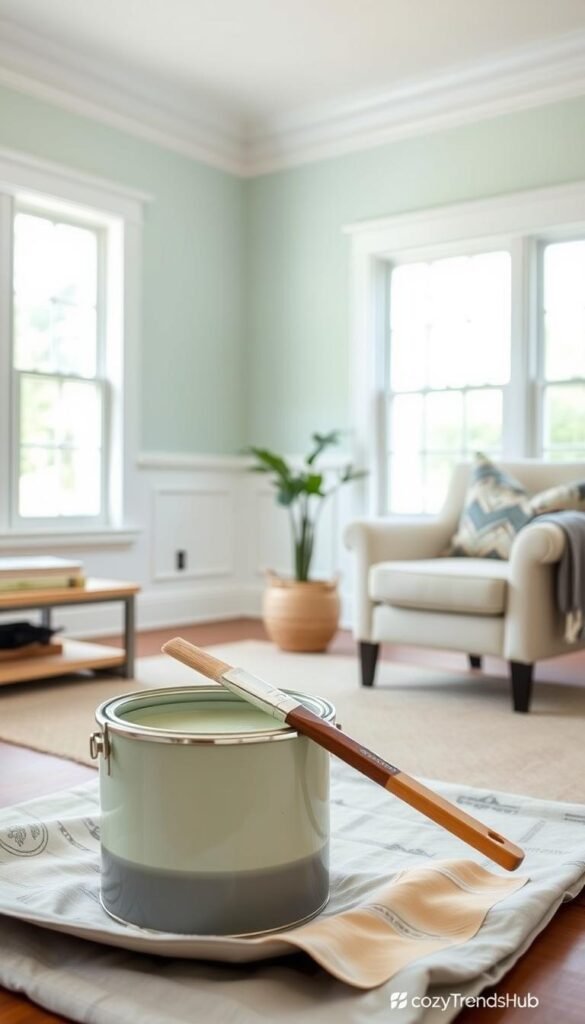
Paint and trim refresh for the biggest “new room” feeling on a budget
A fresh coat of paint is one of the most cost-effective ways to shift a room’s mood and knit a design together.
Best for
This approach suits homeowners and long-term renters who have permission to paint. It is less reversible than textiles, so confirm rules before you start.
Where paint helps most
- Full walls — resets scale and unifies the palette.
- Trim and moldings — crisp white or contrasting color sharpens details.
- Color-drenching — paint ceilings, trim, and walls for cohesive drama when desired.
Practical guidance and prep
Paint when undertone or mismatch is the problem, not when clutter or poor light is the main issue. Start with one wall or a single trim run to test a choice.
Prep: patch holes, tape edges, protect floors, and ventilate. Drying time matters—plan 24–48 hours before heavy use.
Pros and cons
| Pros | Cons |
|---|---|
| High impact per dollar; ties the living palette together. | Prep and drying time; permission and ventilation limits for renters. |
| Can change room feel and light reflection. | Less reversible than surface swaps; requires effort to do well. |
For practical, budget-friendly ideas on how to way update your decor after painting, see easy ways to update your decor.
„Color-drenching is dramatic and lower stakes because it is paint.“
Change the rug or go for statement flooring when the floor is the problem
A mismatched or damaged floor pulls focus and sinks a design; a new rug or statement plank can rescue the space. Start by deciding if a cover-up will do or if the home needs permanent flooring.
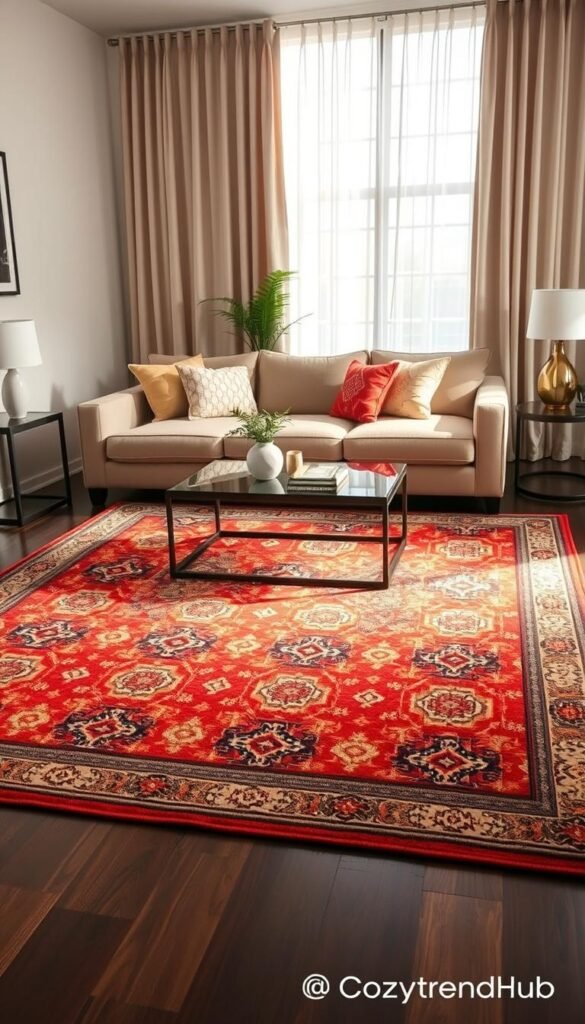
Why start with a rug? Designers often recommend buying a rug first because it is one of the largest pieces in the room. A rug sets the colors and adds texture, helping the rest of the palette fall into place. Jessica Shaw notes it’s the best way to introduce a new color story without committing to renovation.
Best for: renters who can’t replace flooring and homeowners ready for long-term change. Rugs hide worn carpet, protect scratched laminate, and define seating zones.
Buying considerations:
- Correct size: all front legs on the rug for a cohesive layout.
- Pile height: choose low-pile for door clearance and furniture.
- Washable options: essential for pets and kids.
- Grippy pads: prevent slips and protect the floor beneath.
| Use case | Recommended rug type | Why |
|---|---|---|
| High-traffic | Low-pile, stain-resistant | Durable and easy to clean |
| Pet/kid homes | Washable rugs | Hygiene and simple upkeep |
| Style anchor | Large patterned rug | Introduces colors and defines zone |
| Accessory | Rug pad | Grip and floor protection |
Pros: major visual reset, defines zones, hides imperfect floors. Cons: cost, sizing mistakes, and return hassles. Measure first and test a sample when possible to buy once and buy right.
For staging and rugs that hide imperfections, see a practical guide on rugs that hide imperfections.
Lighting upgrades that feel custom without a renovation
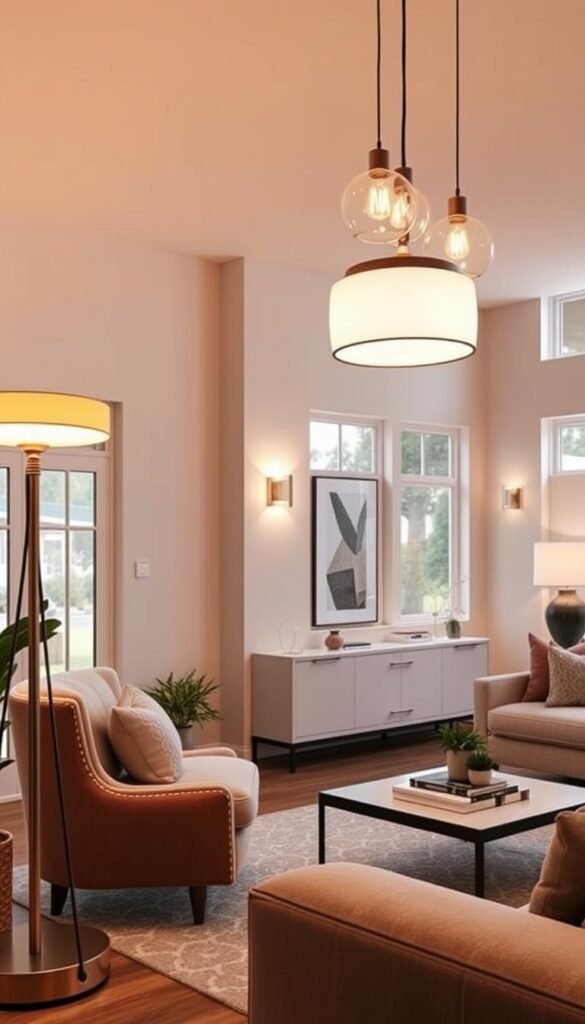
Layered light tricks give a room instant depth and personality with minimal fuss. These changes create a tailored feel without opening walls or running new wiring.
Best for: living room spaces with dated fixtures, no flexible overhead, or a bland overall glow. Renters will find many options reversible; homeowners can take a few extra steps for a more permanent effect.
Easy swaps that act like custom work
- Picture lights — spotlight art and make a wall read like a gallery. Solves a lack of accent light.
- LED strip lighting — tuck under shelves to add depth and a warm halo for a favorite piece.
- Pendant swaps — use plug-in pendants where hardwiring isn’t allowed; they mimic a custom fixture if placement suits seating or a focal point.
„Accent light directs the eye and adds layers, so the whole space feels more intentional.“
| Problem | Fix | Result |
|---|---|---|
| No overhead option | Plug-in pendant or floor lamp | Focused light without rewiring |
| Dated fixture | Replace with a compatible pendant (if allowed) | Modernizes the piece and scale |
| No accent light | Picture lights or LED strips | Highlights art and adds depth |
Pros: adds character, flexible mood control, and better design focus. Cons: rental permissions, outlet and cord management, and limited hardwired changes.
For renter-safe ideas and product picks, see a practical how-to on no-tools pendant swaps and a roundup of cozy fixtures at best cozy lighting.
Create a focal point with a fireplace refresh, media wall, or simple paneling
When a TV or an empty wall dominates, adding structure creates balance and purpose. This reduces the unfinished feel by giving the eye a destination and cutting visual clutter.
Best for: rooms where the TV pulls focus, spaces with an underused fireplace, or walls that need architectural interest.
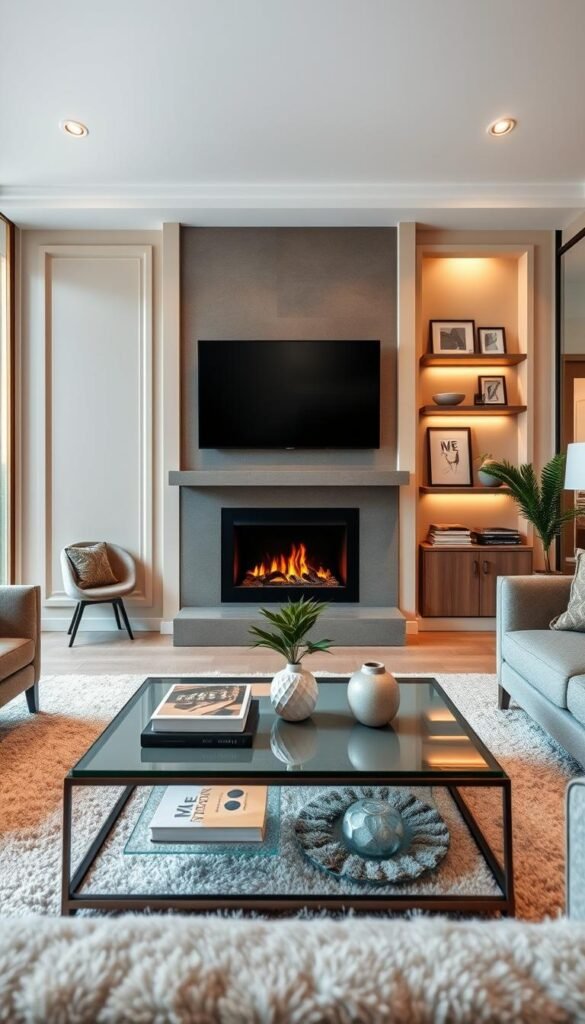
Fireplace styling
Make the fireplace the anchor with a curated mantel edit. Remove excess items, keep two to four scaled pieces, and use a single taller element to add vertical interest.
Tip: arrange objects in groups of odd numbers and leave breathing room so the surround reads intentional, not cluttered. For mantel inspiration and before/after examples, see a practical gallery at before-and-after fireplaces.
Media wall approach
Embrace the TV by framing it with texture—painted trim, peel-and-stick panels, or a floating shelf run. This integrates the display into the design so it reads like furniture instead of a black box.
Practical moves: mount the TV at eye height, add low-profile shelving below, and use textured wallpaper or paint to give the wall depth.
Paneling for dimension
Partial-height paneling adds charm without a full remodel. Choose beadboard or simple rails that stop at chair-rail height for a budget-friendly architectural lift.
Renter-safe options: peel-and-stick trims and lightweight panel kits that attach with removable adhesive or small screws (in studs) for easy removal later.
| Problem | Fix | Why it works |
|---|---|---|
| Unfinished wall | Partial paneling or large art | Adds texture and visual anchor |
| TV dominates | Textured media wall and mounted shelving | Makes electronics feel integrated |
| Neglected fireplace | Mantel edit + surround styling | Creates a single focal piece |
Buying and safety considerations
- Renter-safe: peel-and-stick panels, removable trims, and freestanding mantel shelves.
- Mounting: use rated TV mounts and check wall anchors for the chosen substrate.
- Heat clearances: follow manufacturer specs for paneling and decor near fireplaces and keep electronics ventilated.
„A clear focal point simplifies the rest of the design and makes furniture placement feel intentional.“
What to buy first: comparison tables for quick fixes vs. upgrades
Choosing what to buy first depends on budget, rental rules, and how much time someone has. Start with changes that alter daily function, then layer in the bigger visual moves that need more time or permission.
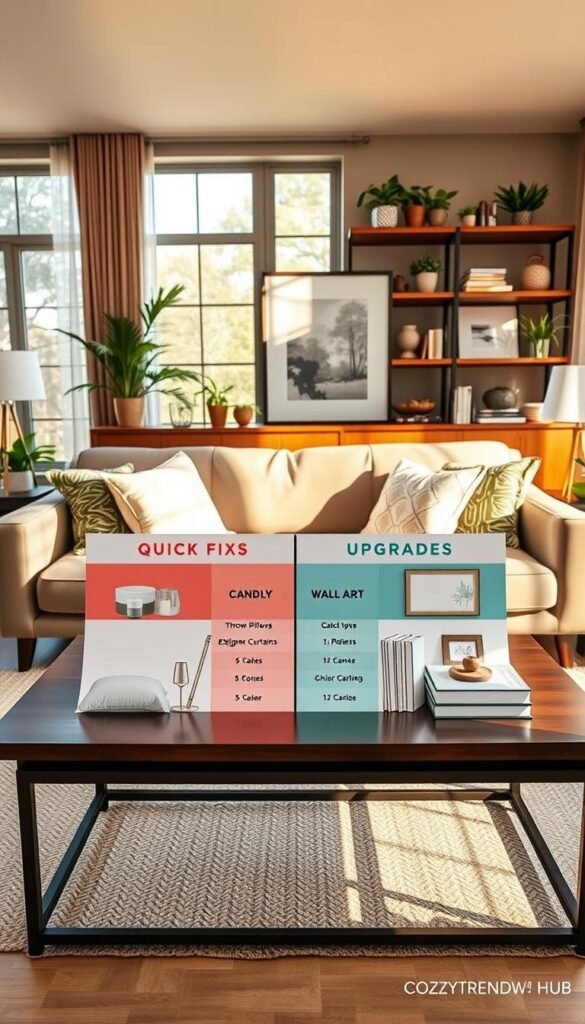
Best-for guide
- Renters: peel-and-stick, plug-in lighting, washable pillows — reversible and low-risk.
- Small spaces: rugs that define zones and slim lamps for vertical light without crowding.
- Seasonal decorators: pillow and throw collections that rotate easily by season.
- Pet/kid homes: washable rugs, durable table storage, and easy-clean accessories.
Comparison: no-buy fixes vs. upgrades
| Action | Expected time | Effort | Primary problem solved |
|---|---|---|---|
| Rearrange layout, declutter | Same-day | Low | Flow & visual clutter |
| Swap bulbs to 2700K, add dimmer | Same-day | Low | Harsh lighting |
| Buy rug or statement paint/wall | Weekend | Medium | Scale & palette |
| Peel-and-stick wall or paneling | Weekend | Medium | Blank walls / focal point |
Affiliate block-ready categories
Organize shopping by intent so readers can convert faster. Recommended categories:
- Pillows/throws — for the sofa and seasonal style.
- Lamps & bulbs — 2700K and dimmable options first.
- Rugs — size, pile, and pad are essential filters.
- Peel-and-stick — removable adhesives and pattern scale guidance.
- Storage — trays, baskets, and lidded boxes for table surfaces.
Cost and time ranges
| Project | Typical cost | Time range |
|---|---|---|
| Same-day refresh (layout, bulbs, plants) | $0–$75 | 1–6 hours |
| Weekend upgrade (rug, peel-and-stick, lamp) | $100–$600 | 1–2 days |
| Paint or statement wall | $150–$800 | 2–3 days (plus dry time) |
Practical buyer filters
| Filter | What to pick | Why it matters |
|---|---|---|
| Rug | Washable or stain-resistant + rug pad | Durability and safety |
| Pillows/throws | Removable covers, machine-washable | Easy care for pets/kids |
| Peel-and-stick | Removability rating & substrate check | Protects paint and ease of removal |
„Fix layout and clutter first, then address lighting, then the largest surface (rug, paint, or wall), and finish with accessories.“
For a targeted guide on which furniture to upgrade first, see a short reference at what furniture is worth upgrading first in.
Conclusion
Simple edits to flow, lighting, and textiles tend to deliver the clearest return on time and money.
Top wins: improve layout to aid circulation, edit surfaces to cut visual noise, switch to 2700K bulbs for warmer light, and add a rug or a removable wall treatment to reset palette and texture. These moves change how the living room and home read without a full overhaul.
Next steps to try today:
One-day plan: edit surfaces, reposition seating, swap a lamp or bulb, and test a plant or two.
Weekend plan: measure and buy a rug, hang peel-and-stick, or paint an accent—only after confirming scale and durability needs.
Expect better results when purchases solve the actual problem. For renter-friendly, small-space ideas and products that work, see a curated guide to aesthetic decor for small spaces. Buy less, choose better, and the room look will stay calm, functional, and easy to maintain over time.