

Blank surfaces can make an apartment feel temporary. Many people avoid decorating because they fear damage and a lost security deposit.
This guide lays out a clear, practical fix: five no-drill options and five peel-and-stick picks that suit small spaces and short leases. It explains what’s included, who benefits, and how each choice protects the home and deposit.
What to expect: quick “Best for” labels, key specs to compare, and short pros/cons so a reader can shop fast. Emphasis stays on temporary, low-damage solutions like lightweight art, leaning mirrors, adhesive hooks, removable wallpaper, and decals.
Recommendations favor ease of removal, surface compatibility, and value. The article also covers removal and patching so people can brighten a room and add personality without permanent changes. For more background and examples, see a fuller roundup at best renter-friendly wall decor.
Key Takeaways
- Choice split: five no-drill solutions and five peel-and-stick options for flexible updates.
- Prioritize surface compatibility, clean removal, and hold strength when buying.
- Lightweight frames, tension rods, and leaning pieces reduce hole risk.
- Peel-and-stick wallpaper and decals give bold change with removable adhesives.
- Measure, test a small area, and document condition to protect the deposit.
Why renters struggle with blank walls (and how to decorate without risking your security deposit)
Empty walls often cause the biggest disputes between tenants and property managers. Lease clauses, inconsistent paint jobs, and varied interpretations of „normal wear and tear“ make adding personality risky.
What “renter-friendly” means in practice: choose items that avoid permanent damage, remove with minimal residue, and leave only tiny, easy-to-fix holes if any.
Lease rules, wall damage, and practical definitions
If a project needs anchors, large screws, or heavy brackets, it usually creates repairs. Small nail or screw holes are simpler to patch with spackle and touch-up paint. Yet even clean adhesives can pull paint on poorly bonded surfaces, so test first.
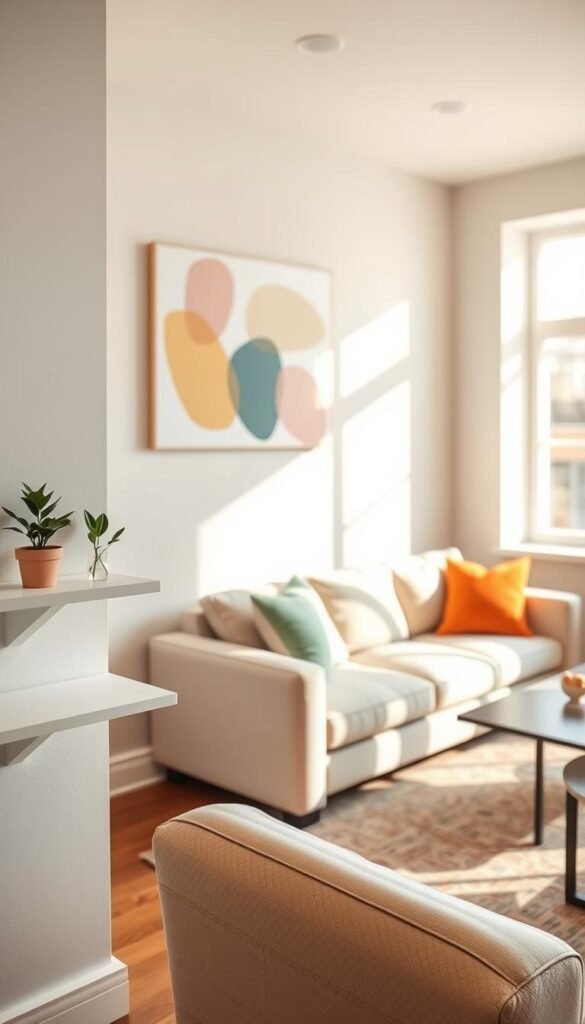
Big holes vs. small holes: a quick comparison
| Type | Example | Repair effort |
|---|---|---|
| Big holes | TV mounts, heavy shelving | Patch, sand, prime, repaint |
| Small holes | Tiny nails, small screws | Spackle, light sanding, touch-up paint |
| Adhesive systems | Strips, hooks, decals | Peel cleanly on good paint; risk paint pull on bad finish |
Quick checklist: read the lease, check wall finish, test one hook behind furniture, and plan removal before move-out.
For practical product picks that respect leases and deposits, see a curated list of the best options at best wall options for apartments.
Quick chooser: no-drill hanging vs. peel-and-stick wallpaper, decals, and murals
Pick the right approach fast: lightweight hanging for rotating pieces or peel-and-stick for a bold focal wall.
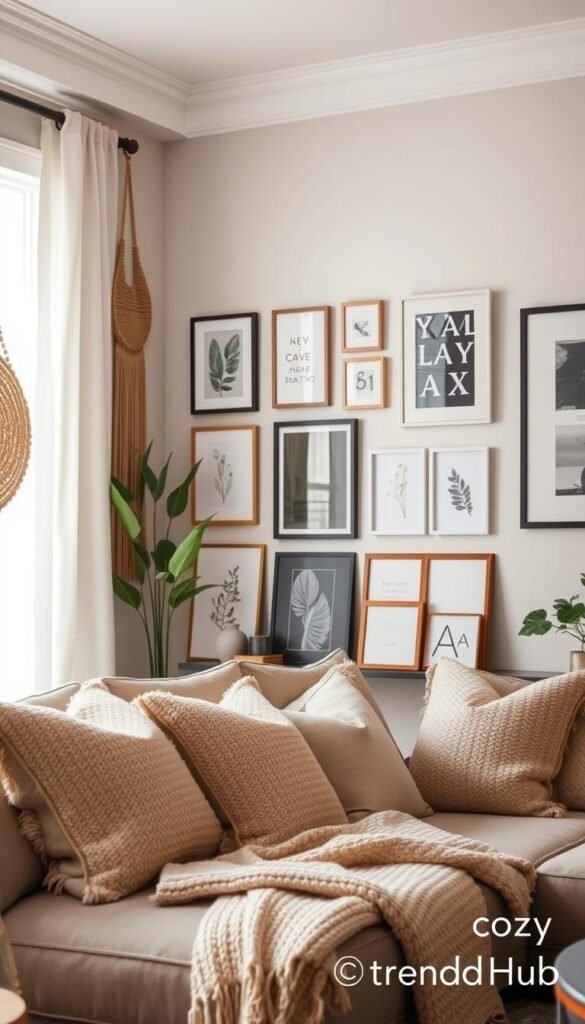
The fastest way to decide is to match the goal to the product. For small spaces, a large mirror expands light and depth. A gallery wall adds curated artwork without repainting. Peel-and-stick wallpaper or a mural changes the entire room with one bold move.
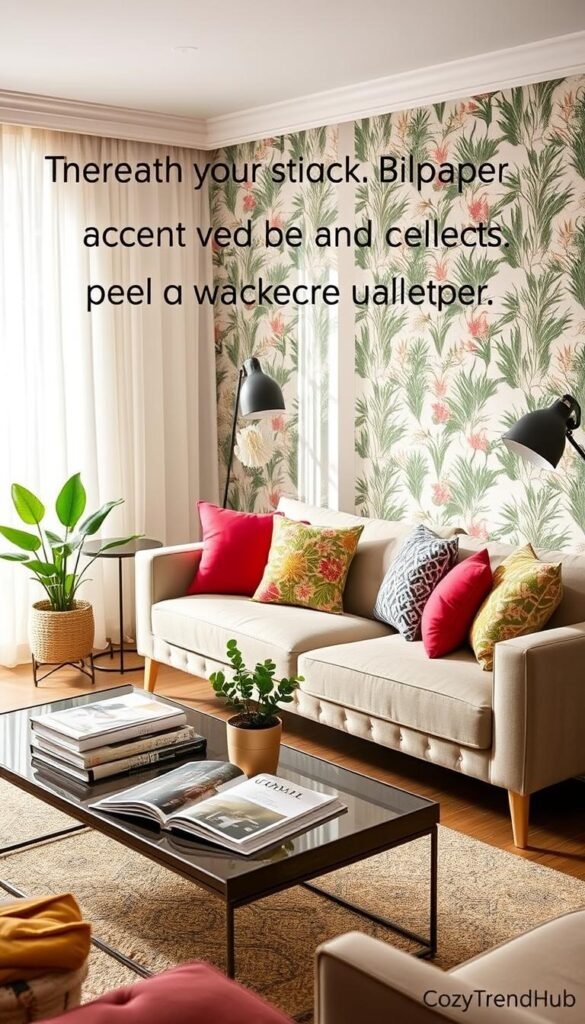
Best for small spaces
Choose a single focal point per room: mirror, gallery, or accent wall. This keeps the space balanced and prevents clutter.
No-drill hanging works for people who rotate frames and change layouts often. Use lightweight frames and rated strips to reduce holes and simplify moves.
Peel-and-stick wallpaper and decals suit those who want dramatic color or pattern. Prep the surface and remove slowly to avoid paint pull.
Seasonal swaps and quick shifts
Decals, removable tabs, and light frames are the fastest way to swap looks for holidays or short stays. They’re easy to install and simple to take down in a few minutes.
Design tip: pick one focal element per room to keep the design clean and cohesive.
| Option | Commitment | Removability | Typical cost |
|---|---|---|---|
| No-drill hanging (strips & hooks) | Low | High—peels clean on good paint | $5–$25 per kit |
| Gallery wall (lightweight frames) | Low–Medium | High with strips; small holes if nails used | $20–$150 depending on frames |
| Peel-and-stick wallpaper / murals | Medium–High | Medium—slow removal needed | $30–$200 per roll/panel |
| Decals and stickers | Low | High—best for targeted art | $10–$60 |
Who should pick no-drill hanging: people who move often, rotate artwork, or want flexible hanging with minimal wall contact. Who should pick peel-and-stick: people who want the most dramatic before/after effect and can take time on prep and removal.
Next: the article lists five top no-drill solutions, then five peel-and-stick picks with “best for,” pros/cons, and buying notes to make shopping faster. For seasonal styling and quick ideas, see additional summer decor options.
Best no-drill wall decor products for apartments and rentals
Small, damage-free fixes can make a big difference in how a space feels. These options avoid drilling and are designed to minimize holes while still making walls feel finished and intentional.
Damage-free picture hanging strips — best for a flexible gallery
Who it’s for: people building a gallery with lightweight frames and rotating artwork.
What it solves: avoids nails and makes repositioning simple.
- Pros: easy to level, rearrange, and remove when used on good paint.
- Cons: strict weight limits and risk of paint pull on weak finishes.
- What to check: max weight per strip, surface type, and reusability.
Removable adhesive hooks — best for textiles and light hanging pieces
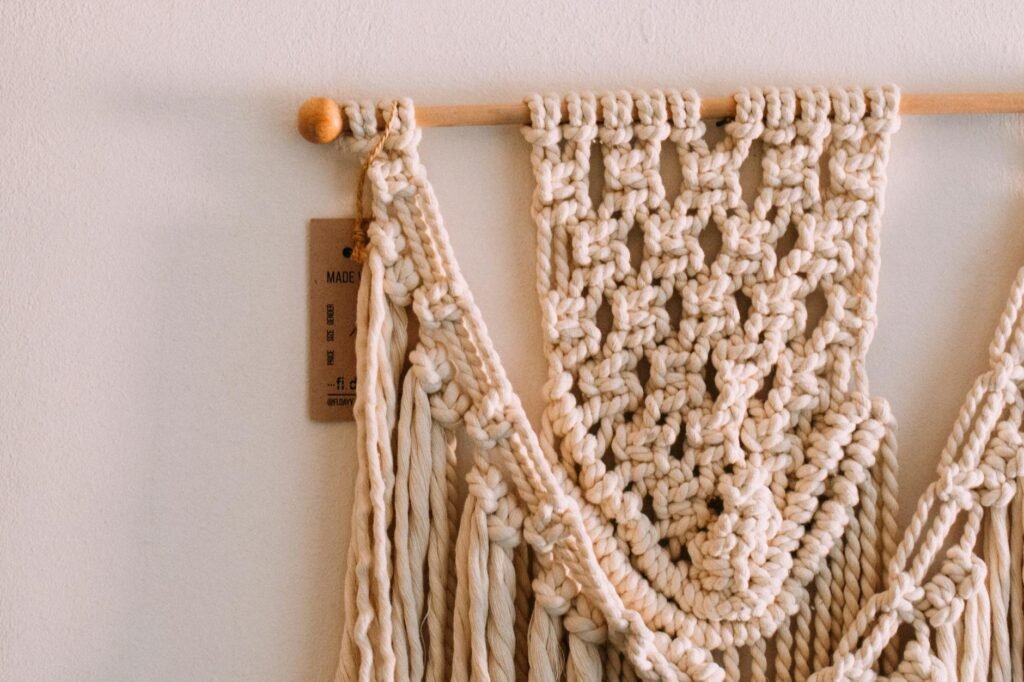
Who it’s for: anyone wanting to hang tapestries, macramé, or light pieces without patching.
What it solves: supports textiles and wall hangings without nails.
- Pros: fast install and flexible placement.
- Cons: adhesive varies by finish and humidity; follow weight limits.
- What to check: finish compatibility, temperature/humidity tolerance, and max weight.
Photo collage strips / removable tabs — best for ultra-small spaces
Who it’s for: students and dorm-like rooms that swap artwork often.
What it solves: lightweight, unframed prints make seasonal changes quick and low-cost.
- Pros: minimal bulk and easy removal.
- Cons: less durable for heavier pieces; alignment can be fiddly.
- What to check: adhesive residue, reusability, and recommended paper weight.
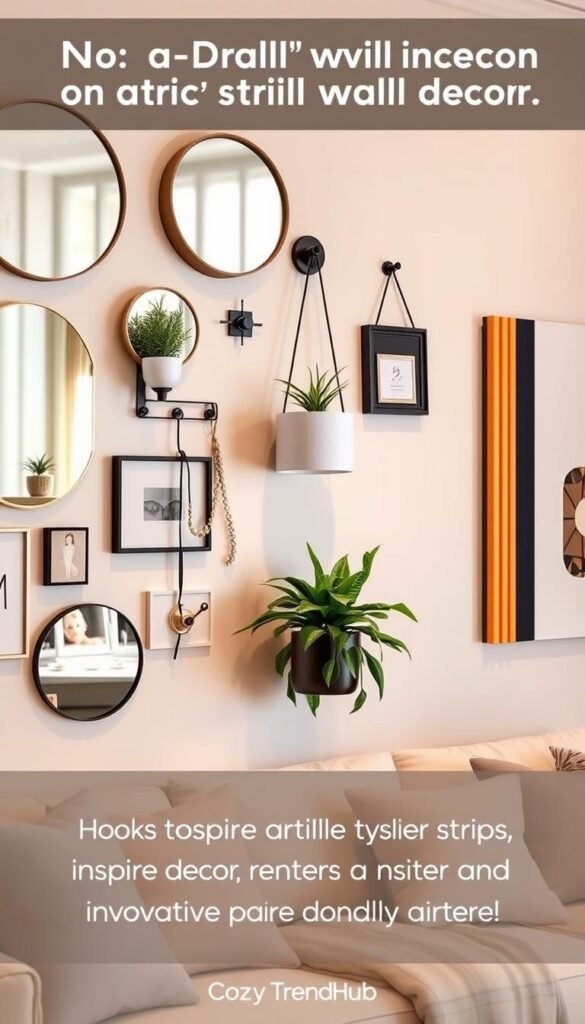
Freestanding vs. hanging mirrors — best for brightening a small space
Who it’s for: anyone who wants more light and perceived depth without drilling.
What it solves: mirrors expand visual space; leaning mirrors avoid holes entirely.
- Pros: freestanding mirrors are moveable; hanging mirrors are sleek and secure when mounted correctly.
- Cons: large freestanding pieces need floor space; hung mirrors require correct hanging hardware or strong strips.
- What to check: mirror weight, floor clearance for leaning, and safe hanging hardware specs.
Wall-mounted planters with removable hooks — best for adding plants and texture
Who it’s for: people who want greenery like pothos, ferns, or spider plants without nails.
What it solves: brings life and texture while keeping holes minimal.
- Pros: adds dimension and air-purifying plants; hooks are simple to place.
- Cons: water and weight risks—use drip trays and respect load limits.
- What to check: max planter weight, waterproofing, and anchor type.
„Measure twice and check weight ratings before you stick anything.“
Buyer checklist (quick compare):
| Product | Max weight | Best surfaces | Removability |
|---|---|---|---|
| Picture strips | Light frames (check pack) | Smooth painted walls | High if removed carefully |
| Adhesive hooks | Varies by size | Smooth, clean paint | High on good finishes |
| Photo tabs | Very light | Paper-friendly surfaces | High; low residue |
| Freestanding mirrors | Floor-supported | Any floor surface | High—moveable |
| Planter hooks | Small to medium planters | Smooth paint; avoid steam areas | Medium; check for moisture risks |
Next: peel-and-stick picks offer larger surface change for readers ready to make a bolder statement.
Best peel-and-stick picks: wallpaper, decals, and renter-safe accent walls
Peel-and-stick options make big visual changes with less commitment than paint or permanent fixtures. They use self-adhesive backing so installation skips paste. Temporary wallpaper allows testing bold patterns, while decals and murals offer targeted artwork and statement scenes.
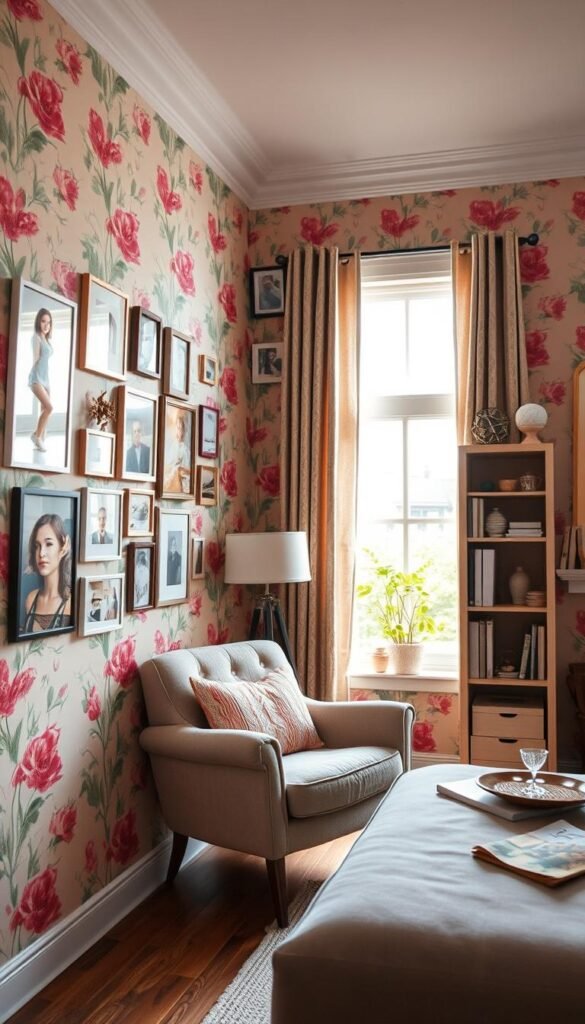
Which option fits the goal
Peel-and-stick wallpaper (full accent wall) — Best for bland white or cream walls that need color and personality. Compare roll coverage, pattern repeat, finish, and removability before buying.
Wood-slat look stick wallpaper — Provides instant texture and a focal look behind a bed or sofa without installing real panels.
Removable decals — Ideal for small areas, corners, or above desks when artwork without frames is preferred. Decals are usually easier to reposition than panels.
Mural-style decals — Use for bedrooms and living rooms when one large image is the goal instead of repeating pattern.
Pattern tips and renter-safe usage
- Pick light palettes and subtle prints for small rooms to keep the space airy.
- Choose one accent wall and plan furniture placement before you stick anything.
- Avoid high-moisture areas unless the product is rated for them.
| Option | Best for | Install time | Repositionability |
|---|---|---|---|
| Peel-and-stick wallpaper | Accent wall color/pattern | 1–3 hours | Moderate (panels can be realigned) |
| Wood-slat look wallpaper | Instant texture & focal point | 1–2 hours | Low–Moderate (align carefully) |
| Removable decals | Small targeted art | 10–30 minutes | High (easy reposition) |
| Mural-style decals | Statement walls in living or bedrooms | 1–4 hours | Moderate (large pieces need care) |
„Test a small hidden area first and remove slowly to reduce paint pull.“
Brands to compare include NuWallpaper, Tempaper, and Urbanwalls for decals and murals. For more product roundup help, see a detailed review of removable options at best removable wallpapers.
Buying considerations that matter for renter wall decor (what to check before you click “add to cart”)
A quick pre-buy checklist saves time and prevents common mistakes when choosing temporary options for a leased space. Start by checking surface compatibility and weight limits before ordering.
Wall type and finish
Smooth painted drywall and textured surfaces behave differently. Stick wallpaper and decals stick best to smooth paint. Textured or imperfect paint may cause adhesive failure or paint pull.
Test one sample or place a strip behind furniture for 24–48 hours to confirm compatibility.
Weight limits and real-world use
Treat listed max weight as a ceiling, not a target. Match strips and hooks to the actual weight of frames, artwork, or hanging planters.
For plants, allow extra safety margin for water and growth—choose stronger hooks or floor-supported options when in doubt.
Value, reusability, and design planning
Pay more for reputable adhesive systems, refill strips, and modular frames that travel to the next home. Factor hidden costs like extra rolls, installation tools, and touch-up supplies.
Map a gallery layout on the floor first. Use one focal piece, repeat one or two colors, and add a few 3D pieces for texture without crowding the space.
| Compare | Key check | Why it matters |
|---|---|---|
| Surface type | Smooth vs. textured | Adhesion and paint risk |
| Removability | Clean peel vs. slow removal | Protects deposit |
| Reuse | Refill strips/frames | Better long-term value |
| Weight rating | Actual item weight | Safety and longevity |
„Once buyers match surface, weight, and reuse needs, installation and clean removal become much more predictable.“
For more aesthetic ideas and product picks, see a practical roundup at best aesthetic decor for apartments.
How to install and remove renter-friendly decor cleanly (so you get your deposit back)
Simple, careful steps for prep and removal make the difference between a clean exit and a deposit dispute. Follow a short workflow to protect paint and avoid extra charges.
Surface prep for peel-and-stick and decals
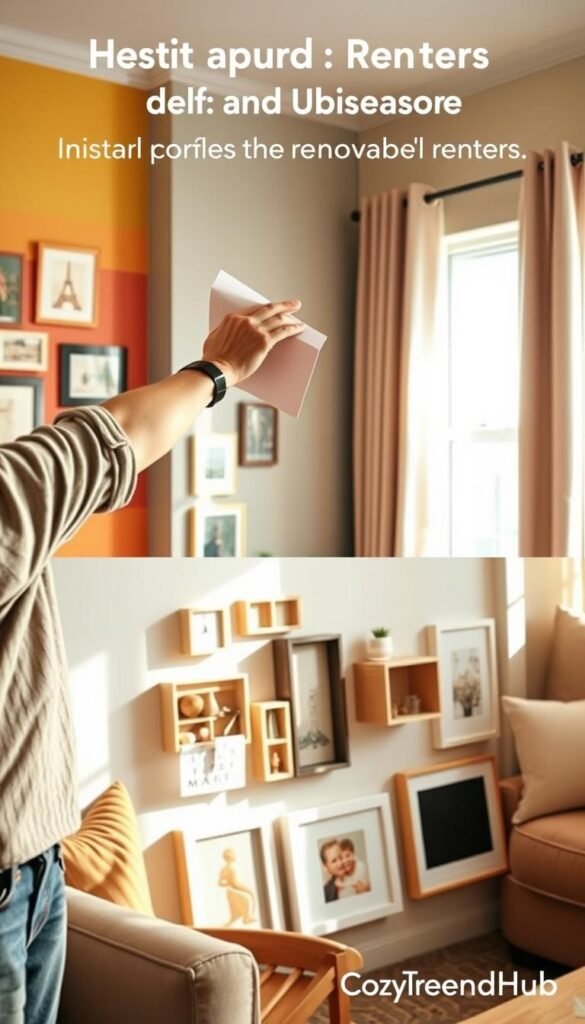
Clean dust and oils with a mild, non-abrasive cleaner and let the surface dry fully. A dry, smooth surface improves adhesion and makes later removal cleaner.
Test a small patch behind furniture for 24 hours before you commit to a full piece.
Install and removal technique that reduces paint pull
Measure, plan seams, and use a level. Smooth panels slowly from the center outward to push out air.
When removing, work low and steady. Pull slowly and keep the strip close to the wall rather than yanking away. If paint starts to lift, pause and warm the adhesive with a hair dryer for a few seconds.
Patching tiny holes from nails or screws
For small holes, use spackling or putty, smooth with a putty knife, then sand lightly once dry. Touch-up with matching paint for a seamless finish.
If you used nails, be extra gentle when removing them to keep holes minimal.
Document your work and protect your security deposit
Take clear before photos of each wall and close-ups of existing flaws. Keep time-stamped move-out photos as proof. Save paint codes or a sample so touch-ups match.
Do not exceed weight ratings, do not rush removal in humid conditions, and do not apply strong adhesives to peeling paint without testing.
| Step | Why it helps | Quick tip |
|---|---|---|
| Prep surface | Improves adhesion; reduces residue | Clean then dry 24 hrs |
| Install slowly | Prevents bubbles and uneven grab | Use a level and smooth outward |
| Remove slowly | Reduces paint lift and large repairs | Pull low, warm adhesive if needed |
| Patch small holes | Fixes tiny nails and screw marks | Spackle, sand, touch-up paint |
For more step-by-step guidance to avoid security deposit issues, see a practical checklist at avoid security deposit issues. For product-friendly ideas, check best home decor for renters.
Conclusion
With the right methods, upgrading a room becomes low-risk and fully reversible. Choose removable systems—strips for rotating artwork, peel-and-stick for a bold accent, or mirrors to add light with minimal impact.
Keep the plan simple: one focal piece, a clear design direction, and a few well-chosen pieces beat cluttered walls. Match products to the surface, respect weight limits, and pick items that move to the next apartment.
Document condition and take photos, and pack mounting supplies for move-out. For more practical makeovers and step-by-step ideas, see a guide to renter-friendly makeovers, tips for blank walls ideas, and easy spring decor ideas.
Next step: pick one wall in living or bedroom, choose one method, and follow the install/remove checklist for a clean, deposit-safe result.


2 Comments