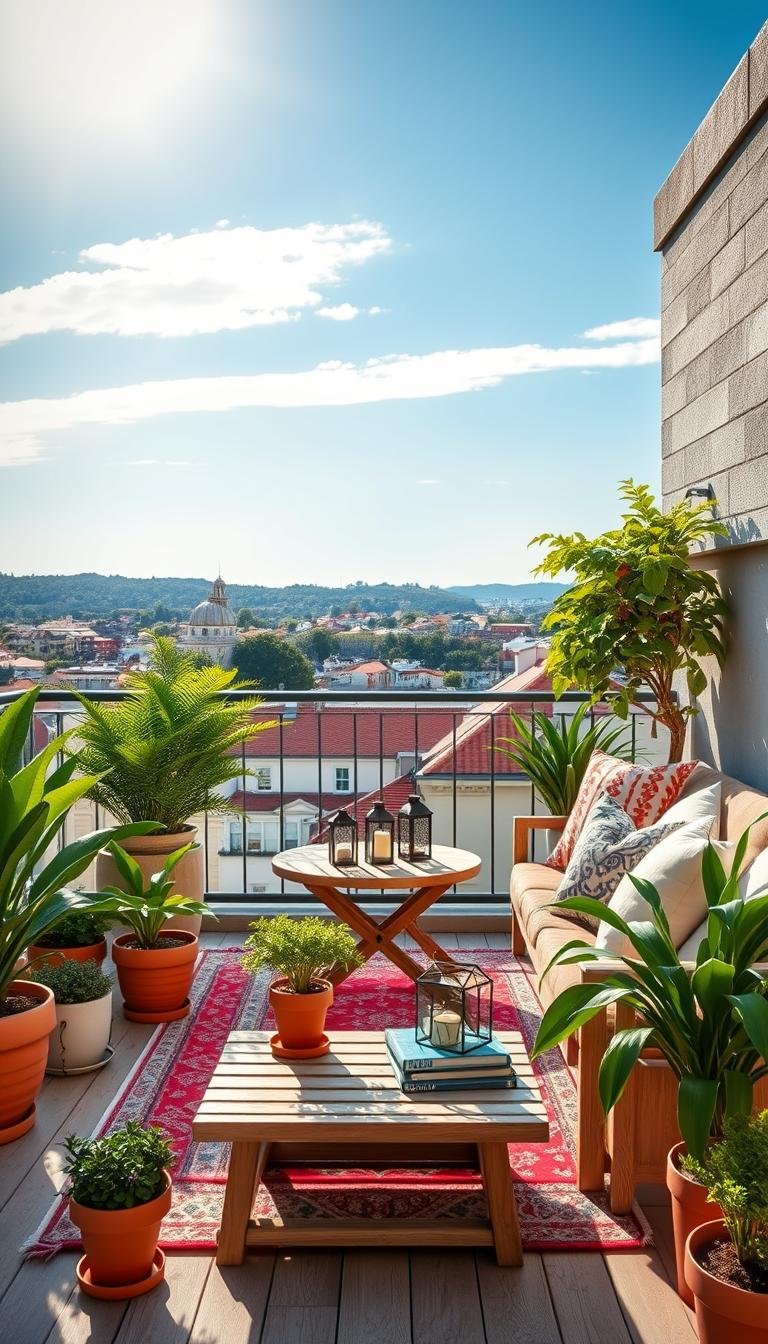
This guide solves a common problem: small outdoor spaces often fail because purchases ignore limits like wind, weight, drainage, and watering logistics.
Instead of inspiration only, the article focuses on a functional starter mix for renters and small-space residents. It lists decor and garden essentials that add comfort, easy-care plants, and practical tools without permanent changes to a unit.
The approach is orderly: assess microclimate, confirm building rules, plan a renter-friendly layout, then buy a compact kit that fits railings, walls, and weight limits. Each of the 10 picks tackles a real issue: no floor space, windy railings, drainage spills, hauling water, or privacy gaps.
What to expect: product cards will show „best for,“ key measurements, pros and cons, and clear comparison points for confident buying. For more detailed recommendations see best balcony decor mix.
Key Takeaways
- Start with limits: measure weight capacity, sun, and wind before shopping.
- Choose renter-friendly items that attach or free-stand without drilling.
- Pick durable tools and containers as long-term purchases; treat annuals as replaceable.
- Each pick solves one common problem—space, drainage, wind, or privacy.
- Success depends on matching plants and pots to site conditions and using good potting mix.
Start With Your Balcony’s Real-World Limits
Start with a quick reality check of your space—its light, wind, and access to water. This simple audit prevents costly, impractical buys and keeps renter rules central.
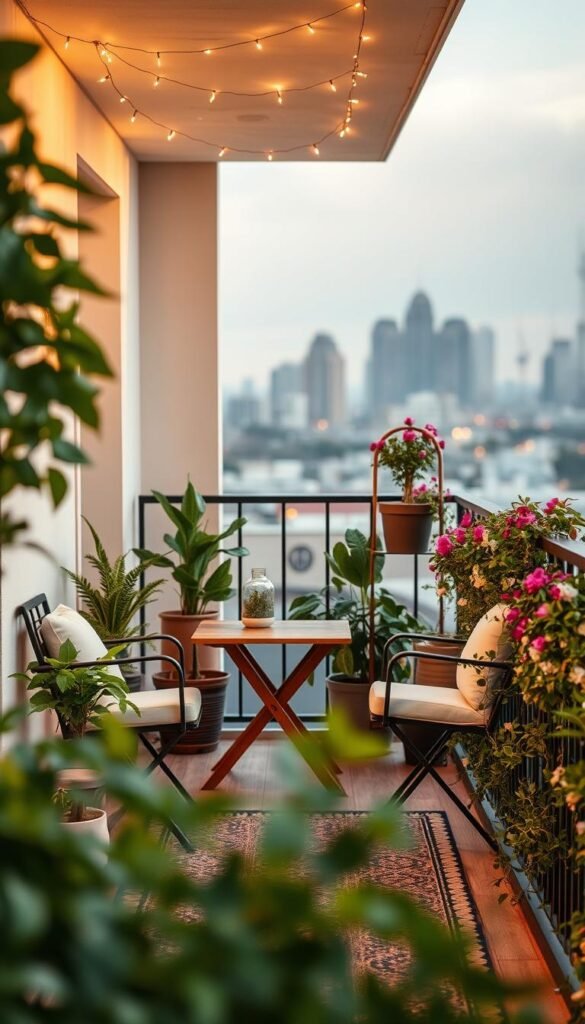
Light and microclimate
Track direct sun hours across a normal day. Note reflected heat near windows and persistent shade under overhangs.
Wind on high levels dries soil fast and topples tall pots. Choose low-profile, heavy-based containers for exposed spots.
Building rules and weight
Confirm weight limits and railing policies before ordering large pots. When in doubt, favor lightweight materials like fiberglass or fabric grow bags.
Water access and tools
If there’s no outdoor spigot, fewer larger pots with moisture-retentive soil work better. Use saucers to prevent drips.
- Option A: collapsible watering can — space-saving and simple.
- Option B: expandable sink hose — reduces trips hauling water.
| Constraint | What to check | Buy guidance |
|---|---|---|
| Sun exposure | Hours of direct sun | Full sun = larger trays, more frequent water |
| Wind | Wind tunnels at corners | Low-profile, heavy planters; anchoring options |
| Water access | Proximity to spigot or sink | Self-watering pots or collapsible cans |
Quick renter tip: verify hanging hardware rules and load limits before adding railing planters. For lighting options that suit renter-friendly installs, see best outdoor lighting.
Plan a Renter-Friendly Layout That Works in Small Spaces
A good layout begins by saving one usable seat and a clear path to it. Protecting that lane prevents plants and furniture from turning a useful area into clutter. This approach keeps the space functional and welcoming.
Maximize vertical space without drilling
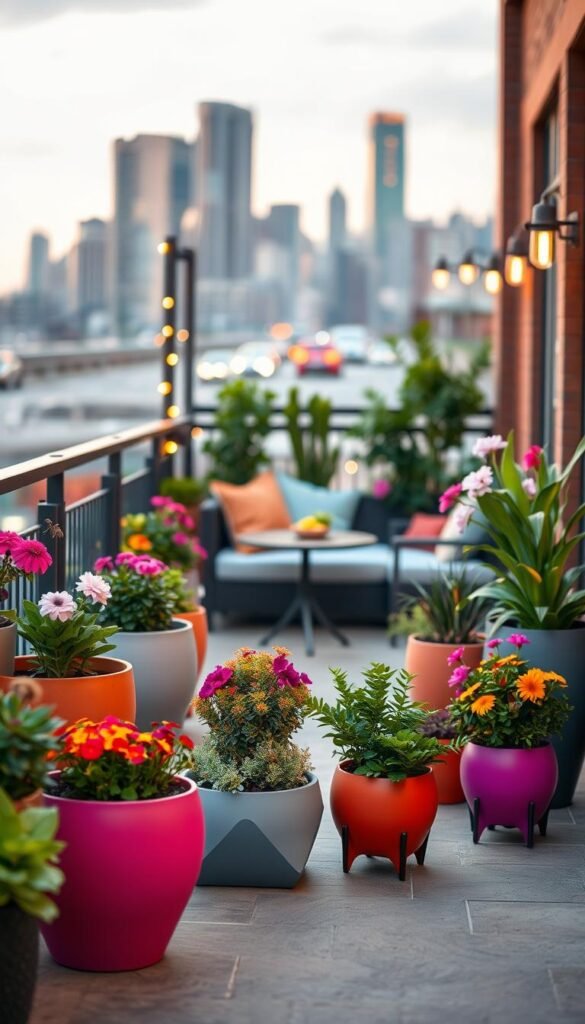
Use railing planters, hanging baskets, and freestanding tiered stands to move plant volume upward. These planters save floor room while keeping most plants accessible for watering and care.
Size floor pieces to keep movement
Measure door swing and walkway width. Check railing depth and shape so mounted containers sit flush and doors still open. A compact chair (18–20″ seat depth) keeps seating usable.
„Start with a protected path and one seat; add vertical pieces only after daily care feels easy.“
- Zone: perimeter = plants, interior = seating, corners = vertical stands, wall-side = wind protection.
- Microclimate: put wind-sensitive plants in low container near walls; sun-lovers at the edge.
- Start small: add a bit of green and expand vertically if maintenance is manageable.
| Item | Key measure | Why it matters |
|---|---|---|
| Railing planter | Loaded width & depth | Ensures fit and door clearance |
| Tiered stand | Footprint (W x D) | Saves floor space, holds many plants |
| Bistro chair | Seat depth 18–20″ | Leaves clear walking path |
For budget-friendly choices and compact sizing ideas, see the budget patio decor guide.
Build Your summer balcony starter mix Around Function First
A useful outdoor kit begins with four functions — a seat, privacy or shade, lighting, and easy-care plants — not with decorative extras.
The starter formula: seating for one usable spot, a screen for comfort and wind buffering, lighting for evening use, and a low-maintenance plant kit that fits your watering routine.
Who each piece helps and why
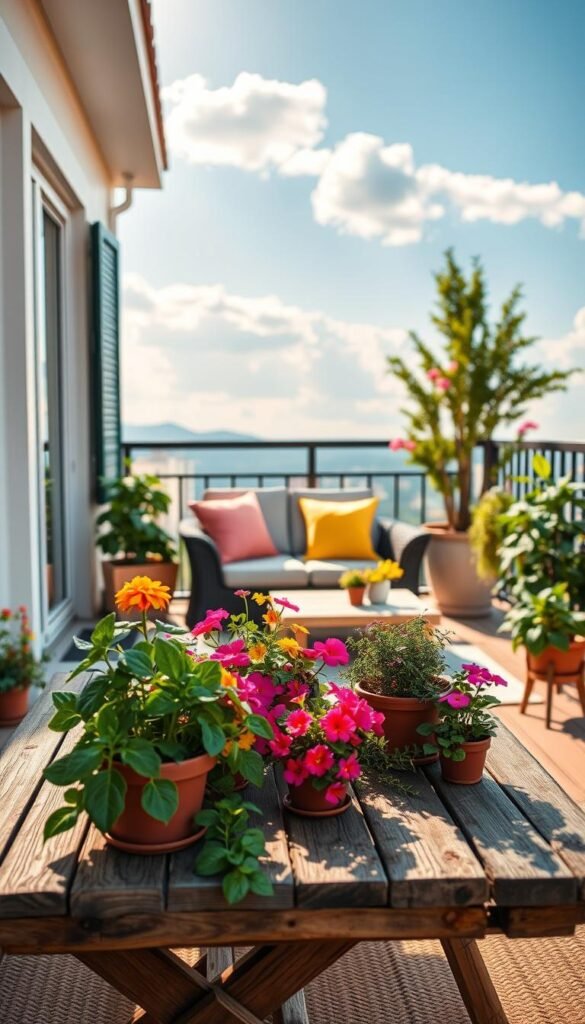
Foldable seating suits renters and small-space owners who need storage. Privacy screens help high-rise units that face wind and visual clutter. Compact lights extend usable time after dark. Self-watering pots reduce trips to the sink on hot or windy days.
Storage-first checklist
- Foldable or stackable chair
- Rollable outdoor rug
- Nesting planters and collapsible watering can
- Small bin for string lights and cushions
„The right kit matches how often someone can water and how many trips they can make to a sink.“
| Function | Best for | Buy-once vs. seasonal |
|---|---|---|
| Seating | Renters who need easy storage | Buy-once: durable folding chair; Seasonal: cushions |
| Shade/Privacy | Windy or exposed units | Buy-once: weather-resistant screen; Seasonal: textile covers |
| Lighting | Evening use and ambiance | Buy-once: quality solar or battery lights; Seasonal: decorative strands |
| Plant kit | Beginners or busy gardeners | Buy-once: durable containers and tools; Seasonal: annuals and textiles |
Plan purchases to match the time you can devote to gardening and maintenance. For compact product ideas and sizing, see best summer decor for small spaces. Each item in the product picks is tied to a common constraint—space, wind, water, or heat—to make buying decisions easier.
Best Balcony Starter Decor Picks That Solve Common Problems
These ten picks focus on function first: space, stability, watering, and mess control. They are product categories, not brands, so readers can compare sizes, materials, and mounting methods for their site and rules.
Railing planters & hanging baskets
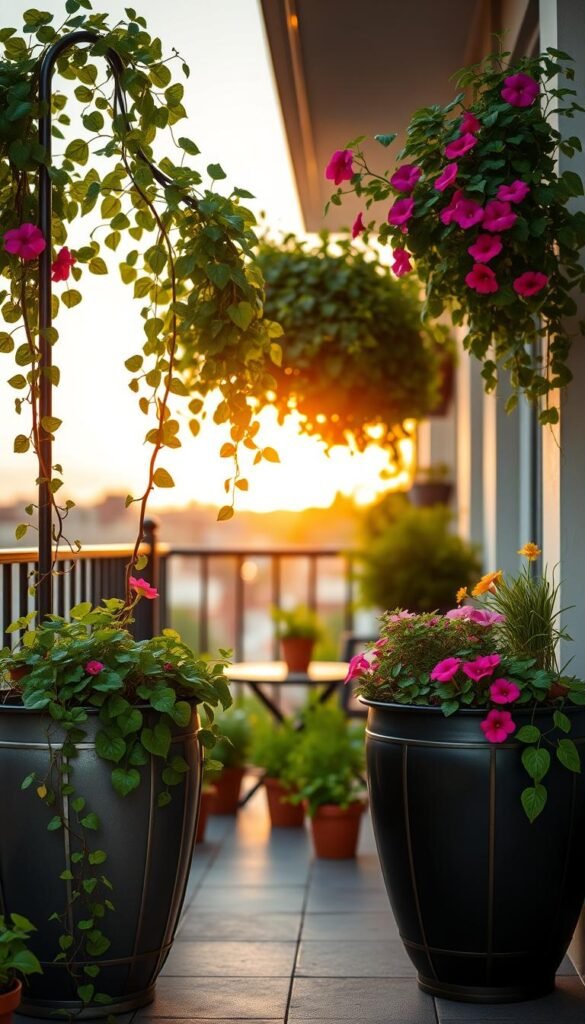
Best for: zero-floor-space units that need plants without blocking the path.
Checks: railing width, secure hooks, and drip control.
Pros: frees floor room; easy visual green. Cons: can drip; must confirm attachment rules.
Tiered planters
Best for: renters who want many plants in a small footprint.
Pros: high capacity and better light exposure. Cons: choose stable designs to avoid toppling.
Lightweight pots & fabric grow bags
Best for: movers and stair-only access.
Pros: easy to carry and store. Cons: may need anchoring in windy spots.
Deep containers
Best for: plants with larger roots and for reliable moisture buffering.
Deeper containers hold more soil volume to steady moisture swings during hot or windy periods.
High-quality potting mix
Why it matters: commercial potting mixes out-perform plain soil for drainage and root health.
Pick mixes labeled for containers and amend only when specific plant needs require it.
Drainage essentials
Must-haves: drainage holes, matching saucers, and spill-control trays.
Buyer note: trays must be emptied after heavy rain to avoid overflow.
Watering tools
Compare a collapsible watering can with an expandable sink hose.
Collapsible can: great for tight storage. Expandable hose: ideal when water must be carried from inside; check adapter fit before buying.
Self-watering planters
Best for: forgetful waterers or drying, windy locations.
They cut routine trips but still need periodic refills and drainage checks to avoid salt buildup.
Windbreak / privacy panels
Best for: exposed units that need shelter and screening.
Checks: secure attachment and building rules; these panels also reduce petal and leaf damage from gusts.
Outdoor rug / deck tiles & compact bistro seating
Rug/tiles: create a room-like feel; choose removable, quick-dry options.
Bistro seating: folding or stackable chairs save space and let plants stay near the perimeter.
„Choose products that solve one clear constraint—space, water, wind, or drainage—and build from there.“
| Category | Best for | Key buy checks |
|---|---|---|
| Railing planters | Zero floor space | Railing width, hook strength, drip trays |
| Tiered planters | Max plants per footprint | Base stability, material, tier spacing |
| Lightweight pots / grow bags | Easy moving & storage | Material durability, wind anchoring |
| Deep containers | Deep roots & moisture buffering | Depth (~16″), frost resistance, drainage |
| Watering tools | Apartment water access | Can capacity, hose adapter compatibility |
For sizing ideas and renter-friendly decor options, see a practical patio decor guide for renters and small-space planting tips at balcony garden ideas.
Buying Considerations and Comparison Criteria for Affiliate Blocks
Practical buying focuses on measurable specs, not style alone. Use clear criteria so readers can compare products quickly. This helps renters and small-space owners pick items that fit real limits: door swing, wind, and water access.
Best for tiny spaces
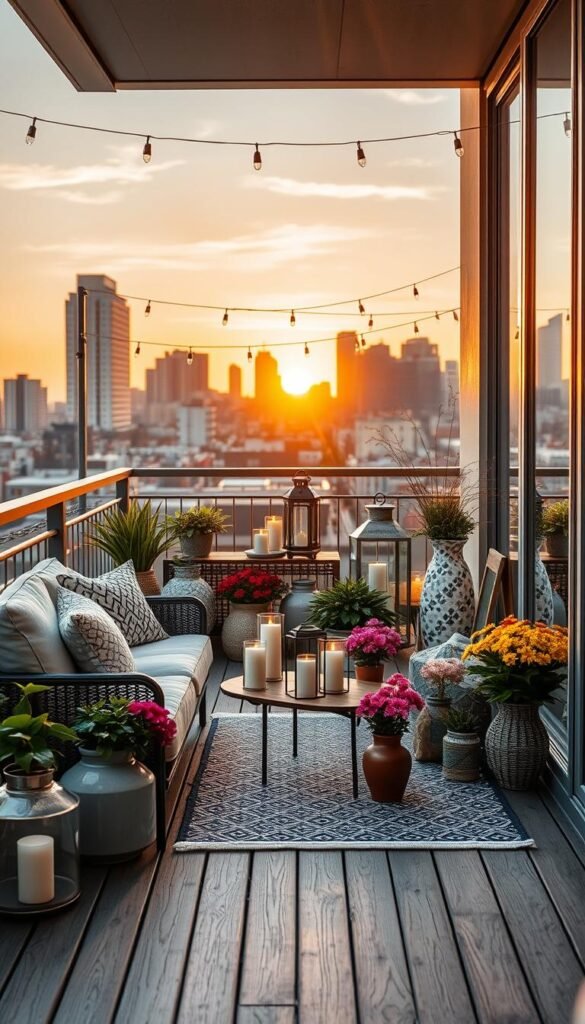
Choose narrow rail planters, vertical tiered stands, and stackable seating. Protect the walking lane and door clearance first. Measure railing depth and footprint before buying.
Best for windy, high-rise sites
Prioritize low-profile containers with wide bases and anchoring points. Include windbreak screens and follow building rules for attachments.
Best for low-sun or partial shade
Match plant types to available light. Place sun-loving plants at the edge; keep shade-tolerant plants nearer the door or under overhangs.
Best for forgetful waterers
Self-watering systems and deeper containers reduce watering frequency. Note: reservoirs still need periodic refills and occasional flushing.
| Spec | Why it matters | How to list in a product card |
|---|---|---|
| Footprint (W x D in inches) | Ensures fit and path clearance | Provide exact W×D and door-swing note |
| Height | Stability and wind exposure | Include loaded vs. empty height |
| Weight (empty / filled) | Building load rules and handling | Show both numbers and soil estimate |
| Drainage & mounting | Drip control and attachment method | State hole count, tray size, and hooks |
| Storage profile | Ease of winter storage or moving | List fold, nest, or stackable details |
Materials & durability: plastic and fiberglass are light but may need ties in wind. Fabric grow bags are easy to move. Terracotta and some ceramics risk freeze-thaw damage in cold weather.
„Choose products that solve one clear constraint—space, water, wind, or drainage—and build from there.“
Pros/cons checklist (use under each product card):
- Setup difficulty: easy / moderate / hard
- Drip risk: low / medium / high
- Stability: anchored / needs anchoring / top-heavy
- Storage ease: folds / nests / bulky
- Cleaning & parts: removable trays, replacement parts
Avoid these common mistakes: buying oversized pots without checking weight limits; skipping trays; choosing tall, top-heavy stands for windy areas; and ignoring railing measurements. For guidance on joint and patio materials see advice on polymeric sand and patio.
Starter Plant Picks That Look Good and Are Easier to Keep Alive
Matching plant choices to light, wind, and watering routine prevents most early failures. This keeps a small garden easy to maintain and more reliable.
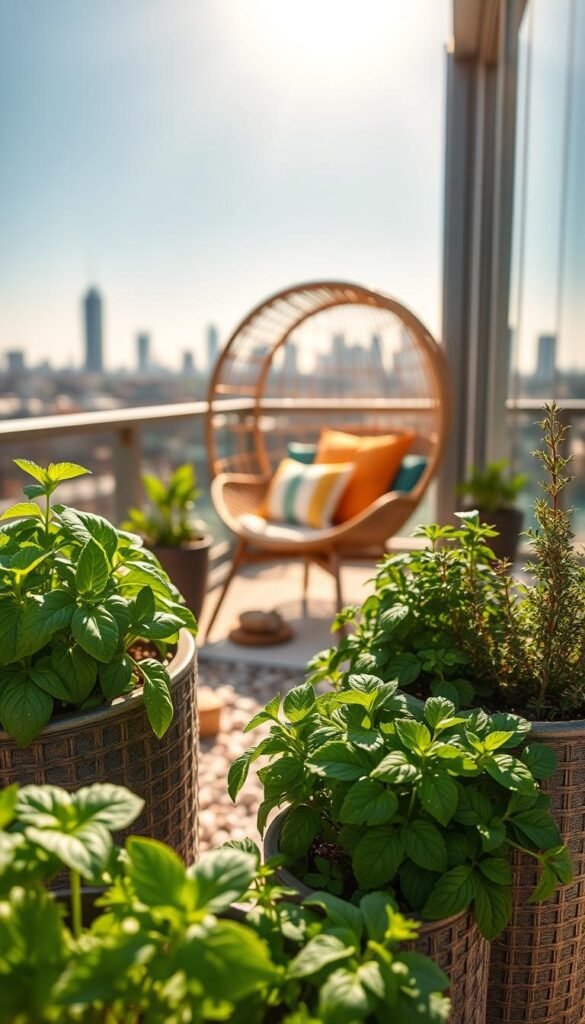
Low-effort edibles that perform
Herbs are top picks for tight containers. Basil, mint, rosemary, thyme, and oregano suit pots and frequent harvests.
Partial-shade options such as parsley, cilantro, and tarragon work when sun is limited or inconsistent.
Beginner-friendly vegetables
Tomatoes and salad greens are common wins in containers. Tomatoes need larger pots (~10–15 gallons) for roots and steady growth.
Greens (lettuce, arugula) do well in shallower pots and can be succession-planted for steady food.
Native and low-maintenance strategy
First assess site conditions, then choose species that tolerate them. Jeremie Fant’s approach—match plant to microclimate—reduces work and improves survival.
Native container-friendly options to try: Aquilegia canadensis, Coreopsis lanceolata, Oligoneuron rigidum, Polygonatum biflorum, Symphyotrichum species.
Soil tweaks and winter reality
Start with a high-quality potting mix. Add sand or vermiculite for better drainage for drought-tolerant plants. Add peat for moisture-hungry species.
Compost is a useful amendment but not a substitute for structured potting mix.
In cold weather, pots face freeze-thaw stress; insulate pot walls and consider overwintering tender plants indoors.
„Match plants to conditions first; aesthetics come after survival and steady growth.“
| Plant type | Best for | Container size |
|---|---|---|
| Herbs (basil, thyme) | Small pots, frequent harvest | 6–10 in. pot |
| Parsley, cilantro | Partial shade | 8–10 in. pot |
| Tomatoes | Fruit production, deeper roots | 10–15 gal. container |
| Salad greens | Succession planting, shallow roots | 6–8 in. trough or pot |
Quick maintenance rhythm: check soil daily in hot, windy weather; deep water when dry; in spring refresh topsoil and clean trays. For container vegetable guidance see what to grow in small spaces and for decor-compatible planting ideas see small-space decor.
Conclusion
Close with a short plan that turns constraints into clear buying and care actions for a successful balcony garden.
Function-first rule: address light, wind, and water access, then match containers, good potting mix, and drainage solutions. Start by securing drainage and watering tools, then pick containers and planters, add seating or privacy, and choose plants and flowers last.
Measure railing width and footprint, check stability for wind, and confirm storage needs. Self-watering containers and drip-control cut daily work but do not remove all care. Begin with a bit of green and one comfort item, then expand as the routine fits your time.
Ready to act? Note sun hours, measure, confirm rules, buy quality soil and trays. For practical how-to steps see how to start a small balcony, read apartment balcony garden tips, or browse decor ideas at best balcony decor for summer.