
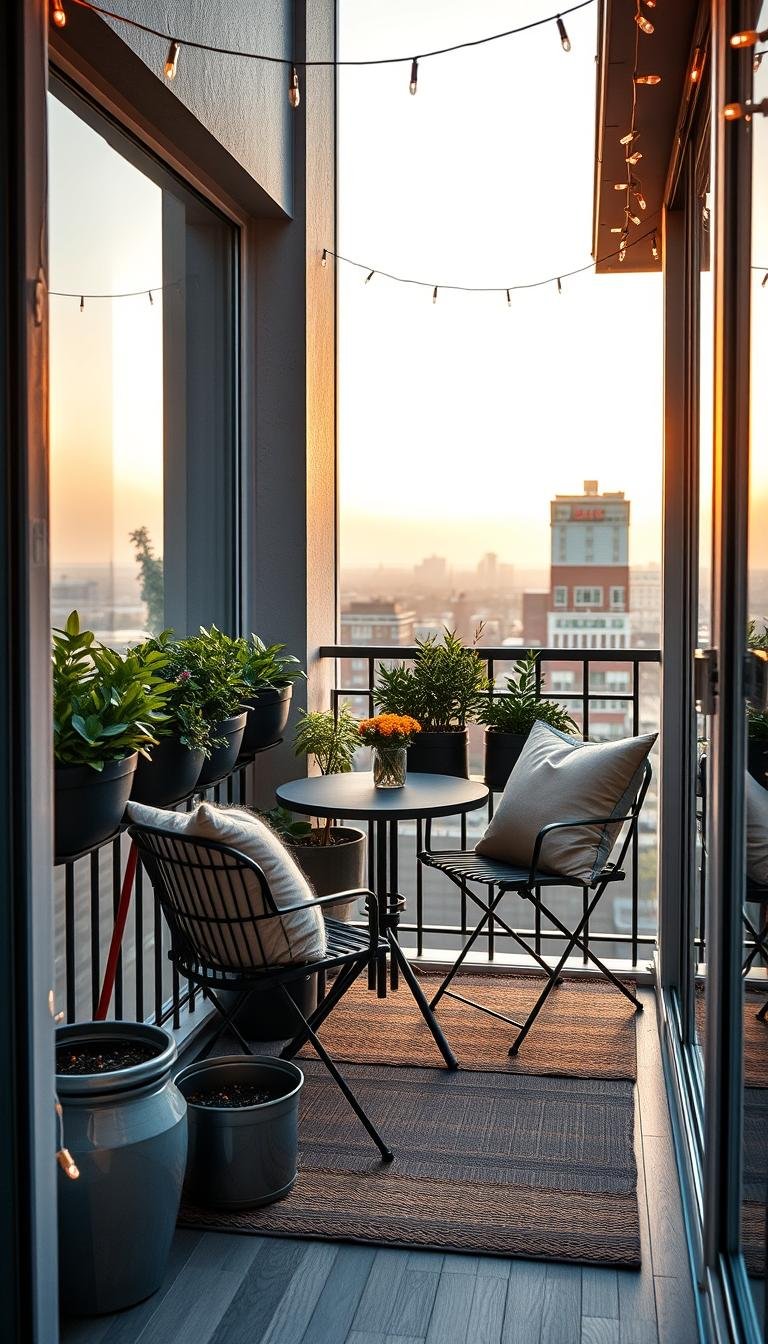
City apartments often come with a tiny outdoor spot that gets ignored or overcrowded. Many residents want a usable outdoor space but end up with clutter or pieces that do not fit. This intro frames the problem and points to practical fixes.
This guide offers five compact ideas plus five space-saving picks chosen for renter realities. Each product pick will note who it suits, what problem it solves, key measurements, and realistic pros and cons.
Readers will see renter-first advice: removable upgrades, rail-safe attachments, and no-drill options that protect deposits. The focus is usable outdoor living for daily habits like coffee, reading, and a single meal — not storage overflow.
The article lays out step-by-step setup sections, followed by product picks and a comparison checklist. Expect clear buying notes and humble, practical solutions rather than exaggerated promises. For complementary tips on compact summer styling, see best summer decor for small spaces.
Key Takeaways
- Define the core problem: usable space vs. clutter.
- Get five layout and styling ideas tailored to renters.
- Find five space-saving picks with buying checklists.
- Prioritize removable, rail-safe, no-drill solutions.
- Design for daily use: seating, light, and compact greenery.
What a “Small Balcony” Means and What You Can Realistically Fit
Measure before you buy: know the real footprint and plan for movement.
Typical compact outdoor spaces range from about 24 to 60 sq ft. That range affects what fits without blocking the path. Measure the usable rectangle and note odd angles.
Plan one primary function: coffee, reading, herbs, or a compact dining spot. Choose slim frames, folding pieces, or railing-mounted solutions to free floor area.
Common traps: stuffing many tiny items or leaving the area bare. Too many pots and mismatched things crowd the view. Untreated concrete with no seating wastes a useful extension of the apartment.
| Item | Typical Footprint | Removability | Best for |
|---|---|---|---|
| Folding bistro set | 6–12 sq ft | High | Casual dining, easy storage |
| Slim lounge chair | 4–8 sq ft | Medium | Reading, single-seat relaxation |
| Interlocking deck tiles | Cover whole floor | High (no drill) | Instant finish, renter-friendly |
| Railing shelf/table | Zero floor | High (clamp) | Work surface without losing space |
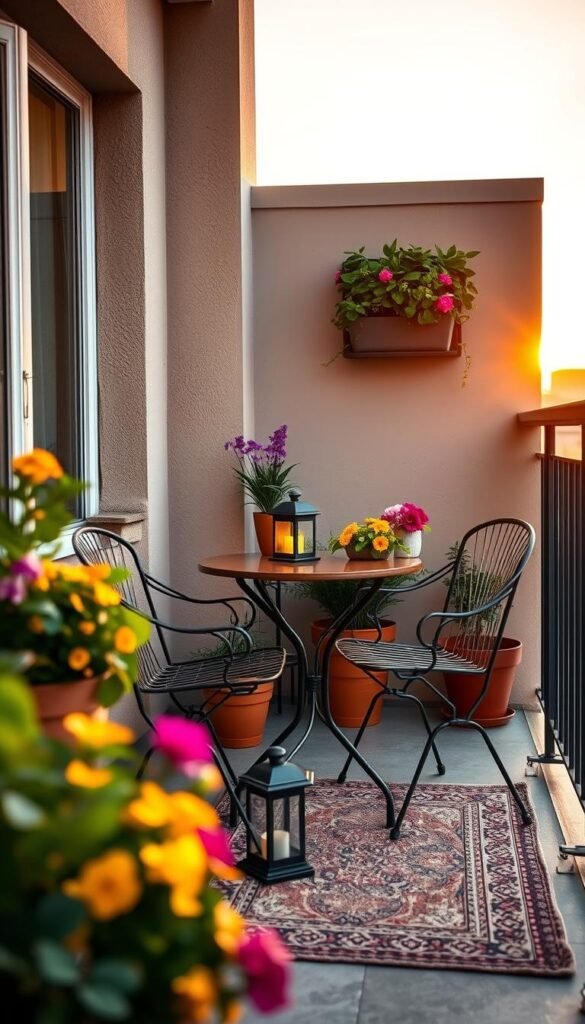
Minimum viable checklist: a seat, a small surface for a drink or book, and one comfort layer (rug or cushion).
Later sections evaluate products by footprint, removability, weather performance, and how they affect sight lines and traffic flow. For quick styling ideas, see best aesthetic decor for small spaces.
Start With Your Constraints: Renters, Rules, Sun, and Sightlines
Before buying anything, map out rules, light, and sight lines to avoid costly returns.
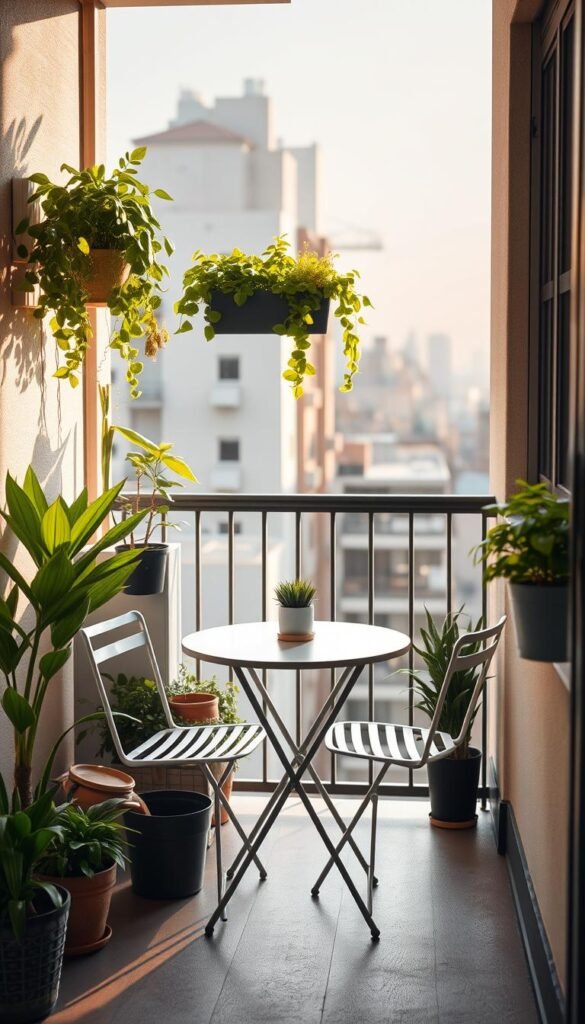
Renter-friendly checks
Removability is the first filter. Pick pieces that fold, slide away, or unclip without tools.
Surface protection matters: feet pads, rubber caps, or a removable floor layer guard finishes.
Railing attachments should clamp with padded jaws and clear weight limits to protect the rail and lease.
Sun versus shade: materials and plants
Full-sun orientations need heat-tough materials that won’t warp or fade. Shade-facing spaces need quick-dry fabrics to avoid mildew.
For plants, choose sun-tolerant species on sunny exposures and shade-tolerant plants where light is low. Battery or solar lights are a smart choice when outlets are absent.
Keep the view with low-profile furniture
Low seating and slim silhouettes preserve sight lines and make city views feel larger. Treat sight lines as a space multiplier.
Document constraints with photos and measurements. That evidence makes comparing railing shelf tables, vertical planters, folding seating, and removable floor upgrades faster and more confident.
| Constraint | Decision Tip | Product Category |
|---|---|---|
| Lease rules | Choose no-drill, clamp, or freestanding options | Railing shelf table, folding chairs |
| Sun exposure | Pick UV-stable materials and heat-tolerant plants | Synthetic wicker, metal with powder coat, drought-tolerant plants |
| Limited sight lines | Use low-profile, slim-frame pieces to keep views | Low lounge chair, narrow table |
Small Balcony Idea That Feels Bigger: Treat It Like an Extension of Your Interior
Treat the outdoor area as a deliberate room extension by echoing the interior’s palette and scale. This makes purchases fit the home and avoids a mismatched look.
Problem: the space often feels like an afterthought, so items arrive that clash and make the area seem busy even with few pieces.
Solution: borrow two to three tones from the interior and repeat one or two material types. Designer Ashi Waliany recommends matching tones, textures, and silhouettes for a cohesive flow.
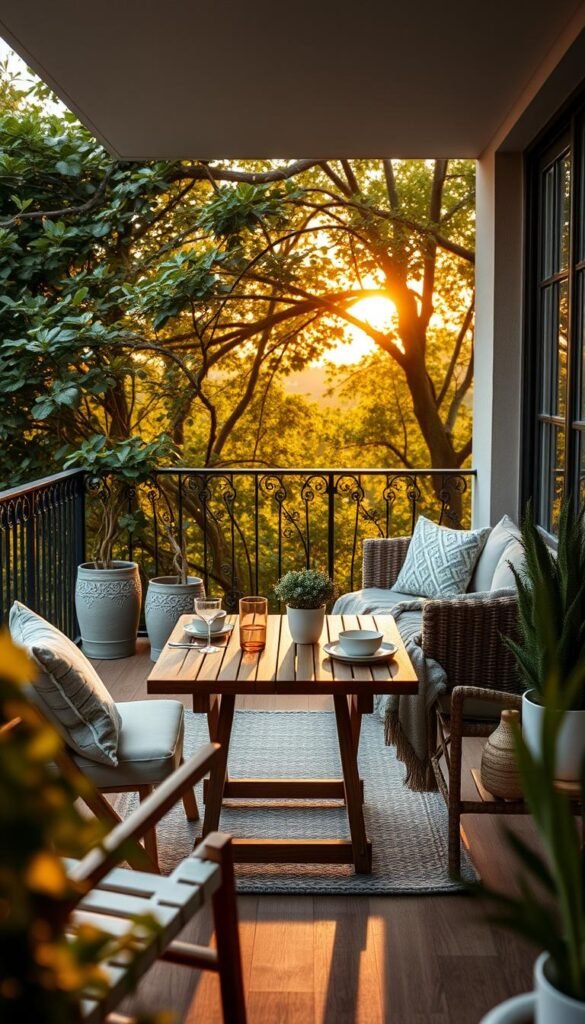
Practical rules for shopping
- Pick one dominant furniture style (metal, warm wood, or woven).
- Follow the „collected, not cluttered“ rule: one anchor piece, one comfort layer, one green layer—then pause.
- Keep pieces low and airy near the rail to preserve sight lines.
| Element | Purpose | Buy Tip | Why it helps |
|---|---|---|---|
| Anchor chair or table | Main function | Match interior silhouette | Creates a cohesive room feel |
| Comfort layer (rug/cushion) | Softness and warmth | Pick indoor-like textures | Bridges inside and out |
| Green layer | Life and screening | Choose low-profile planters | Adds depth without crowding |
Quick pre-buy test: photograph the interior facing the doors and compare tones before ordering. For more curated options, see a set of practical ideas at small balcony ideas and a renter-friendly roundup at best outdoor decor for apartments.
Balcony Decor Small That Actually Works: Edit the Space Before You Add Anything
Start by removing items you don’t use; editing first prevents wasted purchases.
Problem: many renters add dozens of tiny accents and end up with a cluttered view and unusable floor space.
Solution framework: clear everything, pick one or two activities (sitting, watering plants, a quick meal), then choose pieces that support those uses.
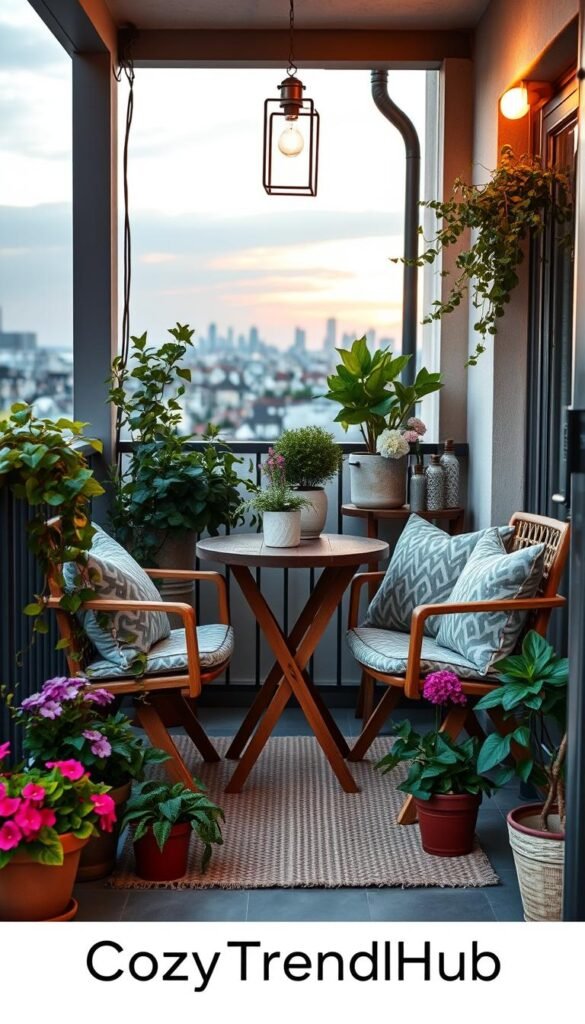
- Choose fewer, larger items so the area reads calm and intentional.
- Keep a clear walkway from the door to the rail; avoid side-stepping around furniture.
- Tape the footprint of planned seating and a table on the floor to test movement before buying.
| Check | Why it matters | Quick fix |
|---|---|---|
| Footprint | Ensures door swing and legroom | Use painter’s tape |
| Function | Keeps purpose clear | Pick multi-use items |
| Sight lines | Preserves view | Low-profile chairs |
Next step: with an edited layout, the upcoming picks—folding sets, railing tables, and rugs—slide in without creating new clutter. For a design how-to, see how to design a small balcony.
Small Balcony Plant Strategy: Go Vertical for Greenery and Privacy
When floor space is limited, the smartest move is to grow up instead of out. Vertical planting keeps usable room for seating and movement while bringing life and softness to the view.
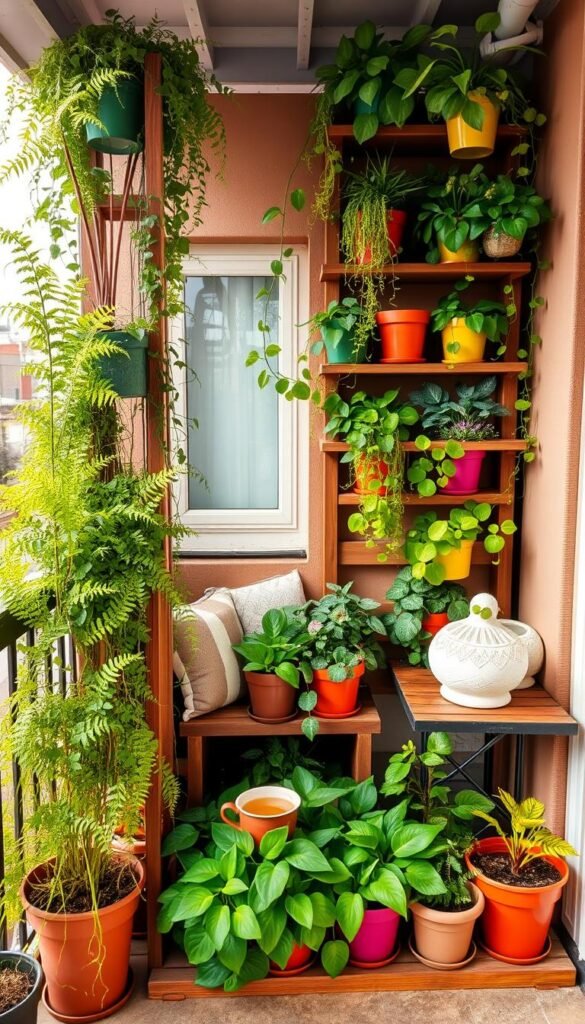
Vertical garden walls for softness without eating floor space
Vertical kits add instant coverage and help with privacy without closing in the area. Renters should pick breathable pockets, lightweight frames, and clear drainage so water does not stain below.
Tradeoffs: they need a watering plan and wind checks. Choose UV-stable materials for sunny exposures.
Hanging planters and railing boxes for a mini herb or flower garden
Hanging pots and a secure railing box support herbs and flowers without using floors. Measure rail width and clamp type before buying to avoid surprises.
These options work well for cooks and seasonal swaps. Look for drip trays or liners to protect surfaces.
Plant layering by height to create depth on compact footprints
Place tallest containers in the back or a shaded corner, mid-height planters near seating, and low bowls at the front. This layout makes the garden feel deeper without crowding.
Functional goals: herbs for cooking, flowering boxes for color, and leafy pots for screening. For a later pick, check materials, drainage, and wind exposure before buying a vertical planter wall kit.
Floor Upgrades That Change the Whole Balcony Without Renovating
The right floor layer changes the whole feel of the space without a single tool. Many apartment decks start as bare concrete that looks cold and unfinished. A quick floor update makes the area feel intentional and usable.
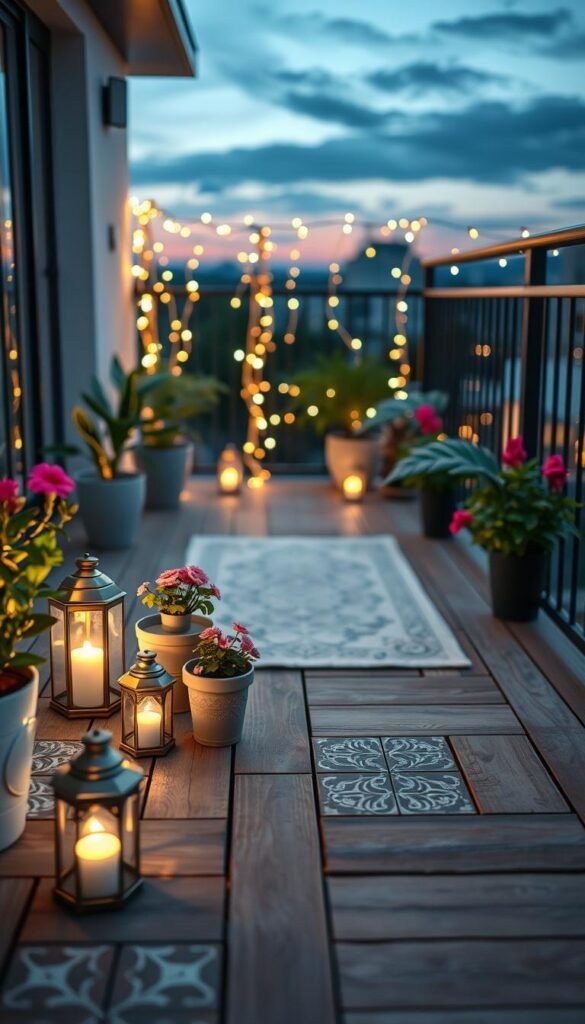
Interlocking deck tiles: a renter-friendly base layer
Why choose them: Tiles snap together, lift cleanly, and give a wood-like or composite finish without glue or nails. They hide stains and add traction.
Pros: removable, levels uneven patches, improves drainage when raised. Cons: height can affect door clearance and some cheap plastics fade.
Outdoor rugs for comfort and a finished look
Why choose one: An outdoor rug adds softness underfoot and a quick visual polish. It works where drainage is adequate and the goal is comfort.
Pros: light, easy to roll up, cheaper than tiles. Cons: can trap moisture; choose quick-dry synthetic fibers and a non-slip pad.
Patterned tile look: when it’s worth it and when to skip it
A bold patterned finish can define the area and lift the whole look. It pays when materials are outdoor-rated and weight or drainage won’t be a problem.
Skip permanent or heavy options if the lease limits changes or if the surface slopes. For renters, simulate the pattern with tiles or a printed outdoor rug before committing.
- Buy checks: measure the floor area, confirm tile height vs. door swing, and verify rug size won’t bunch under furniture legs.
- Renter tip: pick removable options with padding to protect the underlying surface.
- Seasonal swap: floor layers are easy to change and refresh as needs evolve.
| Option | Best for | Removability |
|---|---|---|
| Interlocking tiles | uneven or stained concrete | High |
| Outdoor rug | comfort and quick style | High |
| Patterned outdoor tile look | strong design impact | Medium (depends on install) |
Lighting and Textiles for Cozy Outdoor Living After Sunset
A usable evening setup starts with layered light and textiles that work with renter limits.
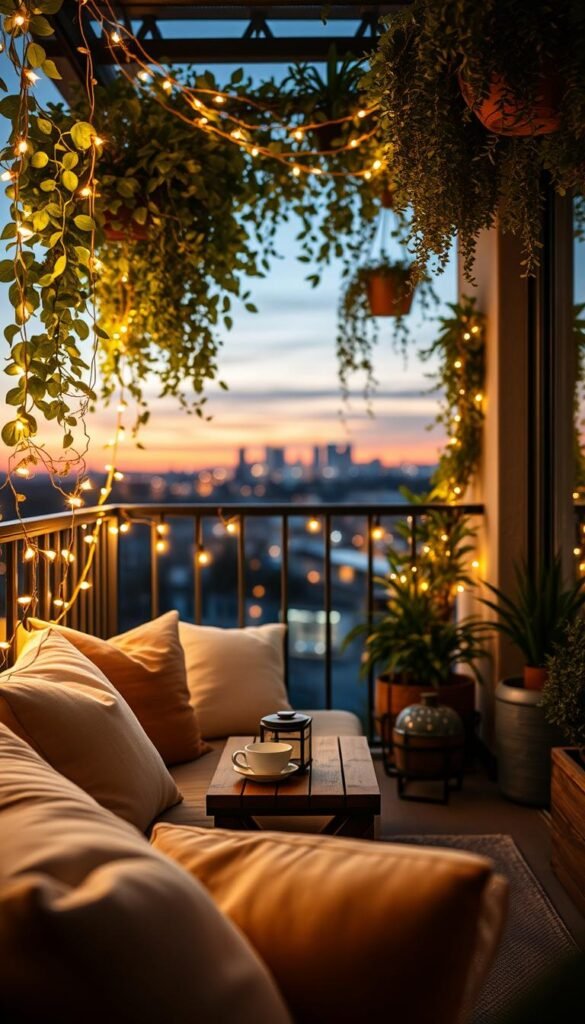
Low-commitment lights for no-outlet situations
Problem: many balconies go dark after the door shuts because there is no exterior power.
Solution: choose string lights, solar options, or battery lamps. Pick items with clear charging methods, run times, and weather ratings.
Buying checks for reliable performance
- Confirm battery type and charging time; rechargeable lithium batteries usually last longer.
- Check IP or weather ratings for rain and humidity resistance.
- Verify mounting options—clamps, adhesive hooks, or hanging loops that won’t damage rails or walls.
Textiles that extend usable time
Layering makes seating warm and inviting as daylight fades. Use a quick-dry rug, a couple of weather-ready cushions, and a lightweight throw.
Fabric rules: favor mold-resistant covers and removable, washable cases to cut maintenance. If indoor storage is tight, buy fewer, higher-quality pieces and keep them in a simple outdoor bin or fabric bag.
For styling tips that bridge interior and porch planning, see how to style outdoor space.
Privacy and Comfort Fixes for City Balconies
Exposure to neighbors, wind, and street noise makes city outdoor spaces feel less inviting.
Start with renter-safe screening: clamp-on privacy screens or bamboo half-shades block sight lines and reduce wind without permanent work. Curtains work where the area is covered and add soft light filtering.
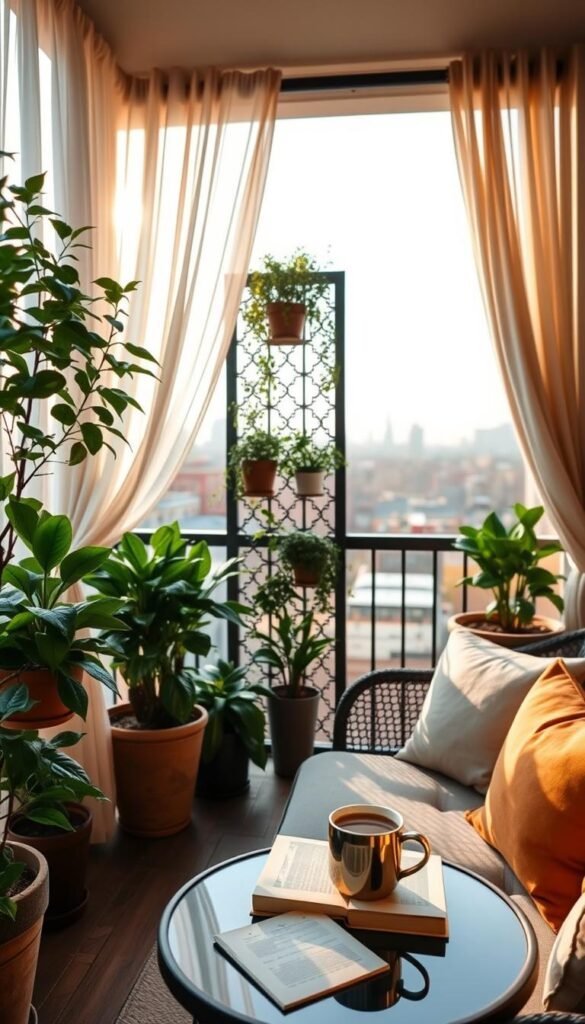
Practical, layered solutions
Combine a lightweight screen with a row of dense plants to create a natural buffer that still keeps a key view open. Avoid solid walls that „box in“ the area; instead leave gaps or use lighter tones to preserve depth.
„A balanced screen protects comfort while keeping the space feeling airy.“
| Option | Pros | Cons |
|---|---|---|
| Clamp privacy screen | Removable, wind-resistant | Can act like a sail if not secured |
| Bamboo half-screen | Maintains partial view | May need replacement in sun |
| Curtains | Soft light filtering | Require covered rail or hook |
Buyer checks: measure railing length and height, confirm attachment is rail-safe, and note prevailing wind direction so screens won’t become hazards. Place screening on the most exposed side and keep the best sight line clear.
For a dual-purpose option that adds green screening in an overlooked corner, review a curated set of picks like the balcony ideas for summer.
Space-Saving Pick: Interlocking Deck Tiles for a Renter-Friendly Floor Refresh
Interlocking deck tiles turn a bland concrete surface into an instant, renter-friendly floor solution.
Best for: renters and small-space residents who dislike bare concrete and want a warmer, room-like base without permanent work.
Why this solves the problem
Modular squares snap together to form a floating surface that visually unifies the area. They cover stains and cold concrete while staying removable at move-out.
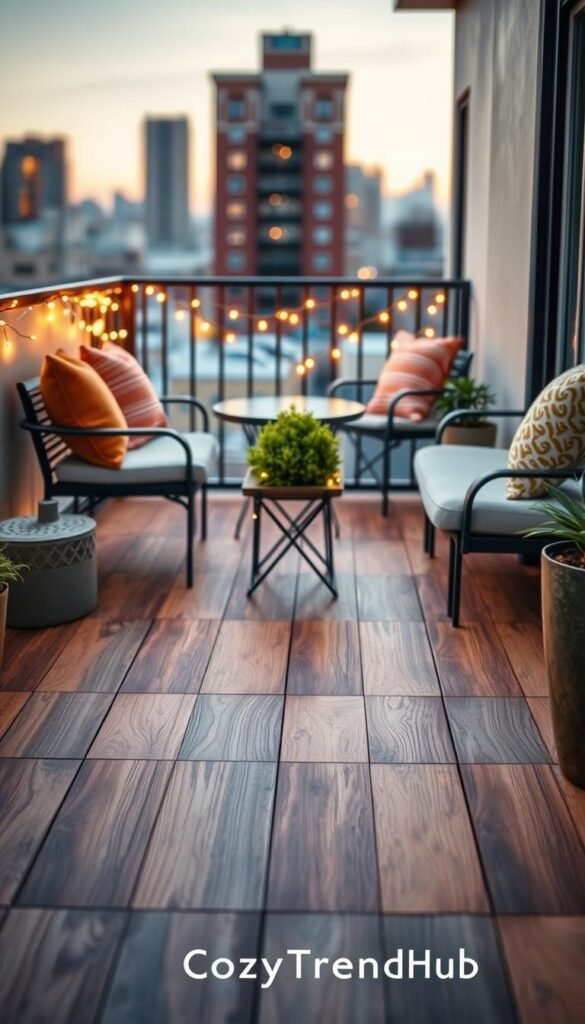
How it works and what to measure
Tiles click into each other and rest on the existing slab. Measure total usable floor dimensions, door clearance, and obstacles like rail posts or AC units before buying.
Pros, cons, and buying checks
- Pros: fast install, easy removal, immediate visual upgrade, and cuts to fit around posts.
- Cons: raises floor height slightly, can trap debris underneath, and needs adequate drainage to avoid puddles.
- Buying considerations: choose between plastic composite or wood-look tiles, check slip resistance, drainage channels, and color/finish to match the intended palette.
„A modular tile base gives renters a room-like floor without changing the apartment permanently.“
| Check | Why it matters | Action |
|---|---|---|
| Total usable dimensions | Ensures full coverage and accurate quantity | Measure length and width in feet |
| Door clearance | Prevents binding or scraping | Test door swing with a mock tile height |
| Drainage & obstacles | Avoids puddles and fit issues | Inspect slope and note posts/units |
Space-Saving Pick: Folding Bistro Table and Chairs for Flexible Seating
A lightweight table-and-chair combo makes it easy to swap between seating and activity zones in seconds. This pick suits people who need their balcony to shift from yoga to drying racks to a morning coffee spot.
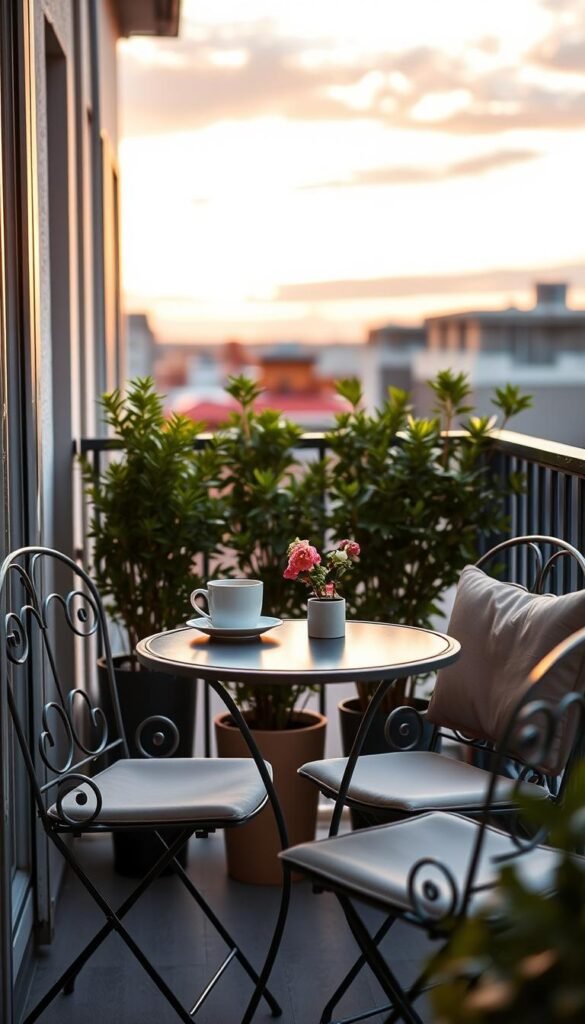
Who benefits and what it solves
Best for: anyone who wants a flexible surface for eating, working, or compact seating without committing floor area.
Key buying specs to check
- Folded depth and folded height — confirm it stores behind a door or in a closet.
- Total weight — lighter models are easier to carry in and out.
- Rust resistance and powder-coat finish for wet conditions.
- Stable leg design that works on slightly uneven concrete.
- Table top diameter that allows knees to tuck under while keeping a clear path to the door.
Everyday use vs. entertaining — pros and cons
Pros: quick to fold, easy to clean, budget-friendly, visually light so the outdoor space feels airy.
Cons: not as cushioned as lounge seating, some ultralight sets can wobble, and many need indoor storage in harsh weather.
| Use | Ideal for | Limit |
|---|---|---|
| Daily coffee or work | 1–2 people, compact meals | Comfort for long sitting |
| Activity switch (yoga, drying) | Easy stow-and-go | Requires quick folding |
| Entertaining | Casual hosting for 2–3 | Add movable stool for extra guests |
Buy tip: for a ready, renter-friendly option, consider the Mara Palermo folding bistro set. It balances compact form, rust protection, and functional seating for versatile outdoor use.
Space-Saving Pick: Railing-Mounted Shelf Table for Ultra-Tight Balconies
A railing-mounted shelf converts an unusable ledge into a practical work and dining surface. This solution adds functionality without taking up floor space. It works well for renters who need a fast, removable upgrade.
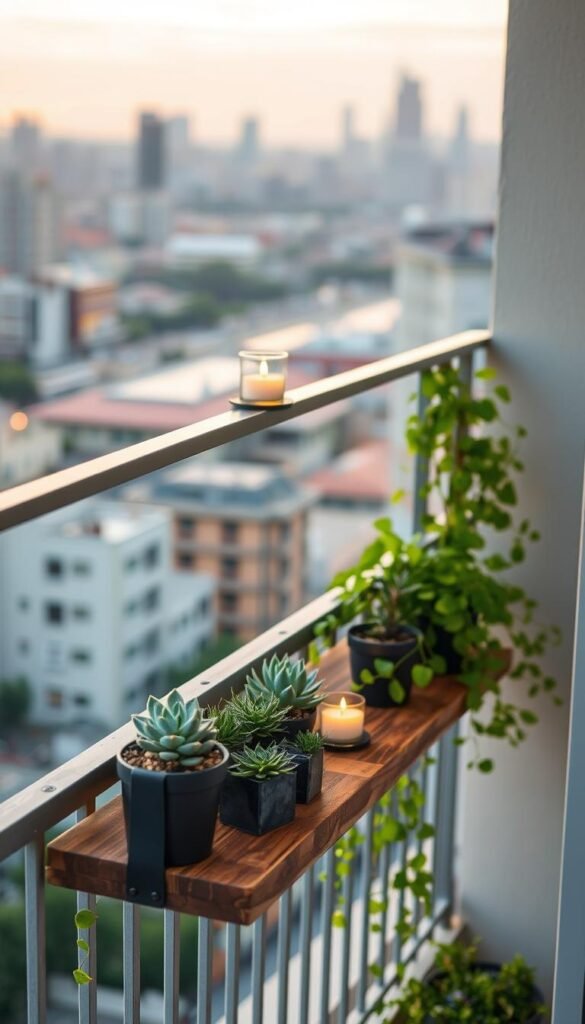
Best for
Ideal fit: ultra-narrow apartment balcony layouts where any floor table would block the door or walkway. It suits someone who wants a quick breakfast spot or a compact dining ledge for one.
Why it solves the problem
A shelf clamps to the rail and becomes a secure counter for drinks, a laptop, or a plate. It frees the floor for plants and movement and creates a focused zone for short tasks and meals.
Buying considerations
- Railing width & shape: measure before buying to ensure clamps fit.
- Clamp padding: protects finishes and prevents scratches.
- Weight limit: verify rated load; choose models that handle a laptop plus a drink.
- Height & comfort: pick a shelf height that works with existing seating or add a folding stool.
- Safety: avoid use on weak rails; secure with secondary fasteners if instructed.
Pros and cons
Pros: maximum function per square inch, renter-friendly removal, keeps the balcony floor clear.
Cons: limited surface area, relies on railing stability, and light items may blow away in wind.
| Feature | What to check | Best use |
|---|---|---|
| Clamp type | Padded C-clamp or adjustable bracket | Protects rail finish; fits varied shapes |
| Weight rating | 25–50+ lbs preferred | Holds laptop and dishes safely |
| Depth | 12–20 inches | Enough room for a plate and cup |
| Material | Powder-coated steel or treated wood | Weather-resistant and sturdy |
Tip: match shelf height to a folding chair to create a comfortable dining or work spot. For many renters, a rail-mounted table is the fastest way to add usable outdoor space without permanent changes.
Space-Saving Pick: Vertical Planter Wall Kit for Privacy in Small Spaces
A vertical planter wall turns a narrow corner into an instant green screen that saves floor space. It draws the eye upward, adds texture, and creates privacy without blocking the view.
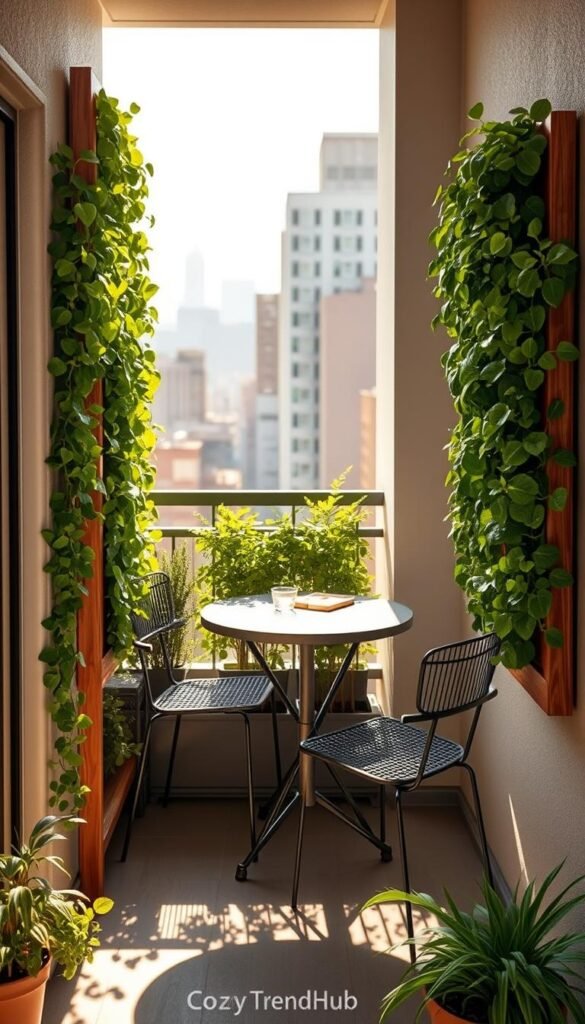
Best for: overlooked corners where neighbors are close and the goal is a planted backdrop behind seating. This solution keeps the floor free for a chair or small table.
Why shoppers choose this
Problem solved: creates screening and a mini garden while preserving usable area for outdoor living. Renter-friendly kits clamp or hang and usually remove cleanly at move-out.
Practical setup and maintenance
- Pick a kit with weatherproof frames and breathable pockets to avoid soggy roots.
- Plan a watering routine and use drip trays or a watering can with a narrow spout to limit mess.
- Place heavier pots low and secure the frame to a wall or rail per the instructions for stability in wind.
Pros and cons
Pros: strong visual impact, added privacy, and a living backdrop that softens the area.
Cons: watering can be messy without drip control, wind dries pockets fast, and seasonal swaps require planning for frost and indoor storage of tender plants.
„A vertical system is the fastest way to add living screening without sacrificing the floor.“
| Feature | What to check | Why it matters |
|---|---|---|
| Mount type | Clamps, hooks, or freestanding frame | Ensures renter-friendly removal and secure fit |
| Pocket material | Breathable fabric or mesh | Prevents waterlogging and root rot |
| Wind rating | Secure anchoring advised | Prevents tipping and plant stress |
| Plant selection | Shade/sun-tolerant mixes | Matches exposure for healthy growth |
Buy tip: for kit ideas and installation guidance suitable for renters, see a practical roundup at small space balcony garden.
Space-Saving Pick: Outdoor Rug to Warm Up a Small Balcony Fast
An outdoor rug can be the fastest way to turn cold concrete into a welcoming outdoor room.
Best for: renters and owners with echo-y, unfinished terraces who want quick comfort and a defined space without permanent work.
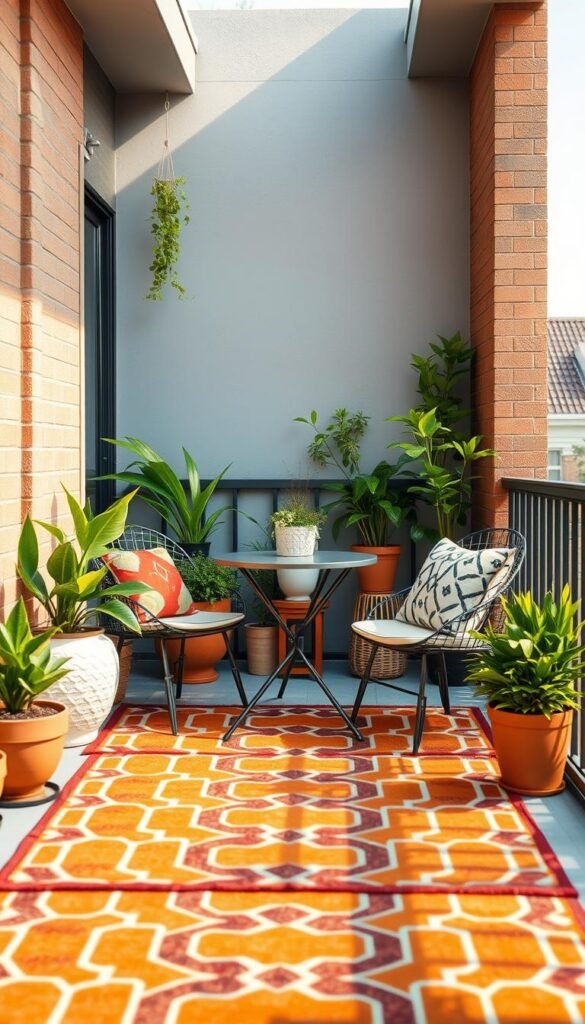
What to look for
- Material: UV-resistant polypropylene or blended synthetics that resist mold and fade.
- Drainage: open weave or grommets so water doesn’t pool on the floor.
- Safety: non-slip backing or a thin rug pad to stop sliding on slick surfaces.
- Size: leave room for door swing; position so front chair legs sit on the rug.
Pros and cons
Pros: quick visual upgrade, added comfort underfoot, and a cohesive base that makes furniture and planters look intentional.
Cons: rugs can trap moisture if drainage is poor, fade in strong sun, and often need rolling up in heavy rain or snow.
„A properly chosen rug finishes the floor and makes the outdoor space feel like an extension of the home.“
Care tip: pick a rug that hosedown or spot cleans easily and store it dry when seasons demand. This keeps the look fresh and protects the floor underneath.
Quick Comparison Criteria for Outdoor Furniture and Decor in Small Balconies
Choosing pieces for a compact outdoor space is about fit and durability, not trends. This short checklist helps buyers compare options fast so purchases work physically and last season after season.
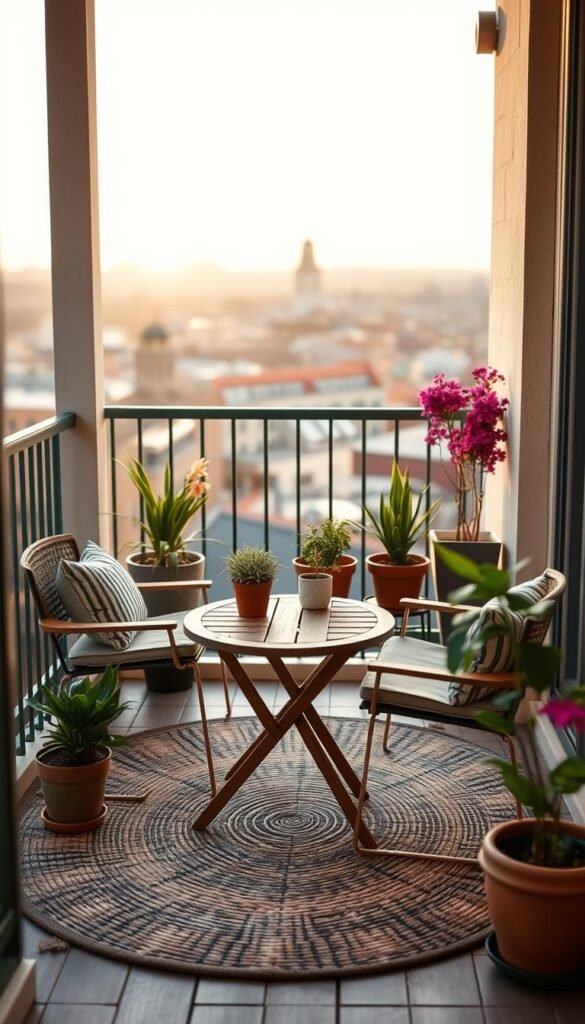
Scale and profile: pick pieces that keep the space breathable
Scannable criteria to compare any product:
- Footprint — measure usable floor in inches and confirm clearance for door swing.
- Profile height — choose low backs and slim legs to preserve sight lines.
- Weight — lighter items are easier to move for weather or storage.
- Storage needs — folded depth or stackable design speeds seasonal stowaway.
Materials that hold up: tradeoffs and practical checks
Teak/cedar/redwood age gracefully and resist rot but often need occasional sealing to keep color. Synthetic wicker (polypropylene) resists moisture and temperature swings and usually cleans easily.
Honest durability note: no material is maintenance-free. Match materials to local climate and your willingness to cover or store items.
Protection tip: use water-repellent furniture covers for year-round peace of mind when leaving items outdoors.
Cohesive palette: reduce visual clutter with fewer finishes
Limit finishes to two tones and one accent. A tighter palette makes the area read larger and reduces impulse returns.
| Compare | Best-for | Weather performance | Renter-friendly |
|---|---|---|---|
| Teak chair | Warm, natural look | High with care | High (removable) |
| Synthetic wicker set | Low-maintenance seating | Very high | High (lightweight) |
| Foldable metal table | Flexible surface | High if powder-coated | Very high (stores easily) |
Decision checklist before you buy: confirm measurements, pick materials that match climate, and prioritize pieces that fold or stow. This approach cuts returns and keeps the outdoor spaces useful for years.
For renter-focused furniture guidance and practical fittings, see a compact guide at balcony furniture guide.
Seasonal Setup and Storage: Keep Your Balcony Useful Year-Round
A quick plan for cold and warm months preserves furniture and makes the space ready to use year-round. This saves time and keeps investments working for the home instead of sitting ruined or boxed away.
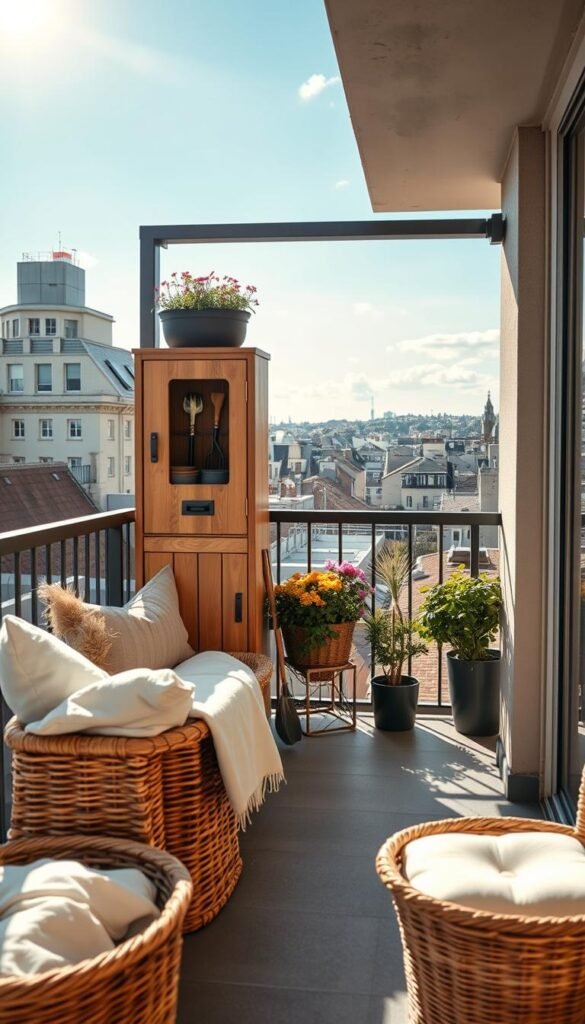
Cold-weather checklist
Bring textiles inside during storms and heavy snow to avoid mildew and soggy cushions. Use a water-repellent cover for teak, cedar, or synthetic wicker furniture when leaving items outdoors.
What can stay out: teak, cedar, and redwood perform well; polypropylene wicker tolerates moisture and temperature swings.
Warm-weather reset
Spend 15 minutes wiping surfaces, rehanging lights, rotating a couple of plants, and decluttering anything that migrated into the area. This quick habit restores function and boosts the feeling of outdoor living.
- Store cushions and string lights in one weatherproof bin for easy access.
- Prefer foldable furniture and stackable chairs to free space fast.
- Choose removable floor layers to reduce lift-and-store time.
| Storage option | Best for | Renter friendly |
|---|---|---|
| Weather bin | Cushions, lights | High |
| Foldable pieces | Chairs, tables | Very high |
| Furniture covers | Teak, wicker, metal | High |
Routine: adopt a 15-minute maintenance check each week to tidy, test lights, and move vulnerable items before storms. For practical setup and year-round tips, see a year-round comfort guide and quick styling ideas at summer renter styling.
Conclusion
A few measured decisions create an outdoor setup that works day after day.
Problem: many city balconies sit empty or get crowded with the wrong pieces. The practical fix is simple: plan for one primary use, protect sight lines, and pick renter-friendly upgrades that fit the actual floor and rail.
Core solutions: measure first, go vertical for plants, upgrade the floor and lighting, and choose compact outdoor furniture that stores or folds.
Quick pick recap: deck tiles — instant floor refresh; folding bistro set — flexible seating; railing shelf table — zero-floor surface; vertical planter kit — privacy without lost space; outdoor rug — fast comfort and definition.
Next step: measure the area, note railing dimensions, check sun/shade, and pick a primary use. A few better decisions beat many impulse buys. Use the comparison criteria to match materials, profiles, and renter rules for a practical, season-ready result.