
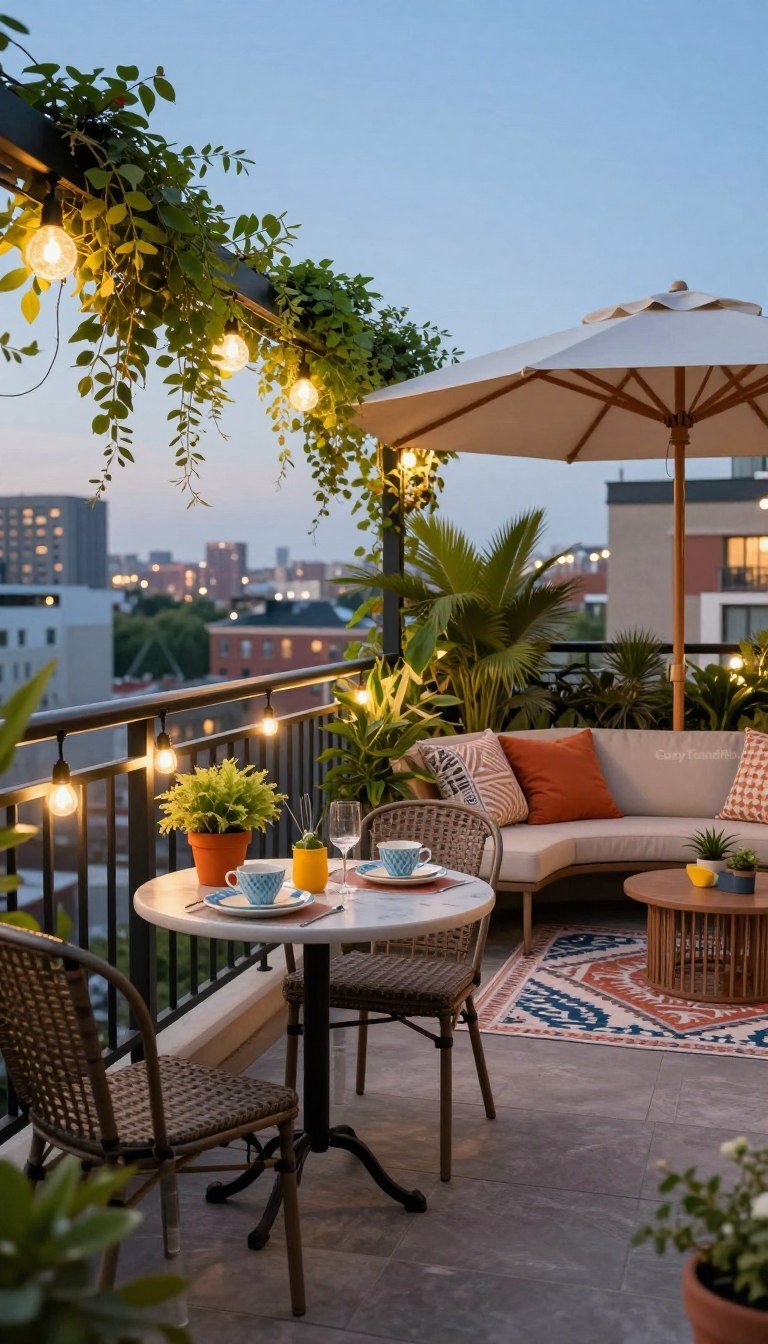
Small balconies and patios often feel unusable. Bland surfaces, tight layouts, and lease limits make it hard to enjoy that extra space.
This guide helps renters and compact-home owners turn a narrow balcony or tiny patio into a useful extension of the home. It focuses on lease-friendly upgrades that add comfort and function first: snap-together flooring, foldable seating, weatherproof textiles, lighting, plants, and privacy screens.
Recommendations favor low-impact, removable options that fit storage needs and local rules. The article previews clear comparisons — flooring vs. tile, folding chairs vs. lounge seating, string lights vs. lanterns, and screens vs. curtains — so readers can match choices to wind, sun, and HOA limits.
Practical pros/cons and short buying checklists follow. The goal is to help readers pick solutions that improve daily comfort and style without risking a lease violation or a bulky, hard-to-store setup.
Key Takeaways
- Prioritize removable, low-footprint upgrades that add function first.
- Compare easy-install flooring and compact seating to match space limits.
- Choose lighting and textiles that handle sun and wind exposure.
- Privacy screens and plants increase useable space without permanent changes.
- Check storage, building rules, and seasonal needs before buying.
Start Here: Renter Rules, Balcony Measurements, and What You Can Actually Change
Start by checking lease rules and building policies; they set the limits you’ll design within. Focus on renter-safe choices: freestanding pieces, removable tiles, tension rods, and non-permanent lighting. Avoid drilled anchors, mortar work, or permanent adhesives unless you have written permission.
Lease-friendly upgrades vs. permanent changes to avoid
Do this: freestanding seating, snap-together flooring, planters on stands, and clip-on rail shelves.
Don’t do this: permanent tile mortar, drilled masonry anchors, or structural alterations that risk lease violations.
Quick measuring checklist
- Measure the usable floor rectangle — note gutters or vents.
- Record railing height and width for attachment limits.
- Confirm door swing so furniture won’t block the entry.
Weather exposure reality check
Match materials to conditions: full sun needs fade-resistant fabric and heat-safe surfaces. High wind favors low-profile, heavy or anchorable pieces to prevent tipping. Frequent rain calls for drainage-friendly flooring and quick-dry outdoor furniture.
| Decision | Footprint | Removability |
|---|---|---|
| Tiles | Medium | High (interlocking) |
| Seating | Small to medium | High (folding) |
| Textiles | Minimal | High (washable) |
Flooring That Instantly Fixes an Ugly Concrete Slab
A tired concrete slab is the easiest problem to fix; the right floor can change the whole feel in an afternoon.
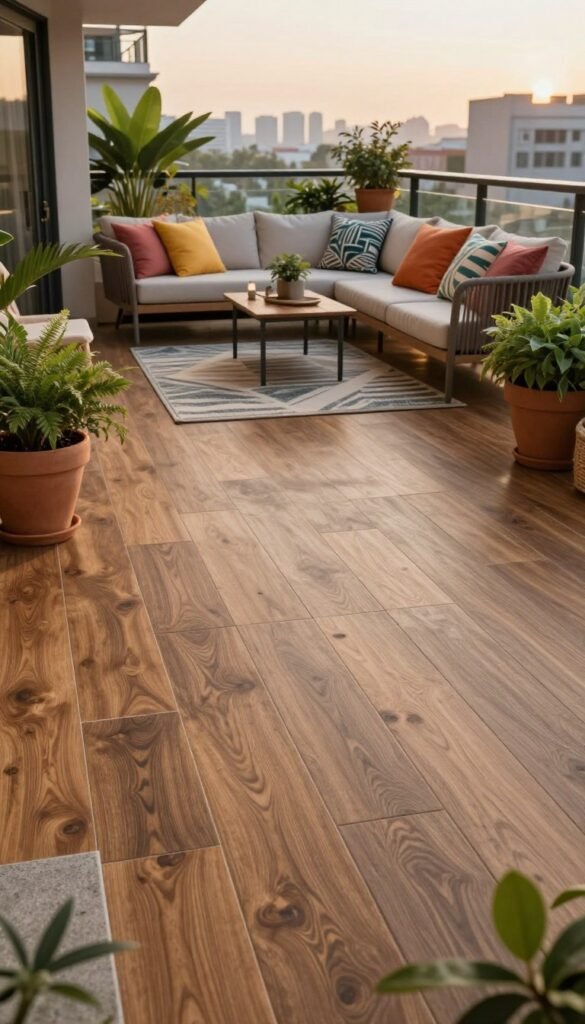
Interlocking deck tiles snap together without glue. They hide stains and lift clean when a renter moves. They install fast and suit small balconies that need a quick refresh.
Outdoor-rated tile gives a more finished patio look without a remodel. Choose frost- and slip-resistant porcelain made for exterior use; indoor tile often fails in freeze/thaw cycles.
Faux turf and runner-style rugs add soft underfoot comfort and reduce echo on concrete. They are light to roll up and easy to hose down.
Buying checklist
- Drainage: Don’t block water paths or scuppers.
- Weight: Confirm balcony load limits on older buildings.
- Heat: Dark tiles can get hot in full sun.
- Rules: HOA and management may restrict changes or appearance.
- Pairing: Pick items that work with compact furniture and the available space.
| Option | Install time | Removability | Barefoot comfort | Rain handling |
|---|---|---|---|---|
| Interlocking deck tiles | 1–3 hours | High | Medium | Good (gapped) |
| Outdoor-rated tile | Half day–day (larger prep) | Medium | High | Depends on grout/drain |
| Faux turf / runners | 30–60 minutes | Very high | High | Dries fast |
Match choices to the renter scenario: tiles for a polished patio look, deck tiles for quick, removable coverage, and turf or runners when light weight and quick change matter in small outdoor space.
Compact Seating That Doesn’t Overwhelm Your Balcony
Small seating choices can transform a cramped balcony into a usable spot without crowding it. Focus on scale, stability, and storage when selecting pieces. Match each piece to daily habits: quick coffee, working on a laptop, or lounging with a book.
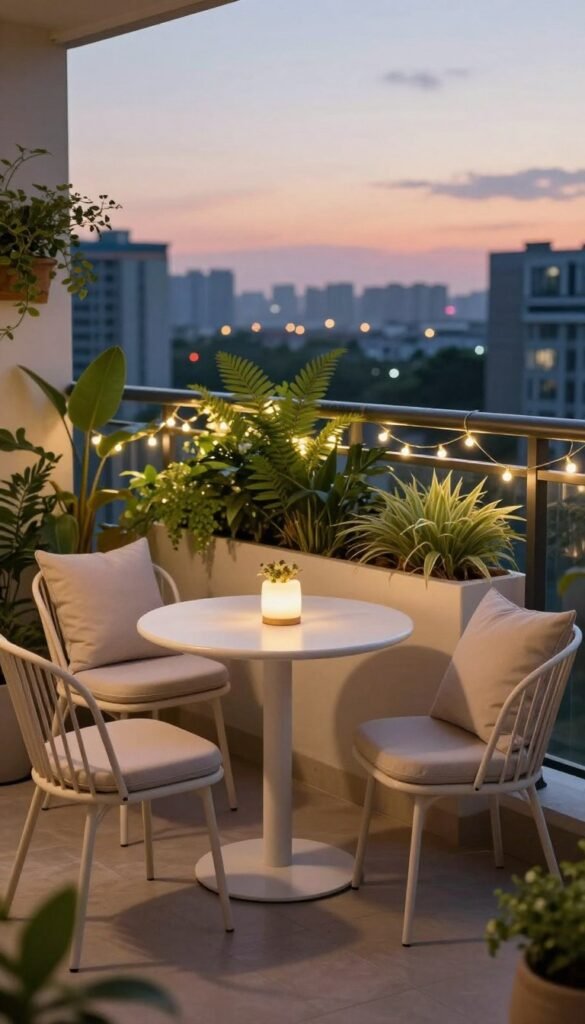
Small bistro sets and space-smart chairs
Who they suit: two-person households and short breakfasts.
Look for armless chairs, narrow depth, and a compact table that tucks against the railing.
Portable seating you can tuck away
Folding chairs and stackable stools clear the floor fast. Choose lightweight frames with wide feet to resist tipping in wind on higher floors.
Lounge options and statement pieces
Egg-style chairs add personality without dominating a corner if placed where they won’t block the door. Pick models with anchoring options or a low center of gravity for safety.
DIY pallet setups
Pallet sectionals with fitted cushions offer good comfort at a low price. Expect extra weight and the need for moisture-resistant cushions and a plan to lift or store the base.
Pros and cons at a glance
- Comfort vs. storage: deeper seats are comfier but harder to tuck.
- Wind risk: lightweight chairs need tie-downs on windy balconies.
- Materials: rust-resistant frames and quick-dry cushions last longer.
| Type | Footprint | Seats | Storeability | Best use |
|---|---|---|---|---|
| Bistro set | Small | 2 | Medium | Coffee, meals |
| Folding chair | Minimal | 1 | High | Temporary seating, storms |
| Egg/lounge chair | Medium | 1 | Low | Solo lounging, statement spot |
| Pallet cushion set | Medium–Large | 2–4 | Low | Budget sectional |
Product blocks to guide choices: look for a compact bistro set sized to your balcony depth, a folding chair with stabilizing feet, a lounge chair with a low base, and a pallet cushion set with quick-dry fabric.
Dining and Work-from-Balcony Surfaces for Everyday Use
A reliable surface solves the single problem most small balconies face: nowhere to set a plate, laptop, or morning cup. This section focuses on compact solutions that restore function without blocking circulation.
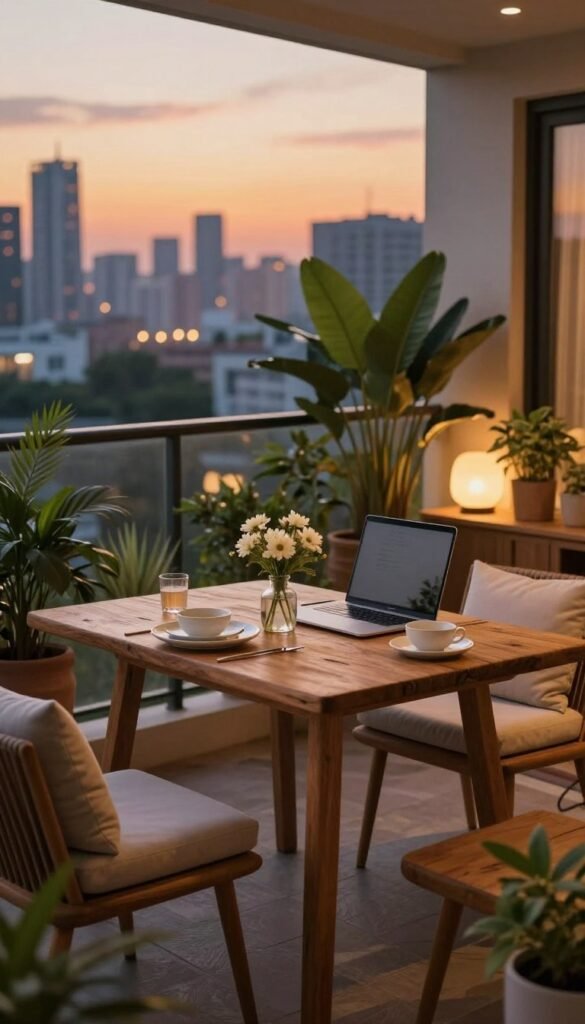
Round patio dining sets that free up circulation
Round dining sets fit tight footprints. They remove sharp corners, making it easier to walk past and place chairs where needed.
They work well for couples and casual entertaining. Choose a small round table and two slim chairs for regular meals and light work.
Balcony bar and railing shelves when there’s no room for a table
A railing-mounted bar is a single-surface fix for ultra-tight balconies. It can support coffee, plates, and a laptop for short WFH sessions.
- Check railing thickness and weight limits before installing.
- Confirm clamp compatibility and whether the shelf can be removed easily.
Materials that hold up: wood choices and maintenance expectations
Wood patio tables (teak, cedar, or redwood look) add warmth but need simple care. Plan light cleaning and periodic sealing if left exposed.
For renters, a small sealed wood table or a folding alternative gives the look with manageable upkeep.
| Option | Footprint | Seats | Laptop-safe | Maintenance |
|---|---|---|---|---|
| Round dining set | Medium | 2–4 | Yes (stable) | Low–medium |
| Balcony railing shelf | Minimal | 1–2 | Yes (short use) | Low |
| Folding table set | Variable | 1–4 | Yes (portable) | Low |
Affiliate-ready product labels: „best for two“ (compact round set), „best for WFH“ (clamp-on railing shelf), „best folding set“ (stowable table and chairs) — pick items by footprint and stability to match your space.
Outdoor Rugs, Cushions, and Throws That Make It Feel Like a Real Room
Swapping in performance pillows and cushions refreshes a balcony in an afternoon. Soft goods add instant comfort and color without bulk or permanent changes.
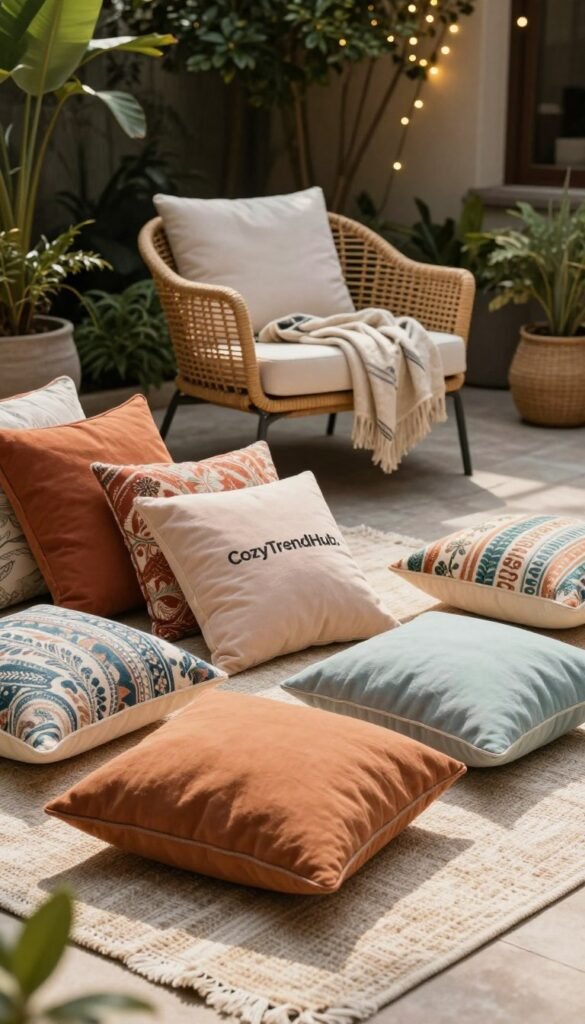
Who benefits most: renters with limited storage, people who already own basic chairs, and anyone who wants a fast visual update to their living spot. Layer a weather-resistant rug, seat pads, and a throw to make the area feel like part of the home.
Buying checklist
- UV/fade resistance: look for labeled fade-resistant textiles for full sun.
- Quick-dry fill: polyfill or quick-dry foam avoids mildew after rain.
- Wipe-clean fabric: choose surfaces that handle pollen and spills.
Pros and cons
Rugs and pillows make budget seating feel finished. Throws add warmth on cool nights but must be stored dry in a bin to prevent mildew.
| Scenario | Best trait | Maintenance | Fabric type |
|---|---|---|---|
| Full sun | Fade resistance | Low | Solution-dyed acrylic |
| Rain-prone | Quick-dry fill | Medium | Polyester blends |
| Low-maintenance | Wipe-clean | Very low | Olefin or coated cotton |
Lighting That Solves the “We Never Use It at Night” Problem
A dark balcony often becomes a wasted hour; the right lighting encourages evening use. This section recommends renter-friendly, easy-to-install options that are simple to remove.
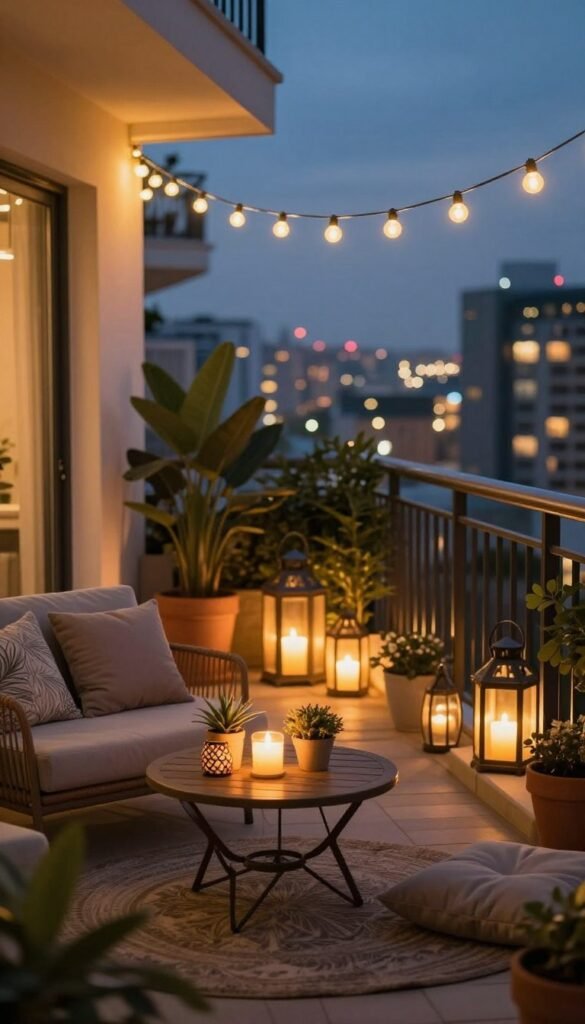
String glow and woven globe options
String lights and woven globe bulbs create soft ambient glow. Check weather rating, cord length, and whether an outlet is available.
Lanterns and safe tabletop choices
Battery LED lanterns and flameless candles keep a table area safe in wind. Choose stable bases and low-center designs to avoid tipping.
Paper lanterns that add color
Hanging paper lanterns add personality on a tight budget. Tie them at sheltered points and use clips to prevent tearing in gusts.
Power, install, and wind: pros and cons
| Power | Pros | Cons |
|---|---|---|
| Solar | Plug-free, eco-friendly | Needs sun; dim on cloudy days |
| Battery | Portable, safe in wind | Requires replacements |
| Plug-in | Reliable brightness | Needs outlet and safe extension |
Affiliate-ready picks: „best solar string lights,“ „best battery lanterns,“ „best wind-resistant clips/hooks,“ and „best balcony-safe extension options“ help readers choose items quickly.
Privacy Solutions for Close Neighbors and Street-Facing Balconies
When a balcony faces the street or a neighbor’s window, a few smart privacy moves can make it feel private again.
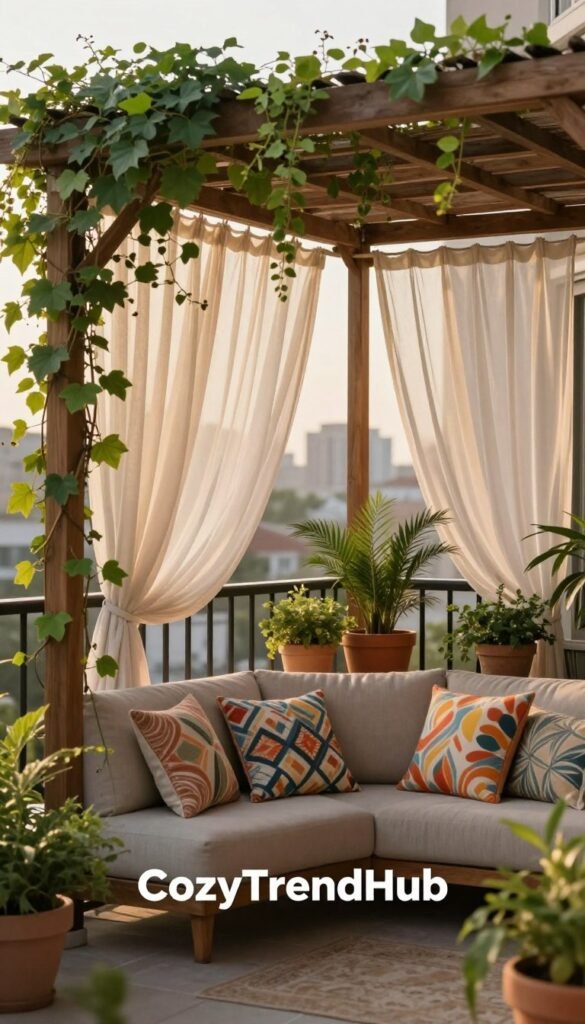
Solid screens for instant coverage
Solid privacy screens give immediate visual and wind protection. Check height, base stability, and whether a panel reduces gusts. These work well on street-facing and neighbor-facing balconies where instant coverage matters.
Budget fabric drape
A simple cloth draped over a railing is low-cost and fast. Use UV-resistant ties and clips. Expect some flapping and fading over time. This is a good way to test placement before a permanent buy.
Bamboo, lattice, and curtains
Bamboo and lattice add pattern while keeping airflow. Half-screens preserve partial views and light.
Curtains create zones; pick panels that blur sightlines but still let light through. Aim for medium-sheer performance rather than blackout weight on a small patio or balcony.
Renter-safe mounting and fabric performance
- Tension rods, clamp hooks, or freestanding frames avoid drilling.
- Choose mildew- and UV-resistant fabric like Sunbrella-style panels for lasting color and mildew resistance.
| Situation | Solution | Pros | Cons |
|---|---|---|---|
| Street-facing | Solid screen | Instant privacy, wind block | Can feel heavy |
| Budget trial | Fabric drape | Low cost, quick | Fades, flaps in wind |
| Want pattern + airflow | Bamboo / lattice | Light, patterned, partial view | Less total shade |
Buy-box cues: look for a no-drill screen, a budget fabric panel, and a performance curtain panel to match the exposure and design of the place.
Plants for Apartments: Greenery Without Eating Up Floor Space
When floor room is limited, vertical planting turns walls and railings into a living feature.
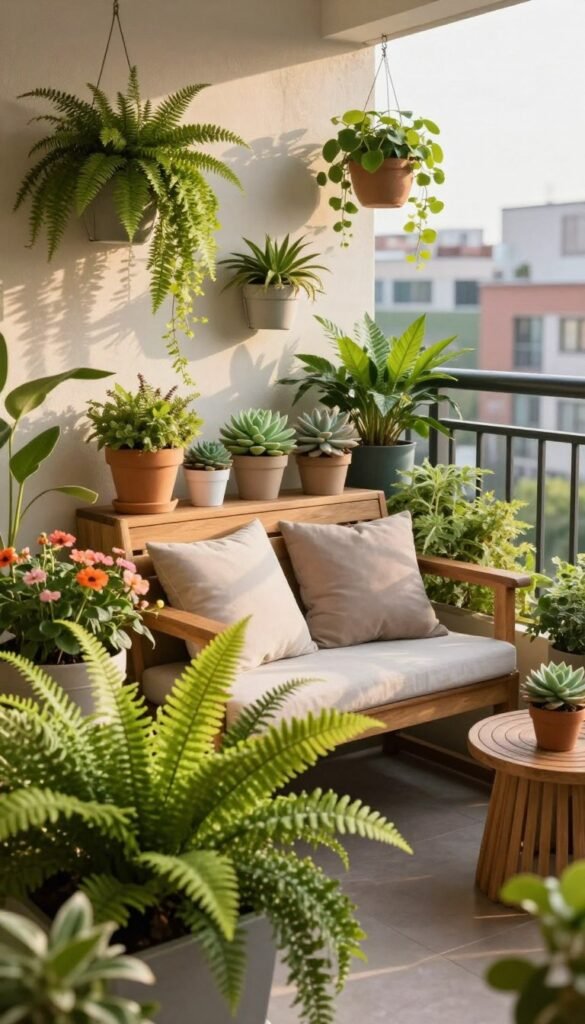
Hanging planter boxes use railing and fence edges to free the floor. They suit hobby growers who want window herbs or cascading foliage. Check rail width, secure brackets, and add a drip tray to stop runoff.
Vertical racks and planter walls
Vertical garden racks stack pots up a wall to make a big visual impact with a tiny footprint. They work well on narrow balconies where an “urban jungle” effect is the goal.
Multi-height plant stands
Tiered stands group pots at varied levels. They improve light access and keep the floor clear. Use them in a corner to stabilize heavier containers and reduce wind stress.
„Layer up, don’t spread out — it saves space and gives plants a fighting chance.“
- Buying checks: railing fit, drainage trays, and container weight limits.
- Wind and height: anchor racks on upper floors; prefer lighter pots or wall-mounted systems.
- Who each setup suits: layered, dense plantings for committed gardeners; simple railing boxes and low-care pots for busy renters.
| Setup | Footprint | Maintenance | Ideal use |
|---|---|---|---|
| Hanging railing boxes | Minimal | Low–medium | Herbs, trailing plants |
| Vertical planter wall | Minimal | Medium | High-impact green wall |
| Multi-height stand | Small | Low | Mixed sun/shade groupings |
Shade and Wind Protection That Makes the Space Usable in Summer
Shade and wind buffering change how much time people actually use a balcony; the right setup restores comfort fast.
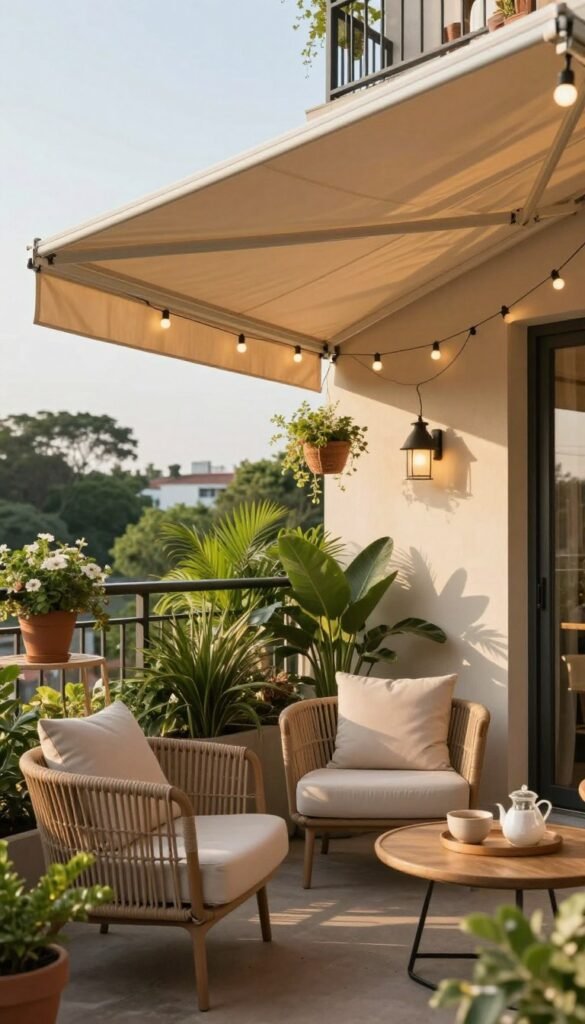
Umbrellas as flexible shade
A compact umbrella gives instant shade on a small patio or balcony and can move with the sun.
Look for: a canopy size that clears the door, a tilt function, and a heavy enough base to resist gusts.
Awnings and performance fabric panels
Awnings create steady cover and help lower heat inside a unit. Fabric panels add layered shade and act as visual decor.
Choose performance textile that resists fading and dries quickly. Renter-safe options include clamp-mounted frames or freestanding pergola panels that avoid drilling.
| Solution | Best-for | Pros | Cons |
|---|---|---|---|
| Compact umbrella | Partial sun, movable shade | Flexible, low-install | Can tip in high wind |
| Wind-vented canopy | Windy balconies | Stable in gusts, vents reduce lift | Needs larger base or tie-downs |
| Fabric shade panel | Style + light control | Decorative, cools area | May need approved mounting |
Weatherproof Materials and Year-Round Durability (Especially If You Can’t Store Furniture)
Choosing materials that stand up to rain, sun, and wind makes a balcony usable year-round without daily fuss.
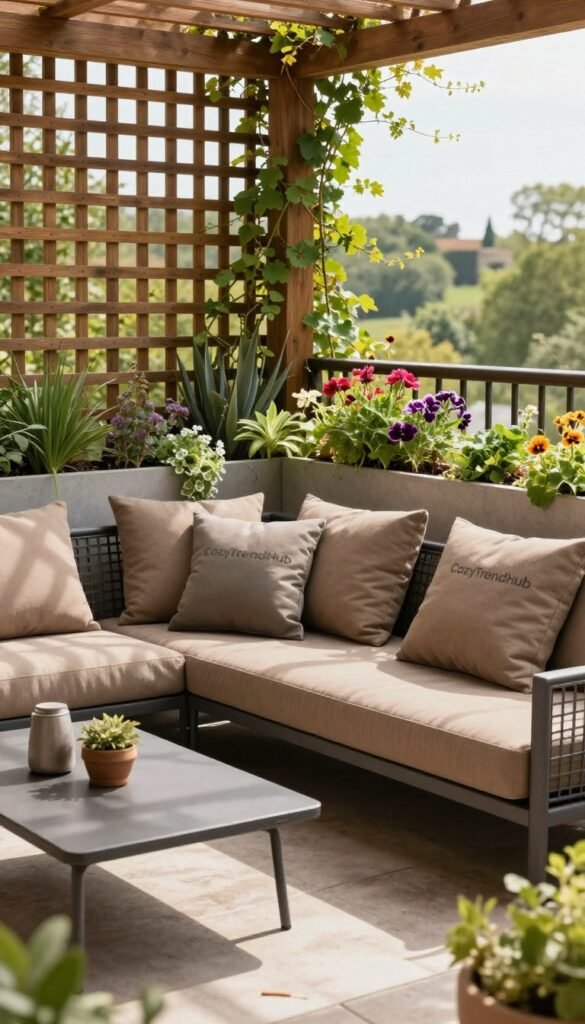
Rot-resistant wood choices and simple sealing
Teak, cedar, and redwood resist rot naturally and suit a patio that stays outside. Expect natural graying over time; that is cosmetic, not failure.
Apply a waterproof sealer if a homeowner wants color retained. A light annual wipe and a reseal every 1–3 years keeps the wood in top shape with modest time.
Synthetic wicker as a low-maintenance option
Synthetic wicker—usually polypropylene—handles moisture and temperature swings better than many natural fibers. It pairs well with weather-rated cushions and is a renter-friendly choice for outdoor furniture.
Covers and breathable protection
Use water-repellent covers with vents and tie-downs to limit condensation and blow-off on a balcony. Quality covers cut cleaning chores and extend the life of patio seating and tables.
Foldable pieces for storms and seasonal clearing
Foldable tables and chairs free space quickly during high wind or when management requires clear egress. They are the practical way to protect furniture without indoor storage.
- Pros: wood ages gracefully; synthetic wicker resists moisture; covers reduce maintenance.
- Cons: wood needs resealing; cheap covers trap moisture; foldables can feel less solid.
| Material | Durability | Maintenance |
|---|---|---|
| Teak / Cedar / Redwood | High (rot-resistant) | Seal occasionally |
| Polypropylene wicker | High (moisture/temp tolerant) | Wipe clean |
| Covered foldables | Medium (portable) | Store folded or cover |
Simple buying framework: match sun/rain exposure, pick materials that suit realistic upkeep, and add a vented cover. This way small investments last through seasons and keep a patio useful without indoor storage of items.
Small-Space Storage That Doesn’t Look Like Storage
Smart storage turns a cluttered balcony into a tidy, usable corner without stealing floor space.
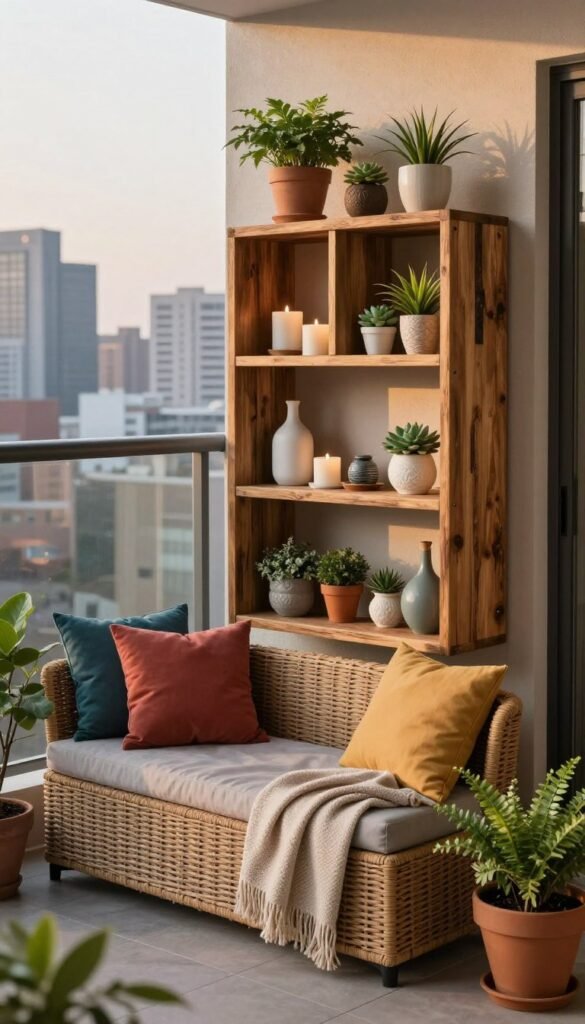
Storage benches and ottomans hide supplies while adding seating. They suit renters who rotate seasonal pillows, pet gear, small tools, or lanterns. Choose models with a waterproof liner, raised feet, and a lid that locks or stays open in wind.
Crate-style stools and side tables
Crate-style stools double as a seat and a small table. They tuck into a corner when guests arrive. Lighter crates move easily but can tip; heavier boxes hold more.
- Who they fit: renters with limited closet space.
- What to store: throws, candle lanterns, plant care items, and other things that need quick access.
- What to look for: water resistance, raised feet, and a wind-safe lid.
| Piece | Capacity | Weather sealing | Pros/Cons |
|---|---|---|---|
| Storage bench | High | Good (lined) | + Extra seating; − heavier |
| Deck box alternative | Medium | Very good | + Large stash; − bulky |
| Crate stool | Low–Medium | Variable | + Versatile; − lighter units need anchoring |
„Pick storage that earns its footprint—if it sits, it should seat, stash, or serve as a table.“
Affiliate-ready cues: small storage bench for tight space, deck box alternatives, budget crate stool, and waterproof liners make choosing simple.
These pieces keep a balcony tidy and usable while protecting items and extending the feeling of home.
Tabletop Decor That Adds Style Without Creating Clutter
A neat tabletop keeps a small patio feeling intentional instead of cluttered. Focus on a few stable pieces that add function and visual interest without blocking the surface.
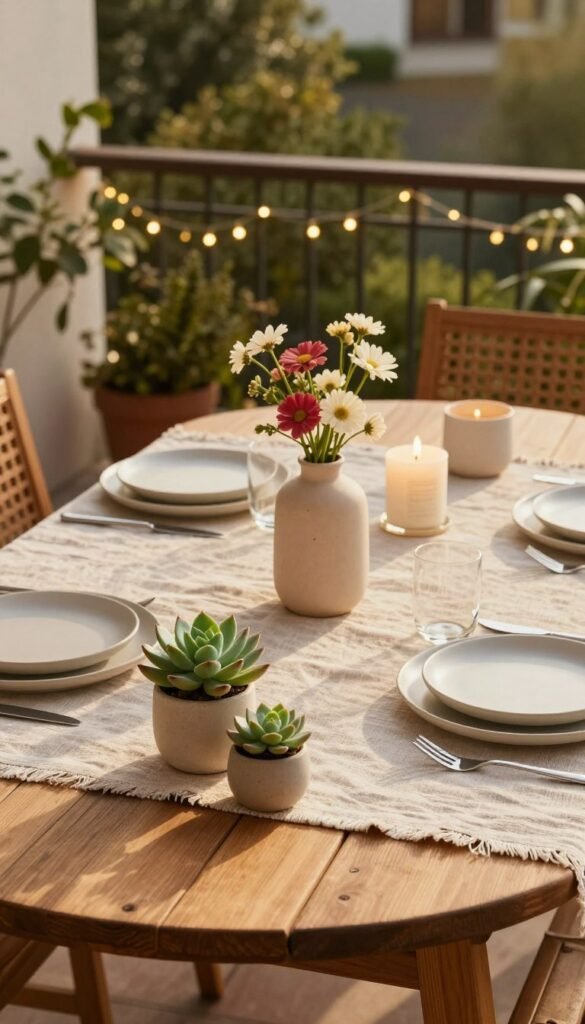
Wind-proof centerpieces
Choose low bowls, lanterns, or weighted pieces. Low bowls hold fruit or succulents and resist gusts. Lanterns with wide bases or enclosed LED candles stay put and add soft light.
Use heavy materials like ceramic or metal, or add sand to hollow bases to increase weight. Keep one centerpiece only to avoid a crowded table.
Durable dinnerware and serving tips
Melamine plates and stackable acrylic glasses survive slips and wind. They look polished and clear quickly after use.
Pick a compact dining set that nests for storage. Choose shatter-resistant pieces with a clean finish to keep the surface usable for food and work.
- Lantern criteria: wide base, enclosed flame or LED, rust-proof finish.
- Centerpiece rules: one focal item, one light source, one serving piece.
- Storage tip: pick stackable sets to save small-cabinet space.
| Item | Wind-safety | Practical use |
|---|---|---|
| Low bowl | High (low profile) | Fruit, succulents |
| Weighted lantern | Very high | Lighting, centerpiece |
| Melamine plates | Medium | Durable dining |
| Acrylic glasses | Medium | Stackable drinkware |
Affiliate cues: lantern centerpiece, melamine dinnerware set, stackable acrylic glassware make practical gift or purchase options when shopping to update a small table.
Style Directions That Work in Rentals (Without Buying Everything New)
Matching a balcony to interior choices starts with one clear color plan and a short shopping list. This keeps purchases focused and prevents overbuying.
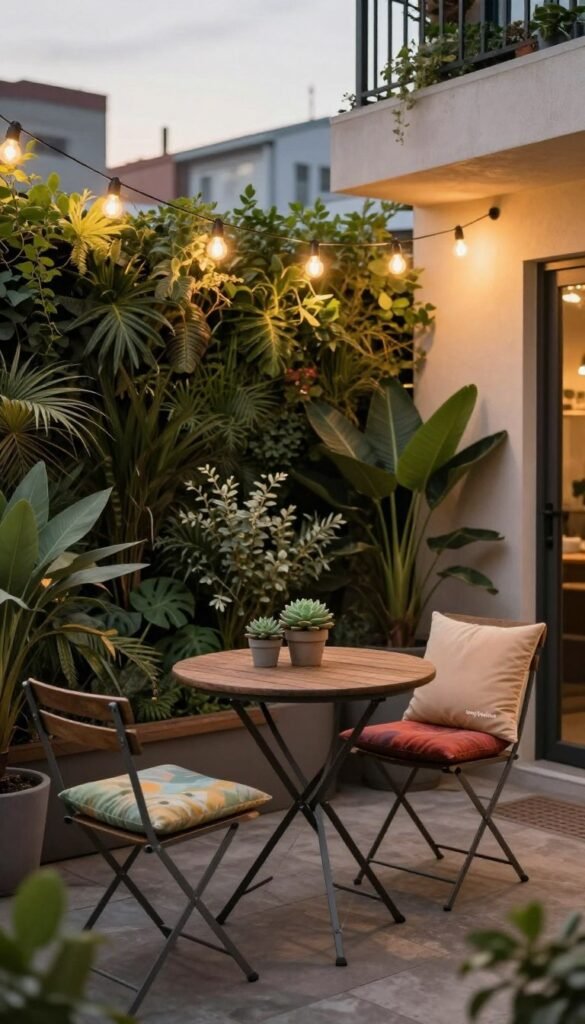
Bohemian patio approach: textiles, layers, and personal touches
The boho formula is simple: layer rugs, pillows, and throws in mixed patterns. Buy one weather-rated rug and two fade-resistant cushion covers.
Reuse indoor trays, baskets, or framed photos to add personality without new bulk. That keeps the look lived-in and renter-friendly.
Plan a color scheme that links interior and outside
Pick one anchor color from inside the home, add a neutral base, then use two accent colors. Print a quick palette on your phone to shop with.
This makes the small space feel like an extension of the interior rather than a separate spot.
Mix materials for balance and durability
Combine metal frames, faux wicker seating, and a small wood side table. Metal adds structure, faux wicker softens the look, and wood warms the palette.
| Look | Key buys | Reuse |
|---|---|---|
| Boho | Weather rug, patterned cushions | Indoor trays, frames |
| Modern | Metal table, monochrome cushions | Minimal art, lamp |
| Natural | Wood table, woven baskets | Potted houseplants |
Quick action: shop one outdoor-rated textile, one small table, and two accent cushions. Use a tie-back plan to keep pieces swap-friendly and the design cohesive across the patio and the rest of the home.
Pet-Friendly Balcony Decor and Safety Upgrades
A few simple changes can keep pets safe on a balcony while keeping the area welcoming. Thin wire mesh panels add protection without drilling, and they can be styled so the railing doesn’t feel closed in.
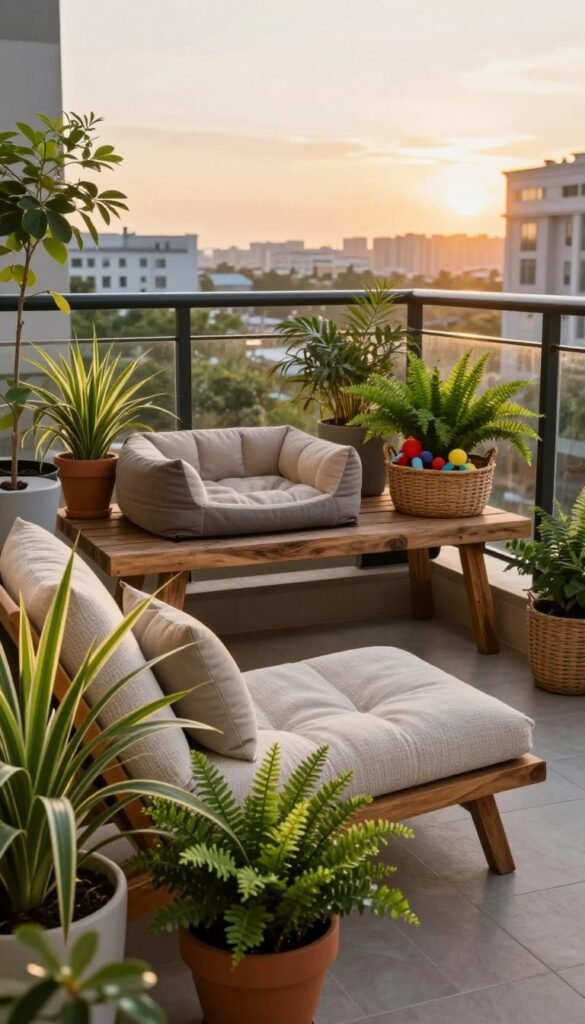
Wire mesh add-ons and how to avoid a „caged“ look
Choose a renter-safe mesh kit with small openings and a rust-resistant coating. Look for finished edges and removable fasteners to avoid scratches and lease issues.
- What to check: gap size small enough for pets, coated wire, and smooth edges.
- Attachment: clamp brackets, zip ties with protective sleeves, or clamp-on rails that leave metal untouched.
- Who this suits: cat owners and small-dog households who want a safer outdoor place without permanent work.
Using mesh as a support for lightweight hanging items
The mesh can do double duty. It supports lightweight paper lanterns, plant pockets, and small planters so the balcony feels layered rather than boxed in.
- Keep planters low and use LED lanterns to avoid weight stress.
- Avoid full coverage; leave visual gaps and add trailing plants to soften the view.
- Confirm the mesh layout doesn’t create an easy climb path.
| Need | Feature | Why it matters |
|---|---|---|
| Renter-safe mesh kit | Coated, removable | Protects pets; no drilling |
| Fasteners | UV zip ties & clamp clips | Hold in wind; remove cleanly |
| Lightweight hanging items | LED lanterns, small planters | Add style while using mesh as support |
„Secure the gaps, not the view — add safety where needed and style around it.“
Quick buying notes: check building rules, avoid climbable patterns, and pick fasteners rated for wind. These upgrades protect pets and help the balcony feel like an easygoing extension of the home.
Seasonal Swaps That Keep Your Outdoor Space Feeling Fresh (Without a Big Budget)
Small, intentional swaps refresh a balcony without new furniture or major expense. This approach solves the common “I’m tired of the look” problem by building a simple rotation around a few compact items that store easily.
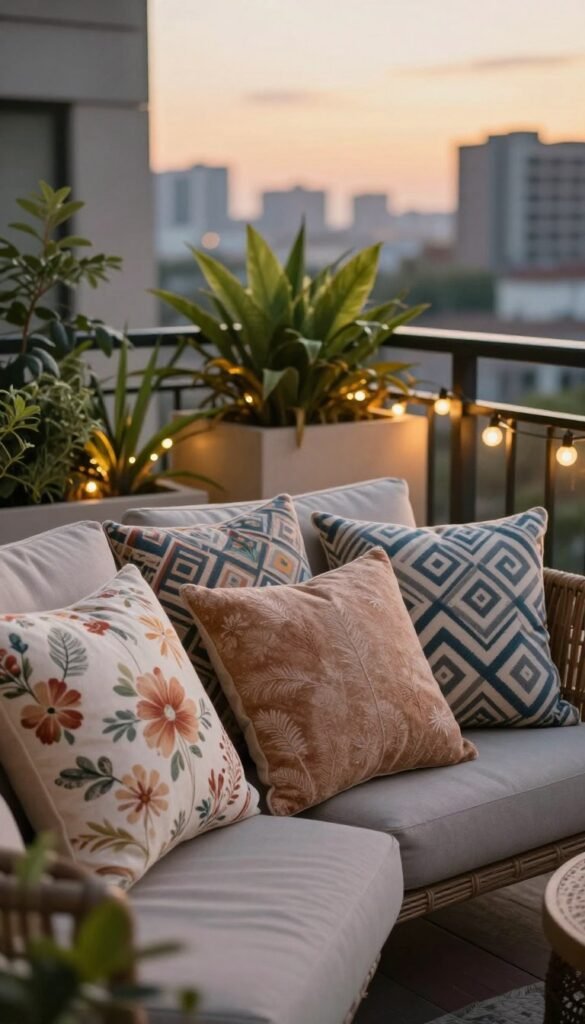
Quick changes: pillows, flowers, and table accents
Start with two pillow covers that match your core palette. Swap them by season to shift mood without changing seating.
Add fresh flowers or a small seasonal plant on the table to update color and scent. Use one new centerpiece, not many, to avoid clutter.
Cold-night comfort: throws and lighting that extend your time
Pair a quick-dry throw with battery lanterns or string lights to add warmth and usable lighting into fall evenings. This extends balcony time without heaters or wiring.
Store seasonal textiles in a bench or weatherproof bin. Rotate pieces each season so storage stays tidy and the space feels new each time it is used.
- Color tip: pick one anchor color and two seasonal accents to keep swaps cohesive.
- Storage tip: ottoman or small deck box holds pillows and throws neatly.
- Affiliate-ready blocks: budget pillow covers, battery lanterns for fall, quick-dry throws for shoulder seasons.
How to Choose the Best Outdoor Decor for Apartments Based on Your Space and Lifestyle
Decide what the balcony must do first — then shop the simplest solutions. That single rule cuts shopping time and keeps purchases useful. Match needs to footprint, wind exposure, and storage options.
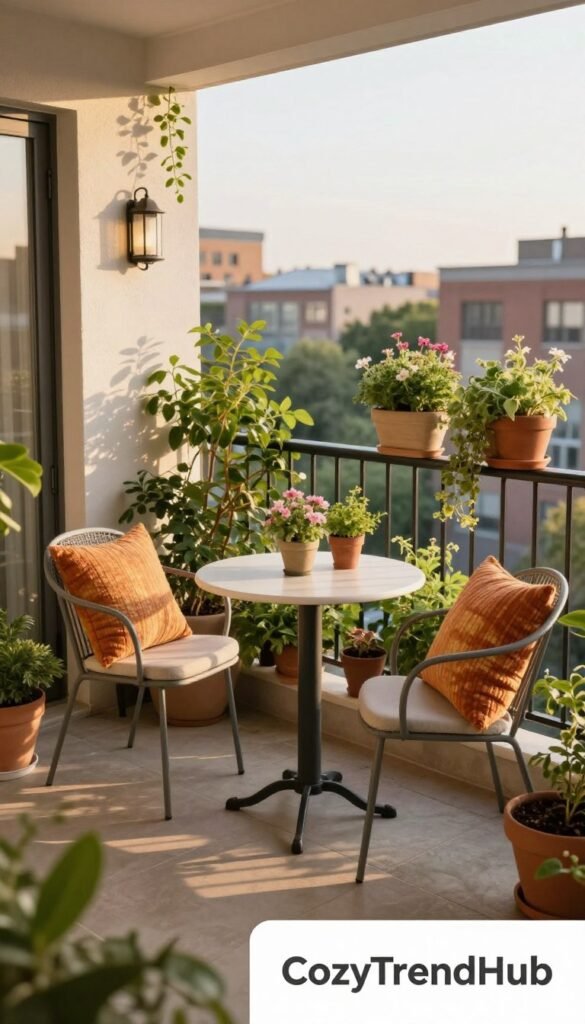
Best for tiny balconies: vertical solutions and folding furniture
If floor space is under 20 sq ft, prioritize vertical planters and railing shelves. Use a fold-down table and stackable chairs to keep walking paths clear.
Quick rule: choose items that fold or hang to reclaim the floor when not in use.
Best for entertaining: flexible seating and a compact dining setup
For hosting, pick modular seating that pulls together or tucks away. A small round table or clamp-on rail shelf gives stable dining without crowding circulation.
If/then: if guests are frequent, pick seating that converts from lounge to dining easily.
Best for privacy-first renters: screens + curtains + plant layering
Layer a freestanding screen, medium-sheer curtains, and tall planters to block sightlines while keeping airflow. Start with a screen; add plants where visual softening is needed.
Tip: use tension rods and clamps to avoid drilling.
Best for low-maintenance: durable materials and protective covers
Choose weatherproof frames, synthetic wicker, or sealed wood when storage is limited. Add vented covers and foldable pieces to protect items during storms.
Priorities: durability, removability, and low cleaning time.
| Need | Footprint | Removability |
|---|---|---|
| Tiny space | Vertical/railing | High (fold/hang) |
| Entertaining | Modular seating + compact table | Medium (rearrange) |
| Privacy | Screens + plants | High (freestanding) |
- Decision saver: map one primary use, one secondary use, then pick pieces that serve both.
- Key criteria: footprint, removability, wind stability, maintenance time, seasonal flexibility.
- Buyer path: tiny = vertical + folding; hosting = flexible seating + dining surface; privacy = layered screens; low-care = weatherproof + covers.
Conclusion
, A small, targeted upgrade can turn a narrow balcony or patio into a usable room that feels like part of the home.
Start with measurements and lease rules, then fix the floor and add stable seating and a table. Layer lights, a privacy screen, cushions, and a weather-ready rug to make the area livable year-round.
Buy with real-life limits in mind: wind, sun, storage, and cleaning matter more than trendy items. Use the article’s pros/cons and checklists as a quick buying guide when choosing furniture, chairs, or cushions.
Quick next step: pick one high-impact change today — deck tiles, string lights, or a privacy screen — to make the apartment spot usable immediately. Add seasonal swaps later.
Think of the balcony as an extension of the interior living space. With a few practical ideas and measured purchases, a small place can become a calm, useful corner that works with a renter’s life.
FAQ
How do lease rules affect what can be changed on a balcony or patio?
Check the lease and any building or HOA guidelines first. Removable items like potted plants, freestanding furniture, outdoor rugs, string lights with clips, and railing planters are usually allowed. Avoid permanent alterations such as drilling into concrete, attaching heavy fixtures to railings, or installing fixed awnings unless you have written permission.
What measurements should renters take before shopping for furniture?
Measure the usable floor area, railing height and width, door swing, and clearances for walking paths. Note any sloped surfaces, thresholds, or drainage openings. Bring these numbers when comparing bistro sets, folding tables, or interlocking tiles to ensure items fit and don’t block egress.
Which materials tolerate sun, wind, and rain on a balcony?
Look for teak, cedar, or pressure-treated wood sealed for outdoor use; powder-coated metal; and synthetic wicker. Quick-dry fabrics like solution-dyed acrylic resist fading and mildew. Use furniture covers or fold and store pieces during heavy storms to extend life.
Are interlocking deck tiles a good solution for covering concrete slabs?
Yes. Interlocking tiles snap together and lift easily for removal, making them renter-friendly. Choose tiles with drainage channels and a breathable backing to prevent trapped moisture. Consider weight limits if you’re on a high-floor balcony.
What are low-profile flooring options that still feel polished?
Outdoor porcelain tile, composite decking tiles, and faux turf provide a finished look without a permanent remodel. Porcelain gives a tile-like appearance; composite tiles need less maintenance. Verify management rules before installing heavier materials.
How can small balconies have comfortable seating without feeling crowded?
Pick compact bistro sets, folding chairs, or a narrow bench with slim arms. Consider stackable or portable stools and a hanging chair that uses vertical space. Measure circulation space so seating doesn’t block doors or walking paths.
What seating stores away easily for renters?
Folding chairs, stackable stools, and lightweight sling chairs tuck into closets or under beds. Ottomans with storage can pull double duty. Choose pieces under 30 pounds if you’ll be moving them often.
Can pallet seating be safe and renter-appropriate?
Yes, when built from heat-treated or kiln-dried wood and sanded smooth. Use weatherproof cushions and seal the wood to prevent rot. Keep pallets freestanding so they can be removed without altering the property.
What dining solutions work when there’s no room for a full table?
Railing shelves and drop-leaf balcony tables create dining surfaces without taking floor space. Narrow bistro sets with round tops let people move around more easily. Choose materials that handle spills and sun exposure.
Which fabrics are best for rugs, cushions, and throws on a balcony?
Solution-dyed acrylic and polyester blends offer fade resistance and quick-dry performance. Look for rugs labeled “outdoor” with UV inhibitors and mildew-resistant backing. Removable covers that are machine-washable add convenience.
What lighting options make nighttime use more inviting and safe?
Battery-operated string lights, solar-powered lanterns, and LED candles provide ambience without hardwiring. Woven globe lights add texture; clipped string lights require no drilling. Consider wind and secure fixtures to prevent hazards.
How can renters add privacy without permanent fixtures?
Use freestanding screens, tension-rod curtains, fabric draped over a railing, or bamboo roll-up shades attached with zip ties or clamps. Plant layers—tall potted plants plus hanging planters—also create visual barriers while keeping airflow.
What plant setups save floor space but still provide greenery?
Hanging planters on railings, vertical wall planters, ladder shelves, and tiered plant stands maximize vertical space. Choose lighter pots to avoid overloading railings and pick low-maintenance plants if access to sun is limited.
How to protect a balcony space from sun and wind without permanent installs?
Use a freestanding cantilever umbrella, removable fabric panels on tension poles, or a portable awning. Wind screens like lattice panels or anchored outdoor curtains reduce gusts; secure all items with weighted bases or tie-downs.
Which outdoor furniture materials are best if storage isn’t possible year-round?
Synthetic wicker, powder-coated metal, and sealed teak tolerate exposure better than untreated wood. Use breathable furniture covers and elevate pieces slightly to aid drainage and avoid trapped moisture.
How can storage be integrated so it doesn’t look bulky?
Choose benches and ottomans with hidden compartments, crate-style side tables, or slender vertical cabinets. Multiuse pieces like storage benches add seating and keep cushions, covers, and small tools out of sight.
What tabletop items won’t blow away on a windy balcony?
Weighted items like ceramic bowls, metal lanterns with glass, and low center-of-gravity planters stay put. Use silicone placemats, magnetic trays, or clips to secure light decor during breezy conditions.
How to create a cohesive style on a rental balcony without replacing everything?
Layer textiles—rugs, cushions, and throws—in a coordinated palette that echoes interior colors. Mix materials such as metal, faux wicker, and wood accents to add depth. Swap small items seasonally to refresh the look affordably.
What pet-proofing steps help keep balconies safe and comfortable?
Install wire mesh or pet netting along railings, anchor it securely, and cover gaps to prevent escape. Use non-toxic plants, provide shaded spots and a cool water bowl, and create soft flooring with outdoor rugs or turf for traction.
How can seasonal swaps keep a balcony fresh without a big budget?
Rotate pillows, throws, and table accents to reflect the season. Add warm lighting and heavier textiles for cold months; switch to breathable fabrics and bright planters in summer. Store off-season pieces in compact bins to save space.
How should someone choose pieces based on balcony type and lifestyle?
For tiny balconies, prioritize vertical solutions and folding furniture. For entertaining, pick flexible seating and a compact dining set. For privacy-focused renters, combine screens, curtains, and layered plants. For low-maintenance needs, select durable materials and use covers.
