
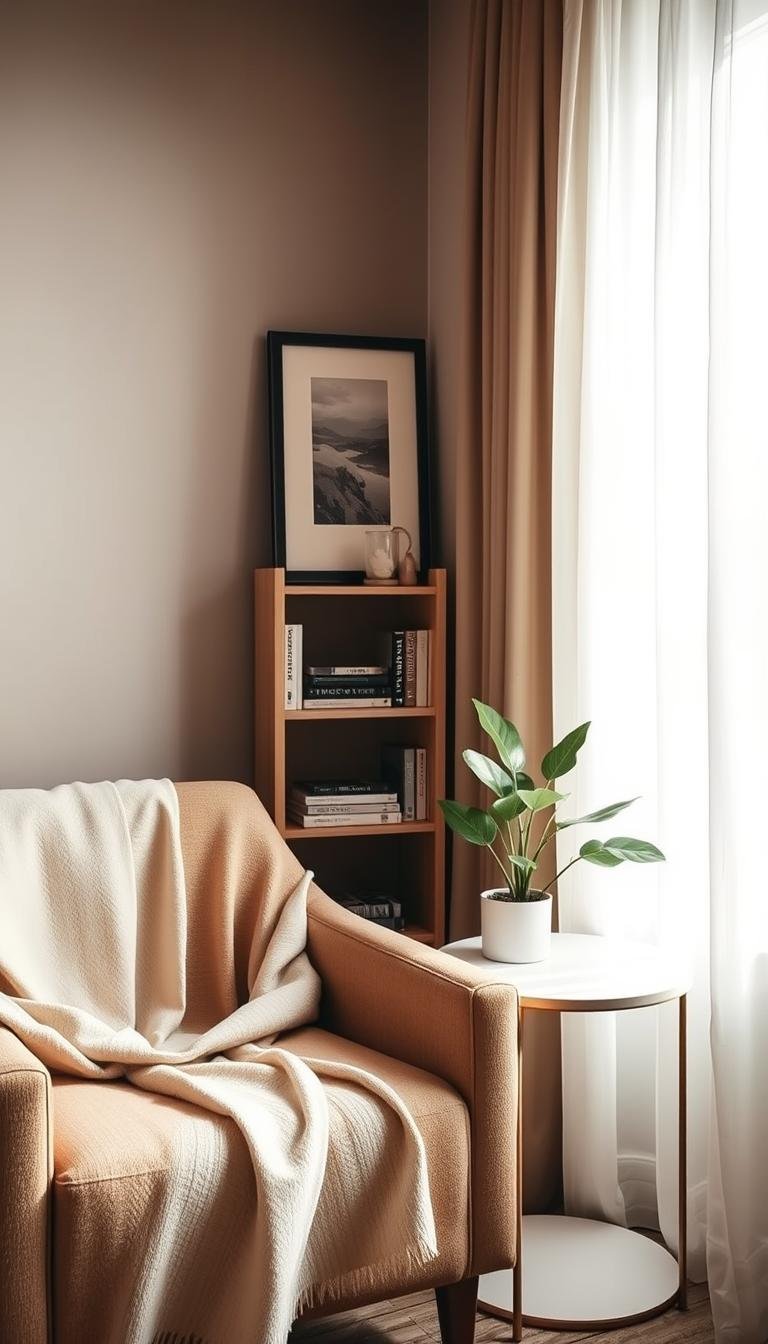
Small living areas can feel crowded fast when pieces add visual weight or block sightlines. This introduction names the problem and offers clear, usable fixes right away.
The approach is practical. It focuses on measured choices, renter-friendly installs, and double-duty items that free floor space. Architectural Digest’s notes on scale, layered textures, and reflective surfaces guide the recommendations. Spacejoy’s tips on leggy furniture and correct rug placement shape the selections.
What to expect: each item listed will solve a constraint—storage gaps, tight walkways, limited light—or meet rental rules with removable options. The goal is not a staged room but a living room that works better and feels intentional.
Quick decision filters: measure first, pick multifunctional pieces, favor low-profile legs, and layer warm lighting. The guide will note tradeoffs and clear “best for” guidance to support confident purchases.
Key Takeaways
- Measure the area before buying to protect sightlines and flow.
- Choose double-duty furniture to clear floors and calm surfaces.
- Prioritize low-profile, leggy pieces and correct rug sizing.
- Use warm, layered lighting and reflective surfaces to boost light bounce.
- Pick renter-friendly fixes: peel-and-stick, hooks, and damage-free hangers.
- Expect practical improvement, not a perfect staged look.
Small-space decorating problems that make a room feel cramped
Many rooms feel tighter than their footprint because a few common mistakes cut visual breathing room.
Too much visual weight often comes from bulky furniture pieces: heavy arms, deep seats, skirted bases, and dark finishes. These traits shorten sightlines and make a room read denser than its plan suggests.
Missing storage turns every surface into a drop zone. When remotes, throws, toys, or work gear have no home, clutter multiplies and the room feel shifts toward chaos.
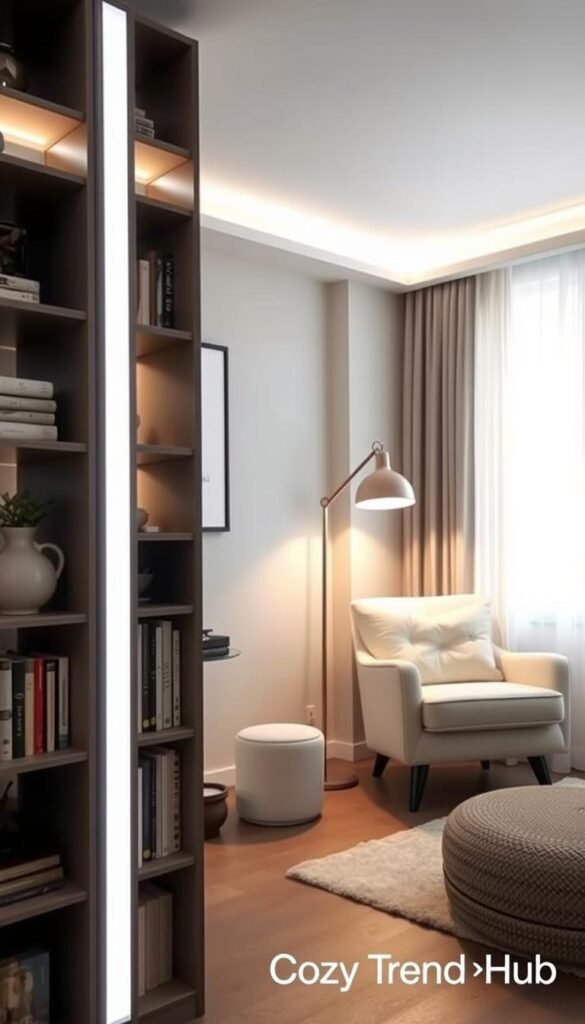
Flat or harsh light also shrinks perception. A single overhead fixture, cool bulbs, or glare-filled shades can push walls inward and leave corners lifeless.
Simple diagnostic: walk the room and note what blocks paths, what piles up, and which corners go dark. Those observations point to low-profile seating, hidden storage, and mirrors or layered lighting as the solution categories that follow.
| Problem | Visual cue | Why it makes a room feel smaller | Solution category |
|---|---|---|---|
| Oversized pieces | Bulky arms, dark finishes | Blocks sightlines and narrows pathways | Low-profile, leggy furniture |
| Storage gaps | Piled surfaces, visible clutter | Creates visual chaos and reduces usable floor | Hidden storage, baskets, ottomans |
| Poor lighting | Harsh glare, shadowed corners | Flattens depth and pulls walls inward | Mirrors, layered warm light |
How to choose the best aesthetic decor for small spaces
Start with scale and purpose. A clear process saves money and keeps a room calm. Measure, then test whether each item helps circulation or storage.
Scale and proportion rules
Confirm width, depth, and height before buying a sofa or chair. Measure clearance paths around the sofa area so walkways stay at least 24 inches.
Quick checklist:
- Measure doorways and circulation lines.
- Compare piece depth to seating needs.
- Favor low-back profiles when sightlines matter.
Pick pieces that do double duty
Choose ottomans with storage, nesting tables, or wall shelving that displays and hides items. One versatile item replaces multiple small ones and keeps the interior uncluttered.
Keep sightlines and layer texture
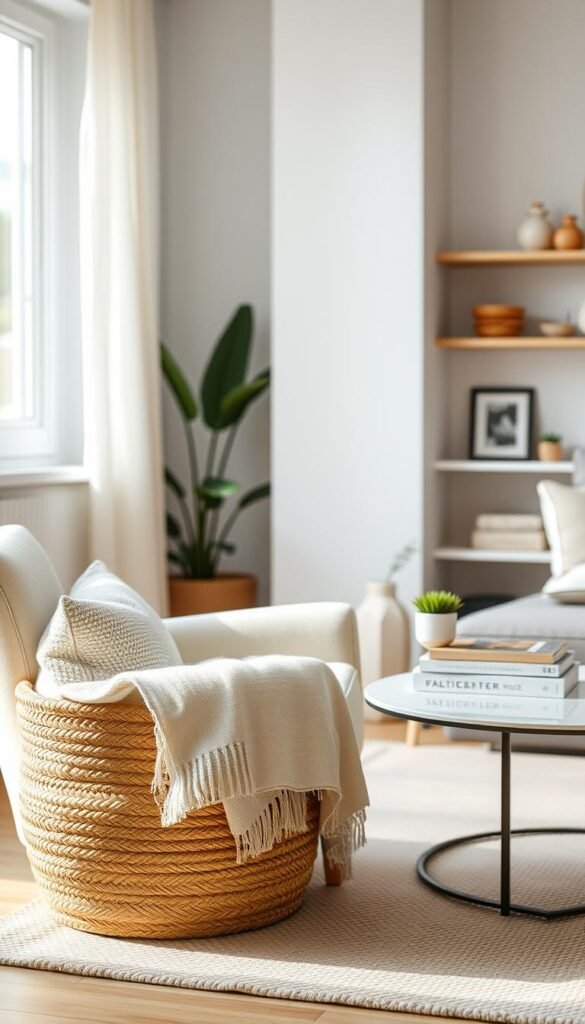
Leggy bases show more floor and make sofas and tables feel lighter. Use one anchor element—art, rug, or mirror—and then layer texture with a throw, basket, and mixed finishes.
Tradeoffs: reflective finishes reveal fingerprints; open shelving needs curation; light upholstery may require washable covers. Renters and studio dwellers benefit most from modular, movable solutions.
Mirrors and reflective accents that bounce light without adding bulk
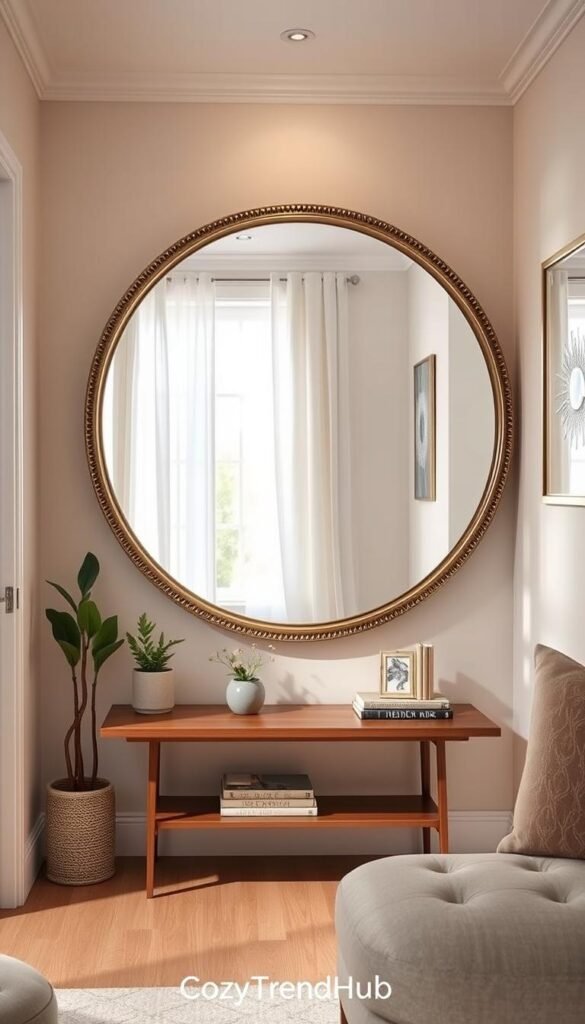
A single well-placed mirror can change how a room reads and how much light it returns. Mirrors increase perceived depth and bounce natural and lamp light without taking floor area.
Where to place a mirror for the biggest effect
Place a mirror directly across from a window to double incoming daylight. If a direct opposite feels awkward, set one adjacent to a window to catch angled light.
At night, position a mirror behind a table lamp to amplify warm light. In narrow layouts, a tall mirror on a long wall lengthens sightlines and helps the room feel more open.
Choosing frames and shapes that suit living rooms
Thin frames reduce visual weight. Rounded or arched shapes soften corners and read as less boxy than rectangles.
Oversized single mirrors can replace multiple small pieces. Leaning mirrors work well for renters—anchor them with anti-tip hardware for safety.
Reflective furniture: pros and cons
- Pros: Adds brightness, reads lighter than solid pieces, and can pair well with a mirrored coffee table to keep a low visual profile.
- Cons: Shows fingerprints, can create glare, and edges need tempering or rounded trim for safety.
| Use case | Placement tip | Buying check | Renter options |
|---|---|---|---|
| Brighten a north-facing room | Across from the main window | Tempered glass, adequate thickness | Removable hanging strips or lean mirror |
| Amplify evening lamp light | Behind a table lamp or sconce | Beveled vs flat edge based on style | Command picture hooks, anti-tip strap |
| Lengthen a narrow wall | Vertical, tall mirror to draw eye up | Size should match wall scale | Leaning mirror secured to wall |
| Add a reflective accent piece | One mirrored coffee table or side table | Rounded edges, durable finish | Portable accent that can move rooms |
Rule of thumb: pick one reflective hero and one smaller accent. This avoids a busy look while making the room feel brighter and more open.
Warm, intentional lighting that makes a small room feel cozy
Layered lighting turns a cramped room into a calm, usable living area by removing flat shadows and adding depth.
Problem: many rooms rely on one overhead fixture. That single source creates flat shadows and dead corners.
Compare options:
- Floor lamps: add height and ambient glow. They need base clearance and can crowd a narrow walkway.
- Sconces: free floor and table surfaces. Plug-in or battery models work well for renters.
- Table lamps: give task light near seating. They require a stable surface and surface space.
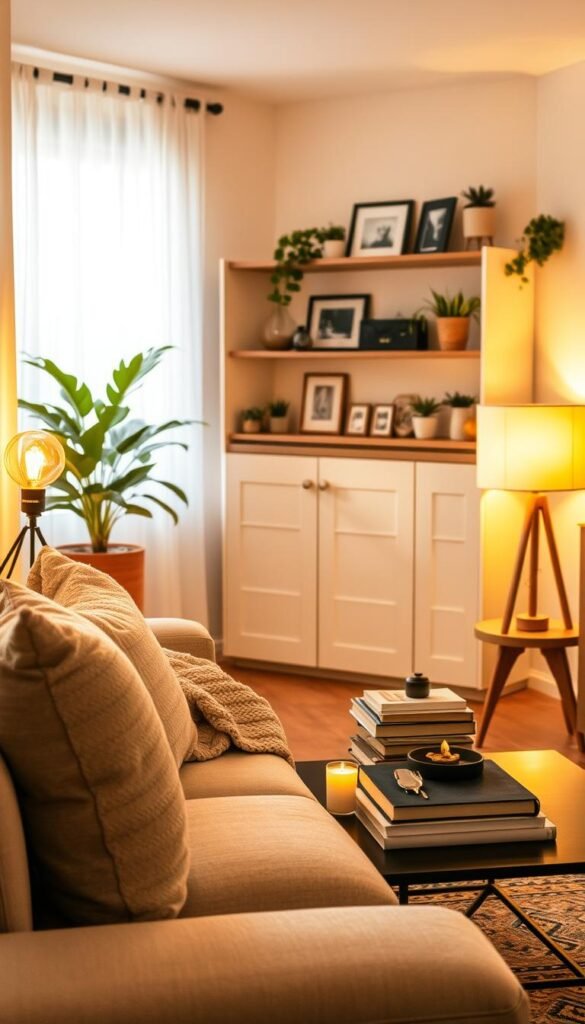
Renter-friendly wall lighting options
Plug-in sconces, battery-powered sconces, and adhesive cord covers let walls host light without rewiring. They pair nicely with a mirror or art to boost reflected light and warmth.
Bulb temperature and shade materials
Choose warm bulbs to avoid an antiseptic feel. Linen, paper, and frosted glass shades soften glare and tame hard edges.
| Type | Best for | Pros | Cons |
|---|---|---|---|
| Plug-in sconce | Renter with limited table space | Easy install, keeps floor clear | Needs outlet; visible cord unless concealed |
| Slim floor lamp | Open corner with clearance | Tall ambient light; stable task options | Can crowd narrow paths |
| Table lamp | Homes with side tables | Focused task light; decorative | Requires surface; uses outlets |
| Battery sconce | No outlets or no-drill renters | No wiring; flexible placement | Needs recharging; limited runtime |
Buyer checklist
- Cord length and outlet access
- Base diameter vs. walkway width
- Dimmer compatibility
- Shade opacity and material
- Bulb type and warm temperature
- Whether fixture blocks paths
Simple lighting map: one ambient source + one task source + one accent source keeps the room balanced and cozy.
Glass and open shelving to add storage without visual heaviness
Shelving that reads light can solve storage without closing in a wall plane. Open and glass shelves keep a room airy while adding usable surfaces.
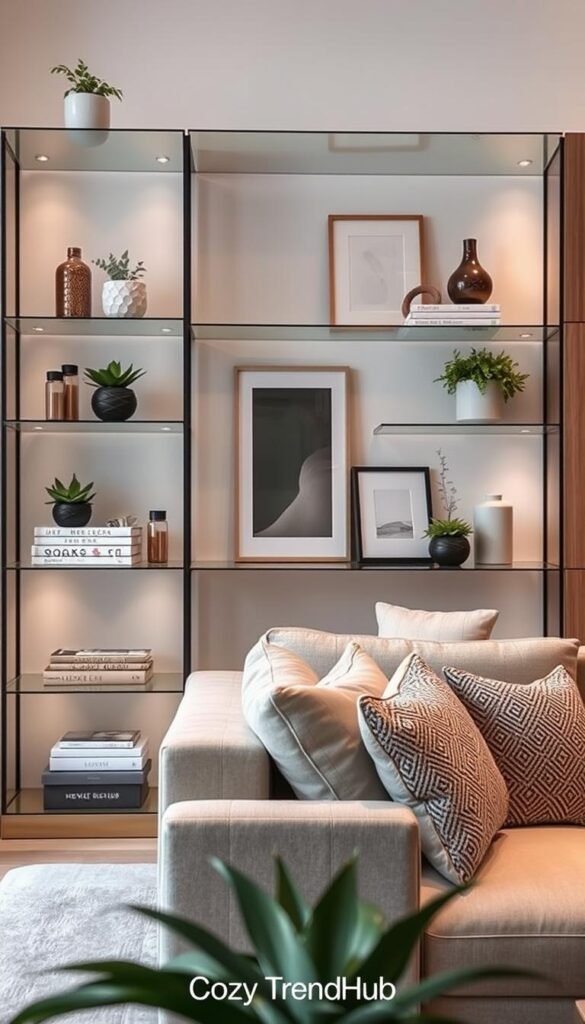
When open shelves work — and when they don’t
Good fit: tidy households, curated collections, and anyone willing to maintain a simple display. Open shelving highlights art and a few useful pieces while keeping walls visually light.
Not a fit: high-clutter homes, busy family rooms, or people with limited time to style. Visible mess reads as a smaller room and shrinks the look of the whole space.
Why glass shelves help
Glass lets light pass and reduces the sense of wall mass. House Beautiful notes glass often reads almost invisible, so the wall plane feels less heavy.
Styling rules and buying checklist
- Limit the color palette and leave negative space on each shelf.
- Group items in odd numbers and mix heights without overfilling.
- Combine one closed basket per shelf to hide daily clutter.
- Check shelf depth, weight rating, and bracket quality. Prefer easy-clean surfaces to reduce dust work.
Tip: renters can use leaning modular units; homeowners may choose built-ins for awkward corners. This gives a practical compromise between display and hidden storage.
Hidden storage decor that keeps surfaces clear
Clutter often gathers where storage is slow or awkward, so hidden solutions should be quick to reach.
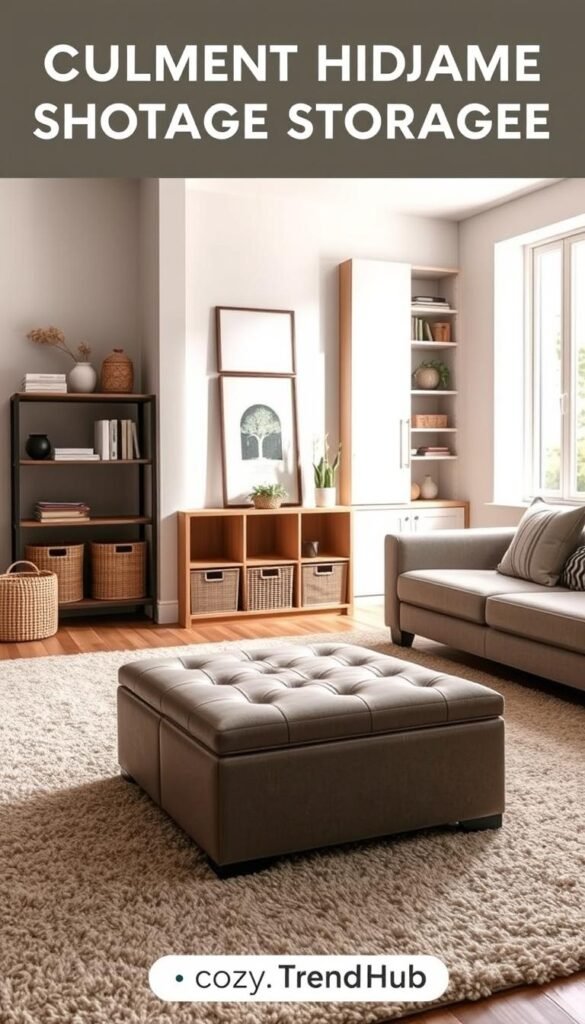
Ottomans, benches, and baskets that hide everyday clutter
Storage ottomans solve specific pain points: throws, remotes, and board games. They act as seating or a footrest while offering hidden storage. Best for homes with occasional guests, and those with kids who need toy cleanup. Pros: multitask; Cons: lidded boxes can hide junk if not sorted.
Lift-top benches work well near an entry or window. They keep shoes and bags off the floor and add a quick seat. Choose soft-close hinges and washable liners when pets or children are present.
Structured baskets are the fastest reset. Pick ones with handles and lids so the room looks tidy and pieces move easily when cleaning. They pair well under a console, keeping the walkway open.
High-hung hooks and renter-friendly installs
High-hung hooks keep jackets and bags away from the floor and clear circulation. Use adhesive hooks within weight limits, over-the-door options, or tension rods inside closets for renters.
| Item | Clutter pain point | Who it’s best for | Buying notes |
|---|---|---|---|
| Storage ottoman | Throws, remotes, games | Families, casual hosts | Check dimensions, lid safety, fabric durability |
| Lift-top bench | Entry pileups, shoes | Renters, pet owners | Soft-close hinge, washable liner, height fits seating |
| Structured basket | Daily quick resets | Busy households | Handles, rigid sides, easy-clean material |
| High-hung hooks | Floor clutter from bags/jackets | Compact homes, commuters | Adhesive limits, anchor hardware for heavy loads |
Multifunctional furniture decor that earns its footprint
Buyer mindset: Every piece in a compact living area should solve at least two needs—dining + work, seating + storage, or hosting + sleeping. That rule cuts wasted square footage and keeps circulation open.
Foldable and expandable tables free floor when not in use. Drop-leaf and gateleg tables tuck against a wall. Extendable tables expand for guests; measure clearance for chairs or a bench before you buy. Check hinge quality and leg stability.
Coffee table choices: nesting sets offer flexible surface area that tucks away. One low-profile coffee table gives a simpler visual line and fewer trip hazards. Prefer rounded corners and durable tops that handle drinks and daily wear.
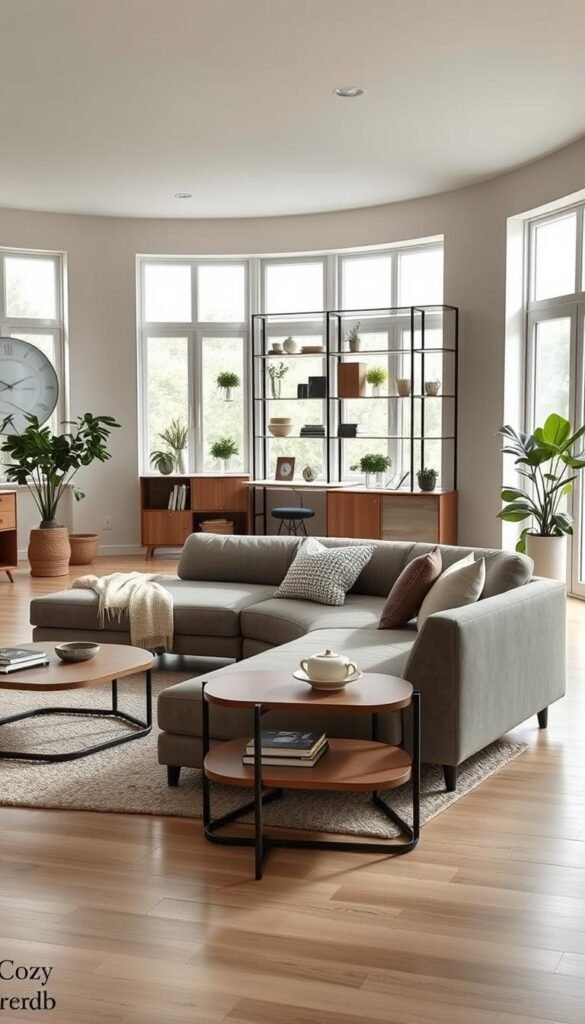
Murphy beds vs sleeper sofas
Murphy beds make a true multipurpose room—office by day, bedroom by night—but need solid wall structure and installation. Sleeper sofas convert living rooms into guest rooms quickly and suit frequent use, though they can be heavy and variable in comfort.
| Option | Footprint | Daily comfort | Install complexity | Renter friendly | Budget range |
|---|---|---|---|---|---|
| Foldable table | Low | High (when open) | Low | High | Low–Mid |
| Nesting coffee table set | Modular | High | Low | High | Low–Mid |
| Murphy bed | Hidden | Very high | High | Low | Mid–High |
| Sleeper sofa | Standard | Variable | Medium | Medium | Mid–High |
Who it’s best for: hosts who entertain occasionally choose fold-up tables; remote workers who need daytime desk space may prefer a Murphy bed room; frequent guests lean toward higher-quality sleeper sofas.
Seating that doesn’t overcrowd: benches, stools, and low-back sofas
Smart seating solves a common problem: a room often needs more seats but lacks clear floor to spare. Permanent chairs can block walkways and increase visual weight.
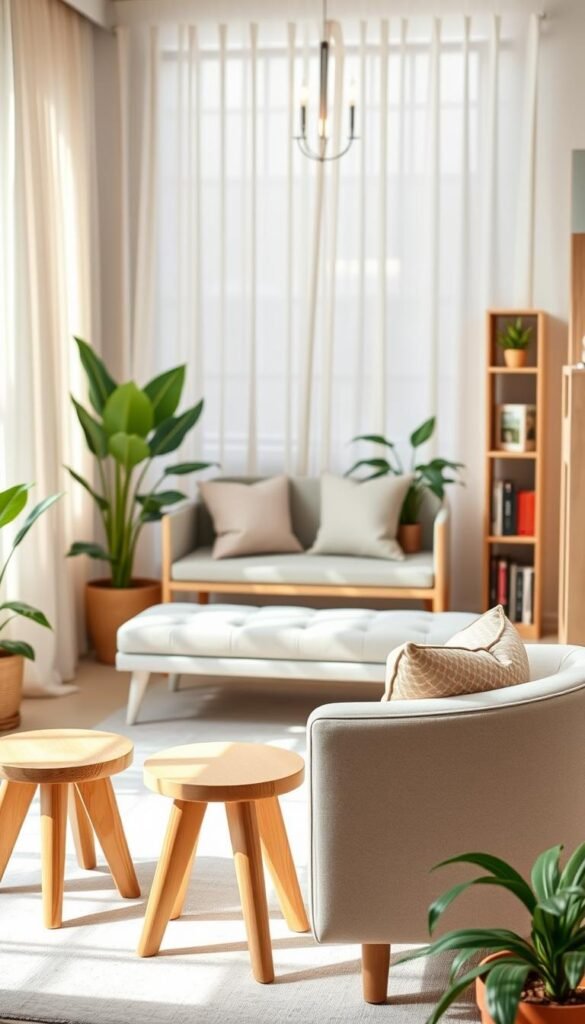
Why benches work
Benches slide under tables or along a wall and seat more people than individual chairs. Without tall backs they read lighter and keep sightlines open.
Best for: apartments with dining zones tied to the living area and open plans that can’t host extra armchairs.
Pull-up stools and flexible extras
Stools move between coffee table, desk, or bar. They tuck under a console or stack in a closet when not used. Non-slip feet prevent sliding on hard floors.
Low-back sofas and layout tips
Low-back sofas keep a room feeling open by preserving visual flow. Place seating so one clear walking lane remains at least 24 inches wide.
| Piece | When to choose | Pros | Cons |
|---|---|---|---|
| Bench | Dining-living overlap | Seats more, tucks away, low visual weight | Less back support for long sitting |
| Pull-up stool | Flexible guest seating | Portable, stacks/tucks, lightweight | Casual feel; may need cushion |
| Low-back sofa | Maintain sightlines | Opens room, comfortable daily seating | Less privacy and head support than tall backs |
Buying checklist: check seat height, depth, weight capacity, and whether pieces can nest or stack when stored. Push extra seating flush to a wall when not in use.
Area rugs that anchor the room (and prevent a chopped-up look)
A well-sized area rug ties furniture into a single visual zone and stops the floor from feeling patchy. Too-small rugs break the floor into fragments and make the room feel chopped up.
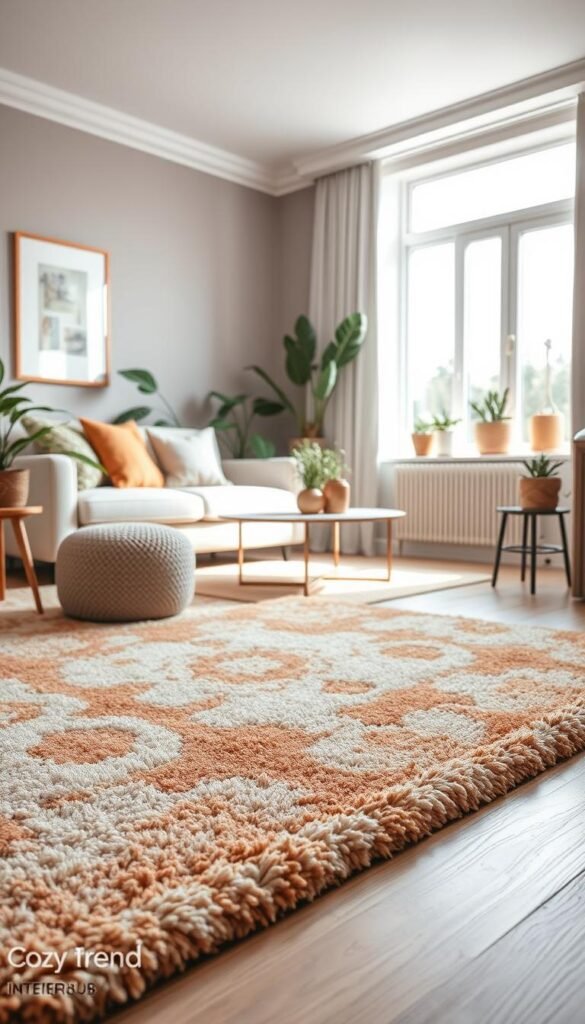
How to size a rug so the room feel is bigger
Use this rule: aim for the front legs of the sofa and main chairs to sit on the rug. That visually connects seating and enlarges the room feel.
Layering rugs to add depth
Start with a thin, durable base rug and add a smaller textured topper. This creates depth without heavy maintenance and lets one piece be seasonal.
Materials and renter- and pet-ready choices
Washable, low-pile rugs work well in high-traffic zones and with pets. Add a rug pad to prevent slipping and protect floors.
„Pick a rug that links furniture and circulation; it changes how the room reads.“
| Size option | Pile | Washability | Use case |
|---|---|---|---|
| Large (8×10) | Low–mid | Spot clean / pad | Open-plan living area |
| Medium (6×9) | Low | Machine-washable options | Small living room |
| Layer topper | Short or flatweave | Easy to swap | Adds texture without heavy cleaning |
Quick buying checks: measure exact room dimensions, allow door swing, and confirm whether furniture will sit fully or partially on the rug.
Wall decor that adds personality without consuming floor space
Walls offer high-impact space that never competes with circulation paths. This makes them an efficient way to add personality while keeping furniture and walkways open. Pick one approach and plan scale before you shop.
Oversized art vs. a tight, intentional gallery wall
Oversized art gives a clear focal point and reads calm. It suits renters who move often and anyone who wants quick impact with one piece.
Gallery walls work when the collection shares a palette or theme. Keep spacing tight and consistent to avoid a scattered wall that shrinks the room’s feel.
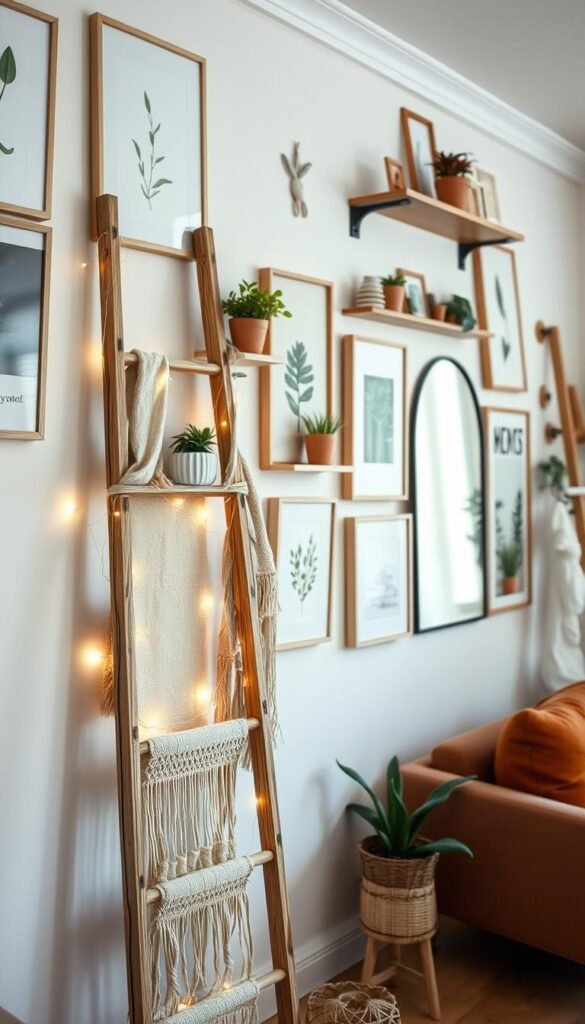
How to “frame” the TV wall with art and shelves
Use slim shelves and two matching pieces of art to balance the screen. Floating shelves above or beside the TV fold it into the composition and soften its dominance in the living room.
| Approach | Who it fits | Quick notes |
|---|---|---|
| Oversized art | Renters, minimalists | Fast impact; needs proper hanging hardware |
| Gallery wall | Collectors, long-term homeowners | Tight spacing (2–3″ gaps); cohesive palette |
| TV framing | Any living room | Use shelves, matching frames, and glare-resistant glass |
Renter-friendly hanging: removable hooks, picture ledges, lightweight frames, and leaning pieces reduce wall damage. Check frame depth, glare-resistant glass, and whether the art width works with furniture scale to improve the final room look.
Wallpaper, murals, and color that add depth in small spaces
Color and pattern on vertical planes change how the eye reads a room. Wall treatments add depth without taking floor area or adding clutter. That makes them a strong tool in renter-friendly home design.
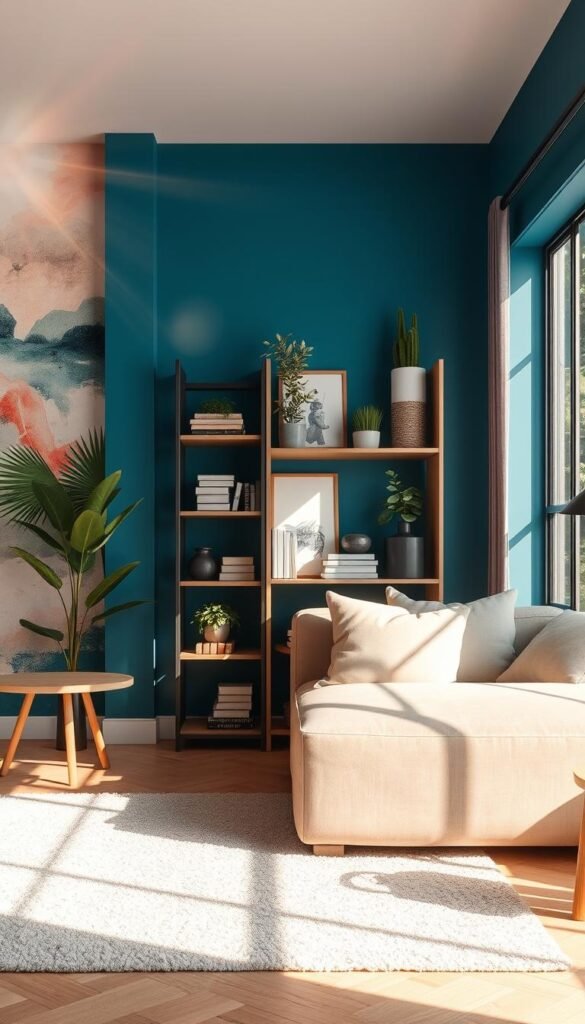
Peel-and-stick wallpaper: renter-ready pattern
Peel-and-stick gives personality with removable commitment. Prep walls by cleaning and testing a small patch. Align panels carefully; seams show more on textured paint.
Pros: removable, easy to install. Cons: may not lift cleanly from some paints.
Murals and focal walls
Use a mural on one wall to create depth-forward perspective. Choose landscape or architectural motifs to visually extend the room without adding furniture.
Color-drenching and layered neutrals
Painting walls, trim, and ceiling the same shade reduces visual breaks and lifts a room. Layered neutrals—warm whites with taupe or sandy beige—keep the interior airy yet forgiving of wear.
„Pick a single color story and let vertical planes do the work of adding warmth and scale.“
| Approach | Pros | Cons |
|---|---|---|
| Peel-and-stick | Removable; quick update | Depends on wall texture |
| Murals | Strong depth effect | Best on one focal wall |
| Color-drenching | Cohesive, lifts ceilings | Requires full repaint to change |
Buying checks: grab swatches, view samples under north and south light, and choose patterns with scale that won’t overwhelm a compact room. Color choices should support the mood the room aims to convey and help make room feel larger.
Window seats, niches, and nooks that create function out of dead space
Unused nooks can become the most useful corners in a living room with a little targeted planning. Identify shallow window areas, awkward alcoves, and built-in niches that often sit empty.
Window seating adds extra seating and a cozy reading spot. Choose a seat height near 17–19 inches and a depth of 16–22 inches for comfortable lounging. Add under-seat storage to hide throws and magazines and keep the room tidy.
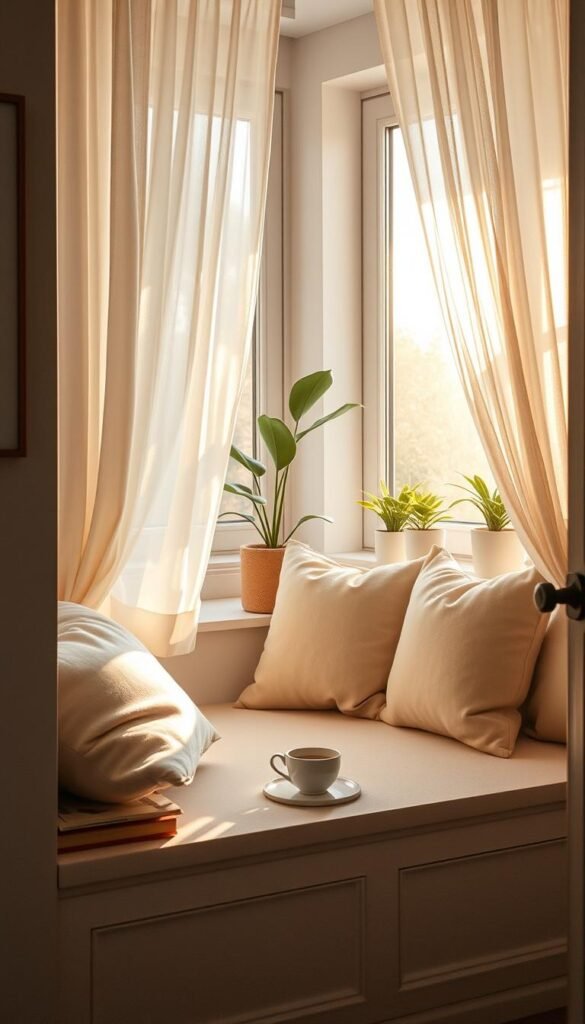
Renter vs homeowner options
Renters can use a freestanding storage bench with cushions and leaning shelves nearby. This approach is movable and avoids permanent changes.
Homeowners or long-term renters may opt for fitted built-ins. Built-ins maximize every inch and read seamless, but they cost more and limit flexibility.
Vignette and sizing checklist
One seat + one lamp + one small table or shelf creates a complete zone without overcrowding. Check clearance for curtains and radiators before sizing cushions.
| Option | Install | Budget | Flexibility |
|---|---|---|---|
| Storage bench | Low | Low | High |
| Banquette | Medium | Mid | Medium |
| Custom built-in | High | High | Low |
Who it’s best for: renters who need portable seating, families who want extra reading space, and homeowners aiming for integrated design. Use low-profile bookshelves nearby to keep floors clear and maintain an open room feel, as House Beautiful and AD suggest.
Vertical decor: tall plants, high shelves, and height tricks that open up the room
Vertical accents let a room feel taller and more balanced with very little footprint. When square footage is limited, lifting design toward the ceiling draws the eye up. That simple shift helps the space feel less boxed-in and keeps floors clear for circulation.
Decorate vertically to create height without clutter
High shelves free floor area and add storage on the walls. Use secure anchors and check weight ratings. For renters, floating shelves or removable brackets work well and keep things movable.
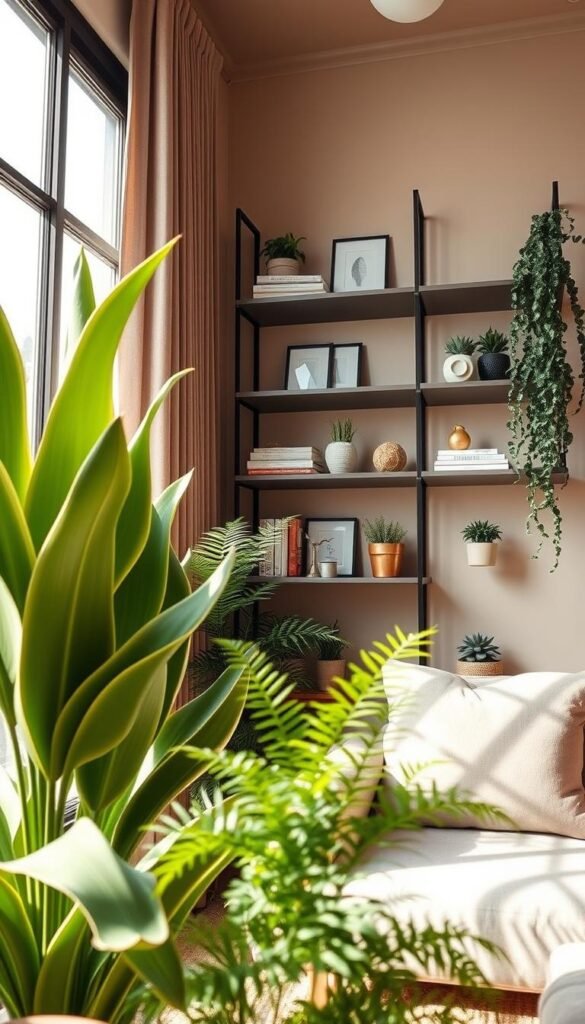
Tall plants soften corners and give upward movement without heavy visual mass. Match plant height to the corner footprint—narrow pots for tight zones and wider planters where pathways allow. If light is limited, pick low-light species or realistic faux options.
Small tricks that change how a room looks
- Hang curtains high and wide to lengthen walls and make ceilings read taller.
- Place one vertical statement per wall to avoid visual clutter.
- Use lightweight pots, anti-tip straps on shelving, and planters with drainage to protect floors and finishes.
Pros and cons: vertical solutions reduce floor crowding but need dusting and occasional step-stool access. Overall, this is a practical way to improve space feel and balance without adding many new pieces.
Curated tabletop decor that looks styled, not cluttered
Table tops quickly become catchalls, so a clear rule set keeps surfaces calm and useful. Start with purpose: decide if the surface will be mainly functional, decorative, or both. That decision guides scale and number of items.
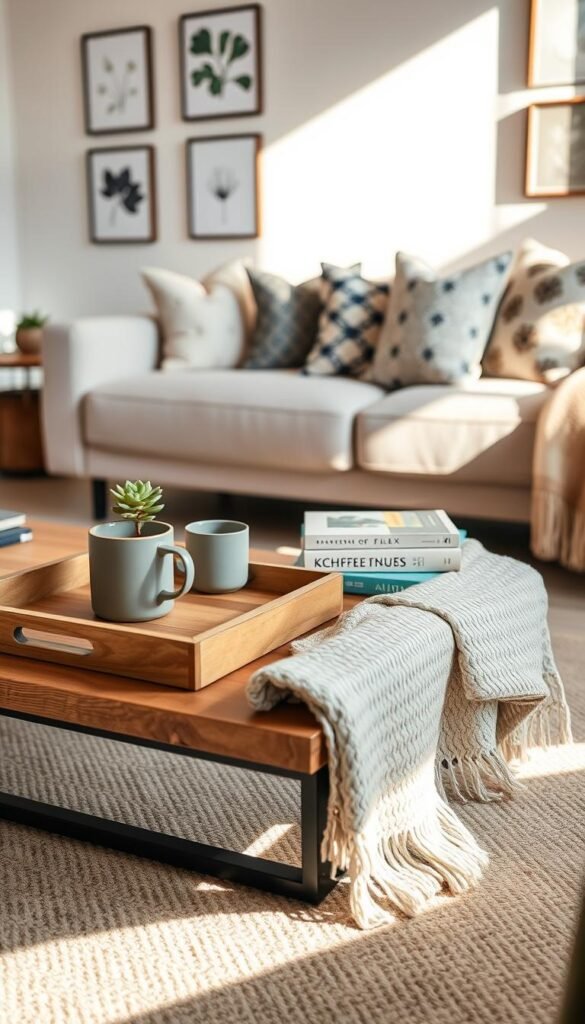
Coffee table styling with fewer, better pieces
Use this simple formula: one tray to corral small items, one vertical element such as a vase or small plant, and one readable stack of books. This keeps the coffee table tidy and easy to clear when needed.
Practical checks: tray size that still leaves usable surface, wipe-clean finishes, and coasters to prevent rings.
Greens and botanicals as “soft structure” on surfaces
Greens add color and softness without visual noise. Choose low-maintenance plants—snake plant, pothos, or small succulents—to avoid daily care.
Protect wood: use a coaster or saucer under planters to prevent water damage. For homes with kids or pets, pick sturdy pots and keep breakable pieces centered, not at the edge.
Invisible options: acrylic and lucite accents
Acrylic and lucite pieces disappear visually and keep a room feeling open. They work well as trays or small side tables when minimal weight is desired.
Tradeoffs: they show fingerprints and scratch more easily than solid wood. Wipe with a soft cloth and choose thicker gauges if durability matters.
„Choose larger, purposeful objects over many minis: one confident group reads curated, not cluttered.“
Seasonal aesthetic swaps that won’t overwhelm small living rooms
Seasonal touches can feel joyful — and then quickly clutter a compact living room if they’re added without a plan.
This approach treats seasonal updates as swaps, not additions. Keep volume low and choose washable, multiuse items that tuck away easily when the season ends.
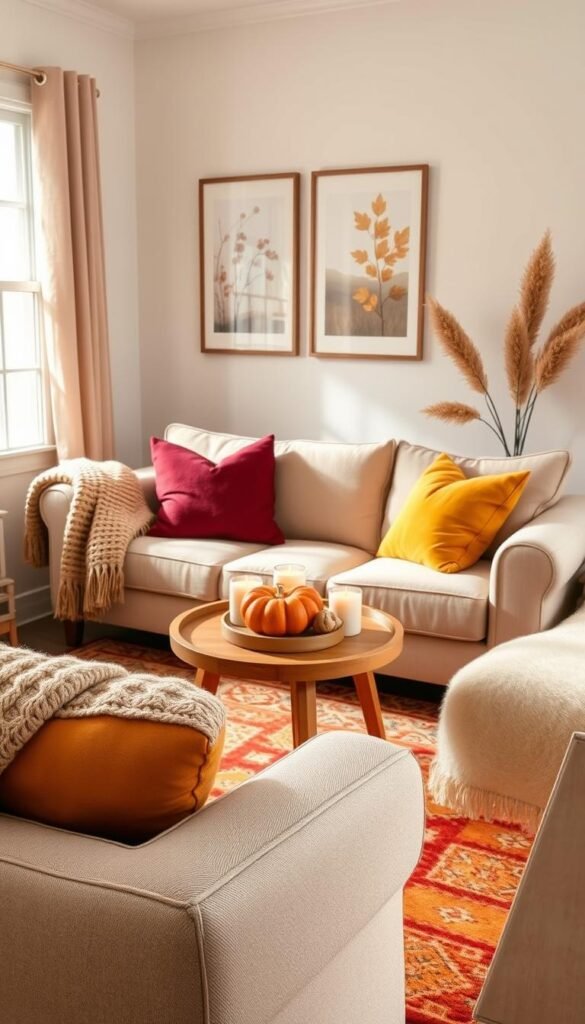
One-bin rule: rotate pillows, throws, and a single statement piece
One labeled bin holds seasonal pillows, a throw, and one statement piece. If it doesn’t fit, it doesn’t stay. That rule prevents overflow and keeps closets usable.
Who benefits: renters and apartment dwellers with limited storage. Soft goods should be washable and compressible to save room.
Seasonal lighting and scent that won’t add permanent clutter
Swap lampshades, use plug-in string lights, or add battery candles to shift mood without adding furniture.
Choose flameless options when possible. Scents can come from a single candle or reed diffuser; keep ventilation in mind in a compact room.
| Update type | Storage volume | Renter-friendly | Buying notes |
|---|---|---|---|
| Pillows & throws | Low (fits one bin) | Yes — washable covers | Check washability, color wash |
| Lighting accents | Very low (small box) | Yes — plug-in/battery | Cord concealment, flame-free options |
| Scent & small objects | Minimal | Yes | Choose safe candles, low-spill diffusers |
Quick reset tip: remove the seasonal bin before adding the next season’s pieces. No overlap keeps a living room calm and functional.
Comparison-ready buying guide for small-space decor
A quick measuring session saves time and ensures each furniture piece earns its footprint. Use the checklist below before adding a sofa, table, rug, or shelf to a room.
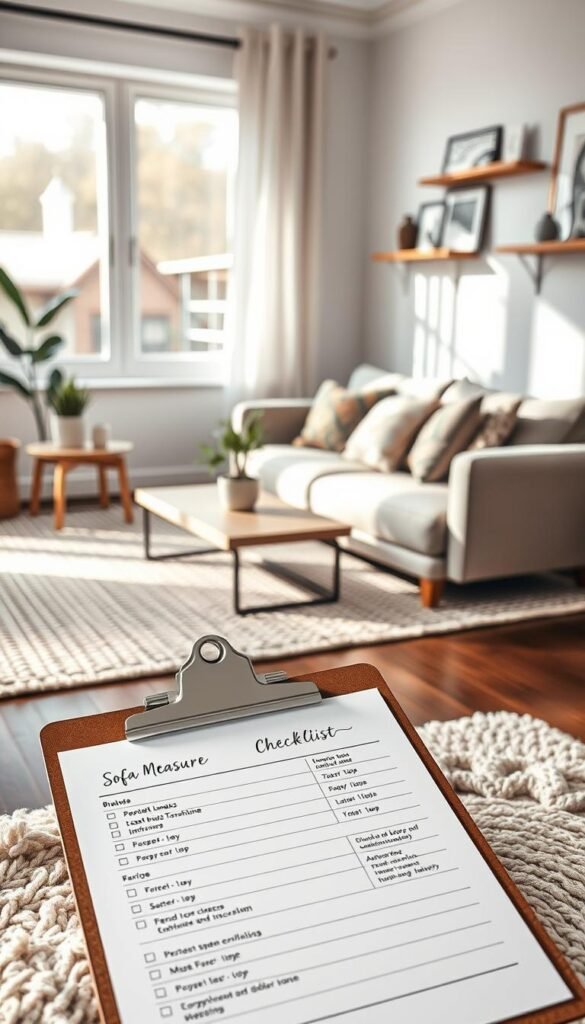
What to measure
- Wall width, ceiling height, and window/vent locations.
- Walkway clearance (aim 24″ minimum) and door swing paths.
- Outlet placement and lamp/cable access.
Measure these items precisely
- Sofa: width, depth, seat height, back height for sightlines, and door/hallway clearance.
- Table / coffee table: height vs. seating height, clearance to move around it, and whether folding or nesting improves flexibility.
- Rug: room dimensions, where seating legs will sit (front legs on the rug), and border left around edges to avoid a chopped look.
- Shelves: depth (keep shallow to avoid bulk), weight rating, mounting needs, and anti-tip anchors for tall units.
Installation and rental constraints
No-drill options: removable hooks, adhesive brackets (check weight limits), and leaning units. Use plug-in lighting or battery sconces instead of hardwiring.
Pros / cons framework for product blocks
Use this repeatable format in affiliate panels: „Best for,“ „Solves,“ „Watch-outs,“ „Measurements,“ „Materials/finish,“ „Rental-friendly?“ This keeps comparisons fair and actionable.
Tradeoff reminder: choose the simplest piece that reduces clutter and improves function without adding bulk.
Conclusion
This final recap focuses on actionable choices that improve how a room functions and reads.
Central principle: pick pieces that reduce visual weight, keep surfaces clear, and add function without crowding a living room.
Reliable upgrades include warm, layered lighting, one well-placed mirror, a properly sized rug, and hidden storage to stop daily clutter.
Measure first. Prioritize the item that fixes the biggest pain point. Then add one supporting accent rather than many small pieces.
Renter-friendly wins: plug-in sconces, peel-and-stick wallpaper, removable hooks, and modular shelving that moves with the home.
Keep it calm: fewer, better pieces in a cohesive palette usually outwork more items. Pick one category to update this week and use the buying checklist to compare options.
With measured choices, a compact living room can feel comfortable, useful, and intentional.



9 Comments