
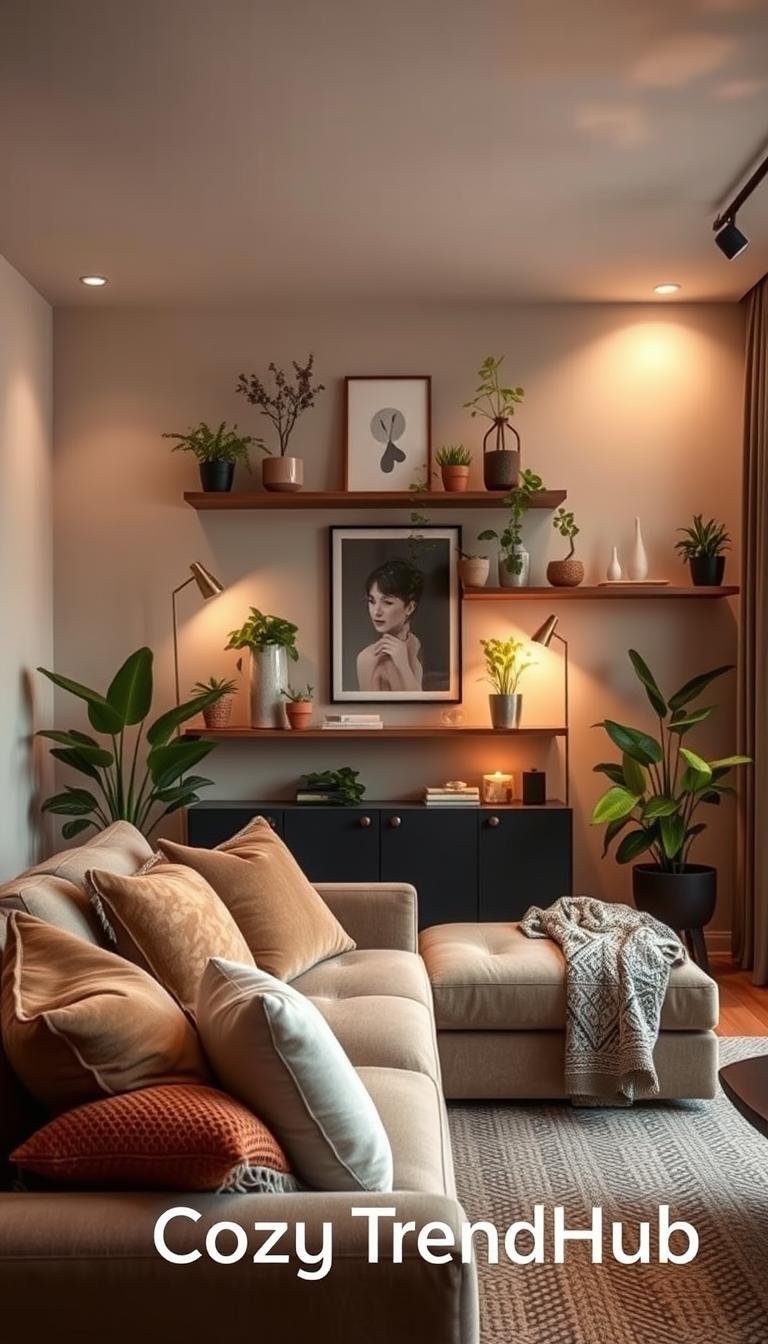
Problem: An apartment with a low ceiling can make a room feel cramped, even when the floor plan is generous.
Promise: This guide shows renter-friendly, reversible ways to open up a small space without remodeling. Recommendations focus on simple swaps that change perceived height and light.
Design tips from FCI London and practical interior design practice steer readers to color continuity, mirrors, low-profile furniture, high-hung curtains, and floor-first rugs. These moves help control where the eye travels — up, across, or down — and reduce clutter near the ceiling line.
The guide is aimed at renters, small-space dwellers, and seasonal decorators who need options that can be undone. Later sections compare fixtures like flush-mount versus semi-flush, list what to buy, and present concise pros and cons to support confident choices.
Read this if you struggle with short windows, bulky furniture, poor lighting, or overcrowded walls.
Key Takeaways
- Simple styling can add perceived height without construction.
- Use mirrors and continuous paint to stretch sight lines.
- Choose low-profile furniture and high-hung curtains.
- Prioritize layered lighting that keeps ceilings uncluttered.
- Later sections will compare products and list pros and cons.
Why low ceilings feel cramped in apartments and what decor can fix
A low ceiling often feels oppressive because several visual „stops“ pull the eye sideways instead of up.
Short curtains, bulky upper cabinets, and low-hung pendants create horizontal breaks. Those breaks make a room feel closer than it is.
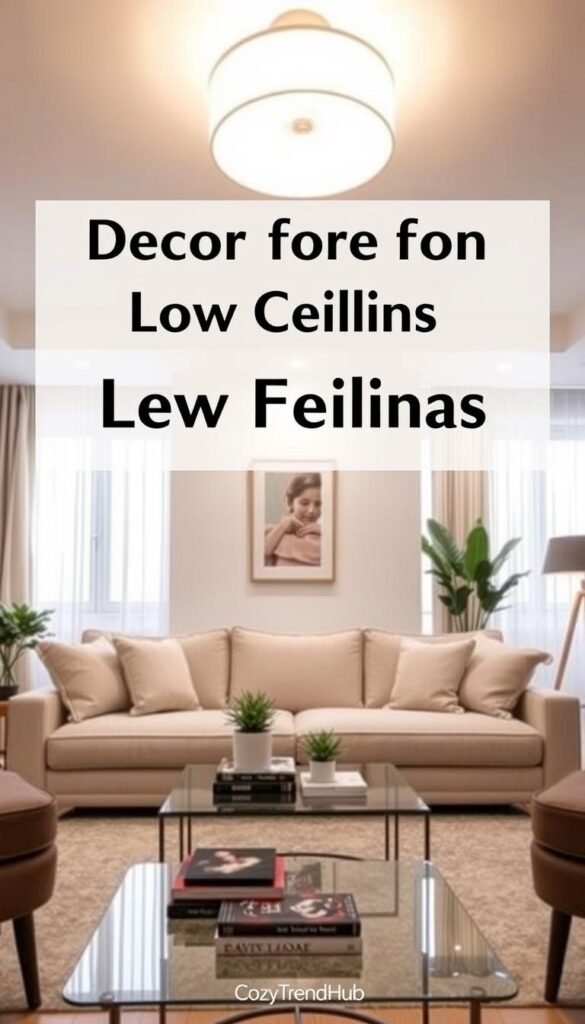
Fast signs your setup emphasizes height limits
- A pendant is the first thing the eye hits.
- Window treatments stop above the floor.
- Tall furniture touches the ceiling plane.
- Dark, heavy fabrics or cluttered upper walls.
Renter-friendly rules and quick fixes
Map each symptom to one simple change: if the eye is stuck at the ceiling plane, choose flush lighting. If walls look chopped, unify paint. If the floor feels empty, add a rug to anchor the space.
Damage risk guide: nails and anchors usually need patching; tension rods and adhesive brackets are low-risk. Prioritize peel-and-stick solutions, command hooks, and plug-in sconces unless permission allows permanent changes.
„Shift one element at a time: solve headroom, glare, or clutter before buying big pieces.“
If the room low feels worst at night → lighting section; worst near windows → curtain section; worst with furniture → furniture section. Suggested comparison tables: renter-friendly wall lighting options and no-drill vs. drilled curtain hardware: cost, stability, removability.
Paint and wallpaper tricks that lift the ceiling without remodeling
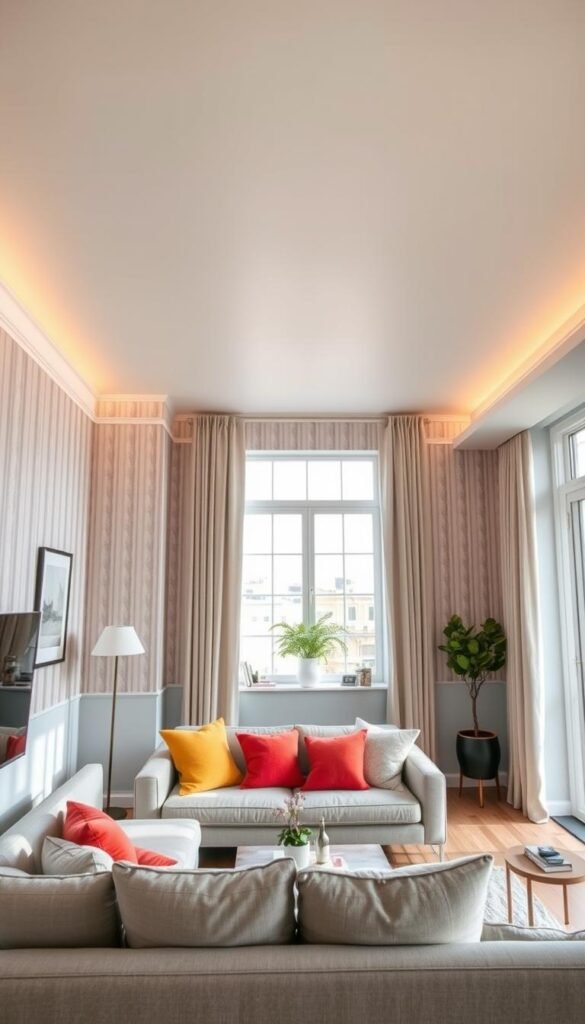
A unified paint plan can erase the hard edge where ceiling meets walls and make a room feel taller. High contrast between the wall and ceiling creates a sharp visual line that makes space feel squat. Reducing that contrast is the simplest optical fix.
Unify color: Paint ceiling and walls the same shade, or put the ceiling one tone lighter. Use matte or eggshell on the ceiling to hide texture. Pick undertones that stay warm in low light to avoid a flat, gloomy look.
When a darker ceiling helps: A deeper tone can add cozy depth in bedrooms or media rooms. Use it intentionally—darker ceilings work when the goal is atmosphere, not maximum brightness.
Vertical lines and wallpaper: Stripes or narrow vertical motifs draw the eye up. For renters, peel-and-stick wallpaper lets you try a single wall or the “fifth wall” on the ceiling. Note: adhesion varies by paint finish.
„Match trim to the main wall tone to blur boundaries and extend sight lines.“
Quick buying checklist: check undertone samples in the room, choose matte/eggshell for ceilings, and favor removable wallpaper with clear return policies.
| Solution | Cost | Time | Removability | Visual Impact |
|---|---|---|---|---|
| Unified paint (ceiling + walls) | Low | 1–3 days | Permanent (repaint to undo) | High—blurs line, adds perceived height |
| Ceiling one shade lighter | Low | 1–2 days | Permanent (repaint to undo) | Moderate—softens edge without full match |
| Peel-and-stick vertical wallpaper | Medium | 2–4 hours (per wall) | Removable (varies by finish) | High—creates upward lines, strong focal effect |
| Tone-on-tone trim | Low | 1 day | Permanent (repaint to undo) | Moderate—subtle boundary blur |
Compare options and product picks in the next sections, or explore practical small-space styling ideas at a compact styling guide.
Window treatments that create illusion of height in a small space
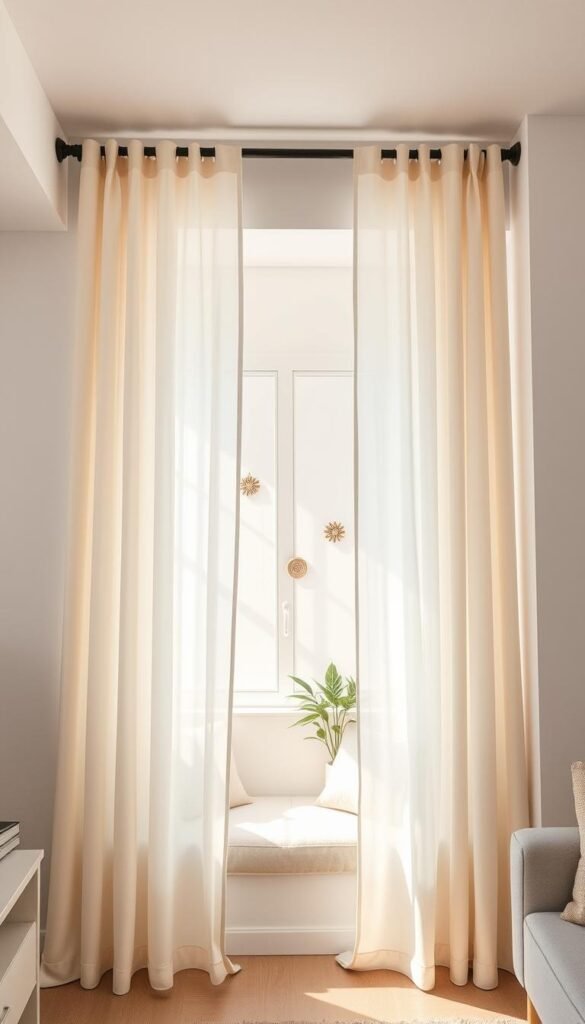
Mounting window hardware near the ceiling and running panels to the floor tricks the eye into seeing taller walls. Short curtains and low rods visually cap the wall and make the ceiling feel closer.
Who should use this: renters who cannot replace windows, anyone with short frames, and studio dwellers who want softness without visual clutter.
Hang curtains close to the ceiling and run them to the floor
Place rods or tracks at the uppermost wall line or use a ceiling track. Full-length panels create continuous vertical lines and naturally draw the eye upward.
Best curtain fabrics and patterns (and what to avoid)
- Lightweight linens and sheers keep the wall plane airy and boost natural light.
- Vertical textures or subtle stripes help the illusion of height.
- Avoid heavy dark fabrics and horizontal stripes that chop the wall and shorten the room.
- Use blackout panels only when sleep or light control outweighs visual space.
Apartment-friendly hardware: no-drill rods, ceiling tracks, and adhesive brackets
| Option | Stability | Weight limit | Removability |
|---|---|---|---|
| No-drill/tension rod | Medium | Light | Easy |
| Adhesive brackets | Low–Medium | Light | Easy (wall surface dependent) |
| Ceiling track | High | Medium–High | Usually requires drill |
„Mount high, run long, and choose airy fabrics to create the greatest visual lift.“
Practical notes: Ceiling tracks need careful measuring. Adhesive hardware can fail on textured paint. Long panels collect dust—plan for cleaning.
Affiliate-ready ideas: “No-drill curtain rod sets,” “Ceiling-track kits for rentals,” and “linen-look panels such as the Sarah Sherman Samuel Painterly Stripe Linen Curtain Panel.”
Lighting for low ceilings: choose fixtures that don’t steal headroom
Hanging fixtures can shrink a room visually and create awkward headroom in tight apartments.
Quick fix: choose shallow ceiling lighting. Recessed or flush-mount fixtures keep the plane clean and stop the fixture from becoming the first object the eye meets.
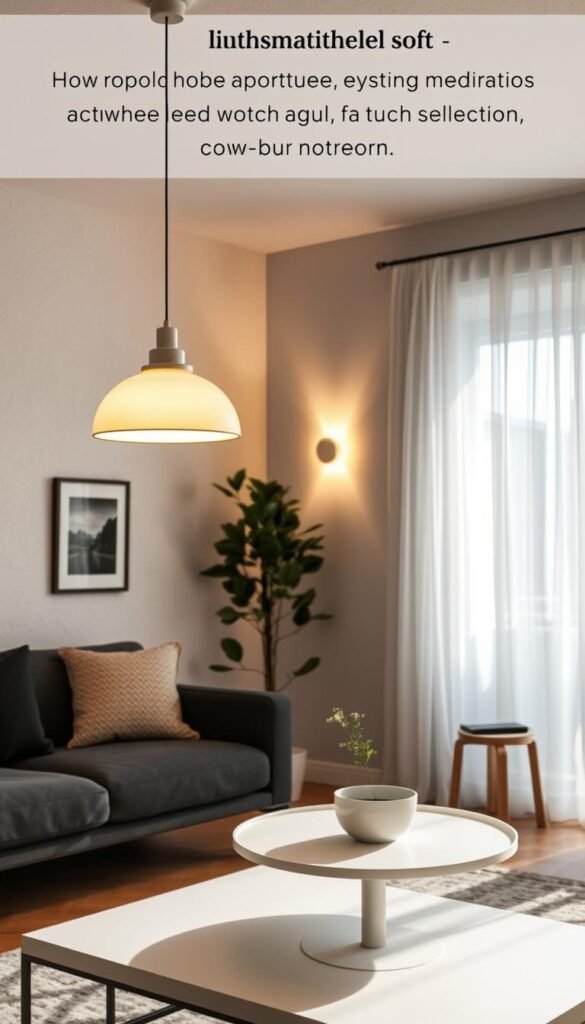
Wall lighting and layering
Wall sconces that wash light up and down extend wall height. Pair plug-in sconces with taller floor lamps and slim table lamps to lift light higher without hardwiring.
When a pendant can work
Reserve short-drop or semi-flush pendants for dining zones. Linear pendants work over a table because they emphasize horizontal span, not vertical depth.
- Who should pick recessed/flush: hallways, kitchens, renters who need max clearance.
- Who should pick sconces: renters who want removable mounts and upward wash.
- Who should pick lamps: flexible layouts that avoid drilling.
| Type | Clearance | Install | Renter-friendly |
|---|---|---|---|
| Recessed/Flush | High | Medium–High | Depends |
| Sconce | High | Low–Medium | Plug-in options |
| Pendant | Low–Medium | Medium | Short drops OK |
„Layered light beats a single focal fixture in short rooms.“
Consider color temperature, shade transparency, and beam direction when buying. For product ideas and more room-level tips see a cozy lighting guide at cozy lighting guide.
Mirrors, art, and wall styling that pull focus off the ceiling
Well-placed mirrors and elevated artwork change where the eye rests and make rooms feel more open. These moves tackle common problems: dark corners, flat walls, and a cramped overhead plane.
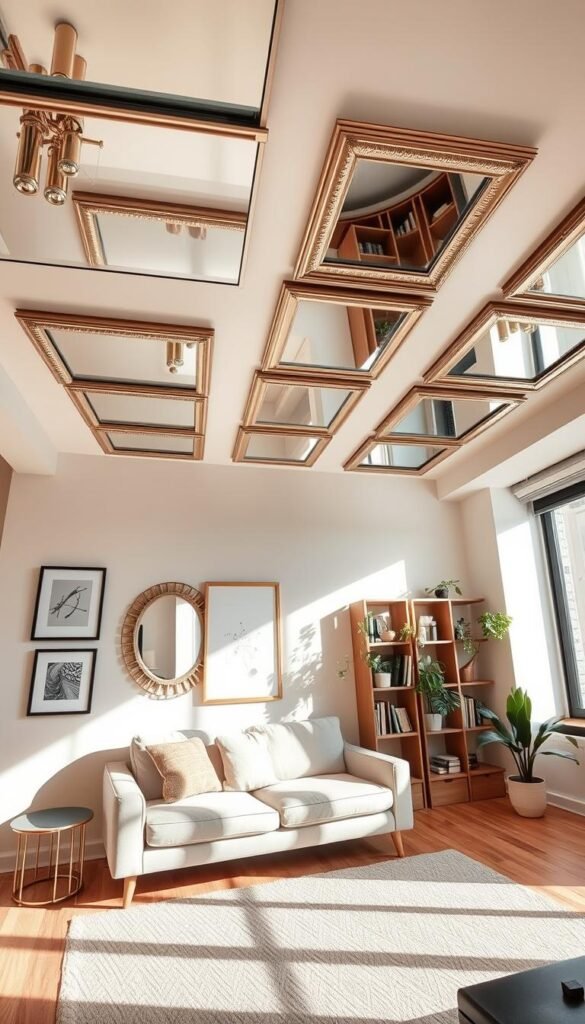
Strategic mirror placement
Position a mirror opposite a window to bounce natural light and add apparent depth. Full-length mirrors work well in studios and bedrooms. In narrow living rooms, a mirrored group brightens and stretches sight lines.
Gallery walls and mixed groupings
Mix mirrors and art to spread attention across the wall plane. Keep spacing consistent to avoid visual noise. Small clustered mirrors suit renters who need light, while a balanced gallery distracts the eye from the ceiling line.
Hang artwork high
Raise frames so the top of larger pieces sits about 8 inches below the ceiling. This nudges the eye upward without adding tall furniture.
| Solution | Pros | Cons |
|---|---|---|
| Opposite-window mirror | Brightens, creates depth | May reflect clutter |
| Clustered small mirrors | Lightweight, renter-friendly | Can feel busy if overdone |
| High-hung large art | Shifts gaze up, simple | Needs scale to work |
Renter-friendly tips: use removable hanging strips, lightweight frames, or lean a mirror with anti-tip hardware. For practical guidance on hanging and mirror layouts see how to make ceilings appear higher and expert notes on mirrored walls advice.
„Place light-reflecting pieces where they lift the wall plane—not where they show clutter.“
Affiliate-ready block ideas: “Best lightweight full-length mirrors,” “Best removable hanging kits,” and “Best oversized art prints for small rooms.”
Furniture that makes a room with a low ceiling feel taller, not smaller
Choose furniture that keeps sight lines open and shows more floor to make a room feel taller. Heavy, tall pieces naturally measure the ceiling and make a room low in perceived height.
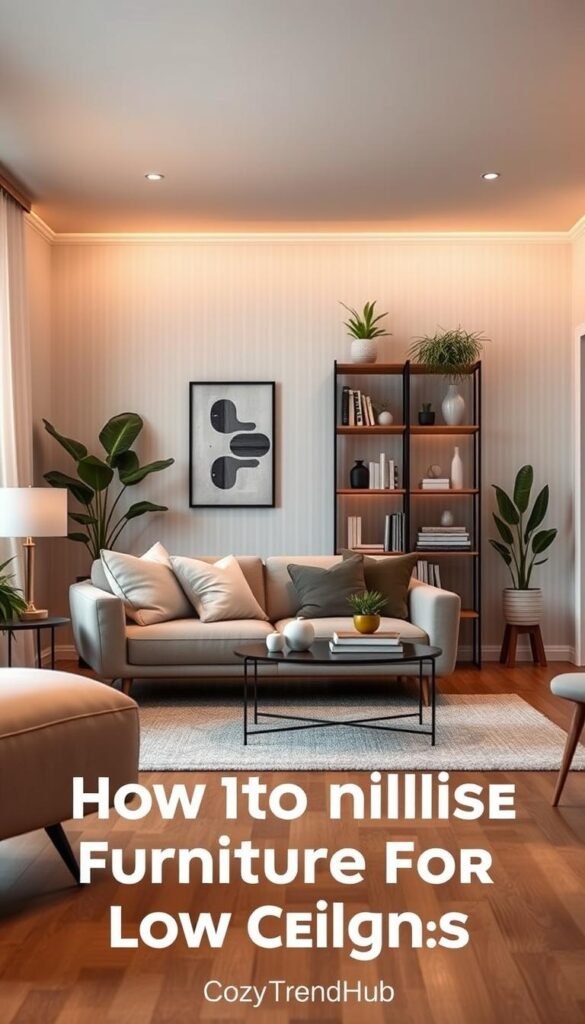
Low-profile seating and beds
Who this suits: renters, studio dwellers, and small-space families who need visual lift.
Pick sofas and beds with lower backs and headboards near ~34 inches. That benchmark helps the wall read taller without sacrificing comfort.
Leggy, clean-line pieces
Choose sofas, chairs, and media consoles with visible legs. Exposed legs show more floor and reduce bulk. This slim silhouette helps open the space in an open-plan layout or a room low on vertical room.
Storage and bookcases
Use tall units that stop several inches below the ceiling to create „breathing“ space. Avoid wall-to-ceiling towers that call attention to the ceiling plane.
Modular storage works best for movers; closed cabinets keep visual calm; open shelving fits well when styling stays minimal.
Pros and cons
Scaled-down furniture prevents overcrowding but can limit deep lounging. One oversized anchor can anchor a larger apartment but may crowd circulation paths.
| Choice | Seat/head height | Visual impact | Best for |
|---|---|---|---|
| Low-profile sofa | Seat 15–17 in, back ~30–36 in | Reduces bulk, shows floor | Small apartments, rentals |
| Leggy console | Standard counter height | Opens floor plane | Open-plan rooms, media walls |
| Short-topped bookcase | Stops 6–12 in under ceiling | Creates breathing room | Families, WFH storage |
„Measure doorways, delivery limits, and walking clearances before you buy.“
For extra tips on how to make ceilings look taller and on small-space styling, see a quick guide to make ceilings look taller and a practical small-space styling resource.
Best decor for low ceilings: floor-focused pieces that anchor the room
Anchor a room by prioritizing the floor: a bold rug or a continuous plank run keeps attention low and eases perceived ceiling height. This floor-first approach pulls focus away from the overhead plane and gives the room a clear visual center.
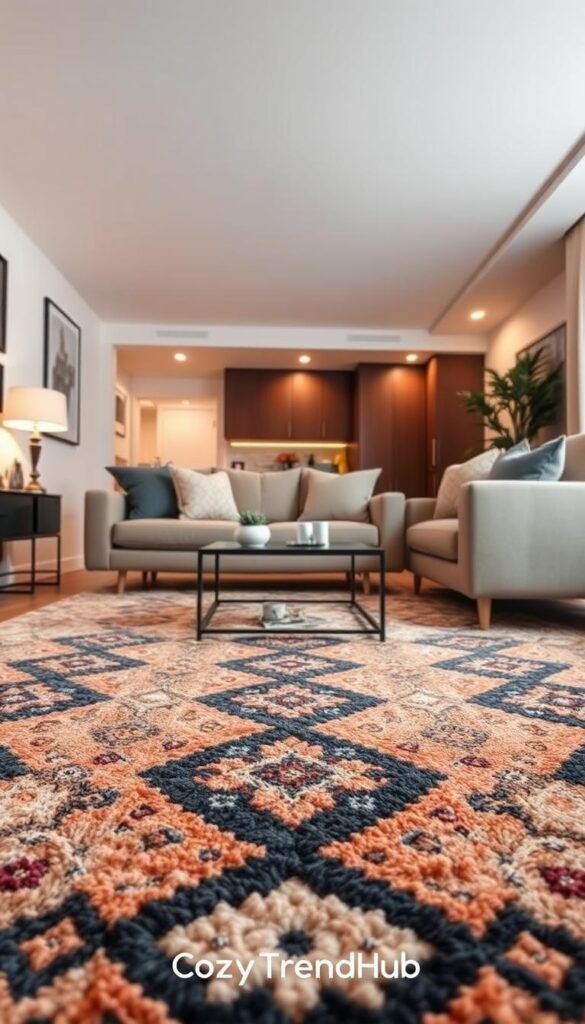
Statement rugs that draw the eye downward and add character
Choose a colorful or patterned area rug to ground seating and create a focal point that naturally draws the eye downward. A bold rug suits renters who swap textiles seasonally, families wanting warmth underfoot, and anyone who needs a strong visual anchor.
Sizing tip: let at least the front legs of sofas and chairs sit on the rug to unify the grouping. Pick low-pile options if door clearance or rolling chairs are a concern.
Flooring visuals that “stretch” space: wide planks, large tiles, and fewer lines
Wide planks and large-format tiles reduce the number of visible joints and grout lines. Fewer horizontal interruptions help the floor read as a continuous plane and calm the interior lines within a small space.
Renter-friendly upgrades: start with an area rug or runner. Peel-and-stick tiles can work but test adhesion and check your lease.
„Direct the eye down with a strong floor anchor before changing overhead elements.“
| Choice | Pros | Cons |
|---|---|---|
| Washable rugs (e.g., machine-cleanable) | Easy cleaning, pet/kid friendly | Lower longevity than wool |
| Traditional wool rug | Cozy, long lasting | Higher cost, harder to clean |
| Low-pile rug | Door clearance, durable | Less plush comfort |
| High-pile rug | Soft, tactile | Traps dust, may block doors |
Buying checklist: size before pattern, low pile for apartments, washable if pets or kids are present, and pair with a good rug pad to stop slipping.
For product ideas on statement rugs and flooring that reduce visual clutter, see a practical low-ceiling styling guide at how to decorate a room with a low and additional tips on plank and tile choices at low-ceiling design tricks.
Conclusion
A few precise styling moves can change how a room reads without touching structure. Color continuity, high-hung curtains, layered lighting, mirrors opposite windows, low-profile furniture, and a strong rug anchor the floor. These steps reduce harsh ceiling lines and redirect the eye.
Renter-first action plan: start with curtain hardware, add plug-in or wall lighting, place mirrors and art higher, then add a rug and swap furniture as budget allows. Measure curtain length, fixture projection, and rug size before buying and check return policies.
Avoid heavy dark panels, low-hanging pendants in walkways, and tall bulky storage that meets the ceiling. See comparison tables and product blocks to weigh cost, impact, and renter-friendliness, and consult practical low-ceiling design tricks and a quick guide on how to decorate a low-ceiling room.
Expectation: these practical tricks won’t alter the architecture, but they consistently make a small space feel taller, brighter, and more usable day to day.
FAQ
Why do low ceilings make an apartment feel cramped, and what simple decor changes help?
Low ceilings reduce perceived vertical space and can make rooms feel boxed in. Simple fixes include unifying wall and ceiling paint to blur the ceiling line, adding vertical visual elements like striped wallpaper or tall trim, and increasing upward light with wall sconces or recessed fixtures. These moves shift attention away from ceiling height and create a taller feel without structural work.
What are quick signs that current styling emphasizes a low ceiling?
Look for heavy, bulky lighting that hangs low, curtains mounted at window trim level, oversized furniture that reaches close to the ceiling, and dark or highly contrasted ceiling paint. Other signs are cluttered walls near the top of the room and horizontal stripes or patterns that draw the eye across rather than up.
As a renter, what changes are safe to make without risking my deposit?
Stick to removable, non-permanent solutions: peel-and-stick wallpaper, tension or adhesive curtain rods, plug-in wall sconces, floor lamps, and removable hooks or adhesive picture hangers. Use renter-friendly ceiling paint only if permitted; otherwise, focus on furnishings, textiles, and lighting that require no drilling or painting.
How does matching wall and ceiling color affect perceived height?
Using a single, light tone from wall to ceiling minimizes contrast and softens the boundary between them. That visual continuity makes the ceiling recede and the room feel more open. Choose matte finishes to avoid reflections that can highlight imperfections or drop the eye back down.
When might a darker ceiling work in a short apartment?
Darker ceilings can add drama and intimacy in compact rooms when the color ties into other elements, like trim or furnishings. Use sparingly—preferably over cohesive, low-contrast walls and with strong overhead or layered lighting so the room feels intentional rather than cramped.
What kinds of vertical lines best draw the eye upward?
Subtle vertical stripes, tone-on-tone trim, and narrow fluted panels work well. Keep contrasts low so the lines suggest height without becoming a dominant pattern. Tall, narrow shelves or stacked art arrangements also direct the gaze upward effectively.
Where should curtains be mounted to create the illusion of height?
Mount curtain hardware as close to the ceiling as possible and let fabric fall to the floor. Even if the rod is only a few inches above the window frame, placing it higher shifts the perceived top of the room and adds vertical drama. Use full-length panels and avoid cropped or café-style curtains.
Which curtain fabrics and patterns are best for rooms with limited vertical space?
Lightweight, flowing fabrics like linen blends or cotton voile hang straight and add height. Choose solid colors or subtle vertical patterns; avoid heavy, busy prints that add visual weight. Sheer panels let in natural light, which also helps the room feel taller.
What apartment-friendly hardware works when drilling isn’t allowed?
Look for tension rods, ceiling-track systems with removable adhesive feet, and heavy-duty adhesive brackets rated for curtain weight. Magnetic rods work on metal window frames. Always follow weight limits and test hardware on a small area first.
Which lighting fixtures suit low ceilings without stealing headroom?
Flush-mount fixtures, semi-flush options with minimal drop, and recessed or low-profile LED panels keep the ceiling plane clean. Wall sconces that wash light up and down lengthen walls. Table and floor lamps add height through layered illumination without lowering the headspace.
Can pendant lights ever work with short ceilings?
Yes—if chosen carefully. Use semi-flush or short-drop pendants over dining tables or islands where the fixture sits above a surface. Linear pendants mounted close to the ceiling or clustered small pendants at varying short heights can work if walkways remain clear.
How should mirrors and artwork be arranged to shift attention away from the ceiling?
Place mirrors opposite windows to amplify light and depth. Hang artwork slightly higher than usual to raise the eye line. Create mixed gallery walls that include mirrors and vertical pieces to spread focus across the wall instead of up at the ceiling.
What furniture proportions make a room with lower height feel larger?
Choose low-profile seating and beds that keep sightlines open. Combine those with leggy, clean-lined pieces—wardrobes, sofas, and tables on exposed legs—to reduce visual bulk. Avoid tall, heavy cabinets that press into the ceiling plane unless they stop a few inches short and are visually light.
Are tall bookcases helpful or harmful in short rooms?
Tall bookcases can draw the eye upward if they’re slim and not overcrowded, but they may also make a ceiling feel lower if placed too close to it. Opt for pieces that leave a small gap to the ceiling or use multiple shorter units stacked visually rather than one oversized tower.
Which floor-level choices pull focus downward and balance a lower ceiling?
Statement rugs, wide-plank flooring, and large-format tiles with fewer seams create horizontal continuity that anchors the eye to the floor. Choose lighter floor tones or subtle grain direction that visually stretches the space rather than chopping it into sections.
How can layered lighting improve the sense of height?
Combine ambient ceiling lighting with wall sconces, floor lamps, and table lamps. Light directed upward—such as uplighters and sconces—brightens the upper walls and creates the illusion of taller vertical space. Dimmers let you control contrast so ceilings don’t read as heavy.
What common styling mistakes make a low-ceiling room feel worse?
Hanging low chandeliers in walkways, using oversized patterns with high contrast, crowding the top third of walls with heavy decor, and painting the ceiling in a stark contrasting color can all emphasize low height. Heavy window treatments mounted at the window frame rather than higher also shorten the visual height.
