
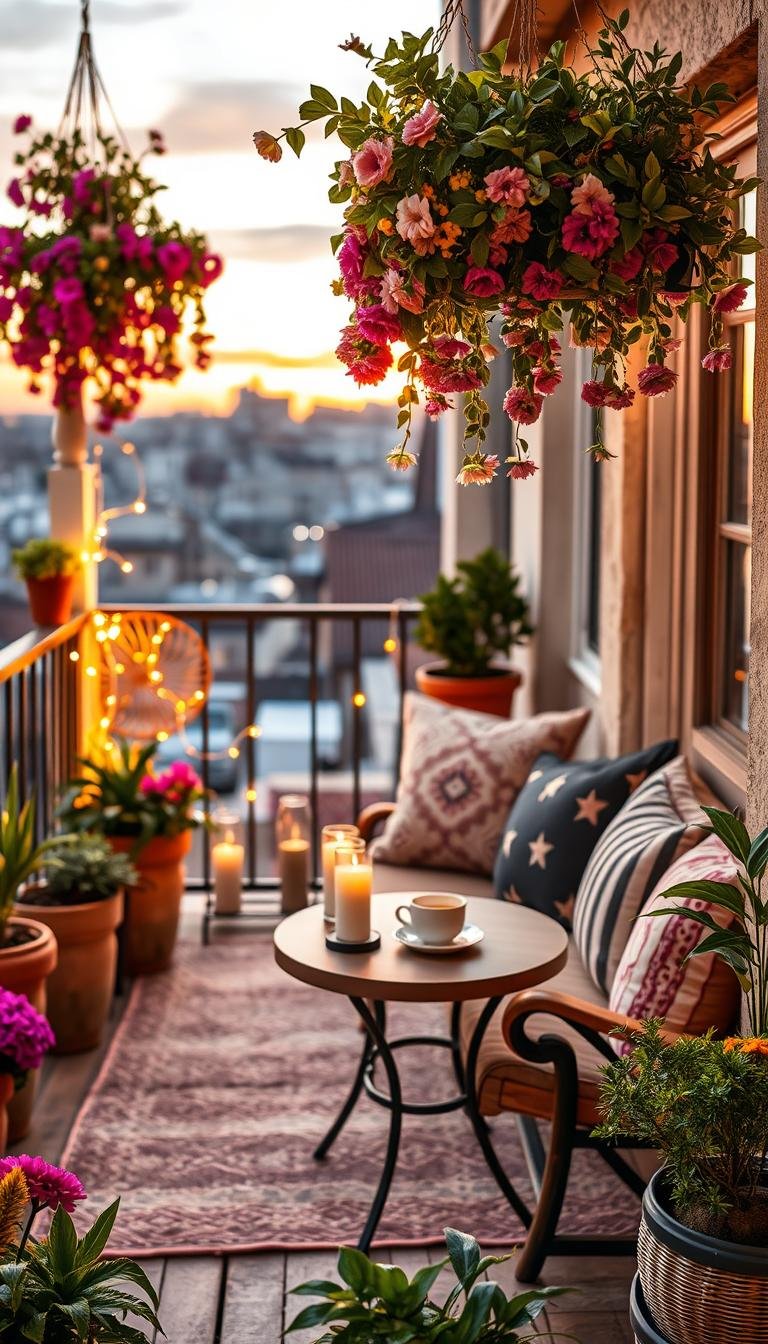
Problem: A small balcony can feel too tight to use, too bare to enjoy, or too cluttered to move through comfortably.
This short guide offers a practical, comparison-ready list of ten renter-friendly items that solve common pain points: no seating, nowhere to place a drink, poor flooring, lack of privacy, limited outlets for lighting, wind exposure, and seasonal comfort gaps.
The approach favors fewer, smarter pieces that earn their footprint. Each item will show who it’s best for, what to look for, material and weather performance, and clear pros and cons. The article also includes a quick shopping checklist to compare products online and avoid returns, especially for apartment deliveries.
Keep in mind many US small balconies range from 24–60 square feet. Every inch of floor and every vertical surface matters. Expect renter-friendly installs, easy storage options, and a cohesive look that matches the home without feeling staged.
Key Takeaways
- Focus on multiuse pieces that save floor space and add function.
- Prioritize flexible seating and an outdoor-ready surface for drinks.
- Each item listing includes fit, materials, and pros/cons for quick comparison.
- Design for 24–60 sq ft realities: use vertical space and compact solutions.
- Choose renter-friendly installs and stashable items for seasonal living.
How to choose balcony decor for a small space without overcrowding
Start with rules that protect movement and purpose before selecting any furniture or plants. A clear decision framework stops common mistakes and keeps choices renter-friendly. Focus on one main function and add only items that support it.
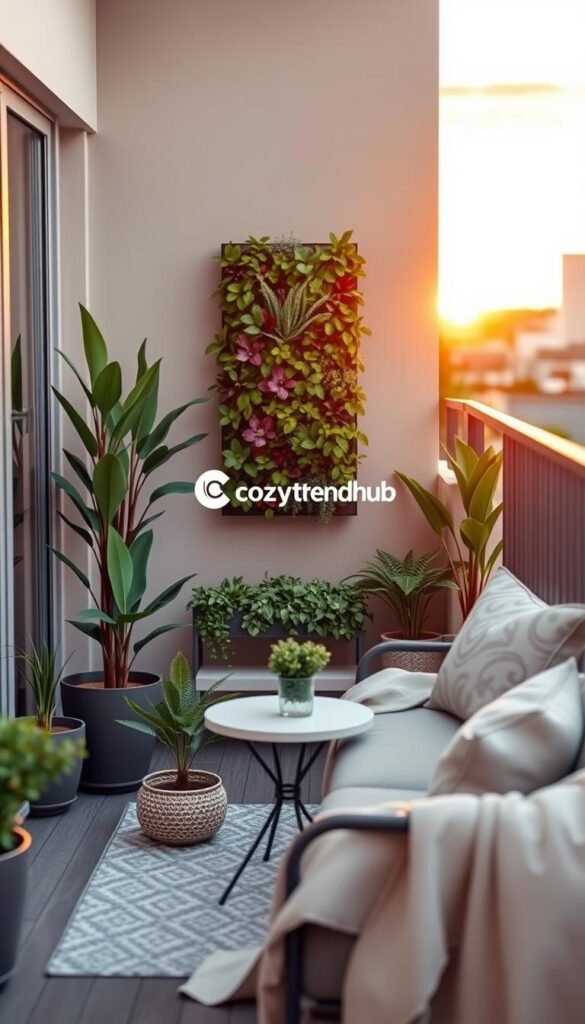
The two most common small-balcony mistakes and how to avoid them
Overfilling the area: Packing 50–60 sq ft with too many pieces kills movement. That makes the space hard to use and maintain.
Leaving it untouched: Doing nothing wastes a usable outdoor room. An empty area rarely becomes a favorite spot.
Think of the outdoor area as an extension of your interior
Treat the space as an extension of the interior by echoing silhouettes, finishes, and a restrained color palette. Matching one or two interior elements helps the doorway feel seamless.
Choose items that nod to indoor style but stand up to weather and renter rules.
Measure your footprint and protect traffic flow before you buy
Map the usable footprint, mark the door swing, and leave a narrow walking lane. Aim for a consistent clearance so daily use feels natural, not staged.
Prioritize foldable, stackable, or nesting pieces for seasonal storage. This keeps the area flexible for guests, plants, or a small table.
| Problem | Starter solution | Why it prevents clutter |
|---|---|---|
| Ugly floor | Outdoor rug or interlocking tiles | Defines the zone and avoids random mats |
| No seating | Foldable chair or low-profile stool | Provides use, stores flat when not needed |
| Lack of privacy | Rail planter or panel screen | Adds greenery and screens neighbors without blocking flow |
Best balcony decor mix for renters: a quick formula that looks cohesive
Use a compact shopping plan to create a cohesive, renter-friendly outdoor space without permanent changes.
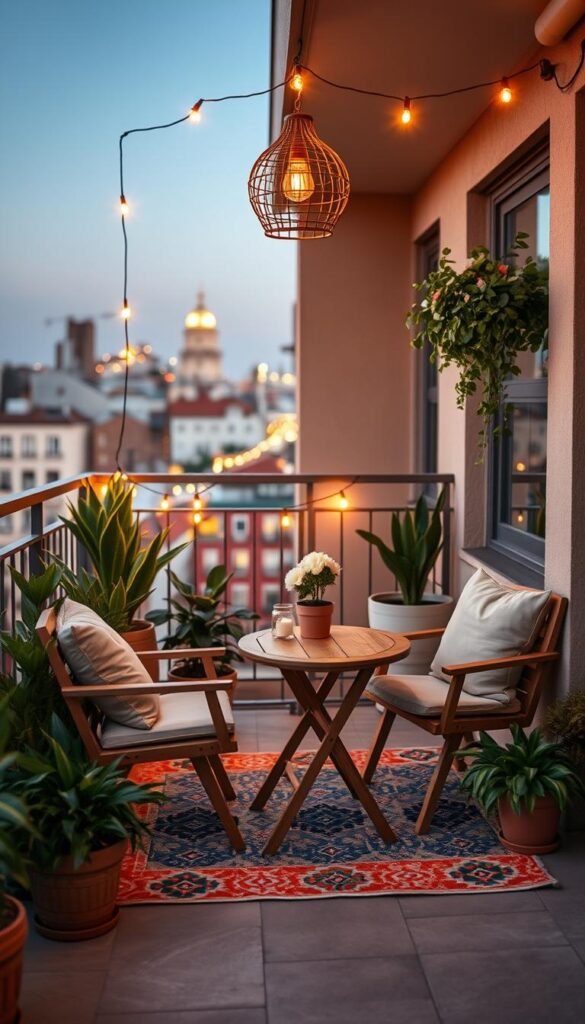
Pick a simple material palette to reduce visual clutter
One limited palette keeps small areas calm. Choose two primary materials and one accent. Examples: warm wood + black metal + neutral textiles, or wicker + teak + stone-look surfaces.
Use repetition plus contrast to make the space feel intentional
Repeat finishes for a steady texture and color. Match planter finishes or cushion hues to create a quiet rhythm.
- Renter formula to shop: one flexible seating piece + one small table + one floor layer + vertical greenery + portable lighting + soft textiles.
- Add one contrast item (a bold rug or statement light) so the space has a designed look without clutter.
Prioritize non‑permanent choices: no-drill solutions, lightweight items that move indoors, and finishes that stand up to sun and rain.
Buy in this way: measure, pick seating, add a table, layer the floor, then bring in plants, lighting, and textiles. Aim to link the balcony back to the interior so the outdoor room reads like an extension of your home.
For more small-space ideas, see small-space summer ideas.
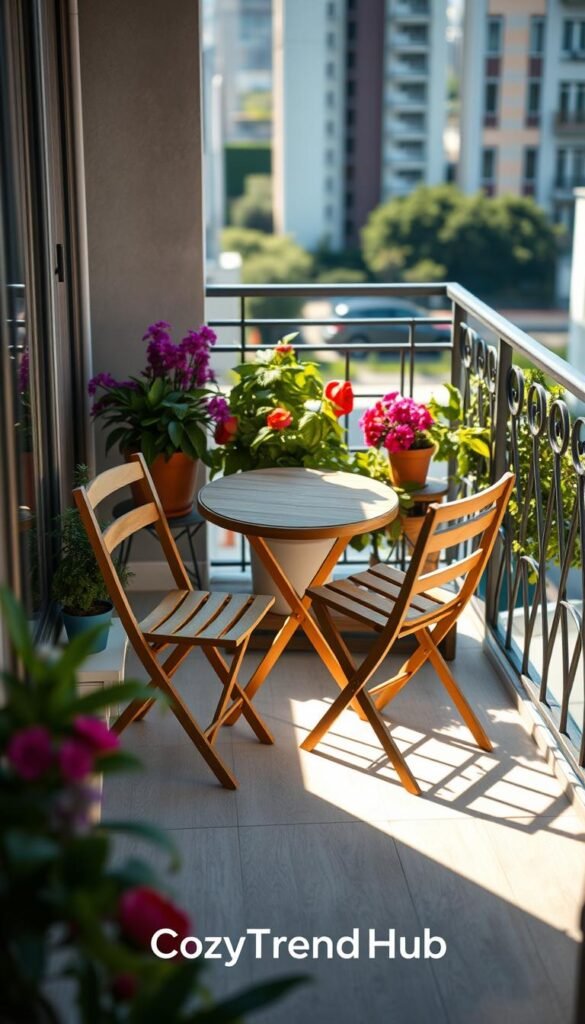
Foldable bistro set for flexible seating and dining
A foldable bistro set solves the common renter problem of needing a place to eat or work without a permanent footprint. It clears the floor fast so the small balcony stays useful for other activities.
Best for
Apartment dwellers who want real seating sometimes but need the floor back the rest of the week. This set suits quick meals, short work sessions, and hosting one or two guests.
What to look for
- Slim profile: low folded thickness and modest open diameter to keep the space feeling airy.
- Durable finishes: powder-coated metal or outdoor-sealed wood to resist rust and sun.
- Stable feet: secure on slightly sloped surfaces so lightweight doesn’t mean tippy.
- Seat comfort for 20–40 minute use and tabletop size for a drink plus a plate.
Pros and cons
| Pros | Cons |
|---|---|
| Creates a café-style zone; folds flat for storage | Smaller table limits serving space |
| Makes outdoor space multipurpose (yoga, drying rack, guests) | Some folding chairs trade comfort for compactness |
| Easy to tuck into a corner to keep the center clear | Cheaper sets can wobble or rust if left uncovered |
Quick tip: Tuck the set into a corner so the door and traffic lane stay open. Scale and simple design keep the overall look calm and functional over time.
Low-profile outdoor lounge chairs that keep sight lines open
Low-profile lounge seating preserves sight lines so a small city view stays the star of the space.
Problem: Bulky chairs can block the skyline, make railings appear taller, and visually shrink an already compact area.
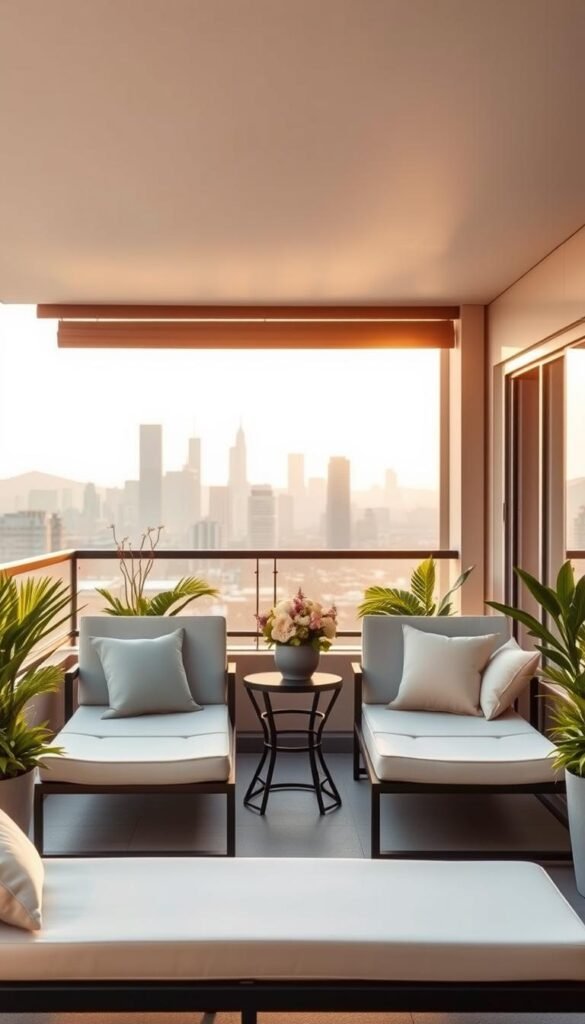
Who this suits
Ideal for city apartments where the main value of the outdoor space is the view, sunsets, and fresh air. Seating should sit low and feel airy.
Buying considerations
- Seat height: Aim 12–16 inches to keep sight lines low but remain comfortable.
- Weight: 12–25 lbs balances wind stability and easy movement.
- Stackability: Choose stackable or foldable frames for seasonal storage.
- Sun exposure: Pick UV-resistant materials and removable cushions renters can bring inside.
| Feature | Suggested spec | Why it matters |
|---|---|---|
| Seat height | 12–16 in | Keeps view clear while still usable |
| Weight | 12–25 lbs | Easy to move; stable in light wind |
| Material | Powder-coated metal or synthetic wicker | UV and weather resistance for sun-exposed areas |
Pros: Keeps the space feeling open and supports a relaxed look without crowding.
Cons: Low chairs can be harder to stand from and very light frames may need grip pads in wind.
Placement tip: tuck chairs along one side or in a corner to keep the center clear for movement. For chair options that suit terraces and small city spaces, see a quick guide to terrace seating here and summer layout ideas here.
Compact outdoor side table for drinks, books, and everyday use
Adding a small surface instantly changes how a tiny outdoor area gets used each day.
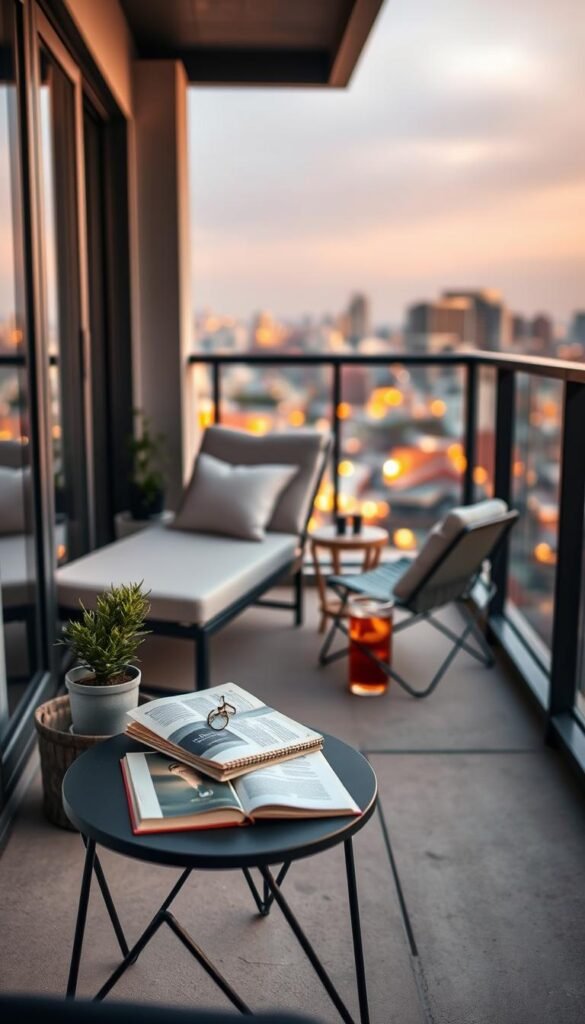
Why one matters
Without a small surface, drinks end up on the floor and reading outside feels inconvenient.
Designers stress that a simple table solves this and makes the space feel like an extension of the home.
Who this helps
Ideal for anyone using the balcony for morning coffee, after-work decompression, or weekend reading. It works especially well in a tight footprint.
Shapes and placement
- Drum tables for a stable, compact top.
- Nesting tables for flexible staging and storage.
- Slim C-tables that slide under a seat to save floor space.
Materials and durability
Powder-coated metal is low maintenance and wipes clean easily.
Teak wood adds warmth and resists weather when oiled occasionally.
Stone-look composites give weight and stability but can heat in direct sun.
| Material | Strength | Care |
|---|---|---|
| Powder-coated metal | Low maintenance, lightweight | Wipe with damp cloth; touch-up paint for chips |
| Teak wood | Weather-resistant, warm look | Oil yearly; store indoors in heavy storms |
| Stone-look composite | Heavy, stable in wind | Wipe clean; can get hot in sun |
Pros and cons
Pros: Improves daily usability; supports cohesive outdoor living; usually small enough to move indoors during storms.
Cons: Very lightweight tables can blow over. Porous wood may stain if unsealed.
Shopping check: Prioritize a stable base and an easy-to-clean surface that handles pollen, rain spots, and city dust. For compact, budget-friendly options and practical ideas, see small outdoor ideas.
Outdoor rug to fix ugly floors and make the balcony feel finished
A well-chosen rug turns a tired concrete floor into a finished space without permanent work. It hides worn tile and gives an immediate look of an outdoor room that feels like part of living space.
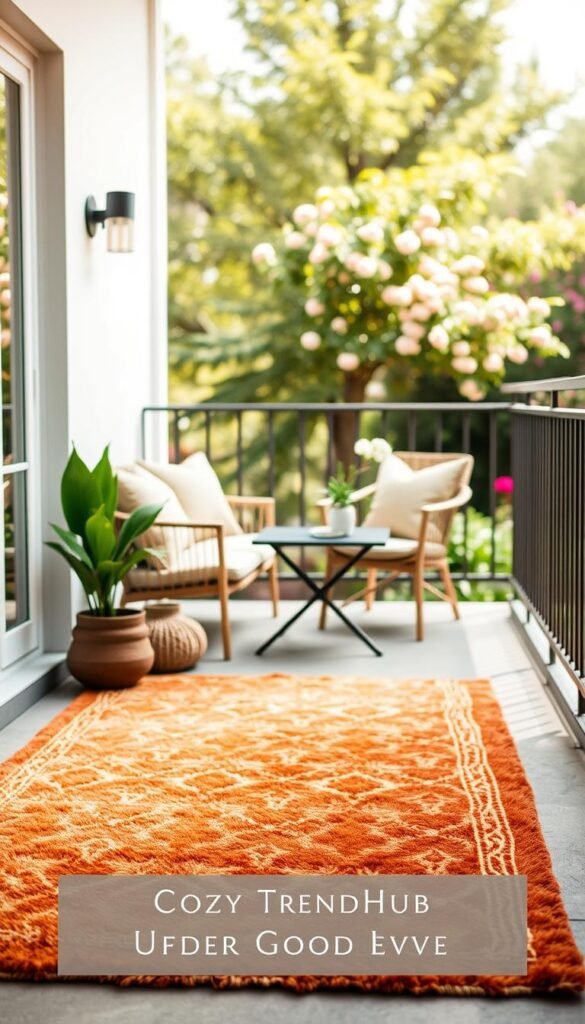
Who this helps
Ideal for renters who can’t replace the existing floor but want a big visual change fast. In an apartment, a rug adds personality with zero demolition and easy roll-up storage when not in use.
Buying considerations
- Drainage: Choose open‑weave fibers so water doesn’t pool.
- Non‑slip backing: Essential on smooth tile to prevent trips.
- Fade resistance: Pick UV‑rated materials for sunny exposures.
- Size: Anchor the seating zone but leave a small border so the rug doesn’t trap water at the door.
Pattern and palette trade-offs
Bold geometric patterns add energy and texture, but tight, large-scale prints can overwhelm a very small space. Neutral palettes and muted color choices make the area feel larger and more cohesive with interior tones.
Pros: Instantly defines a seating or dining zone, adds softness underfoot, and masks ugly floor patches.
Cons: Poorly ventilated rugs can retain moisture and develop mildew over time. Low-quality pieces may fade or lose texture after extended outdoor exposure.
Interlocking deck tiles or lightweight floor covering for a fast upgrade
For renters who want a solid, removable base layer, lightweight deck tiles offer a practical path to a finished floor. These systems cover stains and uneven surfaces without permanent work. They create a cleaner, warmer look that reads like a small room extension of the house.
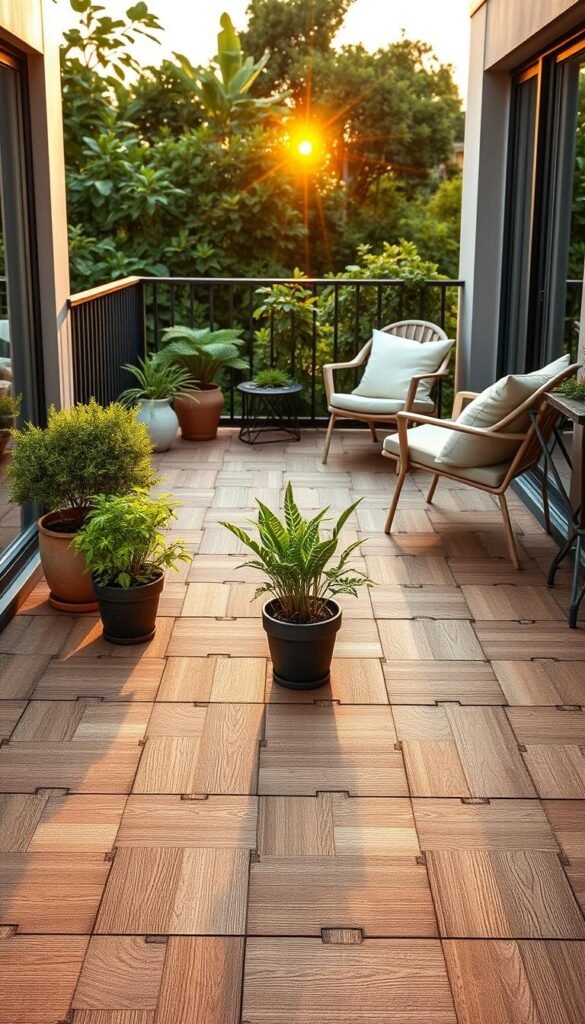
Who this suits
Ideal for: renters with worn concrete or tile who want a more built appearance than an outdoor rug can provide. Good for small space projects where changeability matters.
Safety checklist
- Confirm building rules and weight limits before adding heavy materials.
- Ensure airflow under tiles to avoid trapped moisture and mildew.
- Choose slip-resistant surfaces and test at scale before full install.
- Measure door clearance so the new floor height doesn’t block openings.
Materials and options to compare
- Interlocking composite tiles: weatherproof, low maintenance, moderate weight.
- Snap-together wood tiles: warmer look; treat or seal for weather resistance.
- Light roll-out coverings: very lightweight, easy to carry, best for temporary use.
| Option | Weight | Durability in weather | Removal & storage |
|---|---|---|---|
| Composite interlock | Light–medium | High (UV & moisture resistant) | Sections lift for removal; stacks compactly |
| Wood snap tiles | Medium | Moderate (needs sealing) | May be heavier to carry; removable |
| Roll-out PVC covering | Very light | Low–moderate (can fade) | Rolls up for storage; easiest to ship |
Pros: creates an intentional base, improves underfoot comfort, and can visually warm concrete.
Cons: poor drainage can trap moisture; heavier systems may be hard to carry upstairs; incorrect install can create trip edges at thresholds.
Practical way forward: Measure the space, confirm weight limits, then test a small area. For a wider selection of removable floor options, consider a focused supplier guide like wood patio tiles.
Rail planters and hanging planters to add greenery without losing floor space
Rail and hanging planters let plants live vertically so the floor stays free for seating and movement.
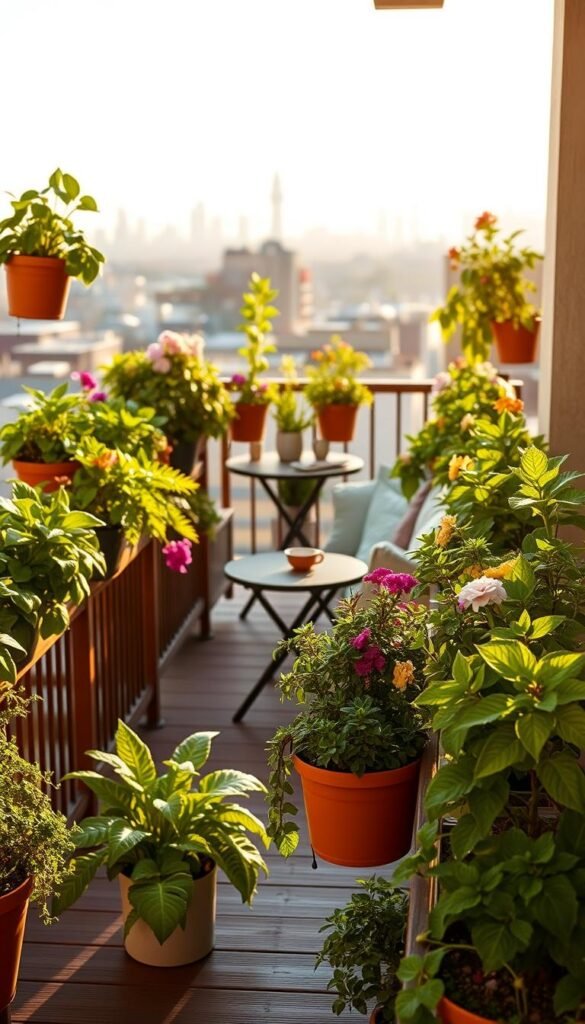
Problem: Many renters want a small garden feel but floor pots take valuable walking and seating space.
Who this suits
Ideal for plant lovers with roughly 24–60 sq ft who need greenery that lives on rails, ledges, or overhead.
How to layer for depth
Design from back to front: tall plants behind, mid‑height containers near seats, and low bowls only where they won’t block traffic. That creates depth and a comforting view of nature.
Buying considerations
- Secure mounting: pick hardware rated for weight and building rules.
- Drip trays: prevent water from falling on neighbors below.
- Wind exposure: choose heavy bases or wind‑resistant pots on high floors.
Plant choices and care
Herbs suit cooks and need regular sun. Flowers add seasonal color but need more attention. Succulents are low‑water and low‑care for busy lives.
„A few well-placed planters can make a small balcony feel like a true outdoor room.“
Pros: adds greenery and privacy without shrinking usable space. Cons: watering can be messy and wind may tip light pots. A simple care plan—fewer varieties, repeat container sizes, and steady watering—keeps the system renter‑friendly and resilient.
Vertical garden wall system for privacy and a softer look
A vertical green wall can turn an exposed outdoor area into a private, layered room without stealing floor space. This solution draws the eye up, adds texture, and keeps the balcony airy while blocking close sight lines.
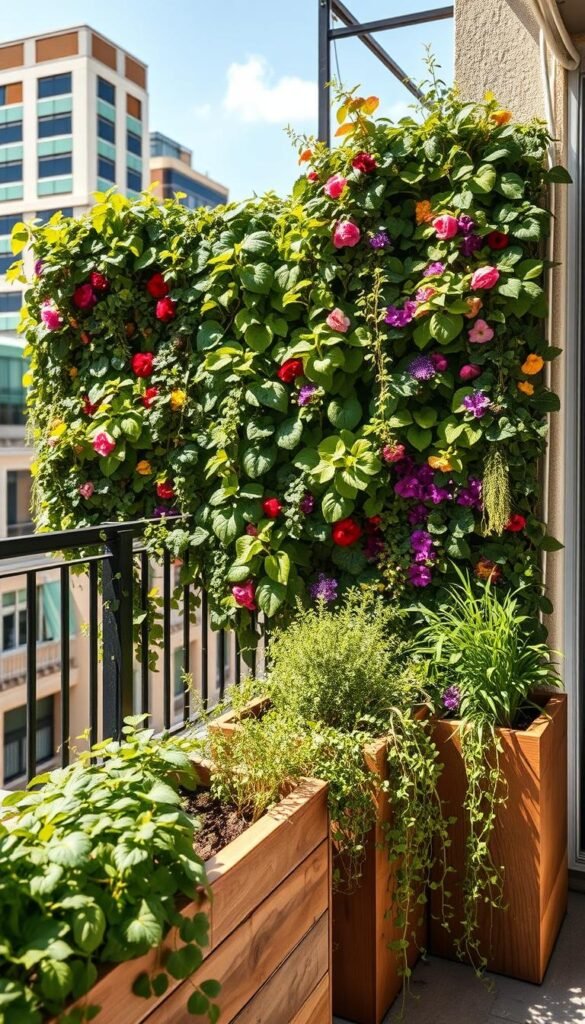
Who this helps
Ideal for renters facing neighbors or street views who want privacy without bulky screens. The planted surface softens the view and becomes a focal point in a small outdoor space.
What to compare
- Modular panel size and plant capacity.
- Mounting method: freestanding frames, rail-friendly brackets, or wall-safe tension systems.
- Irrigation: self‑watering cartridges versus manual trays and drainage.
- Plant light needs: direct sun, partial shade, or bright indirect light.
Practical checks and renter-safe setup
Do a quick light test: watch the floor and rail for three midday hours to pick plants that match conditions. Choose freestanding frames or tension mounts when drilling is not allowed. Add drip protection under planters to protect neighbors below.
| Feature | Why it matters | Quick tip |
|---|---|---|
| Weight | Can strain railings | Pick lightweight panels |
| Irrigation | Controls maintenance | Self‑watering cuts watering time |
| Plant light | Affects survival | Match plants to sun levels |
„A vertical garden creates privacy while keeping a small outdoor area feeling open.“
Pros: soft wall effect, increased privacy, clear focal point. Cons: added weight, drainage planning, and ongoing plant costs. For simple DIY options, see a helpful guide to DIY vertical garden setups, or find renter-friendly patio ideas at patio ideas for renters.
Outdoor lighting that works without outlets
Extending usable hours on a small outdoor space often starts with lighting that needs no hardwiring. Many apartments have no convenient outlet, so switch to solar or battery solutions that are renter-friendly and removable.
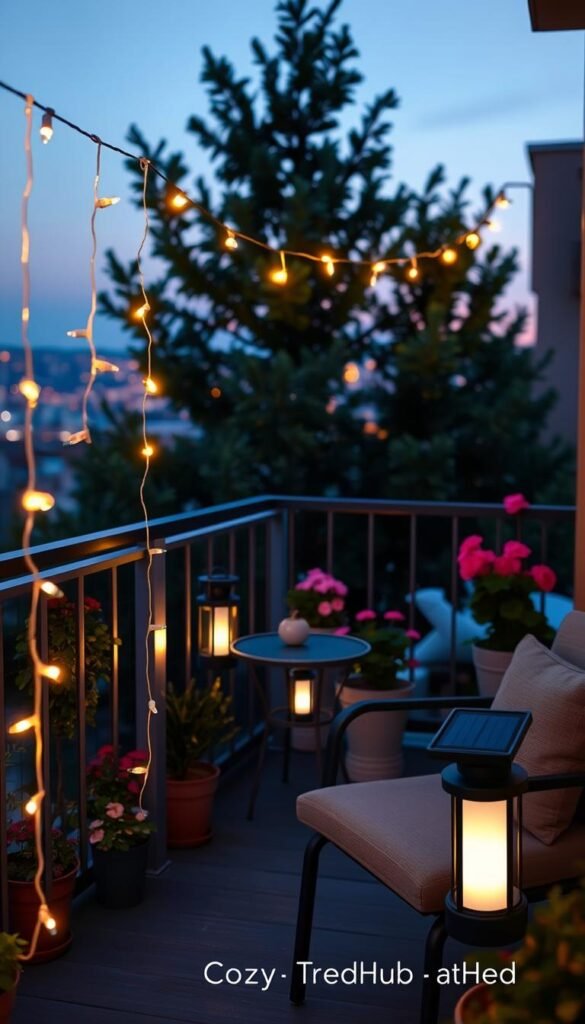
Who this helps: renters who want a fast ambiance upgrade that lets the area serve evening coffee, reading, or small gatherings.
Options to compare
- String lights: perimeter glow that defines the zone and layers easily with other sources.
- Portable table lamps: task lighting for reading or dining; moves indoors to charge or store.
- Statement pendants: battery or solar hangings that act as a focal fixture without wiring.
Buying considerations
- Adjustable brightness: dimming or multiple levels lets the space shift from task to mood lighting.
- Solar vs. battery: choose solar when exposure is good; pick rechargeable battery types for shaded terraces or winter use.
- Weather rating: look for IP44+ for rain and humidity; higher ratings for more exposed areas.
| Feature | When to choose | Quick tip |
|---|---|---|
| String lights | Soft, even glow around a rail or ceiling | Wrap along the edge; avoid directing glare at neighbors |
| Portable lamp | Reading, dining, or task light | Place on a side table; choose rechargeable models |
| Pendant | Creates an outdoor room focal point | Use a hook or tension rod; confirm building rules |
Pros: improves safety and evening usability, adds a cohesive look, and avoids permanent electrical work.
Cons: solar drops in shade and winter; batteries need charging; adhesives or hooks may be limited by building rules or textured surfaces.
Placement tips: wrap strings along rails to define the edge, set lamps on a small table for task light, and angle pendants so they don’t shine into neighbors’ windows.
For more creative ways to light a small outdoor room without hardwiring, see creative balcony lights ideas.
Weather-resistant cushions and textiles to make small balconies cozy
Cushions and throws are the easiest way to stretch a tiny outdoor area into regular living space. Without soft goods, a small balcony can feel hard and temporary. People often stop using the space because seating is uncomfortable.

Who this helps
Ideal for: renters who want comfort from bright afternoons into cool evenings without bulky furniture. Textiles let a small outdoor room work for daily living and weekend life alike.
Buying considerations
- Quick-dry fabrics: polyester blends or solution-dyed acrylic resist moisture after a rain shower.
- Removable covers: washable zippers shorten upkeep and keep cushions hygienic.
- UV and weather resistance: choose rated fabrics so color holds in strong sun.
- Secure ties: cushion ties or non-slip backing stop pads from sliding in wind.
Storage, pros and cons
Store cushions in a slim deck box, a vertical bench, or an apartment closet during long storms. Blankets and rugs can move indoors when wet.
Pros: adds immediate texture and warmth, upgrades low-profile seating, and helps the balcony feel like part of the home.
Cons: left-out cushions can mildew in humid climates and bright colors may fade over time. A simple storage plan keeps textiles long-lasting.
Design tip: repeat one or two cushion colors pulled from inside to create a cohesive look that ties indoor and outdoor living together.
Privacy screening that’s renter-friendly and doesn’t close in the space
A visual buffer changes how a tiny outdoor room gets used—suddenly it feels safe to read, eat, or relax. Close neighbors can make a small area feel exposed, which cuts usable time and comfort.
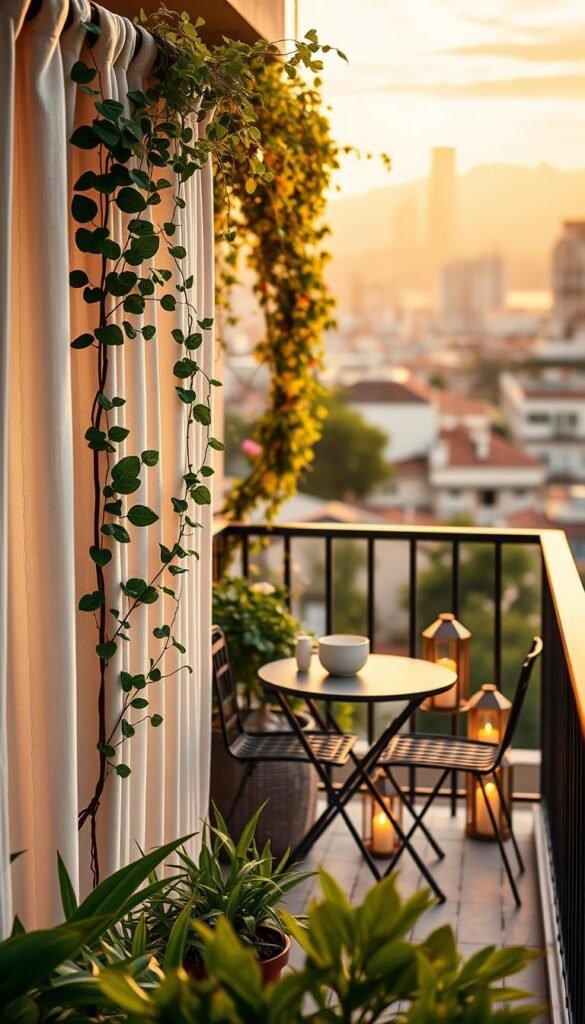
Who benefits
Ideal for: apartments that face other units. A modest screen makes the passage from door to fresh air feel private without permanent changes.
Options to compare
- Outdoor curtains: soft framing, easy to open for airflow, ties or track installs avoid drilling. See curtain choices at curtain options.
- Roll-up bamboo screens: quick coverage, natural look, lightweight but can weather unevenly over time.
- Privacy panels: structured appearance, stable in wind with proper bases, available in semi‑transparent designs to keep a light look.
Decision criteria
Compare three factors before buying:
- Airflow: semi-sheer fabrics keep breezes while screening sight lines.
- Light blocking: heavier panels create shade for plants but can make the area feel smaller.
- Install complexity: tension rods, rail hooks, or freestanding frames work when drilling is not allowed.
| Option | Airflow | Light effect | Install difficulty |
|---|---|---|---|
| Outdoor curtains | High | Variable (sheer to opaque) | Low (track or rod) |
| Roll-up bamboo | Medium | Diffused, warm tone | Low–Medium (hooks or zip ties) |
| Privacy panels | Low–Medium | More blocking; solid or perforated | Medium (bases or brackets) |
Pros and cons
- Pros: increases usable time outdoors, improves comfort, and creates a private nook rather than an exposed rail.
- Cons: curtains can flap in wind; bamboo may fade; solid panels can visually shrink the space if too dark or heavy.
Design tip: choose lighter colors or semi-sheer materials to preserve a bright look and allow air to pass. For additional ideas on non-permanent privacy solutions, refer to practical examples at privacy ideas.
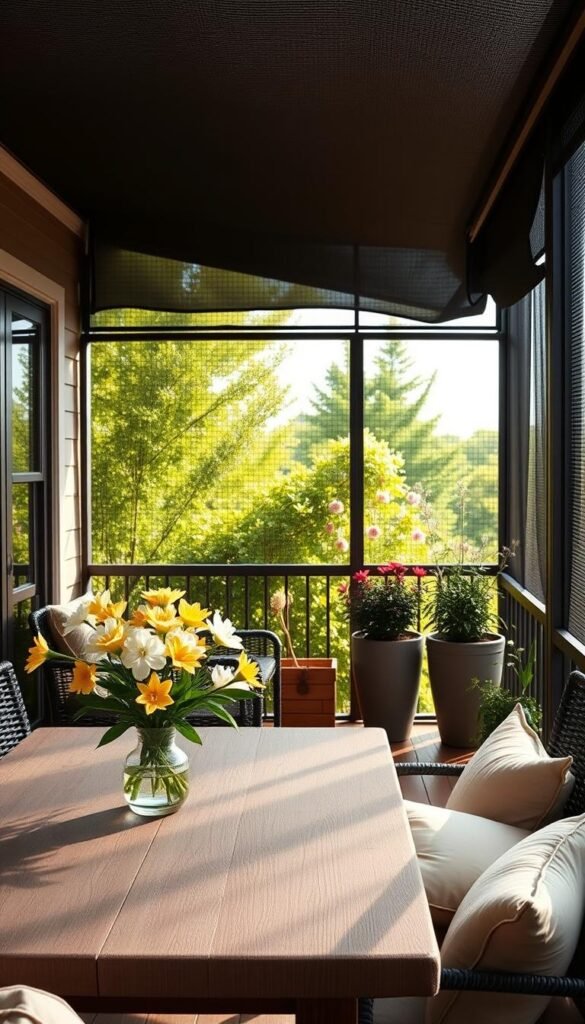
Screened-in solutions and bug control for longer seasonal use
A simple screen can transform a seasonal outdoor area into an evening-ready oasis.
Identify the seasonal barrier: In many warm-weather city neighborhoods, mosquitoes and other insects cut usable time outdoors dramatically.
Who this helps
Ideal for renters who want a true outdoor oasis during peak months without constant repellent and without permanent alterations.
Screening options and buying considerations
- Temporary screen tents or pop-up enclosures for full-coverage evenings.
- Magnetic screen doors that attach to the entryway for easy setup and removal.
- Semi-permanent panels or framed screens where building rules allow drilling.
| Option | Suitability | Notes |
|---|---|---|
| Pop-up tent | Short stays, events | Fast setup; watch wind and airflow |
| Magnetic door screen | Daily use | Easy on/off; protects entry without drilling |
| Framed panel | Longer season use | More durable; check HOA and lease rules |
Pros: extends evening time, protects plants and textiles, and makes meals and lighting more pleasant.
Cons: can cut airflow if tight, cheap fabrics tear in wind, and sturdier solutions cost more and need storage when not used.
„Pair screening with a small table and portable lighting so evenings outdoors feel functional, not just possible.“
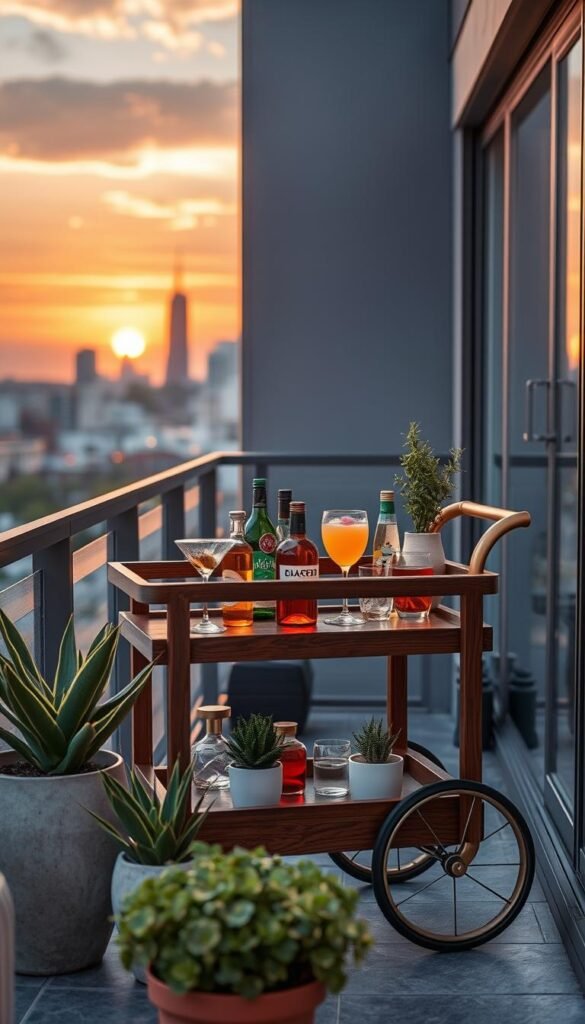
Mobile bar cart for small-space entertaining and easy storage
A movable cart creates a one-stop station so hosting flows without juggling plates and glasses.
Problem: On a compact balcony, guests often crowd the door while drinks and snacks get shuttled back and forth. That makes hosting awkward and short-lived.
Who this suits
A cart fits households that use the outdoor space as a weekend hosting zone. It offers a dedicated surface and storage without permanent furniture and can roll inside when not in use.
What to look for
- Outdoor-safe wheels: roll smoothly on tile and lock securely on slight slopes.
- Rust-resistant frame: stainless steel, powder-coated metal, or treated wood finishes.
- Slim shelving depth: keeps sight lines open while giving room for glassware and a small tray table.
- Top tray that wipes clean and low shelves for stacked plates or bottles.
How it saves space
The cart replaces several smaller surfaces—side table, stacking trays, and plant stands—so the central area stays clear. Park it against a wall when not hosting to preserve the walking lane.
| Feature | Why it matters | Quick check |
|---|---|---|
| Wheels & locks | Mobility and safety on uneven flooring | Test roll on your tile; confirm lock holds |
| Material | Durability in sun and rain | Prefer powder-coat or teak; avoid thin untreated metals |
| Shelf depth | Keeps cart slim and view unobstructed | 10–14 inches works for glassware and small platters |
| Storage use | Doubles as serving station or plant/display table | Look for removable trays and a shelf with a lip |
Pros and cons
Pros: improves entertaining flow, doubles as a coffee station or plant stand, and moves indoors for storms or winter.
Cons: wheels may lock poorly on very uneven floors; too-tall carts can block the view; inexpensive metals may rust if left uncovered.
Tip: Pair the cart with foldable seating to increase hosting capacity without permanently filling the outdoor space. For curated outdoor-serving ideas and durable cart options, see a quick guide to outdoor bar carts and renter-friendly apartment solutions at outdoor apartment ideas.
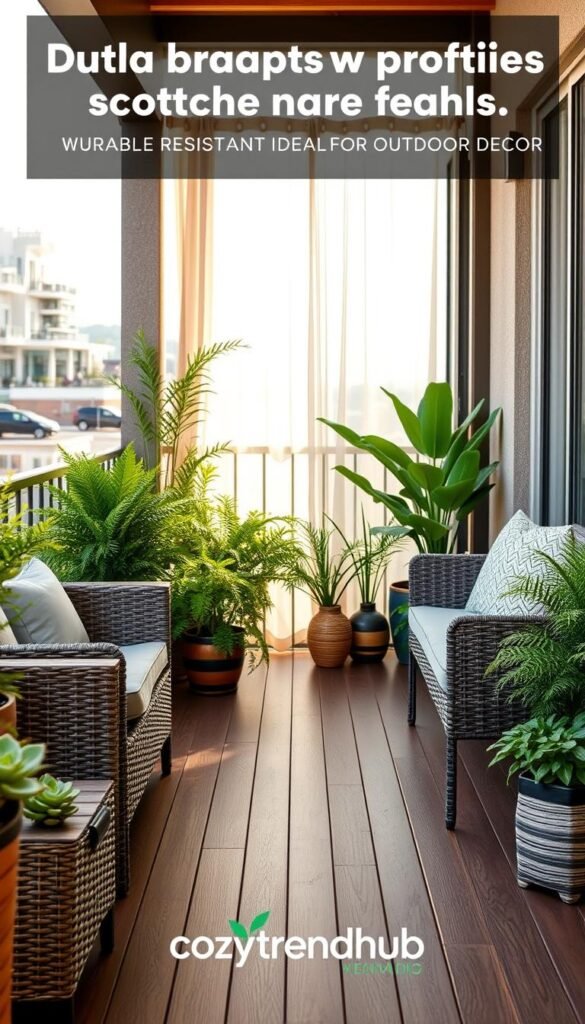
Choose durable materials that won’t fade, fly away, or fail in the weather
Durable choices start by treating the outdoor space like a different climate than the living room. Sun, wind, and rain create real risks: fading, corrosion, warping, and lightweight items that blow away.
Best for: uncovered balconies exposed to harsh sun, wind tunnels between buildings, or frequent rain.
Quick materials guide
- Powder-coated metal: resists rust and keeps finish longer in coastal or rainy areas.
- Teak and outdoor wood: weathers gracefully when oiled; choose outdoor-rated species and sealed joints.
- Tempered glass tops: stable and attractive—pair with a heavy base and avoid thin pieces on very windy levels.
Buyer-ready checklist
| Feature | What to check | Why it matters |
|---|---|---|
| UV resistance | Look for solution-dyed fabrics or UV-rated finishes | Prevents color loss and brittle fibers from the sun |
| Item weight | Confirm weight or add anchoring options | Stops light pieces from blowing away in wind |
| Corrosion-resistant hardware | Stainless fasteners, zinc plating, or powder coat | Extends life in humid or salty air |
| Easy-clean finishes | Wipeable surfaces and drainable cushions | Saves maintenance time from pollen, city grime, and spills |
Pros: durable materials cut replacement costs and keep a consistent look over time. Cons: heavier pieces can be pricier and harder to carry upstairs, and some finishes need seasonal care or covers.
Practical note: renters should balance toughness with portability—choose items that resist weather but are still easy to move or store. For a tested selection of durable outdoor furniture options, consider a guide to durable outdoor furniture.
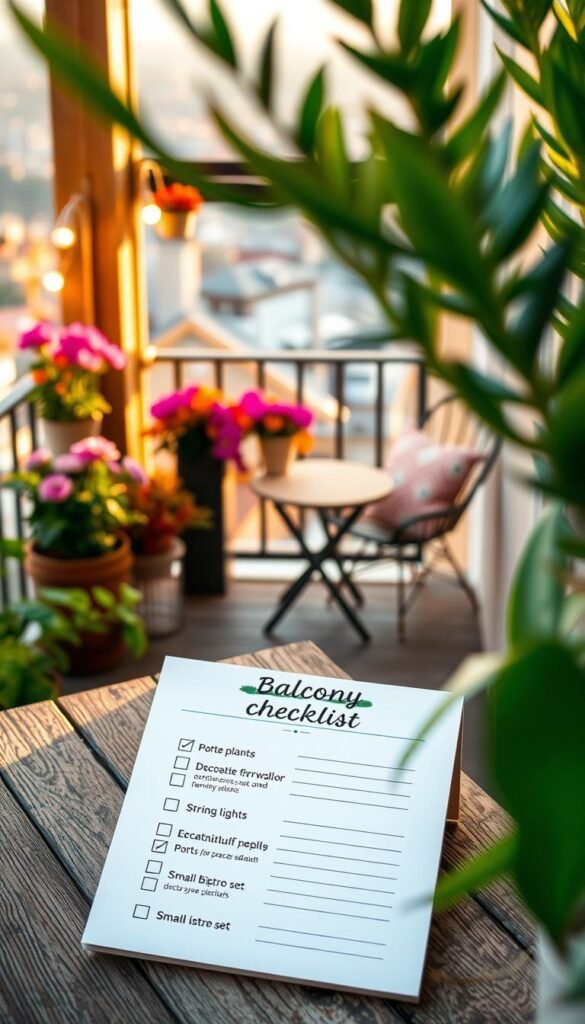
Comparison-ready checklist for shopping small-balcony decor online
When shopping online for compact outdoor items, clear filters cut decision time and reduce delivery surprises. Use this short checklist to compare products side-by-side and lower the risk of returns.
Space-first filters
Space-first checks
- Exact dimensions: usable depth, folded width, and door clearance.
- Foldability / stackability: verifies seasonal storage and carrying through stairs.
- Multipurpose use: stool that doubles as a side table or tray seat saves floor area.
Comfort filters
- Seat depth and height for posture and the intended room use.
- Cushion thickness, support core, and fabric ratings: UV, water resistance, washability.
Style and material filters
- Keep a consistent palette and interior tones so the outdoor area reads as an extension of the interior.
- Check whether glass tops are tempered, metals are powder-coated, and wood is outdoor-rated.
Shipping and returns
- Confirm box sizes for elevators and stairwells.
- Note return window, restocking fees, and whether assembly needs basic tools.
| Field | What to note | Why it matters | Quick affiliate column |
|---|---|---|---|
| Dimensions | Folded & open sizes | Prevents overcrowding | Dims • Weight • One-line con |
| Materials | Tempered glass / powder-coated metal | Durability and safety | Materials • Weather rating |
| Function | Stackable / multipurpose | Saves floor space | Use case • Best-for |
| Delivery | Box size / returns | Avoids failed deliveries | Ship notes • Return cost |
For product ideas and a visual guide that helps match tones and palette, see this focused resource on small-space options: a quick reference.
Conclusion
Conclusion
Focus on one pain point this week—floor, seating, privacy, or light—and build from there. Start by measuring your doorway and traffic lane. Then pick flexible seating, a compact table, and a simple floor layer. Add rail planters or vertical greenery to keep the floor clear.
Keep the look cohesive by echoing interior finishes so the outdoor area reads as an extension of the home. Durable materials save time and money over seasons.
Small balconies become an oasis with few, well‑scaled choices. Protect cushions in storms, secure light items in wind, and refresh plants each season. Choose one problem to solve now, then build the rest of the plan slowly for lasting living value.


3 Comments