
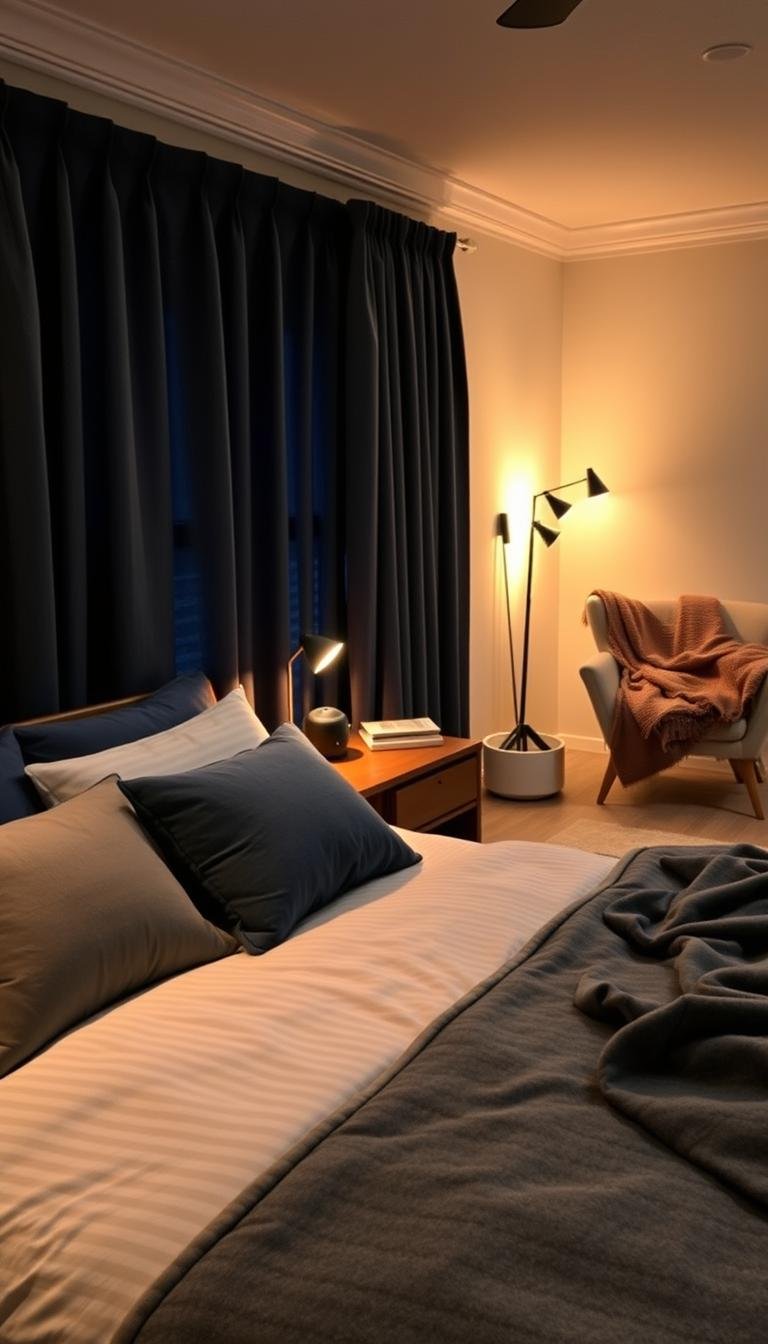
Problem: People who work through the night and try to sleep in daytime face bright windows, street noise, and warm rooms that make rest hard.
Solution: This guide focuses on changes that do more than look nice. It recommends darker window treatments, sound-softening textiles, cooling bedding, and lighting that supports a flipped schedule.
The list is aimed at night-shift and rotating shift workers living in rentals or small spaces. It points out what to buy first — usually high-coverage window control — then noise and temperature fixes, then circadian-friendly lamps.
Expect clear decision factors: install difficulty, coverage gaps, cleaning and maintenance, durability, and year-round usefulness. Options are ranked by use case: renters, shared rooms, small footprints, hot climates, or drafty windows.
Note: These changes aim to build a more sleep-supportive day routine, not a single-step miracle. Choose solutions that match budget and living constraints. See related renter-friendly picks at cozy bedroom choices.
Key Takeaways
- Start with window light control — it usually gives the biggest improvement.
- Layer sound buffering and cooling next to improve daytime sleep quality.
- Pick renter-friendly, low-install options when possible.
- Compare items by install difficulty, coverage gaps, and maintenance needs.
- Focus on circadian-friendly lighting to support wake and wind-down routines.
Why night-shift sleep is harder at home: light, noise, and a flipped circadian rhythm
Daytime sleep feels harder when home signals say “awake” but the body expects night. Small apartment issues magnify that mismatch. Bright windows, street noise, heat, and shared living situations each act like separate alarms.
How light disrupts sleep quality: sunlight and thin curtains cue the brain that it is time to wake. Even brief light leaks raise core alertness and trigger awakenings. This hampers sleep quality and shortens deep sleep during daytime hours.
Translate barriers into decor solutions
- Light leaks: full-coverage window treatments and sealing strips.
- Street noise and echo: wall textiles, rugs, and padded headboards to reduce reflections.
- Heat and humidity: breathable sheets, cooling pads, and insulated shades.
- Roommates/landlords: renter-safe fixes — removable hooks, tension rods, and adhesive seals.
„Create true darkness first, then layer sound control and temperature solutions.“
This section uses a simple triage: if the room is bright, start with blackout coverage; if it’s loud, add textiles and sealing; if it’s hot, upgrade bedding or add cooling. The later sections expand each tier: quick fixes, mid upgrades, and long-term options.
| Problem | Quick fix | Mid-tier | Long-term |
|---|---|---|---|
| Light leaks | Blackout curtains; adhesive side seals | Cellular shades; mounted valance | Motorized blackout shades |
| Street noise | Thick rug; door sweep | Window plugs; acoustic panels | Double-glazed windows |
| Heat | Cooling sheets; fan | Insulated shades; breathable duvet | Room AC or whole-home solutions |
| Shared spaces | Sleep mask; privacy curtain | Room divider; sound-absorbing furniture | Dedicated sleep room setup |
For renter-friendly ideas and product picks that balance function and style, see these cozy bedroom choices at cozy bedroom choices.
Best decor for night workers: blackout window treatments that create true daytime darkness
Making a room truly dark is the most effective upgrade someone on a flipped shift can make to protect daytime rest. Below are practical window choices and who benefits most from each one.
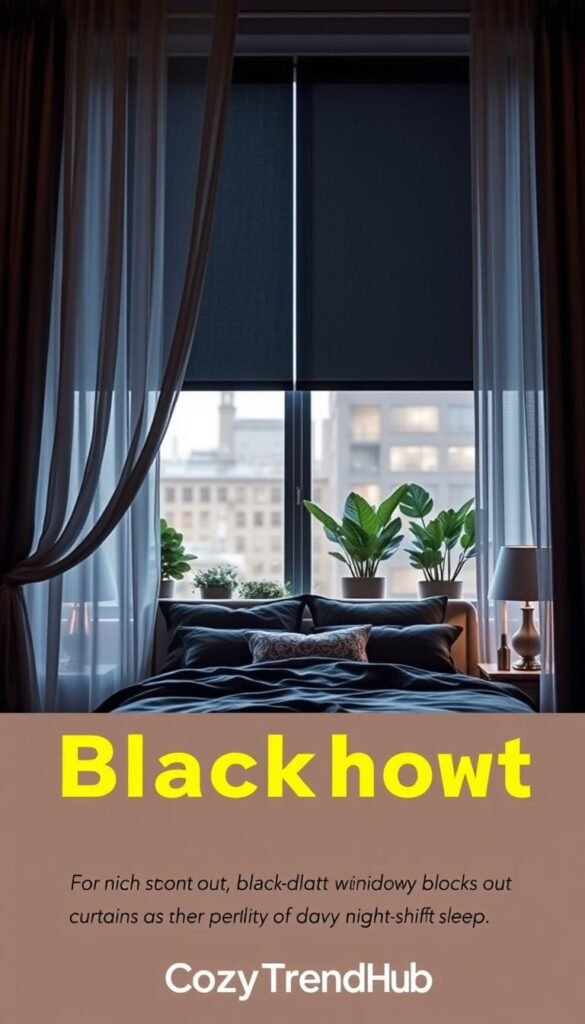
Blackout curtains — renter-friendly, high blocking with simple install
Who they suit: renters and anyone wanting wide coverage quickly.
Pros: wide size availability, easy rod installation, strong blackout level, helps with noise and temperature.
Cons: visual bulk in small rooms; may need wraparound hardware to seal side light leaks.
Roller and Roman blackout shades — clean profile for small spaces
Who they suit: small-space residents wanting a minimal look.
Pros: low visual weight, option to choose true blackout fabric, cordless or motorized operation.
Cons: inside-mount gaps can let light in unless custom-fitted; measuring is critical.
Honeycomb (cellular) shades — light control + insulation
Who they suit: hot sleepers in summer and rooms with drafty windows in winter.
Pros: traps air for insulation, double-cell increases thermal and noise benefits, available in blackout versions.
Cons: higher cost than basic shades; some styles need professional measurement for odd sizes.
Motorized treatments — set-it-and-forget-it schedules
Who they suit: overnight shift staff who need consistent timing without manual adjustment.
Pros: programmable open/close, cordless safety, ideal on rotating shifts.
Cons: higher price and occasional battery or power maintenance.
Drapes with blackout liner — style plus darkness
Who they suit: style-first rooms that still require strong light control.
Pros: design flexibility, improved insulation and noise reduction when lined.
Cons: layered look can crowd small windows unless paired with slim rods.
„Position blackout window treatments as the top-impact upgrade: they change a bright room into a reliable sleep space.“
Buying checklist — measure, seal, and reduce gaps
- Measure width and height twice; add overlap (3–6 inches each side) to block side light.
- Choose outside-mount if seals matter; inside-mount needs tight fit or side channels.
- Use wraparound rods, magnetic side channels, or overlap panels to cut coverage gaps.
- Compare true blackout vs room-darkening fabric and note cleaning needs and cost tier.
- Match the treatment to the worker’s schedule: the chosen window solution must create darkness during the exact morning hours that follow a shift.
For renter-friendly picks that balance function and appearance, see curtain options and buying tips.
Renter-friendly light blocking beyond curtains: quick fixes for bright bedrooms
Renters who can’t alter windows still have simple tools to make daytime sleep reliable. These low-commitment choices aim to create consistent darkness in shared or temporary spaces.
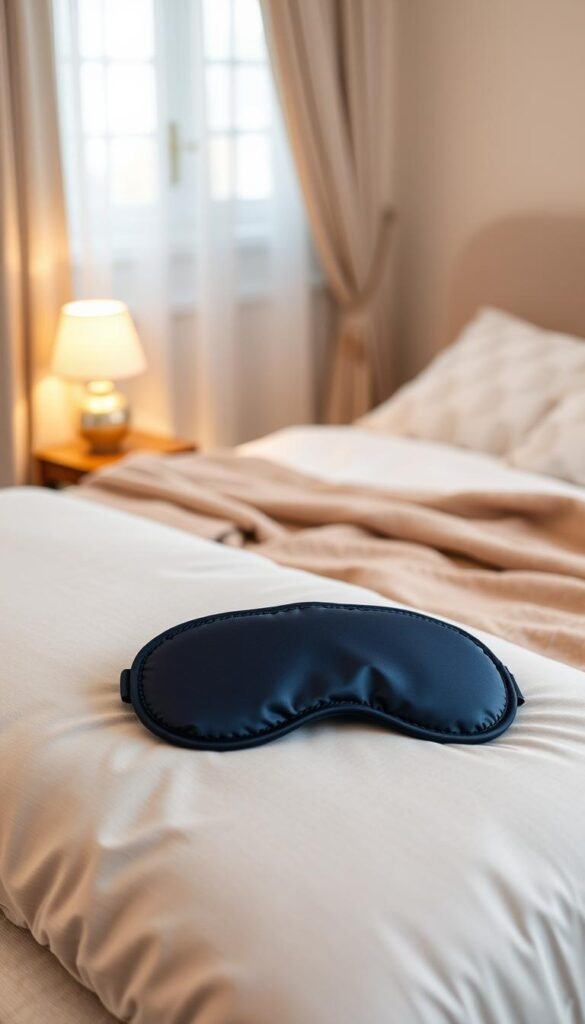
Sleep masks for people who can’t modify windows or share a room
Who they suit: shared bedrooms, dorms, travel between rentals, or rooms with impossible window access.
What to compare: contoured vs flat, strap comfort, nose seal, and breathable fabrics.
Pros: inexpensive, portable, and immediate light control. Cons: some people dislike face pressure or shift them in deep rest.
Privacy and light-control upgrades that work in small spaces without drilling
Look for removable options: tension rods, static-cling blackout film, magnetic side seals, and adhesive-backed block panels.
Benefits: no landlord permission needed, fast install, and easy removal. Watch for edge leaks on larger windows and residue on cheap adhesives.
„Layer a mask with existing blinds or a removable panel to cut bright spikes during the day.“
| Option | Best for | Quick notes |
|---|---|---|
| Sleep mask | Shared rooms, travel | Portable; check fit and fabric |
| Static-cling film | Small windows | Low residue; partial blackout |
| Tension rod + panel | Renters avoiding drills | Good coverage; may need wider overlap |
When buying, favor removability and low residue. Prioritize the simplest option that solves the main light problem so day schedules and rest remain predictable without daily hassle.
Noise-buffering decor to protect daytime rest (especially in busy neighborhoods)
When sleep must happen while the city wakes, reducing echoes and sudden peaks helps preserve sleep. Soft textiles don’t stop sirens, but they lower reflections and cut how loud a room feels.
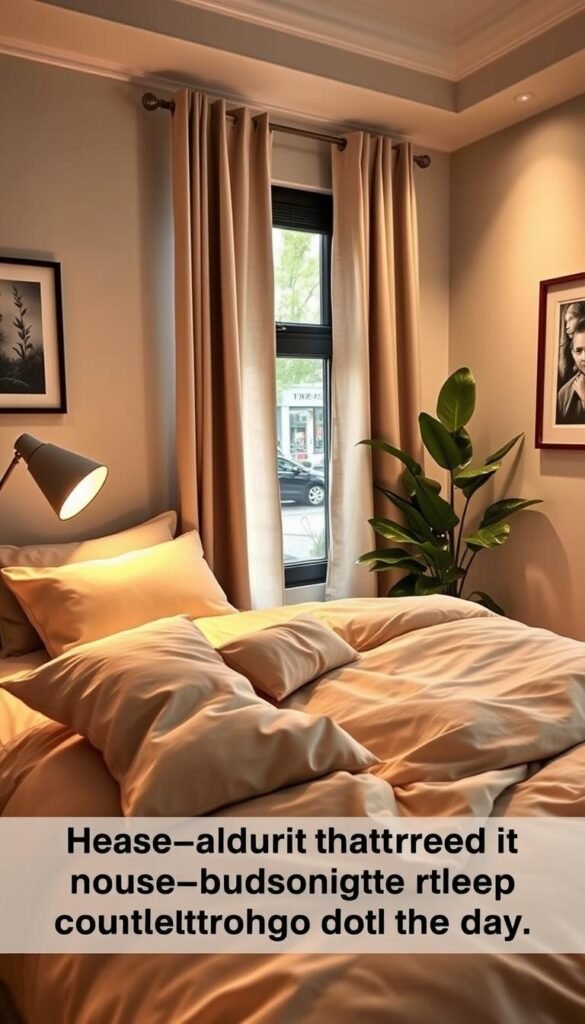
Soft textiles that reduce echo and dampen disruptive sound
What works: thicker curtain panels, rugs with a dense pad, upholstered headboards, and layered bedding. Honeycomb shades and lined blackout panels add both light control and modest sound absorption.
Expectation: these choices reduce perceived noise and improve sleep quality, not full soundproofing. The goal is fewer wake-ups and faster return to rest.
Placement tips: where to add fabric and padding for the biggest payoff
- Cover large hard surfaces: hang heavy panels over windows and the wall opposite the bed.
- Lay an area rug plus a thick pad on bare floors to cut footsteps and echo.
- Add an upholstered headboard or wall-mounted textile behind the bed to soften hallway or shared-wall sounds.
- Use layered bedding and throw blankets to reduce small, sudden noises near the sleeper.
„Target the room’s largest reflective surfaces first; small moves there give the biggest gains in perceived quiet.“
| Tier | Solution | Who benefits most |
|---|---|---|
| Budget | Thick curtain panels or sleep mask; small rug | Street-facing apartments, roommates on different schedules |
| Mid-tier | Honeycomb shades + area rug with pad; upholstered headboard | Homes with thin windows or daytime construction nearby |
| Upgrade | Layered textiles, full wall panel, high-density rug pads | Busy neighborhoods and shared units wanting the best perceived quiet |
Pros/cons & buying notes: thicker textiles improve quiet and light control but collect dust and need cleaning. Rugs help but require a quality pad to matter. Choose removable options when renting. For curtain choices that balance softness and light blocking, see a practical guide to sound-aware curtains at sound-reducing curtain options and renter-friendly room touches at cozy room solutions.
Temperature and bedding upgrades that prevent overheating and broken sleep
Temperature control is a simple, high-impact way to protect daytime rest after working overnight. Overheating and swings in room temp often cause fragmented sleep and slow recovery between shifts.
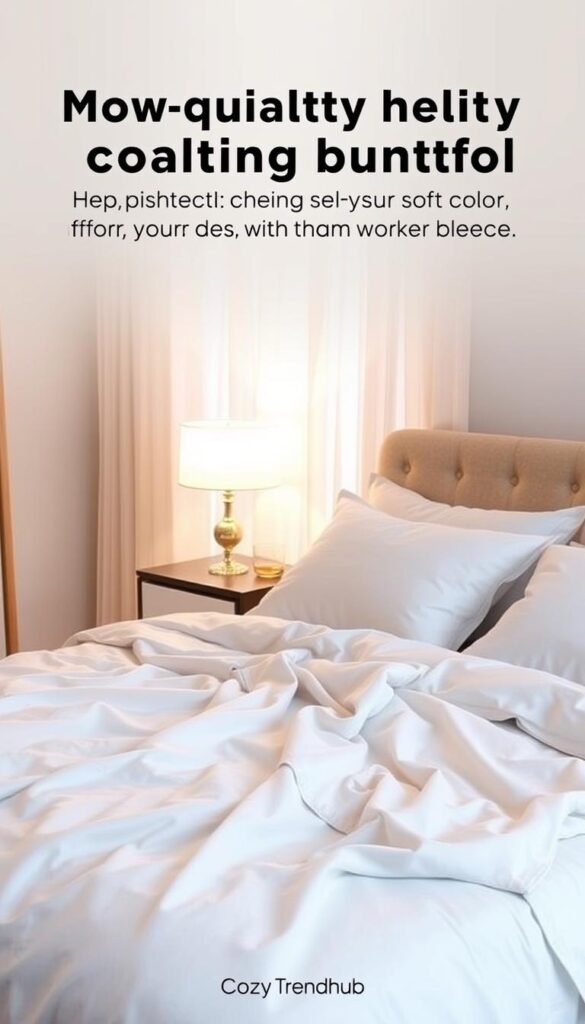
Cooling sheets and targeted bed-cooling systems
Cooling sheets suit hot sleepers, small bedrooms, and people without central AC. Look for breathability, moisture wicking, and easy washing. Realistic outcome: less heat buildup and fewer mid-sleep wake-ups.
Bed-cooling systems (example: BedJet) are for persistent overheating that sheets can’t fix. They blow conditioned air under covers and act quickly. Trade-offs include higher cost, unit footprint, and some noise during use.
Layering strategy that adapts by season
Start with a lightweight breathable base layer in summer. Add a thin duvet and a removable throw for cooler hours. In winter, swap the base to a warmer weave and use an insulated top layer to stop drafts without overheating.
Pros, cons, and budget tiers
- Budget: moisture-wicking sheets + fan. Low cost, quiet, low energy; modest gains if room is very hot.
- Mid-tier: cooling-sheet set + insulated shades. Better all-day comfort and fewer wake-ups; moderate cost and upkeep.
- Upgrade: bed-cooling system + quality duvet. Fast, targeted relief and improved sleep quality; higher price and maintenance.
| Factor | Sheets | Bed-cooling unit | Room cooling |
|---|---|---|---|
| Cost | Low | High | High |
| Noise | Minimal | Low–Medium | Medium |
| Energy use | Low | Low–Medium | High |
| Speed of relief | Moderate | Fast | Fast |
„Improved temperature control supports sleep quality and next-shift productivity without needing whole-home upgrades.“
For a simple bedding upgrade tied to breathable linens, see this guide to linen sheets at linen bedding benefits. Small, targeted changes often deliver the biggest gains in sleep and daytime productivity.
Circadian-friendly lighting decor for your “morning” at night and wind-down after work
Flipped schedules need two simple lighting cues: bright, energizing light when the worker wakes and warm, dim light before sleep. This helps the body follow a repeatable rhythm even if the day starts at 10 PM or 3 AM.
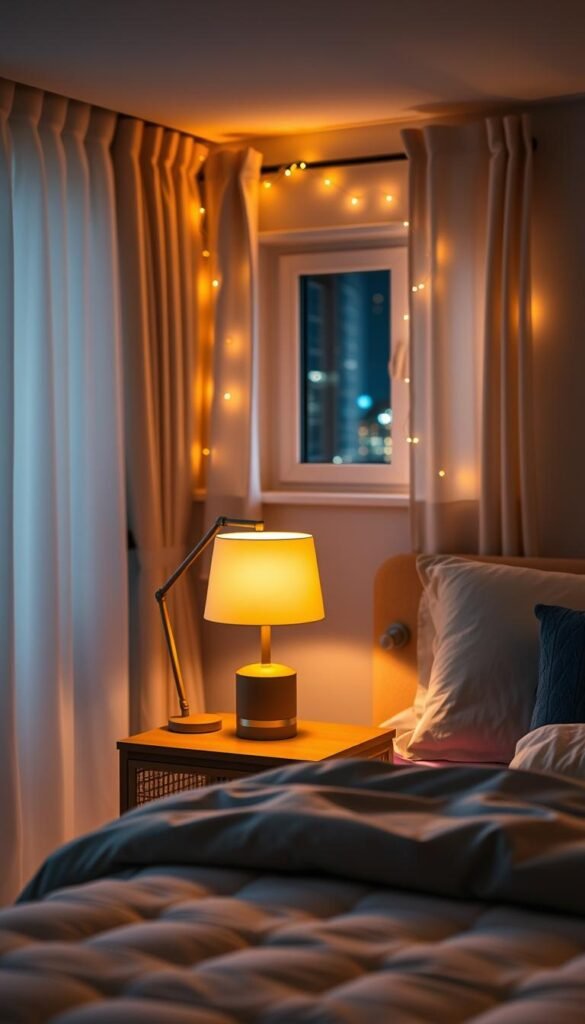
Daylight lamps that mimic morning
Who they suit: people whose workday begins during standard night hours and who need a steady wake cue.
Buying notes: check lux output (aim 5,000–10,000 lux at close range), physical size for a desk or nightstand, and built-in timers. Choose a model with adjustable intensity and a timer so the lamp matches a set schedule.
Placement tip: keep the lamp where morning tasks happen—near coffee, a workstation, or by the mirror—to reinforce routine.
Blue-light control to support wind-down
Limit cool, bright light in the final work hour. Practical options include warm bedside bulbs, device night modes, and blue-blocking glasses. Each choice fits different needs:
- Glasses — good for heavy screen users and shared rooms.
- Device settings — easy, no equipment needed; ideal for mobile-first people.
- Warm bulbs or smart lamps — best when bedside lighting needs to be dim and hands-free.
„Use timers or scheduled scenes to make lighting predictable across rotating shifts.“
| Solution | Best for | Key purchase points |
|---|---|---|
| Daylight lamp | Early-shift starts; people needing a strong wake cue | Brightness (lux), size, timer, adjustable angle |
| Blue-blocking glasses | Heavy screen users, shared households | Fit, visible tint level, comfort for long wear |
| Warm bedside bulbs / smart scenes | Wind-down routine and rotating shifts | Color temperature (≤ 2700K), dimming, programmable routines |
For deeper reading on timed home lighting and circadian support, see this circadian lighting guide. Practical tips aimed at shift routines are also available at lighting for night shift.
Conclusion
Small, targeted changes at the window, bed, and lamp deliver the clearest gains for flipped schedules. Make darkness the first priority: solid blackout coverage is the single biggest swap to protect daytime sleep.
Next, add soft surfaces to reduce noise and echoes, then address overheating with breathable sheets or a targeted cooling unit. Finally, use timed, warm lighting to support a steady circadian rhythm and a predictable wind-down.
Choose by constraints: renters often pick blackout curtains or removable shades plus a sleep mask; hot sleepers benefit from cooling sheets or a bed-cooling system; heavy screen users should add blue-light control. Layering smaller, renter-safe upgrades usually beats one costly install.
Compare options, weigh maintenance and cost, and build step-by-step. For product ideas and renter-friendly picks, see night shift product picks and practical cozy bedroom choices. Small changes can restore rest, improve productivity, and support health without a full remodel.