
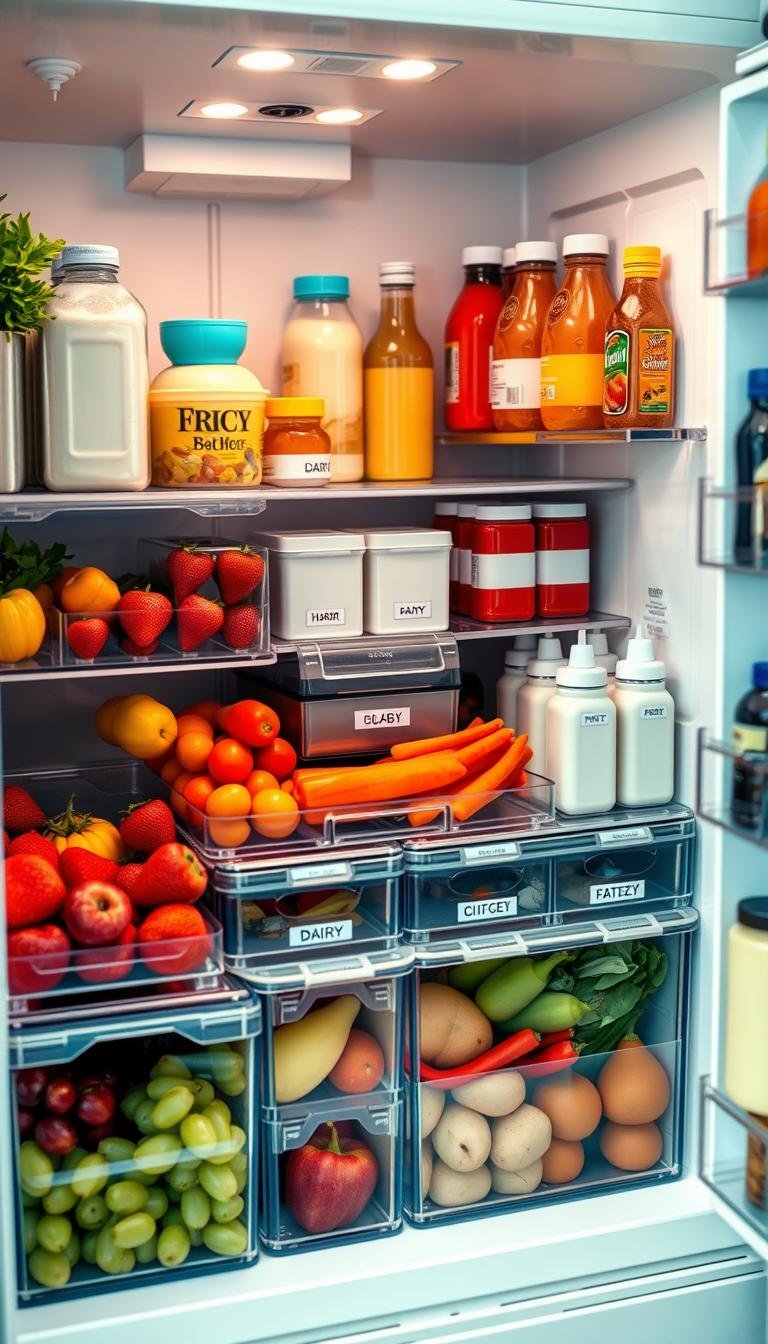
Many U.S. homes struggle with expired sauces, hidden leftovers, and soft produce. This guide opens with a clear problem-solution focus: reduce wasted food and daily fridge frustration without fragile, picture-perfect setups that fail after one grocery run.
The roundup tests products on design, capacity, durability, ease of cleaning, and overall value. Recommendations are renter-friendly and work in small kitchens, including counter-depth and rental refrigerators with tight shelf space.
Readers will get a comparison-ready layout: clear „best for“ use cases, key features, care notes, and practical pros and cons. The decision framework centers on what is stored most—produce, leftovers, drinks, condiments, or freezer items—and the failure mode to fix, such as hidden items, leaks, or crowding.
This guide also covers beyond-the-fridge options like top and side storage for extra capacity without permanent changes. The organizing principle: match organizer type to the food category and how often it is used so systems hold up week to week.
Key Takeaways
- Aim for practical storage that reduces waste, not fragile styling.
- Assess what you store most and the failure mode you need to fix.
- Look for durable, easy-to-clean products suited to rental and small kitchens.
- Each recommendation lists pros, cons, and care needs to aid choice.
- Use top/side-of-appliance options when shelf space is limited.
Why fridge organization fails in real kitchens and how the right organizers fix it
Cluttered shelves and hidden jars are the real test of a storage system’s worth. In many homes, food gets stacked in layers, labels face backward, and small things vanish behind larger containers. The result: expired sauces, forgotten leftovers, and extra trips to the store.
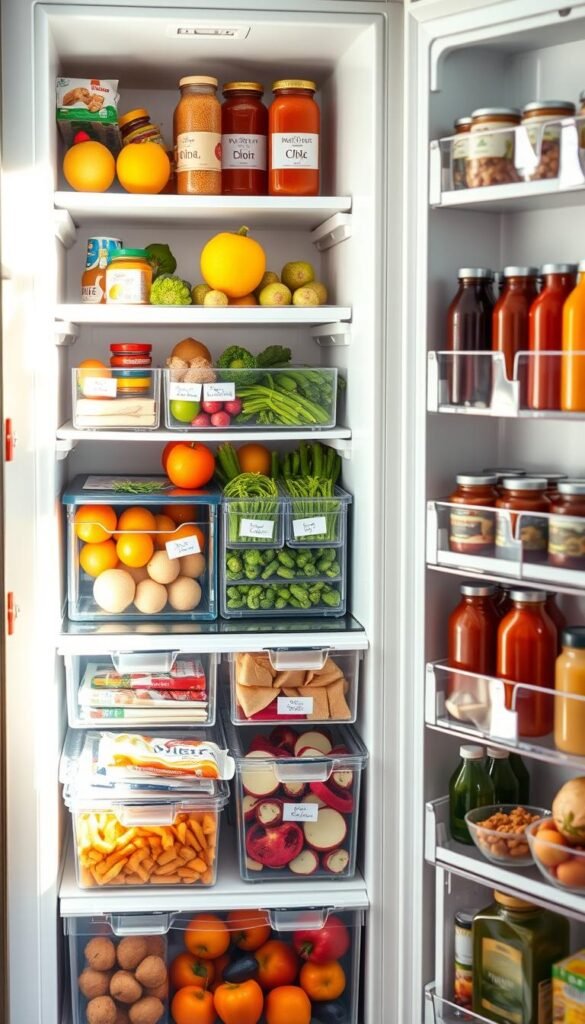
The most common problems: expired food, hidden items, and messy shelves
Hidden inventory wastes money and complicates meal planning. Clear-sided bins and pull-out styles keep items in plain sight so people can see what they have at a glance.
Mixing categories makes mess. Snacks next to raw meat next to produce creates cross-contamination risk and confusion. Category bins — dairy, deli, produce — create simple homes that are easy to maintain.
Problem-solution match: choosing bins, containers, and trays by what you store
- Leak-prone leftovers: sealed containers with gaskets.
- Rolling bottles: a dedicated bottle bin or cradle.
- Vanishing condiments: a turntable for easy reach.
- Freezer chaos: baskets that group similar items.
„The simplest system to clean and return is the one people actually use.“
Renter-friendly upgrades that don’t require adhesive or permanent changes
Look for bins with handles, stackable solutions, freestanding drawers that slide on glass shelves, and turntables. These add useful fridge storage without drilling or tape.
Small-space tip: flexible storage like reusable bags saves room between grocery runs so bulky containers don’t take over a place that needs to stay functional.
What to look for when shopping for fridge organizers in the United States
Size matters: check shelf depth, height clearance, and door swing before buying. Counter-depth models are often shallower, and side-by-side doors need narrower units than French-door shelves.
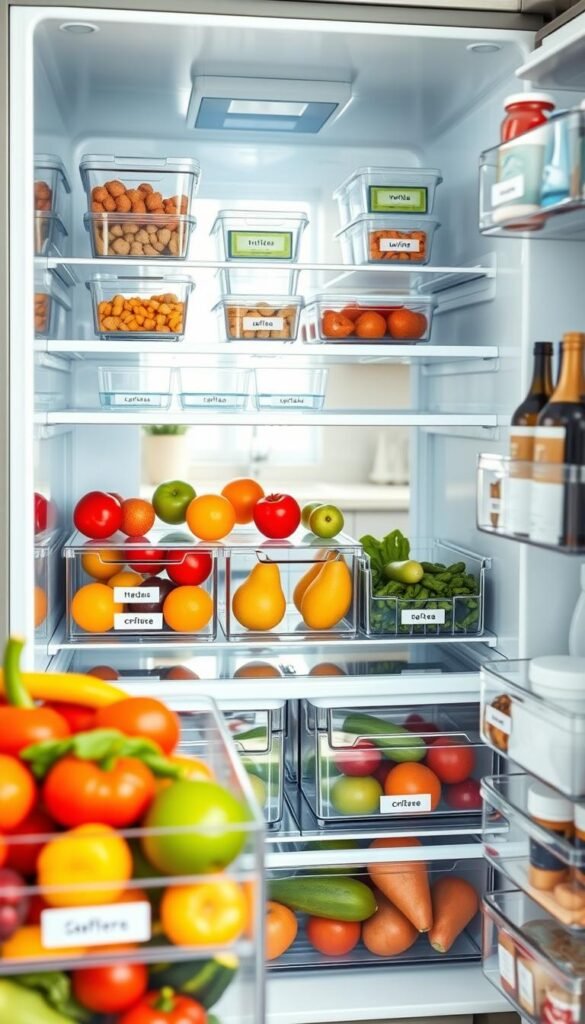
Measure first
Measurement checklist:
- Shelf depth (front to back)
- Shelf height clearance for stacked items
- Door swing interference and hinge clearance
Material matters
Glass resists stains and reheats safely but weighs more. Plastic is light and affordable; quality varies. Wire baskets help freezer airflow but do not stack as neatly.
Design that prevents waste
Choose clear sides for instant inventory, built-in handles for safe pull-out access, and stackable sets to increase vertical capacity without burying items.
Moisture, seals, and care
Notched or vented lids reduce condensation for produce. Gasket lids cut leaks and lock in odor for leftovers. Many storage containers are dishwasher-safe, but several storage bins are hand-wash only—pick what will actually get cleaned.
| Feature | Glass | Plastic | Wire |
|---|---|---|---|
| Durability | High, heavy | Medium, lightweight | High, rigid |
| Care | Dishwasher-safe bases | Dishwasher or hand-wash | Hand-wash; air-dry |
| Best use | Meal prep containers, airtight lids | Modular bins, lids for produce | Freezer baskets, airflow |
For a quick buying guide and budget-minded picks, see a short buying checklist that pairs size and material choices with real-world needs.
Best fridge organizers: quick comparison by use case
This compact comparison shows which solution fits common fridge headaches at a glance.
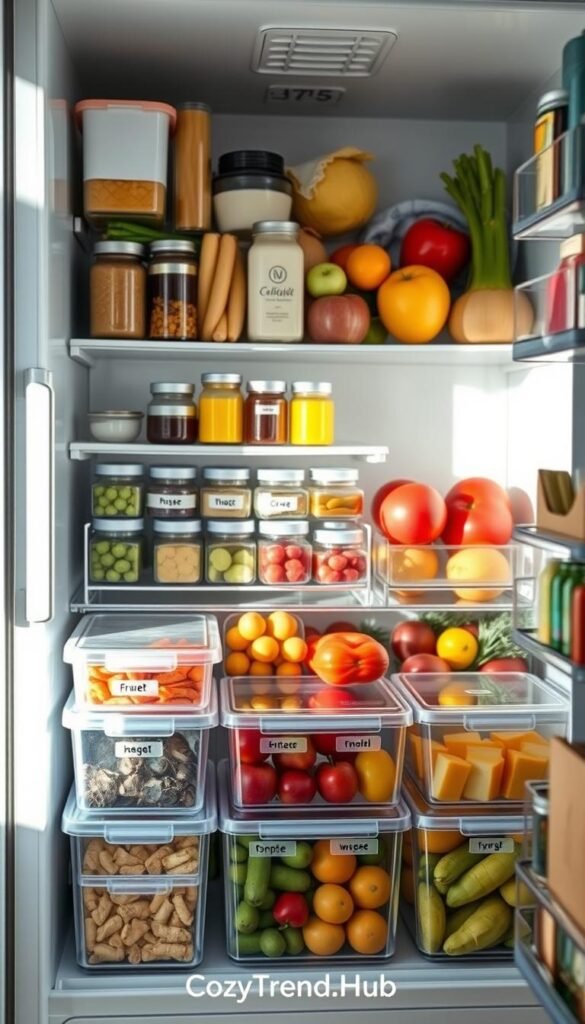
Top picks and who they help
How to use this table: scan the use case, then jump to the matching product block below for details and buying notes.
| Use case | Pick | Top reason | Key spec | Cleaning |
|---|---|---|---|---|
| Leftovers & meal prep | Glasslock container set | Leak resistance & reheating | Multiple sizes; tempered glass | Dishwasher-safe bases |
| Tight shelves / renters | Stasher reusable silicone bag | Collapsible, space-saving | Clear front; sealable | Dishwasher-safe |
| Produce, eggs, bottles | The Spruce by iDesign modular set | Stackable categories | Matchable bins; vented lids | Hand-wash advised |
| Grab-and-go access | Pull-out drawer-style bin | Prevents lost items | Sliding base; wide handle | Wipe or hand-wash |
| Freezer corralling | Sanno wire freezer basket | Keeps small items visible | Coated steel; multiple sizes | Hand-wash; air-dry |
Quick summaries
Containers set: ideal for meal preppers who need airtight lids and oven-safe bases to cut waste.
Reusable bags: a flexible choice for renters and tight shelves; collapse between uses.
Modular bin collection: great for households that want clear, stackable zones for produce, eggs, and jars.
Best overall for fresh storage and leftovers: Glasslock tempered glass container set
Glasslock’s tempered set centers on airtight seals that stop leaks and keep leftovers visible. It suits meal preppers and anyone frustrated by spills, odors, or food that fades before it gets eaten.
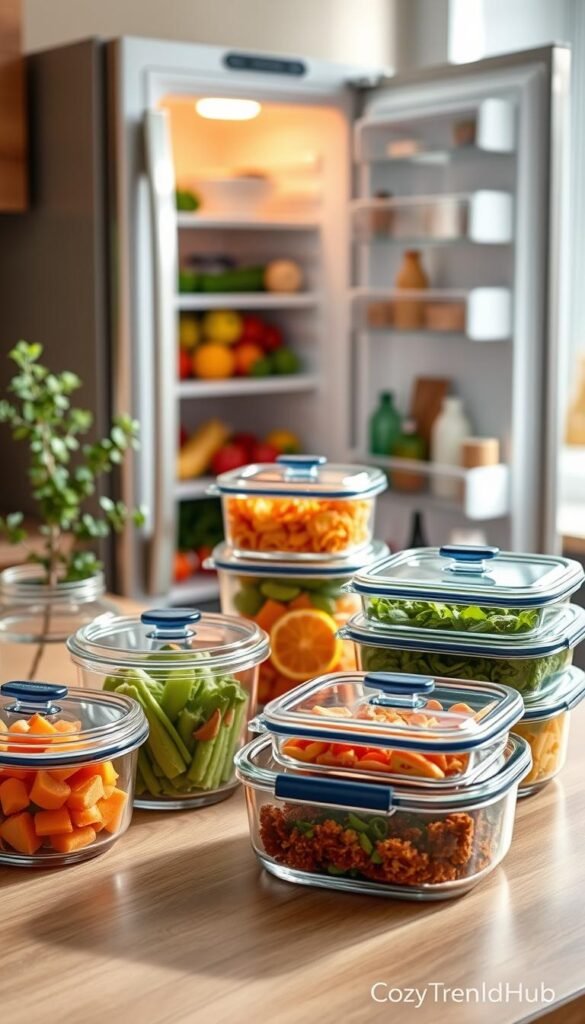
Why it solves the problem: snap-on lids with a gasket create a tight seal that limits air exposure. The tempered glass bases move from freezer to microwave or oven (without lids), so food stays in one dish across storage and reheating.
„Gasket-sealed lids reduce leaks and help keep air exposure low, which supports fresher-tasting leftovers.“
| Spec | Details | Care |
|---|---|---|
| Set | 18-piece (9 glass containers, 9 snap-on lids) | Dishwasher-safe bases, hand-dry lids |
| Capacity range | 0.7‑cup rounds to 6.3‑cup rectangles | Freezer- and microwave-safe (no lids in oven) |
| Materials | Tempered glass bases; BPA-free lids with gasket | Wipe lids; dishwasher bases |
Pros: sturdy glass resists stains and odors, broad size range for batch cooking, and easy cleanup.
Cons: heavier than plastic, less ideal for one-handed kid use.
Buying considerations
Pick a set that includes small rounds for sauces and larger rectangles for proteins and meal batches. Keep a few labeled containers front-and-center as an eat first zone so leftovers get used.
Best for flexible small-space storage: Stasher reusable silicone bags
Stasher silicone bags offer a flexible solution when rigid containers steal shelf space. Made from 100% food-grade silicone, these bags collapse flat when empty so they free up room on narrow shelves and in tiny freezers.
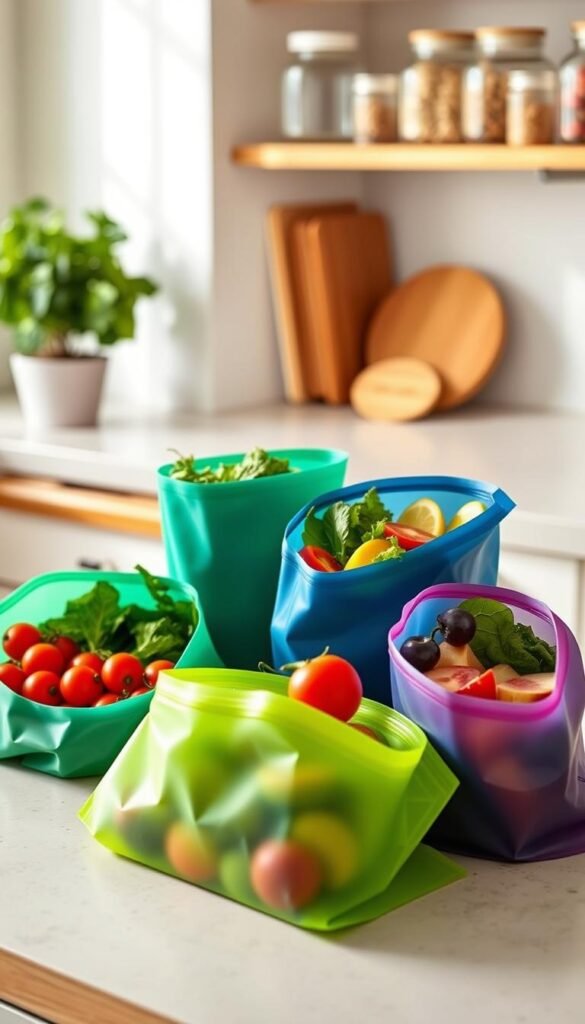
Why this works: the pinch-tight seal reduces air exposure for cut produce, cheese, and marinades. That stops drying and helps prevent spills that make shelves messy.
Key specs and real-world value
The sandwich size holds about 26–28 fl oz — enough for snack portions, chopped veggies, or a small marinade. Bags move between fridge, freezer, microwave, and oven up to 425°F, so one container can cover many uses over years.
Pros and cons
- Pros: reusable, dishwasher-safe, clear front for quick inventory, hot/cold safe, long-lasting.
- Cons: thicker and bulkier than disposable plastic; the seal can take practice to open; higher upfront cost than single-use bags.
„A few dedicated bags for onions, lemons, and shredded cheese keep staples visible and cut waste.“
For a focused guide to silicone bags and testing notes, see this roundup on reusable silicone bags.
Best modular storage bins for everyday fridge organization: The Spruce by iDesign set
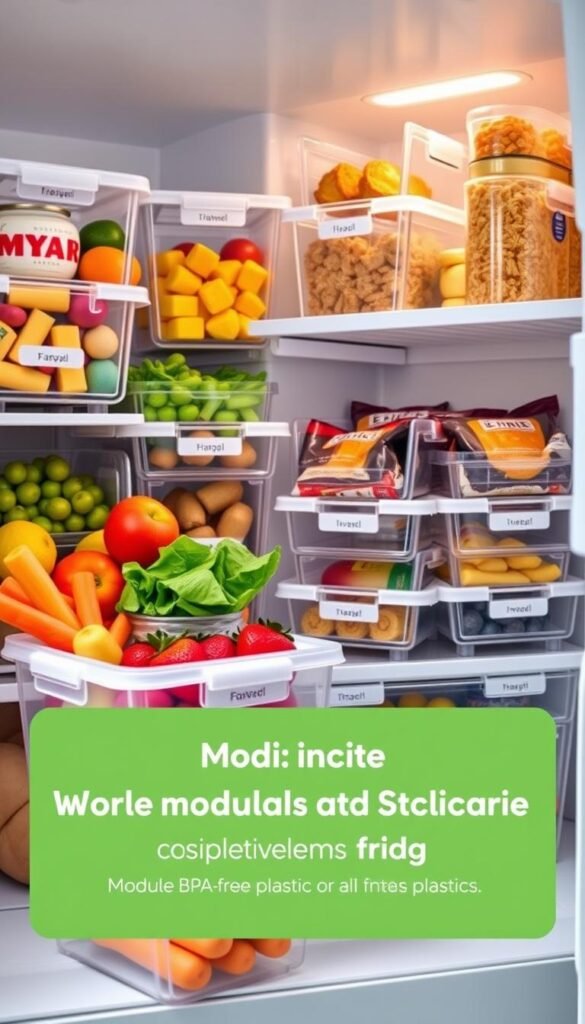
A modular bin system turns messy shelves into clear zones where everything has a home. The Spruce by iDesign 7-piece set is built to group food by category so items stay visible and easy to grab.
Who it suits
Best for: households that want matching bins to corral produce, snacks, eggs, and bottles into consistent zones.
Why it solves common problems
Notched lids reduce condensation on delicate fruit. Clear sides keep inventory visible so items do not get lost in the back. Stackable pieces create a second layer on a crowded shelf without crushing softer foods.
What’s included and fit
The 7-piece collection includes a berry bin, small and large divided bins, two small bins, an egg bin (holds up to 18 eggs), and a bottle bin that fits as many as nine bottles or large cans.
Pros: clear sides cut overbuying, modular sizing adapts to shelf layouts, and pieces are made from 100% post-consumer plastic.
Cons: hand-wash only and the bottle bin’s capacity may not match every household’s needs.
Buying note: start with a smaller set to test fit in a counter-depth fridge or a single zone. Shoppers often compare dimensions and returns at retailers like The Container Store or Crate & Barrel. For related pantry tips, see a short pantry organization guide.
Best specialty picks for small shelves, condiments, eggs, and “lost in the back” items
Specialty solutions target the narrow shelf gaps and condiment clusters most likely to hide food and cause waste. These picks solve three distinct problems: crushed cartons, forgotten small items, and hard-to-reach bottles.

Best egg bin for protected stacking: lidded clear egg organizer
Why it helps: flimsy cartons collapse when stacked. A clear, lidded bin holds up to 21 eggs and the low profile fits tight shelf height. The lid allows safe stacking so eggs stay protected and visible.
Fit notes: fits extra-large eggs; smaller eggs may wobble in the larger slots. Hand-wash only.
Pros: stackable lid, clear count at a glance. Cons: slight wobble with small eggs.
Best for: breakfast station.
Best all-purpose pull-out bin: drawer-style storage bin with easy slide access
Why it helps: items that vanish at the back—yogurt cups, cheese sticks, deli packs—stay visible when the whole bin slides out. Low sides fit under built-in cheese drawers and the durable clear plastic shows inventory.
Fit notes: inner handle edge can feel slightly sharp; check if kids will use it often. Hand-wash recommended.
Pros: full pull-out access. Cons: handle edge caution.
Best for: snack and deli drawer.
Best turntable (lazy Susan) for condiments: rotating tray with high sides and wide handles
Why it helps: rotation beats stacking. A roughly 11.41″ diameter tray brings jars forward without removing them and prevents tipping with high sides and wide handles.
Fit notes: measure shelf depth and door clearance to avoid bumps. The tray rotates smoothly but can squeak; hand-wash.
Bonus renter-friendly use: group small pantry staples in mason jars or jars on the turntable—chopped herbs or lemon wedges stay tidy and visible.
Best for: condiment zone.
| Pick | Key feature | Size / capacity | Care |
|---|---|---|---|
| Lidded clear egg organizer | Stackable lid; clear view | Holds up to 21 eggs; low profile | Hand-wash |
| Drawer-style pull-out bin | Slides completely out for access | Low sides to fit narrow shelf height | Hand-wash; check handle edge |
| Rotating turntable (iDesign / The Spruce) | High sides; wide handles; smooth rotation | ~11.41″ diameter; fits standard shelf sizes | Hand-wash; may squeak |
For a short list of matching storage types and when to choose them, see a focused roundup on fridge organization picks and a related cabinet organization guide.
Best solutions for small fridges, renters, and seasonal overflow
Small kitchens call for practical gear that expands usable shelf and top-of-appliance space without drilling or heavy installs.
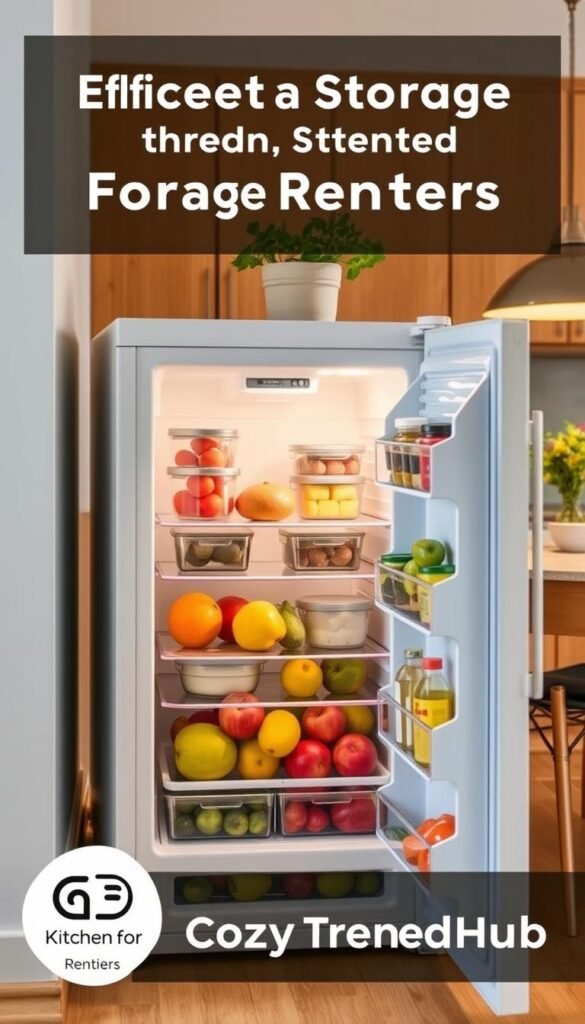
Small-fridge win: OXO set for tight shelves
The OXO fridge organization set works well in narrow top-freezer layouts. Multiple bin sizes and easy-grab handles let users pull items forward instead of unloading a shelf.
Notes: the included egg bin holds 20 eggs and the beverage mat can allow cans to roll unless blocked. All pieces are hand-wash only.
Seasonal surge strategies
For summer produce, add one extra produce bin to a clear zone. In fall, reserve a shelf for fermenting jars and bottles. Use a pull-out tray to stage party platters during holidays so leftovers are easy to reach.
Over-the-appliance and renter-friendly options
Top-of-fridge baskets—water hyacinth or seagrass—hide overflow and look intentional. Metal stackable baskets are easy to wipe and keep items visible.
Decant pantry staples into a large 128‑oz glass jar or a cluster of mason jar sets to cut packaging clutter and make inventory obvious.
Magnetic side-shelf for renters
A removable magnetic shelf holds small jars and spices (rated around 20 lb). It’s a non-permanent way to gain vertical space along the appliance side.
„Many small-space improvements are discoveries people refine over years; fix one friction point first and build from there.“
| Solution | Why it helps | Capacity / fit | Care |
|---|---|---|---|
| OXO multi-bin set | Easy-grab handles; multiple sizes | Fits tight top-freezer shelves; egg bin holds 20 | Hand-wash |
| Woven over-the-fridge basket | Hides visual clutter; stylish top storage | Holds paper goods, extra containers | Spot-clean; air dry |
| Metal stackable baskets | Wipe-clean; visible items; adds levels | Adjustable; professional organizer recommended | Wipe with damp cloth |
| Magnetic side shelf | Non-permanent extra shelf for jars | Holds ~20 lb; great for spices and small jars | Wipe; removable |
Quick tip: choose one problem—lost snacks, overflow top, or seasonal jars—and solve it first. For a short how-to and product picks, see a concise weekly organization guide, a renter-focused under-$50 roundup, or seasonal ideas on a compact inspiration board.
Optional: place a small, unobtrusive email sign-up near this section for readers who want ongoing small-space tips.
Conclusion
A smart purchase starts with one question: what problem is costing the most food or time?
Start by measuring shelf depth and door clearance so any new storage fits your refrigerator and the door closes freely. Pick one category—sealed containers for leaks, silicone bags for flexible storage, modular bins for clear zones—and buy to solve that single issue.
Consider cleaning habits before you shop. Many pieces are hand-wash only; durability and easy care matter for week-to-week use.
Quick recap: sealed glass containers for leftovers, silicone bags for flexible storage, modular bins to group like items, and specialty tools for eggs, condiments, and freezer items. Use clear pieces so inventory is visible and expired food is less likely to be forgotten.
Renters: choose removable, freestanding solutions that add storage without altering the appliance. For current sizing and budgeted product lists, see the Market99 roundup and a set of practical kitchen organization ideas.
If readers want ongoing tips, they can sign up for a short optional email with seasonal refresh ideas and maintenance reminders. Use the comparison table above to match products to needs and make a confident, practical purchase.

One Comment