
Clutter and time pressure make daily life feel chaotic in many households. When space is tight and rental walls limit built-ins, small tasks grow into big stress. This introduction frames a practical, low-pressure plan.
Start by accepting that perfect systems are rare. Give the family grace and aim for simple, repeatable steps that children can follow. The goal is systems that actually work, not showroom order.
What this guide offers: clear steps for decluttering, toy bins, labels, entry setups, clothes and school paper control, plus daily and weekly routines. It also flags product types—open bins, cubbies, label makers, command hooks, plastic drawers, file boxes—and why they help.
Readers who rent, live in apartments, or juggle busy schedules will find renter-friendly, small-space solutions that cut search time, reduce trip hazards, and smooth mornings. Expect practical comparisons and buying notes, not perfection.
Key Takeaways
- Accept progress over perfection and build systems that last.
- Use simple tools—bins, labels, hooks—to reduce daily cleanup time.
- Focus on repeatable routines kids can follow.
- Choose renter-friendly options like command hooks and modular drawers.
- Small changes cut clutter, lower stress, and improve family life.
Start with realistic expectations that reduce stress (and stick long-term)
Aim for systems that free up time, not showroom shelves. This way of thinking helps parents replace perfection pressure with small, repeatable habits. Practical systems reduce stress and last longer in active homes.
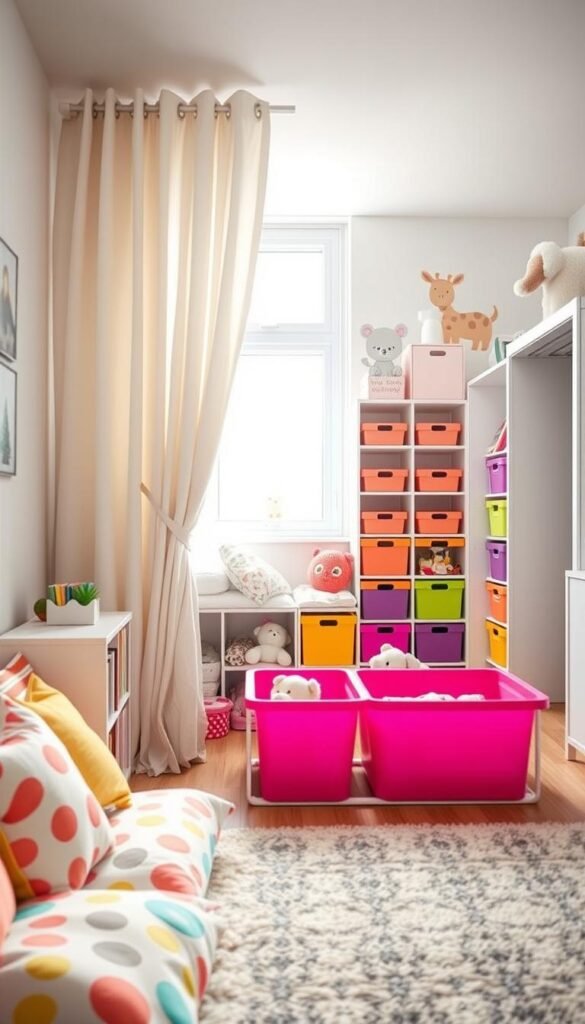
Why “Pinterest-perfect” isn’t the goal
Picturesque setups often hide items or use lids and complex bins. Those solutions slow daily resets. When children are part of the household, simple access beats secrecy.
Choose a “good enough” baseline per room
Define a short reset for each room so maintenance feels doable. For example:
- Living room: one clear surface and a toy containment zone.
- Kitchen: counters clear for cooking; a hook or basket for backpacks.
- Bathrooms & bedrooms: towel hooks and a laundry bin in reach.
- Play areas: open bins and a labeled shelf for quick sorting.
Use a simple decision filter to save time: keep walkways and counters clear, allow imperfect corners like an art table. Pick one visible surface per room to keep mostly clear each day. Choose storage that matches rules—baskets for shoes, low hooks for backpacks—so systems are easy to use.
Maintenance rhythm: a short nightly reset and a weekly tidy prevent collapse after a busy day. Small habits add up and protect family routines over the long term.
Declutter first so you’re not just storing clutter
Clearing clutter first stops storage from becoming a bandage over the real problem. Too much stuff overwhelms any system and overflow comes back in days.
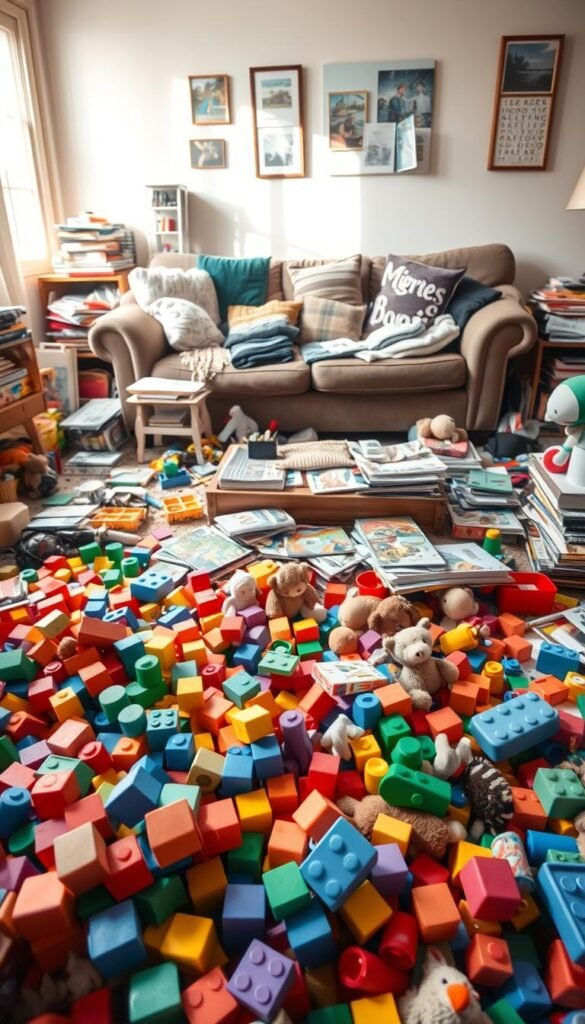
Use-and-love test: keep what a child regularly plays with or shows clear attachment to. Toss broken pieces right away.
Fast, high-impact purge
Pick one drawer, one shelf, or one closet section. Empty it. Return only the most-used things and favorite items. Repeat the next area.
Kid-friendly decision step
Let kids pick a small keep set and a donate set. This reduces fights and builds ownership of the space.
Donation-ready workflow
- Keep a labeled donation box by the exit.
- When full, put it in the car and schedule a weekly drop-off or pickup.
- Use sturdy collapsible boxes, heavy-duty trash bags, and clear keep/donate labels to speed choices.
Seasonal triggers: do a purge post-birthday, after Christmas, and at back-to-school to prevent instant overflow each year.
Less to store means fewer containers, easier cleanup, and systems that hold up. These simple tips make the next step—creating lasting order—much easier.
Create simple organization systems kids can maintain
Make storage obvious so daily cleanups require little thought. Complex setups often fail because children won’t use them consistently, leaving parents to do the work.
Open-top vs. lidded: open-top bins speed pickup. A child can toss toys in and move on. Lidded bins look tidy and stack well, but lids slow the reset and attract piles on top.
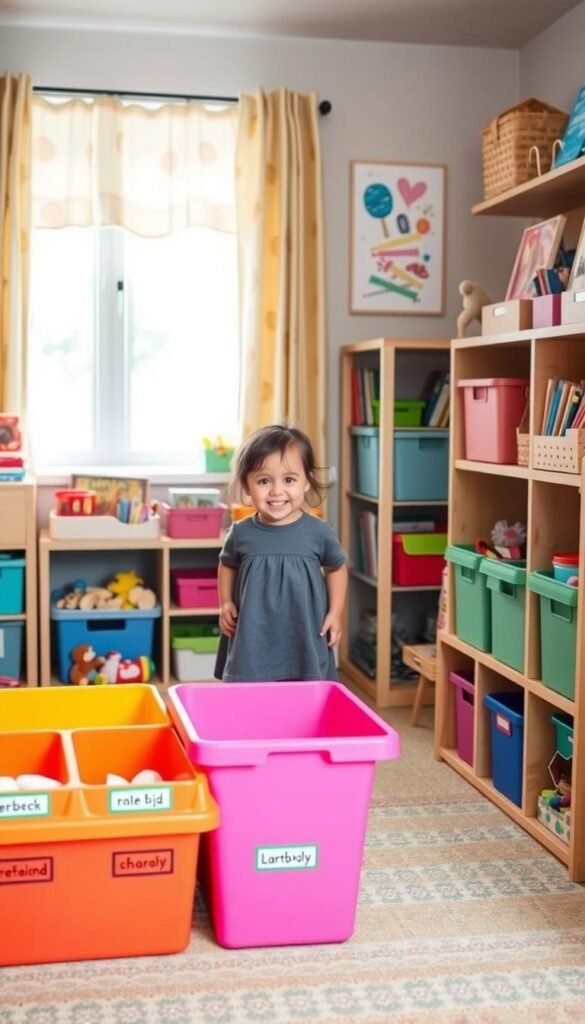
Map a clear home for every category
Assign one place per item type—blocks, dolls, cars—so return is automatic. Use low shelves or labeled baskets that a child can reach.
Keep kid items in kid zones
Create simple rules: kid items live in play areas; shared rooms get one small temporary basket for strays. This prevents toys from migrating through the house and protects family spaces.
- Stackable bins — seasonal overflow and stored sets.
- Open baskets — daily toys and fast resets.
- Latching lids — travel sets and tiny pieces.
For renter-friendly solutions, pick modular carts, fabric cubes, or a single ottoman bin. For product notes and buying ideas, see this short product comparison.
Best organizing with kids for toy clutter in small spaces
Small spaces need clear homes for toys so play stays fun and cleanup stays quick. Start by sorting items into types: blocks, dolls, art supplies, and small parts.
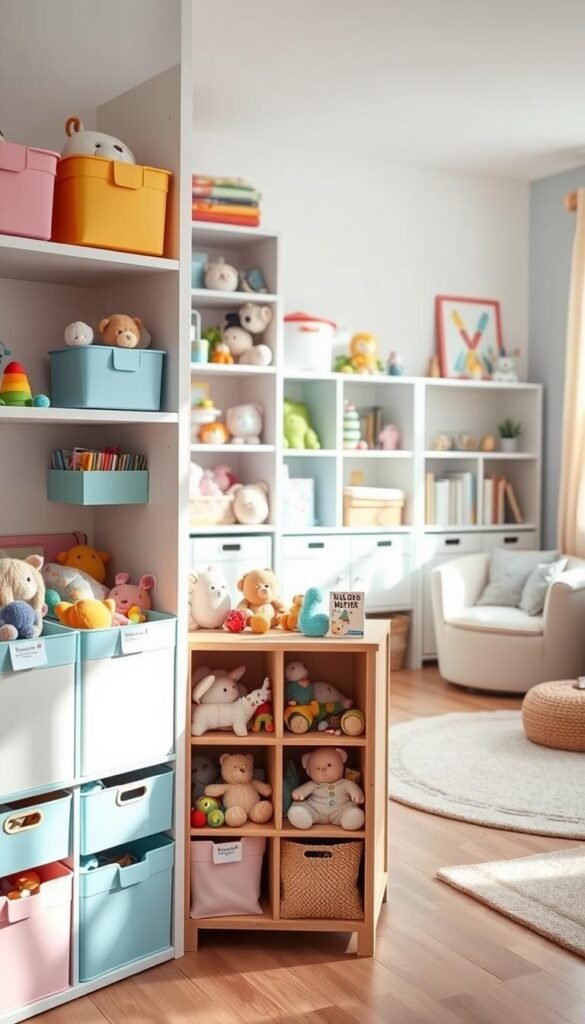
Separate by type so kids can find and return items
One category, one container. Label an open bin per toy type so children locate things fast. This reduces dumping and parental sorting.
Bin and basket setups per room
- Playroom: several labeled open bins for fast toss-in pickup.
- Bedroom: under-bed storage plus one accessible shelf for current favorites.
- Living room: two attractive baskets and a lidded quick-hide for guests.
Cubbies and small drawer organizers
Shallow drawers and cubbies are ideal for LEGO, doll accessories, game pieces, and random things. Small compartments prevent mixing and speed retrieval.
Leave breathing room
Do not overfill. Keep visible empty space in shelves and bins so new toys do not cause instant overflow.
Buying considerations and quick comparison
Check dimensions, weight when full, handles, wipe-clean surfaces, rounded edges, and cube-shelf fit.
| Type | Pros | Cons | Best for |
|---|---|---|---|
| Plastic bins | Durable, cleanable | Can look utilitarian, may crack | Outdoors, messy play |
| Fabric cubes | Light, stylish | Can sag or stain | Shared rooms, living room |
| Wood cubbies | Sturdy, attractive | Heavy, pricier | Long-term bedroom sets |
| Rolling carts | Mobile, great for crafts | Can collect clutter | Art supplies, small toys |
Labeling that actually works for kids of different ages
Clear labels remove guesswork and speed up daily reset work. A simple system prevents parents from becoming the „where does this go?“ bottleneck.
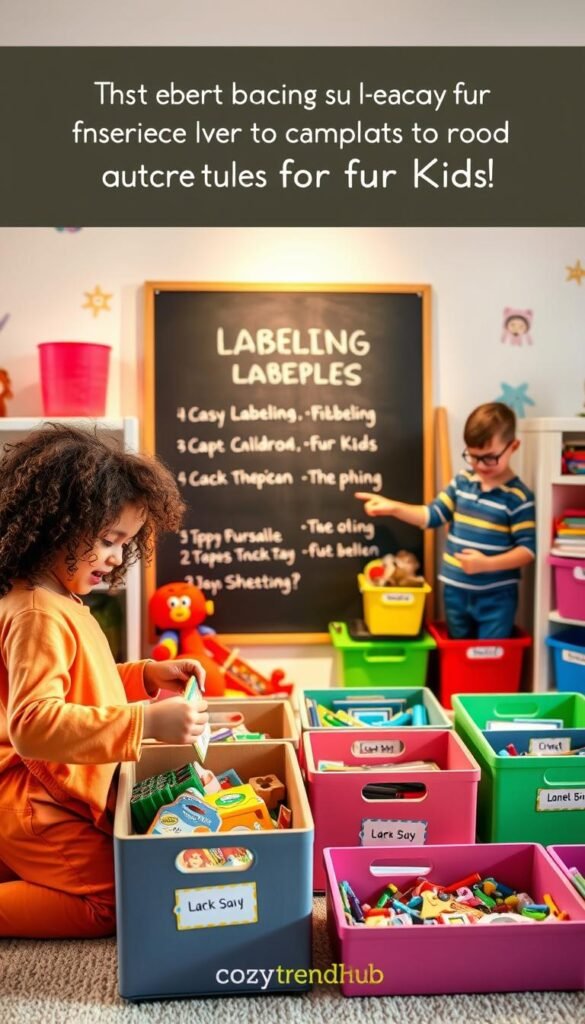
Picture labels and early readers
For pre-readers, combine pictures and words so a child can match visuals to homes. Use icons for shoes, art, and school gear.
Transition to word-only labels as reading improves to keep the system steady.
Where labels give the biggest return
Apply labels to toy bins, dresser drawers, closet zones (school clothes vs sports gear), and craft supplies. These spots cut sorting time most.
Label types: pros and cons
- Label maker: crisp and durable; upfront cost and refills.
- Printable labels: great for pictures; laminate to avoid smudging.
- Handwritten tags: fastest and cheap; less consistent over time.
Color coding and renter tips
Use colors by category or by child to reduce mix-ups. Removable label holders, painter’s tape, or wipe-clean tags work well in rentals.
| Type | Pros | Cons | Best for |
|---|---|---|---|
| Label maker | Durable, neat | Cost, refill tape | High-use drawers and plastic bins |
| Printable | Custom icons, uniform look | Needs printer, laminating for durability | Closet zones and school binders |
| Handwritten | Quick, flexible | Varied legibility, wears faster | Temporary swaps and donation boxes |
Renter-friendly entryway and “mini mudroom” setups for coats, shoes, and backpacks
A renter-friendly mini mudroom keeps coats and shoes off the floor and out of the kitchen path. This small change reduces trip hazards and speeds morning routines.
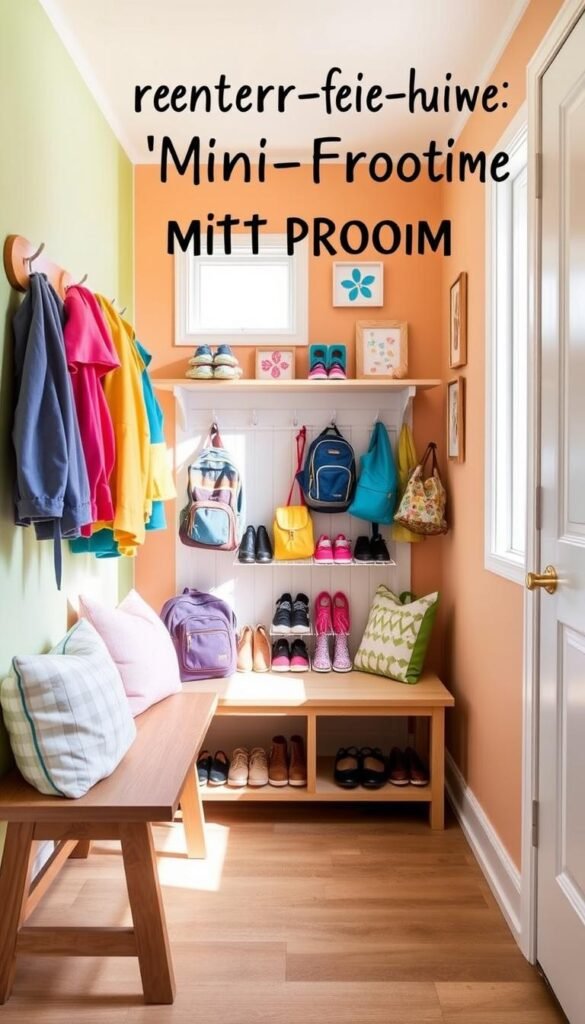
Hook height and reach: place hooks low enough that a child can hang a coat or backpack without help. Aim for reachability so the system works every time.
Drop-zone layout that cuts clutter
One hook per child, a single shoe basket, and a small tray for keys or cards stop spread into the living area. Encourage a nightly reset: anything on the floor goes into the basket.
Apartment-friendly options
- Command hooks and over-the-door racks stick in rentals and use vertical wall space.
- Slim shoe racks and narrow benches give seating without crowding a hallway.
| Choice | When to use | Benefit |
|---|---|---|
| Closed shoe basket | Visual calm, hides clutter | Reduces perceived mess |
| Open rack | Wet shoes, quick drying | Better airflow |
| Bench | Kids who sit to tie shoes | Adds seating and storage |
For product ideas and layout inspiration, see a short guide to mini mudroom ideas and practical entryway organization tips. These options help a house or small home keep the entry way tidy while saving floor space.
Closet and clothes systems that prevent laundry pileups
A small closet that works starts by matching storage to how the family actually dresses each day. Hard-to-reach shelves and mixed piles create laundry backups, not laziness.
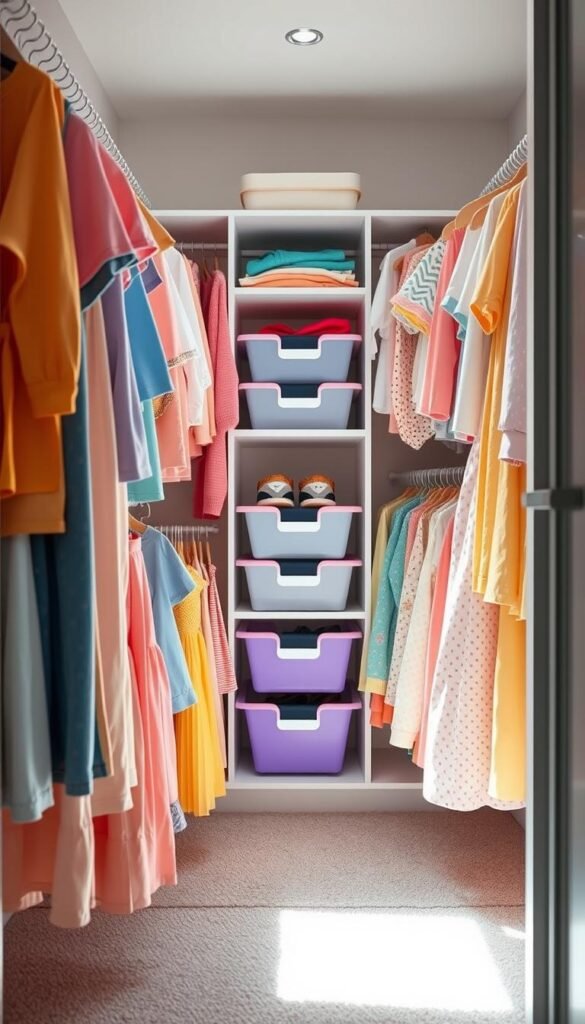
Organize like with like
Group similar items: socks, underwear, pajamas, school clothes, and sports gear each get a clear zone. This makes daily outfit choices faster.
Hand-me-downs and why stacked bins fail
Stacked bins hide contents and force unstacking. That leads to rummaging and re-piling. A drawer lets a parent or child pull one unit and scan contents in one motion.
Plastic drawers and sizing tags
Use clear plastic drawers labeled by size (5T, 6, 7/8). These store hand-me-downs by year so items rotate smoothly. Add simple sizing tags on hangers for overflow.
„Plastic drawers by size turn mystery piles into quick finds and cut duplicate purchases.“
Inventory cards and simple rules
Keep a one-card inventory in each drawer listing key items. Check the card before shopping to avoid repeat buys. A single card per drawer takes seconds to update.
- Best for small closets: shallow drawers with smooth glides.
- When to use bins: only for long-term seasonal storage.
- Garment bags: use for special items or year-to-year keepsakes.
| Option | Pros | Cons | Best for |
|---|---|---|---|
| Plastic drawers | Visible contents, easy one-hand access | Can chew up floor space | Frequent access, small closet floors |
| Stacked bins | Compact vertical use | Hard to access, promotes clutter | True long-term storage, attic |
| Garment bags | Protect seasonal pieces | Not for daily use | Off-season clothes, special outfits |
Buying notes: check drawer depth, glide quality, a clear label area, and the unit’s footprint so it fits a rental closet. For layout ideas, see a practical closet ideas guide and a concise closet organization roundup.
School paper, kids’ art, and permission slips without countertop chaos
Incoming school mail deserves one clear place, not a countertop graveyard. A short habit at the door stops important dates from being lost and prevents piles of art from taking over the kitchen.
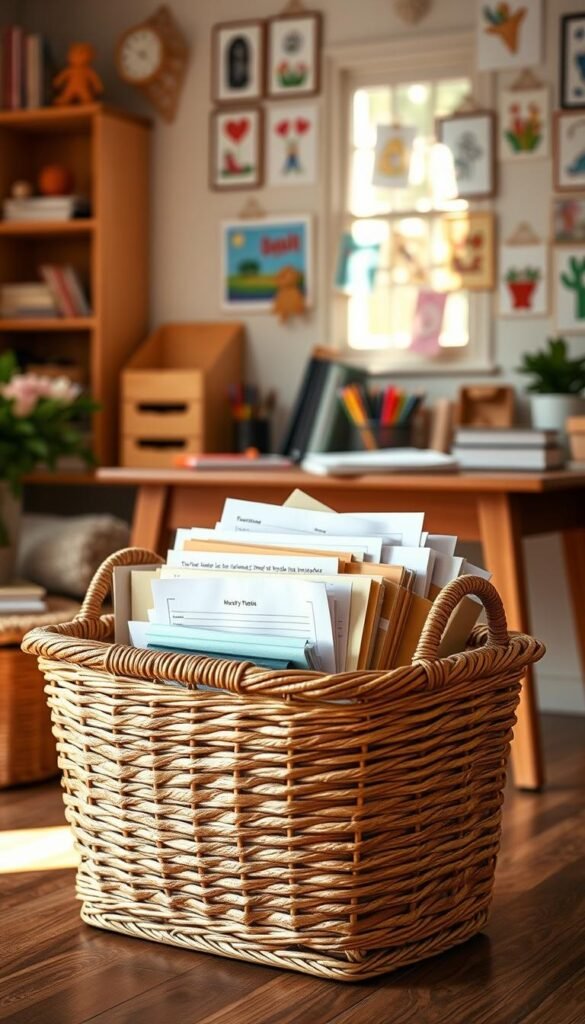
Create one incoming paper “inbox” so nothing gets lost
Adopt a single tray, wall pocket, or folder where every paper lands the moment it comes home. This one-inbox rule removes “temporary” counter stacks and makes sorting fast.
Quick sorting workflow
Decide immediately: recycle, act (sign/return), display, or archive. Treat most items as recyclable; only a few go to the display or file box.
Rotate displays and archive lightly
Keep one frame, wire line, or cork strip for a weekly rotation. Archive about 25–30 meaningful pieces per school year in a labeled file box or portable organizer to save space and memories.
Capture dates the day papers arrive
Add events to a digital calendar the same day and set reminders. Use a wall file or inbox tray near the door and see a short how-to guide for handling paper at home in this paper control guide.
„One inbox and a same-day calendar habit cut late forms and last-minute stress.“
For renter-friendly solutions and a practical study box idea, consider a wall file or portable file box and see these product notes: study box setup and a renter-friendly storage roundup. These tools support repeatable systems that keep paper under control.
Daily and weekly routines that keep the house organized with kids
Short, repeatable rituals keep a home functioning on busy days. Even well-chosen storage fails without simple habits that fit real life. This section offers practical ways to protect systems and save time each day.
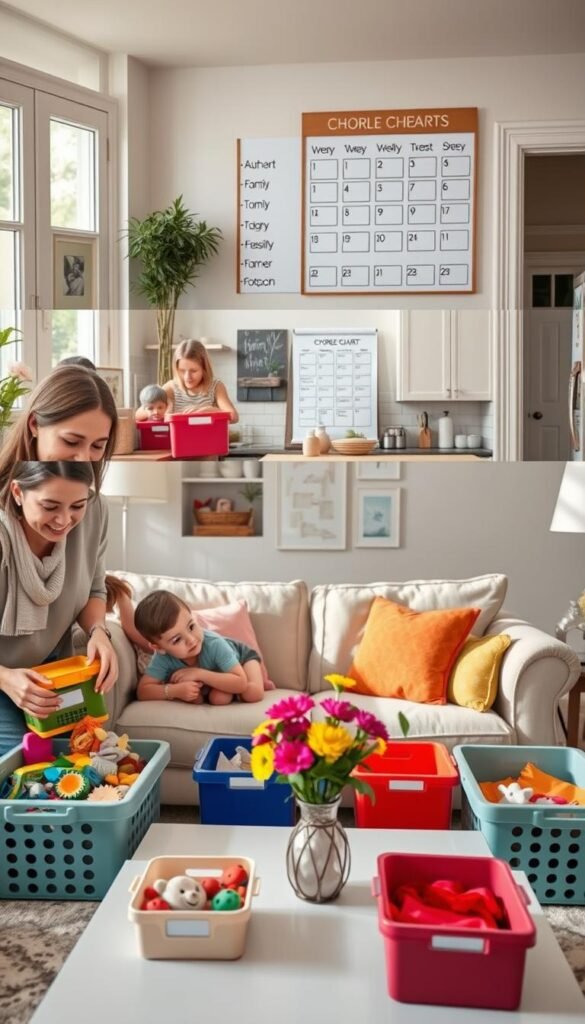
Clean-before-bed quick checklist
Keep a three-step reset: clear floors, return toys to labeled bins, and stage backpacks by the door. This short routine makes mornings calmer and cuts lost-item searches.
Make pickup quick and fun
- Set a 10-minute timer and play a favorite song; make it a playful „race.“
- Use a reusable kitchen timer or phone alarm to mark the end of the session.
Assign one “their thing” task
Give each child one simple job to own: match socks, restock toilet paper, or place grocery items away. Clear ownership spreads work beyond parents and builds habit.
30-minute family tidy
Split tasks by age and attention span: small children pick up soft toys; older children handle trash, paper inbox, or quick vacuuming. Keep jobs visible and time-limited.
Prep-time routines for school days
Stage lunches, set out clothes, and place gear near the door the night before. Use a labeled staging bin to reduce decision fatigue and speed departures.
On hard days, aim for a minimum-viable reset: clear high-traffic zones only. For further practical tips on keeping a clean house while parenting, see this short guide at keeping a clean house.
Conclusion
Pick one problem area and fix it first. Start by choosing the most painful zone — entry, toy clutter, or school papers — and apply one simple system for a week.
Follow the clear sequence: set realistic expectations → declutter → pick kid-friendly storage → label → build entryway, closet, and paper workflows → protect it with short routines.
Renter-friendly tools like hooks, bins, drawers, and file boxes work in small spaces. For a quick declutter how-to, see a short guide to declutter the play area.
Choose products to solve a real problem — faster pick-up, tiny-piece control, paper capture, or laundry access — not just for looks. See a toy rotation idea here and closet baskets options here.
Maintenance tip: short nightly resets and seasonal purges stop clutter from returning. The goal is less stress, safer walkways, and quicker mornings—not a showroom finish.
FAQ
Why isn’t a Pinterest-perfect room realistic when children live in the house?
Children create daily messes as part of play and development. Aiming for a workable, “good enough” baseline reduces stress and makes systems sustainable. Focus on durable storage, easy-to-reach homes for items, and routines that fit your family’s pace rather than perfection.
How do parents choose a realistic baseline for each room?
Assess how the room is used, set a simple target (clear floor, one play zone, accessible storage), and keep decisions time-limited—spend 15 minutes deciding what stays. Pick one visible standard per room so everyone knows the expectation.
What’s the fastest way to declutter a child’s drawer, shelf, or closet section?
Work in 15–20 minute sprints. Pull out one drawer or shelf, sort into keep, donate, and toss piles, and put back only items that are used weekly or have clear sentimental value. Use clear bins to contain the keep pile so it’s easy to maintain.
How can families make donation drop-offs reliable instead of procrastinating?
Keep a labeled donation box in the garage or car. Schedule a monthly or quarterly drop-off with a reminder on the family calendar. Treat the box like an appointment—if it’s full, drop it off that week.
When should parents do a seasonal purge for children’s items?
Key trigger points are after birthdays, after major holidays like Christmas, and at back-to-school time. Also purge at season changes when clothing and gear rotate; that prevents storage from filling with unused items.
Open-top bins or lidded bins—what’s better for daily cleanups?
Open-top bins are best for quick, kid-led pickups because children can see and reach items. Lidded bins work for long-term storage or small pieces parents want contained. Use a mix: open bins for everyday toys, lidded for seasonal or fragile items.
How do you teach children to return items to “a home for everything”?
Start simple: label the spot, show the child how to put items away, and repeat for a week. Use picture labels for pre-readers and short routines like a two-minute tidy before snacks. Praise effort and keep expectations age-appropriate.
How can parents contain kid stuff so shared spaces stay usable?
Create dedicated zones—one basket in the living room, a shelf in the hallway, a corner in the bedroom. Keep those zones stocked with the approved toys for that area. Rotate toys to reduce overflow and move excess to storage when not in use.
How should toys be separated to make them easy to find and put away?
Group by type: blocks, figurines, craft supplies, cars, stuffed animals. Use labeled bins or baskets so children learn where each category belongs. Keep frequently used categories at child height and small pieces in clear, small containers.
What storage solutions work best in small spaces for toy clutter?
Slim shelving with fabric cubes, under-bed drawers, wall-mounted bins, and rolling carts maximize vertical and hidden storage. Prefer modular pieces that serve multiple rooms and can be reconfigured as needs change.
How much empty space should be left on shelves and in bins?
Leave about 20–30% empty to avoid instant overflow. Empty space makes cleanup faster, keeps toys visible, and reduces decision fatigue when kids choose what to play with.
What should parents consider when buying bins for toys?
Choose size that fits the toy type, durable materials that clean easily, and colors or clear fronts that help kids identify contents. Avoid tiny bins for big toys and prioritize stackable or nestable designs for flexibility.
When are picture labels more useful than word labels?
Picture labels help pre-readers and early readers match items to a home independently. Pair pictures with a short word label to support reading development and transition to word-only labels over time.
Where do labels matter most in a family home?
Labels are most helpful on bins, drawers, closet zones, and craft-supply containers. These are high-traffic spots where quick recognition saves time and prevents items from migrating room to room.
Which labeling method is best: label maker, printable labels, or handwritten tags?
Label makers are durable and uniform. Printable labels are quick and customizable for themed zones. Handwritten tags are fast and personal. Choose based on durability needs and how often you’ll update labels.
How high should hooks be for kids in an entryway or mini mudroom?
Mount hooks at child eye level for independence—around 36–48 inches for school-age kids and lower for toddlers. Provide adult-height hooks too so backpacks and adult coats aren’t mixed with kid gear.
What entryway options work for renters and apartments?
Over-the-door hooks, Command hooks, slim shoe racks, and freestanding narrow organizers work well without drilling. Choose temporary options that protect walls and fit small footprints.
How can families prevent laundry pileups and lost clothes?
Use labeled bins for socks, underwear, and school clothes. Do a quick sort each night into family laundry cycles. Keep a small bin for hand-me-downs by size, and rotate items out when bins fill to prevent build-up.
Why do stacked bins often fail for hand-me-down storage?
Stacked, opaque bins hide contents and make accessing lower bins a hassle. Clear or labeled drawers that slide out make it easy to see sizes and reduce the chance of duplicates or forgotten items.
What’s a simple system for incoming school paper to avoid countertop clutter?
Create one incoming paper “inbox” near the door, sort mail and school papers daily, and immediately record dates on a family calendar. Keep a rotating display area for current projects and archive favorites in a labeled file box.
How many art projects should be kept per school year?
Keep a small, curated set—5–10 meaningful pieces per child per year. Photograph or scan extras and store digital versions to save space while preserving memories.
What short routines help keep the house tidy on a daily basis?
A five- to ten-minute pre-bed pickup, a quick breakfast/after-school launch routine, and a weekly 30-minute family cleanup split by age reduces clutter. Use timers, music, and age-appropriate tasks so routines feel doable.
How can parents involve kids in chores without adding daily friction?
Assign one clear responsibility per child—putting away shoes, sorting socks, feeding pets. Keep tasks short and consistent, and use simple checklists or visual charts so kids know what to do independently.
