A balcony can look inviting and still be unsafe in gusts. Light items slide, chairs tip, and small planters can become hazards. This guide focuses on stable, renter-friendly solutions that stay put without permanent mounting.
Readers will learn how to assess exposure, choose heavier materials, and favor low-profile pieces that reduce movement. The emphasis is on models that fit a small space, work through seasons, and are easy to store.
This article serves renters and small-space dwellers who need practical, immediate fixes. Each category will note who it’s best for, tradeoffs, and quick comparison criteria to simplify buying decisions.
Safety and ease matter: prioritize items that minimize maintenance, limit movement in strong wind, and avoid anything that could fall. A clear decision framework follows, plus shopping pointers and links to curated mixes like this curated balcony mix.
Key Takeaways
- Wind can turn light decor into hazards; stability is the priority.
- Measure exposure, pick low-profile shapes, and use heavier materials.
- Solutions should suit renters and small spaces, and be seasonal-friendly.
- Each product category will include who it’s best for and tradeoffs.
- Focus on items that reduce movement, maintenance, and storage needs.
Windy balcony problems that ruin outdoor decor
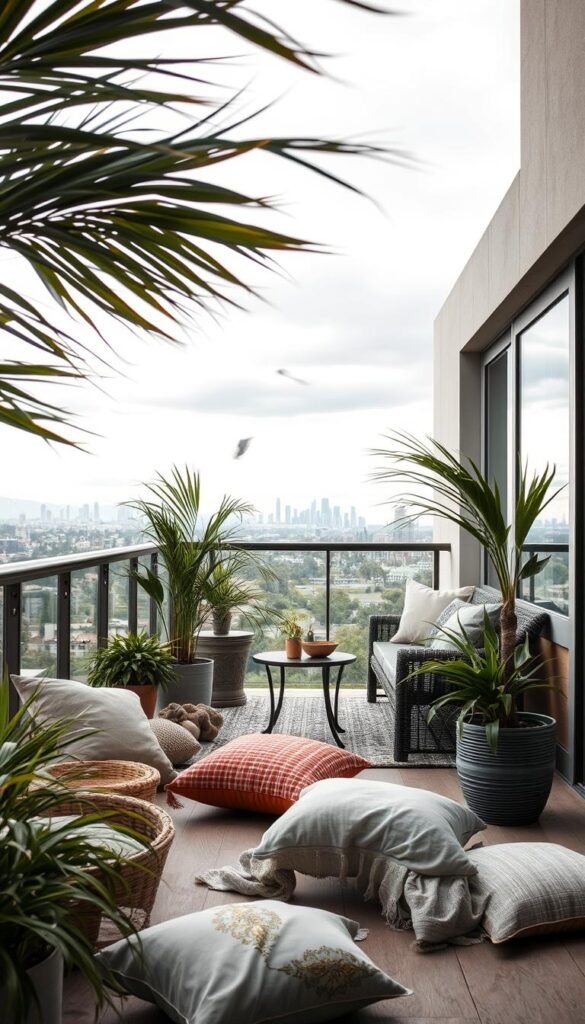
A few strong gusts reveal which pieces will stay and which will go. Gusts create lift and leverage, so tall, light items tip first while loose accessories become airborne. This is how wind turns a neat setup into a hazard.
Why gusts tip furniture, break plants, and make hazards
Gusts act like brief bursts of force that push up and sideways. Tall chairs and narrow tables catch that force and can rotate or tip. Lightweight planters rock until soil loosens and pots fall.
What windy conditions look like in real life
Common scenarios include corner gusts, sudden bursts between buildings, and steady crosswinds on higher floors. These conditions stress legs, casters, and railing mounts in the same way.
When wind damage becomes a safety issue
For renters, nothing can fall. Items off a ledge risk liability and angry neighbors below. The safe buying rule: favor heavier furniture, windbreaks, weighted planters, and secure mounts.
- Avoid: flimsy bistro sets, tall narrow planters, unsecured lanterns, and loose cushions left out in storms.
- Look later: weighted pieces and screens; see this curated balcony mix.
Measure your balcony’s wind exposure and layout before you buy
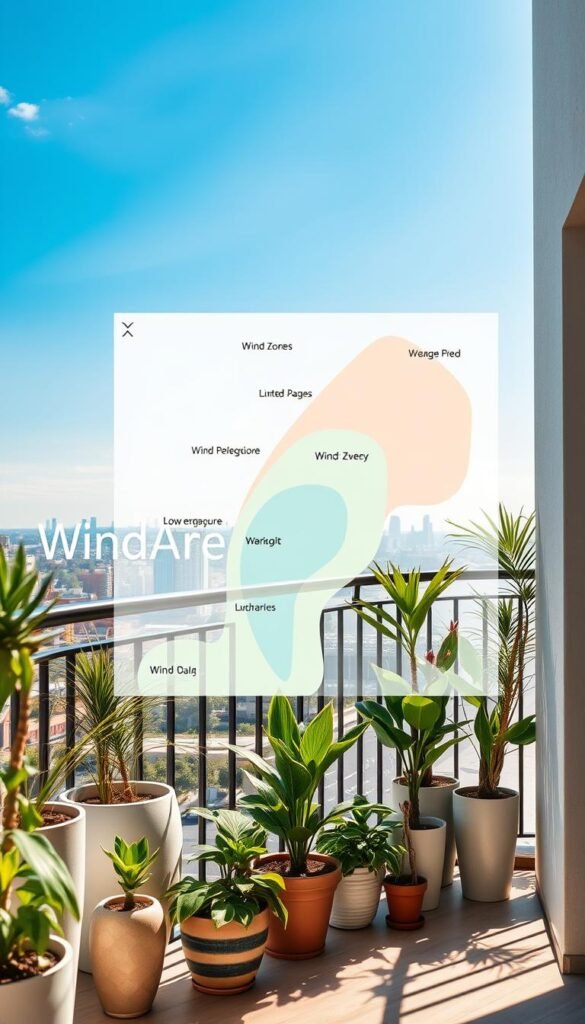
Start by mapping which edges and corners get the strongest gusts so purchases match real exposure.
Find wind direction and the most exposed side
Observe flags, tree movement, or smoke near the building over a day. Check a weather app for prevailing direction and note which railing face gets hit first.
Use natural shelter and spot wind tunnels
Walls and corners create sheltered spots. Adjacent buildings can either block winds or funnel them through gaps.
Watch for narrow passages or straight-through airflow between towers. Those are the zones that flip chairs and spill planters.
Measurements and quick purchasing tiers
Measure railing height, usable depth, and door swing. Mark where a screen could attach without drilling the wall.
| Exposure Level | Buying approach | Key decision criteria |
|---|---|---|
| High | Heavier materials, wide bases, anchor points | Weight, base width, attachment method |
| Moderate | Midweight pieces plus stabilizers or tie-downs | Profile height, storage needs, base width |
| Low | Lighter items with low profiles and removable cushions | Weight, portability, storage method |
One simple layout tip: place heavier pieces against a wall or in a corner to act as anchors. Then add seating in the sheltered zone. This way the area feels intentional and items stay put even in strong winds.
Balcony rules and renter-friendly limits that affect decor choices
Start every purchase by confirming what the lease or HOA allows on shared ledges and rails. This step prevents fines, forced removals, and safety problems.
Weight limits, drainage, and “nothing can fall” safety basics
Check load rules: buildings often list maximum weight per square foot. Heavier pieces add stability, but renters must balance weight with structural limits and portability.
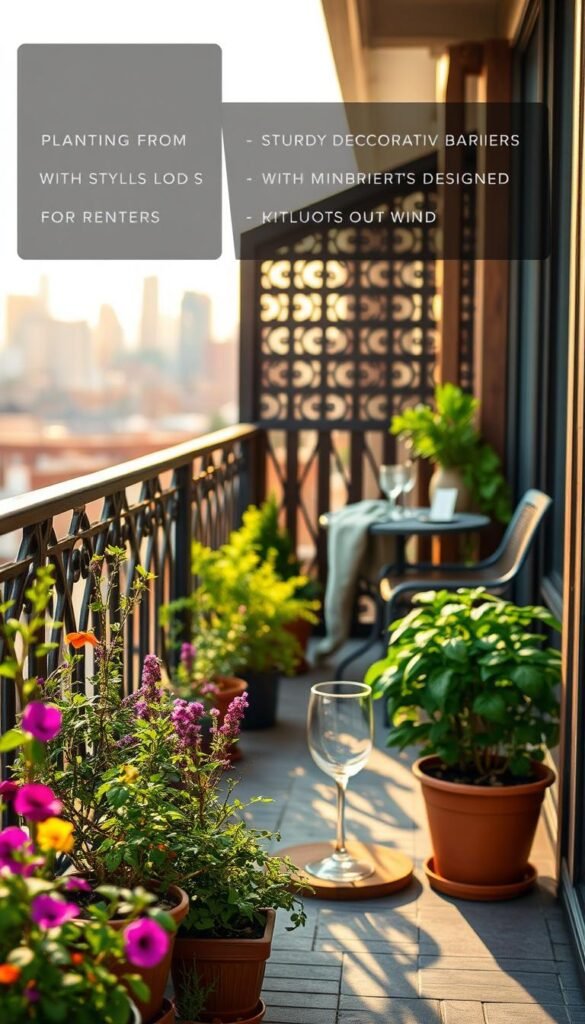
Drainage matters: use saucers, trays, or self-watering inserts to stop runoff to neighbors below. Good drainage reduces stains, pests, and lease disputes.
Watering logistics for plants in sun, shade, and wind
Sun and wind dry pots quickly. Pick fewer, larger containers and self-watering systems so watering stays manageable.
Shade needs less frequent watering but still needs trays to prevent soggy floors and mold.
Why open-flame cooking is a bad fit
No grilling: open flames raise fire risk and can violate rules. Wind worsens flare-ups and makes heat control unsafe.
- Check lease/HOA before mounting or hanging anything.
- Balance weight with building guidance and renter-friendly portability.
- Pick planters with stable bases and drainage control to limit mess and pests.
See a practical summer reference in this balcony summer guide to match purchases to local conditions and rules.
Best outdoor decor for windy balconies: what to prioritize
Choose pieces that stay put—weight, low center of gravity, and wide bases should guide every buy. Stability is the primary filter; style and comfort are secondary upgrades once the core safety rules are met.
Go heavier, lower, and more stable instead of taller and lighter
Core priorities: weight + base width, low center of gravity, and secure placement. These three features reduce tipping and lift in strong wind.
- Who this suits: high-floor or coastal properties that need maximum protection.
- Alternate approach: partially sheltered spots can use midweight pieces with straps or anchors.
Choose wind-resistant shapes and bases
Look for low profiles, rounded edges, and wide legs that sit close to the ground. Avoid tall, narrow silhouettes and large flat faces that catch gusts.
Furniture with a broad, solid base or a tucked-in design resists movement better than thin, delicate frames.
Decor that doubles as wind protection and privacy
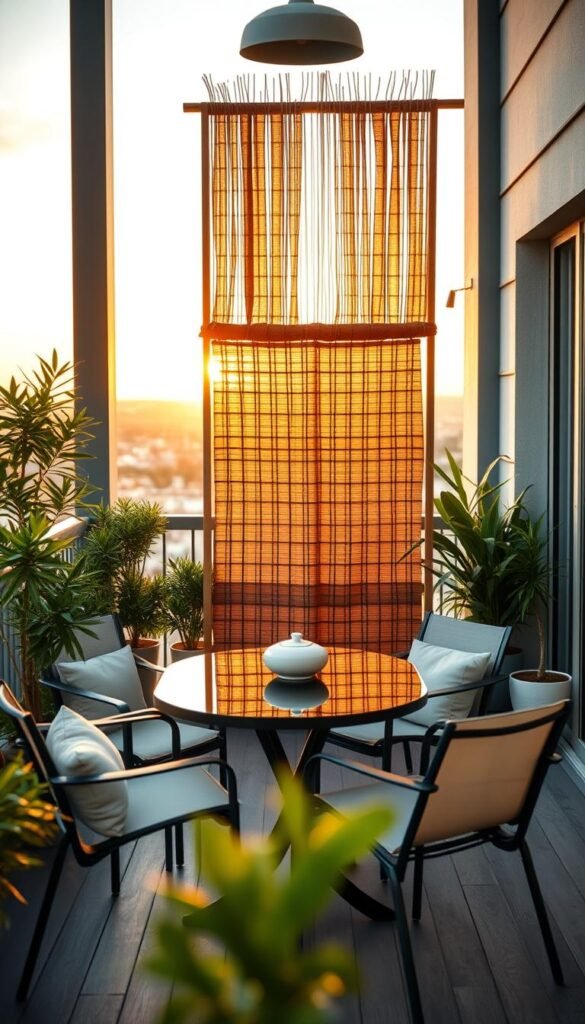
Multiuse pieces save space and add function. Privacy screens, planter walls, and trellis panels block wind while improving the look.
Quick decision matrix:
| Problem | Upgrade | Best outcome |
|---|---|---|
| Chairs move | Heavier frames or anchored bases | Stable seating |
| Planters tip | Wider, heavier containers | Secure planting |
| Sitting feels cold or gusty | Add a screen or planter wall | Comfortable zone |
Pros/cons: heavier furniture offers protection but is harder to move. Modular systems are flexible but need careful placement to avoid shifting.
Common mistakes: buying tall, narrow pieces first, over-accessorizing, or relying on umbrellas that fail in strong gusts. Prioritize function to keep the space safe and inviting.
Wind-resistant materials that hold up on small balconies
Pick materials that resist lift and require minimal upkeep in small, exposed patio spots.
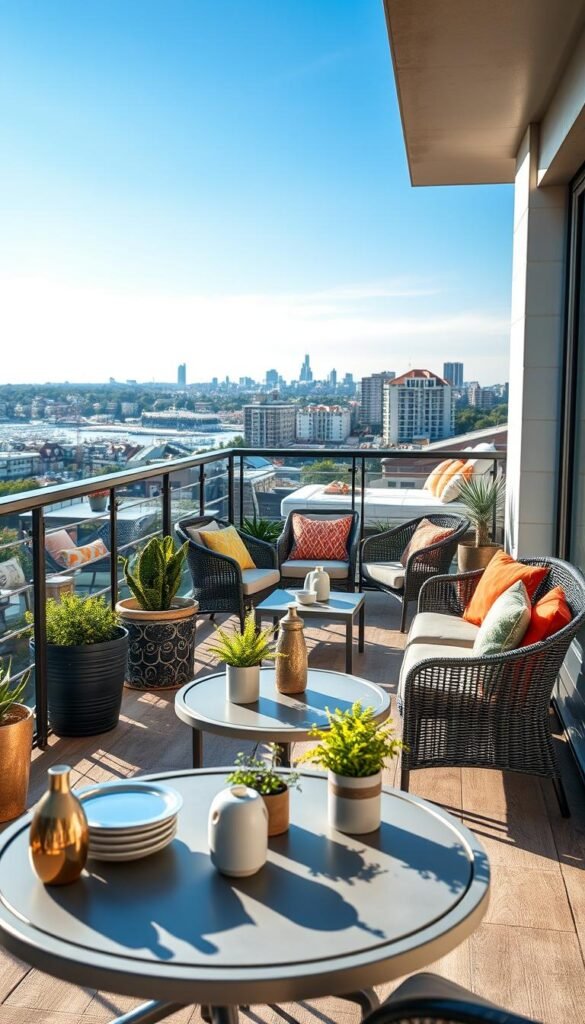
Material choice shapes how stable furniture feels and how much upkeep it needs. Renters should pick pieces that offer mass or secure placement without heavy installation.
Concrete
Pros: very high weight, low maintenance, long-lasting.
Use: anchor a seating zone with one concrete side table or planter that rarely moves.
Steel and aluminum
Steel: adds heft and stability. It resists bending but may need powder coating to limit rust in humid areas.
Aluminum: resists corrosion and suits wet climates. It is lighter, so choose wide bases or add ballast.
Hardwoods, composites, and recycled HDPE
Hardwoods (teak): dense, wind-stable, and handsome. Expect occasional cleaning and oiling.
Composites: wood-look with less maintenance. Often lighter than solid wood; stability depends on footprint.
Recycled HDPE: durable, moisture-resistant, and holds up to sun and weather without frequent refinishing.
| Material | Stability | Maintenance | Small-space fit |
|---|---|---|---|
| Concrete | Very high (anchors area) | Low | Best as one or two foundation pieces |
| Steel | High (heavy frames) | Moderate (protect finish) | Good with wall placement |
| Aluminum | Moderate (lightweight) | Low (corrosion resistant) | Needs wider bases or ballast |
| Hardwood (teak) | High (dense) | Moderate (clean/oil) | Premium look; move with care |
| Composite / HDPE | Moderate to high | Low | Durable, good in humid living areas |
Quick guidance: high-wind areas benefit from heavier concrete or steel. Coastal or humid zones may favor aluminum or HDPE to resist corrosion. Match weight and base width to the space before buying to keep the area safe and pleasant.
Outdoor furniture that won’t blow around in high winds
A smart furniture plan starts with low profiles and heavy anchor pieces that resist sudden gusts. This section gives clear choices by category, specs to scan, and who each option suits.
Tables
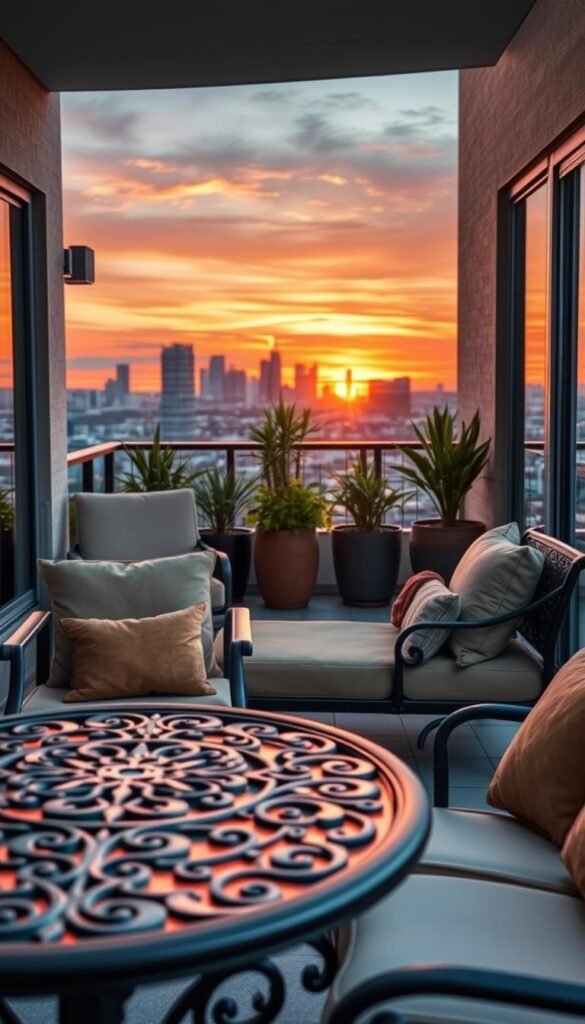
What to look for: pedestal or wide four-leg bases, heavier tops such as teak, steel, or concrete, and a low center of gravity.
- Specs to note: weight (40+ lb), base type (pedestal or broad legs), footprint (wider than tall).
- Pros/cons: very stable but harder to move; concrete tops anchor a zone; teak offers warmth and mass.
- Best for: high-rise exposure and anchored seating zones.
Chairs
Sturdy teak or steel frames beat lightweight resin sets in strong gusts. Prioritize chairs with broad leg stance and attachable cushions that lock in place.
Specs: frame weight, leg stance width, whether cushions secure.
Benches
Benches add linear mass and reduce tip risk. Place against a wall to act as an anti-tip anchor and save floor space.
Best for: narrow patios and renters who want stable seating without many pieces.
Loungers and recliners
Choose low-profile loungers that sit close to the floor. Teak or aluminum options work well; folding models must lock securely and be stowed quickly when not in use.
Sectionals and modular seating
Push modules into corners, use connector clips, and pair with a heavy coffee table to limit shifting. Check module weight and connector strength before buying.
Swings and hammocks
Only consider these if engineered anchors are allowed and installation meets weight ratings. Safety first—do not improvise mounting.
| Category | Key spec | Quick „who it suits“ |
|---|---|---|
| Tables | Weight 40+ lb, wide base | High-rise zones |
| Chairs | Sturdy teak/steel frame | Renters wanting durable seating |
| Benches | Long footprint, heavy | Tiny patios needing mass |
Comparison criteria: product weight, footprint, center of gravity, leg stance width, glide feet, and whether cushions attach. For curated picks and affordable options, see a concise apartment guide at apartment balcony solutions.
Shade options for windy areas without the umbrella headaches
A stable shade strategy focuses on anchoring near existing walls and railings. This section looks at practical options that give sun protection without adding risk.
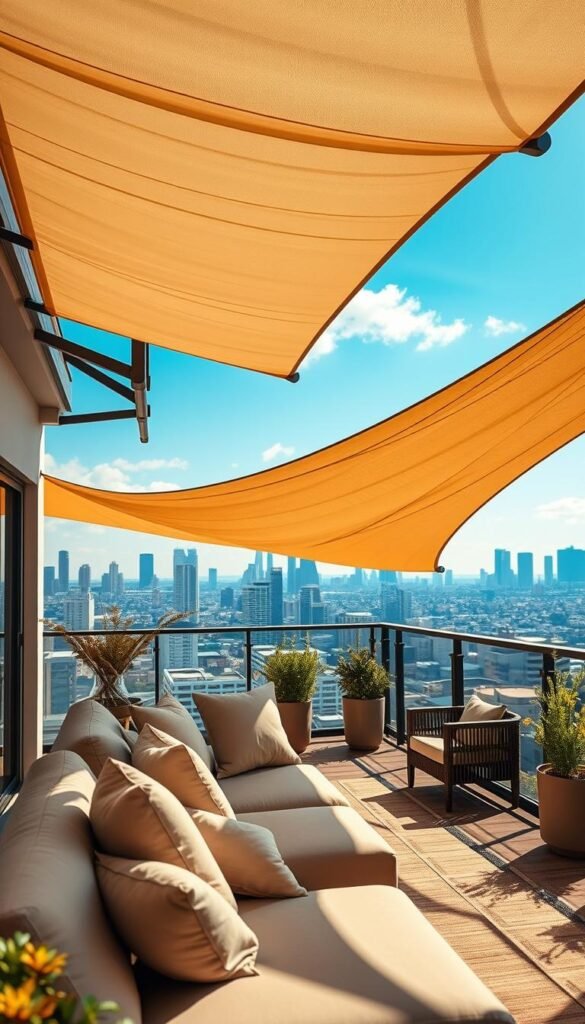
Why patio umbrellas are often a poor choice
Umbrellas act like sails: large canopies catch wind, bases tip, and frames bend. That creates damage and safety risks below.
„In gusts, a center-post umbrella can flip faster than you can close it.“
More secure shade approaches
Wall-mounted shades and railing-attached canopies stay put and use existing structure as anchors. Half-parasol styles that sit against a wall are another stable option.
- Clamp-on and railing systems that avoid drilling are renter-friendly.
- Look for quick-stow designs and UV-resistant fabric.
- Check wind ratings, attachment points, and how fast a cover closes.
One real-life example: a narrow balcony uses a wall-side shade to keep a seating corner usable without a center-post umbrella.
Practical tips: verify building rules, prefer clamp mounts, and skip shade if exposure makes any canopy unsafe.
Windbreaks and privacy screens that also upgrade your design
Windbreaks can make a seating area usable while adding privacy and visual structure. The right screen reduces gust impact, tucks zones into sheltered spots, and gives a defined design statement without heavy construction.
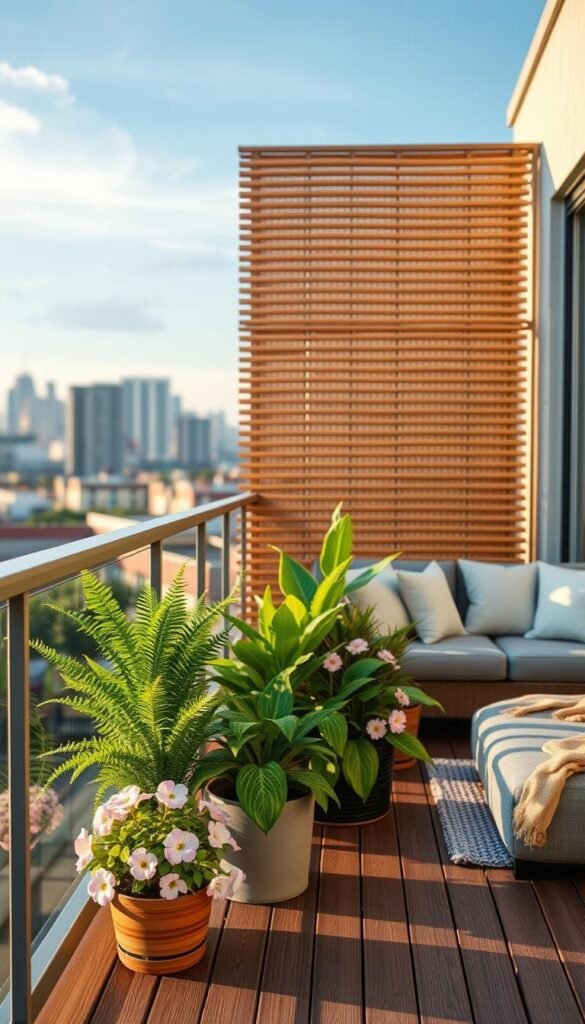
Railing fabric screens: quick, renter-friendly protection
Fabric railing screens attach with ties or clamps and are ideal when drilling is not allowed. Look for reinforced grommets, UV-resistant weave, and close-fit straps to limit flapping.
Pros: lightweight, removable, easy to install. Cons: may flap if loose and offer variable wind permeability.
Slatted panels and partial fencing: a modern room feel
Rigid slatted panels create a structured „outdoor room“ look. They resist movement better than loose fabric and can define dining versus lounging areas.
Mounting usually needs approved clamps or rail brackets. They are heavier and may require landlord sign-off.
Trellis and vines: soften the view and break gusts
A trellis provides a stable structure for climbing plants. Pair with a heavy planter at the base so the system stays grounded.
Design tip: train vines gradually to avoid a top-heavy load that could lean the trellis in strong breezes.
Tiered planting: a layered wind buffer
Layer plants by height: tall at corners, medium along the midline, and low at the edge. This breaks airflow in stages and limits turbulence near seating.
Combine planter weight, plant choice, and staggered placement to create living protection that also supports a small garden and private living zones.
| Type | Attachment | Opacity | Renter-friendly |
|---|---|---|---|
| Fabric railing screen | Ties/clamps | Medium | High |
| Slatted panel | Brackets/clamps | High | Medium |
| Trellis with vines | Planter base/stand | Variable | High |
| Tiered planting | Planters only | Variable | High |
Position screens to protect seating and anchor them near a wall or corner when possible. For quick protection ideas and mounting options, see a practical guide on how to protect your patio from gusts at balcony wind protection and budget-conscious solutions at affordable patio upgrades.
Planters and plants that survive windy balcony conditions
Use fewer, larger containers and wind-tolerant species to keep plants healthy and prevent tipping hazards. Low, flexible growth bends in gusts and rarely snaps.
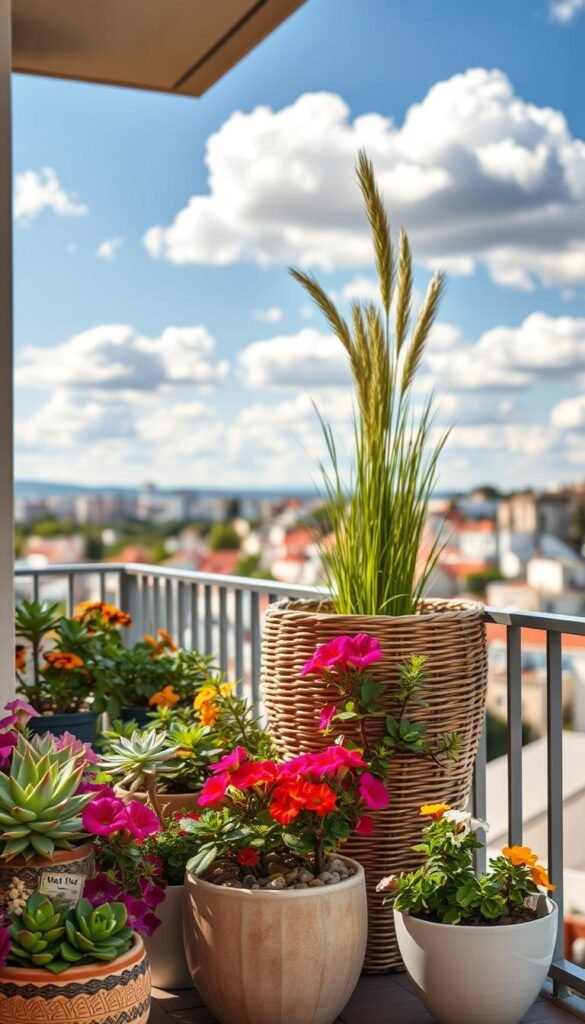
Low-lying, sturdy choices
Rule: low and flexible plants outlast tall, brittle stems. Begonias and groundcover geraniums tolerate movement better than thin-stemmed varieties.
Sunny, dry areas
Sun lovers: pelargoniums (geraniums), marigolds, petunias, ornamental grasses, and Mediterranean herbs like rosemary, lavender, sage, and basil. These plants handle heat and reduced water cycles.
Shady zones
Choose structure with large leaves: fatsia, bamboo in pots, and hostas add fullness without constant sun. These plants cut wind turbulence and improve the garden look.
Container guidance and a simple example
Prefer heavy troughs and wide pots made of stone, ceramic, or thick resin. Avoid many tiny pots that tip. Example layout: secured heavy trough along the railing, medium pots at corners, and low plants near seating.
- Railing planters save space but must lock down.
- Floor pots are safest when wide and heavy.
- Hanging baskets need wind-stable hangers or skip them in very exposed areas.
For plant selection tips and more examples, see this planting guide.
Vertical decor ideas that stay secure in small spaces
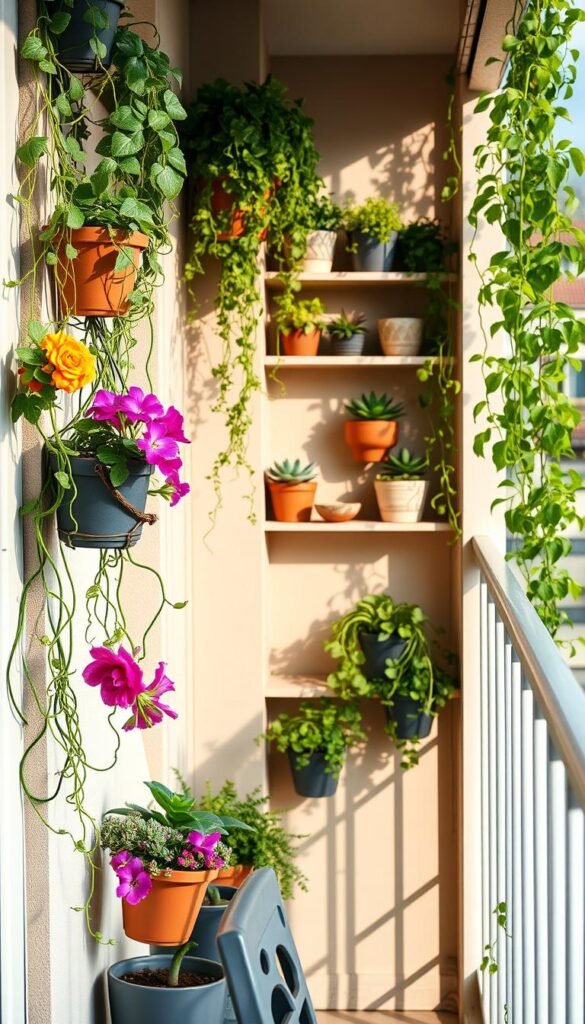
Vertical layouts free floor space and turn walls into functional layers that hold plants and small furniture safely.
Why verticals matter: they increase usable space and keep low-lying items off the floor where movement and sliding occur.
Wall trellis and ladder shelving
Wall trellis systems work well when renters use tension mounts or multi-point anchors that avoid large holes. Anchor at several points to reduce wobble and increase structure.
Ladder shelving creates plant tiers without full shelving units. Choose wider-foot ladders and put heavier pots on the bottom shelf to avoid top-heaviness.
Hanging and railing planters with minimal swing
Hanging planters look great but can swing. Use rigid bracket systems, short hang lengths, and locking rail clamps to limit motion.
„Secure, low-swing brackets turn hanging plants into stable design features.“
- Who this suits: renters wanting green space with little floor furniture.
- Buying criteria: load rating, clamp vs screw attachment, rust resistance, and easy removal.
- Quick tip: well-secured verticals also act as partial wind buffers and increase privacy without bulky pieces.
| Option | Attachment | Best use |
|---|---|---|
| Wall trellis | Tension or multi-point anchors | Tall plant walls and vine support |
| Ladder shelving | Free-standing with wide feet | Tiered plant displays, small furniture storage |
| Railing planters | Locking clamps/brackets | Edge planting without floor pots |
For small apartment guidance and mounting ideas, see this small apartment balcony guide.
Outdoor rugs, textiles, and accessories that won’t become flying debris
Textiles and small accessories are usually the first items to go airborne on an exposed balcony. A clear plan keeps things tidy, safe, and pleasant in changing weather.
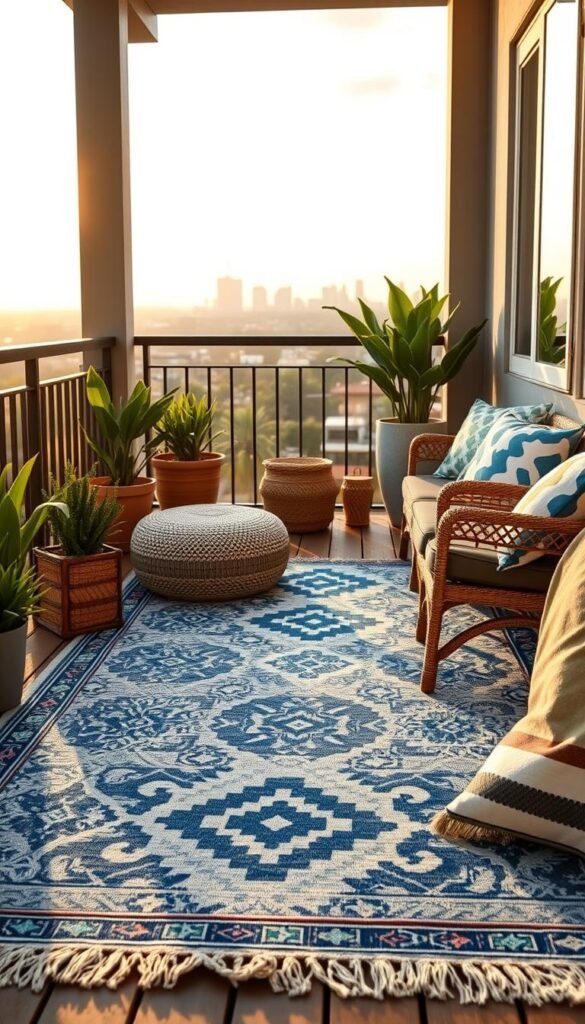
Renter-friendly ways to keep rugs from lifting at the corners
Core risk: low-pile rugs lift at edges and can slide under furniture legs. Use rug corner grips, a grippy back, or double-sided outdoor tape where allowed.
Add weight by placing a stable side table or bench on rug corners. That pins the edge without tripping hazards.
Cushions and throws: what to store and when
Quick-dry cushions with Velcro straps can stay out on mild days. Loose throws and lightweight pillows should be stored when wind or storms are forecast.
- Keep a small deck box or indoor bin near the door for fast stowing.
- Choose UV-resistant fabrics that dry quickly after rain.
- Use simple tie-down straps for large cushions if leaving them out briefly.
Buying considerations: pick rugs with grippy backs, look for furniture-grade ties, and test how well items shake out and dry. For curated rug choices, see this guide to outdoor rugs.
Setup and anchoring tips that prevent tipping and sliding
A careful anchoring plan turns loose furniture into a stable, usable zone.
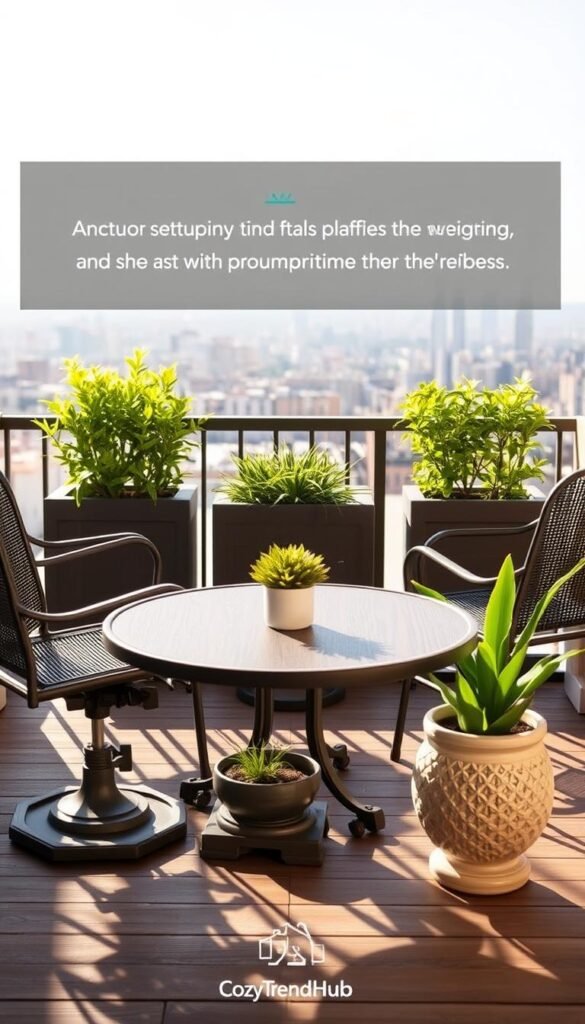
How to add weight safely to furniture and decor
Stabilize with weight before using straps or clamps. Choose heavy materials like steel or stone pieces when possible.
Use purpose-made sand or water ballast bags and heavy planters at the base of screens. Avoid stacking unstable objects or gluing items together.
Placement tricks: use walls and corners to create a sheltered seating area
Place the heaviest furniture against the wall side and tuck seating into corners to block gusts. That creates natural protection and a cozy layout.
Designate the windiest edge as a „wind zone“ with secured planters or a slatted screen. Move delicate items closer to the door.
What to avoid on exposed railings and ledges
- Avoid small pots, loose candles, and lightweight lanterns that can fall or slide.
- Do not rely on DIY ballast that can leak or break; use rated weights and commercial anchors when needed.
- Skip hanging items with long swing lengths unless brackets lock tightly.
| Method | Renter-friendly | Why it works |
|---|---|---|
| Heavy planters | Yes | Add mass at base of screens |
| Clamp brackets | Yes | Attach without drilling |
| Ballast bags | Yes | Temporary weight that drains |
| Permanent anchors | No | Alters structure; needs permission |
Quick safety check: before leaving or when storms are forecast, confirm nothing can lift, roll, or slide—especially on smooth flooring. These simple checks protect neighbors below and keep the space usable in strong winds.
For more protective screen ideas see patio windbreak ideas and seasonal setup tips at summer balcony ideas.
Buying checklist for comparing options and building your affiliate shortlists
A clear comparison view makes it simple to match pieces to a small space and real exposure. Use the checklist below to score candidates before adding them to an affiliate block.
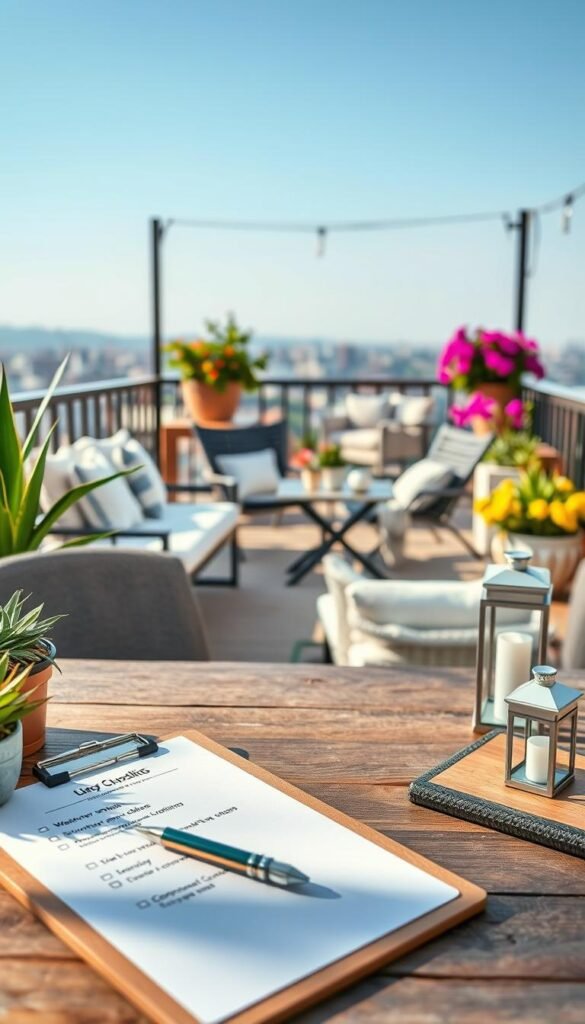
Buyer-ready checklist items
- Category, dimensions (L×W×H), and usable depth
- Weight and base width (stability metric)
- Material and finish (maintenance needs)
- Attachment method or ballast option
- Storage needs and seasonal stow plan
Quick comparison table
| Category | Key spec | Small-space fit | Maintenance |
|---|---|---|---|
| Tables | Weight 40+ lb, wide base | Corner or tuck-away | Wood: oil; Steel: coat |
| Screens | Bracket type, opacity | Railing-mounted or clamp | Fabric: wash; Panels: wipe |
| Planters | Footprint, ballast capacity | Floor troughs or railing clamps | Ceramic/concrete: low; HDPE: wipe-down |
| Vertical storage | Load rating, anchor points | Wall ladders, slim shelves | Check hardware, clean periodically |
Seasonal and maintenance rules
Year-round stay: heavy stone or steel pieces and well-secured panels with rust-safe finishes.
Store: cushions, loose textiles, lightweight accessories, and folding items during storms or winter to protect the garden and keep the space tidy.
Affiliate shortlist sorting
- Ideal for high exposure: heavy, anchored options with a wide base.
- Ideal for renters: clamp-mounted screens and railing-friendly planters.
- Ideal for tiny space: foldable frames and tuck-away shelving.
- Ideal low-maintenance: HDPE, concrete, and coated metals.
Conclusion
Wrap up with a simple plan: measure exposure, pick heavier materials, favor low profiles, and add secure screens or planters where rules allow.
Keep renter safety in mind: nothing can fall, drainage must be controlled, and textiles need a storage plan for storms or winter.
Most reliable strategy: fewer, heavier anchor pieces plus stable vertical or railing elements rather than many small accessories. Use sturdy plants in wide pots to add softness without risk.
Next steps: build a short list by category—furniture, screens, planters, shade—then compare by weight, footprint, and attachment. Buy in phases and test placements before finalizing.
For guidance on heavy, stable seating and materials, see a practical note on heavy pieces and stability that complements this article.