
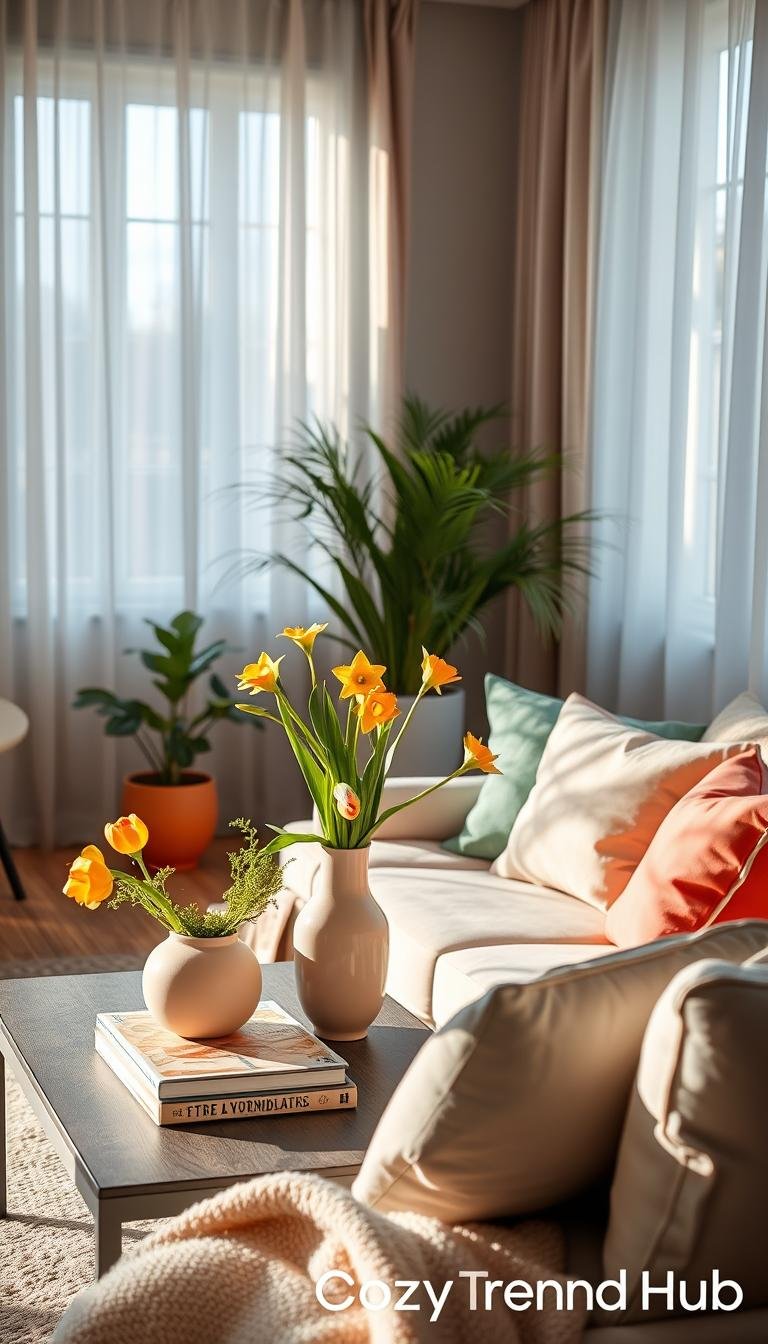
Problem: Refreshing a low-light rental often falls flat because colors read muted, the room feels smaller, and one overhead fixture casts harsh shadows.
Solution: Focus on lightweight, renter-friendly pieces that add brightness and reflect light without a costly overhaul.
The guide prioritizes items that boost visible light and life. It recommends starting with layered lighting, then mirrors and metallic reflectors, followed by textiles and pops of seasonal color. Each pick suits small footprints and easy storage.
Readers will get clear buying cues: who benefits, which problem each item fixes, and what to check before purchase — size, bulb type, opacity, and removability. The approach works with a neutral foundation (white, greige, beige walls and rugs) so accents can rotate year after year without clashing.
Key Takeaways
- Start by improving layered lighting rather than swapping big furniture.
- Use mirrors and metallics to reflect existing light and open the room.
- Choose renter-safe, lightweight items with compact footprints.
- Swap textiles and small accessories for seasonal color that stores easily.
- Each recommendation lists who it helps and what to check before buying.
Why spring decor feels harder in a dark apartment (and what to prioritize)
When windows are scarce, even cheerful accents often look muted and the room feels tight. That makes a seasonal refresh feel like an uphill task. The good news: small, targeted changes shift perception without renovation.
Low natural light problems
Low natural light flattens color and reduces contrast. Walls, rugs, and textiles can appear washed out.
Shadows deepen, which drags down the mood and makes a small room feel more confined. Seasonal accessories alone rarely fix this.
The refresh strategy: what to do first
Prioritize in this order to save money and time:
- Lighting — improve diffusion and add layered sources.
- Reflectors — mirrors and metallic surfaces that bounce what light you have.
- Textiles & small accents — introduce colors and warmth in swappable pieces.
Renter-friendly rules
Avoid permanent changes. Use plug-in fixtures, removable hooks, tension rods, and pieces that store flat or stack. These choices respect the lease and make seasonal swaps easy.
„Brightness in a low-light space is not just more light; it’s softer spreads, fewer hard shadows, and surfaces that reflect.“
The overall spring refresh strategy is simple: add warmth with soft bulbs and layered textures, add life with greenery and stems, and add color with low-commitment pieces that can be swapped or stored.
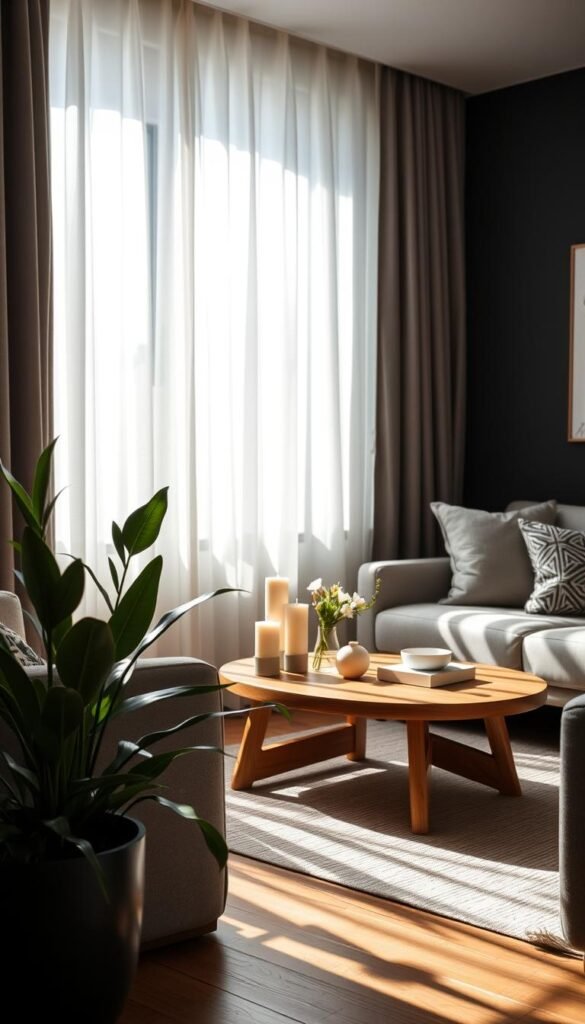
Lighting upgrades that create “instant daylight” without harsh glare
A few well-placed lamps and the right bulbs create an instant, softer daylight vibe. Layered lighting fills shadows, evens color, and makes surfaces read brighter without a remodel.
Layered lighting: ambient, task, accent
The core fix is simple: layered lighting beats a single overhead bulb by spreading light where it matters.
- Ambient — diffused shade lamps that give an overall glow. Best for general living areas.
- Task — focused desk or reading lamps for work, study, and reading.
- Accent — plug-in sconces or picture lights to add depth and highlight walls.
Practical bulb choices
Soft warm bulbs suit most living spaces to avoid a cold look. Cooler bulbs work for an office nook or makeup area but use them sparingly to avoid stark contrast.
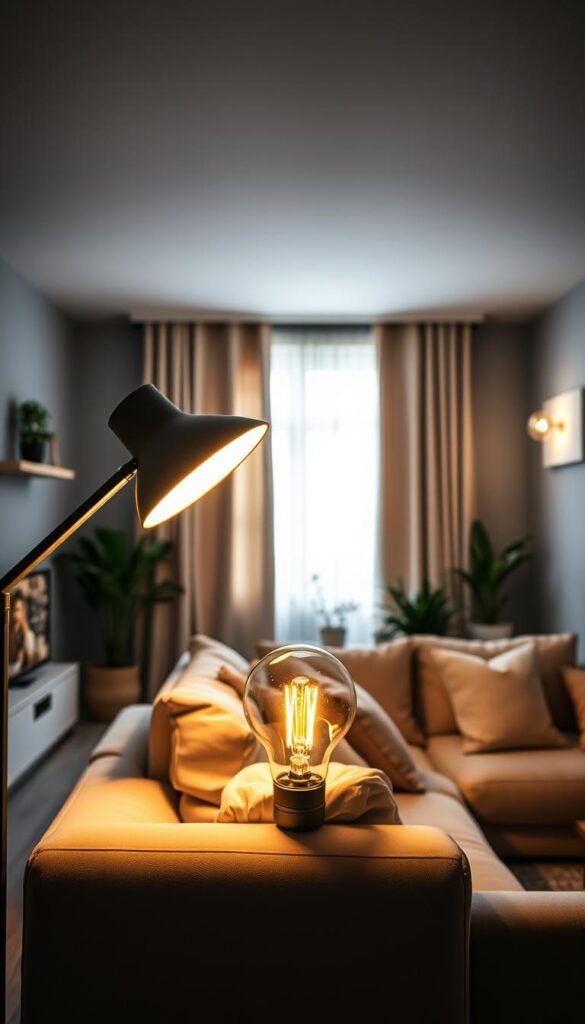
Renter-friendly fixture picks and buying checklist
- Choose plug-in sconces, compact floor lamps, and small table lamps.
- Checklist: cord length, dimmer compatibility, bulb base, and shade material that diffuses rather than spotlights.
Quick comparison
| Room | Fixture | Bulb temp | Pros | Cons |
|---|---|---|---|---|
| Bedroom | Table lamp with shade | 2700K–3000K | Cozy glow, bedside reach | Takes tabletop space |
| Living room | Compact floor + plug-in sconce | 2700K | Height, layered glow | Requires stable base, cord plan |
| Office nook | Adjustable desk lamp | 3500K–4000K | Clear task light, less eye strain | Can contrast with warm ambient |
„Place ambient sources first, add task light where you work, then finish with accents to lift corners and walls.“
Mirrors and reflective accents that bounce light around the room
Strategic placement of mirrors and metallic accents multiplies available glow and improves perceived scale. This approach helps renters who have few windows and narrow rooms most. Mirrors make small spaces read larger and brighter without structural changes.
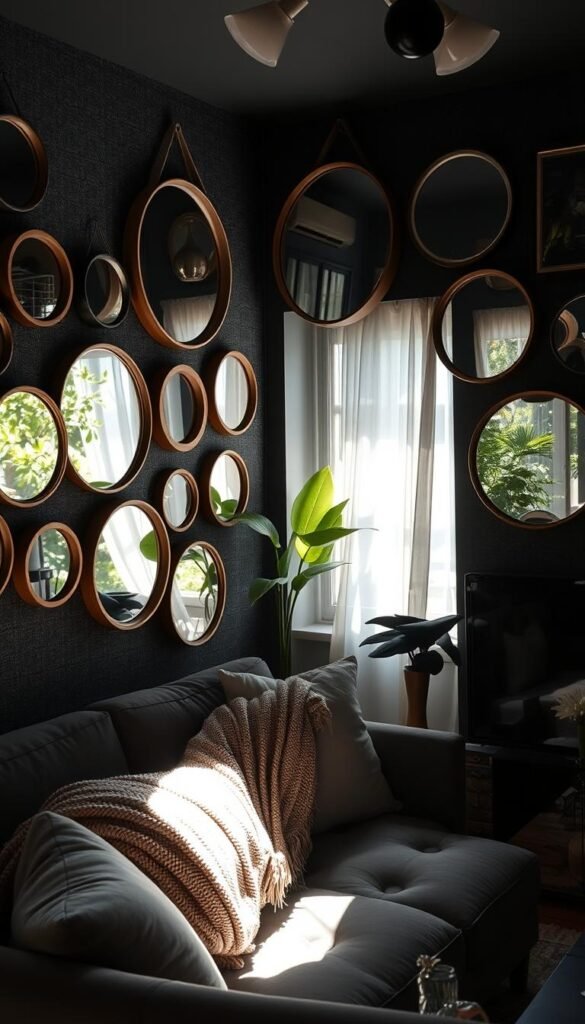
Where mirrors work best
Place a mirror across from a window to double incoming light. Near a lamp, a mirror amplifies warm glow and reduces hard shadows.
In hallways or narrow areas, a vertical mirror widens the view and eases the corridor feel.
Mixing mirror sizes without clutter
Pair one large leaning mirror with one or two smaller wall mirrors. Give each piece a clear purpose: full-length for dressing, small decorative mirrors to lift a wall vignette.
Vary frames and shapes so multiples read intentional, not crowded.
Subtle shiny accents that avoid “too glam”
Choose a metallic picture frame, a low tray on a side table, or a reflective vase finish to catch light without shouting. These accents add points of reflected light and integrate with everyday design.
- Renter-friendly hanging: use removable hooks rated for weight or opt for leaning mirrors with anti-tip straps.
- Measure first: mirror width vs. wall space, weight, and clearance so it won’t block a doorway.
- Clutter warning: mirrors reflect mess. Keep the reflected area tidy.
| Situation | Recommended piece | Pros | Cons |
|---|---|---|---|
| Window-poor living room | Large wall mirror across window | Maximizes daylight, feels spacious | May reflect clutter; needs secure hanging |
| Narrow hallway | Vertical slim mirror | Expands visual depth, low footprint | Can show busy reflections if placed near entry |
| Quiet vignette | Metal tray + framed mirror | Adds shimmer without full glam | Overuse can look busy; keep to one spot |
„A well-placed mirror doubles the room’s perceived light and makes small spaces feel intentional.“
For more renter-friendly swaps and measured recommendations, see this quick guide.
Best spring decor for dark apartments: color palette ideas that brighten without screaming
Choosing a thoughtful palette changes how color reads in rooms with low light. Start with a neutral base: white, greige, or beige walls and a neutral rug let accent pieces do the seasonal work.
Low-light friendly pastels—lavender, blush, mint, and soft blue—read best when paired with creamy neutrals. These tones avoid an icy appearance and keep the room feeling warm and inviting.
When pastels wash out, add depth
Introduce small doses of richer tones like clay, amber, or deep green. Use them as anchors: a throw, a single cushion, or a ceramic vase. These accents prevent the space from looking flat while keeping a spring-appropriate palette.
Pattern rules that add dimension
Mix pattern scales to break up flat neutrals. Try a small check pillow, a medium botanical print on a throw, and one larger floral as a framed print. This layered approach creates depth without clutter.
Undertone mini guide: under warm bulbs, pastels warm up and can read cozier. Under cool daylight, they look truer and slightly brighter. Test swatches at night and during daytime before buying larger pieces.
Buyer guardrails: avoid super-cool grays and neon brights; they either gray-out or feel harsh. Focus purchases on easy-swap items—pillow covers, throws, curtains, prints, and vases—so the palette can change year after year.
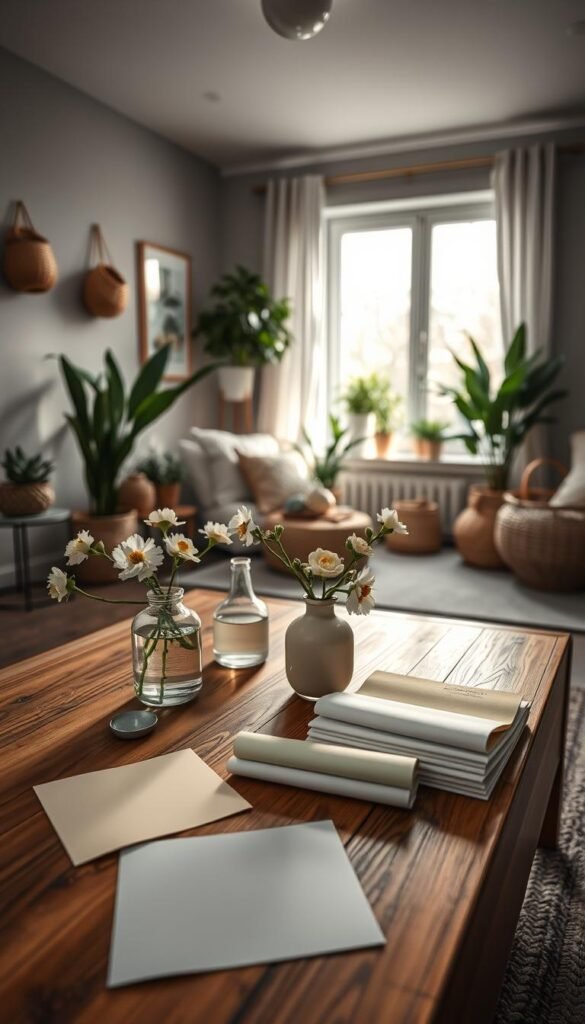
| Item | Suggested palette picks | Why it works | Buy/avoid tip |
|---|---|---|---|
| Pillow covers | lavender, blush, small checks | Easy swap; adds color without commitment | Buy samples; avoid neon prints |
| Throws | mint, soft blue, clay accent | Adds warmth and texture at night | Choose washable fabrics; test under lamps |
| Wall prints & vases | medium botanicals, amber accents | Adds focused depth and reflective points | Stick to one larger print plus small pieces |
„Keep large surfaces neutral so seasonal colors can rotate with minimal cost and effort.“
For quick shopping ideas and practical picks that match these palettes, see this quick guide.
Throw pillows and spring throws for the fastest “new season” look
A well-chosen pillow and a single throw can change how a low-light room reads and feels in an afternoon.
Best for: renters who want big impact with small effort. Pillows and a throw refresh color and texture without painting or swapping fixtures.
How to build the color story
Pick one floral or botanical „hero“ pillow that signals the season.
Pull two supporting solid covers from that pillow’s tones and add a coordinating throw to tie the look together.
Textures that read well in low light
- Crochet: tactile contrast that shows depth.
- Mohair: soft sheen that catches warm lamp light.
- Nubby weaves: stop neutrals from looking flat.
Prints vs. solids — pros and cons
- Prints: add energy and hide wear; use one statement piece.
- Solids: calm the space but need texture to avoid flatness.
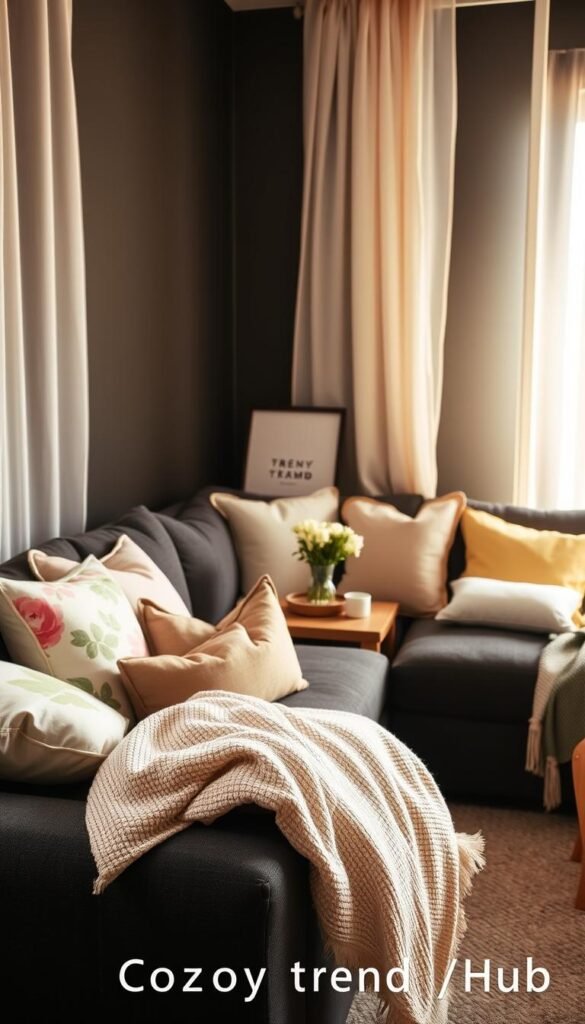
„A hero pillow anchors the theme; supporting covers and a textured throw do the rest.“
Affiliate-ready product block
| Shop | Quick picks | Why it helps |
|---|---|---|
| Shop inserts | Down-alternative, firm loft | Supports shape; hypoallergenic option |
| Shop covers by palette | Floral hero + 2 solids | Easy swaps; lightweight storage |
| Shop throws by texture | Mint mohair, crochet, nubby knit | Adds warmth and light-catching texture |
| Shop storage | Vacuum bags, slim bins | Compact, labeled for reuse next year |
Buying notes: choose 18×18 or 20×20 sizes, washable covers, and reliable zippers for seasonal swaps. For curated picks and shopping links, see this shopping roundup.
Curtains and drapery panels that add softness, color, and a brighter frame for windows
Hanging panels higher and wider is a simple trick that visibly expands a tiny opening.
In low-light rentals, a well-placed curtain both frames the opening and softens hard edges. It makes a small opening feel taller while keeping the perimeter brighter.
Best for small-window situations
Who benefits: renters with one narrow opening, rooms facing alleys, or spaces that cannot be painted. A single panel can lift the entire visual field without structural change.
Color and fabric guidance
Choose light-reflective tones: creamy white, soft blush, pale blue, or light sage. Match a panel tone to an existing floral pillow or print to tie the palette together.
Renter-friendly hanging and measurements
Use tension rods for inside mounts, no-drill brackets for standard rods, or removable hooks for lightweight panels. Hang 4–8 inches above trim and extend rods 6–12 inches beyond the sides so panels stack clear of the glass.
| Type | Pros | Cons |
|---|---|---|
| Sheer | Maximizes daylight; lightweight | Less privacy |
| Light-filtering | Softens glare; modest privacy | Can slightly dim |
| Layered (sheer + panel) | Best balance: glow + privacy | Needs more rod space |
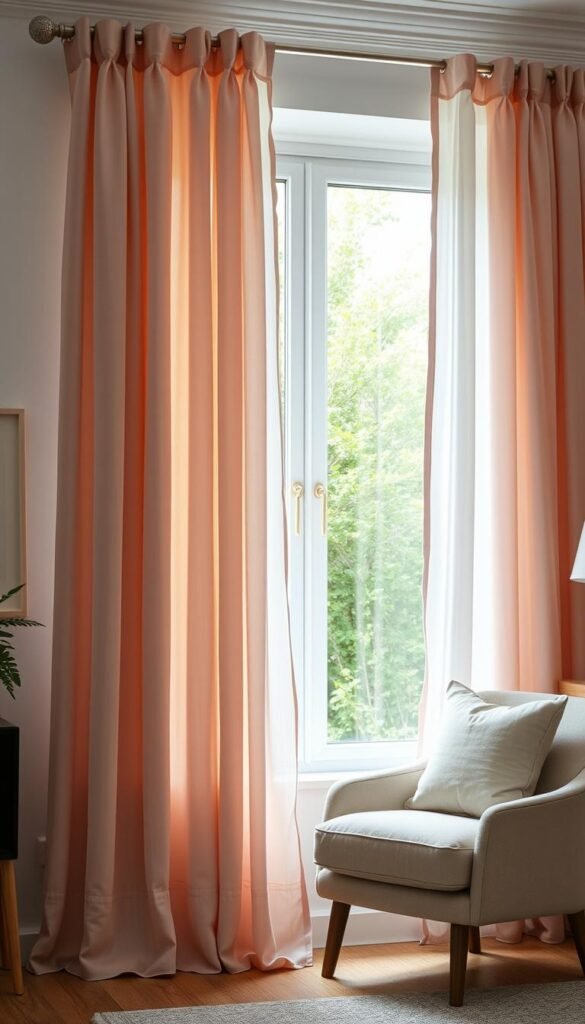
Buying notes: pick floor-grazing or puddle-free lengths based on room scale, and favor textures that stay fresh in low light. For installation ideas and more treatments, see this window treatment gallery or a practical small-space guide.
Wall decor that lifts a dark room without permanent changes
Art and surface texture make walls read intentional instead of disappearing. Renters can add visual depth with minimal fuss and no paint or screws.
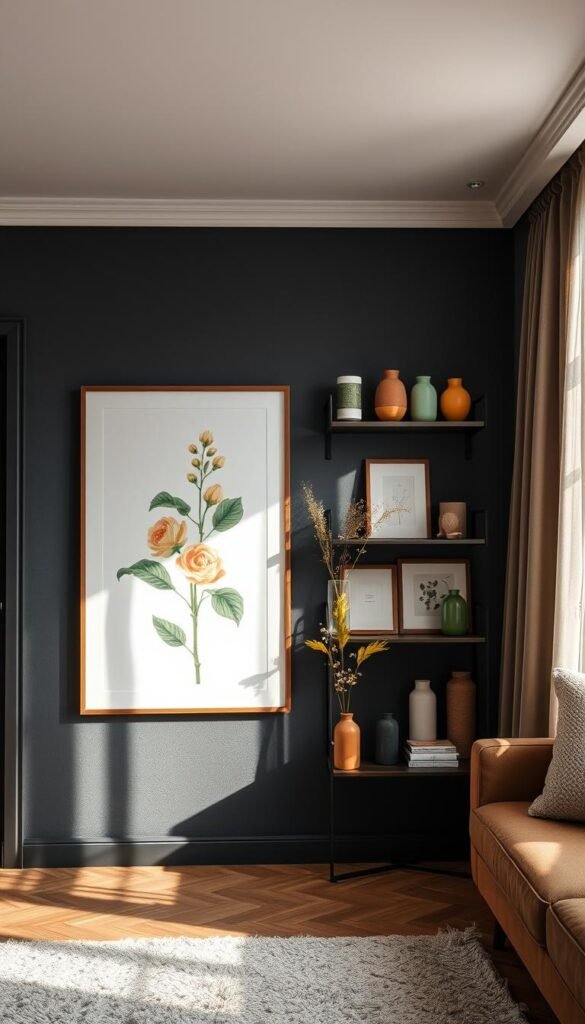
Seasonal art swaps: keep frames, change prints
Keep a set of reliable frames and rotate printed botanicals to signal the season. Store extra prints flat in a labeled portfolio. This system saves space and makes swaps fast.
Textured wallpaper look—without commitment
Use peel-and-stick panels as an accent zone behind a bed or work nook. Select grasscloth-look or embossed patterns to add depth and warmth. Order a sample first to check removal and surface compatibility.
- Who benefits: renters who can’t paint, people with tight square footage, and anyone who wants quick updates.
- Choosing prints: pick higher-contrast botanicals with light backgrounds and one consistent palette so the wall reads cohesive.
| Approach | Pros | Cons |
|---|---|---|
| Framed prints (swap system) | Safest for painted walls; lightweight storage | No added texture; relies on contrast |
| Peel-and-stick accent | Immediate texture; easy to install | May lift weak paint; test samples first |
| Textured panels (fabric-like) | Calming, tactile finish; layered depth | Higher cost; needs careful ordering |
„Pick one texture moment per room — a framed botanical group plus a single textured panel keeps the space lively without risking the walls.“
For practical tips on brightening low-light interiors and renter-friendly swaps, see a quick guide to how to brighten a dark room and a list of renter-friendly swaps.
Flowers, branches, and window-area greenery that add “life” to dark spaces
A few well-placed stems can change a room’s feel more than a bulky accessory.
Greenery acts as the “life” layer—it adds movement, texture, and a seasonal cue that works in small rentals. Choose whether to go fresh or faux based on how much weekly care a person wants.
Fresh vs. faux: quick decision guide
Fresh suits those who enjoy weekly swaps and mild upkeep. Expect trimming, water changes, and brief vase cleaning.
Faux suits steady schedules, travel, or set-and-forget styling. Dust monthly and store in a labeled box between uses.
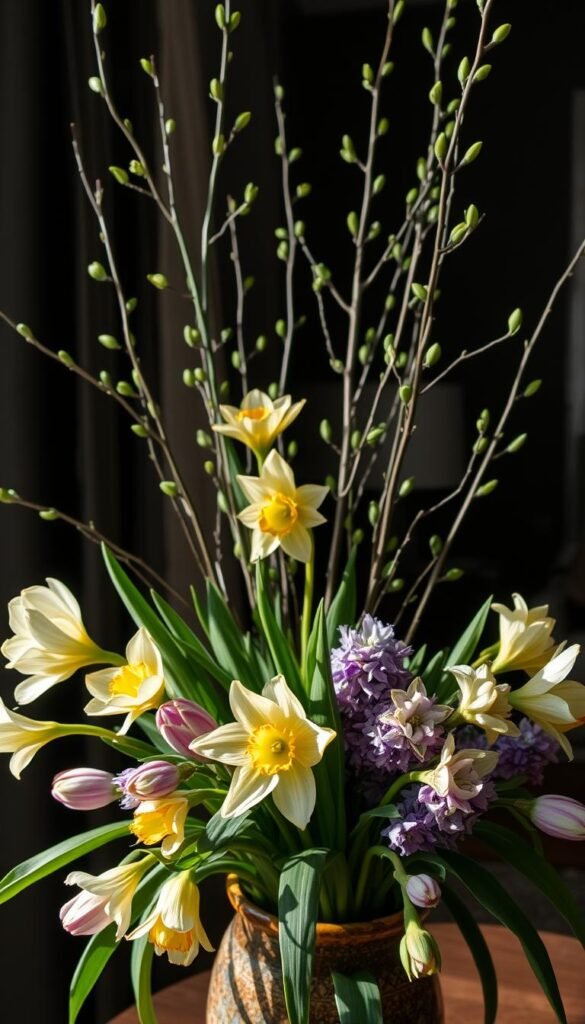
Stems to consider and a scent note
Bright-reading stems: cherry blossoms, dogwood branches, forsythia, and tulips. Use single-type arrangements for a clean look.
Hyacinths add notable fragrance. Use them if ventilation and scent sensitivity allow.
| Stem | Visual effect | Maintenance |
|---|---|---|
| Cherry blossom | Airy, delicate silhouette | Change water twice weekly; trim ends |
| Tulip | Bold color, simple shaping | Rotate stems; watch droop in heat |
| Forsythia | Bright, branching structure | Low fuss; needs fresh cut and water |
| Hyacinth | Fragrant, compact bloom | Ventilate room; manage strong scent |
„Place a plant or vase near the sill to catch and reflect available glow; a slim stand helps if the ledge is small.“
Real plants add warmth but need realistic care; some varieties struggle in low light. For more ideas and arrangement inspiration, see a floral styling primer at floral room ideas and a practical guide to seasonal swaps at a quick renter’s guide.
Table decor and accessories that brighten dark apartments without taking up space
A narrow console or kitchen island can act like a tiny stage for light-catching pieces. Use that surface to add shine and seasonal life without crowding the floor.
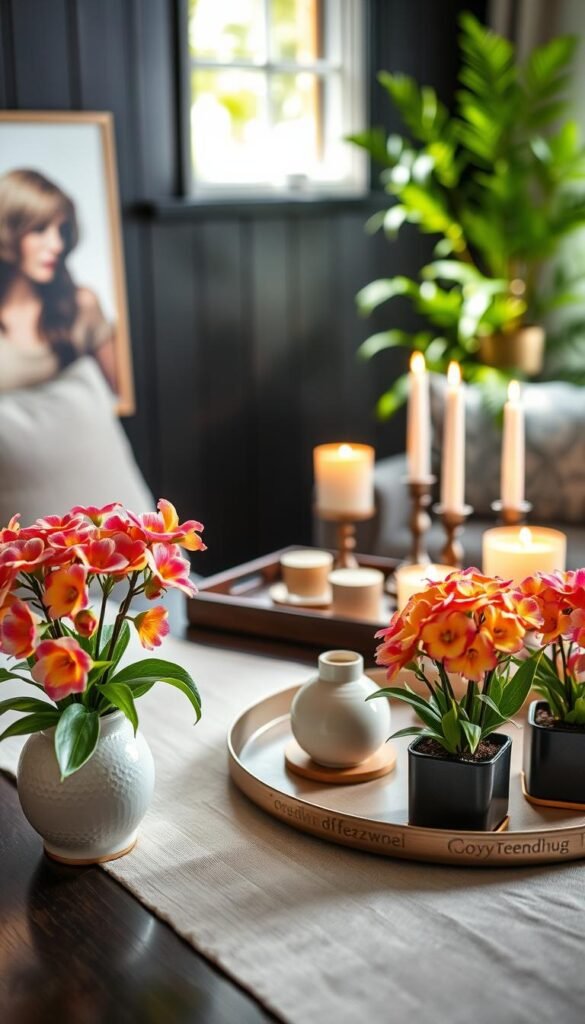
Best for small homes with limited surface area
These ideas suit renters and small-space dwellers who need impact on a tight surface budget. Choose items that store flat or nest so swaps are easy.
Tableware as tabletop accents
- Glassware: clear or etched pieces reflect lamp light and read bright.
- Pottery: glossy ceramics and ginger jars add warmth and texture.
- Bowls & vases: use one taller vase plus a small bowl to avoid clutter.
Simple vignette formula
One tall vase with stems, one reflective tray, and a single bowl. Keep negative space and use odd-number groupings. Let one hero piece lead the eye.
| Tip | Why it helps | Storage note |
|---|---|---|
| Mix glass + pottery | Balance shine and warmth | Stack bowls; wrap fragile pieces |
| Match scale to table | Prevents visual crowding | Choose low-profile pieces for shallow tables |
| Pick multipurpose items | Ready to host or display | Nesting sets save space |
„One well-placed tray or vase lifts the whole surface without filling it.“
Buying considerations: check scale, durability, and whether items nest for storage. For more compact ideas and installation tips, see this small-space ideas.
Buying guide: how to choose spring decor that works in low natural light
Start shopping with a short at-home test so colors and textures behave as expected in your actual room.
What to test at home
Two-time color check
View swatches and textiles near the window during the day and again under warm bulbs at night.
Note: warm bulbs often make mid-to-light tones read cozier. Cooler daylight reveals true hue and contrast.
Sample checklist
- Pin or tape a fabric swatch to the sofa and view it at noon and 9 PM.
- Test a small lamp with the planned shade to check diffusion.
- Place a mirror or metal sample nearby to see how reflection changes the tone.
Materials checklist
Favor light-toned textiles with visible weave and breathable fabrics that catch lamp glow.
Use diffusing lamp shades, small glossy or metallic accents in measured doses, and glass or ceramic vessels that reflect light.
Space planning rules for small rooms
Avoid blocking windows with bulky items. Keep pathways clear and use vertical height—slim floor lamps or tall branches—instead of wide footprints.
Choose fewer larger anchors over many tiny pieces to reduce clutter and storage pain.
Buy-once, reuse-for-years filter
Pick a neutral foundation and a repeatable seasonal palette so accessories can rotate each year without clashing.
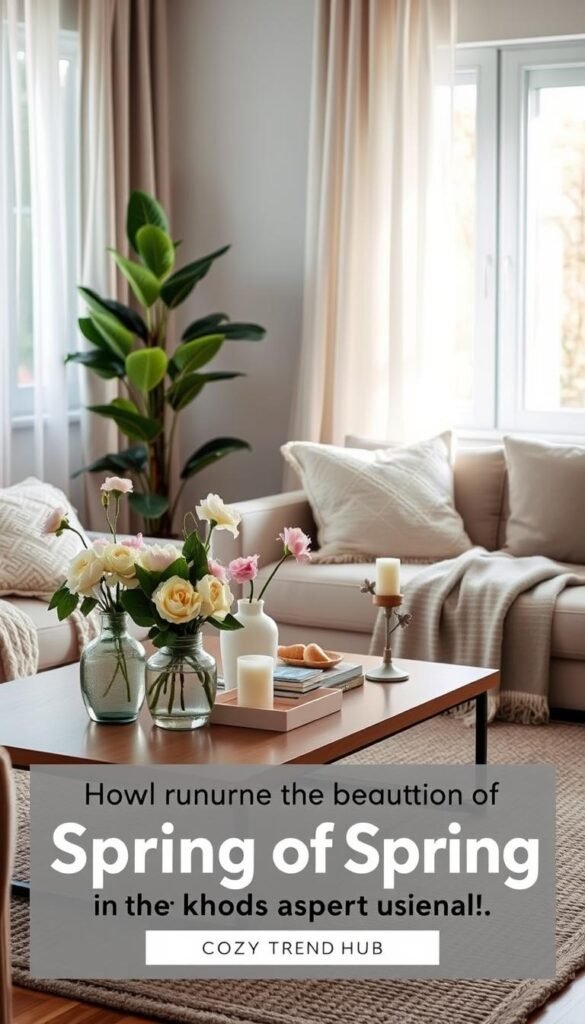
„Test pieces in place and under both light types to reduce wasted purchases.“
| Goal | Best categories | Best for (renter / small space) | Key specs | Tradeoffs |
|---|---|---|---|---|
| Brighter | Layered lighting + mirrors | All renters; window-poor rooms | Warm bulbs, diffusing shades, lightweight mirror | Mirrors reflect clutter; lamps need outlet planning |
| Warmer | Soft warm bulbs + textured throws | Bedrooms, living rooms | 2700K bulbs, mohair or nubby throws, warm-leaning neutrals | Throws take storage; deeper textures can trap dust |
| More seasonal | Stems + botanical prints | Renters who swap often | Low-maintenance faux stems or fresh stems, light-background prints | Fresh stems need upkeep; prints need frames/storage |
| Cozier | Curtains + layered textiles | Small rooms needing perimeter softening | Sheer + panel combo, floor-grazing lengths, light tones | May slightly reduce daylight; needs proper rod width |
Quick pros/cons checkpoints
- Large pieces: high impact, harder to store.
- Small accessories: easy to stash, risk of cluttered look.
- Recommendation: choose fewer anchors and one swap-friendly accent set.
For practical shopping lists and measured recommendations, consult a curated guide on seasonal swaps at this bright-and-breezy guide or a focused small-space resource at this compact-space guide.
Conclusion
Simple, low-commitment moves can lift light, scale, and seasonal color in tight rental spaces.
Start by improving layered lighting, then add mirrors or metallic accents, and finish with swappable textiles and stems. These steps refresh a small home without major changes.
Renter-friendly wins: plug-in lamps, removable hooks, peel-and-stick panels, and lightweight pieces that store flat. Test swatches in both daylight and warm lamp glow before buying larger sets.
Quick purchase checklist: if the room feels gloomy, choose a shade lamp + warm bulb; if it feels small, add a mirror; if it feels seasonless, add stems and a hero pillow.
Use the comparison tables and product blocks to pick one upgrade this week and one later. Read a practical guide on how to brighten your dark apartment to plan next steps.