
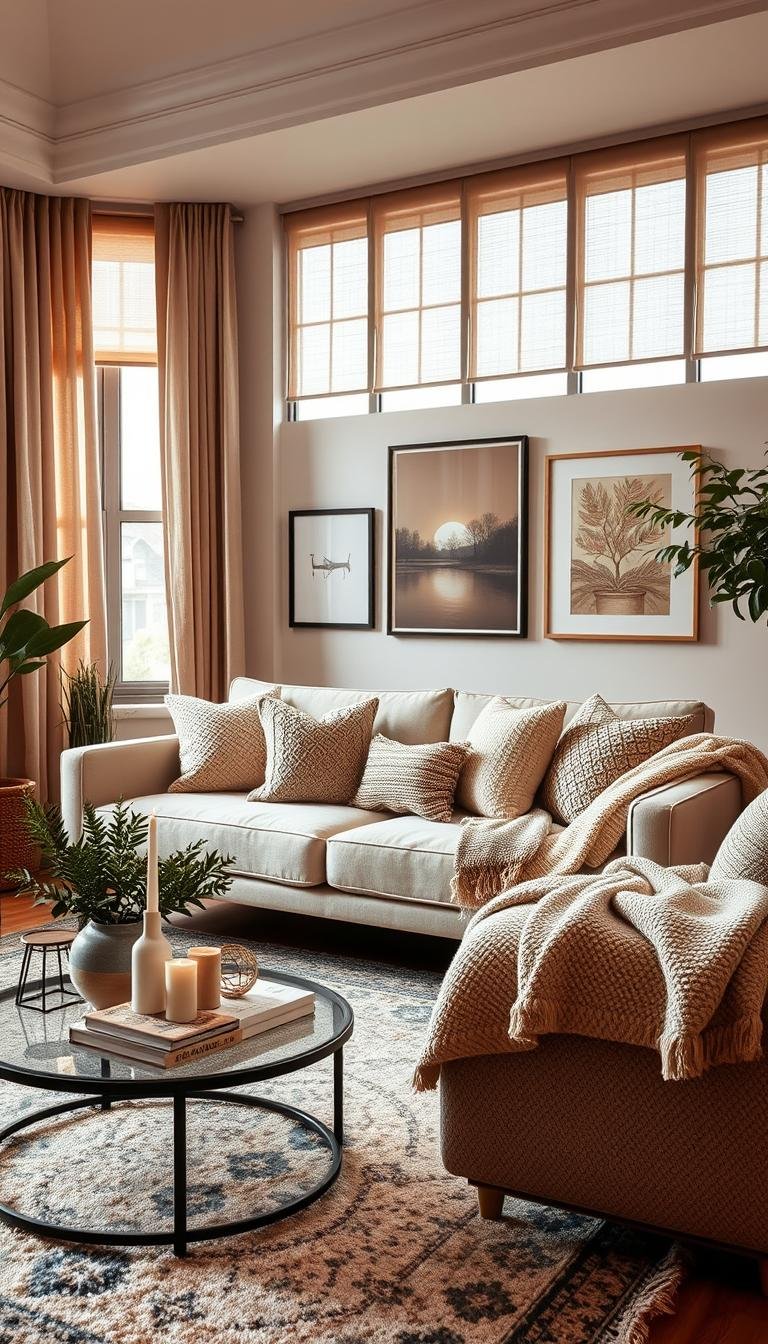
Many apartments and open-plan rooms feel louder than they should. Hard floors, bare walls, and thin windows let noise bounce around. That makes conversation and rest harder in small living spaces.
This short guide frames the problem and the practical fixes. It focuses on items that absorb sound and improve perceived comfort, not on full construction upgrades. Readers will learn what works inside a room and what helps reduce leaks between units.
Recommendations target renters, small-space dwellers, and room-specific uses like home offices or street-facing bedrooms. Each suggestion pairs function with interior design so solutions blend with real-life style.
Expect clear shopping tips: who benefits most, what each product does, and quick specs to compare. The article then moves from soft surfaces (rugs, curtains) to panels and sealing weak points at doors and windows.
Key Takeaways
- Identify whether the issue is echo inside a room or sound between units before buying.
- Soft materials reduce reverberation and improve speech clarity.
- Look for renter-friendly options that attach without permanent changes.
- Styling and function can coexist; choices should match your interior and needs.
- Each section will list pros, cons, and what to look for when shopping.
Identify what kind of noise you’re dealing with before you buy decor
Work out if the trouble is room echo, neighbor transmission, or street noise sneaking in through gaps around windows and doors.
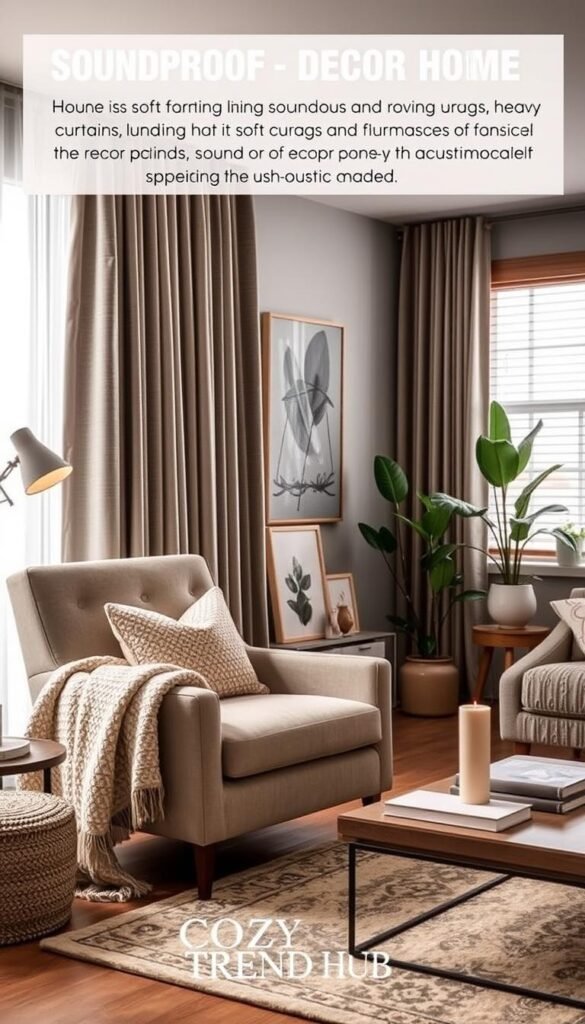
Echo and reverberation inside the room
Hard floors and bare walls reflect sound waves, so a small source can fill a space. Short, soft fixes like rugs, curtains, and panels often make an immediate improvement.
Neighbor noise through shared structure
Transmission through walls, floors, or ceilings is tougher to fix. Soft furnishings will help reduce some frequencies, but they rarely stop impact noise or loud voices in thin construction.
Street noise and gap leaks
Small openings matter: ~1% gaps can leak ~30% of sound and ~5% up to ~90%. Sealing edges at windows and doors is the fastest, most renter-friendly win before adding more wall treatments.
- If speech sounds muddy → panels or acoustic art.
- If footsteps → rugs and underpads.
- If traffic → dense curtains plus seal gaps.
| Problem | Most effective quick fix | Renter-friendly? |
|---|---|---|
| Echo in a room | Rugs, curtains, wall panels | Yes |
| Neighbor transmission | Filled shelving, upholstered furniture | Mostly |
| Street/hallway noise | Seal gaps, door sweeps, heavy curtains | Yes |
Best decor for noisy homes: top sound-absorbing picks you can style like real interiors
Below are practical, design-forward items that cut echo and steady background noise in everyday living spaces.

Decorative acoustic panels and tiles
Best for: home offices, living rooms, media walls that have large reflective walls.
Pros: strong absorption of mid-to-high frequencies, modular layouts, high visual impact.
Cons: requires wall space and careful placement; some panels need anchors.
Acoustic art
Best for: renters and style-focused shoppers who want subtle solutions.
Pros: easy to hang, replaces standard wall art, renter-friendly options exist.
Cons: limited low-frequency control compared with thicker panels.
Rugs and runners
Best for: hallways, entryways, and hard floors where footfall and reflections matter.
Pros: reduces impact noise and echo; rug pads add extra damping.
Cons: requires coverage to be effective; cleaning trade-offs.
| Item | Targets | Install effort | Renter-friendly? |
|---|---|---|---|
| Acoustic panels | Echo, reflections | Medium (anchors or strong adhesive) | Some options |
| Acoustic art | Echo, speech clarity | Low (hooks or removable strips) | Yes |
| Rugs & pads | Footfall, reflections | Low (lay and place) | Yes |
| Heavy curtains / furniture / plants | Window leaks, shared-wall buffering | Low to medium | Yes |
Rug-first fixes for apartments: reduce footfall noise, echo, and downstairs complaints
Fixing floors with rugs and pads is a practical first move to tame impact and reverberation in apartments.

Felt vs memory foam rug pads
Felt pads are dense and absorb speech and music frequencies well. They perform best when covering large areas under a rug.
Memory foam adds cushioning and helps soften footfall. Foam is best where comfort and impact padding matter most.
What to look for in a quiet rug
Prioritize tight weave and higher KPSI over extra pile height. Pile height adds only about a 2% acoustic difference on average.
Vintage handwoven rugs often deliver density and durability; confirm size and return policies before buying.
Layering hacks and room picks
Cut a pad and tuck it under beds or sofas to add an invisible layer where impact is greatest. This stays hidden and helps reduce noise to neighbors.
| Tip | Effect | Install effort | Renter-friendly? |
|---|---|---|---|
| Felt pad under rug | Absorbs mid/high sound | Low | Yes |
| Memory foam pad | Cushions impact | Low | Yes |
| Cut pad under furniture | Targeted impact reduction | Low (trim to fit) | Yes |
| Large area rugs | Reduce echo and footfall | Medium (placement) | Mostly |
Where to cover floors: living room, nursery, home office, and entryway. Rugs add warmth and style, but they need cleaning. Thick pads can affect door clearance and may need trimming.
Renter note: choose non-damaging materials and check building rules to confirm coverage is allowed to reduce noise without permanent changes.
Window treatments that double as sound decor (without replacing your windows)

Thick curtains and smart mounting can turn a standard window into a quieter, more comfortable focal point. They add soft surface area and help reduce noise without replacing glass or installing inserts.
When curtains help: choose fabric if street noise, harsh sunlight reflections, or a bare window makes a room feel loud. Curtains are especially useful in bedrooms, living areas with big windows, and home offices near busy streets.
Buying specs to use: target dense fabrics in the 12–18 oz/yd range. Avoid lightweight „style-only“ panels. Aim for 100% fullness—curtains about twice the window width—so folds create layers that absorb mid and high frequencies.
Install details that matter: mount the rod 3–4+ inches off the wall and extend it wider than the frame. This reduces edge leaks and helps curtains sit past the glass edge. Ceiling-height panels work well in small spaces; they raise a room visually and add more sound-absorbing surface.
„Curtains improve perceived sound and comfort, but they do not fully block noise the way window inserts or secondary glazing can.“
Pros: improved thermal feel, privacy, and a calmer room. Cons: added dust, careful measuring, and limited low-frequency blocking compared with glazing upgrades.
| Use case | Recommendation | Renter-friendly? |
|---|---|---|
| Bedroom (sleep & peace) | 12–18 oz/yd velvet, 100% fullness | Yes |
| Living room (large window) | Ceiling-height panels, rod 3–4+ in off wall | Mostly |
| Home office near street | Dense fabric + secondary glazing if needed to block sound | Depends |
Wall decor that absorbs sound waves and upgrades your style
A treated wall often delivers the largest single-room improvement when rugs and curtains don’t fully quiet a space.

Wood slat akupanel looks
Where they help: media walls behind a TV, a sofa backing, or a full wall when budget allows.
Why choose them: wood slat panels reduce echo and tame mid-to-high reflections while adding warm, linear texture to an interior.
Felt tile accent walls
Renter-friendly option: felt tile systems can be mounted with removable adhesive and double as a pinboard in playrooms or home offices.
Use case: nurseries, desks, and creative spaces where multifunction and easy changeability matter.
Placement strategy for maximum impact
- Cover the largest exposed wall first to reduce overall reverberation.
- Add panels where voices and TV reflections are strongest—behind seating and opposite sound sources.
- Prefer removable mounts or light anchors if rental rules limit permanent fixes.
„Panels deliver noticeable noise reduction when used thoughtfully; appearance and placement matter as much as material.“
Quick comparison: akupanel-style wood gives a designer look and strong reflection control but needs wall space. Felt tiles are lighter, multifunctional, and easier to remove.
For product ideas and install tips, see a curated guide to sound-absorbing wall hangings and a practical wall mix guide.
Stop noise leaks at doors and windows with decor-adjacent upgrades
Tiny gaps around an entry or window often explain why rooms still feel loud. Sealing weak points usually yields a bigger drop in unwanted noise than adding more surface treatments. Start with the paths that let sound travel: thresholds, trim seams, and around the frame.
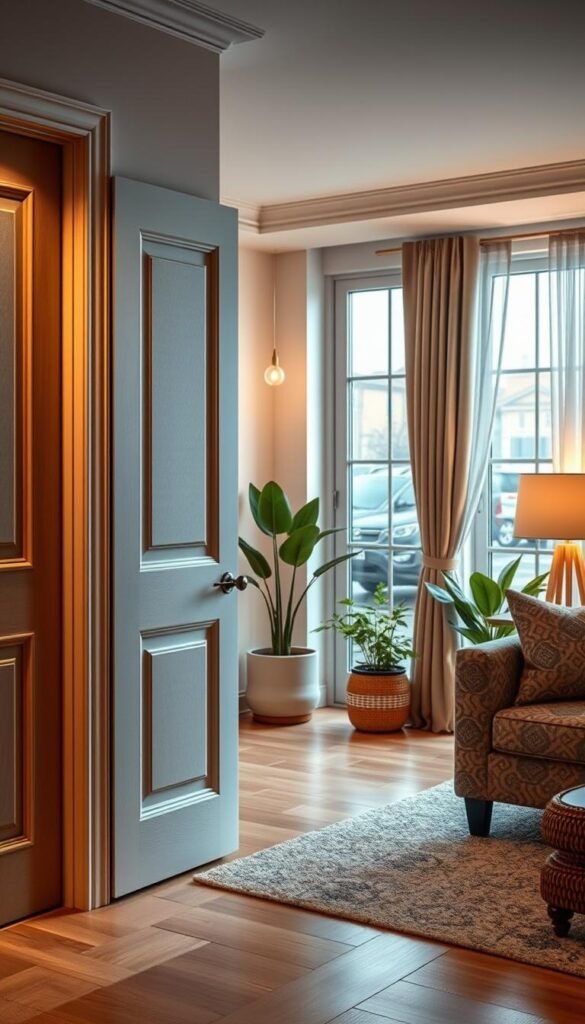
Draft stoppers and door sweeps that look intentional
Quick wins: install a removable draft stopper or a magnetic/adhesive door sweep to reduce hallway chatter and footfall impact.
Pros: renter-friendly, low effort, immediate improvement. Cons: visible if not chosen carefully; measure door clearance before buying.
Acoustical caulk for tiny but loud gaps
Small openings matter: ~1% gaps can leak ~30% of sound and ~5% can leak ~90%. Use acoustical caulk at trim and baseboards to seal cracks that let sound through.
Tip: choose paintable, flexible caulk and focus on joints where trim meets the frame.
When a solid-core door is the smarter upgrade
If a hollow interior door is the main path for transmission, swapping to a solid-core door may block sound more effectively than adding panels. This is a heavier investment and may need landlord approval in rentals.
Seasonal comfort bonus
Sealed doors and windows also reduce drafts. That improves thermal comfort in winter and lowers perceived noise in summer—two gains from the same fixes.
| Fix | Effect on noise | Renter-friendly? |
|---|---|---|
| Draft stopper / sweep | Reduces hall chatter & impact | Yes (removable) |
| Acoustical caulk | Seals leak paths for steady reduction | Mostly (ask landlord) |
| Solid-core door | Strong block sound for doorways | No (permits often needed) |
For single-room tips and mounting ideas, see a practical guide to design-minded sound-dampening hacks. These steps help block sound paths but won’t fully soundproof units with major structural issues.
Furniture-based noise reduction for renters: “maximalism” that’s practical
Furniture can act as a simple, nonpermanent way to reduce noise and make rooms feel calmer. Thoughtful placement and material choices add mass and soft surfaces without major renovations.

Bookshelves on shared walls
Strategy: place tall, filled shelving against a shared wall to add mass and texture. Books and objects create density that helps block and scatter sound coming from a neighbor.
Material notes: harder woods (oak, walnut) block more airborne sound. Softer woods (pine, MDF) and open shelving absorb and scatter mid-range sound when packed with items.
Upholstery, pillows, and blankets as sound softeners
Layered textiles reduce echo without reading like soundproofing. Choose upholstered seating, chunky throws, and extra pillows to add absorption that fits a living or bedroom style.
Buy tip: use foam or dense fills in cushions to improve mid-frequency absorption while keeping comfort high.
Layout moves that help
- Don’t line all seating against the same reflective wall; angle pieces to break direct paths.
- Use tall units or a stacked bookcase to interrupt sound travel between rooms.
- Keep shelves stocked—books and ceramics add real mass compared with empty units.
| Situation | Recommended furniture move | Renter-friendly? |
|---|---|---|
| Living room with loud neighbor | Tall, filled bookshelf on shared wall | Yes |
| Bedroom sharing a wall | Upholstered headboard + layered blankets | Yes |
| Home office needing clearer calls | Bookcase behind desk + soft rug | Yes |
„Furniture won’t fully soundproof a unit, but it offers a practical, stylish way to reduce perceived noise while keeping changes reversible.“
Limitations: furniture helps most with airborne and reverberant sound. Impact noise from above, or very loud neighbor transmission, may still need door sealing, caulk, or structural fixes.
Conclusion
Find the loudest path—floor, window, door, or bare wall—before buying anything. Start with a quick diagnosis, then layer solutions: absorption, sealing, and heavier upgrades only if needed.
Quick starter kit: one dense rug with a quality pad, one heavy curtain setup, and a targeted acoustic panel or art piece. These three moves improve comfort and lower perceived noise levels in most rooms.
Combine textiles and panels to tame echo, then seal gaps at windows and doors. If sounds still travel, consider inserts, secondary glazing, or a solid-core door. See an urban noise guide at urban home noise reduction and practical cozy bedroom ideas for style-forward picks.
Measure first, prioritize big bare surfaces, and choose pieces that match interior style. That way noise reduction feels intentional and delivers real peace and quieter living spaces.
FAQ
How do I identify the type of noise in my home before buying any pieces?
Start by noting where and when the noise is worst. If sound echoes inside a room, hard surfaces are the cause. If you hear neighbors through walls, floors, or ceilings, the issue is airborne or impact transmission. Street noise usually comes through windows and door gaps. Record short clips on your phone in each room and at different times; that helps decide whether to target reflection, transmission, or leaks.
Can wall hangings and art actually reduce echo?
Yes. Decorative acoustic panels, felt tiles, and acoustic art replace flat, reflective surfaces and cut reverberation. Place pieces on large, exposed walls and behind primary sound sources like TVs or sofas. They won’t block loud neighbor noise, but they improve in-room clarity and comfort.
Will rugs stop upstairs footfall complaints?
Rugs with dense construction and a quality pad reduce impact sound. Use thick felt or memory-foam pads under rugs and runners in hallways and high-traffic areas. Layering a pad under sofas or beds also helps. For heavy footfall, cover more floor area rather than relying on a single small rug.
What window treatments are effective at cutting outdoor noise?
Choose heavy, dense fabrics—roughly 12–18 oz per yard—with tight weaves. Use full-width panels with 100% fullness and hang rods 3–4 inches from the wall or ceiling so curtains overlap frames. Ceiling-height treatments and double layers (sheer plus heavy panel) increase absorption without replacing windows.
Do plants and bookshelves make a real difference to noise levels?
Yes. Filled bookshelves and grouped plants scatter sound and add mass, which reduces reflections and some transmission. They work best as part of a layered approach—combine them with rugs, curtains, and pads. Plants also improve room softness and visual warmth while slightly reducing ambient noise.
Are acoustic foam panels worth it for living rooms?
Acoustic foam helps with mid-to-high frequency reflections and is useful near loud sources or in echo-prone rooms. For living rooms, choose decorative or fabric-wrapped panels to keep the look cohesive. Foam won’t address low-frequency bass or through-wall transmission; pair it with other treatments for broader benefit.
How should I place wall panels or felt tiles to get the best effect?
Cover large, exposed surfaces first—walls opposite hard floors, behind seating, and behind TVs. Aim for distributed coverage rather than one concentrated area. For renters, use removable adhesive hooks or tension-mounted systems for felt tiles and acoustic art to avoid damage.
What are practical door and window fixes that look intentional?
Install fabric draft stoppers or decorative door sweeps, use thick curtains that overlap the frame, and apply acoustical caulk to small gaps around trim. These measures reduce leaks and are visually subtle. When noise persists, consider a solid-core door as a longer-term upgrade.
Which rug pad type should I choose: felt or memory foam?
Choose felt pads for broad sound absorption and even surface support; they’re best under larger area rugs. Memory foam pads add impact cushioning and feel softer underfoot, useful in bedrooms and living spaces. For maximum effect, use a dense felt layer topped by a thin memory-foam sheet.
Can I make my apartment quieter without major construction?
Absolutely. Layer rugs with quality pads, hang heavy curtains, add bookshelves along shared walls, use wall-mounted felt panels or acoustic art, and seal gaps with caulk or draft stoppers. Rearranging furniture to break sound paths also helps and requires no permits or permanent changes.
How do I balance sound control with style in small spaces?
Choose multiuse pieces: upholstered headboards, fabric-covered panels, and decorative rugs that match the palette. Ceiling-height curtains and tall plants draw the eye up and add softness without crowding. Aim for a few larger, visually cohesive elements rather than many small items.
When should I opt for structural upgrades like solid-core doors or window replacement?
If noise comes from neighbors or very loud street traffic and decor solutions only help marginally, structural upgrades are the next step. A solid-core door and better windows address transmission and airborne noise that soft furnishings can’t fully stop. Combine structural fixes with soft treatments for the best outcome.
