
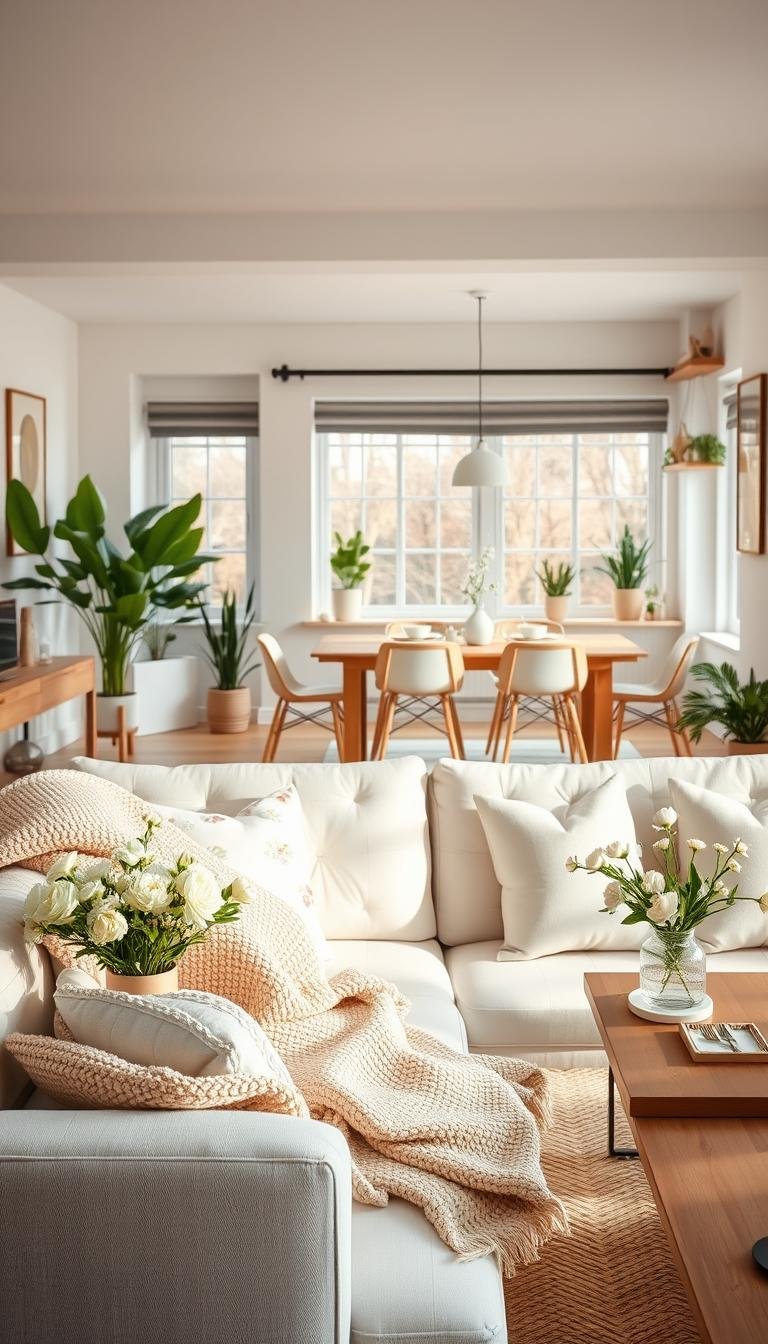
Shared living brings benefits and small design headaches. Roommates share visual space, budgets, and storage, so seasonal changes must reduce friction, not add it.
This introduction outlines a practical plan: quick, renter-safe upgrades like damage-free hanging, washable textiles, and compact table pieces that can be swapped each season without leaving marks.
Recommendations are judged by setup time, storage size, cleaning effort, and fit for small apartments or larger houses. The goal is not a full makeover.
Focus on targeted changes: layered greenery, repeat color accents, and light-filtering fabrics that lift the space while letting each person keep their style.
The article then covers shared-zone rules, renter-friendly upgrades, room-by-room picks, and a realistic cost-splitting plan roommates can use. Success means decor that improves daily function—drop zones, easy-to-clean centerpieces, and brighter light—while adding seasonal color and life.
Key Takeaways
- Choose renter-safe items that install and remove without damage.
- Prioritize compact, washable pieces that store easily.
- Use repeat colors and layered greenery to create cohesion.
- Evaluate buys by setup time, cleaning effort, and storage needs.
- Small changes can refresh the space without imposing a single style.
Shared-home spring decor that looks good and avoids roommate conflict
Start by agreeing on a simple theme so seasonal updates feel intentional, not chaotic. A neutral base with one green accent or a small daffodil motif keeps purchases aligned even when people shop separately.
Set ground rules before buying: agree on 1–2 accent colors, a budget cap per person, and where seasonal items will be stored.
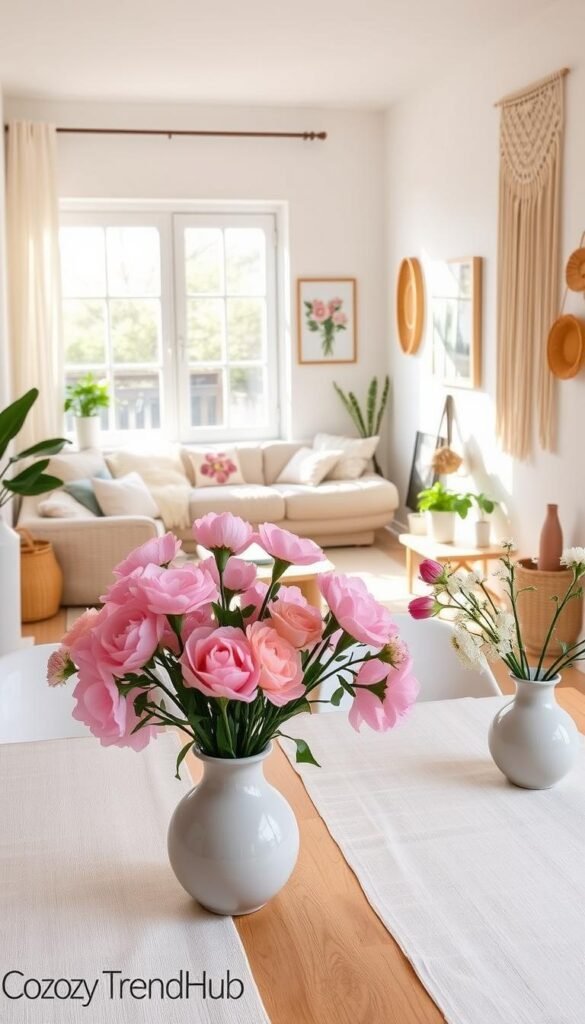
Keep it temporary and easy to manage
Prioritize removable, washable, and single-bin storage pieces. Choose slipcovers, peel-and-stick hooks, and low-cost vases that can be returned if they don’t work.
Define shared zones vs personal zones
Shared zones (entry, living room, kitchen table) should be durable and neutral. Personal zones (bedrooms, desks) allow individual tastes. This reduces conflict and keeps the common space cohesive.
- Roommate agreement: pick a theme like neutrals + green and 1–2 accent hues.
- Why repeating colors help: mixed brands look intentional and calm visual noise.
- Buyer checklist: returns policy, storage plan, setup time, and who handles returns.
When tastes clash, use a simple tie-breaker: neutral base pieces plus one small seasonal accent per person in a designated spot. For shared shopping ideas, see spring living room picks.
Renter-friendly spring upgrades that won’t risk your security deposit
Renters often need seasonal updates that improve the look without risking lease violations. Focus on reversible choices that keep walls and finishes intact. Prioritize lightweight, removable solutions that still feel intentional.
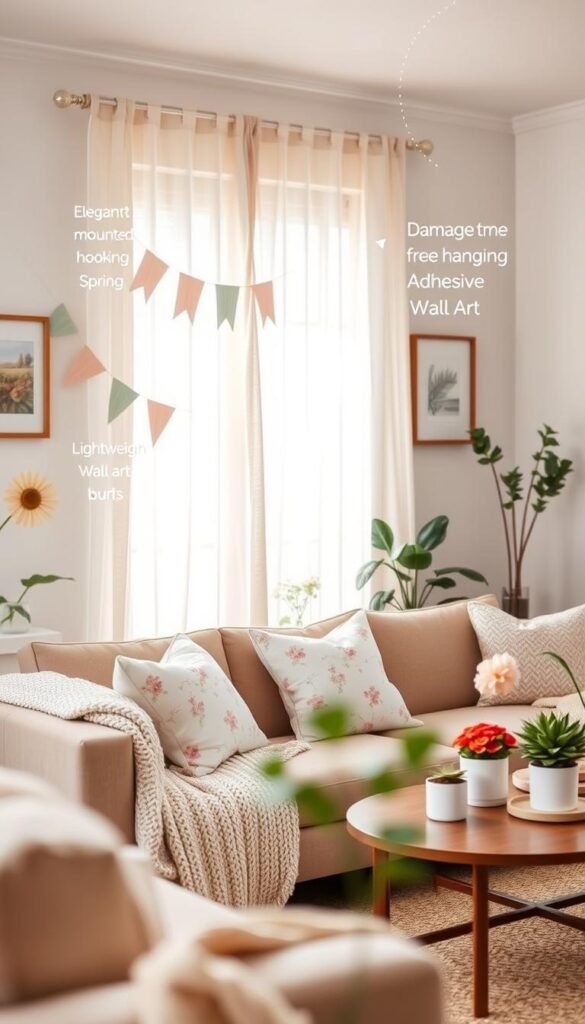
Damage-free hanging and removable hooks
Leases usually ban nails and permanent anchors. Use damage-free hooks rated for the correct weight. Match hook type to wall texture and follow weight guidelines.
Peel-and-stick and elevated removable options
Peel-and-stick works best on smooth, low-moisture walls. It fails on heavy texture and in steamy bathrooms. Choose removable wallpaper panels, peel tiles for a tiny backsplash, or decals used sparingly to avoid clutter.
- Renter problem: permanent nails risk deposits.
- When to use hooks: wreaths, lightweight art, small mirrors.
- When to avoid peel-and-stick: textured walls and high-humidity spots.
| Check | Time | Residue risk | Stores flat? |
|---|---|---|---|
| Surface prep | 5–15 min | Low | Yes |
| Weight rating | Varies | Low–Medium | No |
| Repositioning | Easy | Low | Yes |
Product sections can be formatted as affiliate blocks with clear use cases and a brief note that the list contains affiliate links. This gives shoppers practical guidance without hype.
Create an inviting front entry that works for everyone
C is chosen: A compact, well-organized entry makes a strong first impression without stealing living space.
The front entry is the first impression. It should solve clutter while staying renter-friendly and compact.
Quick visual lift: a weather-resistant doormat plus a seasonal wreath adds instant curb appeal. Choose a wreath that stores flat or fits a wreath box to save space.
Add levels, not clutter. Stack inexpensive crates or use slim risers to elevate plants and trays. This creates style without expanding the footprint.
Shared drop-zone essentials
- One tray or bowl for keys.
- A hook rail for bags and coats.
- Designated shoe basket or slim shoe shelf.
| Solution | Space need | Renter-friendly |
|---|---|---|
| Doormat + wreath | Minimal | Yes (no nails) |
| Crates/slim risers | Vertical use | Yes |
| Bench with baskets | Moderate | Yes (non-permanent) |
Pros: boosts curb appeal and cuts clutter. Cons: too many items can block walkways or need extra cleaning.
Best for: narrow apartments favor wall-mounted hooks and risers; larger houses can add a small bench and extra baskets.

Best spring decor for shared homes: top roommate-approved picks
Here are practical, low-conflict picks that are easy to install, tuck away, and swap each season.
Main categories: doormat + wreath, crates/risers, tray centerpieces, block-printed pillows, lightweight throws, faux bulbs, eucalyptus stems, botanical art swaps, sheer curtains, woven baskets, potted herbs, and tall branches in vases.
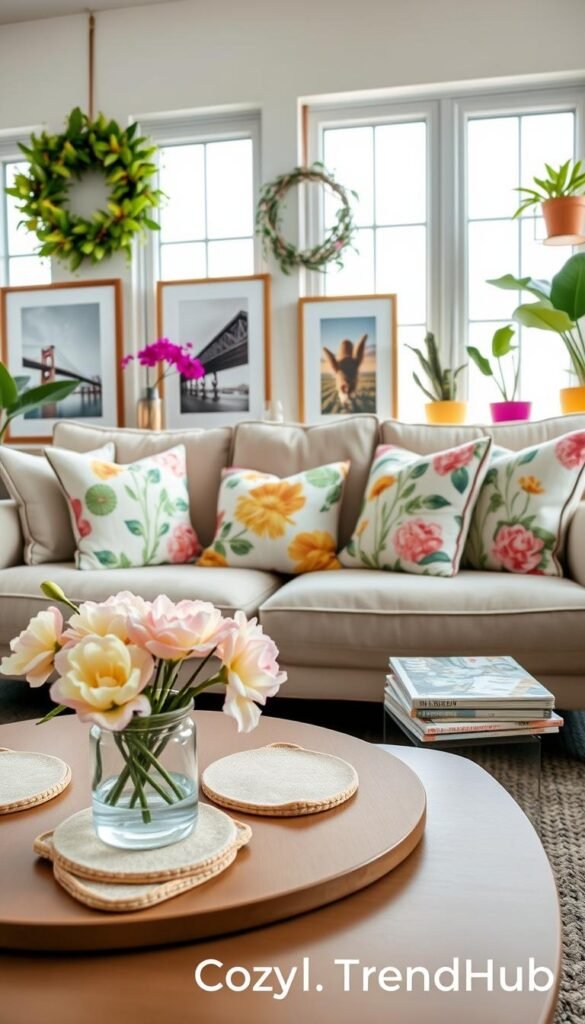
Quick comparison
| Item | Price range | Setup time (min) | Storage size | Renter-friendly |
|---|---|---|---|---|
| Doormat + wreath | $20–$60 | 5 | flat | damage-free |
| Tray centerpiece / pillows | $15–$80 | 10 | bin | yes |
| Tall branches / floor vase | $40–$150 | 15 | bulky | semi-perm |
Use-case notes
- Small apartments: choose compact textiles and trays that save time and space.
- Larger houses: one focal urn or botanical art swap adds scale.
- Tight budgets: refresh pillows and throws first; low cost, high impact.
Affiliate-ready tip: each block should state „best for,“ why it solves the problem, what to measure, and a return policy tip. This list contains affiliate links and helps roommates decide together.
Spring decor ideas for the living room everyone uses daily
A well-styled coffee table can tame clutter and make the shared living room feel intentional. Use a single tray to anchor items and make daily cleanups quick. Pick a tray that leaves room for snacks and games—aim for one that covers about one-third to half of the table surface.

Refresh the coffee table with a tray + low-mess centerpiece
Tray first, centerpiece second. Corralling remotes, coasters, and odds-and-ends on a tray makes wiping the table fast. Choose a low-profile tray (12–18 inches wide for small tables; 18–24 inches for larger tables).
Select low-mess centerpieces: faux tulips in a weighted vase, a small eucalyptus bundle, or a shallow bowl of preserved moss. These options shed little and clean with a quick dusting.
Use a simplified neutral-and-green palette to keep it harmonious
Stick to neutrals and green accents to reduce visual conflict between different tastes. Neutral base pieces let greenery lead the way when choosing accessories.
Buying considerations: wipeable finishes, non-tipping vases, and cork or felt coasters to prevent rings. Agree on a short reset routine: everything returns to the tray and one centerpiece stays. This keeps the room tidy without policing personal items.
Pillows, throws, and texture that make a shared room feel finished
A small, well-chosen set of pillows and throws can change how a communal room performs daily. Textiles add comfort and a cohesive look without forcing one person’s taste on everyone.

Block-printed pillows: pattern without visual clutter
Block-printed pillows introduce soft, organic patterns that stay calm when scaled correctly. Keep patterns to one scale and repeat 1–2 colors to maintain cohesion.
Swap heavy blankets for lightweight throws
Trade bulky winter knits for cotton or linen throws. These lighter fabrics match milder temps and compress easily for small storage spaces.
Buying considerations
- Zippered removable covers and clear machine-wash instructions.
- Colorfast dyes to avoid bleeding across white sheets or light sofas.
- Pet-friendly weaves that resist trapping hair and show less wear.
Pros and cons
Pros: light fabrics look airy and layer well; woven textures add warmth without bulk.
Cons: thin fabrics snag or stain easier; heavy-duty textiles last longer but can feel too warm.
Quick tip: choose a compact set—two pillows and one throw per shared seating area—to avoid overbuying and keep decisions simple. For more styling inspiration, check this textile inspiration post.
Fresh flowers vs faux flowers in a roommate home
Deciding on real versus artificial blooms starts with a quick check of schedules, allergies, and pet safety. This makes the choice practical, not personal.
Shared chores matter: fresh arrangements need water changes, stem trims, and cleanup of dropped petals. If no one claims those tasks, a vase can become a point of friction.
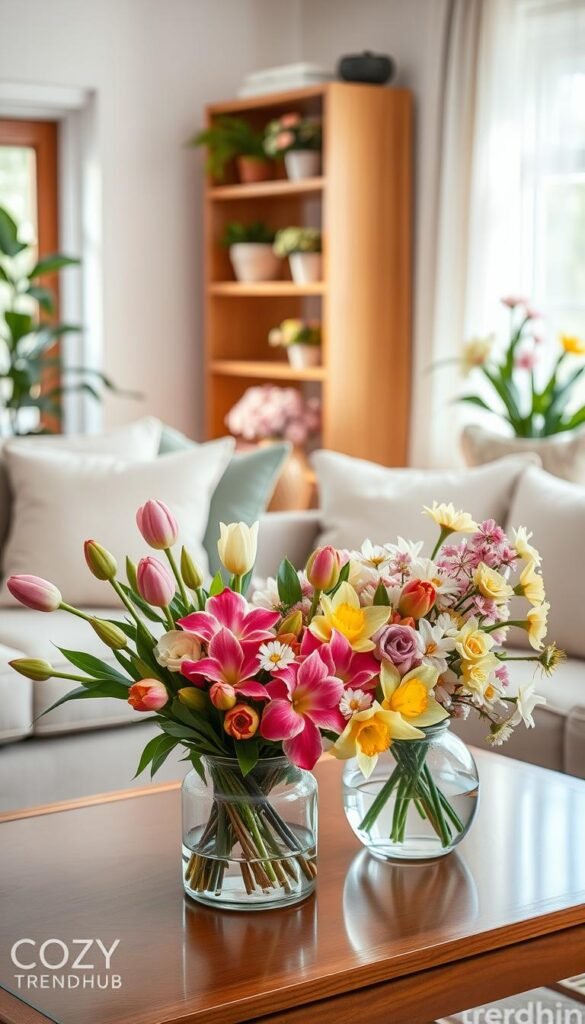
Best picks when time is tight
Realistic faux tulips, daffodils, and lilies of the valley offer seasonal life with minimal upkeep. Look for matte petals, varied stem lengths, and a weighted vase base. These details help a display read natural at a glance.
Best picks when scent matters
Market bouquets like tulips and hyacinths provide authentic fragrance and a garden-fresh presence. Place them where strong scent won’t bother roommates with sensitivities.
How to mix real and faux effectively
- Use real greenery with mostly faux blooms for believable texture.
- Insert 1–2 fresh stems into a faux arrangement so the eye reads it as natural.
- Keep mixed arrangements in a stable, weighted vase to prevent tipping on shared tables.
Pros and cons at a glance
| Option | Ongoing cost | Cleanup & upkeep | Household fit |
|---|---|---|---|
| Fresh flowers (tulips, hyacinths) | Weekly purchase cost | Water changes, petal drop | Good for scent lovers; watch allergies |
| High-quality faux (tulips, daffodils) | One-time purchase, storage | Occasional dusting | Great for busy households and allergies |
| Mixed arrangements | Moderate (occasional fresh stems) | Low to moderate; still need stability | Balanced option; looks natural if blended well |
Final decision tips: assign a flower task in the roommate system or choose faux if nobody will commit. Consider allergies, pets, and where items will sit to avoid spills or smells near food prep areas.
Greenery that survives shared living (even without a green thumb)
Choose greenery that survives busy schedules and shared chores without needing daily care.
Low-stress stems and pots make it easy to add life without creating work. Eucalyptus stems (fresh or faux) hold shape, scent, and color with little upkeep. They pair well with a simple wreath or an accent branch in a tall vase.

Low-stress picks: eucalyptus and hardy pots
Eucalyptus stems read fresh and last when dried. Faux stems mimic the look and remove watering chores. Hardy potted options like snake plant or pothos suit roommates who can handle occasional care.
Functional kitchen greenery
Potted basil, rosemary, and thyme add life and function to the kitchen while earning quick buy-in. They live well on a sunny sill and make herbs available for shared meals.
Containers and cleanup
Neutral ceramic pots keep the space cohesive and wipe clean easily. Use a shallow tray under pots to catch water and soil. Avoid placing plants on tight prep zones; keep them off direct work surfaces.
- Problem: uneven watering and limited windowsills cause plant failure.
- Solution: stems and one hardy pot for beginners; faux or communal herbs for travelers.
| Item | Care | Space need | Best for |
|---|---|---|---|
| Eucalyptus stems (fresh/faux) | Low / zero | Small vase | Low-effort style |
| Basil | Moderate (weekly) | Sunny sill | Kitchen use |
| Rosemary / Thyme | Low–moderate | Small pot | Cooking & scent |
| Neutral ceramic pot | Easy wipe | Varies | Matches mixed items |
Quick callouts: plant beginners should start with stems plus one hardy pot. Frequent travelers should pick faux stems or shared herbs that others will tend.
Create levels of greenery for a “spring lift” in small spaces
In small spaces, vertical layering turns limited floor area into a deliberate, airy display rather than clutter. This approach spreads green moments from low to high so each piece breathes and contributes to the overall look.
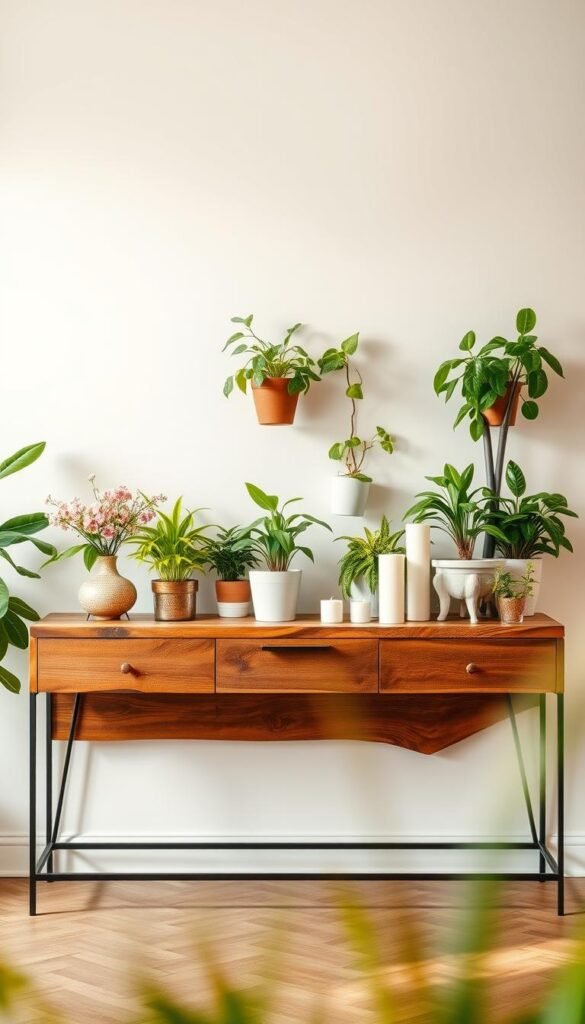
Start low: coffee table and console table greenery
Begin with a compact arrangement on the coffee table and a matching touch on a console table. Keep both pieces small and low-profile to avoid blocking sightlines.
Why it works: paired low pieces create continuity without taking floor space.
Go mid-level: wreaths and hanging planters
Add a single wall wreath or one hanging planter. Use damage-free hooks rated for the weight and place it where everyone can agree. This is an easy way bring a fresh tone without drilling holes.
Go high: branches and top-of-shelf styling
When ceiling height allows, place tall branches in a slim vase or add a subtle greenery wrap to a chandelier. Top-of-shelf moments also lift the eye and make the room feel taller.
- Step-by-step: low → mid → high. Start with the coffee table, add a console table echo, then try one mid-level and one high-level piece.
- Roommate guardrails: cap greenery “moments” at 3 per room and keep tones similar so displays read cohesive.
- Pros: layered greenery looks lush and intentional.
- Cons: it can collect dust and feel busy; pick higher-quality pieces if cleaning is limited.
For a practical example of console table styling, see console table styling.
Dress up a focal point like a mantel, fireplace, or shared media wall
A single, well-chosen focal update can refresh a room without filling every shelf. Focus on pieces that add scale and interest, but remain simple to remove and store when tastes change or a lease ends.
Branch arrangements in a tall vase or urn
Branches in a weighted urn add dramatic height and need no wall hooks. Pick stems that reach roughly 1.5 times the mantel or media unit height so they read proportional without blocking the screen. Use a heavy vase or fill the base with river rocks to keep the display stable.
Choose branches that shed little and tuck them into a narrow-footed urn to avoid crowding. This gives a vintage or natural touch without a permanent change.
Botanical art swaps to shift from winter to warmer months
Swapping prints is low-commitment and renter-friendly. Keep frames in place and replace inserts with botanical prints sized to common US frames (8×10, 11×14, 16×20). This makes the change quick, reversible, and easy to store.
Consider a muted palette so the display complements varied tastes. Vintage-style prints pair well with modern frames when a neutral mat is used.
Pros and cons: statement focal decor vs visual “noise”
- Pros: Creates a clear focal point and reduces the need for many small items. Easier to agree on one statement than dozens of accents.
- Cons: Oversized branches or very colorful art can dominate a room and clash with roommates‘ styles.
- Buying considerations: vase weight, branch shedding, standard print sizes, and storage bulk.
| Solution | Impact | Storage | Best for |
|---|---|---|---|
| Tall branches in weighted urn | High height & drama | Bulky (vase + branches) | Mantels and open fireplaces |
| Botanical print swaps | Moderate seasonal shift | Flat (prints in portfolio) | Media walls and framed galleries |
| Mixed low-and-tall display | Balanced scale, layered design | Moderate (few pieces) | Rooms with TV + mantel combo |
Quick rules: media-wall setups should prefer low-profile pieces so screens stay visible. Mantels can take more height and layers. When in doubt, choose a single statement vessel plus one coordinating print to satisfy varied tastes.
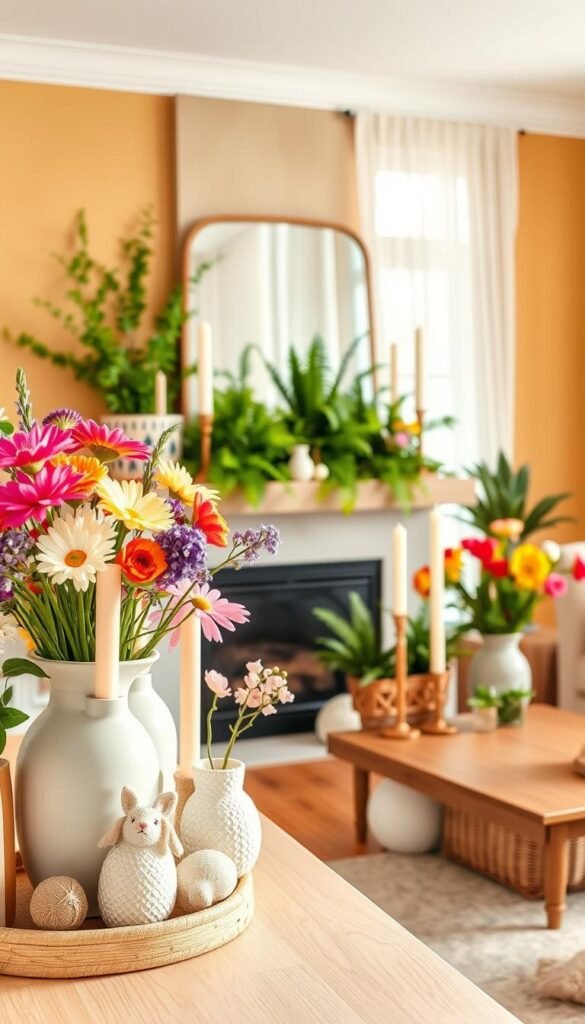
For mantel styling tips and examples, see a practical guide on mantel decor ideas and apartment-friendly updates at apartment decor ideas.
Wreaths, branches, and subtle spring symbols that aren’t holiday-specific
Small nature touches refresh a shared living space without feeling holiday-specific. Pick items that read as garden accents rather than event trimmings to avoid awkward roommate conversations.
Natural elements like tiny nests, simple twigs, and subtle bird accents suggest new growth without leaning into any holiday look. These pieces are small, lightweight, and easy to agree on.
Magnolia, dogwood, and cherry blossom stems
Magnolia, dogwood, and cherry blossom branches give an early-season lift. They add height and a gentle color note while keeping the display minimal.
Renter-friendly display tips: hang a wreath on a removable hook, place branches in a weighted vase, or group small accents on a tray so they can be moved quickly.

Choose neutral-toned natural elements that store flat or fit in a single bin. Avoid signage or overtly themed pieces so the items work year after year.
- Timing: subtle nature pieces work before peak season without feeling premature.
- Storage: nests and wreaths pack flat; branches fit in tall boxes.
- Longevity: neutral materials blend with varied styles and last multiple years.
| Element | Display | Storage | Why it works |
|---|---|---|---|
| Small nest + bird accent | Tray or shelf | Flat box | Suggests garden life, low commitment |
| Magnolia / dogwood / cherry stems | Weighted vase or urn | Tall tube or standing box | Adds height with minimal extras |
| Wreath (neutral materials) | Removable hook on door | Wreath box (flat) | Instant curb appeal, renter-safe |
Best for: roommates who prefer understated textures; these pieces blend easily into most palettes and reduce conflict while giving a gentle seasonal touch. Consider a shared quick-vote on one focal piece to keep decisions simple and fair.
For practical wreath options and styling ideas, see a compact guide at wreath styling ideas.
Lighten up with breezy curtains and brighter natural light
A quick window update can change how a room reads without replacing furniture or repainting. Swapping heavy drapery for white linen or sheer cotton brightens the space and makes rooms feel airier in the spring season.
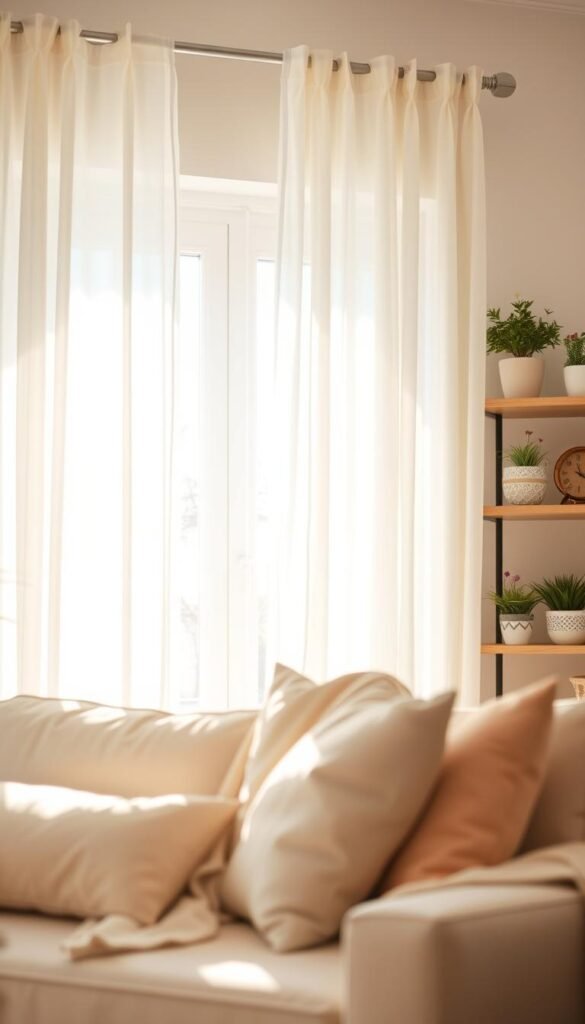
Swap heavy drapery for white linen or sheer panels
Why swap: thick curtains block daylight and shrink sightlines. White linen or sheers let diffuse light in while keeping a calm look.
When to choose sheers: interior-facing rooms or higher floors where privacy is less of a concern. When to keep blackout: bedrooms or street-facing units that need sleep-friendly darkness.
Buying considerations: privacy, light filtering, and sizing
Measure rod width and drop length before shopping. Measure the rod edge-to-edge, then add 6–12 inches total for outside-mount coverage.
- Confirm standard US panel sizes (84″, 96″, 108″) and pick a length that grazes or pools as preferred.
- Decide inside-mount vs outside-mount: inside-mount is tidy; outside-mount boosts privacy and blocks more glare.
- Layering: pair sheer panels with a removable blackout liner to balance light and privacy on busy streets.
Rental notes: use tension rods or ceiling-mounted tracks that require minimal holes. If drilling is needed, choose hardware that can be patched easily at move-out.
Best for: small apartments see the biggest perceived space gain. This update takes little time and low cost, yet lifts the room’s look and feel without permanent changes. See a practical example in a light and airy home tour.
Spring table and kitchen refreshes that won’t crowd roommates
A thoughtful tabletop update should add texture without stealing counter real estate. Shared cooking and eating areas need solutions that move quickly when a meal begins. Keep items slim, wipeable, and easy to pick up.
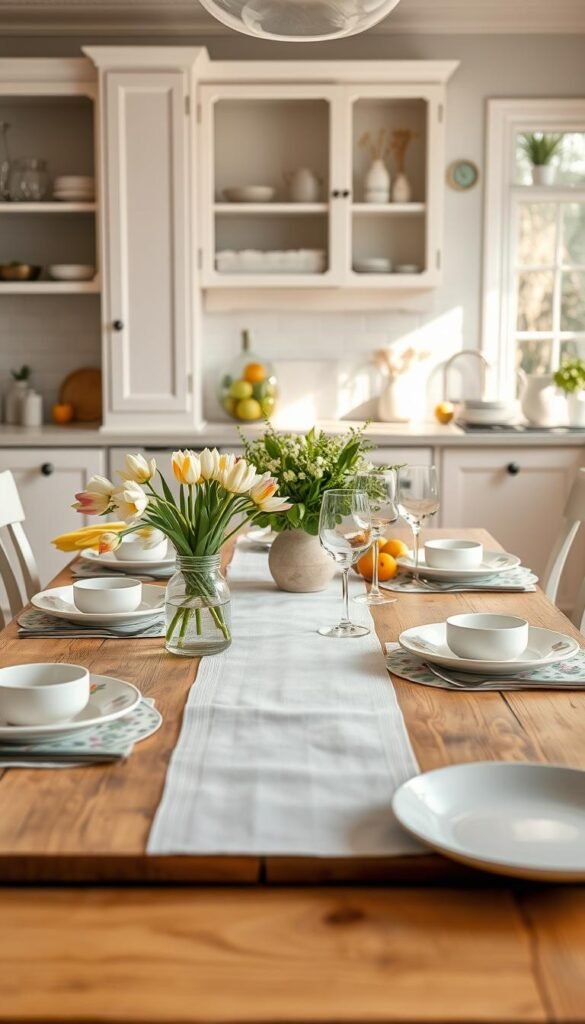
Table runner and placemats in light textures
Choose washable runners and placemats in natural cotton or linen blends. These materials clean well and resist stains when pretreated.
Tip: pick narrow runners that leave room for prep tools and a skillet.
Centerpiece rules
Keep centerpieces low so people can see one another. Use containers that wipe clean and avoid heavy scents near food.
Glass jars and simple ceramic bowls work if they are stable and easy to hand-wash or dishwasher-safe.
Woven trays and baskets
Use shallow trays to corral mail, chargers, and condiments. They add texture while keeping clutter off the prep surface.
Pros, cons, and buying considerations
- Pros: decorative storage speeds cleanups and reduces friction.
- Cons: oversized baskets steal prep space and can become catchalls.
- Measure the table footprint, choose sealed or wipeable finishes, and verify stability before buying.
| Solution | Impact | Care |
|---|---|---|
| Runner + placemats | Quick visual lift | Machine-washable |
| Low centerpiece (glass or ceramic) | Safe near food | Dishwasher or hand-wash |
| Woven tray | Organizes things | Spot clean or wipe |
Small spring touches for bedrooms and personal corners (without overbuying)
Tiny, portable touches are the easiest way to bring seasonal color into a private room. They let each person express style without changing shared areas.
Roommate-friendly approach: bedrooms and desk corners are ideal spots for personal updates. No group approval is needed and items travel easily when plans change.
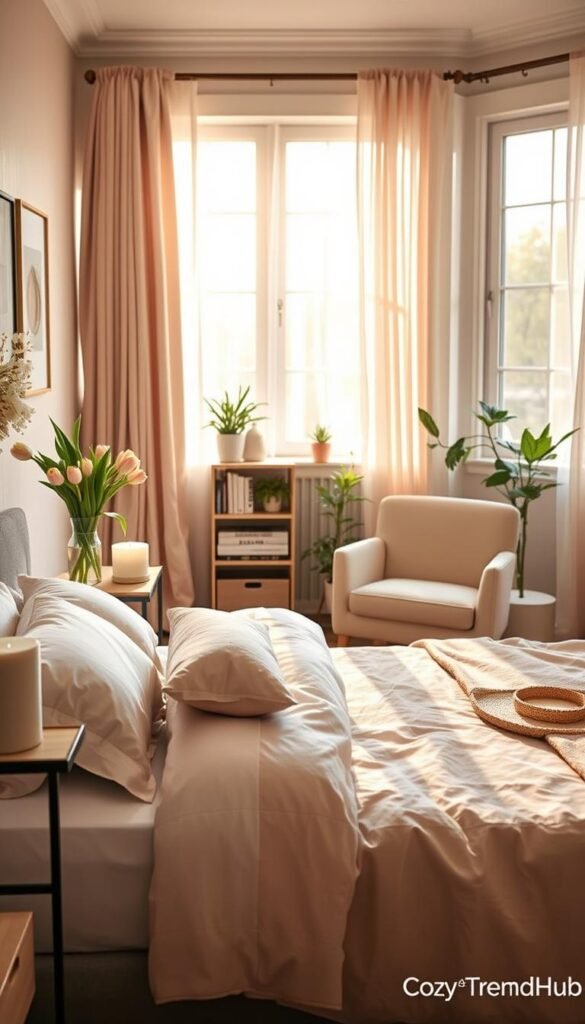
Nightstand mini-vases and single stems
One stem in a tiny vase adds color and won’t create ongoing chores. A single tulip or eucalyptus sprig is low-mess and easy to replace.
Soft pastel accents in small doses
Limit accents to one candle, one vase, or one pillow cover. This keeps a visible corner intentional and prevents clashing palettes when doors open.
- Buy with moving in mind: choose unbreakable vases or padded storage boxes.
- Packability: flat items and small textiles travel well.
- Budget note: one quality item reads better than several cheap pieces.
| Item | Space need | Care |
|---|---|---|
| Mini vase + single stem | Nightstand | Occasional dust |
| Pastel pillow cover | Small chair or bed | Machine wash |
| Compact candle (scented) | Desk corner | Use with ventilation |
Style tip: if two people share a room, pick one pastel tone and repeat it once to keep the corner cohesive rather than random. These small items offer portable, low-risk ways to refresh personal space without overbuying.
Scents and candlelight that keep the peace in shared homes
A light, intentional fragrance plan protects comfort and prevents surprise headaches. Scent is often a small pleasure that can become a major source of conflict when roommates have different sensitivities.
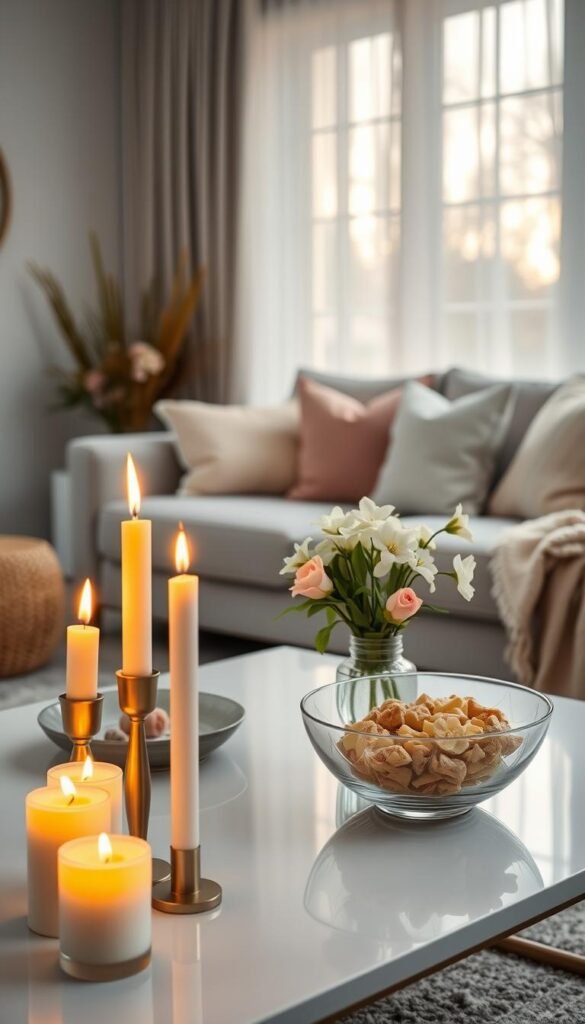
Problem: what smells fresh to one person can trigger allergies or migraines for another. Start with a simple house rule: test new scents in a common area for one week before adding them permanently.
Switch from deep winter spice to fresh floral or citrus notes
Swap heavy, clove-rich candles for lighter floral or citrus families. Choose low-intensity options first. That preserves the seasonal life lift without overwhelming noses.
Buying considerations and safety checks
- Check sensitivities: ask roommates about allergies before buying.
- Pet safety: avoid essential oils known to harm pets and place sources out of reach.
- Open-flame rules: confirm whether candles are allowed; use weighted holders if flames are permitted.
- Ventilation: burn or diffuse in well-ventilated areas to reduce lingering scent.
Alternatives: flameless candles, reed diffusers in low-traffic spots, or unscented candles paired with fresh flowers for a subtle feel.
| Scent family | Intensity | Burn/diffuse time | Room size |
|---|---|---|---|
| Citrus (lemon, bergamot) | Low–medium | 20–40 hrs | Small–medium |
| Floral (peony, lily) | Low | 25–45 hrs | Small–medium |
| Clean/linen (light musk) | Very low | 30–50 hrs | Small–large |
Keep purchases practical: note scent family, intensity, estimated burn time, and which room it suits. Add a shared approval step before buying to avoid friction. For budget-friendly options and quick swaps, consider this list of affordable spring picks that contains affiliate-friendly choices.
How to shop and split costs: what to buy together vs individually
A simple shopping framework makes it easy to decide what the group buys together and what each person keeps. This prevents small fights and speeds up refreshes.
Shared purchases that help daily use
Split costs only on items that improve shared function: an entry drop zone, a living-room tray, and basic table textiles. These items serve everyone and are easy to track.
Personal purchases that travel with you
Keep pillows, art prints, and small decor as individual buys. They move with a person and avoid ownership disputes when roommates change.
Affiliate-ready checklist and shopping method
- Agree on a single cart list and max price per item.
- Pick neutral colors so replacements are simple.
- If one person objects, default to a neutral option or skip it.

| Item | Budget range | Storage footprint | Setup time | Return window |
|---|---|---|---|---|
| Entry drop zone | $30–$120 | Small box | 10–20 min | 30 days |
| Living-room tray / centerpiece | $15–$80 | Bin | 5–15 min | 30–60 days |
| Table linens (runner, placemats) | $20–$60 | Flat / foldable | 5 min | 30 days |
| Personal accents (pillows, art) | $10–$100 | Small box | 1–10 min | 14–60 days |
Seasonal storage plan: designate one labeled bin and one shelf. Agree who holds it at move-out or split items on departure.
Quick resources: use a short voting list or refer to shared affordability guides like this housing affordability piece and subtle style ideas at a decor inspiration post. This approach keeps purchases fair, practical, and easy to reverse if plans change.
Conclusion
A short, focused refresh often gives the biggest payoff with the least fuss.
Choose a single, cohesive theme, favor temporary pieces, and prioritize high-use zones like the entry and living area to change how the whole home looks and feels this season.
Keep renter-safe choices first: damage-free hooks, washable textiles, and removable accents protect deposits and simplify move-out tasks.
Use the comparison table to weigh price, setup time, storage, and renter-friendliness. A starter kit—one entry upgrade, one tabletop refresh, and one textile swap—usually delivers visible impact without clutter.
Next step: pick 2–3 items to buy this week, confirm return and storage plans, then schedule a short install session together. For living-area styling tips, see practical living room ideas at living room ideas.