
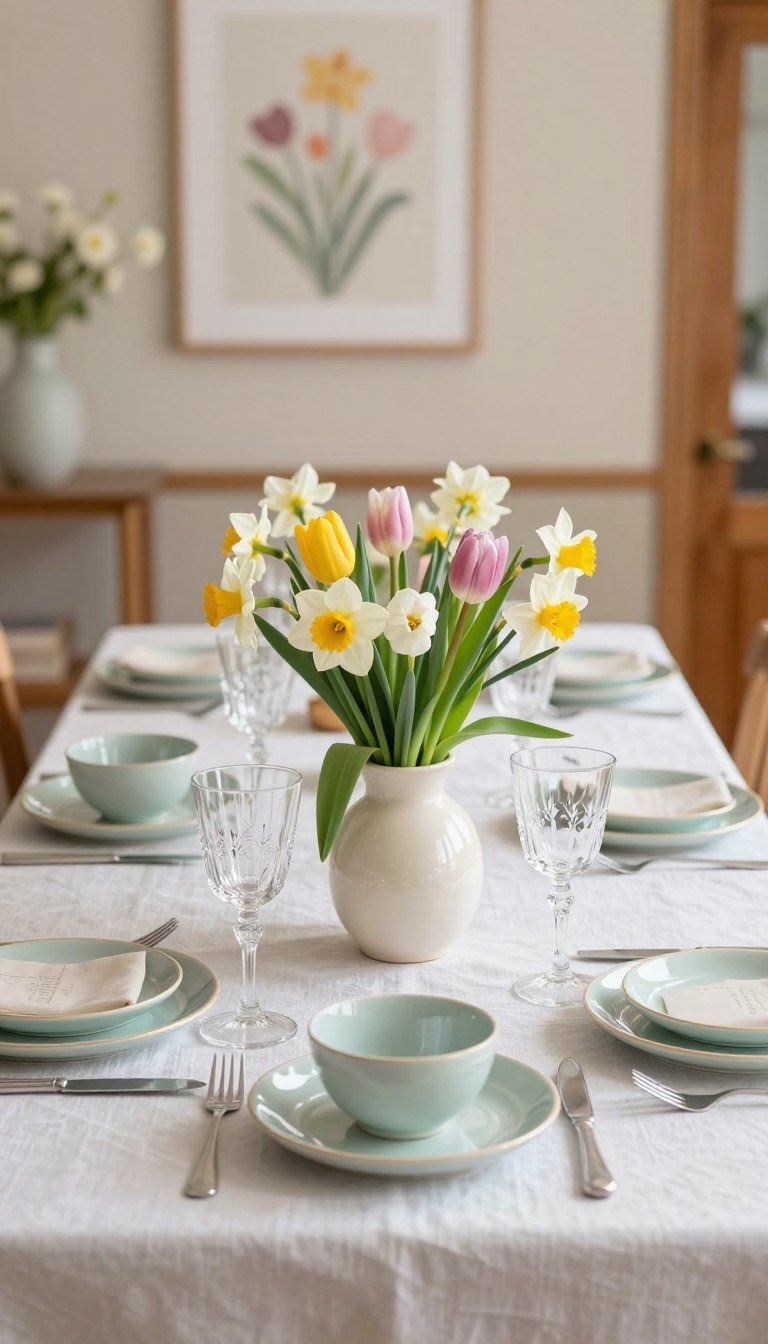
Real homes need realistic styling. Many online setups look perfect but require bulky storage and high maintenance. This guide focuses on low-mess, renter-friendly solutions that work for small dining surfaces and weekday meals while still feeling special for guests.
Design experts say a welcoming setting uses fresh flowers, layered bases like washable linens or chargers, and one intentional accent to finish the look. Start with a base layer, add a low centerpiece, then pick a single focal accent such as place cards or citrus bowls.
This guide is for U.S. renters and small-space households who want practical products that store easily and transition from spring into early summer. Each recommendation will show who it’s best for, real pros and cons, and what to check before buying so readers can compare quickly.
Styling rule to follow: keep centerpieces low so conversation stays central, or move height to the perimeter in narrow vases. The selections emphasize washability, durability, and visual payoff without overpromising.
Key Takeaways
- Focus on low-storage, low-mess pieces that still read as intentional.
- Build a layered base, a low centerpiece, and one clear accent.
- Choose washable linens and small vases for seasonal longevity.
- Designed for renters and compact dining setups in the U.S.
- Each pick will list pros, cons, and buying pointers for fast comparison.
What to prioritize when shopping spring table decor for renters and small spaces
A practical approach to a lively tablescape starts with items that store small and clean up fast. Renters should avoid anything that needs hooks, paint, or permanent changes.
Renter-friendly rules:
- Choose pieces that fit one storage bin. Stackable chargers and nested bowls save space.
- Prefer wipeable or machine-washable linens and shatter-resistant vessels for fast cleanup.
- Pick modular kits: one base layer + one centerpiece style + one finishing touch to reset quickly.
Conversation-first styling
Keep the centerpiece low so guests can see each other. Use clustered mini bud vases or a shallow bowl to make an impact without height.
Seasonal ROI
Neutral linen runners, clear glass bud vases, and woven chargers move easily from a spring table into summer hosting.
Quick sightline test: if seated guests can’t see one another, the centerpiece is too tall. Consider place cards as a small touch that elevates the meal and helps guests feel welcome.
Best spring table decor ideas that work for everyday meals and special occasions
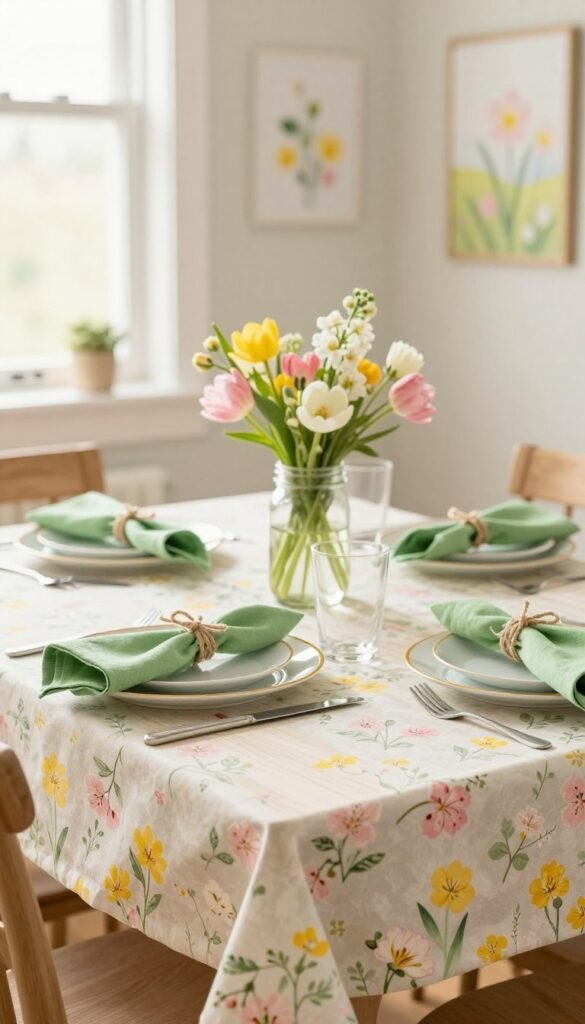
Clear formulas let renters pull together an inviting meal in minutes or plan a layered look for guests. Each approach maps to simple purchases, quick setup time, and small storage needs.
The fast-refresh formula
What to buy: a neutral linen runner or cloth, one low bowl of fresh flowers, and a single pop accent like colored glasses or a citrus bowl.
Time: 5–10 minutes. Cost: low to moderate. Storage: one small bin for linens and the accent.
Why it works: The neutral base keeps the scene calm while flowers add seasonality and one color pop gives a clear statement without clutter.
The small-table formula
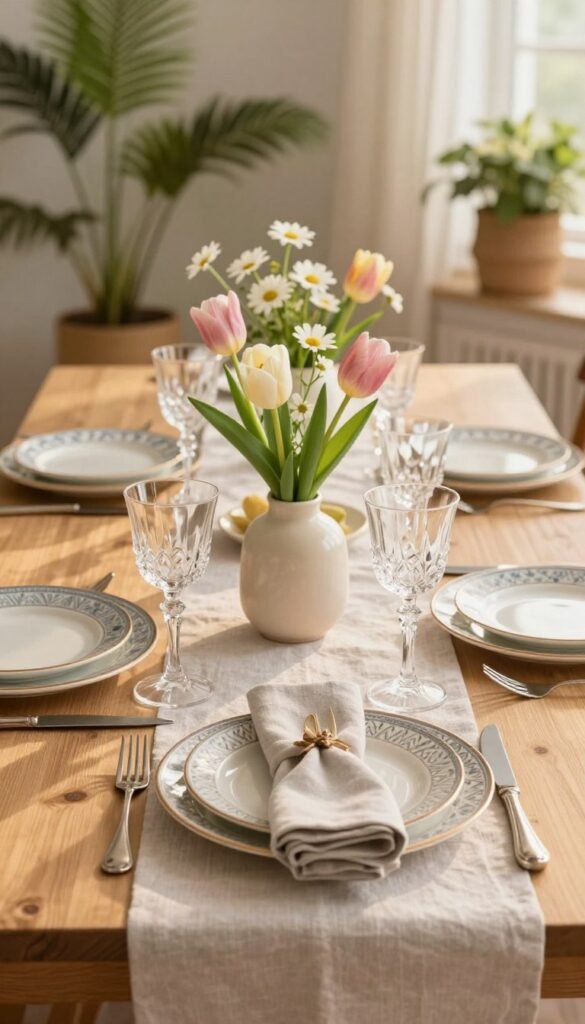
What to buy: a slim runner, a few bud vases, and one off-center vase of vertical branches on a side surface.
Time: 10 minutes. Cost: low. Storage: bud vases stack easily and take little space.
This keeps sightlines open for conversation and gives height without blocking seated views for guests.
The special-occasion formula
What to buy: place cards, a set of candles, and a simple layer of charger + plate + napkin.
Time: 20–30 minutes. Cost: moderate. Storage: chargers and card holders nest in a single box.
Layering creates structure and signals an event. Invest in quality linens and bud vases; seasonal accents can rotate each year.
- Quick comparison: Fast-refresh = minutes and small spend. Small-table = modest setup, minimal storage. Special-occasion = more time, bigger visual payoff.
- Hosting tip: fewer items, stronger cohesion, and clear seating cues make guests feel welcome and keep the meal comfortable.
Best bud vases and mini vase sets for effortless spring tablescape decor
Clustered mini vases let small dining surfaces wear fresh stems without blocking conversation. This approach answers common renter needs: low storage, quick setup, and open sightlines.
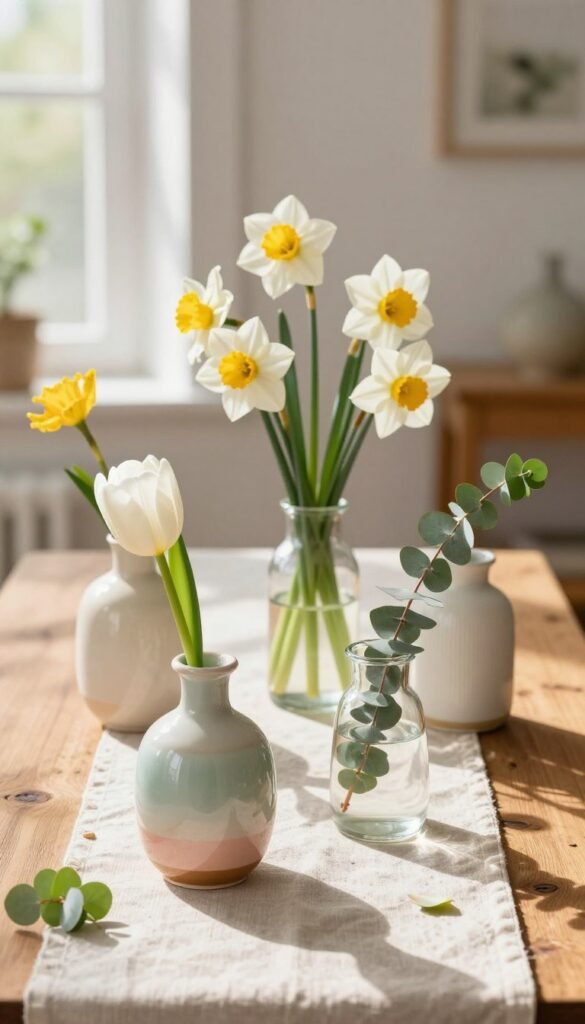
Best for: apartment dining tables, breakfast nooks, and renters who need decor that fits in a single shoebox-size bin.
“Cluster delicate bud vases in mass down the center and use one floral varietal for an easy, colorful statement.”
Pros and cons of clustering down the center
- Pros: easy to scale to table length; inexpensive to refresh; doubles as small guest favors.
- Cons: more pieces to wash; narrow bases can tip; mixed shapes can read busy.
Buying considerations and renter-friendly tip
- Choose thicker glass and wider bases for stability.
- Prefer dishwasher-safe sets for weeknight practicality.
- Pick a set that nests for compact storage and keep snips and flower food together for fast setup.
| Checklist | Specification |
|---|---|
| Number per set | 4–8 |
| Height range | 2–6 inches |
| Base diameter | 1.5–3 inches |
| Weighted glass | Yes/No |
Quick note: clustered bud vases keep floral arrangements low so the centerpiece stays conversational and usable for serving.
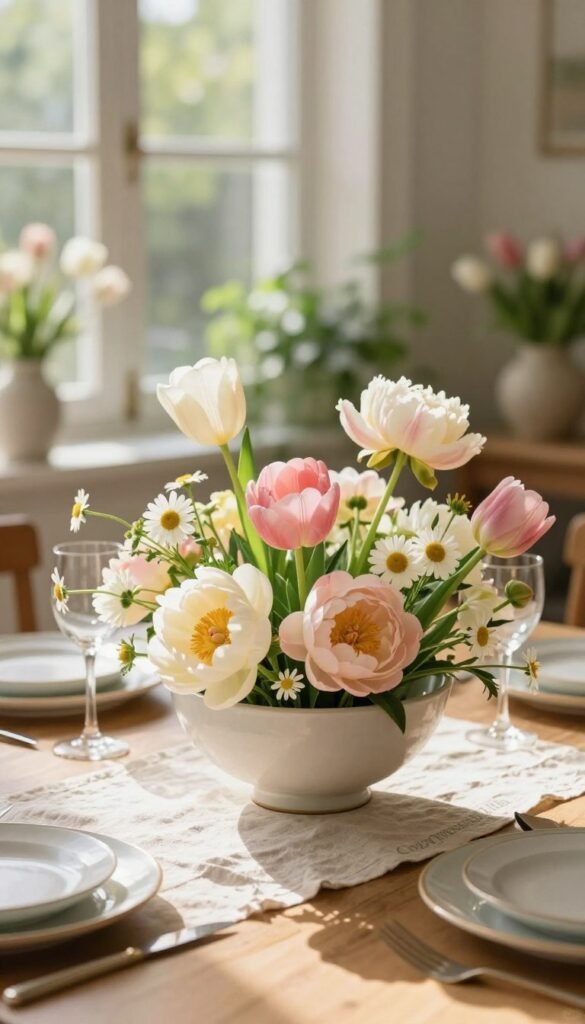
Best low-profile centerpiece bowls for spring floral arrangements
Low-profile bowls make a clear, conversational centerpiece without crowding a small dining surface.
Why they work: Shallow vessels keep blooms below eye level so guests can see one another. This is useful in narrow rooms and for compact tables where tall stems block sightlines.
Who should buy one: Hosts who want a single focal arrangement and renters who prefer one item to store instead of many vases.
Mechanics that hold stems in place
- Chicken wire: reusable and flexible; form a small ball to anchor stems and cut once after use.
- Florist foam: easy for beginners and keeps stems put; must soak before use and creates waste when discarded.
Practical buying considerations
- Choose a wide diameter and shallow depth so the centerpiece sits low but spreads visually.
- Prefer a watertight ceramic bowl if hiding mechanics matters; glass shows stems and water for a cleaner look.
- Look for a weighted base or felt pad to reduce tipping on rental surfaces.
| Material | Diameter | Depth | Watertight |
|---|---|---|---|
| Ceramic | 8–12 in | 2–4 in | Yes |
| Glass | 8–14 in | 2–5 in | Yes |
| Metal (lined) | 10–14 in | 2–4 in | Sometimes |
Pros: Bowls are quick to style, photograph well, and keep floral arrangements low. Cons: they use more central surface area than a row of bud vases and need room for serving dishes.
Low-mess tip: Contain chicken wire or foam inside the bowl so cleanup is a lift-and-dump, not a petal-by-petal cleanup.
Best table runners and tablecloths for spring table settings in tight spaces
A simple linen layer does more than look tidy—it protects a worn surface and frames floral arrangements without extra fuss.
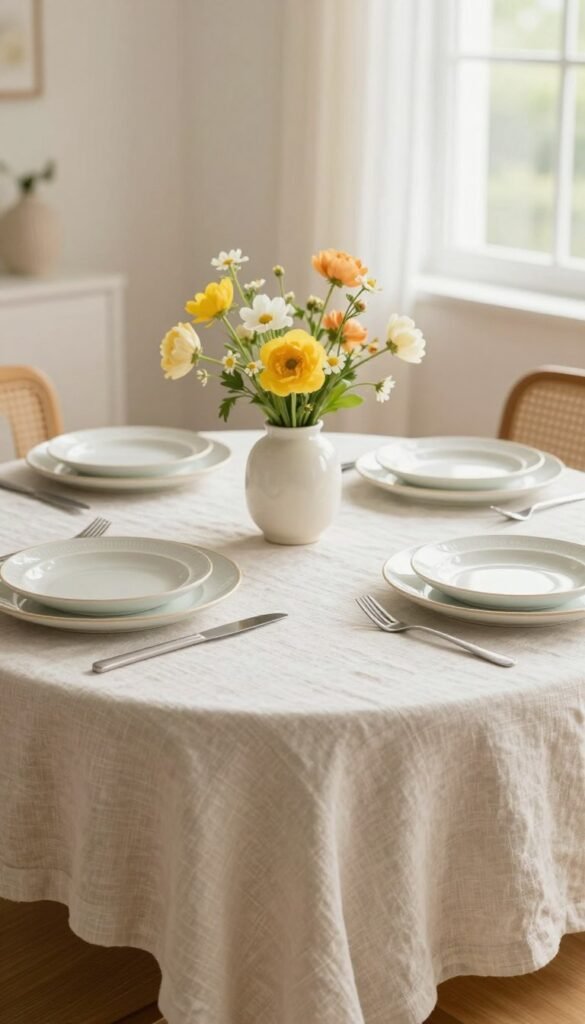
Best for: protecting rental tables and hiding wear with minimal effort. Neutral linen reads as a calm base so tulips, ranunculus, and daffodils stand out.
Sizing and small-space guidance
Measure across the widest point of your table. For tight clearances, pick a drop of 4–6 inches so fabric won’t catch on knees or chairs.
Runner vs. full cloth
- Runner: preserves edges for place settings, uses less laundry, and stores flat.
- Full tablecloth: hides more damage and protects the whole surface but needs more space to store and wash.
Buying checklist
| Feature | What to look for |
|---|---|
| Fabric blend | linen/cotton for texture + machine washability |
| GSM/weight | medium weight for drape and durability |
| Hem quality | double-stitched edges |
| Shrinkage | manufacturer notes pre-wash or percent shrinkage |
Easy-care priorities: pre-washed softness, stain resistance, and machine wash. For renter-safe styling, add a non-slip pad under a runner to stop sliding and constant straightening.
Best linen napkins in spring colors for a polished table decor upgrade
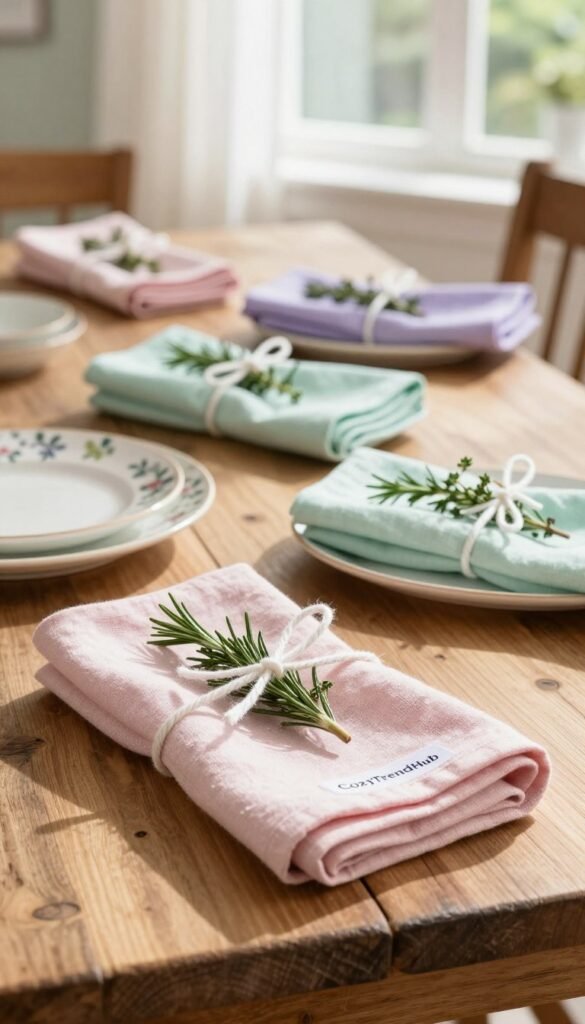
Linen napkins in soft hues give plain place settings an immediate lift with little effort. They work for renters and small-space hosts who can’t change paint or furniture but still want a polished look.
Who they suit and why
Best for: people using basic white plates, mix-and-match dishware, or everyday meals that need one thoughtful touch. A colored napkin creates a clear color story while the rest stays neutral.
Pastel palette and buying checks
Choose blush, mint, powder blue, or lavender for a subtle seasonal feel that won’t feel holiday-specific.
- Check hem quality: mitered corners last longer than a simple hem.
- Feel: pre-washed linen is softer and more user-friendly.
- Care: machine washable and dryer-friendly notes save time.
Practical notes
Pros: reusable, compact to store, and a small spend with big finish.
Cons: linen wrinkles; plan a quick steam or embrace a relaxed, rumpled look.
Renter tip: pick mid-tone pastels to hide minor stains and start with 4–6 napkins, then add accents over time.
Best charger plates for spring table decor with added texture
Adding a woven base under everyday plates turns a casual meal into a considered tablescape.
Why chargers help: Many settings feel flat even with flowers. A charger adds one clear layer so plates sit on a purposeful ground. This lifts the visual design without replacing dinnerware.
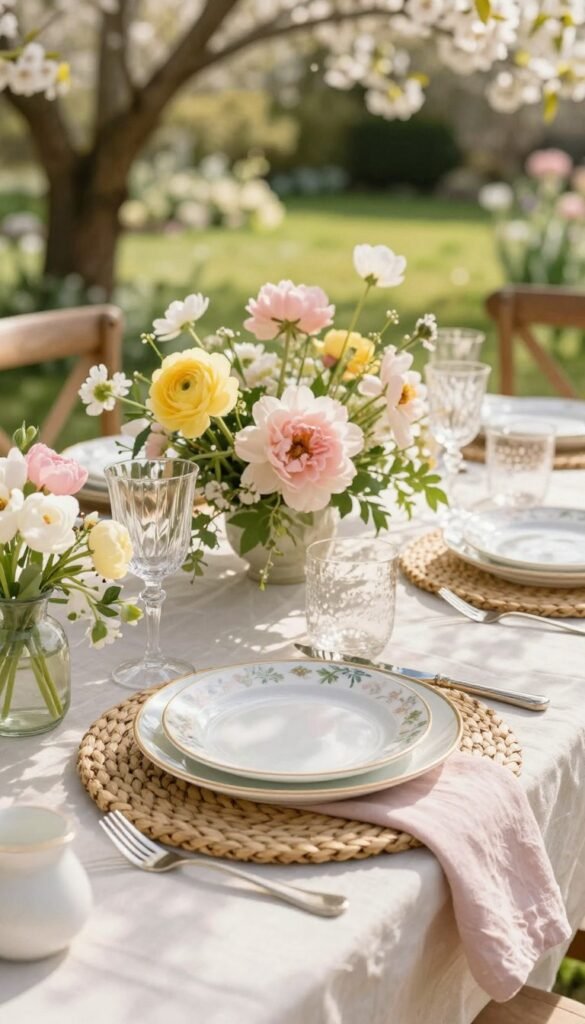
“Woven and rattan chargers are a simple way to add warmth and protect linens while keeping the look informal.”
When woven chargers work: casual brunches, outdoor meals, and warm-weather tablescape looks where texture matters more than shine.
When they don’t: very formal dinners, messy saucy meals, or kitchens that need dishwasher-safe pieces.
- Storage tip: pick slim-profile chargers and stack vertically or slide flat under a bed in a shallow bin.
- Buying checks: wipe-clean finish, snag-free edge, diameter to fit common plates, and low stack height for cabinets.
| Feature | Why it matters | Notes |
|---|---|---|
| Material | Texture & care | Rattan, seagrass, or coated MDF |
| Finish | Cleanability | Wipe-clean coating recommended |
| Diameter | Plate fit | 11–13 inches fits most plates |
| Stack height | Storage | Less than 2 inches per 4 chargers ideal |
Quick cohesion tip: repeat the woven texture once elsewhere—on a bread basket or small tray—and keep other textures simple to avoid a cluttered look in your tablescape and overall table decor.
Best floral dishware and serving pieces for a spring table that feels curated
Floral dishware can instantly make a small dining area feel curated without changing paint or furniture. It’s a renter-friendly shortcut that shifts the room’s mood with one compact purchase.
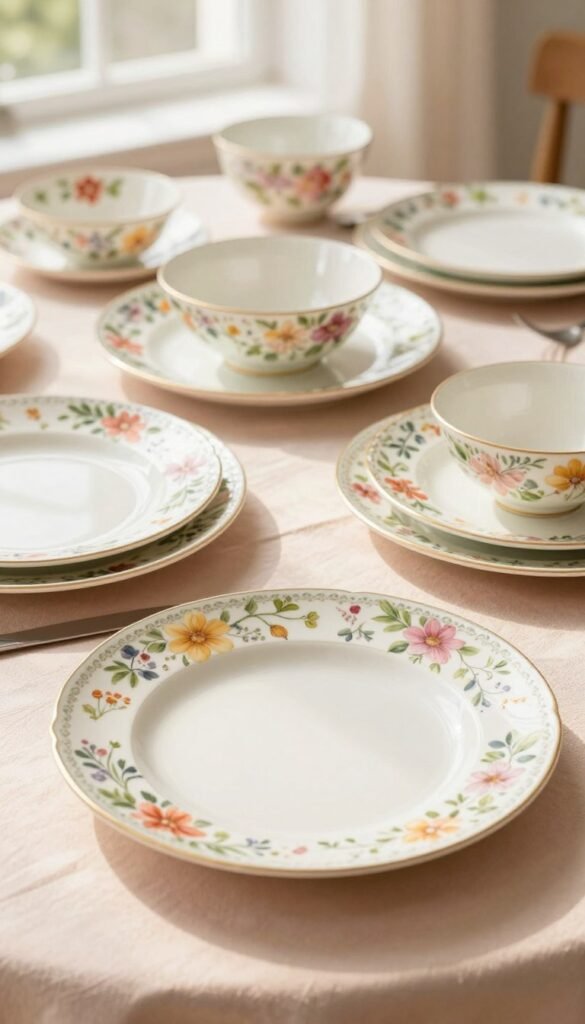
Who this serves
Small apartments: when the table is visible from the living room, patterned plates turn the dining zone into a focal vignette. A single floral pitcher or platter works when storage is tight.
How to mix without clutter
- Pick one hero pattern: floral plates or patterned linens. Keep the other element solid or very subtle.
- Pull one or two colors from the floral motif and repeat them in napkins or glasses for cohesion.
- Limit additional patterns to avoid visual noise; use neutral chargers or plain placemats to ground the look.
Buying and storage checklist
| Feature | Why it matters | Notes |
|---|---|---|
| Place settings | Match household size | Start with 4; add to 8 if you host |
| Stackability | Small storage footprint | Flat rims and nesting bowls save space |
| Care | Everyday use | Dishwasher/microwave safe preferred |
| Single serving piece | Low storage cost | Pitcher or platter bridges seasonal looks |
Pros: a floral collection gives a curated feel with few extra objects. Cons: the style can feel seasonal unless colors are versatile.
Small-space hosting tip: match a simple bud-vase arrangement to one color in the dishware for an easy, pulled-together tablescape that reads intentional from every seat.
Best fresh flower stems for spring centerpieces that are easy to source in the US
Choose a few easy-to-find stems that hold up through an evening and read lively from every seat.
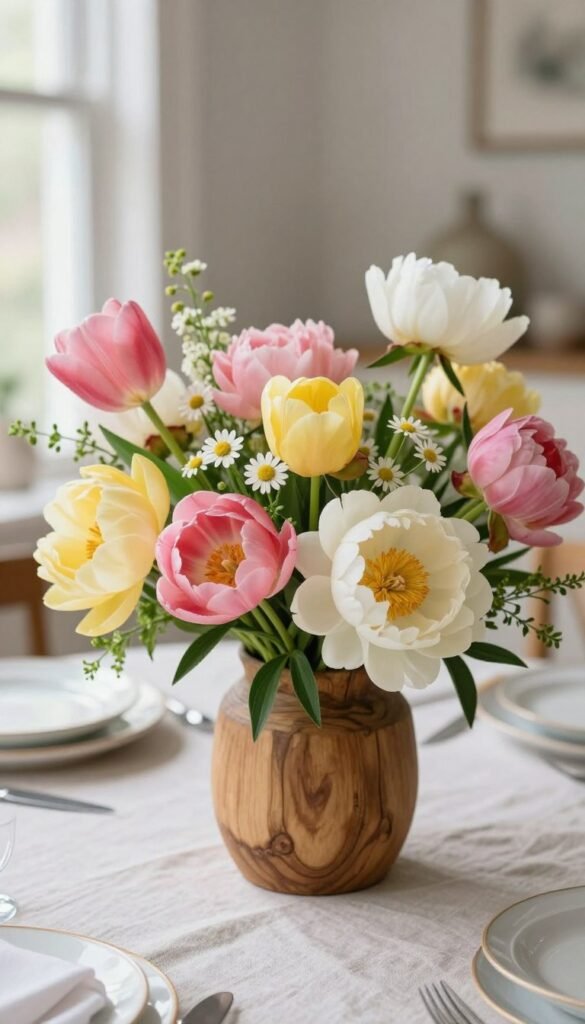
Tulips, daffodils, ranunculus, and peonies — what each is best for
Tulips give a clean, modern color pop and work well in low bowls or clustered bud vases.
Daffodils suit small clusters; they are cheerful and cost-effective at grocery stores.
Ranunculus add layered texture; buy a few stems for a lush look without many pieces.
Peonies make a statement when in season—use one or two as a hero bloom to control cost and storage.
Branch moments for height
Use dogwood, spirea, or airy Queen Anne’s lace for vertical interest. Place tall branches off-center or on a side surface so sightlines stay open.
“Florist tape across the vase opening forms a simple grid that keeps branches and airy stems upright.”
Longevity tips
- Trim stems on a diagonal and change water every 48 hours.
- Vary stem heights for a natural arrangement and to reduce wilting.
- Keep water clean to avoid cloudiness and odor.
Pros and cons: fresh flowers vs faux
Fresh flowers bring scent and natural movement but need water changes and a bit of cleanup.
Realistic faux lavender offers reusable seasonal value and zero maintenance, though it lacks organic variation.
| Shop at | What to buy | Renter-friendly tip |
|---|---|---|
| Grocery | Tulips, daffodils | Choose pre-wrapped bunches; trim at home |
| Local florist | Ranunculus, peonies, dogwood | Ask for a single hero stem + supporting branches |
| Market | Seasonal stems and greenery | Buy one focal bloom and one branch for structure |
Quick shopping strategy: buy one hero stem and one supporting branch to control cost, storage, and cleanup while still getting a confident centerpiece look.
Best floral table runner ideas for long tables and special occasions
For long gatherings, a low floral runner reads as one confident statement rather than many separate arrangements.
What problem it solves: Long surfaces often look empty with a single centerpiece. Multiple tall arrangements can block sightlines. A continuous runner fills the span while keeping height low and conversation easy.
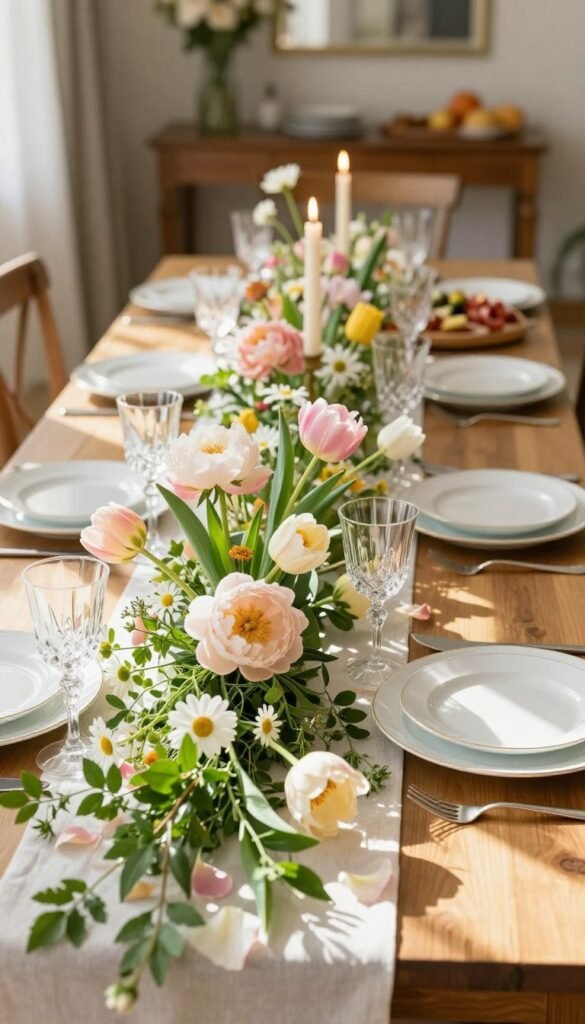
Who it suits
Best for: Easter brunches, holiday meals, and events where a statement look is needed without a single large centerpiece. Hosts with long dining tables will get the most impact.
How to build a lush runner
Start with a protective base—a neutral runner or kraft paper—so spills stay off the surface.
Lay greenery first (eucalyptus, ivy) for structure. Then tuck in clusters of tulips and hydrangeas at regular intervals. Use fewer focal blooms to control cost and storage.
Buying and practical tradeoffs
- Greenery: choose sturdy stems like eucalyptus for volume.
- Fragrance: hydrangeas and eucalyptus can be scented; avoid heavy-scented blooms if guests are sensitive.
- Cleanup time: runners shed leaves and petals—plan 10–15 minutes for teardown and have a trash bag ready.
Renter-friendly alternative: achieve the same continuous effect with repeated bud vases spaced down the center. This cuts mess and stores easily.
| Option | Pros | Cons |
|---|---|---|
| Pre-made greenery garland | Fast setup, uniform look | Less flexible, can be pricier |
| Loose bunches | Customizable, often cheaper | More prep and shed leaves |
| Repeated bud vases | Low mess, easy teardown | More items to wash |
Best citrus and produce accents for bright, budget-friendly spring table decorations
When time is tight, fruit accents act as instant styling tools that also feed guests. Produce adds color without petals, and most options store or get eaten after the meal.
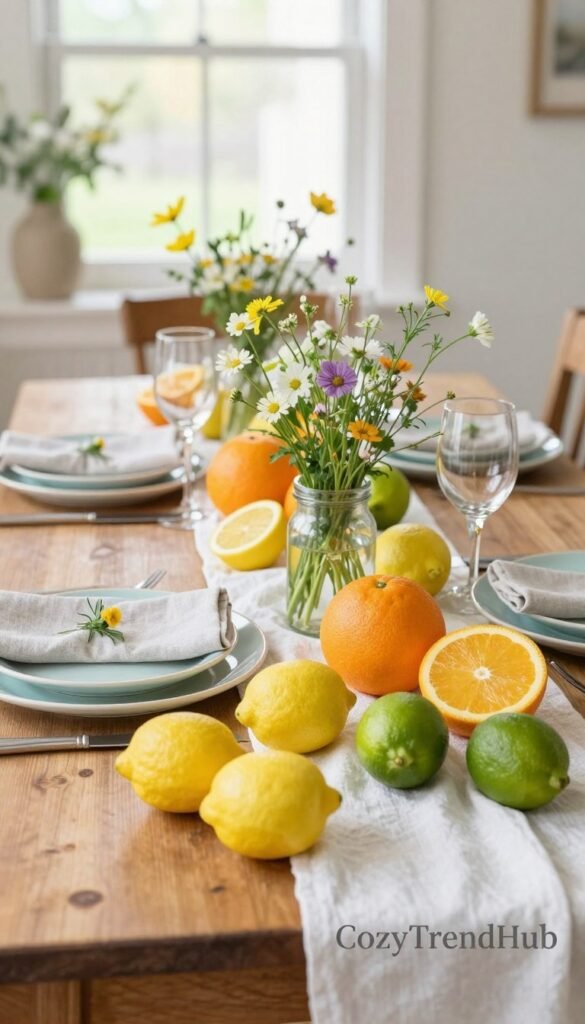
Best for quick hosting
Who benefits: busy weekdays, casual brunches, and renters who avoid pollen or vase water. A simple bowl of lemons or oranges is a no-florist-needed solution that doubles as a snack.
Styling options
Choose a clean bowl of lemons for a contained centerpiece and modern look. For extra impact, layer citrus slices in a tall glass vase so the color shows through the water.
- Practical pros: real fruit is affordable and edible; decorative glass or ceramic fruit never spoils.
- Practical cons: fresh fruit can bruise or attract flies if left too long; faux pieces cost more up front.
- Buyer tip: pick a weighted, wipe-clean bowl or tray so the display won’t slide if bumped.
| Option | Upfront cost | Storage/cleanup |
|---|---|---|
| Real citrus (lemons/oranges) | Low | Eat or compost; rinse vases promptly |
| Decorative ceramic/glass fruit | Medium | Store easily; no spoilage |
| Sliced citrus in glass vase | Low | Wipe condensation; change water |
Cohesion rule: repeat the citrus color once—on a napkin or small candle—and keep the rest neutral to avoid a busy look. For cleanup, rinse vases immediately and wipe rings from the table surface.
Best herb garden centerpieces for fragrance and function
A compact herb centerpiece gives a dining area daily function and a gentle scent that guests notice. It earns its space by being edible, reusable, and useful between meals.
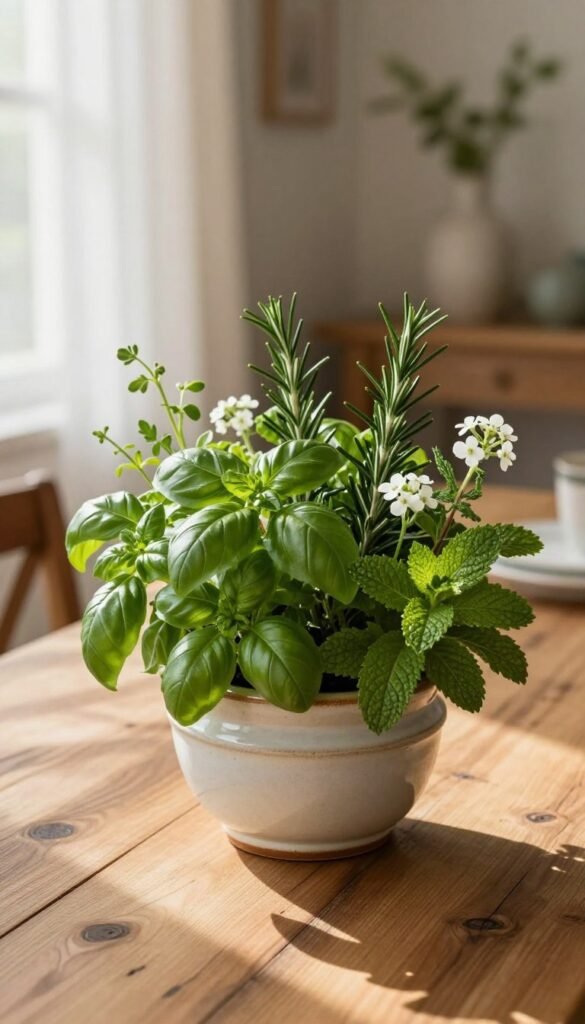
Who this suits
Best for: kitchen counters, small dining nooks, and households that eat at the table daily. An herb planter lives there full-time without looking like clutter.
Top herbs to plant
- Rosemary — structure and a natural “handle” for trimming.
- Thyme — dense foliage for fullness.
- Basil — quick garnish and strong fragrance.
- Lavender — a spring-forward scent and soft flowers.
Buying and care considerations
Look for pots with proper drainage and use a saucer or liner to protect the surface. Herbs need light; if the dining spot is dim, choose a moveable planter that spends daytime near a sunny window.
Low-mess tip: keep each herb in a nursery pot inside a decorative container so watering happens at the sink and soil stays put.
| Feature | Why it matters | Renter tip |
|---|---|---|
| Drainage | Prevents leaks and root rot | Use a saucer under the outer container |
| Light | Supports growth and scent | Move planter to a window daily if needed |
| Size | Fits serving space | Choose a slim trough for long tables |
Pros: long-lasting, budget-friendly, and fragrant. Cons: soil can spill and some guests may find strong herbal scents overpowering. A simple pot cluster or slim trough-style arrangement keeps sightlines open and adds a useful touch to spring table decor.
Best candle options for spring tablescapes, including renter-safe choices
When daylight fades, a few well-chosen candles lift mood and make a modest setting feel intentional.
What candles solve: Evening dinners can feel flat under bright overhead light. Candles add warmth without taking space from plates or serving dishes. For outdoor settings, they create atmosphere while staying portable.
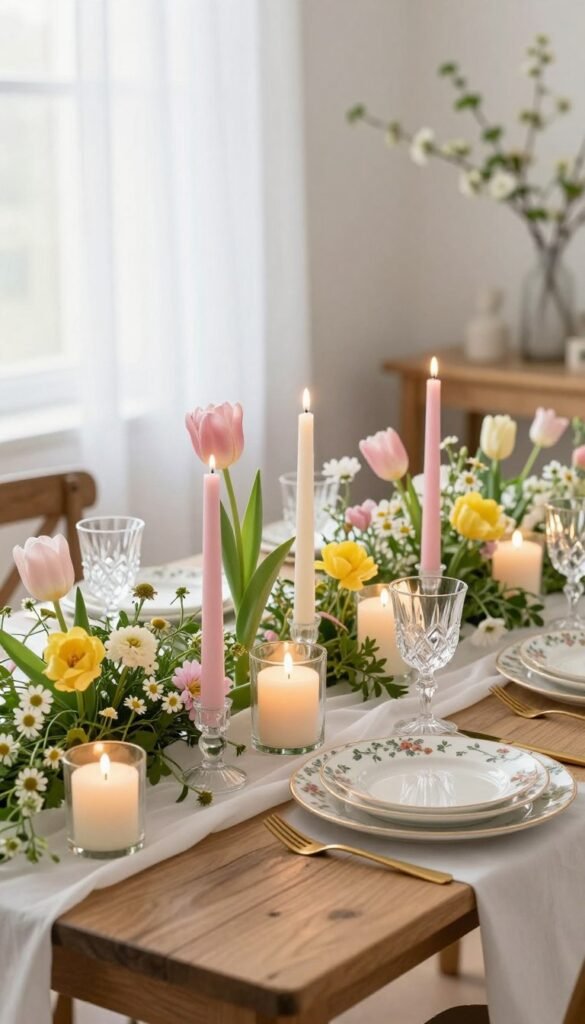
Who this suits
Best for: small apartments that can’t change lighting and outdoor setups where ambience matters but wind is a factor.
Beeswax vs soy: scent and drip control
Beeswax: burns cleanly and often produces less drip in sturdy tapers. It gives a subtle, natural scent that many find pleasant.
Soy: works well in containers and jars, so drip is easier to manage. Soy options are widely available and often come unscented or lightly scented for sensitive guests.
Renter-safe guidance and simple centerpiece
Prioritize enclosed votives, stable holders, and low-drip formulas. Choose unscented or lightly scented candles if guests may be sensitive.
For a low-height centerpiece: fill a shallow bowl with water, float tea lights or small pillars, and tuck a few flower petals around them. This keeps sightlines open and takes little time to assemble.
“Floating candles with petals create a soft, low centerpiece that reads seasonal without extra objects.”
| Feature | Why it matters | Tip |
|---|---|---|
| Burn time | How long the light lasts | Choose 4–6 hour candles for dinner events |
| Container vs taper | Drip control and safety | Use jars or votives to limit wax on linens |
| Holder footprint | Stability on small surfaces | Pick low, weighted holders for renters |
| Low-drip design | Protects fabrics and finish | Look for labeled low-drip or dripless blends |
- Cons: open flames need supervision; wax can stain linens; outdoor breezes may require hurricane glass or lanterns.
- Coordination tip: match candle color to a napkin or floral hue for a cohesive table setting without adding more objects.
Best place cards and place card holders to make guests feel welcomed
A thoughtful name card signals that each guest has a designated spot at the meal. Place cards end awkward seat searches, get people settled fast, and add a low-effort touch that reads intentional.
“Place cards elevate everything. They make a guest feel like this spot was meant for them.”
Who benefits: hosts planning an Easter brunch, dinner party, or any gathering where a small detail improves the table setting and flow for guests.
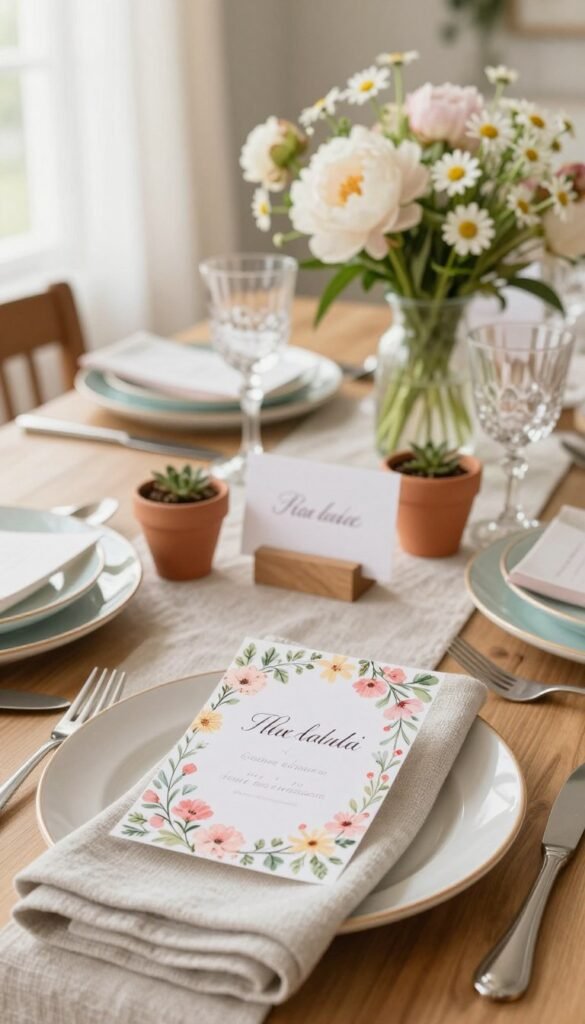
Two purchase paths and a renter-friendly DIY
- Reusable holders — metal, ceramic, or branch-inspired pieces that store flat and work across seasons.
- Simple cardstock — cheap, printable cards for one-off events or themed gatherings.
- DIY cork holders — cut a thin slit into Champagne corks and slide in calligraphed cards for a garden feel and tiny storage footprint.
Buying checklist: set size (4/6/8+), stability (won’t tip), storage footprint, and whether the finish matches existing design elements like chargers or napkin rings.
| Feature | Why it matters | Practical tip |
|---|---|---|
| Material | Affects weight and reuse | Choose metal or ceramic for repeat hosting |
| Set size | Matches household or guest list | Buy one set sized to gatherings you host most |
| Storage | Small-space friendly | Flat holders or corks tuck into a drawer |
Quick ROI: place cards offer high perceived effort for a small spend. They can double as menu labels or favor tags to increase value. Livingetc notes they also remove seat-choice dilemmas, which speeds the start of a meal and reduces host friction.
Best Easter table decor accents that don’t overwhelm your everyday spring table
A capsule approach to Easter keeps the look intentional and easy to pack away. Pick one seasonal element and let neutral linens and napkins do the heavy lifting.
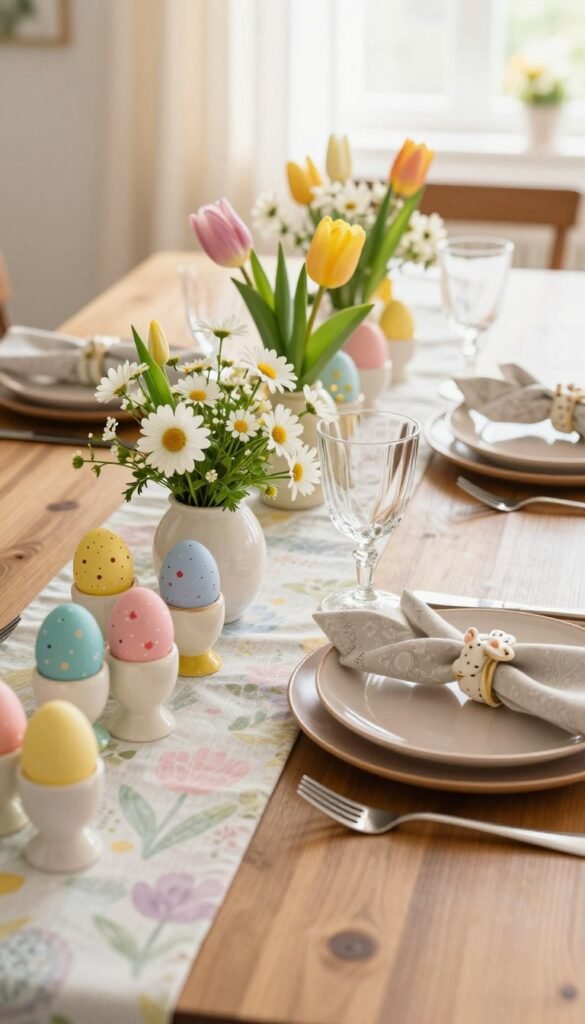
How to use eggs tastefully
Keep clusters small and match egg colors to your tablecloth or napkins. Boil eggs first to avoid spills if one cracks during a meal.
For a refined speckled finish, dip a toothbrush in brown craft paint and flick gently over pale-dyed shells for a robin’s-egg effect. Use muted tones to keep the look grown-up rather than craft-like.
Centerpiece twists that stay renter-friendly
Try a cabbage vase by hollowing a small head, then nestling a jar of water inside before adding stems. It looks seasonal and is easy to compost after use.
A carrot bouquet tucks a few trimmed carrots behind florals for a playful nod without extra clutter. Wicker baskets with florist foam make structured arrangements that lift blooms while staying low.
Pros and cons: DIY vs purchased accents
- DIY: customizable and budget-friendly; can be messy and time-consuming.
- Store-bought: quick and clean; requires storage space between seasons.
Renter-friendly tips: line baskets with plastic, contain paint projects on a tray, and choose washable napkins or monogrammed cloths that work year-round. A small capsule collection—a bin of eggs, one basket, and a set of napkins—delivers impact with little storage need.
| Accent | Effort | Storage | Cleanup |
|---|---|---|---|
| Speckled eggs | Low–medium | Small bin | Wipeable surface; boil first |
| Cabbage vase | Medium | Compost or dispose | Trim and rinse jar |
| Carrot bouquet | Low | Minimal (eat or compost) | Quick rinse |
| Wicker basket with foam | Medium | One box | Line with plastic; lift-out foam |
Conclusion</H2:
,
A simple approach works: a layered base, a low centerpiece, and one decisive accent make a spring table feel intentional without fuss.
Buy first: neutral linens, a low-profile vase or shallow bowl, and one upgrade item such as colorful napkins or a set of plates that store compactly.
Keep sightlines clear. Place height off-center with branches when needed. Use clear glass and woven textures for pieces that move from spring into summer.
Quick hosting checklist: measure the surface, choose a base layer, pick one centerpiece style, then add a single finishing touch you can store easily.
Match purchases to real life: prioritize storage, laundry habits, and cleanup time over trends. With a small set of reliable staples, refreshing a tablescape becomes an easy, repeatable routine.


2 Comments