
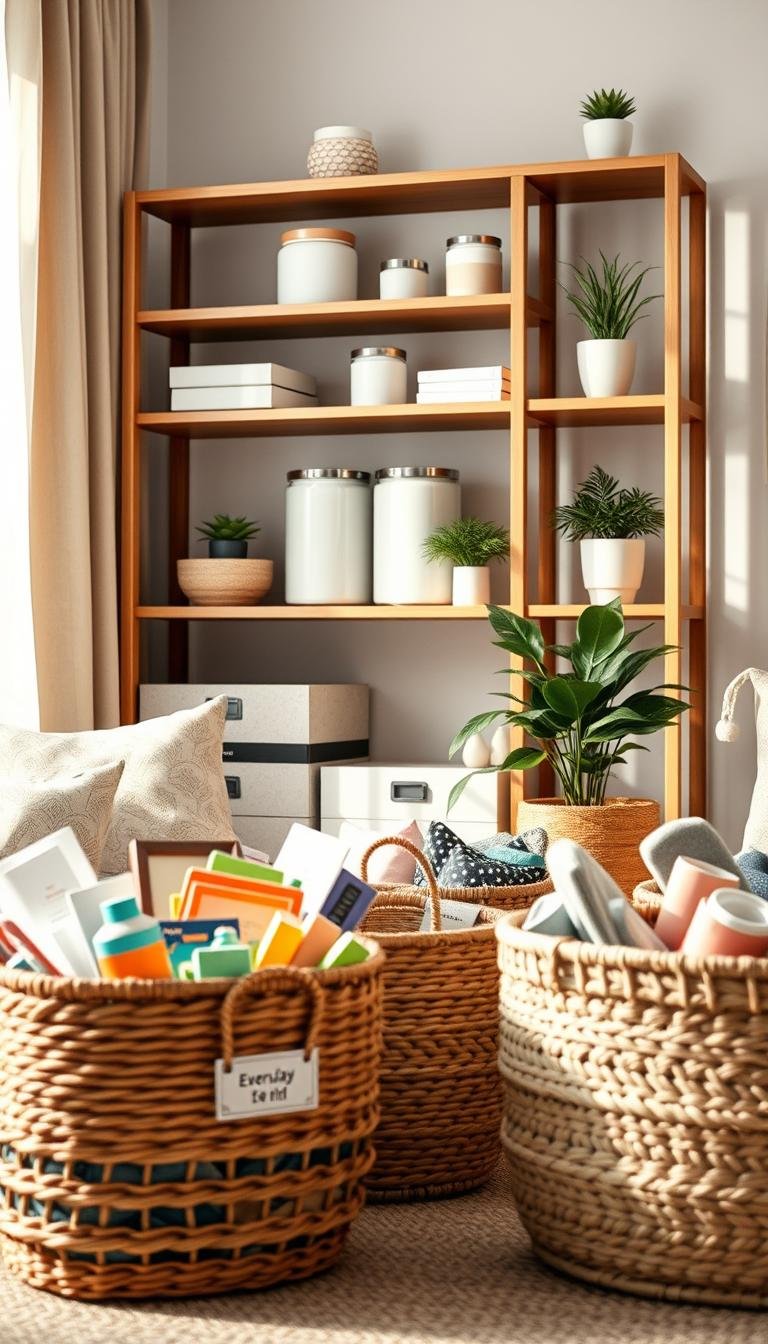
Daily clutter returns fast, and it often does because common items lack quick homes. This short guide promises a practical solution: a product comparison that helps reset a room in minutes, not hours.
Define the everyday tidy mix as a small set of tools that make routine resets easier than deep cleaning. Picks focus on renter-friendly, small-footprint gear. Each entry shows pros and cons, setup time, capacity, and where it should live.
Kelsey Nodgaard of Smart Move Organizing notes regular decluttering makes a home feel “lighter.” These products support habits that prevent buildup, but they do not replace basic cleaning or decluttering routines.
This list is organized for fast shopping: product-by-product, problem solved, best-for household type, and quick buying notes. Readers can jump to kitchen, bathroom, bedroom, or entryway items and decide in minutes.
Key Takeaways
- Small, renter-safe tools cut reset time and reduce clutter buildup.
- Each product entry lists durability, capacity, and setup time.
- Picks fit tight spaces and typical home routines.
- Recommendations aim for realistic minutes-not-hours wins.
- For quick buys, see this roundup of best Amazon home finds.
Why a compact tidy toolkit works for busy lives
When a few surfaces collect stuff, routines slow down and decisions pile up. Common hotspots — the kitchen counter, bathroom sink, bedside table, and entry table — steal time during a rushed morning or a long day.
Small spaces and rentals amplify the problem. Limited storage and no-drill rules mean fewer places to hide items. Without clear homes, items spill into sightlines and the mind wastes energy deciding what to do next.
„A home stays orderly through micro resets, not deep cleans,“ says Nicola Lewis of Mind Over Clutter.
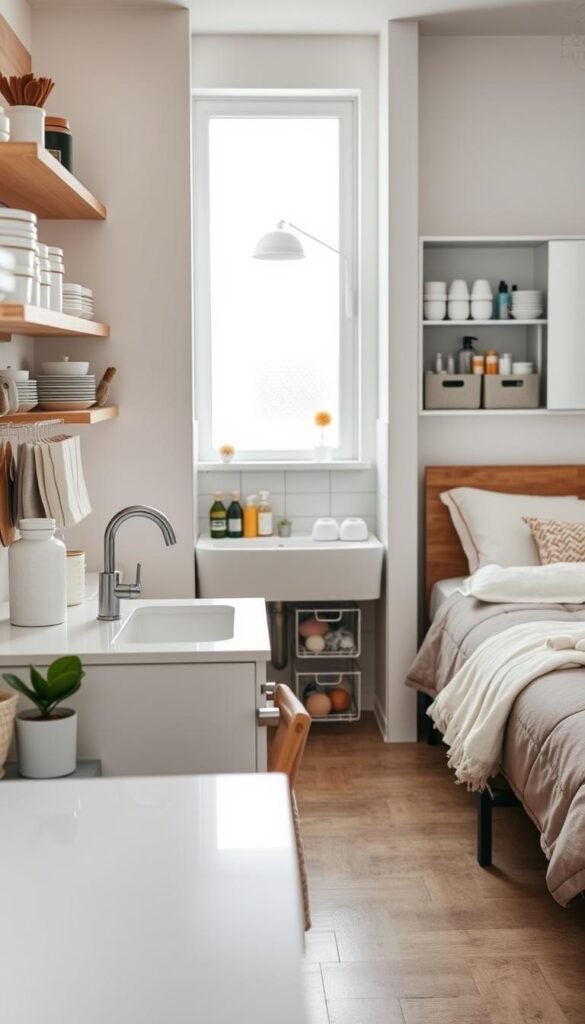
The workable solution: one-minute micro-resets
Micro-resets are short routines that take minutes, not hours. Set a one-minute timer and clear one zone. Repeat this small process each day to keep surfaces usable without weekend overhauls.
Match products to rooms and habits: slim hampers for bedrooms, no-drill hooks for rentals, vertical racks for tight kitchens. These options reduce friction and encourage a consistent habit.
| Hot spot | Why it steals time | Buyer-ready fix |
|---|---|---|
| Kitchen counter | Blocks prep space; visual distraction | Stackable bins or narrow shelf risers |
| Bathroom counter | Toiletries crowd sink area | Lidded trays and wall-mounted caddies (no drill) |
| Bedside table | Piles of re-wear clothes and mail | Slim laundry sorter or small drop basket |
Use this list to pick products for the room that bugs you most, the habit you keep, and your storage limits. The aim is not perfection; it is a home that runs smoother on a normal weeknight.
- Identify one hot spot to fix this day.
- Choose renter-friendly or slim options first.
- Think vertical, stackable, or contained drop zones.
- For quick inspiration, see a guide to small-space decor: best spring decor for small spaces.
Set up your daily tidy process in minutes (habits backed by organizing pros)
Start with three small zones and a clear finish line to make daily resets manageable.
Why it works: A short process reduces decision fatigue and builds a repeatable habit that lasts.
Use a one-minute timer for reset zones
Set a timer for the counter, nightstand, and entry table. Nicola Lewis recommends one-minute zones to make cleaning feel doable.
Contain chaos with the drop-basket method
Keep one basket per floor for loose items. When it fills, empty it into permanent homes. This “contain first, sort later” approach prevents spread and reduces overwhelm.
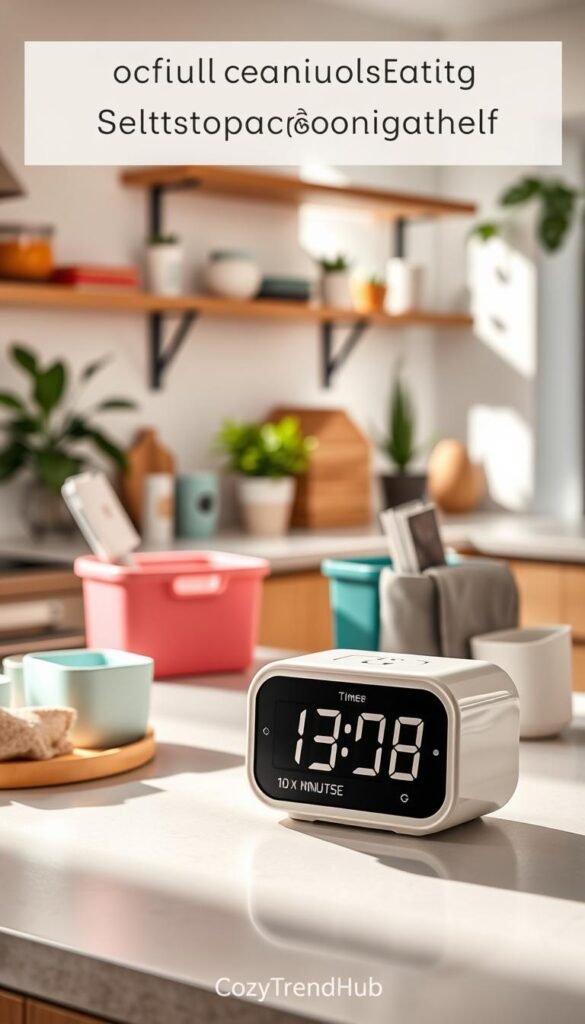
Make homes with labels so the whole family can follow
Label bins and shelves to remove guesswork. Labels help the family return items quickly and keep systems consistent.
Stop visual clutter fast with reusable cable ties
Bundle cords behind the TV, at a workstation, and in drawers. Reusable ties cut tangles and calm visual clutter in minutes.
- Quick setup: pick three zones, set a timer, use a basket, add labels, and secure cords.
- Practical example: sort mail immediately into recycle/action/file to stop paper piles.
For entryway solutions and product picks that fit renters, see this short guide to entryway organization.
The best everyday tidy products to cut clutter by room and routine
A few well-chosen tools stop piles before they start and make quick cleaning feel possible.

Below are compact product blocks designed for fast buying decisions. Each entry lists who it helps, the problem it solves, quick pros and cons, and what to compare before you buy.
Visual kitchen timer for one-minute reset zones
Best for: busy households.
Solves: lingering counter clutter by enforcing a one-minute reset.
Pros: clear display, audible alert, portable.
Cons: may be too quiet for large rooms.
What to compare: readability, loudness, mount vs. stand.
Renter-friendly over-the-door hooks
Best for: renters and small bedrooms.
Solves: chair piles by creating a re-wear and grab-and-go spot for clothes and backpacks.
Pros: no tools, quick install, space-saving.
Cons: door thickness limits and weight capacity.
What to compare: fit, number of hooks, finish.
Command-style wall hooks
Best for: no-drill entryways.
Solves: dropped keys, coats, and small entryway clutter.
Pros: removable, damage-free, low-profile.
Cons: adhesive may fail on textured surfaces.
What to compare: adhesive rating, removal method, hook profile.
| Product | Best for | Key pro | What to compare |
|---|---|---|---|
| Drop basket set | Families with kids | Contains roaming items until sorting | Size, handles, nesting ability |
| Lidded clear bins | Kitchens with snack overflow | Visible categories, stackable | Lid style, stackability, wipe-clean surface |
| Adjustable drawer dividers | Small kitchens & bathrooms | Stops junk-drawer creep | Expand range, grip, water resistance |
| Handheld label maker | Shared households | Makes homes obvious for items | Tape type, readability, refill cost |
| Reusable cable ties | TVs and workstations | Manages visual cord clutter | Length options, reusability, snag risk |
Also consider a mesh laundry sorter for small bedrooms and a quick-refresh bathroom set (shower curtain + bath mat) to change a room’s look fast.
For curated product picks and buying guidance, see the roundup of best home organization products.
How to choose the right products for your home, time, and space
Good buying starts with where clutter lands and how much time people realistically have each day.

Best for renters: no-drill, removable, and damage-free options
Renters should pick no-drill hooks, over-door organizers, and adhesive caddies for entryways, bathrooms, and bedrooms where wall damage matters most.
Why it works: These solutions give high impact without holes. Over-door shoe pockets and Command-style hooks keep coats, bags, and re-wear clothes off the floor.
Best for small spaces: vertical storage and slim footprints
Think up, not out. Back-of-door racks, stackable bins, and narrow hampers protect walking space and add usable storage.
Look for: tall, slim pieces and multi-use organizers that hold more without broadening the room footprint.
Best for families with kids and busy weeks
Choose simple toy containment: labeled baskets and low bins that kids can use at night. Make resets a two-minute family habit.
For busy weeks, favor items that support one-minute routines—timers, drop baskets, and reusable cable ties that reduce setup friction and save minutes each day.
Kitchen, bedroom, laundry, and seasonal swaps
In the kitchen, build zones to cut counter clutter and speed up unloading the dishwasher. Drawer dividers and labeled shelves keep plates and tools in easy reach.
For the bed and laundry, choose a hamper that sits where clothes land and re-wear hooks near the bed to reduce floor piles.
Use seasonal edits as a rhythm: wardrobe and kitchen yearly; toy room and pantry every six months; garage in April–May; edit holiday items before storing, per organizing pros‘ recommendations.
What to compare before you buy
- Measure capacity and footprint; know where the piece will live.
- Pick easy-clean materials to cut cleaning time and avoid fragile finishes.
- Check setup time and renter compatibility to avoid returns.
For decluttering strategy and longer guides, see a practical how-to on decluttering your home and tips to organize each space at organize every space in your house.
Comparison-ready checklist for building your everyday tidy mix
A clear checklist turns product ideas into practical setups you can copy room by room.
Room-by-room drop zone map (copy this template):
- Entryway: keys, mail, backpacks — labeled tray or wall hook.
- Kitchen counter: daily-use items only — small bin or narrow tray.
- Bedside: phone, glasses, one book — slim basket or tray.
- Bathroom counter: minimal toiletries — lidded tray or wall caddy.
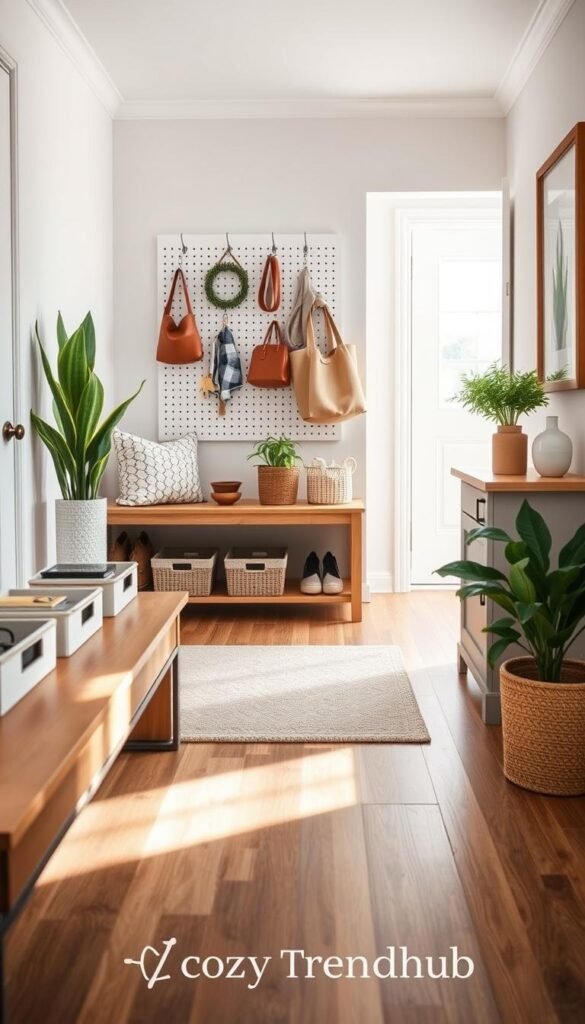
- Price range: budget / mid / premium.
- Footprint: width × depth in inches to fit your space.
- Renter-friendly: no-drill, adhesive, or over-door options.
- Setup time: out-of-box, 5–10 minutes, or tool-required.
Measure-first checklist
- Measure door thickness, shelf depth, and counter clearance.
- Check floor clearance for baskets and slim hampers.
- Confirm adhesive works on your surface if textured walls are present.
Standard pros/cons framework
| Filter | Pros | Cons |
|---|---|---|
| Durability | Long life, holds weight | Higher cost |
| Ease of reset | Quick to use during routines | Smaller capacity may need frequent emptying |
| Cleaning effort | Wipe-clean surfaces save time | Fabric bins may need laundering |
| Aesthetics | Blends with decor | May sacrifice utility for style |
Decision rules for common pain points
- If mail piles up: add a labeled sort spot in the entryway and use a visible bin for action items.
- If items migrate between floors: prioritize a portable drop basket per floor.
- If the counter fills: restrict the kitchen counter to daily items only and add a small closed bin.
When building affiliate product blocks, show clear product names, key specs (size, install type, price band), and a short note on why the item solves the stated problem. For compact storage ideas and product suggestions, see curated picks for small spaces and buying help at space-saving home products and a practical 30-day reset guide at 30-day cleaning challenge.
Conclusion
Pick a short list of tools that make a daily reset realistic, not overwhelming. This approach supports a repeatable process and cuts the time you spend on cleaning each day.
Start small: choose 2–3 products that fix your biggest friction point — entry clutter, kitchen counter buildup, bedroom piles, or a crowded bathroom. Protect one drop zone for a week before adding the next item.
Renter and small-space households should favor damage-free installs and slim organizers that fit how the home already works. Kelsey Nodgaard’s decluttering advice and Nicola Lewis’s micro-reset method both point to steady, short habits over deep cleans.
Keep a simple rule: if a product won’t save time, cut effort, or make a room easier to reset, don’t keep it. For tips on decluttering as self-care, see decluttering as self-care, and for habit-building ideas try this top tidying habit guide.