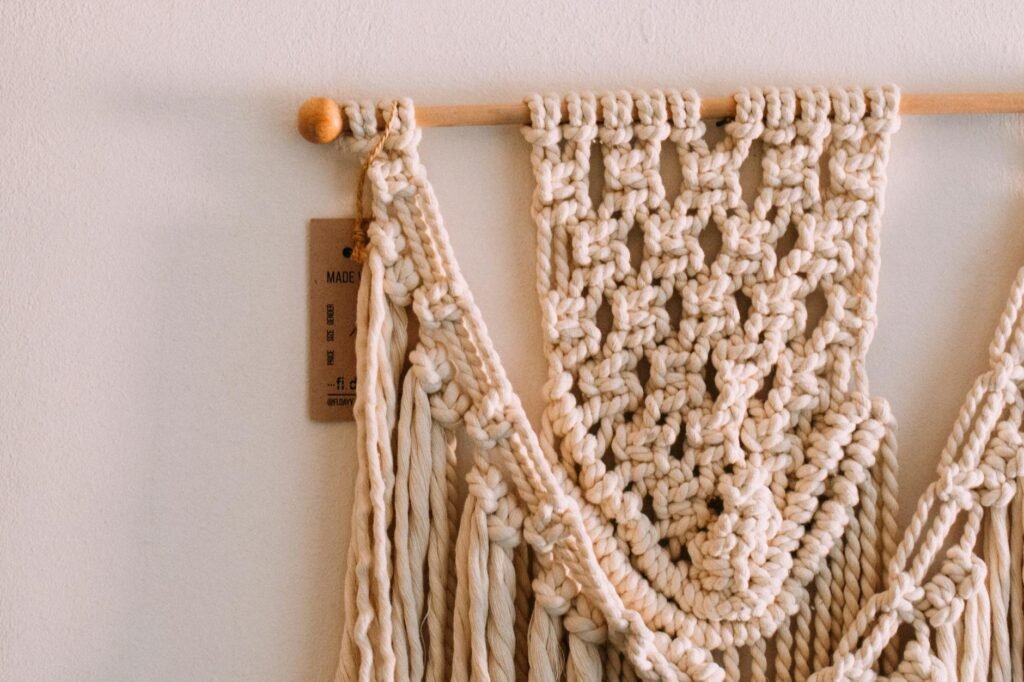
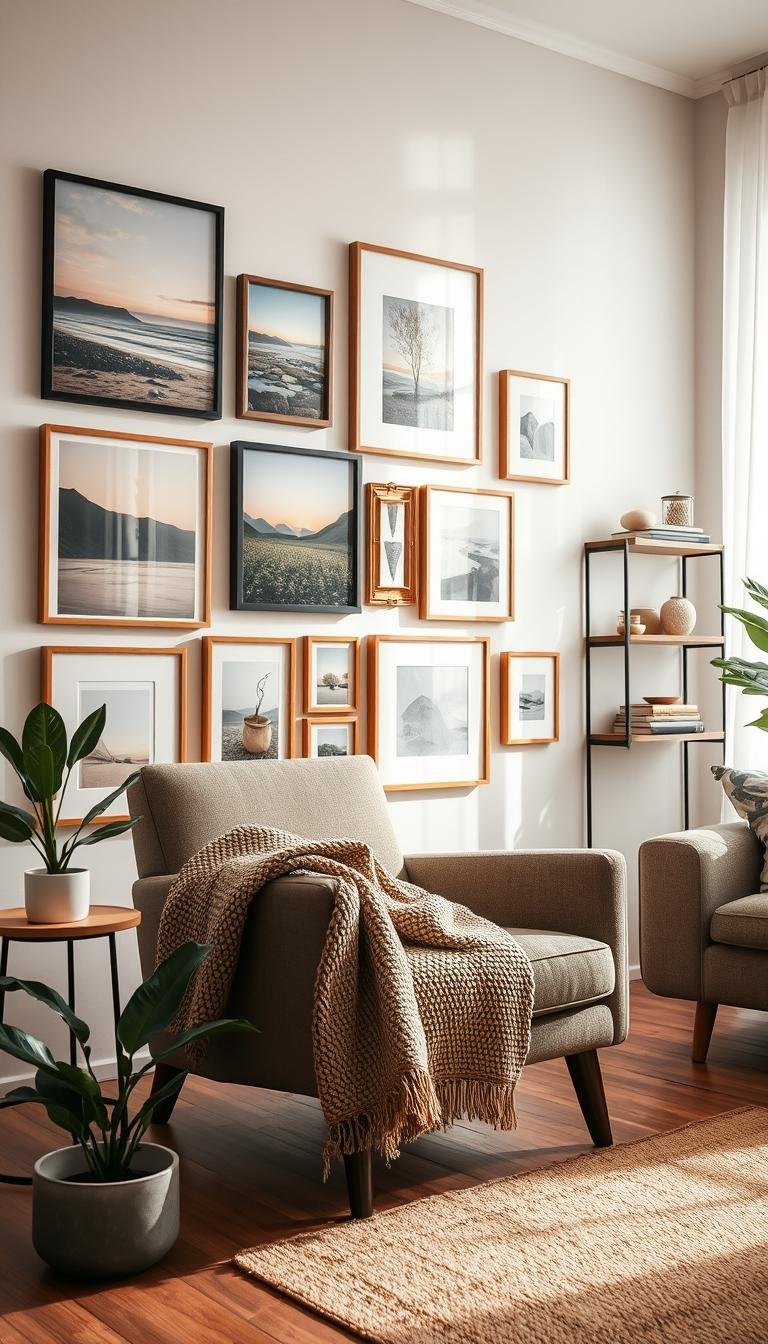
Renters and small-space dwellers often want visual interest without damaging paint or committing to permanent changes.
This guide lays out two clear tracks: five renter-friendly wall decor ideas that use removable hardware, washi tape, and leaning displays, and five true no-wall options that work around strict leases or concrete surfaces.
The plan is practical. It helps readers measure, shop, and compare before buying frames, mirrors, shelves, or lighting. It also highlights seasonal flexibility so pieces can be swapped without repainting or patching.
Expect concise pros and cons, room-by-room picks, a buyer checklist, and clear shopping tips. For renter-specific suggestions and examples, see a focused guide at renter wall ideas.
Use this list to match solutions to your walls, budget, and time. The tone stays calm and practical so readers can choose the safest option for their home.
Key Takeaways
- Understand the core problem: many cannot or should not make holes in their walls.
- „Wall decor alternatives“ here means both damage-minimizing and true no-wall solutions.
- Measure before you buy and pick solutions that match your lease and surface type.
- Five renter-friendly ideas and five no-wall options give clear, comparable choices.
- Seasonal swaps keep small spaces fresh without repainting or repairs.
Start Here: What You Can (and Can’t) Do in a Rental or Small Space
Begin with a quick audit: check lease clauses, paint finish, and surface texture before planning any display. Landlords often forbid holes or require full patching, and even small holes can peel paint when repaired.
Damage-free hanging basics suit most renters. Removable picture-hanging strips work well for framed art within weight limits. Washi tape is ideal for lightweight paper patterns and temporary borders. Leaning frames or floor mirrors avoid wall contact entirely and are safest for fragile paint.
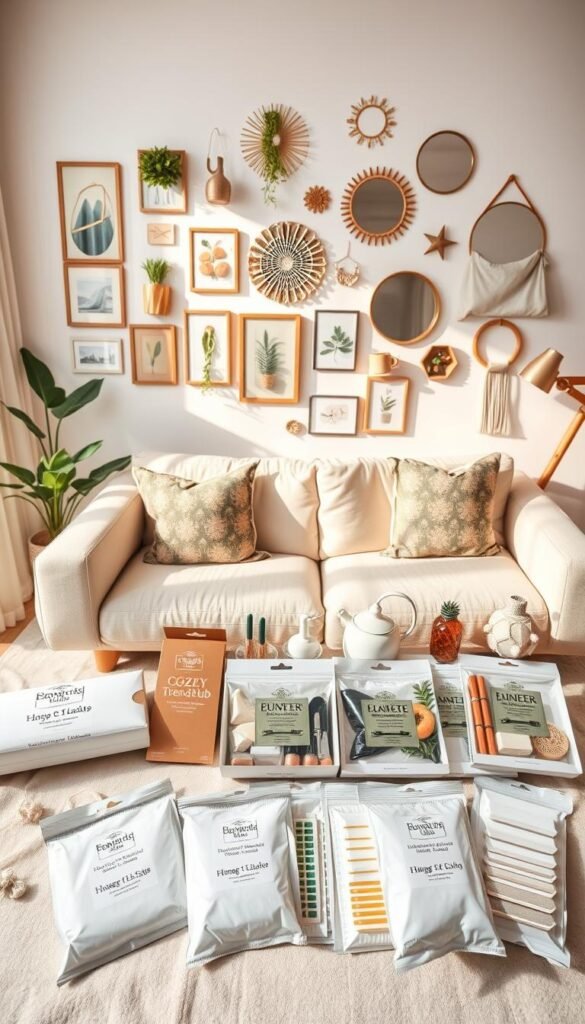
Adhesives perform best on clean, smooth paint. They can fail on textured or humid surfaces. Match the method to your surface and respect weight limits to avoid falls or torn paint.
Scale and seasonal strategy
In a small room, one oversized piece can make the space feel intentional. A mini gallery adds personality if spacing is consistent. Align art width with a sofa or bed so the look feels anchored rather than floating.
Choose items that store flat, roll, or stack so swaps stay simple and won’t force repainting. For frequent refreshes, favor printable art, washi patterns, and textile swaps.
- Who this suits: renters, tight budgets, frequent updaters.
- Next: room-by-room picks and a measurement checklist to cut returns.
| Method | Best Use | Limits | Care Notes |
|---|---|---|---|
| Removable strips | Framed art up to rated weight | Smooth paint only; follow weight limits | Clean surface; remove slowly per instructions |
| Washi tape | Light prints, temporary patterns | Not for heavy items; may lift on textured paint | Low-residue; replace if edges peel |
| Leaning displays | Floor mirrors, oversized frames | Needs floor space; use anti-tip anchors | Keep away from high-traffic zones |
| Textile swaps | Seasonal color and texture | May need rods or clips; consider sun fade | Store rolled to avoid creases |
For renter-friendly product ideas and examples, see a focused guide at best renter-friendly picks.
Quick Pick Guide by Room: Living Room, Bedroom, Entryway, Home Office
Find one clear option per room that creates instant impact without heavy installs. This quick map helps readers choose by function, floor space, and how much installing they’ll tolerate.
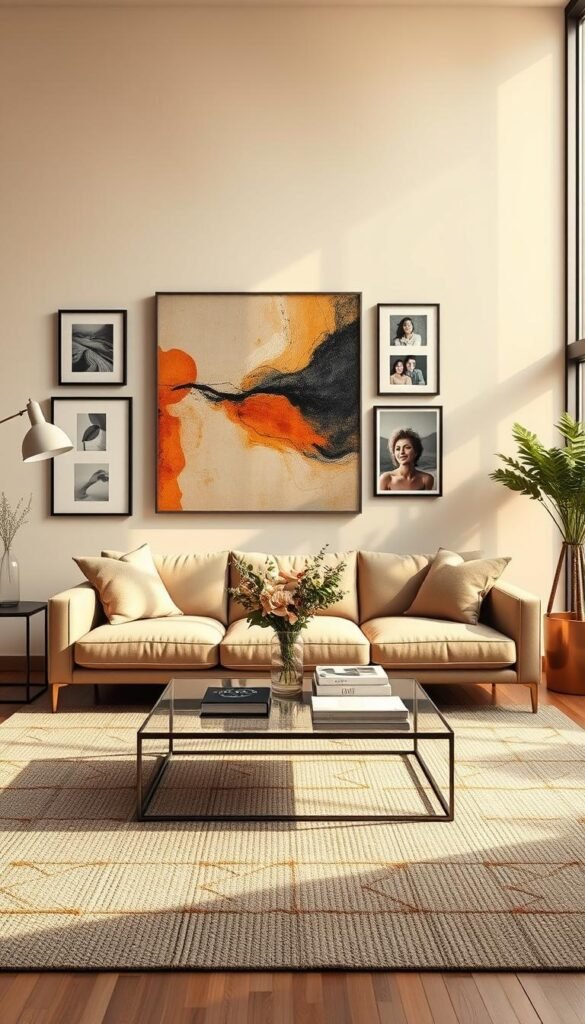
Living focal points that skip a full gallery
For a living room, pick a single strong statement: oversized art, a large mirror, or a hanging textile. Each makes the space feel intentional without planning a full gallery.
What to choose: oversized print for scale, mirror to add light, or a quilt for texture. If you pick an oversized piece, jump to the buyer checklist for sizing tips.
Bedroom anchors that replace a headboard
In a bedroom, choose a textile wall hanging or a removable wallpaper panel behind the bed. These add structure and softness without bulky furniture.
Best when: floor space is tight and a quick swap is needed for seasonal updates.
Entry solutions for narrow foyers
Narrow entries benefit from mirrors to reflect light and visually expand the space. Pair a mirror cluster with slim storage like a floating shelf or small bench.
Tip: pick framings that match your entryway hardware for cohesive design.
Home office backdrops for video calls
Choose a controlled backdrop: a mini gallery, a tidy shelf vignette, or a single textile panel. Keep it uncluttered so the framed area reads as intentional on camera.
Camera-friendly rule: avoid busy patterns and favor mid-tone neutrals with one statement piece to add visual interest.
- Quick tradeoffs: leaning mirrors need floor clearance; shelves add storage but need editing to prevent clutter.
- If you picked any of these ideas, jump to the buyer checklist for measuring and finish guidance.
Buyer Checklist: What to Measure and Compare Before You Buy
Measure, test, and match: three simple steps to buy frames and prints with confidence. This helps renters pick pieces that fit the lease, store flat, and return easily if needed.
Wall surface and paint finish

Check paint finish: glossy holds adhesives poorly; matte and eggshell work best. Textured or dusty surfaces reduce bond strength. Test a strip on an inconspicuous patch and wait 24 hours before committing.
Frame sizes, print ratios, and matting
Measure available width and height, and note furniture width below. Leave a safe zone for leaning pieces so they don’t block walkways.
Standard sizes: 8×10, 11×14, 16×20. Match print aspect ratios (2:3, 3:4, 4:5) to avoid awkward cropping. Use a consistent mat color—white or warm white—to unify mixed frames and prints.
Color and style matching
Pick one accent color to repeat across textiles and art to make a small room feel intentional. Decide warm versus cool neutrals before shopping.
Vintage frames can pair with modern prints if finishes match (all black or all brass). Sample first for large pieces or bold color swaps to reduce returns and preserve paint.
| Surface | Adhesive suitability | Notes |
|---|---|---|
| Matte/eggshell paint | Good | Clean surface first |
| Glossy paint | Marginal | May peel when removed |
| Textured/plaster | Poor | Use leaning or freestanding options |
Wall Decor Idea: Gallery Wall with Printable Art and Thrifted Frames
Assemble printable art and secondhand frames for a curated, low-cost gallery that changes with the seasons. This solves a common problem: a large blank surface needs impact, but renters want low-cost options that won’t force repainting.

Best for: tight budgets, frequent refreshers, and anyone who prefers a collected, slightly vintage look over perfectly matched sets.
Shopping list
- Downloadable printable sets (high-res PDFs)
- Frame packs in standard sizes and thrifted frames for makeovers
- Removable hanging strips and small acrylic mats
- Simple level or spacing tool
Planning and quick method
Pick a consistent color palette. Decide grid or organic layout. Mock arrangements on the floor before anything touches paint.
Pros, cons, and buying notes
Pros: flexible, swap-friendly, and affordable ($10–$30 start). Thrifted frames can be unified with paint for a cohesive display.
Cons: takes time to plan spacing and can look cluttered without a unifying rule.
Buying considerations: choose heavier matte paper to reduce glare, prefer acrylic over glass for lighter frames, and check frame depth for a premium look. Remember removable strips need correct removal and may not suit fragile finishes.
For curated shopping options and mix ideas, see best wall decor mix.
Wall Decor Idea: Washi Tape Patterns for Color, Shapes, and DIY Texture
Quick and removable, washi tape is a DIY route to color and geometry that respects leases. It costs $5–$15 and works well for stripes, grids, simple arches, or a single accent block behind a desk.
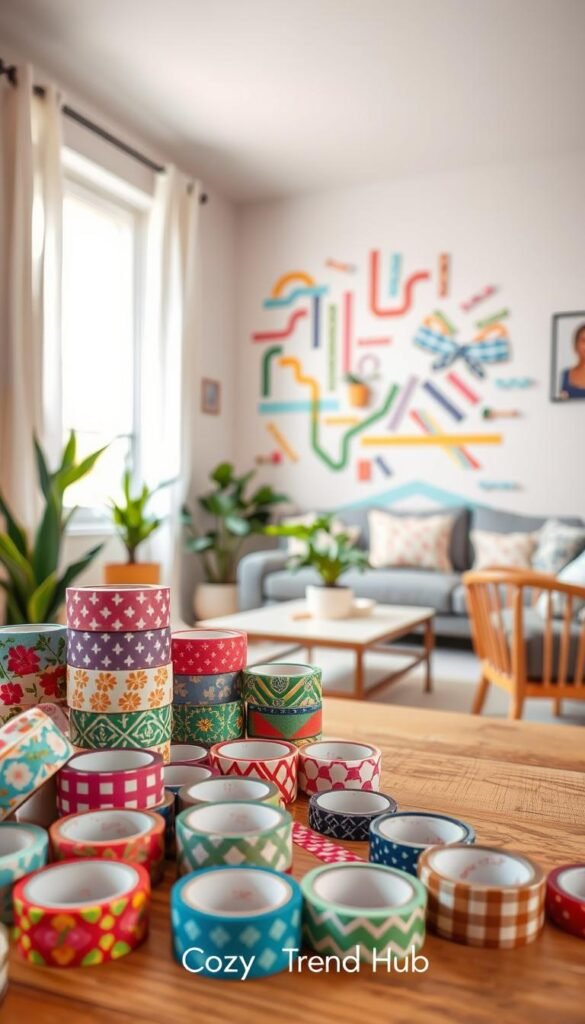
Best for
Best for: dorms, kids’ rooms, and renters who want the fastest change with minimal tools and commitment.
Practical tips
Start with a small test patch on clean paint and wait 24 hours. Press edges firmly and use a steady hand or level for straight lines.
Simple patterns that suit small rooms: thin stripe grids, one arch above a desk, or a modest color block to avoid clutter.
Pros and cons
- Pros: fast install, low cost, easy seasonal swaps, and great for trying colors before buying bigger pieces.
- Cons: edges can lift on textured surfaces; delicate paint may peel if tape is left too long or removed aggressively.
„Washi projects are the fastest way to test a new color and add playful shapes without permanent change.“
Buying notes: pick tape width, matte finish for subtle contrast, and a limited palette so the final look reads intentional. Avoid freshly painted surfaces and humid spots like some bathrooms to protect finishes.
Wall Decor Idea: Removable Wallpaper or Fabric Wall Covering Look
Peel-and-stick and fabric panels are the fastest way to add pattern and texture while keeping paint intact. They solve a common renter problem: landlord-white walls that feel unfinished but can’t be repainted.
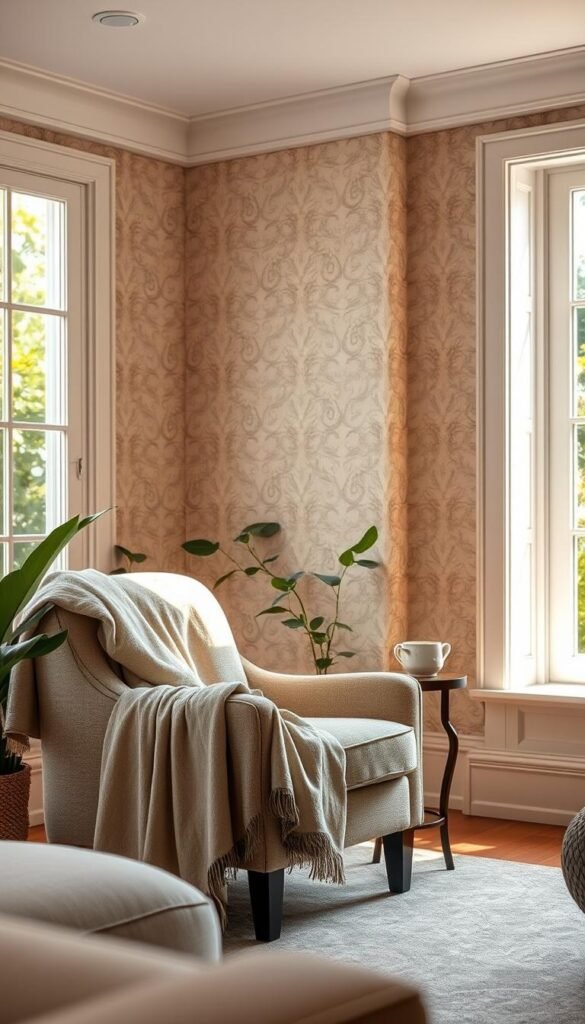
Best for
Best for: renters who want a big change without permanent paint. Use a single accent zone behind a bed, desk, or sofa to limit cost and risk.
Option types and quick notes
- Peel-and-stick wallpaper: full-coverage, easy patterns, but alignment matters.
- Fabric panels: softer texture, forgiving seams, and usually gentler on paint.
- Textural panels: mimic murals or woven textures for a high-impact look in small space.
Pros and cons
Pros: high impact fast; adds pattern and texture that can replace multiple small pieces.
Cons: seams and alignment take patience. Some adhesives can lift delicate paint if removed incorrectly.
Buying and install checklist
- Order samples. Test on a hidden patch and wait 24 hours.
- Evaluate pattern scale—large motifs read better in tight rooms; tiny prints can look busy.
- Measure height, account for outlets/vents, and plan seams to fall in less visible areas.
- Choose a removable adhesive labeled safe for painted surfaces.
„Pick a limited zone—like a panel behind the bed—to get dramatic effect with minimal risk.“
| Type | Best Use | Paint Risk |
|---|---|---|
| Peel-and-stick wallpaper | Full accent wall, bold patterns | Medium — test first |
| Fabric panel | Textural zone, forgiving seams | Low — gentler removal |
| Textural mural panel | Mimic art without framing | Varies — check adhesive |
Wall Decor Idea: Mirror Gallery Wall to Add Light and Make Rooms Feel Bigger
A mirror gallery can turn a dim corridor or compact living area into a brighter, airier space without major work.
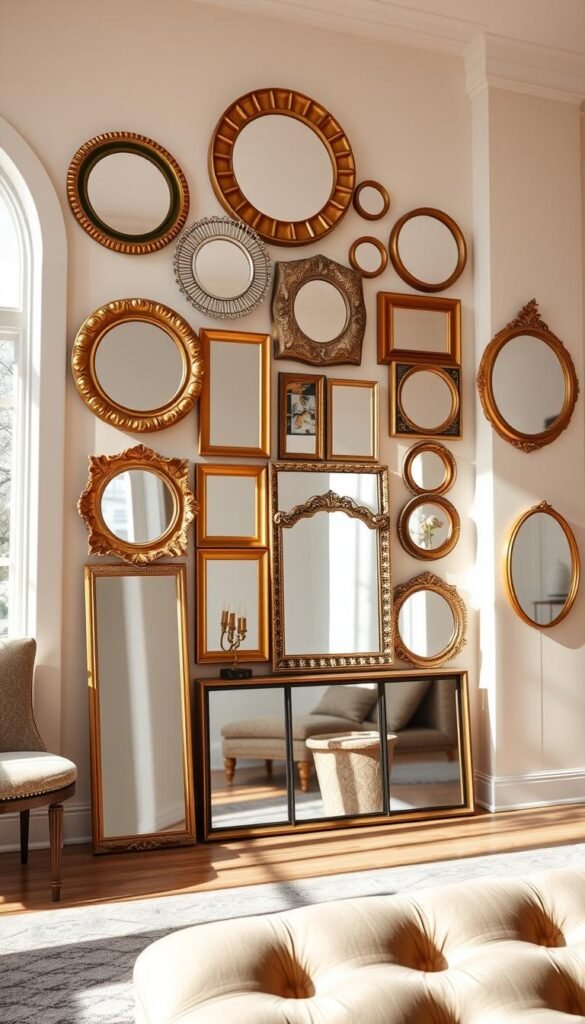
Best for: dark living rooms, narrow hallways, and small entryways where reflecting natural or lamp light helps the area feel open.
How this differs from art
Unlike framed prints, a mirror adds depth and functional reflection as well as style. It serves as both practical surface and a visual statement.
Pros and cons
- Pros: instant boost of light, can make tight areas feel larger, and suits modern or vintage looks.
- Cons: mirrors are often heavier than prints; some pieces need stronger anchors and specific hangers.
Buying considerations
Match the frame finish—brass, black, or wood—to existing hardware. Mix shapes and small sizes for interest, but test budget mirrors for distortion before buying.
„Position mirrors to reflect a window or lamp — not clutter — for the best effect.“
| Feature | What to check | Why it matters |
|---|---|---|
| Weight | Use hangers rated for mirror weight | Prevents falls and paint damage |
| Distortion | Inspect reflection at eye level | Preserves usable reflection |
| Frame finish | Match room hardware | Keeps the grouping cohesive |
For curated sets and renter-friendly hanging solutions, consider a selection of mixed-shape mirrors and lightweight options linked in this small-spaces guide.
Wall Decor Idea: Textiles as Wall Art (Quilts, Blankets, Scarves, Mounted Fabric)
Textiles bring immediate warmth and tactile interest to a room without bulky frames or heavy hardware. They solve a common gap: small spaces can feel echoey or flat when limited to framed prints. A single fabric piece reads as a cozy focal point and can act as a headboard alternative in a bedroom.
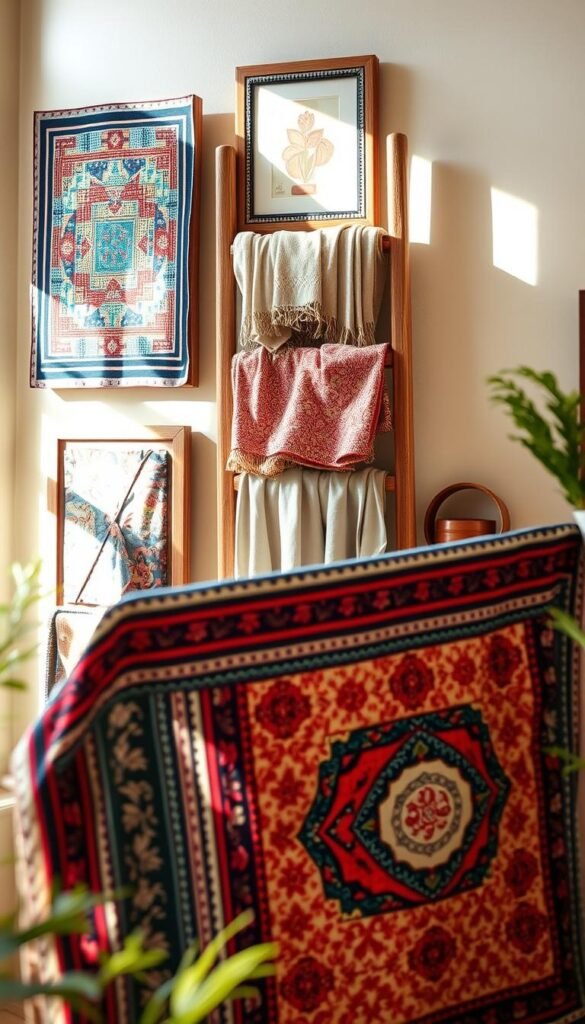
Best for
Cozy bedrooms, boho rooms, and anyone who prefers texture over glass-front frames. Use a full quilt, a lightweight scarf as a tapestry, or mounted fabric segments when a cleaner, framed look is wanted.
Pros and cons
Pros: textiles add real texture, hide small imperfections on walls, and create warmth with fewer items than a gallery wall.
Cons: dust collects, dyes can fade in sun, and heavy pieces need secure hangings that may stress delicate paint.
Buying considerations & care
- Choose a hanging method: rod pockets, dowels, clip systems, or museum-style mounts for heirloom artwork.
- Check weight limits for adhesives; if paint is fragile, use freestanding rods or spaced-off mounting for airflow.
- Protect heirloom quilts by avoiding direct sun, rotating seasonally, and using non-puncturing clips for valuable fabric.
„Textile art turns a single piece into an instant focal point while adding depth to room design.“
Suggested shopping: textile hangers, lightweight panels, wooden dowels, and protective display options to keep fabric fresh for your home.
Wall decor alternatives that skip nails, holes, and permanent changes
Renters often face one core choice: reduce damage risk on the paint or avoid wall contact entirely. Each path has clear trade-offs based on lease terms, surface condition, and how often pieces will be swapped.
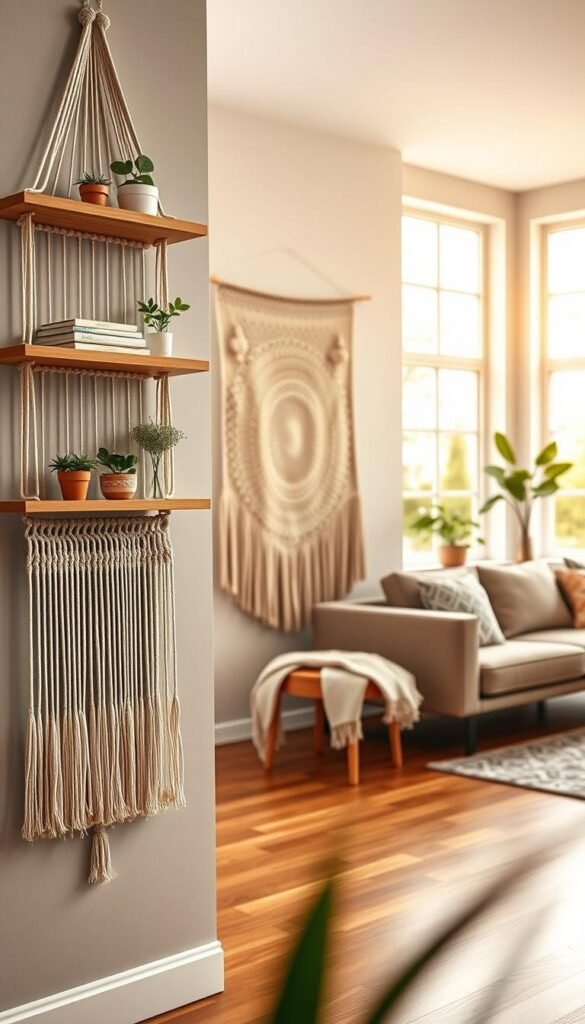
Removable hanging systems—strips, light hooks, and adhesive clips—work for framed prints and small mirrors when paint is stable and smooth. They save time and look neat, but they rely on a good bond and careful removal.
Leaning and standing options—oversized frames, floor mirrors, and freestanding screens—avoid contact with painted surfaces. They offer the lowest risk for fragile finishes and textured surfaces. Anti-tip hardware is still recommended for tall items.
When “temporary” can still harm paint
Adhesives can fail on delicate or poorly bonded paint. Textured plaster and humid rooms reduce adhesion and can pull paint when removed. In those cases, favor no-contact displays or ultra-light pieces that use low-tack solutions.
Best approach for seasonal decorators
Choose pieces that store flat and swap easily: printable prints, removable wallpaper panels in small zones, and lightweight textiles. These save space in storage and shorten install time for seasonal refreshes.
| Option | Best use | Damage risk | Notes |
|---|---|---|---|
| Leaning frames / floor mirrors | Strict leases, textured paint | Low | Zero wall holes; use anti-tip brackets |
| Removable strips & hooks | Small frames, light mirrors | Medium | Works on smooth paint; test first |
| Peel-and-stick panels | Single accent zone | Higher | High coverage increases paint risk; order samples |
Safety-first rule: if paint condition is uncertain, avoid adhesives and pick freestanding displays. This way, renters protect finishes while still adding interest and style to their space.
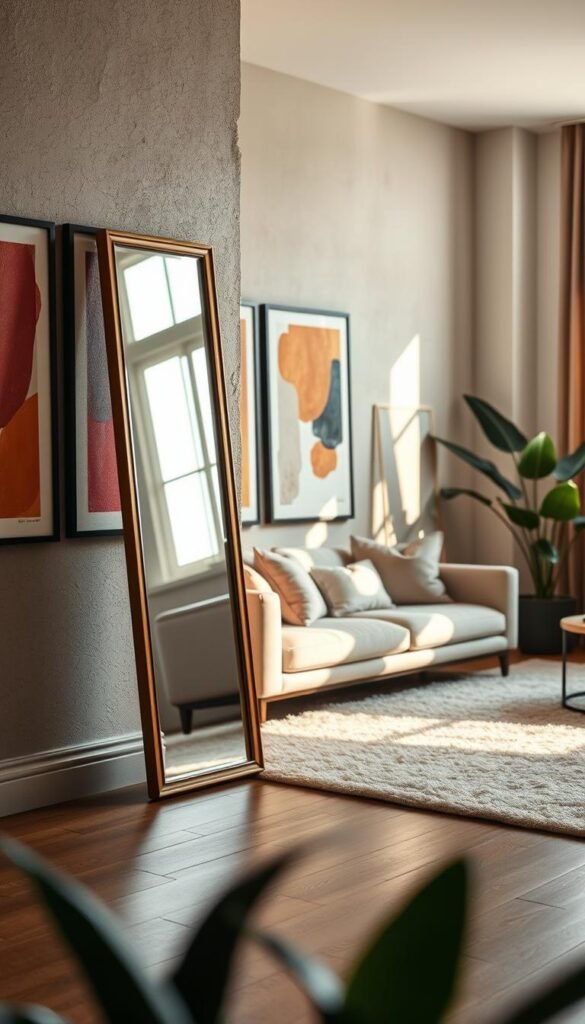
No-Wall Option: Leaning Art, Oversized Frames, and Floor Mirrors
If nails are off-limits, a bold framed piece or floor mirror can anchor a room instead. This solves the core problem for renters and those with concrete or brick surfaces: get impact without risking paint or lease violations.
Best for
Strict leases, textured concrete, and anyone who dislikes measuring gallery layouts. Leaning pieces work well for quick staging and seasonal swaps.
Where to place them
Behind a sofa or console, in a bedroom corner as a headboard stand-in, or near an entryway where a mirror reflects light and opens the room.
Pros and cons
- Pros: truly zero contact with the wall, easy to move, and one large piece changes the entire look.
- Cons: needs floor space, can block traffic in tight areas, and requires anti-tip safety if kids or pets are present.
Buying considerations
Check frame thickness for stable leaning. Prefer shatter-resistant glass for mirrors. Pick sizes that fit corners and won’t block doors or vents.
Buyer tip: measure baseboard depth and test the lean angle so the piece sits stable without sliding. Add anti-tip kits and non-slip floor pads for safety.
| Item | Best use | Key check |
|---|---|---|
| Oversized framed art | Single focal piece over sofa | Frame depth and backing stability |
| Floor mirror | Brighten small entries and living rooms | Shatter resistance and weight |
| Anti-tip kit + pads | Child/pet safety and slip prevention | Mounting method and pad grip |
Affiliate picks: oversized frames, full-length mirrors, anti-tip kits, and non-slip pads help make this no-hole approach both stylish and safe.
No-Wall Option: Shelf Styling That Turns Objects into “Wall Art” (Without Hanging Art)
A well-styled shelf can replace a gallery while adding real storage. In small apartments, shelves solve two problems at once: limited storage and blank vertical space that needs visual interest.
Best for: compact studios and renters who prefer rearranging items over new installs. A bookshelf, leaning ladder, or picture ledge creates a flexible display zone and can even hide a TV when arranged carefully.
Pros: adds storage, supports seasonal swaps, and makes collections feel intentional. Cons: shelves can look cluttered fast; regular editing and consistent spacing keep the look tidy.
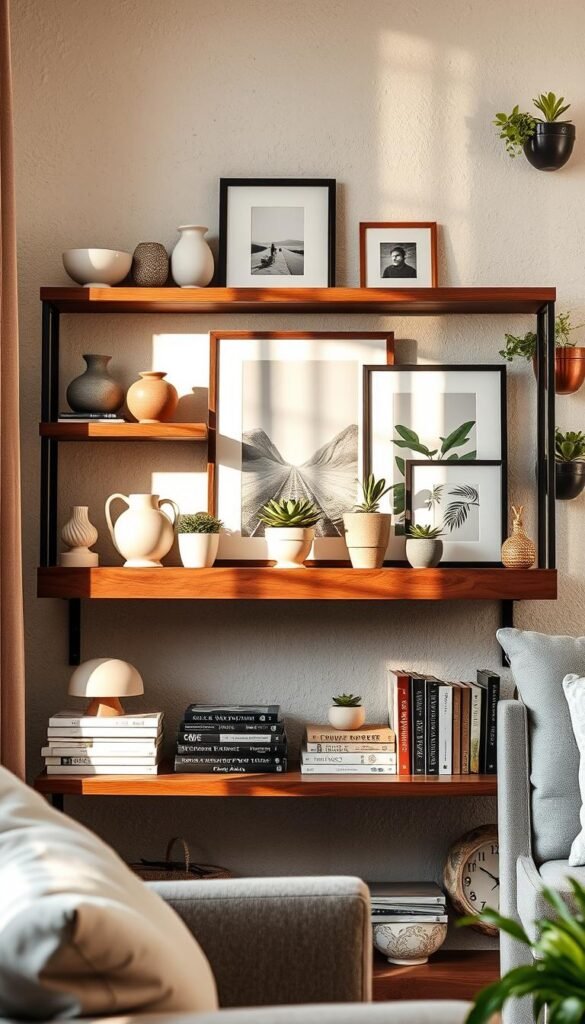
What to shop: sturdy bookcases, leaning ladders, picture ledges, and decorative brackets for minimal installs. Pick pieces with adjustable shelves so the layout adapts as collections change.
Styling formula: group by color, vary heights (tall vase + stacked books + small object), and leave negative space so each item reads as deliberate. Use plates on stands, baskets, framed photos leaning on a shelf, and small plants as safe “object as art.”
For photo-free shelf ideas and how to style without hanging, see a quick guide on shelf display ideas — useful when a tidy background matters for video calls or a polished room look.
No-Wall Option: Statement Lighting Like Plug-In Sconces and Picture Lights
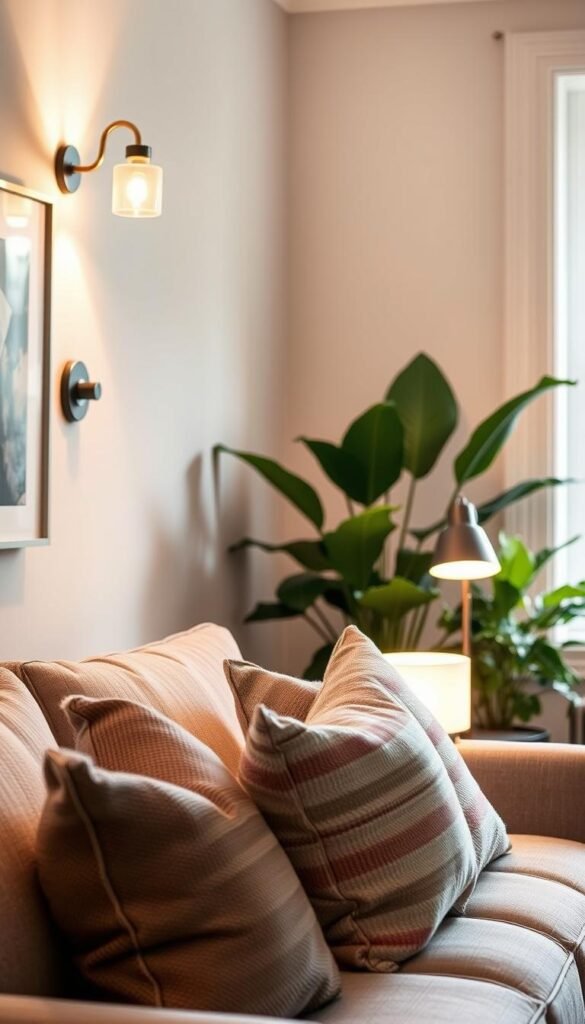
When nails are off-limits, lighting often becomes the easiest way to add style and function. Renters can use plug-in sconces and picture lights to create mood, improve task lighting, and serve as a statement piece without full rewiring.
Best for
Best for: renters who want evening ambiance, better reading light, or a more polished look without large art. These fixtures also help a small room feel layered and intentional.
Pros and cons
- Pros: adds glow and polish, creates a focal point, and improves daily comfort for reading or working.
- Cons: cord management can look messy; outlet placement may limit fixture location; some mounts still require small holes.
Buying considerations
Plug-in vs. hardwired: plug-in is renter-friendly; hardwired gives cleaner lines but may need landlord approval.
Bulb color temperature: warm (2700K–3000K) for cozy evenings; neutral (3500K–4000K) for task clarity.
Shade and scale: pick a shade that fits the narrow height of a room and doesn’t overwhelm a small niche or mirror.
Styling tip: use a sconce or picture light to frame a leaning piece, a shelf vignette, or a mirror so the area reads deliberately lit rather than an afterthought.
„Good lighting must be functional first; the best fixtures double as subtle design pieces.“
| Product | Best use | Pros | Cons |
|---|---|---|---|
| Plug-in sconce | Bedside, reading nook, framed art | Easy install, renter-safe, portable | Cord visibility, outlet limits |
| Picture light | Above prints or mirrors | Highlights art, slim profile | May need mount; bulb heat |
| Dimmable plug fixture | Ambiance control in living areas | Adjustable mood, energy-saving bulbs | Higher cost, may need compatible bulbs |
Practical buys to consider: plug-in sconces, cord covers, dimmable bulbs, and picture lights sized for common frame widths. For renter-friendly shopping options, see a curated guide on where to buy plug-in sconces at plug-in sconce sources.
No-Wall Option: Plants and Freestanding Planters for Biophilic Visual Interest
A single tall plant can anchor a room and add organic texture without touching the paint. Freestanding planters bring natural finishes and plant shapes into a home while avoiding nails and permanent changes.
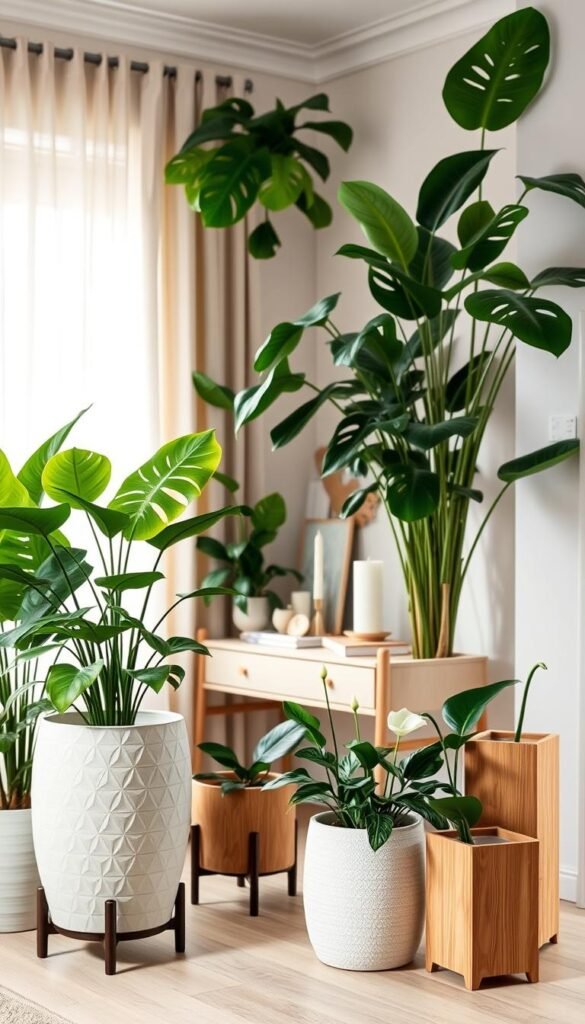
Best for
Anyone who wants flexible color and texture that moves with their layout. This suits renters, small-space residents, and people who prefer one strong element over many small pieces.
How plants act as visual pieces
Height, leaf shape, and planter finish work like sculptural art. A tall fiddle leaf or bird of paradise reads as an anchor. A grouping of different leaves creates layered texture and color.
Pros and cons
- Pros: lively, flexible placement; easy seasonal refresh by swapping pots or plants.
- Cons: plants need light and care; watering and stray soil can be a chore in busy homes.
Buying considerations
Match planter size to floor space and add a stand for scale. Pick finishes that fit the room—black metal, warm wood, or neutral ceramic. Consider grow lights for low-light rooms and saucers to protect floors.
Small-space tip: use one tall specimen in a corner to anchor the area rather than many small pots that can look cluttered.
For low-maintenance options and styling ideas, see a useful guide on faux solutions in the replica plants guide.
No-Wall Option: Decorative Collections You Can Display on Furniture
A curated tabletop collection can add instant personality without ever touching paint.
Many renters find blank areas impersonal but hesitate to drill holes. Displaying a collection on furniture solves that. It provides visual interest while keeping surfaces and lease terms safe.
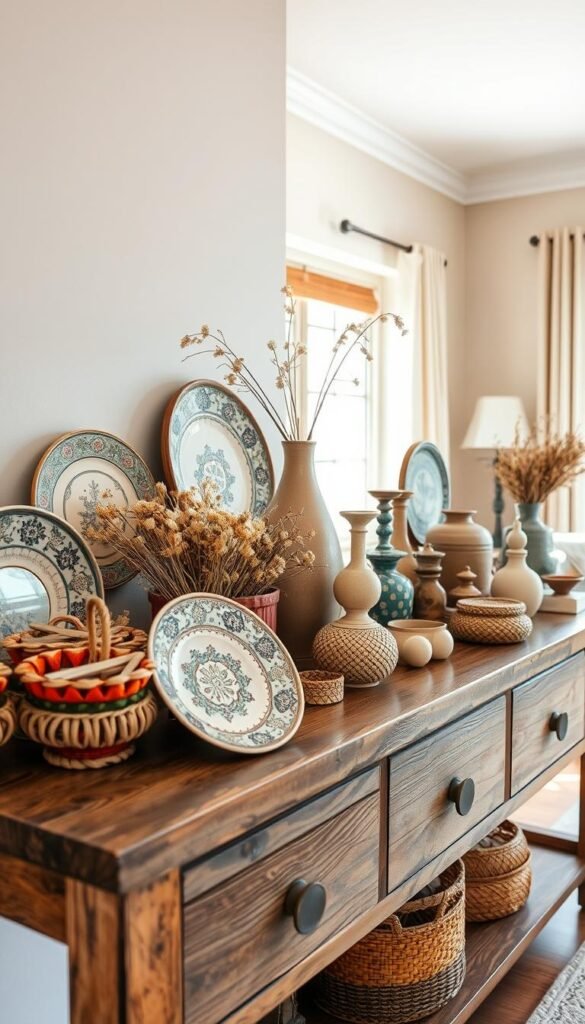
Best for
Vintage lovers, thrifters, and collectors who prefer a layered, personal style. This method suits an entry console, dresser top, or a living-room credenza.
What to display
- Plates on stands, mixed sizes and edges for rhythm.
- Wicker baskets, small sculptures, travel objects, or memorabilia.
- One strong anchor piece plus a few smaller complementing pieces for balance.
Pros and cons
Pros: high personality, easy to add over time, and no drilling required.
Cons: too many small objects can overwhelm a small room and feel cluttered.
Buying and styling tips
Repeat a color or material to create cohesion. Keep one primary collection per zone and leave space for daily use like keys or mail. Rotate seasonally using stackable storage bins and decorative trays to corral items when not on display.
| Need | Why it matters | Practical picks |
|---|---|---|
| Cohesion | Prevents a scattered look | Repeat metal finish, color, or texture |
| Storage | Protects off-season pieces | Stackable bins, padded boxes |
| Rotation | Keeps surfaces fresh | Plate stands, decorative trays, basket sets |
„Limit each surface to one primary collection and leave negative space for function and clarity.“
For ideas on styling a collection and arranging pieces by theme, see a visual how-to guide on displaying a collection and tips for a neutral, cohesive mix at best neutral mix.
Comparison Table Setup: Which Option Fits Your Budget, Space, and Lease Rules
A side-by-side comparison helps readers pick the right solution for their budget, space, and tenancy rules. Below are the key decision columns to include when building a comparison table.
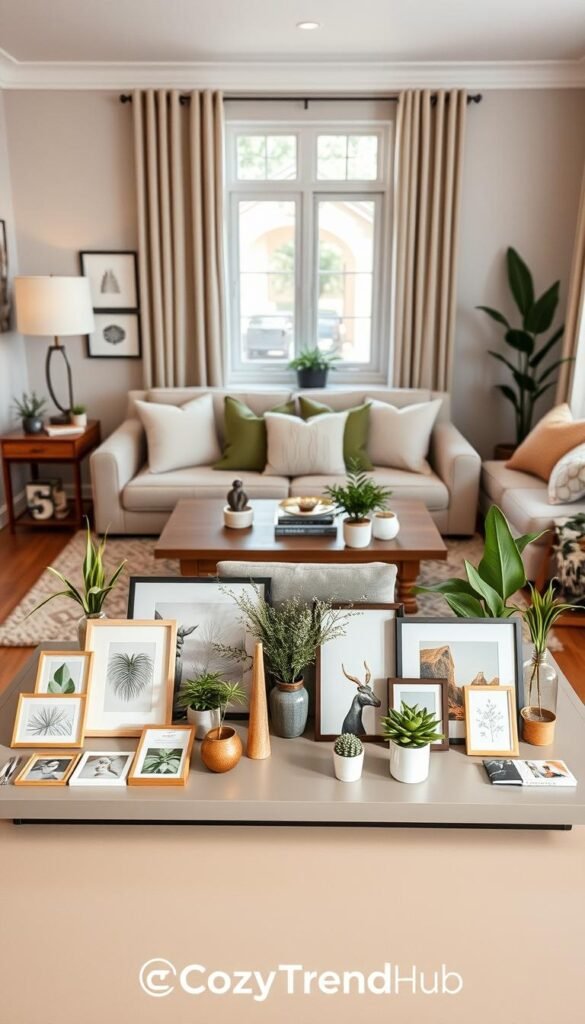
What columns to include
- Cost range — from DIY ($5–$30) to mid-range purchases.
- Install effort — low, medium, high.
- Damage risk — none to high (adhesives vs. heavy anchors).
- Footprint / floor space — freestanding vs. wall-mounted.
- Seasonal swap ease — how fast and low-cost swaps are.
- Best rooms — entry, living, bedroom, office.
Quick picks by need
Best bang for buck for large blank walls: removable panels, printable gallery kits, or one oversized leaning piece depending on lease rules.
Best for tiny rooms: mirrors for light, a single large piece, or narrow shelving that adds storage without clutter.
Best for frequent swaps: printable art, washi tape accents, textiles, and shelf styling.
Lowest-effort installs: leaning art, floor mirrors, freestanding planters, and lightweight strip-hung frames on stable paint.
| Pick | Cost | Effort | Damage Risk | Footprint | Best Room |
|---|---|---|---|---|---|
| Washi tape / printables | $5–$30 | Low | Low–Medium | Minimal | Office / Kid room |
| Removable panels | $30–$150 | Medium | Medium | Wall | Living / Bedroom |
| Leaning art / mirror | $50–$300 | Low | None | Floor | Entry / Living |
| Shelves & lighting | $40–$200 | Medium | Medium | Varies | Living / Office |
Affiliate block mapping: frame packs, removable strips, wallpaper samples, plug-in sconces, planters, and adjustable shelves are prime picks to feature.
Buyer tip: double-check measurements and the buyer checklist before purchasing large pieces to reduce returns and frustration. For renter-specific ideas, see a focused guide at ways to decorate a rental.
Conclusion
Conclusion
Finish by picking one high-impact piece to set the room’s tone before layering smaller touches. A well-chosen mix of art, mirrors, textiles, shelves, lighting, and plants creates interest without permanent change.
Confirm lease rules and inspect surfaces first. Measure the space, then choose the safest install level for the room’s use—either a wall-based option or a no-contact solution.
Start simple: one mirror, a textile panel, an oversized leaning frame, or a tested wallpaper sample. Add smaller supporting pieces after the anchor feels right.
Shop smart: favor standard sizes, order samples, and pick lightweight materials if paint is fragile. For curated styling ideas and modern looks, see this modern inspiration guide.
Next step: use the comparison table to narrow to 1–2 ideas, then shop the recommended picks with confidence.